Can You Freeze Creatine? Storage, Shelf Life, and What Temperature Does to Quality
By The Creatine Canada Research Team — Evidence-based supplement analysts
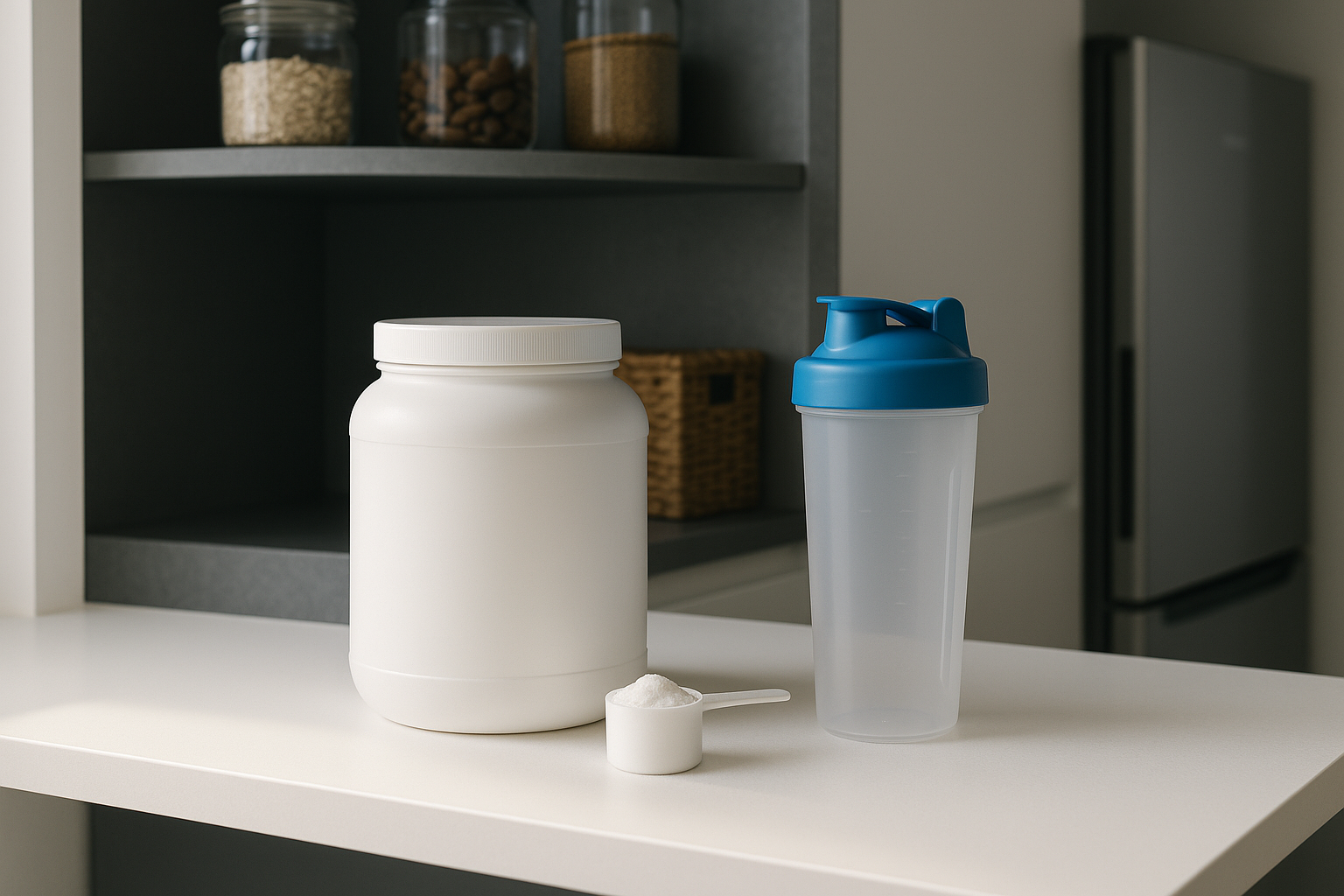
Yes, you can freeze creatine powder, but you usually should not need to. Freezer storage does not improve creatine monohydrate’s effectiveness, and the bigger risk is moisture condensation when the container comes in and out of the freezer, which can cause clumping and gradually reduce quality more than simple cool, dry cupboard storage.
Evidence-based · Cites 4 sources · Editorial standards
Key Takeaways
- Yes, creatine powder can be frozen, but it offers little practical benefit over room-temperature storage.
- The main storage threat to creatine is moisture, not normal household warmth.
- A tightly sealed tub kept cool, dry, and out of sunlight is the best default storage method.
- Avoid moving creatine repeatedly between freezer and room temperature because condensation can get into the powder.
- Dry creatine powder is more stable than pre-mixed liquid creatine, which is less ideal for long storage.
- If your creatine is clumpy but still dry-smelling and within date, it is often still usable, though texture may be worse.
- For most people, 3 to 5 g/day of creatine monohydrate matters far more than whether the tub is refrigerated or frozen.
Can you freeze creatine powder? Yes — but it is rarely the best way to store it
Yes, you can freeze creatine powder, and freezing creatine does not inherently ruin it. The more useful answer, though, is that most people should not store creatine in the freezer because freezer storage adds condensation risk without giving meaningful performance or shelf-life advantages over a cool, dry cupboard.
If your goal is to preserve potency, the key issue is not getting creatine as cold as possible. The key issue is keeping creatine monohydrate dry, sealed, and protected from humidity. Dry creatine powder is generally quite stable in ordinary indoor conditions, which is one reason monohydrate remains the gold standard form. The 2017 ISSN position stand and the 2021 JISSN review both reinforce the broader point that creatine monohydrate is the most studied, effective, and practical form for routine use, and that fancy handling is usually unnecessary.
Here is the short featured-snippet version:
- Can creatine be frozen? Yes.
- Should you freeze creatine powder? Usually no.
- Best storage method? Keep it sealed in a cool, dry, dark place.
- Main risk of freezer storage? Condensation when you open the container after removing it from the freezer.
Why does condensation matter? When a cold container hits warmer room air, water can condense on or inside it, especially if the lid is opened too soon. Even small repeated moisture exposure can make powder clump. Over time, moisture is a more realistic quality issue than room-temperature storage itself.
This is also why people asking about creatine freezer storage, can I store creatine in freezer, or creatine and cold storage usually need the same practical advice: if your home is normal indoor temperature, the freezer is unnecessary. If your environment is unusually hot or humid, using a fridge or freezer can work, but only if the container is extremely well sealed and allowed to return to room temperature before opening.
For the bigger picture on basic use, dosing, and expectations, see our guides to how to take creatine and does creatine expire.
What temperature actually does to creatine quality, solubility, and shelf life
Temperature affects creatine less than moisture does, but heat, water, and time together matter more than cold alone. In practical terms, dry creatine powder stored at ordinary room temperature stays usable far better than many people assume, while creatine dissolved in liquid is less stable over time.
Creatine works by increasing muscle phosphocreatine, the stored high-energy compound that helps rapidly regenerate ATP, your cells’ immediate energy currency during short, hard efforts. Storage temperature does not change that mechanism. What storage can affect is whether the powder stays chemically intact and physically easy to use.
The key distinction is this:
- Dry powder: generally stable when sealed and kept dry.
- Mixed in liquid: more prone over time to degradation into creatinine, especially if stored for long periods.
That is why freezing dry powder is mostly unnecessary, while pre-mixing a bottle for days is less ideal. If you stir creatine into water and drink it soon, that is completely normal. If you mix it and let it sit for long periods, especially in warm conditions, you create a less favourable storage environment than the powder had in the tub.
Cold water itself is not a problem. In fact, creatine can be mixed into cold drinks just fine. The tradeoff is simply that creatine tends to dissolve less easily in very cold liquid than in warm liquid, so you may notice more grit at the bottom. That is a mixing issue, not an absorption problem.
The evidence-based bottom line is simple: freezing does not make creatine stronger, more absorbable, or more effective. Once creatine reaches your muscle stores through consistent daily intake, storage in the freezer versus a cupboard does not change the physiological outcome.
If you want deeper background on how creatine behaves and why monohydrate remains the standard, the ISSN position stand and JISSN misconceptions review are the best starting points. We also cover practical mixing details in how to mix creatine and temperature-specific mixing in our related guide on creatine with water temperature.
Freezer vs fridge vs cupboard: the best creatine storage temperature for real life
For almost everyone, a cool, dry cupboard beats the fridge and freezer for creatine storage. The best storage temperature is simply a stable indoor temperature with low humidity and minimal light exposure, because stability reduces condensation and moisture problems.
The most common mistake is assuming colder always means better. That is true for some foods, but creatine powder is not fresh produce. Creatine monohydrate does not need freezing for preservation the way perishable items do. Instead, every transfer between cold storage and room temperature creates a chance for humid air to meet a cold container.
| Storage option | Good choice? | Main benefit | Main drawback |
|---|---|---|---|
| Cool, dry cupboard | Yes — best for most people | Simple, stable, low condensation risk | Needs protection from humidity and sunlight |
| Refrigerator | Sometimes | Can help in very hot homes | Moisture and condensation risk if opened cold |
| Freezer | Usually unnecessary | Very cold environment | Highest condensation risk when removed and opened |
| Bathroom cabinet | No | Convenient | Steam and humidity make it a poor choice |
| Car, garage, shed | No | None | Large temperature swings and humidity exposure |
If you live in a humid Canadian summer environment without air conditioning, cold storage may look attractive. Even then, the smarter move is often a sealed tub plus a dry indoor closet, not a freezer. If you do choose fridge or freezer storage, keep the powder in its original sealed container or an airtight supplement jar with the lid tightly closed.
Also keep the desiccant packet if the product came with one. That small packet helps absorb incidental moisture and is there for a reason.
For Canadians shopping for replacement tubs, look for products with clear lot information, intact seals, and Health Canada-compliant labelling where applicable. On Canadian shelves, that may include an NPN, which means Natural Product Number, depending on the product format and regulatory pathway. We cover buying considerations in our best creatine rankings, creatine brand reviews, and creatine product catalog.
Exactly how to store creatine properly, with or without freezer use
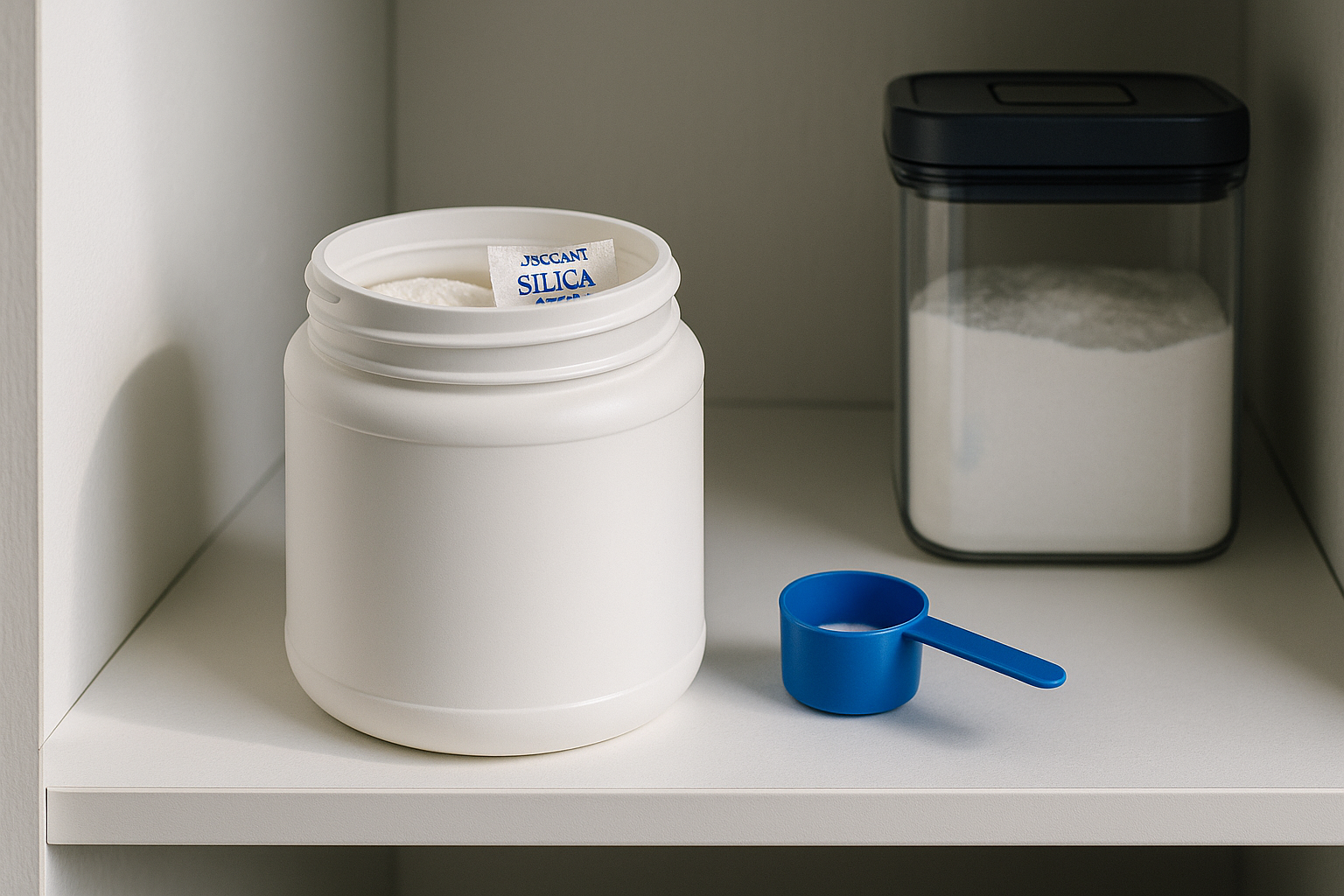
The best way to store creatine is to keep it sealed, dry, and away from heat and humidity. If you want a no-fuss system that protects quality, follow these steps exactly.
- Leave it in the original container if possible. Quality tubs are usually designed to limit air and moisture exposure.
- Close the lid tightly after every scoop. Even brief exposure to humid kitchen air can add up over months.
- Store it in a cool, dry place. A bedroom closet, pantry shelf, or dry cabinet is better than a bathroom or windowsill.
- Keep the scoop dry. Never use a wet shaker spoon or damp measuring spoon inside the tub.
- Keep the desiccant packet inside. Do not eat it, but do not throw it away unless the label specifically says otherwise.
- Avoid repeated temperature swings. Consistency matters more than chasing cold temperatures.
If you insist on freezing creatine powder, do it this way:
- Make sure the container is truly airtight. A poorly sealed tub defeats the point.
- Freeze the whole container, not daily portions opened repeatedly.
- When removing it, let it come fully to room temperature before opening. This step reduces condensation inside the tub.
- Do not return it to the freezer every day. Frequent in-and-out cycling is the exact pattern most likely to invite moisture.
A good rule is this: open cold creatine late, not early. Letting the sealed tub warm up before opening is the simplest way to reduce water droplets from humid room air.
If you bulk-buy creatine to save money, splitting a large order into two sealed containers can help. Keep one in active use and one untouched. That reduces the number of times your full supply is opened.
This matters more than micromanaging temperature. A perfectly frozen tub opened carelessly is a worse setup than a cupboard-stored tub handled properly.
If you are just starting and want the whole beginner protocol, pair this storage advice with creatine for beginners, creatine dosage calculator, and how much creatine per day.
If creatine clumps, freezes, or gets cold: how to tell whether it is still good
Clumpy creatine is not automatically bad. In many cases, clumping simply means the powder absorbed some moisture from the air, which affects texture and flow more than safety or effectiveness.
People often confuse three different situations:
- Cold powder: usually fine.
- Clumpy powder: often still usable, but signals moisture exposure.
- Wet, discoloured, or foul-smelling powder: discard it.
Use this quick check:
- Look at the colour. Plain creatine monohydrate should remain white or off-white.
- Smell it. It should have little to no strong odour.
- Feel the texture. Small dry clumps that break apart are usually not a big concern; damp chunks are more concerning.
- Check the container and date. If the seal was broken long ago and storage has been poor, be more cautious.
- Mix a serving. If it behaves normally apart from mild clumping, it is often still fine.
Freezing itself does not make creatine spoil. The more likely issue is what happened around freezing: a lid not fully tightened, exposure to freezer odours, or condensation after opening a cold container.
If the powder hardened into a brick, that usually means significant moisture intrusion. At that point, the question is not “can you freeze creatine?” but “did water get into it?” A dry brick-like mass may still be mostly a texture issue, but a damp or altered product is not worth gambling on given how inexpensive creatine monohydrate usually is per serving.
Pre-mixed creatine is different. If you mixed creatine into water and then froze the drink, the freezing itself is not the central issue. The practical issue is whether it was left mixed for a long time before use, because dissolved creatine is less ideal for prolonged storage than dry powder. For best practice, mix creatine close to when you plan to drink it.
If you are troubleshooting poor texture, see our guides on how to mix creatine and why creatine clumps.
Storage matters less than dosing: the creatine amounts that actually drive results
If your creatine is stored reasonably well, your results will depend far more on dose consistency than on freezer use. For most adults, 3 to 5 grams of creatine monohydrate per day is the standard maintenance dose that keeps muscle stores elevated over time.
The classic evidence-based options are straightforward:
| Goal | Protocol | Typical timeline | Best for |
|---|---|---|---|
| Fast saturation | 20 g/day split into 4 doses for 5-7 days, then 3-5 g/day | About 1 week to saturate faster | Athletes wanting quicker effects |
| Simple daily use | 3-5 g/day every day | Roughly 3-4 weeks to build stores | Beginners and most gym-goers |
| Larger body size or high lean mass | Often 5 g/day as a practical default | Similar overall pattern | Taller, heavier, or more muscular users |
By body weight, a practical approach looks like this:
- Under about 70 kg: 3 g/day is often sufficient.
- About 70 to 100 kg: 3 to 5 g/day fits most people.
- Over about 100 kg or very muscular: 5 g/day is a common practical choice.
These are not hard medical cutoffs; they are sensible real-world ranges. The main idea is consistency. Missing days matters more than whether the powder was stored cold.
What should you expect?
- Week 1 with loading: fuller muscles, possible mild scale increase from intracellular water.
- Weeks 2-4 without loading: gradual saturation and subtle improvement in repeated high-intensity training capacity.
- Weeks 4-12: the biggest practical payoff is usually better training quality over time, which can support strength and muscle gain.
The ISSN position stand concluded that creatine monohydrate is the most effective ergogenic nutritional supplement currently available for increasing high-intensity exercise capacity and lean body mass during training. That outcome depends on muscle saturation, not whether your tub sat beside frozen berries.
For personalized math, use our creatine dosage calculator and read creatine loading phase and how long creatine takes to work.
Can you mix creatine in cold drinks or freeze a shake? Yes — here is the practical way
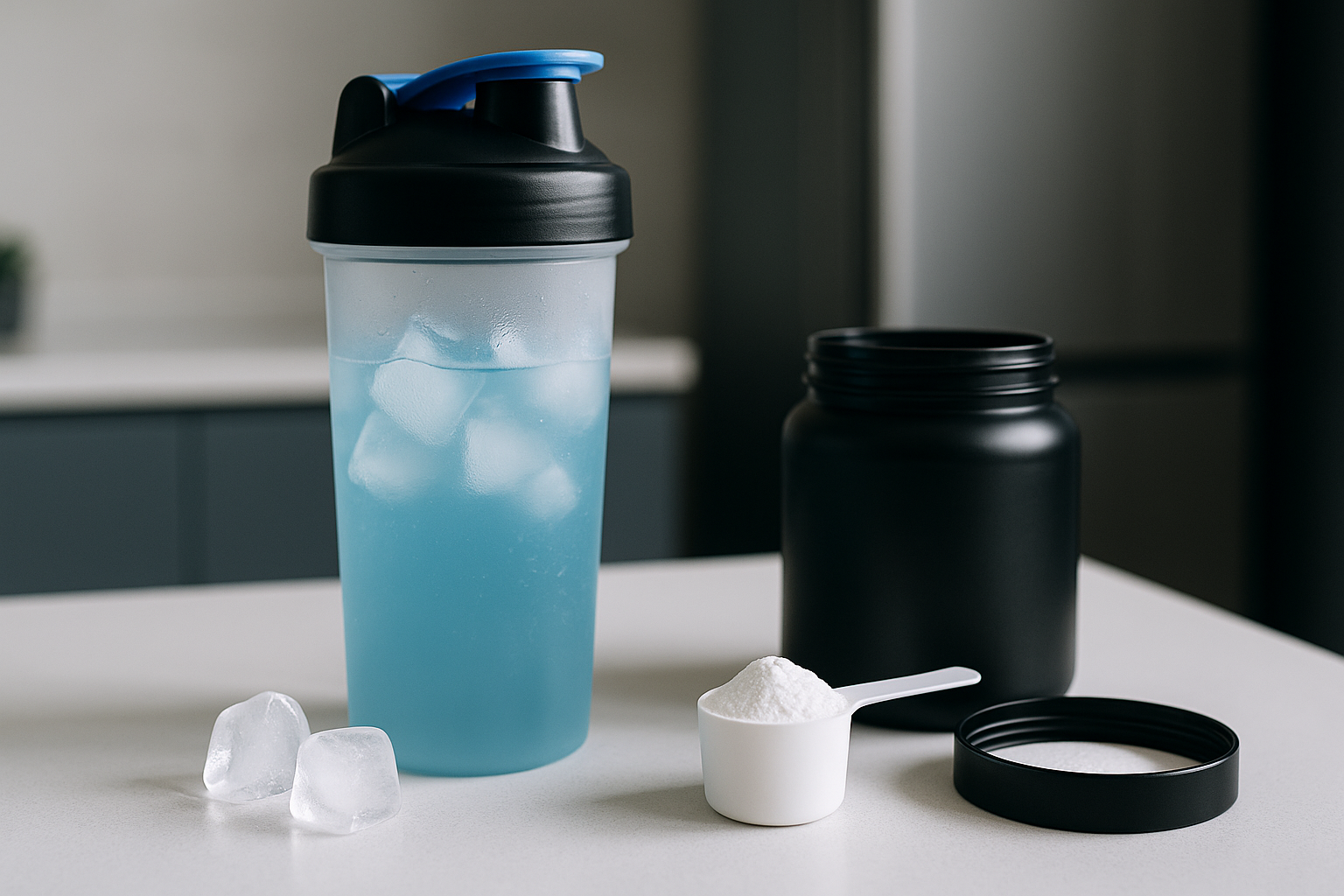
Yes, you can mix creatine into cold water, juice, protein shakes, or even a drink you chill in the fridge, and you can freeze a mixed drink if needed. The important nuance is that cold affects dissolving more than effectiveness, while long storage after mixing is less ideal than drinking it the same day.
Creatine does not need a precise time of day to work. Its benefits come from keeping muscle creatine stores elevated over days and weeks. So if a cold drink helps you remember your dose, that is a perfectly good strategy.
Best practices for cold storage and mixing:
- Add 3 to 5 g to your drink.
- Shake longer if the liquid is very cold. Cold liquids dissolve powder more slowly.
- Drink soon after mixing when possible.
- If refrigerating, think hours, not many days.
- If freezing a prepared drink, thaw and consume rather than storing indefinitely.
If you see sediment at the bottom, that does not mean the creatine failed. Creatine monohydrate can remain partly suspended rather than fully dissolved, especially in cold liquid. Many people simply swirl the last mouthful and finish it.
People sometimes worry that ice, refrigerators, or freezers “kill” creatine. That is not the concern. The bigger concerns are poor mixing, forgotten doses, and letting a prepared drink sit far too long. In real life, a slightly gritty cold shake consumed today is better than a perfectly dissolved drink you never actually take.
As for timing, before versus after workout matters much less than daily adherence. If you already pair supplements with a meal or shake, using that routine is smart. For more on timing and beverage choices, see when to take creatine, creatine with or without food, and mixing creatine with protein powder.
The practical hierarchy is: take it daily, store it dry, mix it however helps you stay consistent. Freezing is optional and usually unnecessary.
Beginners, women, older adults, and athletes: who should care most about storage details
Storage advice is relevant to everyone using creatine, but it matters most for people who buy in bulk, live in humid conditions, or use creatine inconsistently and leave tubs open too often. For everyone else, freezing creatine powder is a minor issue compared with choosing the right product and taking it daily.
Beginners should keep this simple: buy plain creatine monohydrate, store it in a dry cupboard, and take 3 to 5 g/day. Do not overcomplicate your first tub with freezer strategies.
Women can use the same storage principles and broadly the same dose ranges as men. There is no female-specific reason to freeze creatine, and there is no evidence-based reason women should avoid creatine because of “bulking” fears. The real-world effect is better strength and training performance, with some people noticing modest water-related scale change early on.
Older adults should care less about storage hacks and more about adherence. Creatine is often most useful when paired with resistance training and consistent daily use. A simple visible storage spot can be better than tucking the tub into a freezer and forgetting it exists.
Competitive athletes may have one extra consideration: product quality assurance. In Canada, that means buying from reputable brands and, where relevant, preferring third-party testing such as NSF Certified for Sport or Informed Sport for higher-risk tested-sport contexts. Storage will not remove contamination risk from a poor-quality product.
Travellers and shift workers often do best with small dry portions in sealed packets or capsules rather than moving one cold tub around. If convenience improves consistency, use the convenient option.
Plant-based eaters may respond especially well to creatine because baseline dietary intake is lower, but the storage rules do not change: dryness first, cold second.
If you fit one of these groups, the most relevant next reads are creatine for women, creatine for older adults, creatine for competitive athletes, and is creatine vegan.
Safety, side effects, and myths: freezing does not solve the wrong creatine problems
Freezing creatine does not make it safer, cleaner, or easier on your kidneys or stomach. Those concerns are separate from storage temperature, and they should be addressed with evidence rather than internet myths.
According to the 2017 ISSN position stand and the 2021 JISSN review, creatine monohydrate is one of the most studied sports supplements available, with a strong safety record in healthy people when used at recommended doses. The common issues people notice are usually practical rather than dangerous.
- Stomach upset: more likely with large single doses, especially during loading.
- Water-weight increase: common early on because creatine pulls water into muscle cells.
- Clumping: a storage issue, not a health issue by itself.
- High blood creatinine on labs: can reflect creatine metabolism and does not automatically mean kidney damage.
Freezer storage will not fix digestive discomfort. If creatine bothers your stomach, the better fixes are:
- Use 3 to 5 g/day instead of aggressive loading.
- Split the dose into smaller servings.
- Take it with food if that feels better.
- Choose plain monohydrate rather than underdosed blends.
Freezer storage also will not fix poor product choice. If a product is contaminated, mislabeled, or underdosed, cold storage will not rescue it. That is why buying from reputable sources matters more than freezing. The International Olympic Committee consensus on supplements emphasizes the importance of product quality and contamination risk, especially for athletes.
Three myths to ignore:
- “Creatine must be refrigerated.” False for dry powder.
- “Cold destroys creatine.” False in normal use.
- “If creatine clumps, it is toxic.” False; clumping usually means moisture exposure.
For deeper safety answers, see is creatine safe, creatine digestive side effects, and creatine and kidney concerns. For broader misconception clean-up, our creatine myths debunked hub is a useful next step.
Buying creatine in Canada: what matters more than freezer storage
If you are buying creatine in Canada, product quality, label clarity, and supplier trust matter more than whether you plan to refrigerate or freeze it. A well-made creatine monohydrate stored reasonably well will outperform a flashy product with weak quality control.
What should you look for?
- Creatine monohydrate as the main ingredient. This is still the most studied and cost-effective form.
- Clear serving size in grams. Avoid labels that hide tiny doses in proprietary blends.
- Lot number and expiry or best-before information.
- Tamper-evident seal.
- Third-party testing where relevant. Especially valuable for competitive athletes.
For Canadian shoppers, you may also see an NPN, or Natural Product Number, on some supplement labels. An NPN indicates the product has been licensed by Health Canada under the natural health products framework. It is useful, but it should not replace basic quality judgment, ingredient review, and brand reputation.
Storage-related buying tips are simple:
- Choose a container size you will actually finish. Bigger is not always better if it sits half-open for a year.
- Prefer sturdy, well-sealing packaging.
- Skip “liquid creatine” for long shelf storage concerns. Dry powder is usually the safer practical bet.
- Do not pay a premium for exotic forms on the assumption they store better.
The strongest evidence still favours plain monohydrate. As the ISSN and mainstream evidence summaries note, alternate forms have not consistently shown superiority in real-world outcomes. Examine’s evidence summary also supports monohydrate as the benchmark form for efficacy, safety, and value.
If you are comparing options, use our best creatine rankings, brand reviews, and product catalog. If you want the buying framework behind those picks, read our related guides on the best type of creatine, how to choose creatine, and third-party-tested creatine in Canada.
Bottom line: freeze creatine only if you must, not because you need to
Yes, you can freeze creatine powder, but no, you do not need to. The best answer for almost everyone is to store creatine in a sealed container in a cool, dry, dark place and focus your energy on taking the right dose consistently.
If you remember only five points, remember these:
- Dry powder is the priority. Moisture is the real enemy.
- Freezing is not harmful by itself. Condensation is the bigger concern.
- Do not open a frozen tub until it warms to room temperature.
- Room-temperature cupboard storage is usually ideal.
- Daily 3 to 5 g of monohydrate matters more than storage hacks.
If your home is unusually hot or humid, fridge or freezer storage can be workable, but only with airtight handling and minimal temperature cycling. If your home is normal indoor temperature, freezer storage is usually overthinking a very stable supplement.
Put differently: creatine works by saturating muscle stores over time, not by being kept ice-cold. A sealed tub on a dry shelf plus a consistent daily habit will beat a frozen tub you keep forgetting to use.
For the next step, pair this page with how to store creatine, how to take creatine, creatine maintenance dose, and the complete creatine guide.
Can You Freeze Creatine? The Numbers That Actually Matter
- 3-5 g/day Standard daily maintenance dose — This matters more for results than freezer storage.
- 20 g/day Typical loading dose — Usually split into 4 doses for 5-7 days.
- 5-7 days Typical loading phase length — Used to saturate stores faster.
- 3-4 weeks Approximate time to saturate without loading — With consistent daily intake of 3-5 g.
Frequently Asked Questions
Can you freeze creatine powder without ruining it?
Yes, you can freeze creatine powder without automatically ruining it. The bigger issue is that freezer storage can introduce condensation when the container is opened cold, so a sealed tub in a cool, dry cupboard is usually the safer and simpler option.
Can creatine be frozen for longer shelf life?
Yes, creatine can be frozen, but freezing does not usually provide a meaningful shelf-life advantage over proper dry storage at room temperature. Keeping creatine sealed, dry, and out of humidity is generally more important than making it colder.
Can I store creatine in the freezer every day?
You can, but you should not move creatine in and out of the freezer every day if you can avoid it. Repeated temperature swings increase the chance of condensation, which can cause clumping and gradually reduce powder quality.
Does cold temperature destroy creatine?
No, cold temperature does not destroy creatine in normal household use. Cold mainly affects how easily creatine dissolves in liquids, while moisture and prolonged storage after mixing are more relevant quality issues.
Is refrigerated creatine better than cupboard-stored creatine?
No, refrigerated creatine is not inherently better than cupboard-stored creatine. For dry powder, stable room-temperature storage in a cool, dry place is usually the best balance of convenience and protection.
What happens if creatine powder gets clumpy after cold storage?
If creatine powder gets clumpy after cold storage, it usually means moisture got to it, not that it became dangerous. Small dry clumps are often only a texture problem, but wet, discoloured, or foul-smelling powder should be discarded.
Can you freeze a creatine drink or shake?
Yes, you can freeze a creatine drink or shake, but it is still better to mix creatine close to when you plan to drink it. Dry creatine powder stores more reliably than creatine dissolved in liquid for extended periods.
What is the best creatine storage temperature?
The best creatine storage temperature is simply a cool, stable indoor temperature in a dry place away from sunlight. There is no evidence-based need to freeze creatine monohydrate for normal home use.
Should I keep creatine in the fridge during summer?
You can keep creatine in the fridge during summer if your home is very hot or humid, but it is not usually necessary. A tightly sealed tub stored in a dry closet or cabinet is often the better option because it avoids condensation from opening a cold container.
Does freezing make creatine work better?
No, freezing does not make creatine work better. Creatine’s benefits come from consistent daily intake that raises muscle phosphocreatine stores, not from cold storage.