Flavored and Sugar-Free Creatine in Canada: The 2026 RTD and Zero-Sugar Shift
By The Creatine Canada Research Team — Evidence-based supplement analysts
Yes—if you want sugar free creatine in Canada, the best choice is usually a flavoured or unflavoured creatine monohydrate product that still delivers a full 3–5 g dose per serving, has an NPN, and avoids unnecessary stimulants or underdosed blends. In 2026, zero-sugar creatine and ready-to-drink creatine formats are growing faster than the broader Canadian creatine market, but convenience still matters less than getting the right form and dose consistently.
Evidence-based · Cites 4 sources · Editorial standards
Key Takeaways
- The best sugar free creatine in Canada is usually creatine monohydrate with 3–5 g per serving, not a flashy proprietary blend.
- Flavoured creatine can work just as well as plain powder if the label clearly discloses the full creatine dose.
- Zero-sugar creatine products often use stevia, sucralose, or monk fruit to improve taste without adding sugar.
- Ready to drink creatine is convenient, but many products trade value or full dosing for portability.
- Market-research estimates suggest sugar-free creatine now makes up roughly 12–16% of Canadian creatine volume in 2026, up from about 7–9% in 2021.
- Check Canadian labels for an NPN and favour third-party-tested products whenever possible.
- Timing matters less than daily consistency: take creatine every day until muscle stores are saturated.
What “sugar free creatine Canada” actually means—and what to buy
Sugar free creatine in Canada usually means a creatine supplement with no added sugar that still provides an effective daily dose, most often 3–5 g of creatine monohydrate per serving. That is the direct answer most shoppers need, because “sugar free,” “zero sugar,” “flavoured creatine,” and “creatine drink Canada” are format or taste decisions—not separate performance ingredients.
The evidence-based ingredient remains creatine monohydrate. The 2017 ISSN position stand concluded that creatine monohydrate is the most effective ergogenic nutritional supplement currently available for increasing high-intensity exercise capacity and lean mass gains during training. In plain English, creatine works by increasing intramuscular phosphocreatine, the stored form of creatine phosphate that helps regenerate ATP, the immediate energy currency your muscles use for short, hard efforts.
So where do sugar-free and flavoured products fit? They solve an adherence problem. A supplement only works if you take it consistently enough to saturate muscle stores. If a flavoured zero-sugar creatine helps you actually use it every day, that format can be a smart choice. The catch is that some products hide behind “performance blends,” add caffeine you did not want, or underdose creatine to make room for flavour systems, electrolytes, amino acids, or pump ingredients.
For most Canadians, the shortlist is simple:
- Best value: unflavoured creatine monohydrate powder.
- Best adherence: flavoured sugar-free creatine monohydrate with a clearly disclosed 3–5 g dose.
- Best convenience: ready to drink creatine, but only if it still provides a meaningful dose and makes sense on cost.
If you are new to creatine, start with the basics first: what creatine is, how much to take, and how to use it every day. Our guides on creatine dosage calculator, creatine product catalog, and best creatine rankings can help you narrow the field quickly.
The main buying rule is this: choose the format you will use daily, but never sacrifice the proven ingredient and proven dose just to get better flavour.
Why flavoured, zero-sugar, and RTD creatine are growing faster in Canada
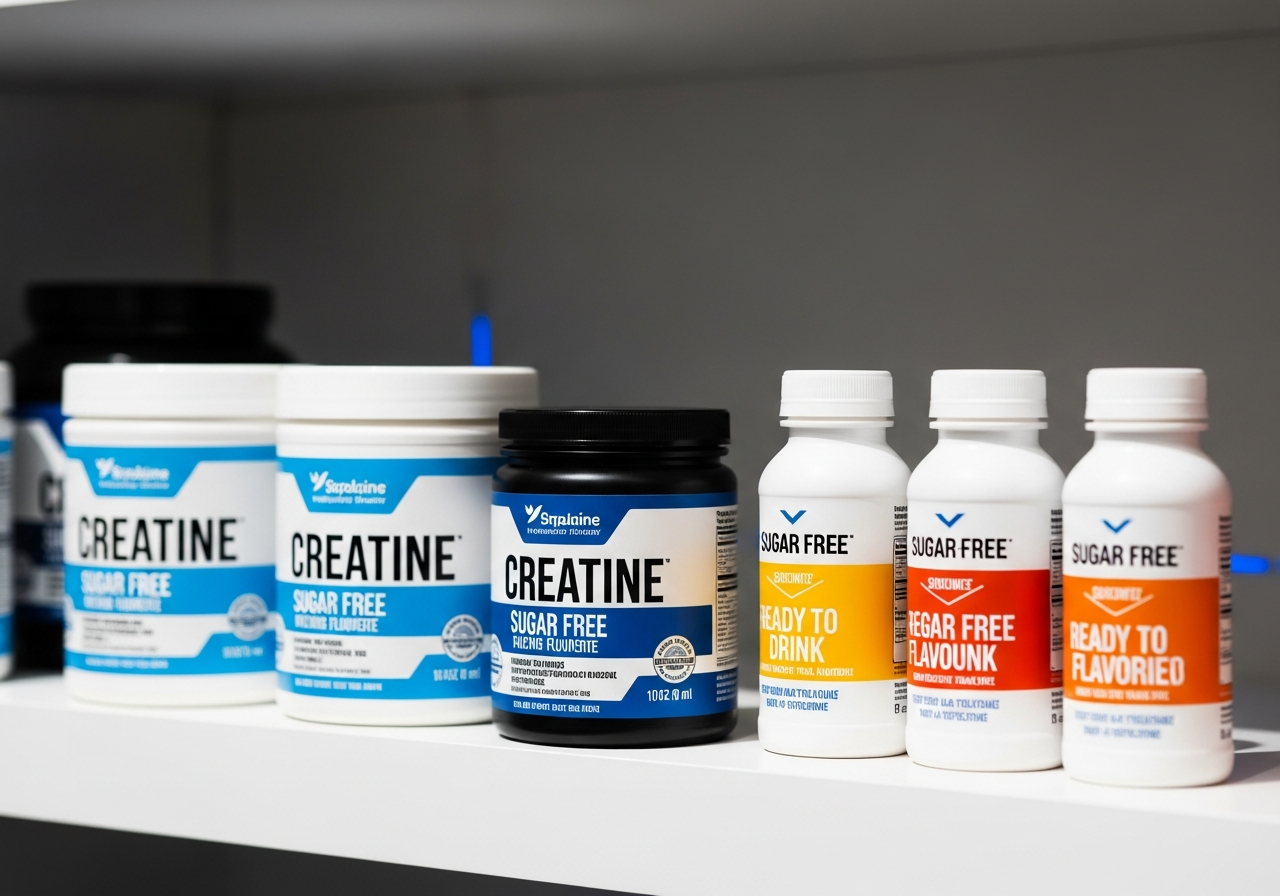
Flavoured and sugar-free creatine are growing faster in Canada because more buyers want better taste, no added sugar, and grab-and-go convenience without giving up the benefits of daily creatine use. That trend is real at the market level, even though it does not change the underlying science of what form works best.
Market-research estimates suggest the Canadian sugar-free creatine segment represents roughly 12–16% of total creatine supplement volume in 2026, up from about 7–9% in 2021. Those same estimates project roughly 8–11% compound annual growth from 2026 to 2035, which would outpace the broader category. For context, the overall creatine supplement market is estimated near USD $1.85 billion in 2026. Those are market figures, not clinical outcomes, but they help explain why Canadian shelves and online listings now include more zero-sugar powders, flavoured blends, and ready to drink creatine products than they did a few years ago.
Three forces are driving the shift:
- Low- and zero-sugar demand: many buyers want taste without added sugar, especially if they already get carbohydrates elsewhere.
- Improved flavour systems: stevia, sucralose, and monk fruit make modern flavoured creatine far more drinkable than older bitter formulas.
- RTD convenience: a bottled creatine drink is easy to throw into a gym bag, office bag, or hockey bag.
Still, a trend is not automatically a recommendation. The practical question is not “Is RTD creatine popular?” but “Does this product still give me enough creatine, at a reasonable price, with a clean label?” That is where many shoppers go wrong. A great-tasting creatine drink that contains less than a meaningful daily dose is convenient, but it is not cost-effective supplementation.
Canadian buyers should also think locally. Check for an NPN, which is a Natural Product Number issued for licensed natural health products in Canada, and look closely at any flavoured formula that layers creatine with caffeine, stimulants, or proprietary blends. If you want a cleaner read on labels and forms, see our creatine brand reviews and creatine myths debunked pages.
The short version: the zero-sugar shift is real, but monohydrate and full dosing still matter more than format trends.
How sugar-free creatine works: flavour changes the experience, not the mechanism
Sugar-free creatine works the same way as any other creatine product because the active ingredient—not the sweetener—is what raises muscle creatine stores. If two products deliver the same amount of creatine monohydrate and you absorb them normally, the physiological effect should be the same.
Creatine supports performance by increasing the amount of phosphocreatine stored in muscle. During short, intense efforts such as heavy sets, repeated sprints, jumps, or explosive intervals, phosphocreatine helps regenerate ATP quickly. That matters because ATP is depleted rapidly during maximal or near-maximal work. With fuller phosphocreatine stores, you can often sustain power output a little better, get an extra rep, recover faster between repeated bouts, and over weeks of training accumulate a better stimulus for strength and muscle gain.
Creatine is not a stimulant, and it does not work like caffeine. You usually do not “feel” it kick in after one serving. Instead, it works through saturation, meaning the gradual filling of muscle creatine stores over days to weeks. With a loading phase of about 20 g per day split into four doses for 5–7 days, saturation happens faster. With a straight maintenance approach of 3–5 g per day, saturation still happens, just more gradually.
Sugar is not required for creatine to work. That is an outdated oversimplification. Carbohydrates can influence insulin, and insulin can influence nutrient transport, but in real-world supplementation the critical factor is still regular intake of enough creatine over time. A zero-sugar creatine can therefore work perfectly well.
What flavouring can change is:
- Palatability: easier daily use for people who dislike plain powder.
- Mixability: flavoured formulas often dissolve more pleasantly in water.
- Tolerance: some people do better or worse with specific sweeteners.
- Label cleanliness: more flavour usually means more non-active ingredients.
The 2021 JISSN review on common questions and misconceptions about creatine also reinforces that many fears around creatine are overstated or unsupported. What matters most is choosing a product that helps you stay consistent while still respecting the evidence. For a fuller science overview, see what is creatine and how long does creatine take to work.
The bottom line here is simple: zero sugar changes taste and calories; it does not reduce creatine’s core mechanism if the dose is right.
Powder, flavoured mix, or ready-to-drink creatine: which format is best in Canada?
The best creatine format in Canada is the one that combines proven dosing, daily convenience, and transparent labelling, and that usually still means powder—either plain or flavoured. Ready to drink creatine can be useful, but it is often less economical and more variable on dose.
The comparison below helps most shoppers decide quickly.
| Format | Best for | Main advantages | Main drawbacks | What to check |
|---|---|---|---|---|
| Unflavoured monohydrate powder | Value-focused users | Most studied, simplest label, usually best cost per gram | Plain taste, can feel boring for daily use | 3–5 g serving, monohydrate, NPN, third-party testing |
| Flavoured sugar-free creatine | People who want taste and consistency | Better adherence, pleasant daily routine, no added sugar | More ingredients, some blends underdose creatine | Full disclosed 3–5 g monohydrate, no proprietary blend hiding dose |
| Ready to drink creatine | Travel, office, gym-bag convenience | No mixing, portable, easy to use on the go | Higher cost, heavier packaging, dose can be lower than ideal | Actual grams of creatine per bottle, ingredient stability, NPN |
If your question is “best flavoured creatine Canada,” the answer is not one universal brand—it is the flavoured product that still respects the fundamentals. You want a flavour you genuinely enjoy, but the label must show the full active dose clearly. If the front screams “performance matrix” and the back buries creatine inside a proprietary blend, that is a red flag.
RTD creatine makes the most sense for people who are frequently away from home, dislike mixing powder, or simply know that convenience drives compliance. But if you train mostly at home or have a shaker at work, a flavoured powder usually delivers the same benefits with more flexibility and better value.
One practical compromise is to use powder as your default and keep RTD bottles only for travel or hectic days. That gives you the best of both worlds without overpaying for every serving.
If you want to compare product types more broadly, visit our best creatine rankings, creatine brand reviews, and creatine product catalog.
Exactly how to take sugar-free creatine for results: a simple step-by-step plan
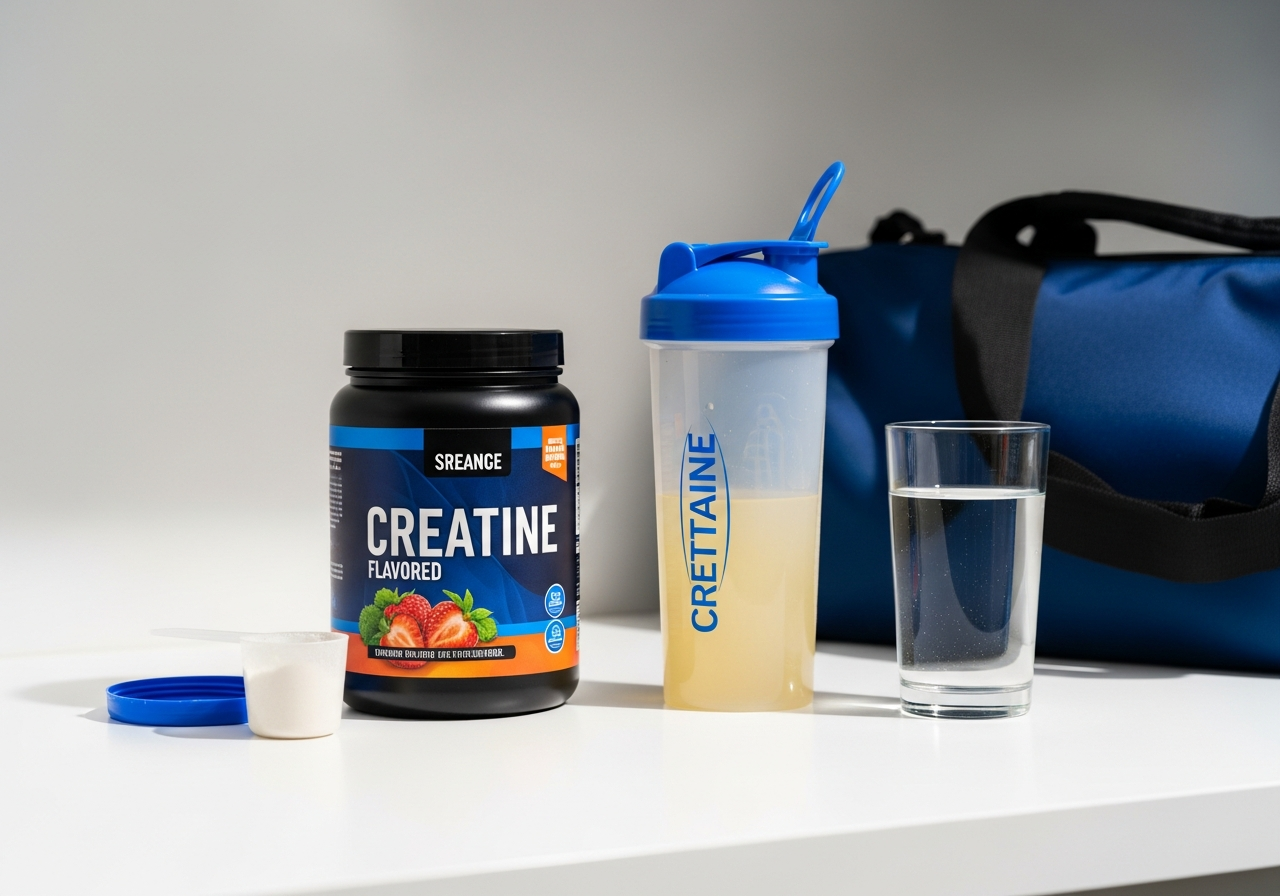
The simplest effective plan is to take 3–5 g of sugar-free creatine monohydrate every day, at any time you can stick to consistently, until your muscle stores are saturated. That is enough for most adults, whether the product is flavoured, unflavoured, or a creatine drink.
- Pick the right product. Choose creatine monohydrate with a clearly stated dose. If it is flavoured or zero sugar, make sure the label still shows a full 3–5 g serving.
- Decide whether to load. If you want faster saturation, take about 20 g per day split into 4 doses for 5–7 days, then move to 3–5 g daily. If you prefer simplicity, skip loading and just take 3–5 g daily from day one.
- Mix it properly. Stir or shake the powder into water, or combine it with a protein shake if that helps compliance. Micronized powders often dissolve more easily.
- Take it every day. Training days and rest days both count. Missing the odd day is not catastrophic, but consistency matters more than timing perfection.
- Track what changes. Watch performance markers like an extra rep, slightly better repeated sprint capacity, or more stable training volume over time.
Here is a realistic week-by-week expectation for most users:
- Week 1 with loading: faster water uptake into muscle and possible scale increase from intracellular water.
- Weeks 2–4 without loading, or immediately after loading: better training capacity becomes more noticeable.
- Weeks 4–8: strength and lean mass differences show up more clearly when training and protein intake are in order.
How do you know it is working? The best signs are not a “buzz.” Instead, you may notice slightly better output in repeated hard efforts, improved gym volume, and over time better progress in strength or lean mass. Some people also notice muscles feel a bit fuller because creatine draws water into muscle cells.
If you have never taken creatine before, our creatine dosage calculator and how to take creatine guide make setup easy. If you want specifics on daily amounts, also see how much creatine per day.
The key point is that a sugar-free label does not change the routine. Take enough, take it daily, and give it enough time to saturate your muscles.
Dosing by body weight, goal, and format: what counts as a real serving
For most adults, the effective maintenance dose is 3–5 g of creatine per day, while a loading phase is about 20 g per day split into four doses for 5–7 days. Those are the numbers that matter whether you buy a flavoured creatine, sugar free creatine, or ready to drink creatine.
Many people ask whether body weight changes the answer. In practice, most general fitness users do well with 3–5 g daily, but larger athletes and those with more lean mass often gravitate toward the upper end of that range. The main principle is still saturation: if the product does not provide enough actual creatine, the format is secondary.
Use this practical framework:
- Smaller adults or beginners: 3 g daily can be enough if taken consistently.
- Most active adults: 5 g daily is the standard, simple target.
- Larger strength or team-sport athletes: 5 g daily is typically the safer practical default unless a sport professional advises otherwise.
By goal, the interpretation looks like this:
- Muscle and strength: 5 g daily is the common evidence-based choice.
- General fitness and recovery support: 3–5 g daily works well.
- Fast saturation before a training block or tournament: loading for 5–7 days, then 3–5 g daily.
By format, pay attention to what the serving really delivers:
- Powder: easiest way to get the full dose.
- Flavoured powder: fine if the label still gives 3–5 g creatine per serving.
- RTD bottle: only count it if the bottle itself provides a meaningful daily amount.
The most common label trap is confusion between serving size and creatine amount. A scoop may weigh more than 5 g because flavouring agents, acids, anti-caking agents, electrolytes, or sweeteners are included. What you care about is the line that states the actual grams of creatine monohydrate.
If you want a more tailored estimate, use our creatine dosage calculator and read creatine maintenance dose. If you are considering a loading protocol, our guide on creatine loading phase walks through it in detail.
The takeaway: a real serving is defined by the grams of creatine delivered, not by how sweet, colourful, or convenient the product looks.
Best timing, mixing, and drink options for flavoured or zero-sugar creatine
The best time to take sugar-free creatine is the time you will remember every day, because timing has a much smaller effect than total daily consistency. Whether you take it before training, after training, with lunch, or on a rest day in the morning, the main goal is keeping muscle stores topped up.
This is because creatine is not an acute stimulant. Once muscle stores are saturated, the body benefits from that elevated pool throughout training, rather than from a sharp same-minute effect. That is why daily routine beats perfect timing.
Good practical timing options include:
- Post-workout: easy to pair with a protein shake or meal.
- Pre-workout: useful if your pre-gym routine is reliable.
- With any meal: often easiest on the stomach.
- Same time daily on rest days: helps habit formation.
For mixing, plain water is completely fine. You do not need sugar for creatine to work. You can also mix creatine with a protein shake, juice if you prefer it, or a flavoured hydration drink. If you use ready to drink creatine, the mixing question disappears, but label scrutiny becomes more important.
Common issues and fixes:
- Powder not dissolving: use more water, a shaker, or lukewarm liquid.
- Stomach discomfort: take a smaller single dose, split it up, or use it with food.
- Forgetting doses: keep it beside your protein powder, coffee setup, or toothbrush—wherever the habit sticks.
Do not overcomplicate the sweetener question. If a zero-sugar flavoured creatine uses stevia, sucralose, or monk fruit and you tolerate it well, that is usually a practical non-issue. The more important question is whether the product stays simple and properly dosed.
For deeper timing nuance, see when to take creatine. For dissolving and liquid choices, our guide on how to mix creatine is useful, and if you train around coffee, can you mix creatine with coffee covers that angle.
The evidence-based rule is refreshingly boring: take creatine in a way that makes daily use easy, comfortable, and repeatable.
Who sugar-free, flavoured, or RTD creatine is best for
Sugar-free or flavoured creatine is best for anyone who wants the proven benefits of creatine but is more likely to stay consistent when the product tastes good or is easy to carry. That includes plenty of people beyond young male gym-goers.
Beginners often do best with a simple flavoured monohydrate because it removes friction. Plain creatine is excellent, but if the taste or texture makes you skip doses, a zero-sugar flavoured option can improve adherence from day one.
Women can use creatine just as effectively as men. Creatine is not a steroid, and it does not “bulk” women in some unique way. Women who lift, do HIIT, team sports, or simply want support for strength and lean mass can use the same evidence-based dosing. If a pleasant flavoured option makes daily use easier, that is a real advantage.
Older adults may also benefit, especially when creatine is paired with resistance training. The convenience of a flavoured drink or easy-mixing powder can matter more here than in hardcore lifting circles. Ease of use often determines whether supplementation actually happens.
Athletes in sports with repeated high-intensity efforts—hockey, football, sprinting, combat sports, many field and court sports—are classic good candidates for creatine. The International Olympic Committee consensus on dietary supplements recognises creatine among evidence-supported performance supplements in the right contexts. For tested athletes, however, product quality matters even more, so third-party testing becomes a priority.
Vegetarians and vegans often respond especially well to creatine because dietary creatine intake is lower when you eat little or no meat. In that group, a convenient daily format can be particularly worthwhile.
Who may prefer RTD specifically?
- Shift workers
- Frequent travellers
- Students on campus all day
- Athletes moving between school, work, and training
If you fit one of those groups, a creatine drink Canada search may make sense—but still verify dose and label quality. For more targeted guidance, see creatine for beginners, creatine for women, creatine for older adults, and creatine for competitive athletes.
The practical answer is that the best creatine format is the one that matches your lifestyle well enough that you actually take it daily.
Safety, side effects, and Canadian label checks before you buy
Creatine monohydrate is well studied and generally considered safe for healthy individuals when used at evidence-based doses, but flavoured and RTD products require extra label scrutiny. The active ingredient is familiar; the surrounding formula is where many quality differences show up.
The ISSN position stand and the JISSN review on common creatine questions and misconceptions both support creatine’s strong safety profile in healthy populations when used appropriately. Common side effects are usually mild and manageable:
- Water weight gain: often reflects more water stored inside muscle, especially early on.
- Temporary stomach upset: more common with large single doses or poorly mixed servings.
- Perceived bloating: often improved by skipping loading or splitting doses.
What creatine does not reliably support are many common internet myths. It is not a steroid. It does not appear to dehydrate you in the way people often fear. It does not automatically harm kidneys in healthy people, though anyone with known kidney disease or relevant medical conditions should speak with a physician before supplementing.
For Canadians, there are four especially practical checks:
- Look for an NPN. An NPN indicates the natural health product is licensed for sale in Canada.
- Check the exact creatine dose. The product should clearly disclose 3–5 g per serving if marketed as a complete daily serving.
- Watch for stimulants. Some flavoured blends add caffeine or pre-workout ingredients you may not want.
- Favour third-party testing. This matters even more for competitive athletes and anyone prioritising quality assurance.
If you experience digestive issues, do not assume creatine itself is the only cause. Sweeteners, acids, colouring, or large bolus doses can all contribute. Often the fix is simply taking a smaller serving, using it with food, or switching to a simpler product.
For more on common concerns, see is creatine safe, creatine digestive side effects, and is creatine bad for your kidneys.
In short, the safest sugar-free creatine in Canada is the one with a transparent label, a full monohydrate dose, and no unnecessary extras you do not need.
Common mistakes and myths about zero-sugar creatine, debunked
The biggest mistakes with sugar-free creatine are buying by flavour instead of dose, assuming sugar is required, and expecting an instant stimulant-like effect. Those three errors explain most disappointing experiences.
Myth 1: Sugar-free creatine is weaker.
False. Sugar-free creatine is not inherently weaker if it provides the same amount of creatine monohydrate. The key variable is grams of active creatine, not grams of sugar.
Myth 2: Flavoured creatine is automatically low quality.
Not necessarily. A flavoured creatine can be excellent if it uses a transparent formula and still delivers a full effective dose. Flavouring adds ingredients, but that alone does not make a product ineffective.
Myth 3: RTD creatine does not work.
Overstated. Ready to drink creatine can work if the product is formulated well and provides enough active creatine. The real concern is often value, stability, or underdosing—not the mere fact that it is liquid.
Myth 4: You must load creatine.
False. Loading speeds saturation, but it is not necessary. Daily maintenance dosing still works.
Myth 5: Creatine makes you gain fat.
False. Early weight gain is usually water retained within muscle, not body fat. Over time, improvements in training can support lean mass gains.
Now the common shopping mistakes:
- Choosing the best-tasting option without checking whether it contains only a token amount of creatine.
- Paying extra for a fancy blend when plain monohydrate would do the job better.
- Ignoring the NPN or skipping quality checks because the packaging looks premium.
- Using creatine only on workout days and then wondering why results are inconsistent.
- Judging effectiveness after three days without a loading phase.
The Antonio et al. 2021 review is especially useful here because it addresses many misconceptions directly. Creatine’s reputation still suffers from old myths that persist longer than the actual evidence supports. If you want a deeper cleanup of the most common claims, our creatine myths debunked and creatine myths and facts guides are worth reading.
The core message is this: when zero-sugar creatine fails, the problem is usually not the lack of sugar—it is the wrong product, wrong expectations, or inconsistent use.
How to buy the best flavoured creatine in Canada without getting fooled by the label
The best flavoured creatine in Canada is the product that tastes good enough to use every day while still clearly delivering a full 3–5 g of creatine monohydrate per serving. If the label does not make that obvious, move on.
Use this Canadian buying checklist:
- Start with the form. Look for creatine monohydrate first, because it remains the most studied and most cost-effective form.
- Confirm the active dose. The label should show the grams of creatine per serving clearly.
- Check for an NPN. This is a practical trust signal in Canada for licensed natural health products.
- Review the ingredient list. Flavouring is fine, but avoid unnecessary stimulants or a kitchen-sink proprietary blend unless you truly want those extras.
- Prefer third-party-tested products. Especially important for athletes and careful buyers.
- Assess value per effective serving. A bigger tub is not a better deal if each serving provides less active creatine.
When comparing sweeteners, treat tolerance as personal rather than ideological. Some people prefer stevia, others tolerate sucralose better, and some like monk fruit. There is no special performance advantage to one sweetener in creatine use; the more important issue is whether the product tastes good enough that you keep taking it.
For RTD products, add two extra checks:
- Does one bottle provide your full daily dose?
- Are you comfortable paying for water, packaging, and transport every single serving?
If the answer to the first question is no, the product is likely best thought of as a convenience supplement rather than your full creatine solution. If the answer to the second is no, keep RTD for backup use and stick with powder as your base format.
You can compare options in our best creatine rankings, browse the creatine product catalog, or read creatine brand reviews. If you want a form-specific deep dive, best creatine monohydrate in Canada is the best next read.
The smartest buyer mindset is simple: pay for effective creatine first, and pleasant flavour second—not the other way around.
Bottom line: the 2026 zero-sugar shift is real, but monohydrate still wins
Sugar free creatine in Canada is a legitimate and increasingly popular choice, and for most people the best option is still a properly dosed creatine monohydrate product in the format you will use every day. That is the clear answer after you strip away the marketing.
The 2026 market trend is real: flavoured, zero-sugar, and ready to drink creatine are growing faster than the broader category in Canada. Market-research estimates put sugar-free creatine at roughly 12–16% of Canadian creatine volume in 2026, up from about 7–9% in 2021, with projected growth of roughly 8–11% annually through 2035. That tells you Canadian buyers increasingly care about taste, low-sugar formulation, and convenience.
But the science has not changed. The product still needs to deliver enough creatine to saturate muscle stores, and creatine monohydrate remains the benchmark form on efficacy, safety, and value. A flavoured creatine can be excellent. A zero-sugar creatine can be excellent. A creatine drink Canada shoppers love for convenience can also be useful. None of those features are the problem. The problem is when they distract from the basics.
If you want the shortest practical recommendation:
- Choose creatine monohydrate.
- Make sure the serving gives 3–5 g of actual creatine.
- Use it every day.
- Check for an NPN in Canada.
- Prefer transparent, third-party-tested products.
If plain powder works for you, great. If a flavoured zero-sugar formula helps you stay consistent, also great. If RTD is the only format you will reliably use during travel or hectic weeks, that can still be a rational choice. The best creatine is the one that combines evidence, label transparency, and daily adherence.
For your next step, compare products in our creatine product catalog, review our best creatine rankings, or use the creatine dosage calculator to dial in your daily plan.
Sugar-Free Creatine in Canada: The 2026 Shift at a Glance
- 12–16% Estimated share of Canadian creatine volume from sugar-free products in 2026 — Presented as market-research estimates, not clinical data.
- 7–9% Estimated share of Canadian creatine volume from sugar-free products in 2021 — Shows how quickly the segment has expanded.
- 8–11% Projected CAGR for Canadian sugar-free creatine, 2026–2035 — Estimated growth rate expected to outpace the broader category.
- 3–5 g/day Evidence-based maintenance dose for most adults — Applies across plain, flavoured, and zero-sugar creatine formats.
Frequently Asked Questions
What is the best sugar free creatine in Canada?
The best sugar free creatine in Canada is usually a creatine monohydrate product that clearly provides 3–5 g per serving, has an NPN, and avoids unnecessary proprietary blends. Flavour is a personal preference, but the evidence-based priority is still a full disclosed monohydrate dose taken daily.
Does sugar free creatine work as well as regular creatine?
Yes, sugar free creatine can work just as well as regular creatine if it delivers the same amount of creatine monohydrate. Sugar is not required for creatine to raise muscle creatine stores, so the active dose and your daily consistency matter far more than whether the product contains sugar.
Is flavoured creatine as effective as unflavoured creatine?
Yes, flavoured creatine can be just as effective as unflavoured creatine when the product contains the same amount of creatine monohydrate. The real risk with flavoured products is not flavour itself, but hidden underdosing or unnecessary add-ins that distract from the proven ingredient.
What sweeteners are commonly used in zero sugar creatine?
The most common sweeteners in zero sugar creatine are stevia, sucralose, and monk fruit. These ingredients mainly affect taste and user preference, not creatine’s mechanism, so the practical question is whether you tolerate the formula well and whether it still gives a full effective creatine dose.
Is ready to drink creatine worth buying in Canada?
Ready to drink creatine can be worth buying in Canada if convenience is the main reason you otherwise miss doses and the bottle provides a meaningful daily amount of creatine. For many people, though, flavoured powder offers the same benefits with better value and more reliable full-dose serving sizes.
How much sugar free creatine should I take per day?
Most adults should take 3–5 g of sugar free creatine per day for maintenance, regardless of flavour or format. If you want faster saturation, a common loading strategy is about 20 g per day split into four doses for 5–7 days before dropping to the usual 3–5 g daily.
Do I need to take sugar free creatine before or after my workout?
No, you do not need to take sugar free creatine at a special workout time for it to work well. Timing matters less than taking it consistently every day, because creatine works by saturating muscle stores over time rather than by giving an immediate stimulant-like effect.
What should I check on a flavoured creatine label in Canada?
In Canada, check that a flavoured creatine label shows the exact grams of creatine monohydrate per serving, includes an NPN, and does not hide the dose inside a proprietary blend. Also scan for added stimulants or pre-workout ingredients if you only want plain creatine support.
Can women take flavoured or zero sugar creatine?
Yes, women can take flavoured or zero sugar creatine using the same evidence-based dosing principles as men. Creatine is not a steroid, and a pleasant-tasting format can make daily use easier for women training for strength, performance, body composition, or healthy aging.
Does zero sugar creatine cause bloating or weight gain?
Zero sugar creatine can cause some early body-weight increase, but that is usually water being stored within muscle rather than fat gain. If you feel bloated, the issue is often large doses, loading, or sensitivity to the formula, and many people improve by using 3–5 g daily without loading.