Optimum Nutrition Creatine Monohydrate Review: Benchmark Quality?
By The Creatine Canada Research Team — Evidence-based supplement analysts
Optimum Nutrition Creatine Monohydrate is generally a good creatine, but it is not automatically the benchmark just because the brand is famous. If you want an evidence-based answer, ON creatine is a straightforward micronized creatine monohydrate product that should work well when dosed properly, but Canadian buyers should still judge it on purity, label transparency, third-party testing, price per gram, and Health Canada compliance rather than branding alone.
Evidence-based · Cites 4 sources · Editorial standards
Key Takeaways
- Yes, Optimum Nutrition creatine is likely a solid choice because it uses creatine monohydrate, the most studied form.
- Micronized creatine means finer particles for easier mixing, not better muscle results than standard monohydrate.
- The effective dose is still 3-5 g daily, or about 20 g daily split into 4 doses for 5-7 days if loading.
- For most Canadians, the biggest buying question is value and verification, not performance differences.
- Look for clear ingredient lists, lot details, a Natural Product Number when sold as an NHP in Canada, and ideally third-party testing.
- If ON creatine causes stomach upset, the fix is usually smaller doses, more water, and skipping the loading phase.
- A good brand cannot outperform inconsistent use; daily saturation is what actually drives results.
Our direct verdict: is Optimum Nutrition creatine good?
Yes, Optimum Nutrition Creatine Monohydrate is probably a good creatine if the product you are buying is a plain creatine monohydrate powder with clear labelling and legitimate Canadian retail sourcing. That is the short answer to the typical optimum nutrition creatine review query, and it matters because creatine quality is mostly about the raw material, the label, and the manufacturing controls rather than flashy marketing claims.
From a performance perspective, the formula itself is not exotic. That is a positive. Creatine monohydrate remains the gold standard because it has the largest body of evidence for improving high-intensity exercise capacity, lean mass gains over time, and strength outcomes when combined with training. The 2017 International Society of Sports Nutrition position stand concluded that creatine monohydrate is the most effective ergogenic nutritional supplement currently available for increasing high-intensity exercise capacity and lean body mass during training, which is why any serious ON creatine monohydrate review has to start with the form, not the brand name. See Kreider et al. (2017).
What ON does offer is familiarity, broad retail availability, and a generally simple formula. What it does not automatically guarantee is that it beats every other product in Canada. If you are shopping smart, compare it against our best creatine rankings, browse other creatine brand reviews, and check the full creatine product catalog before assuming brand recognition equals best buy.
For Canadian buyers, the practical verdict is this:
- Good choice if you want basic, unflavoured micronized monohydrate from a mainstream sports nutrition brand.
- Not necessarily the best choice if another reputable monohydrate offers better testing transparency or lower cost per gram.
- Not a special-performance product because monohydrate works by saturating muscle stores, and one plain monohydrate generally performs similarly to another when purity and dose are equivalent.
If your question is simply, is optimum nutrition creatine good? the evidence-based answer is yes, likely, as long as the product is authentic and you use it correctly. If your question is whether ON creatine is uniquely superior, the answer is no; it competes in a category where dosing consistency and quality assurance matter more than branding.
What ON micronized creatine actually is, and what “micronized” does not mean
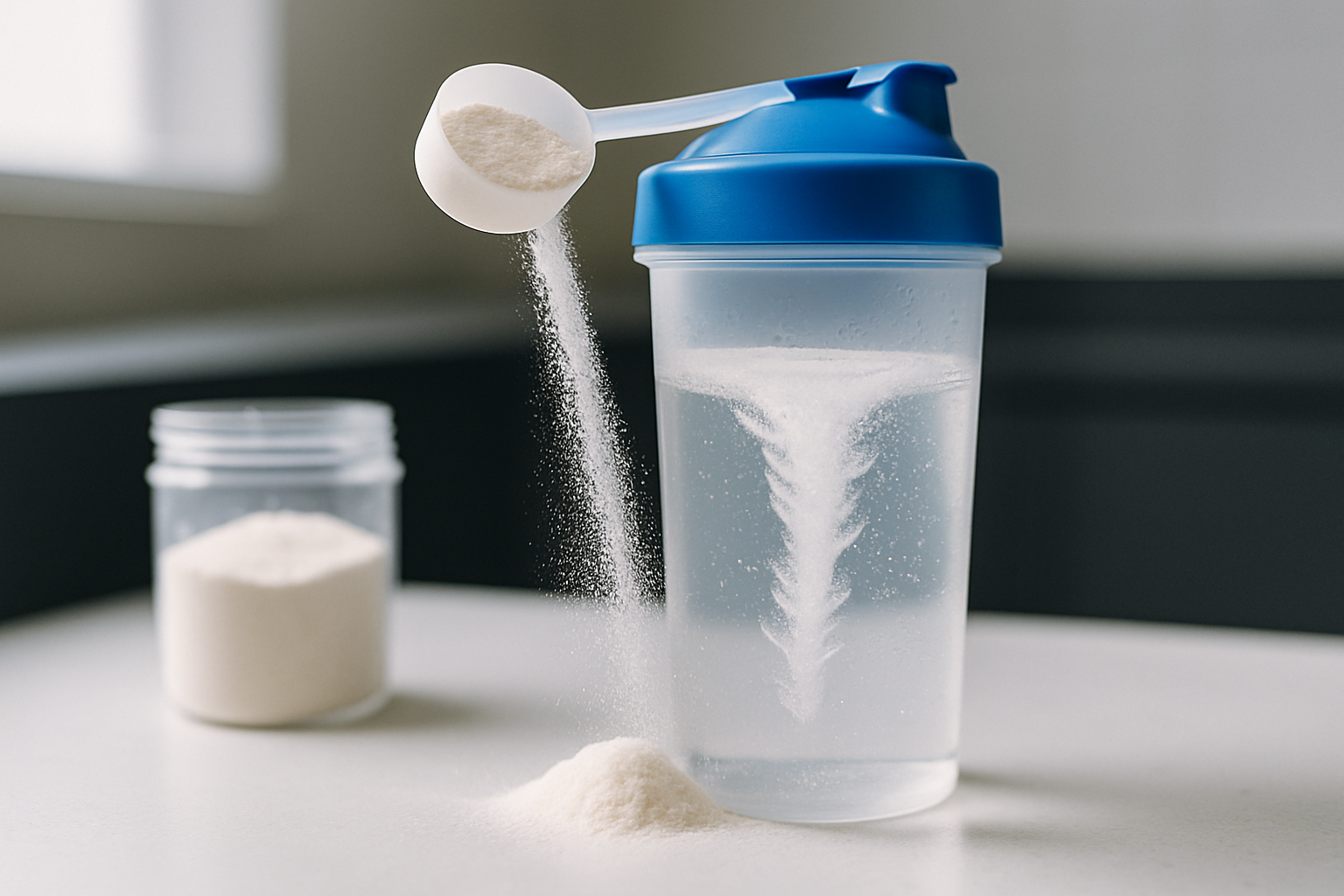
Optimum Nutrition micronized creatine is still just creatine monohydrate, and micronized mainly means the powder particles are smaller for easier mixing. This is the key point behind most searches for optimum nutrition micronized creatine: micronization can improve texture and suspension, but it does not make creatine biologically stronger than standard monohydrate.
Creatine monohydrate is a compound your body stores mostly in muscle, where part of it becomes phosphocreatine, a high-energy phosphate donor that helps regenerate ATP, the cell's immediate energy currency, during short bursts of hard effort. When a label says micronized, it is describing the particle size of the powder, not a different creatine molecule. Smaller particles can reduce grittiness in a shaker and may make the product feel easier on the stomach for some people, but the end goal is still the same: raise intramuscular creatine stores over time.
That distinction matters because supplement marketing often blurs three different questions:
- Form: monohydrate, HCl, nitrate, gummies, capsules.
- Particle size: regular vs micronized.
- Quality controls: purity, contamination testing, and manufacturing standards.
Only the first category changes the chemical form. Micronized monohydrate remains monohydrate. If you want the deeper science on why plain monohydrate still wins, see Monohydrate Is Still King in 2026 and our explainer on micronized creatine.
In practical use, most people notice three things with a micronized powder:
- It disperses faster in water or a shake.
- It leaves less sediment at the bottom of the glass.
- It may feel a bit gentler if you were sensitive to coarse powders.
What you should not expect is faster saturation, bigger muscle gains, or superior strength results purely because the powder is micronized. The 2021 JISSN review on common creatine questions and misconceptions reinforces that monohydrate remains the reference form against which alternatives are judged, and better evidence does not currently support paying extra just for a different label story. See Antonio et al. (2021).
So, in a plain-language ON creatine quality review, micronization is a convenience feature, not a performance upgrade. Treat it as a nice-to-have, not the reason to buy.
Why it works: the mechanism behind strength, power, and muscle gains
Creatine works by increasing the amount of creatine and phosphocreatine stored in muscle, which helps you regenerate ATP faster during repeated short, hard efforts. That single mechanism explains why a product like ON creatine can help in the gym even though it is not a stimulant and does not create a dramatic “feel” after one scoop.
ATP is the immediate fuel your muscles use to contract, but the amount stored in muscle is small and can power only a few seconds of maximal effort. Phosphocreatine acts like a rapid backup system by donating a phosphate group to rebuild ATP. When muscle stores are fuller, you can often sustain slightly more total work across sets, sprints, jumps, or repeated bursts. Over weeks and months, that extra training quality can translate into more strength and more lean mass gain.
This is why creatine tends to help most with:
- Heavy resistance training
- Sprinting and repeated sprint sports
- Jumping and explosive efforts
- High-intensity interval work
- Training volume across multiple hard sets
It is also why creatine is less magical for long, steady endurance performance unless the sport includes repeated surges, accelerations, or strength demands. The International Olympic Committee consensus on supplements recognises creatine as one of the few supplements with strong evidence for performance use in appropriate contexts. See IOC consensus on dietary supplements.
How much difference should you expect? Not overnight transformation. Real-world creatine benefits are usually modest per workout but meaningful over time: another rep, slightly better repeat sprint output, slightly more quality work done across a mesocycle. Those small edges stack.
There are also secondary mechanisms worth understanding. Creatine can increase cell hydration inside muscle, and that fuller cell state may support anabolic signalling and training capacity. It may also help glycogen storage in some contexts and support recovery between intense bouts. But the primary reason any optimum nutrition creatine canada buyer should care is simpler: if the powder is genuine monohydrate, it can help you train harder and recover your immediate energy system faster.
If you want the full beginner-friendly science background, start with what is creatine and then our performance deep dives on creatine and ATP and the creatine phosphate system.
Exactly how to take ON creatine for best results
The best way to take ON creatine is to use 3 to 5 grams every day, at any time you can stick to consistently, with enough fluid to make it comfortable to drink. This is the most practical answer for beginners searching on creatine canada or wondering how to use a new tub correctly.
Here is the simplest step-by-step protocol:
- Pick your dose. Start with 3 g daily if you are smaller-bodied or cautious with digestion, and 5 g daily if you are average to larger-bodied or want the standard maintenance dose.
- Choose your timing. Take it whenever you are most likely to remember it: after training, with breakfast, or with your post-workout shake. Timing matters far less than consistency.
- Mix it well. Add the powder to water, a protein shake, or another non-acidic drink you already tolerate well. Warm water can improve dissolution.
- Take it every day. Training day, rest day, travel day, deload week. Muscle saturation is maintained by regular intake, not by workout-only use.
- Give it time. Without loading, expect roughly 3 to 4 weeks to reach near-full muscle saturation.
If you want results faster, you can load:
- Loading option: 20 g per day split into 4 doses of 5 g for 5 to 7 days.
- Then maintain: 3 to 5 g per day.
Loading is optional, not necessary. It simply speeds up saturation. Many people skip it to avoid stomach upset. If you want personalised numbers, use our creatine dosage calculator and the full guide on how to take creatine.
Three practical tips make a big difference:
- Do not dry scoop it. Creatine works through total daily intake, so there is no benefit to taking it in an uncomfortable way.
- Do not cycle it. There is no good evidence that healthy users need on/off phases.
- Do not panic if you miss one day. Missing a single day does not erase muscle stores; just resume normal dosing the next day.
If you are using Optimum Nutrition micronized creatine and it seems to sit at the bottom of the cup, that is normal. Creatine does not need to dissolve perfectly to work. You can swirl, sip, and rinse the remaining sediment with another splash of water.
In short, the best ON creatine protocol is boring on purpose: one small daily dose, every day, for months rather than days.
The right dose by body weight, training goal, and urgency
The right creatine dose for most people using ON creatine is still 3 to 5 grams daily, but body size, diet, and how quickly you want saturation can justify small adjustments. If you are comparing products, remember that the scoop size on the label is less important than the number of grams of actual creatine monohydrate you take.
Below is a practical dosing framework for monohydrate. If you want finer personalisation, see how much creatine per day and our calculator.
| Body weight / goal | Daily maintenance | Loading option | Best use case |
|---|---|---|---|
| Under 60 kg | 3 g/day | 15-20 g/day split doses for 5-7 days | Beginners, smaller athletes, cautious digestion |
| 60-90 kg | 3-5 g/day | 20 g/day split into 4 x 5 g for 5-7 days | Most lifters and field/court athletes |
| Over 90 kg | 5 g/day | 20 g/day split doses for 5-7 days | Larger strength or power athletes |
| Vegetarian or vegan | 5 g/day | 20 g/day split doses for 5-7 days | Often lower baseline stores, may notice stronger response |
| Need fastest saturation | 3-5 g/day after loading | 20 g/day split doses for 5-7 days | Short runway before training block or competition phase |
For specific goals:
- Strength and muscle gain: 5 g/day is a simple default.
- General fitness and beginners: 3 g/day is often enough if taken consistently.
- Older adults: 3 to 5 g/day alongside resistance training is the practical evidence-based range.
- Women: the same evidence-based range applies; there is no special low “women's dose” required just because the user is female.
If you are loading and get cramping, loose stools, or bloating, the issue is usually dose concentration, not the ingredient itself. Split doses more evenly, take them with meals, or skip loading entirely. If you want the full troubleshooting playbook, see creatine loading phase and creatine digestive side effects.
The most important principle in any ON creatine monohydrate review is this: a premium-looking tub cannot overcome underdosing. A cheap, well-made monohydrate taken at the right dose daily will outperform an expensive brand taken inconsistently.
When to take it, how long it takes to work, and what results are realistic
Creatine timing matters much less than daily adherence, and most people notice benefits after muscle stores become saturated rather than after a single serving. That means the real question is not whether to take ON creatine before or after your workout, but whether you can take it every day for long enough to let the physiology work.
Without a loading phase, most users reach near-full saturation in about 3 to 4 weeks. With loading, many reach it within about a week. Once saturated, the product supports training performance in the background rather than delivering a stimulant-like buzz.
A realistic week-by-week expectation looks like this:
- Week 1 with loading: some users notice fuller muscles or a small increase in body weight from intracellular water.
- Weeks 2-3: slightly better repeat effort performance, better training volume, and marginally stronger later sets may start to show.
- Weeks 4-8: strength progression and gym performance improvements become easier to notice if training and protein intake are already decent.
- Weeks 8-12: the accumulated effect is usually clearer in load progression, total reps, and lean mass trends.
What should you feel? Often, not much acutely. Creatine is not caffeine. Many people think it is “not working” because they do not feel a rush. A better test is whether you are recovering slightly better between hard sets, losing fewer reps across sets, or adding load over time. For more detail, read how long does creatine take to work and realistic creatine results.
As for timing, the practical hierarchy is:
- Take it daily.
- Take it at a time you remember.
- If you want a slight practical edge, pair it with a meal or post-workout shake because that routine improves consistency and is easy to repeat.
There is no strong evidence that ON creatine must be taken pre-workout to work. There is also no good reason to reserve it for training days only. If your search was optimum nutrition creatine canada timing, the answer is simple: pick a repeatable time and stick to it.
If you want a deeper timing breakdown, see when to take creatine and creatine on rest days.
Who ON creatine is best for, and who should think twice
Optimum Nutrition creatine is best for people who want a plain, mainstream creatine monohydrate powder without unnecessary extras. That includes beginners, women, older adults, and many athletes, because the physiological benefits of creatine are not limited to young male bodybuilders.
Good candidates include:
- Beginners: Creatine can help new lifters build momentum because it supports training quality early on, and plain monohydrate is simpler than complicated pre-workouts.
- Women: Women can use the same monohydrate dosing framework as men, and common fears about “bulking” confuse intracellular water with fat gain. For a full breakdown, see creatine for women.
- Older adults: Creatine plus resistance training can support muscle function and help counter age-related declines in strength and lean mass.
- Team-sport and power athletes: Hockey, football, sprint, CrossFit, basketball, and repeated-effort sports fit creatine's mechanism well.
- Vegetarians and vegans: Because baseline dietary creatine intake is lower, response can be especially noticeable. See creatine for vegetarians.
Who should be more cautious?
- Anyone with known kidney disease or under medical evaluation for kidney issues should speak with a clinician before supplementing.
- Anyone pregnant or breastfeeding should use extra caution because evidence is not yet strong enough for routine broad recommendations.
- People on medications affecting kidney function, fluid balance, or relevant lab monitoring should clear it with their healthcare provider.
The Mayo Clinic summary and broader sports nutrition literature generally consider creatine safe for healthy adults when used appropriately, but that does not mean every person in every medical context should self-prescribe it. See Mayo Clinic — Creatine.
There is also a sport-specific nuance. If you compete in a weight-class sport or a sport where every kilogram matters, the mild water-related gain that often comes with saturation may be a downside in some phases. In those cases, creatine can still be useful, but the timing of loading, maintenance, and weigh-in strategy matters more.
So if your question is who is ON creatine for?, the answer is most healthy adults seeking strength, power, or lean-mass support. If your question is whether everyone should take it, the answer is no; context still matters.
Safety, side effects, and the kidney myth most buyers still get wrong
Creatine monohydrate is well-supported as safe for healthy adults at standard doses, and the most common side effects are mild digestive issues or temporary water-related weight gain rather than organ damage. This is one of the most important parts of any serious optimum nutrition creatine review because fear-based myths still distort buying decisions.
The 2017 ISSN position stand and the 2021 review of common misconceptions both reinforce that creatine is one of the most studied sports supplements and is generally safe when used as directed in healthy populations. The confusion often comes from creatinine, a breakdown product measured on blood tests. Supplementing creatine can increase creatinine slightly in some users because there is more creatine turnover, but that does not automatically mean kidney damage. It can, however, complicate interpretation if your clinician does not know you supplement. See Kreider et al. (2017) and Antonio et al. (2021).
Common, usually manageable side effects include:
- Water-related weight gain: often a small early increase from more water stored inside muscle, not fat gain.
- Bloating or stomach discomfort: more common with large single doses or aggressive loading.
- Loose stools: usually a dosing or mixing issue rather than a sign the ingredient is harmful.
How to minimise side effects:
- Use 3 to 5 g daily instead of loading.
- Split larger intakes into smaller doses.
- Take it with food if your stomach is sensitive.
- Drink normally and do not assume you need extreme water intake.
Myths worth debunking:
- Myth: Creatine is a steroid. Fact: It is not a hormone and not an anabolic steroid.
- Myth: Creatine dehydrates you. Fact: Standard use does not support the old dehydration myth in healthy users.
- Myth: Creatine harms healthy kidneys. Fact: Current evidence does not support that claim in healthy people at recommended doses.
For a deeper myth breakdown, visit creatine myths debunked, is creatine safe, and the kidney myth explained.
In short, ON creatine does not raise any special safety red flags beyond the usual monohydrate considerations. The bigger risk for most buyers is misunderstanding lab markers or using poor dosing habits.
ON creatine quality in Canada: what to check before you buy
When buying Optimum Nutrition creatine in Canada, you should verify legitimacy, label compliance, and quality signals rather than assuming every listing online is equally trustworthy. This is where an optimum nutrition creatine canada review becomes different from a generic U.S.-focused review.
Canadian buyers should look for:
- A legitimate Canadian seller: authorised retailers, established supplement stores, or major chains with clear return policies.
- Proper label details: ingredient list, serving size in grams, lot coding, and importer or distributor information where applicable.
- Natural Product Number (NPN) when sold as a natural health product: an NPN is Health Canada's product licence identifier for authorised natural health products.
- Testing and transparency: brand-level or product-level third-party testing is a major plus, especially for competitive athletes concerned about contamination risk.
Here is the buying framework we recommend:
| Buying factor | What good looks like | Why it matters |
|---|---|---|
| Ingredient simplicity | 100% creatine monohydrate | Less filler, easier dose accuracy |
| Form | Powder, unflavoured or lightly flavoured | Usually best value per gram |
| Micronized status | Optional convenience feature | Better mixing, not better results |
| NPN / Canadian compliance | Clear Health Canada-compatible labelling where applicable | Helps confirm lawful Canadian sale route |
| Third-party testing | Independent verification or strong brand transparency | Reduces contamination uncertainty |
| Price per gram | Competitive vs other monohydrates | Best way to judge value |
For competitive athletes, certification matters more than branding. A famous logo does not replace banned-substance risk management. If you are drug tested, consider whether a product is independently screened or whether a different product from our best creatine rankings or brand reviews may better fit your risk tolerance.
If you are comparing ON against other options in this market, also read best creatine monohydrate in Canada, how to choose creatine, and third-party tested creatine in Canada.
Bottom line for Canada: ON creatine can be a strong mainstream buy, but only if the listing is authentic, compliant, and competitively priced per gram.
How ON compares with other creatines: where it wins and where it does not
Optimum Nutrition creatine usually competes well on simplicity and brand familiarity, but it does not automatically win on value, certification, or transparency against every other monohydrate on the Canadian market. That is the honest answer buyers need when searching ON creatine quality or comparing mainstream tubs.
Where ON often does well:
- Recognisable brand: many buyers feel more comfortable with a familiar sports nutrition company.
- Simple formula: plain monohydrate is exactly what most people should buy.
- Micronized texture: easier mixing can improve day-to-day use.
- Wide availability: easier to find than niche specialist brands.
Where ON may not be the category leader:
- Price per gram: some bulk monohydrate products can be cheaper.
- Athlete certification: some competing products are more explicit about NSF or Informed Sport style screening.
- Premium raw-material signalling: some buyers specifically prefer products clearly marketed around a named raw material standard.
The crucial context is that performance differences between legitimate monohydrate powders are usually minimal when purity and dose are comparable. In other words, if Product A and Product B both deliver genuine creatine monohydrate and you take 5 g daily, the deciding factors become trust, convenience, and value.
That is why we recommend comparing products using a strict hierarchy:
- Is it real creatine monohydrate from a trustworthy seller?
- Is the label clear and compliant for your market?
- Is there useful testing transparency?
- What is the cost per gram?
- Does the powder format fit your routine?
If ON scores well on those points for the price you found, it is a good buy. If another product clearly beats it on cost per gram and testing, the brand halo should not stop you from switching. To compare beyond this review, browse our creatine product catalog and related reviews such as Allmax Creatine Review, Leanfit Creatine Review, and Sports Research Creatine Review.
The best summary is simple: ON is a credible mainstream option, not a magical category-breaker. That is often enough, but it is still worth comparison shopping.
The most common ON creatine mistakes, and how to fix each one fast
The most common reason people think ON creatine is not working is not product failure; it is user error. Because monohydrate works through saturation, small routine mistakes can quietly erase the benefit.
Here are the biggest mistakes and the fix for each:
- Mistake 1: Taking it only on workout days.
Fix: Take it daily, including rest days. Saturation falls when intake becomes inconsistent. - Mistake 2: Expecting a stimulant-like feeling.
Fix: Track performance markers such as total reps, sprint repeatability, or working-set load instead of waiting for a buzz. - Mistake 3: Underdosing.
Fix: Make sure you are actually getting 3 to 5 g of creatine monohydrate, not a partial scoop guessed by eye. - Mistake 4: Taking huge single doses.
Fix: Split doses or skip loading if your stomach complains. - Mistake 5: Blaming normal water retention.
Fix: Understand that an early scale increase is often intracellular water, not fat gain. - Mistake 6: Buying from sketchy marketplaces.
Fix: Use trusted Canadian retailers and inspect packaging, seals, and batch details. - Mistake 7: Quitting after one week.
Fix: Give it at least 3 to 4 weeks without loading before deciding it is ineffective.
A smaller but common issue with micronized powders is thinking clumping or sediment means the product has gone bad. Minor sediment is normal. Clumping can happen if moisture gets into the tub, but it does not always mean the product is unusable. Store it cool and dry with the lid tightly closed.
If your main issue is digestion, the fix sequence is straightforward:
- Drop to 3 g/day.
- Take it with food.
- Mix in more water.
- Avoid loading.
- Check whether another ingredient, not the creatine, is the problem if you are using a flavoured blend.
For more troubleshooting, read creatine not working, common creatine mistakes, and how to mix creatine.
In practice, ON creatine success usually comes down to boring consistency, correct dose, and buying a legitimate tub. Get those three right and most of the usual problems disappear.
Bottom line: should Canadians buy Optimum Nutrition creatine?
Yes, Canadians can confidently buy Optimum Nutrition creatine if they want a straightforward creatine monohydrate product from a well-known brand and the price is competitive for the amount of actual creatine provided. That is the final verdict of this optimum nutrition creatine review.
The strongest argument in ON's favour is not that it has a secret formula. It is that it stays close to what the evidence already supports: plain creatine monohydrate, used consistently, in effective doses. For most buyers, that is exactly what a creatine supplement should be.
The reasons not to buy it are also clear and rational:
- The price per gram is worse than an equally trustworthy competitor.
- You need explicit third-party athlete certification.
- You prefer another product with stronger Canadian compliance transparency or better retail availability in your province.
If you are deciding today, use this fast checklist:
- Confirm it is plain creatine monohydrate.
- Confirm the seller is legitimate in Canada.
- Check for NPN and proper label details where applicable.
- Compare the cost per gram against at least two alternatives.
- Buy the size you will actually finish while the product stays fresh.
- Plan your daily dose before the tub arrives.
Our practical recommendation is simple. If ON creatine is priced fairly and sourced from a trustworthy Canadian retailer, it is a solid buy for beginners and experienced lifters alike. If another reputable monohydrate offers the same simplicity with better testing disclosure or better value, you should have no hesitation choosing the alternative instead. In this category, evidence beats branding.
For your next step, compare it against our best creatine rankings, use the creatine dosage calculator, and explore the most relevant follow-up guides: daily dosing, timing, and safety.
Final takeaway: Optimum Nutrition creatine is likely a good, effective monohydrate product, but the smartest Canadian buyer should judge it on authenticity, label transparency, testing, and value per gram, not on brand recognition alone.
Optimum Nutrition Creatine Review: The numbers that actually matter
- 3-5 g/day Standard daily maintenance dose — The evidence-based intake range for most healthy adults using creatine monohydrate.
- 20 g/day Typical loading dose — Usually split into 4 doses for 5-7 days to saturate muscle stores faster.
- 5-7 days Time to saturate with loading — A loading phase speeds results but is optional.
- 3-4 weeks Time to saturate without loading — Consistent daily use matters more than precise timing.
Frequently Asked Questions
Is Optimum Nutrition creatine good?
Yes, Optimum Nutrition creatine is generally a good choice because it uses creatine monohydrate, the most studied and most reliable form of creatine. Its real value depends on whether you are buying an authentic product from a legitimate seller at a competitive cost per gram, because plain monohydrate products tend to perform similarly when purity and dosing are comparable.
What does micronized mean on Optimum Nutrition creatine?
Micronized means the creatine powder has been processed into smaller particles for easier mixing and a less gritty texture. It does not mean the creatine is stronger or more effective than regular creatine monohydrate once muscle stores are saturated.
How much ON creatine should I take per day?
Most people should take 3 to 5 grams of ON creatine per day. A loading phase of 20 grams per day split into 4 doses for 5 to 7 days is optional if you want faster saturation, but daily maintenance without loading still works well.
Do I need to load Optimum Nutrition creatine?
No, you do not need to load Optimum Nutrition creatine for it to work. Loading simply fills muscle stores faster, while 3 to 5 grams daily without loading usually reaches near-full saturation in about 3 to 4 weeks.
When should I take Optimum Nutrition creatine?
You can take Optimum Nutrition creatine at any time of day that helps you remember it consistently. Post-workout or with a meal is convenient for many people, but timing is much less important than taking the right dose every day.
Does ON creatine cause bloating or weight gain?
ON creatine can cause a small early increase in body weight, but that is usually water stored inside muscle rather than fat gain. If you feel bloated, the problem is often large single doses or aggressive loading, and reducing the dose or splitting it can help.
Is Optimum Nutrition creatine safe for women?
Yes, Optimum Nutrition creatine is generally safe for healthy women when used at standard monohydrate doses. Women do not need a special low dose, and common fears about looking bulky confuse normal muscle hydration with unwanted fat gain.
Is ON creatine safe for kidneys?
For healthy adults, standard creatine monohydrate use is not supported by current evidence as harmful to kidneys. People with existing kidney disease, abnormal kidney labs, or medications affecting kidney function should still speak with a healthcare professional before using it.
How do I know if my Optimum Nutrition creatine is working?
You know creatine is working by looking for improved training output over time, not by waiting for a dramatic feeling right after taking it. Common signs include better repeat performance across sets, slightly easier strength progression, and fuller muscles once saturation is reached.
What should Canadians check before buying ON creatine?
Canadians should check that the seller is legitimate, the product label is clear, the ingredient is plain creatine monohydrate, and the listing is competitively priced per gram. Where applicable, Health Canada-friendly labelling and a Natural Product Number add another useful layer of trust.