Does Creatine Make You Thirsty? Hydration and Water Needs
By The Creatine Canada Research Team — Evidence-based supplement analysts
No, creatine does not inherently dehydrate you, but it can make some people feel thirstier because it increases water stored inside muscle and may highlight that your overall fluid intake is too low. In practice, creatine and thirst is usually a hydration-management issue, not a sign that creatine is “drying you out.”
Evidence-based · Cites 4 sources · Editorial standards
Key Takeaways
- Creatine does not act like a diuretic and is not proven to cause dehydration in healthy users.
- A mild increase in thirst can happen, especially during a loading phase or when training hard in heat.
- The standard maintenance dose is 3-5 g of creatine monohydrate per day.
- If you load creatine at 20 g/day for 5-7 days, split it into 4 doses and pay closer attention to fluids.
- Drink to thirst plus enough to keep urine pale yellow most of the day; do not force excessive water.
- Headaches, dry mouth, dark urine, dizziness, and poor training performance point to underhydration, not creatine failure.
- If creatine upsets your stomach or seems to worsen thirst, reduce the dose, take it with food, or skip the loading phase.
Does creatine make you thirsty? The direct answer most people need
Yes, creatine can make some people feel thirstier, but that does not mean creatine dehydrates you. The better way to say it is this: creatine changes where water sits in the body by increasing intracellular water, meaning water stored inside muscle cells, and that shift can make your normal fluid intake feel less adequate.
If you searched “does creatine make you thirsty,” the practical answer is that mild thirst is possible, especially in the first week or two, during a loading phase, or when you also train hard, sweat heavily, or eat a high-protein, high-sodium diet. For many people, however, creatine causes no noticeable change in thirst at all.
The reason confusion persists is that people often mix up three different things:
- Water retention: creatine increases water held inside muscle tissue, which is expected and often part of why muscles look fuller.
- Thirst sensation: some users notice dry mouth or thirst, particularly if they started creatine and intensified training at the same time.
- Dehydration: a true fluid deficit that shows up as dark urine, dizziness, headaches, reduced performance, or feeling unusually hot.
Those are not the same thing. Creatine can increase cellular water without causing dehydration. In fact, long-standing concerns that creatine causes cramping, dehydration, or heat illness have not held up well in the broader evidence. The 2017 ISSN position stand concluded that creatine monohydrate is effective and safe, and later reviews have also pushed back on the idea that it inherently causes dehydration.
For beginners, the most useful rule is simple: if you start with 3-5 g/day of creatine monohydrate, drink fluids normally, and monitor thirst, urine colour, and workout performance, you will usually do just fine. If you want help with the exact amount, our creatine dosage calculator and guide on how much water should you drink with creatine make the process more concrete.
Bottom line: creatine and thirst can go together, but creatine does not appear to dehydrate healthy people when used at normal doses.
Why creatine can change thirst: the actual water-shift mechanism
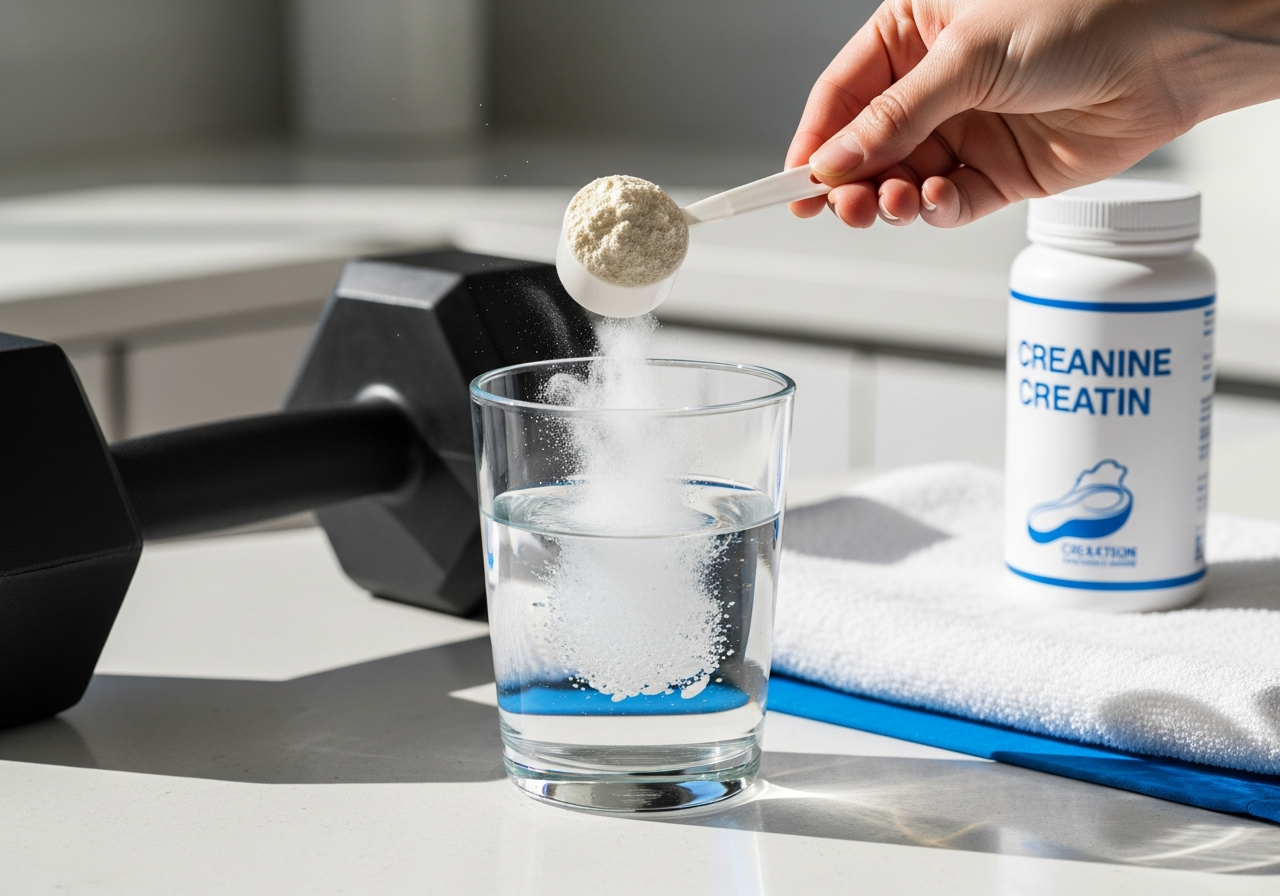
Creatine can affect thirst because it raises muscle creatine and phosphocreatine stores, and that tends to pull more water into muscle cells as those stores increase. Phosphocreatine is the stored form of creatine that helps rapidly regenerate ATP, the cell’s immediate energy currency, during short, intense efforts like lifting, sprinting, and jumping.
Here is the simplified mechanism:
- You take creatine monohydrate.
- Over days to weeks, muscle creatine stores rise toward saturation, meaning they approach their practical upper limit.
- As muscle creatine content rises, water is drawn into the muscle cell.
- That can slightly increase body mass and muscle fullness.
- In some people, that intracellular water shift may increase thirst sensation if total daily fluid intake does not keep pace.
This is one reason people sometimes notice the scale move up by roughly 1-2 kg in the first 1-2 weeks, especially with loading. That early gain is usually water stored in muscle, not fat. If you want the full explanation, see does creatine make you gain weight.
Importantly, water moving into muscle is not the same as water being lost from the body. Creatine is not working like a classic diuretic. The misconception likely grew from the fact that thirst, bloating, water retention, sweating during training, and temporary scale changes can happen around the same time.
The more likely real-world causes of “creatine thirst” are usually a combination of:
- Starting with a high loading dose
- Taking large single servings instead of split doses
- Hard training with substantial sweat loss
- Hot or humid conditions
- Not drinking enough across the full day
- Using flavoured products with sodium or sweeteners that encourage drinking less plain water
The 2021 JISSN review on creatine misconceptions specifically challenged the common claim that creatine causes dehydration and muscle cramping. That does not mean nobody ever feels thirstier on creatine; it means the symptom should not automatically be interpreted as evidence of dehydration caused by creatine itself.
If you want the shortest evidence-based summary, it is this: creatine changes fluid distribution more than it causes fluid loss.
Does creatine dehydrate you? What the best evidence actually says
No, creatine is not supported by the best evidence as a cause of dehydration in healthy people. That is the most important correction to the common “creatine dehydration thirst” myth.
The strongest practical consensus comes from sports nutrition reviews and position stands, not from one flashy study. The ISSN position stand and the 2021 JISSN review both support the view that creatine monohydrate is safe for healthy individuals and that concerns about dehydration, cramping, or heat intolerance are often overstated or unsupported.
Why does this matter? Because many gym-goers hear that creatine “pulls water into the muscles” and assume the rest of the body must therefore become dried out. That is an intuitive story, but the body is more dynamic than that. Total body water, renal regulation, thirst signalling, sodium balance, and sweat losses all interact. A shift in water compartment does not automatically produce clinically meaningful dehydration.
In practice, what the evidence supports is:
- Creatine monohydrate is the best-studied form and the standard reference for safety and effectiveness.
- Normal maintenance dosing at 3-5 g/day is well established.
- Loading at about 20 g/day for 5-7 days can speed saturation but may increase the odds of temporary GI discomfort, water-weight changes, or thirst sensations.
- Hydration still matters, especially for athletes, but that is true with or without creatine.
Where nuance matters: if you are an athlete doing two-a-days in summer heat, cutting weight, restricting fluids, using stimulants, or already underhydrated, then creatine does not protect you from those mistakes. Thirst during creatine use in that context may reflect your training environment, sweat loss, or poor intake pattern more than the supplement itself.
The International Olympic Committee’s supplement consensus also treats creatine as one of the more evidence-based performance supplements for appropriate use in sport. That is not how an inherently dehydrating supplement would typically be regarded.
So if you are asking, “does creatine dehydrate you?” the best plain-English answer is: not in healthy users taking standard doses, but your training, heat exposure, and fluid habits can still leave you dehydrated.
Exactly how much water to drink with creatine, step by step
The best way to manage creatine and thirst is not to chase a magic number of litres, but to pair a sensible creatine dose with steady daily fluid habits and a few easy hydration checks. Most people do well by taking creatine with a full glass of water and then drinking normally to thirst across the day.
Here is a practical step-by-step system:
- Choose the right dose. Start with 3-5 g of creatine monohydrate daily. If you are a beginner, skipping the loading phase often makes hydration easier to manage.
- Take it with fluid. Mix your dose in roughly 250-500 mL of water, or add it to a shake if you prefer. More matters for comfort than for “absorption hacks.”
- Anchor hydration to meals. Have a drink with breakfast, lunch, dinner, and your training session instead of trying to chug everything at once.
- Watch urine colour. Pale yellow most of the day is a simple field check. Dark apple-juice colour suggests you need more fluid.
- Account for sweat loss. If you train hard, in heat, or for long sessions, drink extra fluid before, during, and after. Some people also benefit from electrolytes when sweating heavily.
- Respond to symptoms, not internet panic. Dry mouth, headache, unusual fatigue, dizziness, and performance drop-off are better cues than forcing huge water intakes “just because you’re on creatine.”
A useful beginner target is this: take creatine with one full glass of water and make sure your total daily fluid intake increases modestly if your thirst or sweat losses increase. There is no evidence-based rule that everyone must drink a fixed extra litre solely because they started creatine.
Common mistakes include:
- Dry scooping instead of mixing properly
- Taking 10-20 g at once
- Using creatine during intense summer training without changing fluid habits
- Confusing caffeine-related thirst or frequent urination with creatine effects
For deeper dosing help, see how much creatine per day, how to take creatine, and how to mix creatine. If you want a dedicated hydration walkthrough, the full companion guide is how much water should you drink with creatine.
The key is consistency: small, regular fluid intake beats occasional over-drinking every time.
Best creatine dose by body weight and goal, and when thirst is more likely
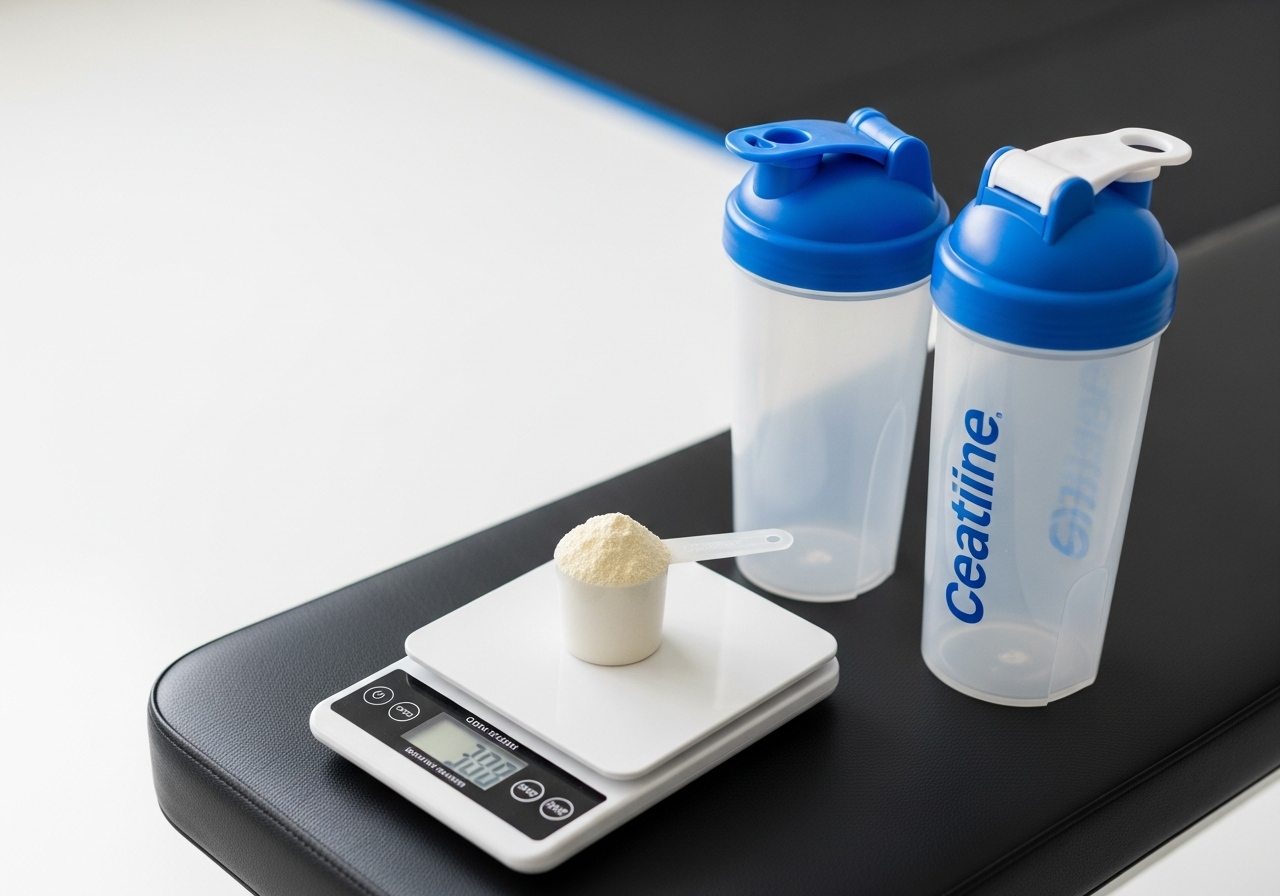
The dose that works for most adults is 3-5 g of creatine monohydrate per day, regardless of whether your goal is strength, muscle gain, sprint performance, or general training support. Thirst is usually more likely when the dose is aggressive, the servings are large, or the person is also sweating heavily.
There are two mainstream ways to take creatine:
- Maintenance-only approach: 3-5 g/day every day. This reaches muscle saturation more slowly, typically over about 3-4 weeks, but tends to be easier on the stomach and may reduce noticeable thirst or water-weight shifts.
- Loading approach: about 20 g/day for 5-7 days, split into 4 doses of 5 g, then 3-5 g/day. This saturates muscle faster, often within about a week, but is more likely to produce temporary fullness, GI upset, or thirst sensations.
Body weight can help refine the plan, especially for smaller or larger athletes:
| Body weight | Simple daily maintenance | Optional loading phase | Hydration note |
|---|---|---|---|
| Under 60 kg | 3 g/day | 15-20 g/day split for 5-7 days | Smaller users may notice thirst sooner if they take big single doses |
| 60-90 kg | 3-5 g/day | 20 g/day split into 4 x 5 g | Most common evidence-based range |
| Over 90 kg | 5 g/day | 20 g/day split, sometimes slightly more in practice | Watch sweat losses if training hard or in heat |
These are practical guidelines, not rigid medical rules. If your main concern is “creatine water intake,” start low and stay consistent. A beginner does not need to load to get results.
Goal matters too:
- Muscle and strength: 3-5 g/day is enough for most.
- Rapid event prep or quick saturation: loading is optional but not required.
- Endurance athletes using creatine strategically: water-weight changes may matter more, so gradual dosing can be preferable.
If you want your exact starting point, use the creatine dosage calculator. If you are deciding whether loading is worth it, read creatine loading phase. For a maintenance-only approach, creatine maintenance dose goes deeper.
The take-home message is simple: higher and faster dosing increases the chance you notice thirst, but it does not make creatine inherently dehydrating.
What to expect in the first month: thirst, water weight, and results week by week
If creatine is going to affect your thirst, you will usually notice it early, not months later. Most changes in thirst, body water, and scale weight show up in the first 1-2 weeks, especially if you do a loading phase.
Here is a realistic timeline for most healthy users:
Days 1-3: If you start with 3-5 g/day, you may notice nothing at all. If you load at 20 g/day split into 4 doses, you might notice fuller muscles, mild thirst, or stomach sensitivity if doses are too large or not taken with enough fluid.
Days 4-7: Loading users may see a small increase in body weight and muscle fullness. Thirst can increase if training is hard or daily drinking habits have not adjusted. Maintenance-only users often still feel normal.
Week 2: Many loading users are fully or nearly saturated by now. Some report better gym performance in repeated hard efforts, a slightly better pump, or improved training volume. If thirst was going to be a thing, it often settles once intake habits normalize.
Weeks 3-4: Maintenance-only users are now approaching meaningful saturation. At this stage, most users judge creatine by training outcomes, not thirst. Typical signs it is working include an extra rep, slightly better repeat sprint output, improved strength progress over time, or muscles looking a bit fuller.
How to tell the difference between normal adjustment and a problem:
- Normal: slight thirst, fuller muscles, small early weight increase, no performance decline.
- Needs adjustment: bloating, stomach upset, headache, dry mouth, dark urine, or feeling flat in training.
- Get medical advice: ongoing vomiting, severe dizziness, inability to keep fluids down, or concerns due to kidney disease, medication use, or another medical condition.
If you are not sure whether creatine is “working,” remember that it is not a stimulant. Creatine should not feel like an instant buzz; it works by gradually increasing phosphocreatine availability in muscle. For the expected performance timeline, see how long does creatine take to work.
If your only symptom is mild thirst, the fix is often boring and effective: slightly more fluid, better dose splitting, and patience for a week or two.
Who should monitor hydration more carefully on creatine
Most healthy adults can use creatine without unusual hydration issues, but some groups should monitor fluid status more closely because their training demands or physiology make thirst signals more meaningful. The supplement is usually not the problem; the context is.
Beginners: New users often notice every body sensation and blame creatine for all of them. In reality, thirst is commonly linked to starting harder training, eating more protein, or changing workout timing. Beginners usually do best with 3-5 g/day, no loading, taken consistently.
Women: Women can use the same evidence-based dosing principles as men, usually 3-5 g/day. Concerns about “water retention” often mean fear of looking puffy, but the typical creatine-related water shift is inside muscle, not necessarily the under-skin puffiness people imagine. If you want more context, see creatine for women.
Older adults: Creatine can be valuable for resistance training support, but older adults may already drink less than ideal or use medications that affect fluid balance. A simple routine of creatine with meals and visible water intake can help.
Athletes in heat: Hockey players, football players, runners, CrossFit athletes, and labour-intensive trainees in hot environments should pay close attention to sweat loss. Here, creatine does not replace the need for structured hydration and, when appropriate, electrolytes.
Vegetarians and vegans: These users may respond especially well to creatine because baseline stores can be lower, but the same hydration principles apply. Response may be more noticeable, not riskier.
People cutting weight: If you are in a weight-class sport or doing aggressive dieting, thirst and water shifts become harder to interpret. This is a situation where timing, body-mass goals, and coach oversight matter.
People with kidney disease or medical complexity: Although creatine is considered safe for healthy people, anyone with known kidney disease, relevant medical conditions, or medication concerns should speak with a qualified clinician before use. For more on safety, read is creatine safe and who should not take creatine.
In short, thirst matters most when your environment, sweat rate, body-mass goals, or medical context already make hydration tricky.
If creatine makes you thirsty, headachy, or bloated, do this
If creatine seems to make you thirsty, the fix is usually to adjust the protocol, not to quit immediately. Most hydration-related complaints improve when you lower the dose per serving, mix it properly, and stop treating creatine like a pre-workout shot.
Use this troubleshooting checklist:
- Reduce single-dose size. If you are taking 10 g at once, switch to 3-5 g/day or split your loading dose into 4 smaller servings.
- Take it with more fluid. Mix each serving in 250-500 mL water rather than swallowing it with a sip.
- Take it with food if your stomach is sensitive. This often helps with nausea or cramping.
- Review your training context. Are you sweating more than usual, using sauna sessions, or training in summer heat?
- Check caffeine and alcohol. Either can complicate how thirsty you feel and how well you recover.
- Use monohydrate from a reputable brand. Fancy forms are not automatically better tolerated.
Here is how common complaints usually map out:
- Dry mouth or thirst: usually more fluids across the day, not necessarily all at once.
- Headache: often underhydration, poor sleep, too much caffeine, or heat exposure rather than creatine itself. If this is your main issue, see does creatine cause headaches.
- Bloating or stomach upset: often too much at once, low-quality mixing, or a loading phase that your gut does not love. See does creatine cause bloating and creatine digestive side effects.
- Frequent urination: may just reflect increased fluid intake. See does creatine make you pee more.
When should you stop and reassess? If symptoms are persistent, severe, or clearly worsening despite lowering the dose and fixing hydration, pause use and consider medical advice, especially if you have a relevant health condition.
The main principle is this: creatine problems are often protocol problems. A conservative, consistent monohydrate routine solves most of them.
Myths debunked: thirst does not prove dehydration, and water retention is not fat gain
The biggest myth in this topic is that feeling thirsty on creatine proves creatine is dehydrating you. That conclusion is too simplistic and usually wrong.
Let’s clear up the most common myths:
Myth 1: Creatine dries out the rest of your body by pulling water into muscle.
Reality: creatine increases intracellular water in muscle, but that is not the same as causing whole-body dehydration. The evidence does not support creatine as an inherent dehydrator in healthy users.
Myth 2: If you feel thirstier, creatine is unsafe for you.
Reality: mild thirst can simply mean your intake has not yet matched your training, heat exposure, or dosing pattern. It is a cue to adjust habits, not automatic proof of harm.
Myth 3: Water retention from creatine means you are getting bloated or fat.
Reality: early weight gain on creatine is usually water in muscle cells, not fat mass. Some people do feel transient bloating, but that is more common with loading or large servings.
Myth 4: You need exotic forms like HCL to avoid thirst or hydration issues.
Reality: creatine monohydrate remains the most studied and most cost-effective form. Claims that other forms eliminate all side effects are stronger in marketing than in evidence. See creatine monohydrate vs HCL and best type of creatine.
Myth 5: You must force huge amounts of water if you take creatine.
Reality: over-drinking is unnecessary and can be counterproductive. Drink enough to cover thirst, daily needs, and sweat losses; do not turn hydration into a contest.
Why myths persist:
- People start creatine during hard training blocks
- Summer heat and sweat losses get blamed on the supplement
- Scale increases are misread as “bad water retention”
- Old locker-room warnings keep getting repeated
If you want a broader reality check, our creatine myths debunked page and creatine myths vs facts guide unpack the bigger picture.
The truth is less dramatic and more useful: creatine may change how hydrated you feel, but that does not mean it is harming your hydration status.
Buying creatine in Canada: what to choose if you want fewer side-effect surprises
If you want the lowest-drama creatine experience, buy a simple, reputable creatine monohydrate product and dose it correctly. The product choice matters less than the form, label quality, and dosing discipline.
For Canadian buyers, the main checkpoints are straightforward:
- Choose creatine monohydrate. It is the reference form used in most evidence.
- Look for clear dosing in grams. Avoid vague “proprietary” blends.
- Prefer products with a Health Canada NPN when applicable. An NPN, or Natural Product Number, is the product licence number used on many regulated natural health products in Canada.
- Consider third-party testing or strong brand transparency.
- Be cautious with flashy hydration claims. Electrolytes can be useful for heavy sweaters, but they do not make basic creatine inherently superior.
Here is a simple comparison:
| Option | Best for | Pros | Potential downside |
|---|---|---|---|
| Unflavoured creatine monohydrate powder | Most people | Best evidence, easy 3-5 g dosing, best value | Texture can be slightly gritty |
| Micronized monohydrate | People who hate grit | Mixes a bit easier, same core ingredient | May cost more |
| Capsules | Travel or convenience | No mixing, easy to pack | Usually pricier per gram and takes many capsules |
| Flavoured blends with electrolytes | Heavy sweaters who want convenience | May encourage fluid intake during training | Can cost more and add ingredients you do not need |
If thirst is your concern, the best “buying hack” is not a miracle form. It is buying a product you can dose accurately and take consistently. Start with a plain monohydrate you tolerate well, then adjust your hydration habits if needed.
For product selection help, see our best creatine rankings, creatine brand reviews, creatine product catalog, and best creatine monohydrate in Canada.
The practical Canadian bottom line: simple, licensed, transparent creatine monohydrate is usually the smartest buy.
Bottom line: how to use creatine without overthinking thirst
No, creatine does not inherently dehydrate you, but yes, it can make some people feel thirstier, especially during loading, hard training, or hot-weather sweating. The right response is usually to tighten up your fluid routine, not to panic about the supplement.
If you want the simplest evidence-based plan, do this:
- Buy a reputable creatine monohydrate product.
- Take 3-5 g/day consistently.
- Mix it in a full glass of water.
- Drink to thirst and keep urine pale yellow most of the day.
- Increase fluids when sweat losses rise.
- Skip loading if you want a gentler start.
That covers the vast majority of people. If you do choose to load, use 20 g/day split into 4 doses for 5-7 days, then drop to maintenance. That faster approach can make thirst, GI upset, and early water-weight changes more noticeable, but it is not necessary for results.
Remember what creatine is supposed to do: it raises muscle creatine and phosphocreatine stores so you can better support short, intense efforts and, over time, training quality. It is not meant to feel like an energy drink, and it is not a sign of failure if the main thing you notice at first is slightly fuller muscles or a bit more thirst.
If you want to keep learning, the most relevant next reads are creatine and dehydration, how much water should you drink with creatine, creatine for beginners, and what is creatine.
The final answer in one sentence: creatine and thirst can be linked, but creatine does not appear to dehydrate healthy people when used at standard doses with normal, sensible hydration.
Creatine, thirst, and hydration: the numbers that matter
- 3-5 g/day Standard maintenance dose — The evidence-based daily amount most adults use to maintain muscle creatine stores.
- 20 g/day Typical loading dose — Usually split into 4 x 5 g servings for 5-7 days to saturate faster.
- 5-7 days Fastest common saturation window — Loading can raise muscle stores quickly, but may make thirst or stomach upset more noticeable.
- 1-2 kg Typical early water-weight increase — Often seen in the first 1-2 weeks, mainly from increased water stored in muscle.
Frequently Asked Questions
Does creatine make you thirsty right away?
Sometimes, yes, creatine can make you feel thirstier in the first few days, especially if you use a loading phase. That early thirst is usually related to increased muscle water storage, larger doses, or not drinking enough for your training load, not proof that creatine is dehydrating you.
Does creatine dehydrate you?
No, creatine is not supported by the best evidence as a cause of dehydration in healthy people using standard doses. You can still become dehydrated while taking creatine if you sweat heavily, train in heat, or simply do not drink enough, but that is different from creatine causing dehydration by itself.
How much water should I drink with creatine?
Take creatine with a full glass of water and then drink enough across the day to satisfy thirst and keep urine pale yellow most of the time. There is no universal rule that everyone needs a fixed extra litre just because they started creatine, but hard training and heat do increase needs.
Why does creatine make my mouth feel dry?
Dry mouth on creatine is usually a sign that your fluid intake has not kept up with your body’s needs, not that creatine is inherently harmful. Large doses, loading, caffeine, heavy sweating, and salty meals can all make dry mouth more noticeable while you are starting creatine.
Is thirst more common during a creatine loading phase?
Yes, thirst can be more noticeable during a loading phase because 20 g/day split into multiple doses increases muscle creatine stores faster and can make early water shifts and stomach sensitivity more obvious. If that bothers you, use 3-5 g/day instead and reach saturation more gradually.
Should I stop taking creatine if it makes me thirsty?
Not necessarily, because mild thirst alone is usually manageable by improving hydration and lowering the dose per serving. If thirst comes with dark urine, dizziness, severe headaches, vomiting, or ongoing symptoms despite adjustments, stop and reassess, and seek medical advice if appropriate.
Can creatine cause headaches from dehydration?
Creatine itself is not well supported as a direct cause of dehydration headaches, but headaches can happen if you are underhydrated, overcaffeinated, training in heat, or taking large doses with too little fluid. In many cases, the fix is better hydration habits rather than stopping creatine altogether.
Does creatine make you retain water in a bad way?
Usually no, because the classic creatine-related water retention is mainly intracellular, meaning inside muscle cells, which is different from looking puffy from subcutaneous water. Some people do feel temporarily bloated, especially during loading, but that is not the same as fat gain or harmful water retention.
Who is most likely to notice thirst on creatine?
People most likely to notice thirst on creatine are those who load aggressively, sweat heavily, train in hot conditions, drink too little overall, or take large single servings. Beginners also tend to notice it more because they are paying close attention to every new body sensation.
What is the best type of creatine if I am worried about thirst or hydration?
Creatine monohydrate is still the best first choice because it is the most studied, the most cost-effective, and the standard form behind the safety evidence. If thirst is your concern, changing the dose and hydration routine usually matters more than switching to a more heavily marketed form.