Does Creatine Make You Pee More? (It's Not a Diuretic — Here's Why)
By The Creatine Canada Research Team — Evidence-based supplement analysts
No—creatine does not act like a diuretic, and for most people it does not make you pee more just because they started taking it. If you notice more urination on creatine, the usual reasons are increased fluid intake, a short loading phase, caffeine, or an unrelated urinary issue rather than creatine itself.
Evidence-based · Cites 4 sources · Editorial standards
Key Takeaways
- Creatine is not a diuretic, and standard doses do not usually increase urination frequency.
- Most "I pee more on creatine" reports are explained by drinking more water, not by creatine forcing fluid out.
- A typical maintenance dose is 3–5 g per day; loading is optional and may briefly change how much fluid you drink.
- Creatine mainly pulls more water into muscle cells, which is intracellular water, not a bladder-stimulating effect.
- Burning urination, urgency, blood in urine, fever, or flank pain are not normal creatine effects and should be assessed medically.
- If creatine upsets your stomach or seems to affect bathroom habits, split the dose, take it with food, and use plain monohydrate.
- In Canada, choose creatine monohydrate with clear dosing, an NPN when applicable, and preferably third-party testing.
Does creatine make you pee more? The direct answer most people need
No, creatine does not normally make you pee more, and it is not considered a diuretic. The shortest accurate answer to queries like does creatine make you pee, does creatine make you urinate more, and do you pee more on creatine is that creatine itself does not typically increase urine output in healthy users taking evidence-based doses.
That matters because creatine gets blamed for almost any change in hydration or bathroom habits. In reality, creatine monohydrate works by increasing muscle creatine stores and phosphocreatine, which is the stored high-energy form that helps regenerate ATP during short, intense efforts. That mechanism improves high-intensity performance and training capacity; it does not work by making the kidneys dump more water into urine.
The common confusion comes from what people change when they start creatine. Many start drinking noticeably more water, begin a loading phase, add a pre-workout with caffeine, or become hyper-aware of normal bathroom patterns. Any of those can make it feel like creatine caused more urination. The 2017 ISSN position stand concluded that creatine monohydrate is effective and generally safe when used appropriately, and being a diuretic is not part of its established effect profile.
If you want the practical takeaway, use plain creatine monohydrate at 3–5 g daily and drink to thirst plus normal workout needs. You do not need to force excessive water because you are taking creatine. If you want help with exact intake, use a creatine dosage calculator or read our guide on how much water to drink with creatine.
There are a few exceptions worth separating from the headline answer. If someone uses a loading protocol of 20 g per day split into four 5 g doses for 5–7 days, they may briefly drink more and notice bathroom changes. If someone develops burning urination, severe urgency, fever, or pain, that is not a normal creatine effect and should not be dismissed as a harmless supplement side effect.
Is creatine a diuretic? No—and the mechanism explains why
No, creatine is not a diuretic, because it does not primarily increase urine production the way true diuretics do. A diuretic increases renal excretion of water and often electrolytes; creatine’s best-established effect is different: it increases intramuscular creatine and phosphocreatine stores, which tends to draw more water into muscle cells rather than push more fluid out through urine.
That distinction is the whole story behind the myth. Creatine increases cellular osmolarity inside muscle tissue, which means water shifts toward the muscle cell. This is why some people gain roughly 0.5 to 2 kg in the first 1–2 weeks, especially with loading: it is mostly water retention inside muscle, not dehydration and not fat gain. We cover that in more detail in does creatine make you gain weight.
Creatine also gets confused with creatinine, which is a waste product measured on bloodwork. Elevated creatinine on a lab panel can make people assume the kidneys are under stress or that urination should increase. Those are separate questions. Creatine supplementation can raise creatinine somewhat because more creatine is available to convert, but that does not automatically mean kidney damage or increased urination. If that topic worries you, see creatine vs creatinine and is creatine bad for your kidneys.
The 2021 JISSN review on common questions and misconceptions about creatine supplementation specifically addressed several myths around fluid balance and safety, reinforcing that many concerns about dehydration and cramping are overstated or unsupported in the general healthy population. The same logic applies here: when people ask does creatine cause excessive urination or does creatine cause more frequent urination, the evidence-based answer is generally no.
If your urination clearly increases after starting creatine, look first at what else changed: water intake, coffee, pre-workout, sodium intake, alcohol, training volume, or anxiety-driven symptom tracking. Those factors are far more plausible causes than creatine monohydrate itself.
Why some people swear creatine makes them pee a lot
People usually think creatine makes them pee more because they change other hydration habits at the same time. When someone asks does creatine make you pee a lot or does creatine cause you to pee more, the most common explanation is not a direct creatine effect but a change in behaviour around creatine use.
- They start forcing water: Many beginners hear that creatine "dehydrates you" and begin drinking litres more than usual. More fluid in means more urine out.
- They use a loading phase: Loading with 20 g per day for 5–7 days often increases thirst, fluid intake, and stomach sensitivity, all of which make bathroom patterns more noticeable.
- They start caffeine too: A new pre-workout, energy drink, or extra coffee can increase urinary frequency, especially in people sensitive to caffeine.
- They notice normal fluctuations: Urination varies with temperature, sweat losses, sodium intake, menstrual cycle, carbohydrate intake, and training volume.
- They have GI upset: Oversized single doses can cause stomach discomfort or loose stools, which some users loosely describe as "creatine messing with fluids." That is a dosing issue, not a diuretic effect.
There is also a psychological factor. Starting a supplement makes people scan for effects. A person who never counted bathroom trips before may suddenly interpret a normal day as abnormal. That does not mean symptoms are imagined; it means attribution is often sloppy.
If you want a cleaner self-test, hold everything else constant for two weeks. Keep caffeine, sodium, water intake, and training similar. Take 3–5 g of creatine monohydrate daily. If urination is only higher on days you deliberately chug extra water or use more caffeine, creatine is not the driver.
This is one reason plain monohydrate is still the best choice. Fancy multi-ingredient products can muddy the picture with stimulants, sugar alcohols, or herbs. Our best creatine rankings, creatine brand reviews, and creatine product catalog can help you compare simple options if you want fewer variables.
How to take creatine without turning it into a hydration problem
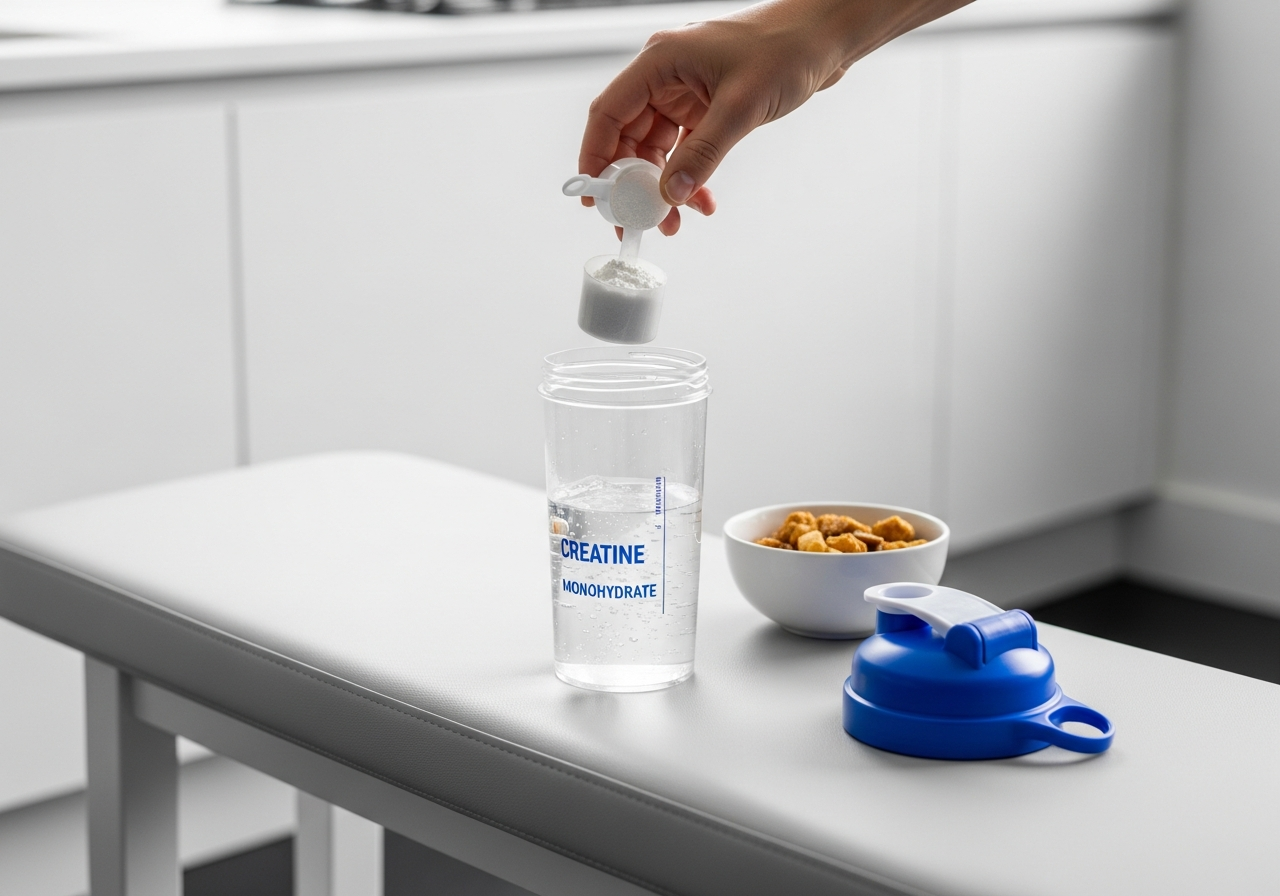
The best way to avoid bathroom-related confusion on creatine is to use a simple dose, stay normally hydrated, and change one variable at a time. If your goal is to avoid wondering whether creatine causes more urination, a conservative routine works better than a complicated stack.
- Choose creatine monohydrate. It is the most studied, most cost-effective form, and the benchmark against which other forms are compared. If you are comparing formats, see best type of creatine.
- Start with 3–5 g once daily. This is the standard maintenance range for most adults. You do not need a loading phase to get benefits; loading only gets you saturated faster.
- Mix it in a normal amount of liquid. About 250–500 mL of water is plenty for one serving. You do not need to force huge water boluses.
- Take it at any consistent time. Morning, post-workout, or with a meal all work. Timing matters much less than daily consistency. For details, read when to take creatine.
- Drink based on thirst and training conditions. More sweat loss means more fluid; desk work in cool weather means less. Creatine does not require a fixed oversized water rule for everyone.
- If you are sensitive, split the dose. Try 2 g with breakfast and 2–3 g later in the day rather than one larger serving.
- Track the right outcomes. Look for better training volume, a few extra reps, improved sprint repeatability, or slightly faster body-mass increase from muscle water and lean mass support—not a dramatic feeling.
Most people feel nothing acute from creatine, which is normal. It is a saturation supplement, not a stimulant. If your only obvious change is peeing more, first reduce forced water and review caffeine.
For a beginner-friendly walkthrough, see how to take creatine and creatine for beginners.
Best creatine dose by body weight, goal, and concern about urination
The dose most likely to work well without unnecessary bathroom or stomach issues is 3–5 g per day of creatine monohydrate. People searching can creatine increase urination often benefit from lower-friction dosing rather than loading aggressively from day one.
Here is the practical rule: smaller or lighter people often do fine at 3 g daily, while larger athletes and people with more lean mass often use 5 g daily. A loading phase is optional, not mandatory. If you load, use 20 g per day split into four 5 g servings for 5–7 days, then switch to 3–5 g daily. If you want body-weight precision, a common evidence-based loading approach is about 0.3 g/kg/day for 5–7 days, followed by about 0.03 g/kg/day.
| Body weight / goal | Simple daily plan | Optional loading plan | Best for |
|---|---|---|---|
| Under 60 kg | 3 g/day | 15–20 g/day split for 5–7 days, then 3 g/day | Beginners, smaller adults, women with lower body mass |
| 60–90 kg | 3–5 g/day | 20 g/day split into 4 x 5 g for 5–7 days, then 3–5 g/day | Most recreational lifters and team-sport athletes |
| Over 90 kg | 5 g/day | 0.3 g/kg/day for 5–7 days, then about 0.03 g/kg/day | Larger athletes, higher lean mass, power athletes |
| Worried about peeing more or stomach upset | 3 g/day to start | Skip loading | Anyone sensitive to GI issues or hydration anxiety |
What should you expect over time? With loading, muscles saturate faster, often within about a week. Without loading, full saturation usually takes around 3–4 weeks of daily use. That is why some people prefer a steady, no-drama approach. If your main concern is does creatine cause increased urination, skipping loading is sensible because it removes the biggest source of behaviour change.
For exact numbers and examples, use our creatine dosage calculator or read how much creatine per day and creatine loading phase.
What is normal week by week after starting creatine
The normal early changes from creatine are fuller muscles, a small body-weight increase, and gradual training improvements—not constant urination. If you want to know whether creatine is working, judge it by performance and recovery trends over weeks, not by bathroom frequency over hours.
Days 1–7 with loading: Some people notice a 0.5 to 2 kg increase in scale weight, especially if they are leaner or more responsive. This is mostly water drawn into muscle cells. A few people get stomach upset if they take large doses at once. Urination may seem higher if they are also forcing more water.
Weeks 1–2 without loading: Most people feel little acutely. That is normal. Saturation is building gradually, and many notice nothing except perhaps slightly better gym pumps or recovery between sets.
Weeks 3–4 without loading: This is when creatine’s benefits usually become clearer if training is consistent. You may get one or two extra reps at a given weight, better repeat sprint performance, or a modest bump in training volume.
Weeks 4–8 and beyond: The value of creatine becomes cumulative. By supporting higher-quality training over time, it can contribute to greater strength and lean-mass gains than training alone. The International Olympic Committee’s 2018 supplement consensus identified creatine as one of the few supplements with strong evidence for performance benefit in high-intensity exercise contexts.
What about hydration? If urine is pale yellow, thirst is reasonable, performance is stable, and you are not dizzy or cramping abnormally, hydration is probably fine. Urine colour can help, but it is imperfect because supplements, B vitamins, and fluid timing all affect it.
If you want a realistic expectation timeline, see how long creatine takes to work and creatine benefits. The key point is simple: creatine working does not mean peeing more; it means better phosphocreatine availability and usually better repeated high-intensity output.
Burning urination, urgency, or pain: when creatine is probably not the cause
Creatine should not cause burning urination, and symptoms like pain, urgency, fever, blood in urine, or flank pain should not be written off as a normal supplement side effect. If you are searching can creatine cause burning urination or can creatine cause urination problems, the medically responsible answer is that these symptoms usually point to something other than creatine itself.
- Burning with urination: More consistent with urinary tract irritation, infection, dehydration, stones, or another medical issue than with plain creatine monohydrate.
- Urgency and frequency: Often related to caffeine, alcohol, anxiety, bladder irritation, high fluid intake, or infection.
- Dark urine with muscle pain and weakness: Needs urgent medical assessment, especially after extreme exercise, because severe exercise-related muscle breakdown is a different issue entirely.
- Flank pain, fever, nausea, blood in urine: Not a normal creatine effect and worth prompt evaluation.
There is a narrower scenario where creatine may be indirectly involved: if a person takes huge amounts, becomes dehydrated during hard training in the heat, or combines multiple supplements and medications without thinking through the overlap. Even then, creatine is not the obvious first suspect in burning urination.
If symptoms started after a new supplement routine, strip it back. Pause the non-essential extras, especially stimulant-heavy pre-workouts, mega-dose vitamin C, and anything with proprietary blends. Review your caffeine intake and hydration. If symptoms persist, seek professional care rather than troubleshooting indefinitely online.
Anyone with known kidney disease, recurrent kidney stones, significant urinary symptoms, or medical advice to limit certain supplements should talk to a qualified clinician first. For the broader safety picture, read is creatine safe and who should not take creatine.
Who creatine is for—and who should be more cautious about urinary symptoms
Creatine is appropriate for many healthy adults, including beginners, women, older adults, and athletes, and urination concerns do not change that basic recommendation for most users. The groups that benefit most are those doing resistance training, sprint-based sport, repeated high-intensity intervals, or trying to preserve muscle and strength with aging.
Beginners: Creatine is beginner-friendly because the routine is simple and the evidence base is strong. Start with 3 g daily if you want the lowest-friction approach.
Women: Women respond well to creatine, and the idea that it causes some unique female water-retention or bladder problem is not evidence-based. Dose based on body size and goal, not sex. Our creatine for women guide goes deeper.
Older adults: Older adults may particularly benefit when creatine is combined with resistance training, because muscle mass and power tend to decline with age. Start conservatively at 3 g daily if appetite, GI comfort, or medication complexity are concerns. See creatine for older adults.
Athletes: Team-sport athletes, power athletes, sprinters, and CrossFit-style competitors often see the clearest performance upside. Endurance athletes may still use it strategically, though body-mass changes matter more in some sports.
Vegetarians and vegans: People with low dietary creatine intake often respond well because baseline muscle creatine stores may be lower.
Who should be more cautious: Anyone with pre-existing kidney disease, unexplained urinary symptoms, recurrent stones, or complex medication use should get individual advice first. Creatine is not automatically off-limits in every special case, but symptoms should be interpreted in medical context.
Canadian buyers should also choose products carefully. Look for a straightforward creatine monohydrate label, clear serving size in grams, and when sold as a regulated natural health product, an NPN, which is a Natural Product Number issued under Health Canada rules. Third-party testing adds another layer of confidence, particularly for competitive athletes concerned about contamination.
Common myths and mistakes about creatine and peeing, debunked
Most bathroom-related creatine myths come from mixing up water retention, dehydration, kidney lab markers, and caffeine effects. If you have heard that creatine always makes you pee a lot, dehydrates you, or damages kidneys in healthy users, that bundle of claims is far too simplistic.
- Myth: Creatine is a diuretic. False. Creatine is not classified or supported as a diuretic in the research.
- Myth: If you do not chug tons of water with creatine, it is unsafe. False. You should hydrate normally for your activity level; there is no universal "must drink litres extra" rule.
- Myth: More bathroom trips mean creatine is working. False. Creatine working is about muscle saturation and performance support, not urination.
- Myth: Creatine causes burning urination. Not a normal effect. Consider UTI, stones, irritation, dehydration, or another cause.
- Myth: A rise in creatinine means creatine is harming the kidneys. Not necessarily. Creatinine is a breakdown product and lab interpretation is context-dependent.
- Myth: Newer forms like HCL prevent all water issues. Unsupported. Monohydrate remains the most-studied standard and the best value for most people.
The biggest practical mistake is taking huge single doses because the scoop is convenient. That is how people end up with stomach upset and then blame creatine broadly. A second mistake is starting creatine, pre-workout, extra coffee, and a gallon-water challenge all on the same day. If you change five things at once, you cannot know what caused what.
Another mistake is buying a flashy blend instead of plain monohydrate. A "creatine" product can include stimulants, flavour systems, sweeteners, and extras that affect urination or digestion far more than creatine does. If you want the full myth breakdown, our creatine myths debunked and creatine myths vs. facts guides are useful follow-ups.
How to choose a creatine product in Canada if you want fewer side-effect surprises
The best creatine product for avoiding confusion about side effects is usually a plain, single-ingredient creatine monohydrate powder with transparent dosing. In Canada, smart buying reduces the odds that another ingredient gets blamed on creatine.
Use this short checklist when comparing products:
- Ingredient list: Ideally just creatine monohydrate, especially if you are troubleshooting symptoms.
- Dose clarity: Look for a true gram amount per serving, not a vague scoop size.
- NPN: If marketed under Canada’s natural health product framework, an NPN shows it has gone through the applicable regulatory pathway.
- Third-party testing: Helpful for purity and especially relevant for tested athletes.
- Form: Powder is usually the most economical and easiest to dose accurately. Capsules can work, but often require many capsules to hit 3–5 g.
- Avoid unnecessary add-ons: Stimulants, diuretic herbs, or heavily flavoured blends complicate symptom tracking.
Micronized creatine can improve mixability, but it is still creatine monohydrate. That is useful if gritty texture makes you gulp extra water or avoid taking it consistently. For buying help, see best creatine monohydrate in Canada, where to buy creatine in Canada, and Canadian supplement regulations.
If you are deciding between forms, remember the boring answer is usually the correct one: monohydrate still wins for evidence, cost, and reliability. Newer forms may market themselves as gentler or less bloating, but that does not mean they reduce urination, because urination was not the core issue to begin with.
For a broader evidence summary, Examine’s creatine review and the Mayo Clinic overview are reasonable external references alongside the sports-nutrition position stands.
Bottom line: when creatine affects the bathroom, what it usually really means
Creatine does not usually make you pee more, and standard creatine monohydrate use is not known for causing increased urination in healthy people. If you are asking does creatine cause more urination, does creatine cause you to urinate more, or do you pee more when taking creatine, the evidence-based answer is usually no.
What creatine actually does is increase muscle creatine and phosphocreatine stores, which supports repeated high-intensity effort and tends to pull more water into muscle cells. That can increase body weight slightly at first, but it is not the same thing as a diuretic effect. Most reports of peeing more are explained by increased fluid intake, loading, caffeine, or another unrelated cause.
The simplest low-risk plan is this:
- Use plain creatine monohydrate.
- Take 3–5 g per day, or 3 g if you want to start conservatively.
- Skip loading if you are sensitive or anxious about side effects.
- Drink normally according to thirst, exercise, and climate.
- Do not blame creatine for burning urination, fever, blood in urine, or significant pain.
If you want a supplement that is easy to judge fairly, creatine is one of the best-studied options in sports nutrition. Just judge it by the right outcomes: gym performance, training volume, body composition support, and consistency over weeks. Not by how often you visit the bathroom on day two.
Creatine and urination: the numbers that matter
- 3–5 g/day Standard maintenance dose — The usual daily amount for most adults using creatine monohydrate.
- 20 g/day Optional loading dose — Typically split into 4 doses for 5–7 days to saturate faster.
- 3–4 weeks Time to full effect without loading — Daily use gradually saturates muscle creatine stores.
- 0.5–2 kg Typical early scale-weight increase — Often seen in the first 1–2 weeks, mostly from increased intracellular water.
Frequently Asked Questions
Does creatine make you pee more?
No, creatine does not usually make you pee more in healthy people taking normal doses. If you notice more urination after starting creatine, the more likely explanations are drinking more water, using caffeine, starting a loading phase, or noticing normal bathroom variation more closely than before.
Is creatine a diuretic?
No, creatine is not a diuretic. Diuretics increase urine production through kidney effects, while creatine mainly increases muscle creatine and phosphocreatine stores and tends to draw more water into muscle cells rather than force more water out as urine.
Do you pee more when taking creatine during a loading phase?
You might pee more during a loading phase, but usually because you are drinking more fluid, not because creatine itself is acting like a diuretic. Loading commonly uses 20 g per day for 5–7 days, and people often pair that with aggressive hydration or other supplements that change bathroom frequency.
Can creatine cause increased urination at night?
Creatine itself is not a common cause of nighttime urination. If you are peeing more at night after starting creatine, look first at total evening fluid intake, caffeine timing, alcohol, or an unrelated bladder or prostate issue rather than assuming creatine is directly responsible.
Can creatine cause burning urination?
No, burning urination is not a normal or expected effect of creatine. Burning, pain, fever, urgency, blood in urine, or flank pain suggest a urinary tract issue, dehydration problem, stones, or another medical cause that deserves proper assessment.
Does creatine dehydrate you and make you pee a lot?
No, creatine is not established to dehydrate healthy users when taken properly, and it does not normally make you pee a lot. The dehydration myth likely comes from misunderstanding early water retention in muscles, plus people intentionally drinking far more water after starting creatine.
How much water should you drink with creatine?
You do not need a massive fixed amount of extra water just because you take creatine. A practical approach is to mix each serving in roughly 250–500 mL of liquid, then hydrate normally based on thirst, training intensity, sweat loss, weather, and your usual diet.
What creatine dose is least likely to cause bathroom or stomach issues?
A simple 3 g per day dose of creatine monohydrate is often the easiest starting point if you are worried about side effects. It is slower than loading, but it usually avoids the large fluid-intake changes and oversized single servings that cause most early complaints.
Can creatine cause urination problems in women?
Creatine does not appear to cause unique urination problems in women when used at standard doses. If a woman notices urgency, burning, or frequent urination after starting creatine, the same usual suspects apply: fluid intake, caffeine, bladder irritation, infection, or another unrelated cause.
Should I stop creatine if I am peeing more than usual?
Not necessarily, but you should troubleshoot logically. First reduce forced water intake, review caffeine and pre-workout use, and consider whether you started a loading phase; if you also have burning, pain, fever, blood in urine, or persistent symptoms, stop self-diagnosing and seek medical advice.