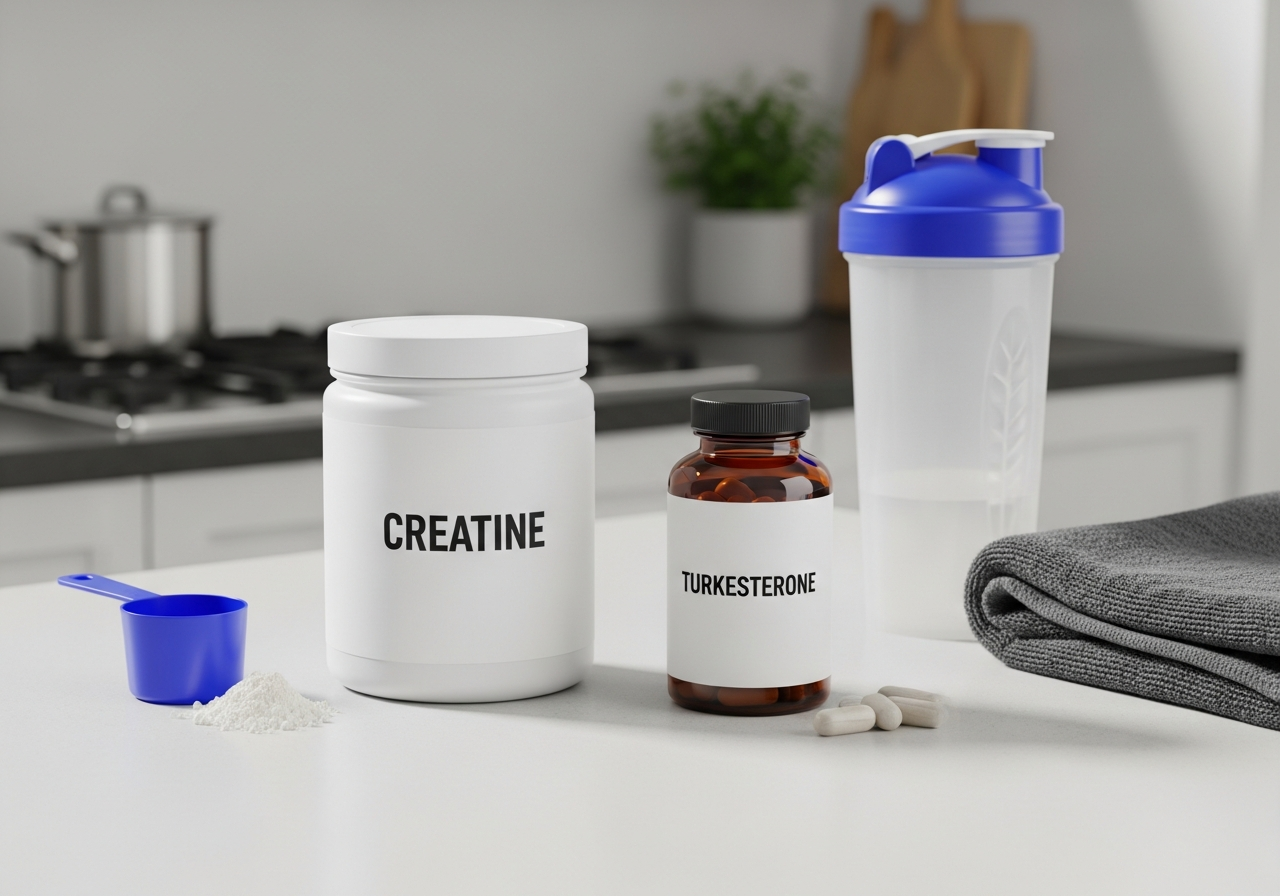
Creatine vs Turkesterone: One Has Decades of Evidence — The Other Doesn't
By The Creatine Canada Research Team — Evidence-based supplement analysts
Creatine beats turkesterone for muscle, strength, and real-world reliability because creatine has decades of high-quality human evidence while turkesterone does not. If you are choosing one supplement for performance or size, creatine monohydrate is the clear first pick; turkesterone is, at best, an unproven extra with uncertain benefit.
Evidence-based · Cites 4 sources · Editorial standards
Key Takeaways
- Creatine monohydrate is the evidence-based winner for strength, power, lean mass, and training performance.
- Turkesterone is marketed for muscle growth, but strong human data are limited and nowhere near creatine's evidence base.
- If your budget allows only one, choose 3 to 5 g of creatine monohydrate daily.
- A creatine loading phase of 20 g/day split into 4 doses for 5 to 7 days saturates muscles faster, but it is optional.
- You can stack turkesterone with creatine, but the creatine is doing the proven heavy lifting in that combo.
- For Canadians, prioritise products with an NPN and reputable third-party testing over flashy claims or exotic formulas.
Creatine or turkesterone? Start with creatine, and it is not a close call
Creatine is the better choice than turkesterone for almost everyone who wants more muscle, more strength, or better training performance. The short reason is simple: creatine has decades of controlled human research behind it, while turkesterone has generated interest mostly from marketing, anecdotes, and limited evidence that does not yet justify treating it as a reliable muscle-building supplement.
When people search creatine vs turkesterone or is turkesterone better than creatine, what they usually mean is: which one is more likely to work in a normal gym routine without wasting money? The answer is creatine monohydrate. According to the 2017 ISSN position stand, creatine monohydrate is the most effective nutritional supplement currently available for increasing high-intensity exercise capacity and lean body mass during training. That is a very strong statement, and it is based on a large body of human evidence.
Turkesterone sits in a different category. It is a plant-derived ecdysteroid, meaning a compound structurally related to insect moulting hormones and found in some plants. The theory is that it might support muscle protein synthesis or performance without acting like an anabolic steroid. The problem is that the practical human evidence is thin, inconsistent, and far less robust than the evidence for creatine. That does not prove turkesterone does nothing; it means the confidence level is much lower.
If you are a beginner, the decision is even easier. Creatine has a clear dosing protocol, a clear timeline, and a clear expected payoff. Most people can begin with a simple daily habit and assess results within a few weeks. If you want the basics first, start with our complete beginner's guide to creatine and then use the creatine dosage calculator to personalise your dose.
The best framing is this: creatine is a foundational supplement, while turkesterone is still speculative. If you already train well, eat enough protein, sleep properly, and still want to experiment, turkesterone might be a low-priority add-on. If you have not yet nailed the fundamentals, spending on turkesterone before creatine makes very little sense.
They are not even trying to do the same job: how creatine and turkesterone actually work
Creatine and turkesterone differ first in mechanism, and that matters because evidence quality often follows biological plausibility plus repeatable human results. Creatine works mainly by increasing muscle phosphocreatine, which is stored creatine bonded to phosphate and used to rapidly regenerate ATP, the cell's immediate energy currency during short, intense efforts.
That means creatine helps you do slightly more high-quality work in training: one more rep, a bit more power, or better maintenance of output across repeated sets and sprints. Over weeks and months, that small edge compounds into more training volume, better overload, and typically better gains in lean mass and strength. Creatine also draws water into muscle cells, which can increase cell volume and may contribute to a more anabolic environment, but the main practical benefit is improved performance capacity.
Turkesterone is usually described as a phytoecdysteroid, a plant-based ecdysteroid. Supplement brands often imply that it boosts muscle growth by stimulating protein synthesis, improving nitrogen retention, or acting in a hormone-friendly way without being hormonal in the steroid sense. The issue is that these proposed mechanisms have not been validated nearly as well in humans taking commercial turkesterone products. Even if a mechanism sounds plausible on paper, that is not the same as proving a useful effect in trained adults.
Here is the practical distinction. Creatine's mechanism links directly to measurable gym outcomes, and those outcomes have been repeatedly studied in humans. Turkesterone's mechanism is more hypothetical in the supplement context, and product quality adds another problem because you may not know whether the bottle contains the stated amount, the right extract standardisation, or an effective dose at all.
That is why turkesterone vs creatine for muscle is the wrong way to think about it if you assume they are equivalent tools. They are not. Creatine has a known physiological target and a known way to use it. Turkesterone is an experimental add-on with a much wider uncertainty band.
If you want to understand the energy side more deeply, our guides on how creatine gives muscles energy and how creatine builds muscle over time break down the mechanism in plain language.
For muscle and strength, creatine has the evidence lead by a mile
Creatine has far stronger evidence than turkesterone for increasing strength, lean mass, and repeated high-intensity performance. That is the central answer to turkesterone vs creatine for muscle: if you want the supplement with the better odds of producing a measurable result, choose creatine.
The creatine literature is unusually broad for a sports supplement. The ISSN position stand and the 2021 JISSN review on creatine misconceptions both describe creatine monohydrate as well-studied, effective, and generally safe when used appropriately. In practice, the most consistent benefits show up in:
- Strength and power: especially resistance training, sprinting, jumping, and repeated high-intensity efforts.
- Lean mass gains: particularly when combined with a progressive resistance-training plan.
- Training quality: more total work across sets can create better long-term adaptation.
Typical real-world expectations are modest but meaningful. Creatine is not a steroid and does not transform results overnight, but many users notice better rep quality, improved recovery between hard sets, and a fuller muscle look once saturation is reached. Over a proper training block, that can translate into more progress than you would have achieved without it.
Turkesterone does not have a comparable stack of high-quality human trials in trained populations using standardised commercial products. That is the key limitation. There is enough uncertainty around dose, extract quality, and actual efficacy that you should treat claims very cautiously. Strong claims require strong human evidence, and turkesterone simply does not have creatine-level proof.
The International Olympic Committee's 2018 consensus on supplements also places the strongest practical support behind supplements with meaningful evidence for performance, and creatine fits that standard far better than trendy muscle compounds do. In evidence-based programming, the burden of proof is on the new, expensive, exciting option, not on the boring one that already works.
If your goal is maximum value per dollar, creatine is usually near the top of the list. If you want help choosing a product rather than a theory, see our best creatine rankings and creatine brand reviews.
What results should you expect, and how fast? Creatine has a clear timeline; turkesterone does not
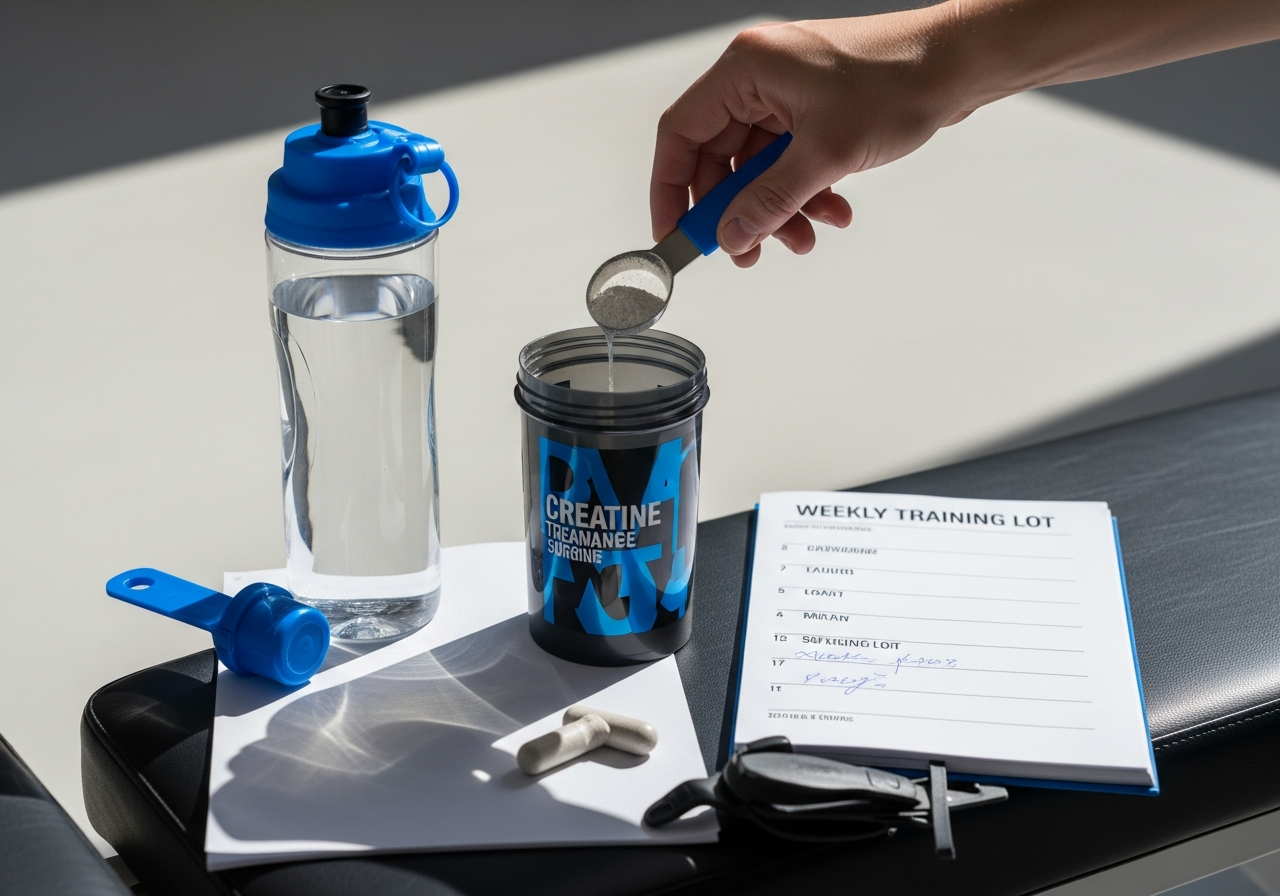
Creatine has a predictable results timeline, whereas turkesterone does not have a well-established one. If you use creatine consistently, you can usually judge whether it is helping within a few weeks because muscle saturation happens on a known schedule.
With a loading phase of 20 g per day split into 4 doses for 5 to 7 days, many people notice body-weight changes and training improvements within the first week or two. Without loading, taking 3 to 5 g daily typically saturates muscle stores in about 3 to 4 weeks. That timeline is one reason creatine is beginner-friendly: you can set expectations in advance instead of guessing.
Here is what many lifters notice, roughly in order:
- Days 3 to 10 with loading, or weeks 2 to 4 without loading: slight weight gain from increased intracellular water, often around 1 to 2 kg, though responses vary.
- Week 1 to 3: better repeat performance in hard sets, sprints, or explosive efforts.
- Week 4 onward: more total training volume and, if your program and nutrition are solid, better strength and lean mass progress over time.
That early weight gain is usually water inside muscle, not fat. If that worries you, read our guide on creatine weight gain. Many people actually take that fuller look as one sign the supplement is doing what it should.
Turkesterone is much murkier. Because there is no consensus dosing framework with repeated, reliable human outcome data, there is also no equally trustworthy timeline. If someone says they added turkesterone and gained size in two weeks, you cannot easily separate placebo effect, better training consistency, more food, glycogen fluctuations, or even changes in the product itself.
This difference matters more than people realise. A supplement is easier to use well when you know the dose, the expected onset, and the signs of response. Creatine gives you that. Turkesterone does not. If you want a full creatine timeline, see how long creatine takes to work and our loading phase guide.
Best dosing: exactly how to take creatine, and why turkesterone dosing is still a guess
Creatine dosing is straightforward and evidence-based, while turkesterone dosing remains uncertain enough that no equally confident protocol exists. If you are deciding between creatine or turkesterone, the ease and reliability of proper creatine dosing is a major advantage.
For creatine monohydrate, use one of these two evidence-based approaches:
| Goal | Protocol | Who it suits | What to expect |
|---|---|---|---|
| Fast saturation | 20 g/day for 5 to 7 days, split into 4 doses of 5 g, then 3 to 5 g/day | People who want quicker results | Faster rise in muscle creatine stores; more chance of temporary stomach upset if taken in large single doses |
| Simple maintenance-only start | 3 to 5 g/day every day | Most beginners | Same end result, but saturation takes roughly 3 to 4 weeks |
Body size can help fine-tune things. Smaller adults often do well with 3 g/day, average adults with 3 to 5 g/day, and larger athletes or people with high lean body mass may prefer 5 g/day as a practical maintenance dose. Some protocols also use about 0.3 g/kg/day for loading and about 0.03 g/kg/day for maintenance, but for most gym-goers, fixed gram doses are easier and work well.
Examples:
- 60 kg beginner cutting or maintaining: 3 g/day is usually enough.
- 75 to 90 kg lifter trying to build muscle: 5 g/day is a practical default.
- 100 kg strength athlete: 5 g/day is still common, though some larger athletes may use a bit more under professional guidance.
Turkesterone is different. Commercial labels vary widely, standardisation is inconsistent, and there is no creatine-like consensus that says, 'this dose, for this long, in this population, reliably improves muscle gain.' That makes it hard to recommend with confidence.
The simplest move is this: dose creatine correctly first, train hard for 8 to 12 weeks, and assess your logbook. If you still want to experiment, treat turkesterone as optional and uncertain, not foundational. For a personalised starting point, use our creatine dosage calculator and read how much creatine per day.
How to use them in real life, including whether a turkesterone creatine stack makes sense
A turkesterone creatine stack is possible, but only creatine in that stack has strong evidence behind it. If you choose to combine them, build the plan around creatine and treat turkesterone as the experimental add-on rather than the driver of results.
Here is the most practical step-by-step approach for someone asking whether to use turkesterone creatine stack or just one product:
- Start creatine first. Take creatine monohydrate daily for at least 4 weeks, or load for 5 to 7 days and then continue on maintenance.
- Keep training and diet stable. Do not change your program, calories, and protein at the same time if you want to know what is working.
- Track objective markers. Log body weight, gym performance, and waist measurement weekly.
- Only then consider adding turkesterone. If you add it, keep everything else unchanged for another 4 to 8 weeks so you can at least observe whether anything clearly changes.
What should you mix creatine with? Almost anything you will consistently drink. Water is fine. Protein shakes are fine. A meal is fine. Timing matters less than consistency, which is why our guides on how to take creatine and when to take creatine emphasise daily adherence over supplement theatre.
For a stack to make practical sense, your basics should already be covered:
- Resistance training at least 3 times per week
- Daily protein intake that supports muscle gain or retention
- Enough calories to support your goal
- Sleep and recovery that are not sabotaging progress
Without those basics, adding turkesterone is mostly adding noise. If progress improves after starting both at once, you will not know whether the creatine, a better routine, or simple placebo expectation drove the change.
The smartest stack order is therefore: creatine first, protein and food dialled in, then optional extras later. If you want to compare with other proven stacks, our guide on creatine with protein powder is a better starting place than speculative compounds.
Who each supplement is actually for: beginners, women, older adults, and athletes
Creatine is suitable for far more people than turkesterone because its benefits, dosing, and safety profile are better established across different groups. If you are wondering who should choose creatine vs turkesterone, the answer is that creatine fits beginners, women, older adults, vegetarians, and many athletes far more clearly.
Beginners: Creatine is one of the few supplements worth considering early because it is simple, affordable, and evidence-based. Turkesterone is not a beginner essential and often distracts from basics.
Women: Women can benefit from creatine just as men can. Creatine does not work only for men, and it does not automatically make women bulky. It may help support training quality, lean mass, and performance, and our creatine for women guide explains the details. Turkesterone has even less population-specific certainty.
Older adults: Creatine may be especially useful when paired with resistance training because maintaining muscle and strength becomes more important with age. That makes creatine far more compelling than turkesterone for adults concerned about healthy ageing and performance.
Vegetarians and vegans: People who eat little or no meat often start with lower muscle creatine stores, so they may respond particularly well to creatine supplementation. That creates a strong practical case for creatine in plant-based diets.
Competitive athletes: Creatine is widely used in sport because the benefits map directly onto repeated sprint ability, power, and gym performance. Athletes still need to confirm their sport rules and product quality, but creatine is a recognised sports-nutrition staple. The IOC consensus on dietary supplements is useful context here.
Who might still consider turkesterone? Mainly advanced supplement experimenters who already know their response to creatine, train consistently, and understand that the evidence is uncertain. That is a narrow use case, not a general recommendation.
The best question is not 'could turkesterone help someone?' but 'who should choose it before creatine?' For almost nobody is that the rational answer.
Safety, side effects, and the Canadian buying reality: creatine is clearer on all three
Creatine has a well-established safety profile in healthy people when used at standard doses, while turkesterone raises more unanswered questions about both efficacy and product quality. That does not mean creatine is side-effect free, but it does mean the likely issues are better understood and easier to manage.
According to the 2021 JISSN review and the Mayo Clinic overview, common creatine issues are usually mild and manageable. The most common are:
- Temporary water-weight increase: usually from more water stored within muscle.
- Stomach upset: more likely if you take too much at once, especially during loading.
- Occasional bloating complaints: often improved by smaller divided doses or switching to micronized monohydrate.
Most healthy adults do not need to cycle creatine, and daily use is standard. If you have kidney disease, significant medical conditions, are pregnant, or take medications that affect kidney function, talk with a clinician first. Also remember that creatine can raise creatinine on blood work without indicating kidney damage, which is one reason context matters in lab interpretation.
Turkesterone's safety picture is less settled largely because the evidence base is thinner and product standardisation is inconsistent. When evidence is weak, even a low side-effect rate is hard to quantify confidently. A bottle may also contain less active compound than claimed, a different extract profile, or undeclared ingredients, especially in poorly controlled marketplaces.
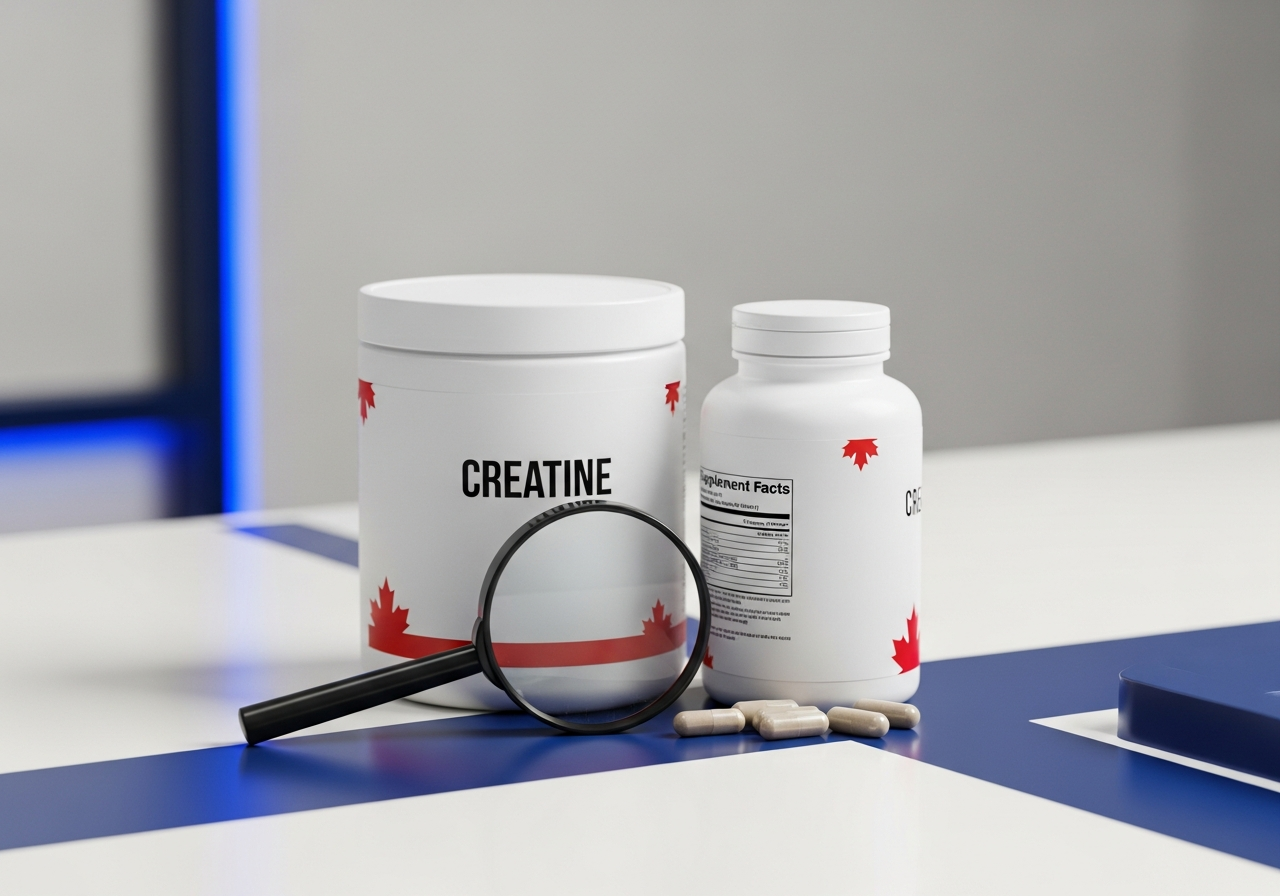
For Canadians, this quality issue matters. Look for a Natural Product Number, or NPN, which is Health Canada's product licence identifier for approved natural health products. An NPN is not a magic proof of effectiveness, but it is still a useful legitimacy check. Also favour brands that disclose ingredient amounts clearly and use third-party testing. Our creatine product catalog and best creatine monohydrate in Canada guide can help you compare products that meet a higher quality bar.
In safety terms, the practical ranking is simple: creatine is known, predictable, and manageable; turkesterone is less known, less standardised, and therefore harder to trust.
The biggest mistakes and myths in the creatine vs turkesterone debate
The biggest mistake in the creatine vs turkesterone debate is treating anecdote as equal to evidence. A supplement that feels exciting online is not automatically comparable to a supplement backed by decades of controlled research.
Myth 1: Turkesterone is basically a natural steroid. No. Turkesterone is not the same thing as anabolic steroids, and you should be sceptical of any marketing that implies steroid-like results without steroid-like risk. If a product promised steroid-level gains with supplement-store legality, that claim would demand extraordinary evidence.
Myth 2: Creatine only adds water, not real muscle. False. Creatine often increases intracellular water early, but the evidence also supports better training performance and lean-mass gains over time. Water is part of the early response, not the whole story.
Myth 3: If turkesterone is newer, it must be more advanced. Newer does not mean better. In supplements, newer often means less tested.
Myth 4: If a famous athlete or influencer says turkesterone worked, that proves it. It does not. Their results may reflect training, genetics, coaching, diet, other supplements, or even non-disclosed variables. Anecdotes can generate hypotheses; they cannot settle efficacy.
Myth 5: You need both, or you are leaving gains on the table. No. If your budget is limited, creatine alone is the much smarter buy. The odds that creatine improves your training are far higher than the odds that turkesterone adds something meaningful on top.
Myth 6: Creatine is risky, but plant compounds are automatically safe. Not necessarily. 'Natural' is not a synonym for proven or safe. Plenty of natural compounds are poorly studied, inconsistently dosed, or sold in questionable formulations.
If you are sorting through claims, use this filter: is there repeatable human evidence, in relevant populations, at realistic doses, using products similar to what consumers can actually buy? Creatine passes that test far better than turkesterone. For more claim-by-claim reality checks, see creatine myths debunked and our broader myths vs facts guide.
If you choose creatine, here is exactly what to buy and what to ignore
If you choose creatine over turkesterone, buy plain creatine monohydrate from a reputable brand and ignore fancy forms unless there is a very specific reason not to. Creatine monohydrate remains the best-supported and most cost-effective form, which is why evidence-based recommendations keep circling back to it.
Use this checklist when buying:
- Ingredient: look for creatine monohydrate, ideally with no unnecessary proprietary blends.
- Dose clarity: the label should make it easy to get 3 to 5 g daily.
- Third-party testing: especially valuable for athletes and anyone concerned about purity.
- NPN in Canada: a useful sign the product is sold within the Canadian natural health product framework.
- Format: powder is usually the best value; capsules are convenient but often more expensive per gram.
What should you ignore? Mostly buzzwords. Terms like buffered, ultra-absorbed, advanced transport matrix, or anabolic complex often sound more impressive than the evidence supporting them. For most users, a plain tub of monohydrate does the job just as well or better.
Micronized creatine can be worth considering if you want easier mixing or find regular powder gritty, but it is still monohydrate. That is a texture choice, not a fundamentally different ingredient. If you are comparing formats, our guides on powder vs capsules, micronized creatine, and the best type of creatine can help.
Should you buy turkesterone instead if a label looks more impressive? No. Label drama is not evidence. If two products cost similar amounts and one contains the ingredient supported by decades of human research while the other relies mainly on hype, the rational purchase is clear.
When in doubt, simplicity wins. One plain, well-dosed, legitimate creatine monohydrate product is a better bet than a shelf full of uncertain 'muscle optimisation' capsules.
Bottom line: one is proven, one is speculative
Creatine is the clear winner over turkesterone for muscle, strength, and performance because the evidence for creatine is deep, repeatable, and practical. If you want the shortest possible answer to creatine vs turkesterone, it is this: buy creatine monohydrate first, use it daily, and only consider turkesterone later if you fully understand that the evidence is much weaker.
The final verdict breaks down like this:
- Best for muscle and strength: creatine
- Best-supported mechanism: creatine
- Best value for money: creatine
- Best option for beginners: creatine
- Most predictable timeline and dosing: creatine
- Most uncertain but theoretically interesting: turkesterone
That does not mean turkesterone is impossible to work for some people. It means the current evidence does not justify putting it on the same tier. In evidence-based sports nutrition, the default should be to use the supplement with the highest confidence of benefit and the lowest uncertainty around dose, safety, and product quality. Today, that is creatine monohydrate.
If you are ready to act, the simplest next step is to choose a quality creatine monohydrate product, take 3 to 5 g daily, and stay consistent for at least 4 weeks. Track your body weight, your reps at a given load, and how you recover between hard efforts. That is how you evaluate whether a supplement is earning its place.
For most readers, the smartest stack is not creatine plus turkesterone. It is creatine plus good training, enough protein, enough sleep, and patience. Everything else is secondary.
Creatine vs Turkesterone at a Glance
- 3-5 g/day Standard creatine maintenance dose — The evidence-based daily amount for most adults after saturation or from day one without loading.
- 20 g/day Typical creatine loading dose — Usually split into 4 doses for 5 to 7 days to saturate muscle faster.
- 3-4 weeks Time to saturate without loading — Daily creatine still works without loading; it just takes longer.
- Decades Human evidence behind creatine — Creatine monohydrate has a much deeper research base than turkesterone.
Frequently Asked Questions
Is turkesterone better than creatine for muscle growth?
No, creatine is the better-supported choice for muscle growth. Creatine has decades of human research showing benefits for training performance and lean mass, while turkesterone does not yet have a comparable evidence base in real-world lifters using standard commercial products.
Should I take creatine or turkesterone if I am a beginner?
Beginners should take creatine, not turkesterone, if they want one proven supplement. Creatine has simple dosing, predictable timelines, and reliable performance benefits, whereas turkesterone adds cost and uncertainty before you have even established how you respond to the basics.
Can you stack turkesterone with creatine?
Yes, you can stack turkesterone with creatine, but creatine is the proven part of that stack. If you combine them, start creatine first, keep your training and diet stable, and treat turkesterone as an experiment rather than a guaranteed booster.
Does turkesterone work like a steroid?
No, turkesterone does not work like an anabolic steroid in the way most people mean. It is marketed as a plant-derived ecdysteroid, but steroid-like claims are not supported by steroid-level human evidence, so expectations should stay modest and sceptical.
How much creatine should I take instead of turkesterone?
Most adults should take 3 to 5 g of creatine monohydrate daily instead of spending first on turkesterone. If you want faster saturation, use 20 g per day split into 4 doses for 5 to 7 days, then continue with 3 to 5 g daily.
How long does creatine take to work compared with turkesterone?
Creatine usually works on a known timeline, while turkesterone does not. With loading, creatine can start showing practical effects within about a week; without loading, it usually takes about 3 to 4 weeks to fully saturate muscle stores and show clearer training benefits.
Is creatine safer than turkesterone?
Creatine is generally the clearer safety choice because it has been studied much more extensively in healthy adults. Turkesterone may or may not be well tolerated, but the thinner evidence base and inconsistent product quality make it harder to evaluate with the same confidence.
Will creatine make me gain fat while turkesterone keeps me lean?
No, creatine does not inherently make you gain fat. Early body-weight increases from creatine are usually due to more water stored inside muscle, and over time creatine can support lean mass gains by helping you train harder, not by adding body fat directly.
What is the best form of creatine if I choose it over turkesterone?
The best form for most people is plain creatine monohydrate. It is the most studied, the most consistently effective, and usually the best value, which makes it a far more sensible purchase than under-researched or heavily marketed alternatives.
If I only have money for one supplement, should it be creatine or turkesterone?
If you only have money for one, choose creatine monohydrate. It gives you the highest confidence of real benefit for strength, power, and lean mass, while turkesterone is still too uncertain to beat creatine on evidence or value.