Buying Creatine in Quebec: Montreal, Quebec City, and Online
By The Creatine Canada Research Team — Evidence-based supplement analysts
Yes, you can buy creatine in Quebec easily, and the smartest choice is usually a plain creatine monohydrate powder from a reputable Canadian retailer or supplement store in Montreal, Quebec City, or online. For most people in Quebec, the best buy is an NPN-labelled, third-party-tested monohydrate product with a clear 3 to 5 gram daily serving and no unnecessary proprietary extras.
Evidence-based · Cites 4 sources · Editorial standards
Key Takeaways
- Creatine monohydrate is the best-studied, most effective, and usually most cost-effective form to buy in Quebec.
- Look for a Natural Product Number (NPN), a simple ingredient list, and preferably third-party testing or strong brand transparency.
- A standard maintenance dose is 3 to 5 g daily; loading is optional at 20 g per day split into 4 doses for 5 to 7 days.
- Montreal and Quebec City both have plenty of supplement retail options, but online buying often gives better selection, price comparison, and stock consistency.
- Timing matters far less than consistency; take creatine every day, including rest days.
- Mild water-weight gain and occasional stomach upset are the most common early side effects, and both are usually manageable.
- If you want the right dose fast, use a /calculator or compare products in the /products and /best-creatine guides.
Where to buy creatine in Quebec: the direct answer for Montreal, Quebec City, and online
You can buy creatine in Quebec from supplement stores, some pharmacies and fitness retailers, and Canadian e-commerce sites, but the best overall choice for most buyers is a reputable creatine monohydrate powder purchased from a trusted online or in-store seller with clear labelling. If you are searching for creatine in Quebec, buy creatine Montreal, creatine Quebec City, or creatine stores Quebec, focus less on the city and more on the product quality, dose, and seller reliability.
The first filter is the form: creatine monohydrate remains the gold standard because it is the most studied form by far, consistently improves high-intensity exercise capacity and training adaptations, and usually costs less than heavily marketed alternatives. The 2017 ISSN position stand concluded that creatine monohydrate is the most effective ergogenic nutritional supplement currently available for increasing high-intensity exercise capacity and lean mass during training. That is why plain monohydrate should be your default unless you have a very specific reason to prefer capsules or a different format.
The second filter is Canadian compliance and transparency. In Canada, many creatine products sold as natural health products carry an NPN, or Natural Product Number, which is the product licence number issued under Health Canada rules. An NPN does not mean the product is magically superior, but it does tell you the product is being sold within the Canadian natural health product framework and that the label claims and ingredients have gone through that pathway. For a deeper background, see guides related to best creatine rankings and creatine brand reviews.
The third filter is the seller. A good Quebec creatine retailer should provide clear serving sizes in grams, batch or lot details, return policies, and realistic shipping timelines if ordering online. If you live in Montreal, Laval, Longueuil, Quebec City, Gatineau, Sherbrooke, or elsewhere in the province, online buying often gives more consistent stock and easier product comparison than walking store to store.
- Best for value: unflavoured creatine monohydrate powder
- Best for convenience: capsules, if you do not mind the higher cost per gram
- Best for avoiding mistakes: products with one active ingredient and a 3 to 5 g serving
- Best for reassurance: NPN-labelled products from brands with testing transparency
If you want a quick shortlist before buying, compare options in the creatine product catalog and then confirm serving size with the creatine dosage calculator.
Why creatine works so well: the mechanism that matters before you buy
Creatine works because it helps your muscles regenerate ATP faster during short, intense efforts, and that mechanism is exactly why the cheapest plain monohydrate often beats more expensive alternatives. ATP, or adenosine triphosphate, is the immediate energy currency your muscles use for hard contractions, but stored ATP runs low quickly during sprinting, heavy lifting, jumping, and repeated high-output efforts.
Creatine is stored in muscle partly as phosphocreatine, which is creatine bound to a phosphate group. Phosphocreatine donates that phosphate to help rebuild ATP during intense exercise. More intramuscular creatine storage means a larger phosphocreatine reserve, and a larger phosphocreatine reserve can help you maintain output for another rep, another sprint, or another interval. Over time, that small performance edge can translate into better training quality and greater muscle and strength gains.
This is why creatine is not a stimulant. It does not act like caffeine, and it does not create a dramatic buzz on day one. Instead, creatine works by gradually increasing muscle creatine saturation, meaning the degree to which your muscle stores are filled. Loading can raise saturation faster, while daily maintenance without loading gets you there more slowly over several weeks.
The evidence base here is unusually strong for a sports supplement. The ISSN position stand and the 2021 JISSN review on common questions and misconceptions both support creatine monohydrate as effective and broadly safe for healthy people when used appropriately. The International Olympic Committee consensus on dietary supplements also recognises creatine as one of the better-supported performance supplements for specific sporting contexts.
For Quebec buyers, the practical takeaway is simple: you do not need a special “Quebec creatine” formula. You need enough actual creatine monohydrate per day to saturate muscle stores. Fancy ingredient decks, flashy flavours, and claims about proprietary transport systems usually matter less than dose consistency, product quality, and your training plan.
- Best fit: strength training, hypertrophy, sprinting, repeated intervals, team sports, CrossFit-style work
- Possible added value: older adults, vegetarians, and some women may notice strong benefit because baseline creatine intake or stores can be lower
- Less dramatic but still possible: endurance athletes may benefit more in sprint finishes, repeated surges, and training support than in steady-state output
If you need the full beginner science first, start with what is creatine and then come back to the buying decision.
How to choose a good creatine product in Quebec without getting ripped off
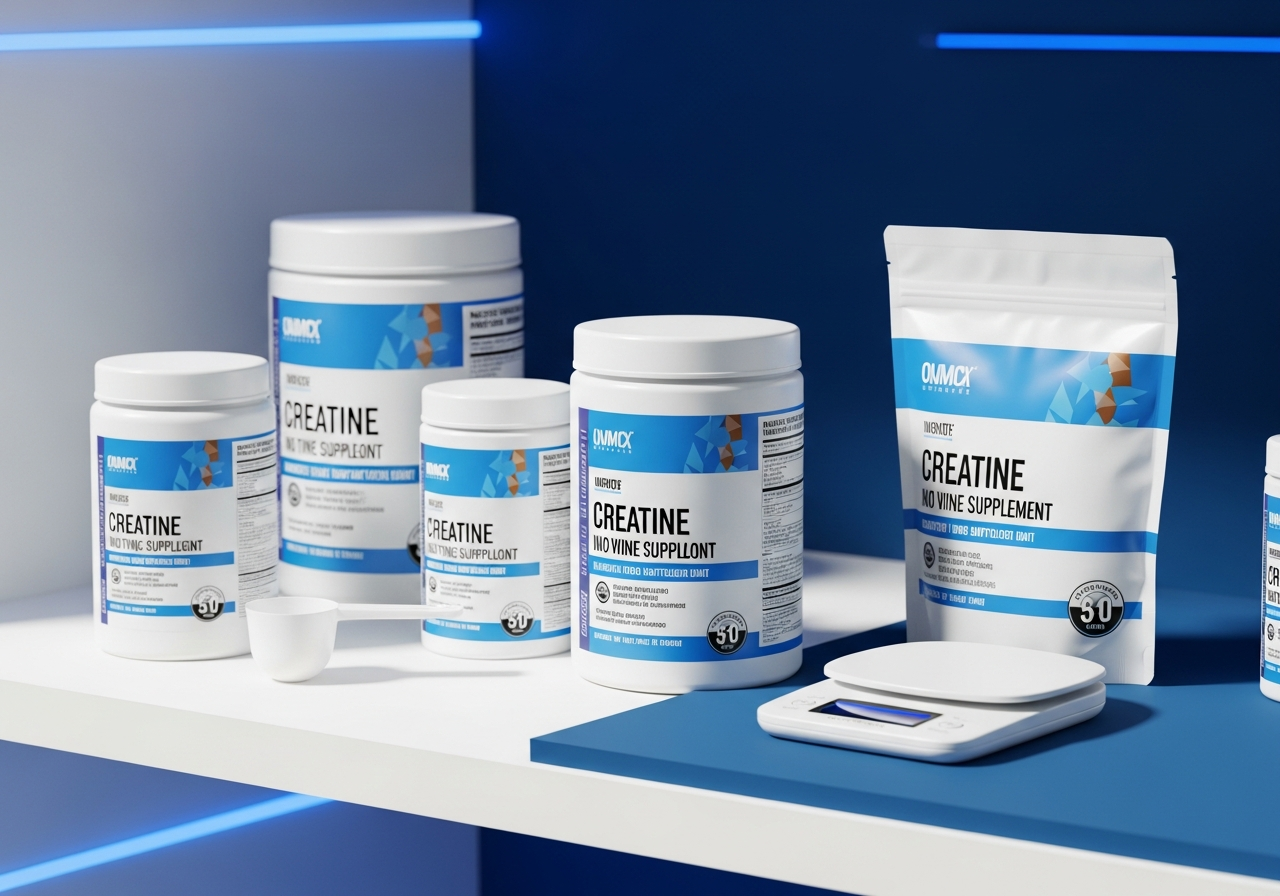
The best creatine product in Quebec is usually a plain creatine monohydrate powder with a simple label, a clear serving size in grams, and credible quality signals such as an NPN or third-party testing. That answer solves most shopping confusion because the biggest buying mistakes are overpaying for weak formats, underdosed blends, or products that hide basic information.
Start with the ingredient panel. Ideally, it should say creatine monohydrate and very little else. Flavoured versions can be fine, but every extra ingredient raises the chance of paying more for less actual creatine. Many “all-in-one” pre-workout products include only small amounts of creatine, which is inconvenient if your goal is to hit a reliable daily dose of 3 to 5 g.
Next, look at serving math. A good tub should clearly show grams per serving and servings per container. If the label uses scoop sizes without gram context, that is a yellow flag. Scoops vary, powder density varies, and “one scoop” is not a precise dose unless the actual grams are listed. If you want to be exact, use a kitchen scale or our creatine dosage calculator.
Then check quality markers that matter in Canada:
- NPN: a Health Canada Natural Product Number on the label can add confidence that the product is being sold in the Canadian regulatory framework.
- Testing transparency: brands that mention third-party testing, purity standards, or batch information are generally easier to trust.
- Seller reputation: strong customer service, clear returns, and transparent shipping matter, especially when buying online in Quebec.
- Packaging integrity: sealed tub, intact lot code, legible expiry or best-before details, and no signs of moisture damage.
Be careful with premium claims that are not worth much on their own. “Micronized” can improve mixability, but it does not make creatine fundamentally more effective than standard monohydrate. “Buffered,” “alkaline,” “HCl,” and similar forms often cost more without stronger evidence that they outperform monohydrate in real-world results.
If you are comparing options in Montreal or Quebec City stores, use the same checklist you would online. Ignore shelf marketing and compare cost per 100 g, ingredient simplicity, and whether you can actually hit 3 to 5 g every day without hassle. Our best creatine rankings and creatine brand reviews can help narrow the shortlist before you buy.
Buying creatine in Montreal and Quebec City vs. ordering online in Quebec
If you are deciding whether to buy creatine in Montreal, Quebec City, or online, the best option depends on whether you value immediate pickup, product inspection, wider selection, or better pricing. For many Quebec shoppers, online ordering wins on convenience and stock consistency, while in-store buying wins when you need creatine today or want to inspect the product before paying.
For buy creatine Montreal searches, the city gives you the broadest local retail selection in Quebec. You will typically find creatine at dedicated supplement stores, larger fitness retailers, and some health-focused shops. Quebec City shoppers usually have fewer store options than Montreal, but there are still enough retailers that plain monohydrate is normally easy to find. Outside major centres, online access becomes even more useful.
Here is the practical comparison:
| Buying option | Best for | Main strengths | Main drawbacks |
|---|---|---|---|
| Montreal supplement stores | Same-day purchase | Immediate pickup, can inspect packaging, staff may answer basic questions | Selection and pricing vary widely; upselling is common |
| Quebec City stores | Local convenience | Good for standard monohydrate if in stock | Fewer niche brands and formats than major online retailers |
| Online in Quebec | Value and comparison | Easy price comparison, broader product range, reviews, often better stock | Shipping time, return friction, occasional counterfeit risk from poor marketplaces |
Whether you search where to buy creatine Quebec or creatine stores Quebec, the same rules apply. Avoid mystery marketplace listings with vague origin details or suspiciously low prices. A slightly cheaper tub is not a bargain if the lot information is unclear, the seller is unverified, or the seal arrives broken.
Online buying also makes it easier to compare powder versus capsules. Powder is almost always more economical per gram, while capsules are easier for travel or if you dislike mixing. If you want format-specific help, see creatine powder vs capsules and buying creatine online in Canada.
The simplest recommendation is this: buy in-store if you need creatine immediately and the product checks all your boxes, but buy online if you want the best chance of finding a plain, properly dosed monohydrate at a fair price with transparent product details.
Exactly how much creatine to take: doses by body weight, goal, and format
Most people in Quebec should take 3 to 5 g of creatine monohydrate daily, and larger athletes or those using a loading phase can scale from there. The mainstream evidence-based maintenance range is simple enough that most buyers do not need a complicated protocol, but body size, goals, and format still matter.
The two evidence-based ways to start are:
- Maintenance-only approach: take 3 to 5 g every day. This saturates muscle more gradually, typically over about 3 to 4 weeks.
- Loading approach: take about 20 g per day, split into 4 doses of 5 g, for 5 to 7 days, then continue with 3 to 5 g per day. This saturates muscle faster.
A body-weight method also appears in the literature: roughly 0.3 g/kg/day during loading for 5 to 7 days, followed by about 0.03 g/kg/day for maintenance. That works out approximately as follows:
| Body weight | Loading dose for 5-7 days | Maintenance dose | Practical note |
|---|---|---|---|
| 60 kg | 18 g/day | 2 to 3 g/day | 3 g/day is a simple real-world choice |
| 75 kg | 22.5 g/day | 2 to 3 g/day | 3 to 5 g/day is common and practical |
| 90 kg | 27 g/day | 3 g/day | 5 g/day is often used for convenience |
| 105 kg | 31.5 g/day | 3 to 4 g/day | 5 g/day is still a common easy dose |
In practice, most healthy adults training seriously do very well with 5 g daily because it is easy to remember and covers the needs of many body sizes without constant measuring. If you are smaller, sedentary, or simply cautious, 3 g daily is still a valid maintenance dose.
Choose the lower end if your priority is tolerance and consistency. Choose the higher end if you are larger, more muscular, or prefer a simple round number. If you are using capsules, calculate how many capsules you need to hit the full dose, because many products underdeliver per serving. You can check your exact target with the creatine dosage calculator and learn more in how much creatine per day.
The biggest dosing mistake is not taking too little once; it is buying a product or format that makes daily consistency inconvenient. The best dose is the one you can actually take every day for months.
How to take creatine after you buy it: a simple Quebec-proof routine
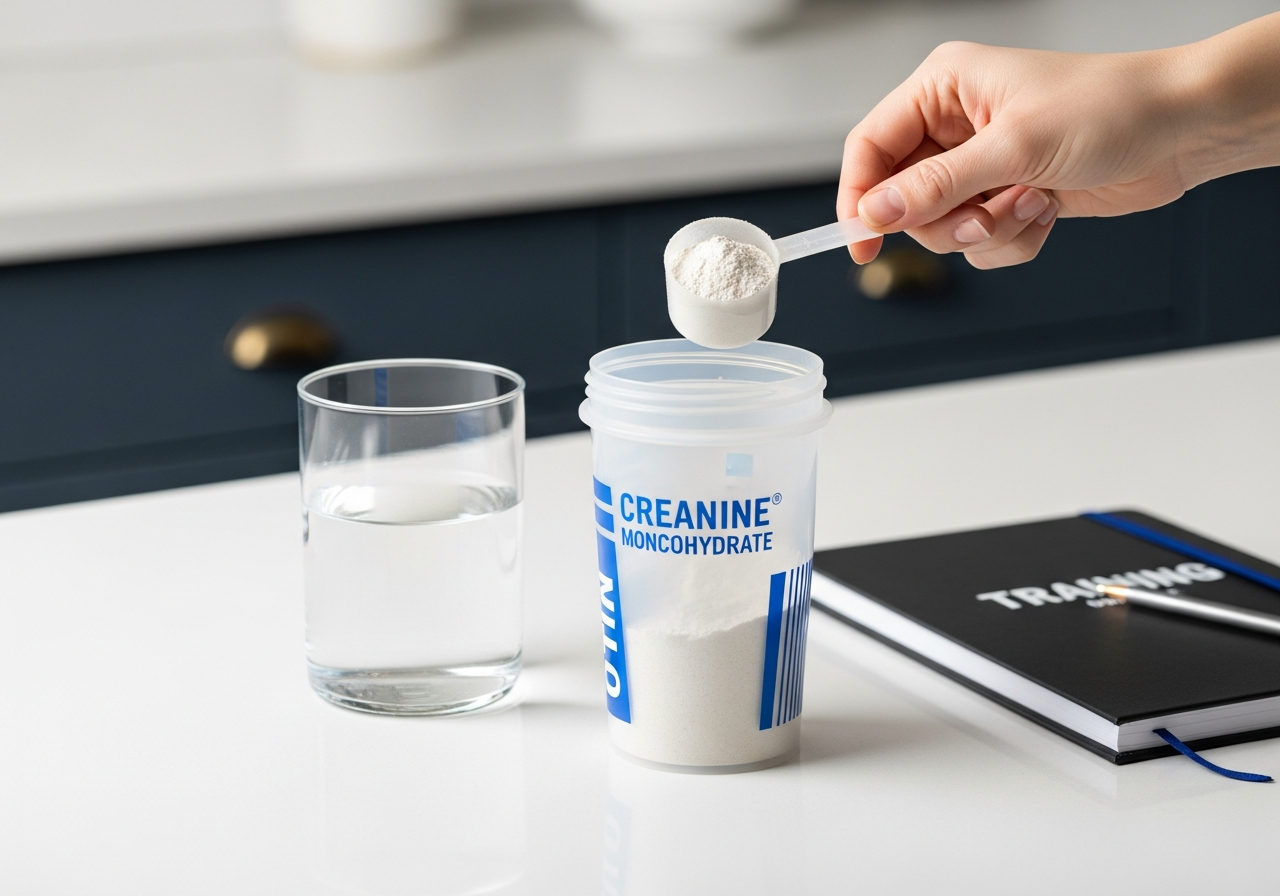
The best way to take creatine is to pick a daily dose, attach it to a routine you already follow, and keep taking it every day, including rest days. That is the simplest plan that works for beginners, lifters, team-sport athletes, women, and older adults.
- Buy the right product. Choose plain creatine monohydrate powder unless you strongly prefer capsules.
- Pick your dose. Use 3 g daily if you want a low-fuss start, or 5 g daily if you want the most common all-purpose routine.
- Decide whether to load. Load only if you want faster saturation. If not, skip it and be patient.
- Mix it in liquid or food. Water, juice, a protein shake, or yogurt all work. Creatine timing is far less important than daily adherence.
- Take it every day. Workout days and rest days both count because saturation is the goal.
- Track three things for 4 weeks. Body weight, gym performance, and tolerance.
If you are new, a very practical beginner routine is 5 g mixed into your post-workout shake on training days and 5 g with breakfast on rest days. If you train first thing in the morning, pre-workout is also fine. If you forget often, leave the tub beside your protein powder, coffee setup, or toothbrush—wherever your routine is already automatic.
Week by week, here is what many people notice:
- Week 1 with loading: body weight may rise by roughly 0.5 to 1.5 kg from increased intracellular water, and workouts may start feeling stronger.
- Weeks 2 to 4 without loading: more gradual performance changes as stores fill.
- Weeks 4 to 8: improved repeat effort, better training volume, and sometimes a fuller muscle look.
You know creatine is likely working when one or more of the following happen: an extra rep at a familiar weight, less drop-off across sprint repeats, slightly better training volume, or improved recovery between hard sets. You do not need to “feel” a stimulant-like effect for creatine to be doing its job.
If you want a more detailed routine, read how to take creatine, when to take creatine, and how to mix creatine.
Who should consider buying creatine in Quebec, and who should be more cautious
Creatine is a strong fit for many healthy adults in Quebec who want better strength, lean mass, sprint power, or training quality, but it is not mandatory for everyone and a few groups should be more cautious. The best candidates are people doing resistance training, repeated high-intensity exercise, or sports with bursts, collisions, jumps, or sprint demands.
Beginners can absolutely use creatine. In fact, beginners often benefit because their training is improving quickly and creatine can support performance while they build consistency. If you are just starting, pair it with a basic training plan and enough dietary protein rather than expecting creatine to do the heavy lifting on its own.
Women can use the same creatine monohydrate and similar dosing as men. Creatine does not masculinise women, and the common fear that it will cause “bulky” muscle overnight is a myth. Some women notice less dramatic scale change than men, while others notice a fuller look and better performance. If this is your concern, our creatine for women guide is useful.
Older adults may benefit when creatine is combined with resistance training, especially for muscle function and training support. Creatine is not a substitute for exercise, but it can be a helpful adjunct. See creatine for older adults if this applies.
Vegetarians and vegans may respond particularly well because baseline dietary creatine intake is often lower when little or no meat is eaten. That does not mean omnivores cannot benefit; it means lower baseline stores can make supplementation more noticeable.
Athletes in strength, power, sprint, and team sports are often ideal users. The IOC consensus recognises creatine as one of the more evidence-backed supplement categories in sport, especially for performance contexts requiring repeated high-intensity efforts.
Use more caution, or speak to a qualified healthcare professional first, if you have known kidney disease, are pregnant or breastfeeding, are managing a complex medical condition, or are buying supplements for a minor. Healthy people often use creatine safely, but “safe for many” is not the same as “appropriate for every individual.” If this topic is relevant, read who should not take creatine and is creatine safe.
Safety, side effects, and Health Canada labelling: what Quebec shoppers should know
Creatine monohydrate is generally considered safe for healthy individuals when taken at recommended doses, and the most common side effects are mild water-weight gain and occasional digestive upset rather than serious harm. That summary is consistent with the 2017 ISSN position stand and the 2021 JISSN paper addressing creatine misconceptions.
The two side effects new users notice most often are:
- Water-weight gain: creatine pulls more water into muscle cells, so some people gain roughly 0.5 to 1.5 kg early on, especially with loading.
- Stomach upset: nausea, loose stools, or cramping can happen if you take too much at once or use a poorly dissolved large dose.
These effects are usually manageable. Split larger doses, avoid dry scooping, take creatine with a meal or shake if needed, and ensure you are drinking normal adequate fluids. Creatine does not appear to dehydrate healthy users by default, but athletes training hard in Quebec summer heat still need sensible hydration for performance and safety.
The kidney question deserves special clarity. Creatine supplementation can raise creatinine, which is a normal breakdown marker often measured in blood tests, and that can confuse interpretation if the clinician does not know you supplement. A higher creatinine value is not automatically proof of kidney damage from creatine. That said, people with known kidney disease should not self-prescribe based on internet reassurance alone. If you need more detail, see is creatine bad for your kidneys and creatine vs creatinine.
For Quebec shoppers, label literacy matters. An NPN on a Canadian supplement label indicates that the product has a Natural Product Number under the Canadian framework. It is a useful legitimacy signal, but it should be combined with practical checks such as ingredient simplicity, serving clarity, lot coding, and seller credibility.
For general public-facing summaries, both Mayo Clinic and Examine.com provide accessible overviews, though the sports-performance detail is stronger in the ISSN and IOC materials. The key point for buyers is straightforward: stick to plain monohydrate, use a normal evidence-based dose, and treat quality control as part of safety.
Common buying mistakes and creatine myths Quebec shoppers should ignore
The biggest creatine mistakes in Quebec are buying the wrong product, expecting the wrong effect, and quitting too early. Most misinformation comes from marketing, not from the core evidence on creatine monohydrate.
Myth 1: You need a fancy form because monohydrate is “old.” False. Monohydrate is old because it is proven, not because it is obsolete. Newer forms often lean on marketing claims that exceed the evidence.
Myth 2: Creatine is a steroid. False. Creatine is not an anabolic steroid and does not work through steroid hormone pathways. It helps energy recycling in muscle by supporting phosphocreatine and ATP regeneration. If you want the full explanation, see is creatine a steroid.
Myth 3: You must cycle creatine. False for most healthy users. There is no standard requirement to cycle on and off if you tolerate it well and your healthcare context does not suggest otherwise. Read do you need to cycle creatine for details.
Myth 4: Creatine causes fat gain. False. Creatine can increase body weight through water retention and support muscle gain over time, but it does not inherently add body fat. See does creatine make you gain weight.
Myth 5: If you do not feel it in three days, it is not working. False. Without loading, noticeable effects may take several weeks. Creatine is about saturation and training support, not an immediate buzz.
The most common buying errors are just as important:
- Paying premium prices for underdosed blends hidden inside pre-workouts
- Buying capsules without realising how many you need to hit 3 to 5 g
- Choosing marketplace sellers with weak authenticity signals
- Using a random scoop size instead of checking actual grams
- Stopping after a week because the scale moved upward slightly
The 2021 JISSN misconceptions review directly addressed several persistent creatine myths, including confusion around safety, cramping, dehydration, and hair-loss claims. The quality of evidence is not equal across all myths, which is why nuanced guidance matters. For a fuller myth breakdown, visit creatine myths debunked and creatine myths vs. facts.
The simplest anti-hype rule is this: if a creatine product in Quebec sounds revolutionary but still relies on the same old 3 to 5 g daily use pattern, monohydrate probably remains the smarter buy.
Powder vs capsules vs gummies: the smartest creatine format to buy in Quebec
For most Quebec buyers, creatine powder is the best format because it is the easiest way to get a full 3 to 5 g dose at the lowest cost per gram. Capsules and gummies can work, but they usually trade value for convenience.
Format matters less than total daily creatine intake, but it matters a lot for cost, adherence, and dosing precision. Here is the practical comparison:
| Format | Who it suits | Advantages | Disadvantages |
|---|---|---|---|
| Powder | Most people | Best value, easiest to dose 3 to 5 g, widely available in Quebec | Requires mixing; some products clump in humidity |
| Capsules | Travellers, people who hate mixing | Convenient, portable, tidy | Usually higher cost per gram; may require many capsules per day |
| Gummies | People prioritising taste and ease | Simple to take, no shaker needed | Often expensive for the dose delivered; some include added sugars or lower creatine totals |
| Flavoured mixes | People who dislike plain powder | Better taste, can improve adherence | Extra ingredients, variable value, sometimes lower creatine concentration |
If you train regularly and care about value, powder is hard to beat. If you travel often for work between Montreal, Quebec City, and elsewhere, capsules become more attractive because they are easy to pack and measure. If you are deciding between formats, check how many capsules or gummies are needed to deliver a genuine full daily dose. A convenient label can still hide an inconvenient serving burden.
Micronized powder can be a reasonable choice if you care about mixability, but do not confuse easier mixing with stronger results. Creatine monohydrate is still the main active either way. If you want a deeper product-form comparison, see creatine powder vs capsules, creatine gummies vs powder, and best type of creatine.
The bottom line on buying format in Quebec is simple: start with powder unless convenience is the main barrier, because the cheapest format that you will actually use daily is usually the best creatine purchase.
Bottom line: the best way to buy creatine in Quebec and start using it today
The best way to buy creatine in Quebec is to choose a reputable creatine monohydrate product with clear gram dosing, solid seller credibility, and ideally an NPN or strong testing transparency, then take 3 to 5 g every day. That single sentence is the practical answer whether you are in Montreal, Quebec City, or ordering to any other part of the province.
If you want the shortest possible action plan, use this:
- Buy plain creatine monohydrate powder from a trusted Quebec or Canadian retailer.
- Check that the label clearly states grams per serving.
- Prefer simple formulas over proprietary blends.
- Take 5 g daily, or 3 g daily if you prefer a lighter start.
- Use loading only if you want faster results.
- Keep taking it on rest days for at least 4 to 8 weeks before judging results.
If your main question was where to buy creatine Quebec, the honest answer is that many places can sell you creatine, but not all products are equally smart buys. The right product is more important than the nearest storefront. In Montreal and Quebec City, local stores can be useful for same-day pickup. Online, you usually get the strongest comparison advantage. In both cases, plain monohydrate remains the safest default recommendation from an evidence and value perspective.
If you are still narrowing your choice, start with creatine product catalog, compare contenders in best creatine rankings, and use the creatine dosage calculator to lock in the right dose. For more detailed next steps, the most relevant follow-up guides are how to take creatine, how long creatine takes to work, and best creatine monohydrate in Canada.
The final verdict is straightforward: if you are shopping for creatine in Quebec, buy the boring proven option, use it consistently, and let your training results—not the label hype—do the talking.
Creatine in Quebec: the numbers that actually matter
- 3-5 g/day Standard maintenance dose — The evidence-based daily range most healthy adults use after saturation.
- 20 g/day Typical loading dose — Usually split into 4 x 5 g doses for 5 to 7 days.
- 5-7 days Time to saturate with loading — Loading accelerates muscle creatine saturation compared with maintenance-only use.
- 3-4 weeks Time to saturate without loading — Daily maintenance alone works, just more gradually.
Frequently Asked Questions
Where can I buy creatine in Quebec?
You can buy creatine in Quebec from supplement stores, some fitness retailers, select health shops, and Canadian online stores. The best choice is usually a plain creatine monohydrate product from a reputable seller with clear gram dosing, simple ingredients, and ideally an NPN or strong testing transparency.
What is the best creatine to buy in Montreal?
The best creatine to buy in Montreal is usually plain creatine monohydrate powder. It has the strongest evidence, is typically the most cost-effective option, and makes it easy to hit the proven 3 to 5 g daily dose without paying extra for weak add-ons or overhyped alternative forms.
Can I buy creatine in Quebec City easily?
Yes, you can usually buy creatine in Quebec City without much trouble, especially if you want standard monohydrate. Local stock may be narrower than in Montreal, so online ordering is often the better option if you want a specific brand, capsule format, or a better price comparison.
What should I look for on a creatine label in Canada?
You should look for creatine monohydrate listed clearly, the serving size in grams, the total servings per container, and ideally an NPN on Canadian products sold under the natural health product framework. Third-party testing, lot codes, intact seals, and a simple ingredient list are also strong quality signals.
Is creatine legal to buy in Quebec?
Yes, creatine is legal to buy in Quebec. It is widely sold in Canada through supplement retailers and online stores, and many products appear under the Canadian natural health product framework with an NPN, which helps buyers identify products sold with compliant labelling.
How much creatine should I take after buying it?
Most people should take 3 to 5 g of creatine monohydrate daily after buying it. If you want faster saturation, you can use a loading phase of about 20 g per day split into 4 doses for 5 to 7 days, then continue with 3 to 5 g daily.
Is buying creatine online in Quebec safe?
Yes, buying creatine online in Quebec can be very safe if you use reputable Canadian retailers or trusted brand-direct sellers. The main risks come from vague marketplace listings, poor return policies, and weak authenticity signals, so always check lot details, seller reputation, and product transparency before ordering.
Do I need a special Quebec or French-labelled creatine product?
No, you do not need a special creatine formula just because you live in Quebec. What matters most is that the product is genuine creatine monohydrate, clearly dosed, and sold through a reliable channel; bilingual or region-specific packaging can be helpful, but it does not change how the supplement works.
Is creatine monohydrate better than creatine HCl or gummies?
For most buyers, yes, creatine monohydrate is the better default choice because it has the strongest evidence and is usually the best value. HCl and gummies can still work, but they often cost more per gram and do not have stronger proof that they outperform monohydrate in real-world muscle or performance results.
How long does creatine take to work?
Creatine usually starts working after your muscle stores become more saturated, which often takes about 5 to 7 days with loading or roughly 3 to 4 weeks without loading. The first benefits are typically better repeated effort, improved training volume, and sometimes a slightly fuller muscle look rather than an instant energy rush.