Buying Creatine in Ontario: Where to Get It and What to Know
By The Creatine Canada Research Team — Evidence-based supplement analysts
Yes, you can legally buy creatine in Ontario from supplement stores, major retailers and Canadian online shops, and the best choice for most people is plain creatine monohydrate with a Natural Product Number and clear third-party testing. If you want the safest, simplest buy, choose an Ontario-available monohydrate powder that lists grams per serving, no unnecessary proprietary blend, and transparent seller policies.
Evidence-based · Cites 4 sources · Editorial standards
Key Takeaways
- Creatine is widely available in Ontario both in-store and online, but plain monohydrate is still the smartest default buy.
- Look for a Natural Product Number, full ingredient disclosure, lot details and third-party testing when possible.
- For most adults, 3-5 g per day is the evidence-based maintenance dose; loading is optional, not required.
- Buy by cost per 5 g serving, not by flashy claims about HCL, buffered or “advanced” forms.
- Toronto, Ottawa and other Ontario cities usually offer the fastest access through local supplement chains, pharmacies and Canadian e-commerce.
- Minor water-weight gain and occasional stomach upset are the most common early effects; both are manageable.
- If a product seems unusually cheap, under-dosed or vague on labelling, skip it.
Where to buy creatine in Ontario: the direct answer for Toronto, Ottawa and beyond
You can buy creatine in Ontario from brick-and-mortar supplement stores, some pharmacies, select grocery or big-box retailers, and Canadian online supplement shops, and the best first purchase for most people is unflavoured creatine monohydrate powder. If your goal is reliability rather than novelty, start with a product that clearly states the form, the grams per serving, the ingredient list, and a Natural Product Number, or NPN, which is the licence number used on many natural health products sold in Canada.
For people searching buy creatine Toronto, creatine Ottawa or creatine stores Ontario, the practical distinction is not really city versus city. It is seller quality versus seller quality. A good Ontario retailer, whether local or online, should tell you exactly what form of creatine you are buying, how many servings are in the container, whether it is flavoured or unflavoured, and what the return or freshness policy is. A weak seller often hides behind marketing terms like “ultra-absorption matrix” while giving you less actual creatine per dollar.
In-store buying is best if you want the tub today, want to check the label yourself, or want to avoid shipping fees. Online buying is best if you want broader selection, easier price comparison, and access to brand-specific testing information. If you are comparing options, our best creatine rankings, creatine brand reviews and creatine product catalog can help you filter quickly.
For most Ontario buyers, the best-value shortlist looks like this:
- Plain creatine monohydrate powder: best evidence, best value, easiest to dose.
- Micronized monohydrate: same active ingredient, often mixes a bit easier.
- Capsules: convenient for travel, but usually cost more per effective dose.
What should you avoid? Avoid under-dosed gummy products, blends that do not tell you the exact creatine grams, and imported marketplace listings with weak seller history. The 2017 ISSN position stand concluded that creatine monohydrate is the most effective ergogenic nutritional supplement currently available for increasing high-intensity exercise capacity and lean body mass during training, which is why it should anchor your Ontario buying decision rather than marketing buzz alone. See Kreider et al. (2017), ISSN Position Stand for the foundational evidence.
What creatine actually is, and why monohydrate still wins on Ontario shelves
Creatine is a naturally occurring compound stored mostly in muscle, where it helps regenerate adenosine triphosphate, or ATP, the immediate energy currency your body uses for short, hard efforts. The reason creatine works is not mysterious: supplementing raises muscle creatine and phosphocreatine stores, and phosphocreatine is the stored form that helps rapidly remake ATP during heavy sets, sprints, jumps and repeated high-output efforts.
This matters when you are choosing a product in Ontario because the form with the strongest evidence is still creatine monohydrate. Monohydrate is the reference form used in most of the research, it is typically the most cost-effective per gram, and newer alternatives have not consistently shown better real-world results. The 2021 JISSN review on common questions and misconceptions about creatine concluded that creatine monohydrate remains the most studied and effective form, while many claims around superior alternative forms are not well supported. That is why a simple monohydrate powder often beats a more expensive HCL, buffered or proprietary blend product on value and evidence. See Antonio et al. (2021).
Here is the practical mechanism in plain English:
- You take creatine daily.
- Your muscles gradually store more creatine and phosphocreatine.
- You replenish ATP faster during high-intensity efforts.
- You may squeeze out an extra rep, maintain output slightly longer, or recover power better between bouts.
- Over weeks and months, that small training advantage can translate into more strength and muscle gain.
Creatine does not act like a stimulant, and it is not a steroid. It will not give you a sharp “buzz” like caffeine. Instead, it improves the energy system used in brief, intense work and may also support training quality over time. If you are brand new to the topic, read creatine myths debunked and the related guide on what creatine is before you let a store clerk or flashy label overcomplicate it.
For Ontario shoppers, the buying conclusion is straightforward: if the label says creatine monohydrate, the grams per serving are clear, and the product is from a reputable Canadian seller, you are already very close to the best possible purchase.
How to choose a good creatine product in Ontario without getting fooled by the label
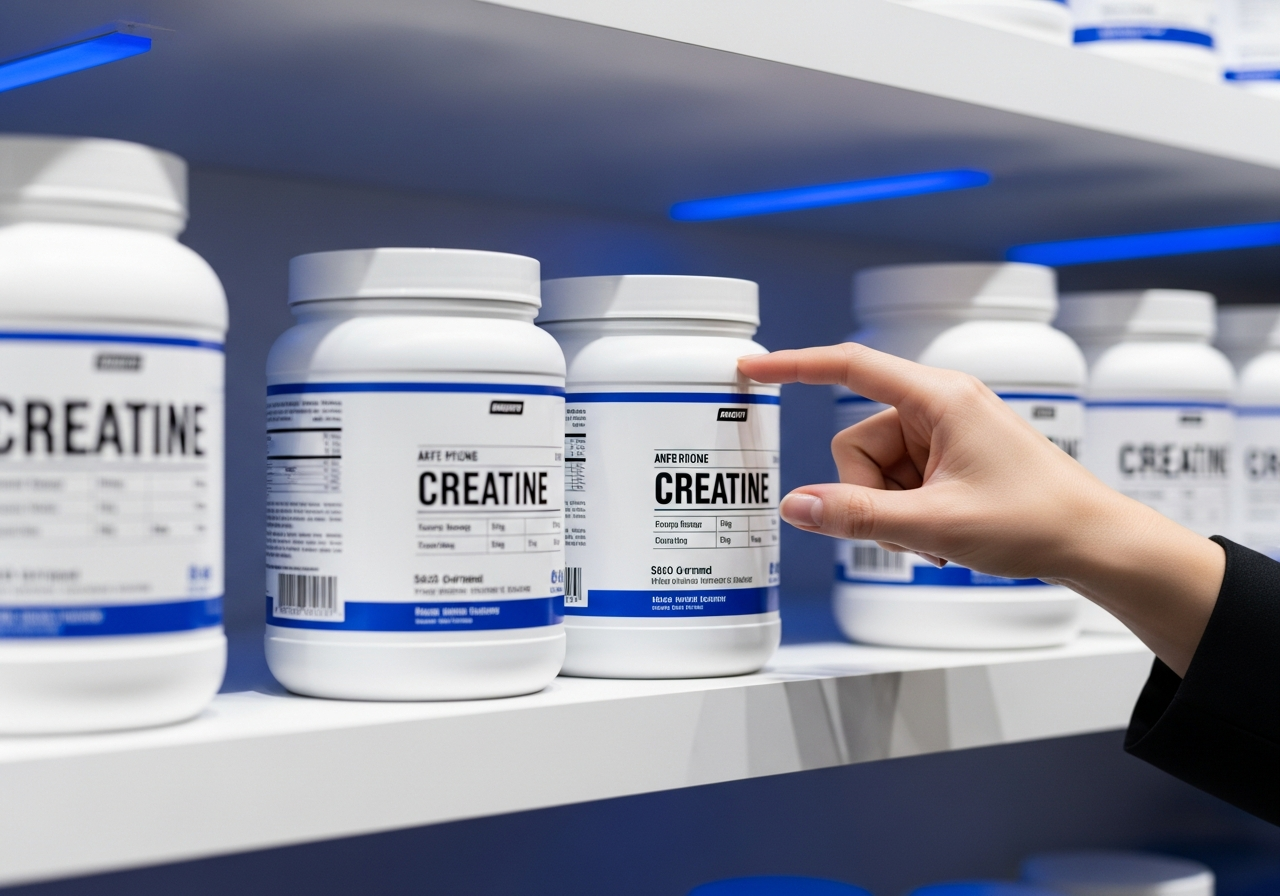
The best creatine product in Ontario is the one that gives you a full effective dose of creatine monohydrate, clear Canadian-compliant labelling, and solid seller transparency at a fair price. You do not need a long ingredient list, a stimulant blend, or a special delivery system to get the core benefit.
Use this label-check process every time you shop:
- Confirm the form. Look for “creatine monohydrate” on the front or supplement facts panel, not just “creatine blend”.
- Confirm the dose. A standard serving should clearly provide about 3 g to 5 g of creatine monohydrate, or tell you exactly how much you need to scoop.
- Check the ingredient list. Fewer ingredients are usually better if you only want creatine. Flavours, sweeteners and acids are not automatically bad, but they should not obscure the dose.
- Look for an NPN when applicable. In Canada, an NPN signals the product has been licensed as a natural health product. It is not a perfect quality guarantee, but it is a useful legitimacy check.
- Look for testing transparency. Third-party testing, lot tracking, or easy-to-find brand documentation are all positives.
- Compare cost per effective serving. Price the tub by cost per 5 g serving, not by container size alone.
- Check the seller. A reputable Ontario or Canadian retailer should have clear contact info, shipping policies and product details.
If you want a faster shortlist, compare options using our best creatine rankings, browse the creatine product catalog, or use the creatine brand reviews to see which companies disclose more.
| Format | Best for | Main upside | Main downside |
|---|---|---|---|
| Unflavoured monohydrate powder | Most Ontario buyers | Best evidence and value | Can be a bit gritty in some liquids |
| Micronized monohydrate | People who care about mixability | Often dissolves a bit better | Sometimes slightly pricier |
| Capsules | Travel and convenience | No mixing needed | Usually more expensive per 3-5 g dose |
| Flavoured creatine | People who dislike plain powder | More palatable | Added ingredients and often higher cost |
| Gummies | People prioritizing convenience | Easy to use | Can be under-dosed and expensive |
A final Ontario buying tip: if a product headline promises “no loading required” or “better absorption than monohydrate,” treat that as marketing until the brand shows strong evidence. For most people, simple wins.
How much creatine to take: simple Ontario dosing by body weight and training goal
For most adults buying creatine in Ontario, the right maintenance dose is 3 g to 5 g per day, every day, and a loading phase is optional. If you want faster saturation, meaning fully topped-up muscle creatine stores, the standard loading protocol is about 20 g per day split into 4 doses of 5 g for 5 to 7 days, followed by 3 g to 5 g per day.
This guidance is well-established in mainstream creatine science and aligns with the ISSN position stand and broad evidence summaries such as Examine.com’s creatine evidence summary. The reason body weight matters only modestly is that a standard 3 g to 5 g daily dose is enough for most people to reach high muscle creatine stores over time, but larger athletes or aggressive loaders may prefer weight-based calculations.
Here is a practical framework:
- Smaller adults under about 60 kg: 3 g daily is often enough.
- Most adults around 60-100 kg: 5 g daily is the usual simple choice.
- Larger athletes over 100 kg: 5 g daily is still reasonable, though some prefer a slightly more tailored approach.
By goal, your plan can look like this:
| Goal | Suggested approach | What to expect |
|---|---|---|
| General fitness | 3-5 g daily, no loading | Gradual saturation over roughly 3-4 weeks |
| Strength or bodybuilding | Optional loading 20 g/day for 5-7 days, then 3-5 g/day | Faster early effect on training performance and water-weight increase |
| Team sports or sprint power | 5 g daily, consider loading before a training block | Best fit for repeated high-intensity efforts |
| Older adults training for muscle maintenance | 3-5 g daily with resistance training | Benefit depends on consistent training and time |
If you want precise dosing help, use our creatine dosage calculator and read the deeper guides on how much creatine per day and creatine loading phase.
The biggest dosing mistake Ontario buyers make is inconsistency. Creatine is not a “take it only on workout days” supplement if you care about best results. The whole point is keeping muscle stores elevated. Daily use matters more than perfect timing.
Exactly how to take creatine after you buy it, and what results to expect week by week
The simplest way to take creatine is to mix 3 g to 5 g of creatine monohydrate into water, a shake or another drink once per day and keep doing it consistently. Timing matters far less than daily adherence, so the best time is the time you will actually remember.
Follow this step-by-step plan:
- Measure the dose. Use the included scoop only if it states grams clearly; otherwise weigh it or use a product with exact gram guidance.
- Pick a daily anchor. Many people tie creatine to breakfast, their post-workout shake or a consistent evening meal.
- Mix it fully enough. Monohydrate does not need to disappear perfectly to work, but a shaker and room-temperature liquid usually help.
- Take it daily. Workout day, rest day, travel day and vacation day all count.
- Stay normally hydrated. You do not need extreme water intake, but do not under-drink.
What should you expect?
- Days 1-7 with loading: some people notice a quick body-mass increase from extra intracellular water, meaning water drawn into muscle, plus slightly better repeat performance in the gym.
- Weeks 2-4 without loading: muscle stores are building, and you may start noticing improved training quality, one more rep on hard sets, or a bit more power on repeated efforts.
- Weeks 4-8: this is where consistent users often notice clearer strength and training-volume benefits, especially if their program is good.
- Months 2-6: the real payoff is cumulative. Creatine helps you support better training, and better training drives muscle and performance gains.
How do you tell if it is working? The best signs are not dramatic feelings. Look for objective trends: slightly more reps at a given weight, more total training volume, improved sprint repeatability, modest scale increase early on, or better long-term progress in strength and lean mass. If you want a full setup guide, see how to take creatine, when to take creatine and how long creatine takes to work.
If nothing seems to happen after a month, do not assume the supplement failed. Check your dose, your consistency, your training quality and whether your expectations were unrealistically stimulant-like. Creatine works subtly, then compounds.
Who creatine is for in Ontario: beginners, women, older adults and competitive athletes
Creatine is appropriate for many healthy adults in Ontario who want better support for strength, power, training volume or muscle retention, and it is not only for young men trying to bulk. The strongest evidence is in high-intensity exercise and resistance training, but several groups may find it especially useful.
Beginners are often excellent candidates because they can build simple habits early. A beginner does not need anything fancy. One daily 3 g to 5 g dose of monohydrate, paired with a basic lifting or fitness routine, is enough. See creatine for beginners if you are just starting.
Women can use creatine just as effectively as men. Creatine does not masculinize you, and it does not cause fat gain by itself. Some women notice a small early scale increase from water stored in muscle, not body fat. Our deeper guide on creatine for women covers the details.
Older adults may benefit when creatine is paired with resistance training to support muscle performance and maintenance. Age-related muscle loss is a practical reason this topic matters well beyond bodybuilding. Read creatine for older adults for the full picture.
Athletes in sports involving repeated sprints, jumps, collisions or heavy strength work are classic creatine users. The International Olympic Committee consensus on dietary supplements recognises creatine as one of the more evidence-supported performance supplements in sport. See IOC consensus on dietary supplements.
Vegetarians and vegans may respond particularly well because dietary creatine intake from meat and fish is lower or absent. That does not mean omnivores cannot benefit; it means low baseline intake can make the storage increase more noticeable.
Who should pause before buying? Anyone with a relevant medical condition, especially pre-existing kidney disease, complex medication use, pregnancy or another situation requiring clinician guidance, should discuss it with a qualified healthcare professional first. That is not a sign creatine is broadly unsafe; it is simply good practice when any supplement intersects with health management.
For Ontario shoppers, the bottom line is simple: if you train hard or want to preserve muscle and performance as you age, creatine is one of the most evidence-based supplements you can buy.
Safety, side effects and Canadian labelling: what Ontario buyers should realistically watch for
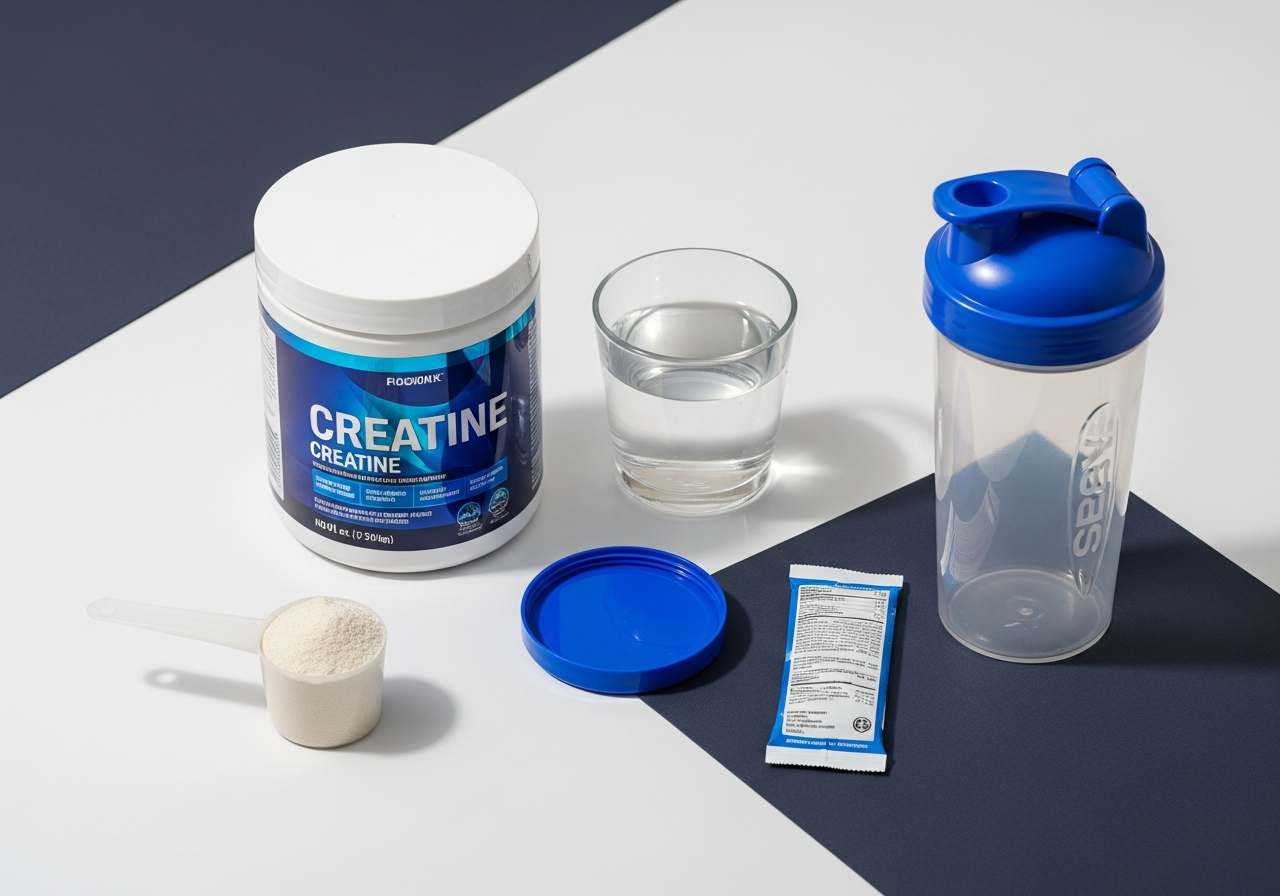
Creatine is generally considered safe for healthy adults when taken at recommended doses, and the most common side effects are mild water-weight gain and occasional digestive discomfort. The idea that creatine is inherently harmful to healthy kidneys, causes dehydration, or behaves like an anabolic steroid is not supported by the mainstream evidence base.
The 2017 ISSN position stand and the 2021 JISSN misconceptions review both support the overall safety profile of creatine monohydrate in healthy populations when used appropriately. Mayo Clinic also notes that creatine appears to be safe for up to several years when used as directed in healthy people. See Mayo Clinic — Creatine.
What side effects are most realistic?
- Water-weight gain: often shows up early, especially if you load. This is usually water pulled into muscle tissue, not fat gain.
- Stomach upset or loose stool: more common with large single doses or poor mixing. Splitting doses and avoiding dry scooping usually helps.
- Perceived bloating: some people report it, though true problematic bloating is often more about dosing method than creatine itself.
Ontario-specific buying and safety checks matter too:
- NPN: a useful legitimacy signal on many Canadian natural health products.
- Full label disclosure: exact creatine amount, all non-medicinal ingredients, serving size.
- Lot or batch details: useful for traceability.
- Third-party testing: not mandatory for every good product, but a strong plus.
Two important cautions deserve honesty. First, creatine can increase blood creatinine, which is a breakdown marker often used on bloodwork, and that can confuse people into thinking kidney harm is occurring when it may simply reflect creatine metabolism. Second, if you already have kidney disease or another significant medical issue, self-supplementing without medical guidance is unwise.
If side effects are your main concern, go with plain monohydrate, start at 3 g daily, take it with food or a larger drink if needed, and read our deeper guides on is creatine safe, creatine digestive side effects and creatine and kidney concerns.
Common creatine myths Ontario shoppers still hear in stores, and what the evidence actually says
Most creatine myths persist because the supplement causes real but misunderstood effects, especially water retention, and because many buyers still confuse creatine with completely different substances. The evidence-backed view is much calmer: creatine is a well-studied dietary supplement, not a steroid, not a hormone, and not a shortcut that replaces training.
Here are the most common myths and the straight answer:
- “Creatine is a steroid.” False. Creatine is a naturally occurring compound involved in cellular energy production, not an anabolic steroid.
- “Creatine ruins your kidneys.” Not supported in healthy users at recommended doses, though people with existing kidney disease should get medical guidance.
- “You have to cycle creatine.” False for most people. There is no established need to cycle creatine on and off.
- “It only works if you load.” False. Loading works faster, but daily maintenance alone still works.
- “Women should avoid it because it causes bulk.” False. It can support performance and lean mass, but it does not automatically make someone bulky.
- “If you stop taking it, you lose all your muscle.” False. You may lose some water-weight and some performance edge over time, but actual training gains do not instantly vanish.
- “Expensive forms absorb better, so they must work better.” Usually unproven. Monohydrate remains the evidence standard.
The practical reason these myths matter in Ontario stores is that they influence purchasing. A buyer who fears monohydrate may overpay for a weaker evidence product. A buyer who expects stimulant-like energy may think creatine “did nothing” even while training performance is gradually improving.
If you want the longer evidence review, see creatine myths debunked, do you need to cycle creatine, does creatine make you gain weight and is creatine a steroid.
The best myth filter is this: if a claim tries to scare you away from simple monohydrate or push you toward a premium “advanced” creatine without strong comparative evidence, assume the seller is marketing first and educating second.
Buying creatine online versus in-store in Ontario: price, convenience, trust and returns
For Ontario shoppers, buying creatine online usually gives you more selection and easier price comparison, while buying in-store gives you immediate access and hands-on label checking. Neither channel is automatically better; the smarter choice depends on how much you value speed, scrutiny, price transparency and shipping convenience.
Online buying is often best if you want to compare cost per serving across multiple brands, read ingredient panels carefully, and review several forms at once. Canadian online retailers can also make it easier to avoid cross-border import hassles. If you are comparing digital listings, verify that the grams per serving, flavour, tub size and seller identity are all clear.
In-store buying is useful if you need creatine today, want to inspect the seal and expiration details yourself, or prefer face-to-face questions. For searches like buy creatine Toronto or creatine Ottawa, local supplement chains and fitness-oriented nutrition stores can be excellent if their staff are informed and not just upselling blends.
Use this Ontario buying checklist whichever route you choose:
- Does the listing or label clearly say creatine monohydrate?
- Is the dose clearly 3 g to 5 g per serving or easy to measure to that range?
- Is there an NPN or other clear Canadian-compliant information when applicable?
- Are return, freshness and shipping policies visible?
- Is the seller reputable enough that you would trust a batch issue or damaged product claim?
One hidden cost online buyers forget is serving inflation. A tub can look cheap until you discover the serving is only 2 g, meaning you need more scoops to hit an effective daily dose. One hidden cost in-store buyers forget is upselling into “premium” forms that are not meaningfully better.
If you are shopping across the province rather than a single city, Ontario residents usually benefit from broad access to Canadian warehouses and major courier networks. That means online buying can be especially competitive for repeat purchases, subscriptions and larger tubs. For broader national context, see the related guides on where to buy creatine in Canada and buying creatine online in Canada.
The best practical strategy for many people is hybrid: buy your first tub in-store if you want confidence, then reorder online once you know exactly which monohydrate product you like.
The biggest mistakes Ontario buyers make after purchasing creatine, and how to fix them fast
The most common creatine mistakes are buying the wrong format for your budget, taking too little, taking it inconsistently, or expecting an immediate stimulant effect. The good news is that almost all of these problems are easy to fix within a few days.
Here are the mistakes that matter most:
- Choosing a flashy blend instead of monohydrate. Fix: switch to plain monohydrate unless you have a very specific reason not to.
- Using a low dose. Fix: make sure you are actually getting about 3 g to 5 g daily, not an under-dosed serving.
- Only taking it on workout days. Fix: take it every day.
- Dry scooping or taking large single doses that upset your stomach. Fix: mix it in liquid and split doses if needed.
- Quitting because of a small early weight increase. Fix: understand that early water-weight gain is common and usually reflects muscle saturation, not fat gain.
- Judging it by “feeling energized”. Fix: track reps, sets, body weight and performance instead.
Troubleshooting is straightforward:
- If you feel bloated or get loose stool, reduce to 3 g daily and take it with a meal.
- If the powder feels gritty, use more liquid, warmer water, or a shaker bottle.
- If you keep forgetting, store it beside a daily routine item like your coffee mug or protein tub.
- If you think it is not working after two weeks without loading, remember that full effects can take several weeks.
Many Ontario buyers also make a shopping mistake before the use mistake: they buy a tiny expensive format, then become stingy with dosing to “make it last.” That usually leads to ineffective use. If cost matters, powder nearly always wins. Our guides on creatine powder vs capsules, how to mix creatine and missing a day of creatine can help you iron out the details.
The most successful users are rarely doing anything sophisticated. They buy a solid monohydrate, take the right amount daily, train consistently and give it time.
Bottom line: the smartest way to buy creatine in Ontario today
The smartest way to buy creatine in Ontario is to choose a reputable Canadian-sold creatine monohydrate product with clear labelling, an appropriate daily dose, and transparent quality signals rather than chasing novelty formulas. If you want the shortest possible answer to where to buy creatine Ontario, the answer is: buy from a trustworthy Ontario or Canadian retailer, online or in-store, and default to monohydrate unless you have a specific, evidence-based reason not to.
Your decision framework should be simple:
- Pick creatine monohydrate.
- Confirm about 3 g to 5 g per daily serving.
- Prefer clear Canadian labelling and an NPN when applicable.
- Check seller reputation, shipping and returns.
- Compare cost per effective serving, not hype per tub.
If you are in Toronto, Ottawa or elsewhere in Ontario, you do not need a city-specific formula. You need a legitimate product sold by a legitimate business. That is true whether you are shopping a downtown supplement store, a suburban chain, or a national Canadian e-commerce site.
Once you buy it, use it correctly. Take it every day, not just before workouts. Keep your expectations realistic. Expect support for strength, repeated high-intensity performance and long-term training progress, not an instant buzz. Expect the possibility of a small early increase in body weight from water held in muscle. Expect better results when it is paired with good training, enough protein and enough overall calories for your goal.
If you want to go deeper after this guide, the most relevant next reads are best creatine rankings, creatine dosage calculator, is creatine safe and the related buying guide on where to buy creatine in Canada.
For most Ontario buyers, the right move is not complicated: buy plain monohydrate, dose it properly, and stay consistent long enough to let the evidence-backed benefits show up in your training.
Creatine in Ontario: the numbers that actually matter
- 3-5 g/day Standard maintenance dose — Appropriate for most healthy adults using creatine monohydrate.
- 20 g/day Typical loading phase — Usually split into 4 doses for 5-7 days if faster saturation is desired.
- 5-7 days Common loading duration — Helps raise muscle creatine stores faster than maintenance alone.
- 3-4 weeks No-loading saturation window — A daily maintenance dose typically takes several weeks to fully saturate muscles.
Frequently Asked Questions
Where can I buy creatine in Ontario?
You can buy creatine in Ontario from supplement stores, some pharmacies, select big-box retailers and Canadian online supplement shops. The best choice for most people is a reputable seller offering plain creatine monohydrate with clear grams per serving, full ingredient disclosure and, ideally, Canadian-compliant labelling such as an NPN where applicable.
What is the best creatine to buy in Toronto?
The best creatine to buy in Toronto is usually plain creatine monohydrate from a reputable Canadian seller. Monohydrate is the most studied form, typically the best value per effective dose, and the easiest product type to compare across local stores and online listings.
Can I buy creatine in Ottawa stores, or do I need to order online?
Yes, you can buy creatine in Ottawa stores, and you do not need to order online unless you want broader selection or easier price comparison. In-store buying is useful if you want the product immediately and want to inspect the label yourself, while online buying often wins on variety and repeat-purchase convenience.
Is creatine legal to buy in Ontario?
Yes, creatine is legal to buy in Ontario. It is commonly sold as a sports supplement, and shoppers should focus less on legality and more on choosing a properly labelled, reputable product with clear dosing and transparent seller information.
Do I need a Natural Product Number on creatine in Ontario?
You do not need to reject every product that lacks an NPN, but an NPN is a helpful quality and legitimacy signal for many creatine products sold in Canada. It shows the product has been licensed as a natural health product, though you should still review the ingredient list, dose and brand transparency.
How much creatine should I take after buying it in Ontario?
Most adults should take 3 g to 5 g of creatine monohydrate per day after buying it in Ontario. If you want faster saturation, a common loading option is 20 g per day split into 4 doses for 5 to 7 days, followed by 3 g to 5 g daily.
Is creatine monohydrate better than creatine HCL or gummies?
For most people, creatine monohydrate is the better buy because it has the strongest evidence base and is usually the most cost-effective format. HCL and gummies may be convenient for some users, but they are often more expensive and have not consistently outperformed monohydrate in meaningful results.
What should I look for on a creatine label in Ontario?
You should look for the exact form, usually creatine monohydrate, the exact grams per serving, a short ingredient list, seller transparency and Canadian-compliant labelling details. An NPN, lot information and third-party testing claims can all add confidence, especially when buying online.
Can beginners in Ontario take creatine safely?
Yes, healthy beginners in Ontario can usually take creatine safely at recommended doses, and beginners often do well with a simple 3 g to 5 g daily monohydrate routine. The main caveat is that anyone with kidney disease, complex medical issues or medication concerns should speak with a healthcare professional first.
Does creatine make you gain weight when you start taking it?
Yes, creatine can cause a small early increase in body weight, but that is usually due to water being drawn into muscle rather than fat gain. This effect is more noticeable with loading and is one reason people should judge creatine by performance and training progress, not scale weight alone.