Where to Buy Creatine in Nova Scotia: Halifax and Online Options
By The Creatine Canada Research Team — Evidence-based supplement analysts
You can buy creatine in Nova Scotia from Halifax supplement stores, major pharmacies and fitness retailers, but for the best mix of price, stock consistency, and label transparency, buying creatine online in Nova Scotia is usually the smarter option. For most people, plain creatine monohydrate with a Health Canada-compliant label is the best creatine choice in Nova Scotia because it is the most studied, most effective, and usually the lowest-cost form per gram.
Evidence-based · Cites 4 sources · Editorial standards
Key Takeaways
- The best all-around option in Nova Scotia is plain creatine monohydrate powder, ideally unflavoured and third-party tested.
- Halifax has the widest in-store selection, but online buying usually offers better price per gram and fewer out-of-stock issues.
- A standard maintenance dose is 3 to 5 g daily; a loading phase is optional at 20 g daily split into 4 doses for 5 to 7 days.
- Look for a Health Canada-compliant label and avoid overpaying for HCL, gummies, or flashy blends unless convenience matters more to you than cost.
- Creatine works by increasing muscle phosphocreatine stores, which helps you regenerate ATP faster during short, hard efforts.
- Women, beginners, older adults, vegetarians, and many athletes can all use creatine safely when dosing is sensible and contraindications are respected.
- The most common buying mistakes are choosing the wrong form, ignoring serving size math, and mistaking normal water-weight gain for fat gain.
Where to buy creatine in Nova Scotia: the direct answer first
You can buy creatine in Nova Scotia in two main ways: from local stores, especially in Halifax, or by ordering from Canadian online supplement retailers. If your goal is the best balance of quality, price, and convenience, online shopping is usually the better route; if your goal is same-day pickup, Halifax stores are the better route.
That is the short answer, but the better question is what kind of creatine you should buy and how to tell whether you are getting good value. In practice, the best creatine in Nova Scotia for nearly everyone is creatine monohydrate, not a designer form. The 2017 ISSN position stand concluded that creatine monohydrate is the most effective ergogenic nutritional supplement currently available for increasing high-intensity exercise capacity and lean mass during training, which is why it remains the default recommendation rather than HCL, nitrate, ethyl ester, or proprietary blends.
If you are shopping locally, Halifax is the province's strongest hub for creatine supplement stores because it has the highest density of supplement shops, fitness chains, and pharmacies. Outside Halifax, selection can be more limited, and you may see fewer unflavoured monohydrate options or more expensive specialty products. That is one reason many buyers search for buy creatine online Nova Scotia: online listings let you compare grams per container, ingredients, flavouring, and shipping costs more easily.
When buying, use this simple filter:
- Best value: unflavoured creatine monohydrate powder.
- Best convenience: capsules if you hate powder, though they usually cost more per gram.
- Best evidence: monohydrate from a reputable Canadian seller with transparent labelling.
- Best for beginners: a single-ingredient powder with a clearly labelled 3 g, 4 g, or 5 g scoop.
If you are new to dosage math, use our creatine dosage calculator before buying a tub. If you want product-level comparisons, start with our best creatine rankings and creatine product catalog.
The key point is simple: the best place to buy creatine in Nova Scotia depends less on geography than on whether the product is correctly dosed, plainly labelled, and reasonably priced per gram.
The best creatine in Nova Scotia is usually plain monohydrate, not the fancy version
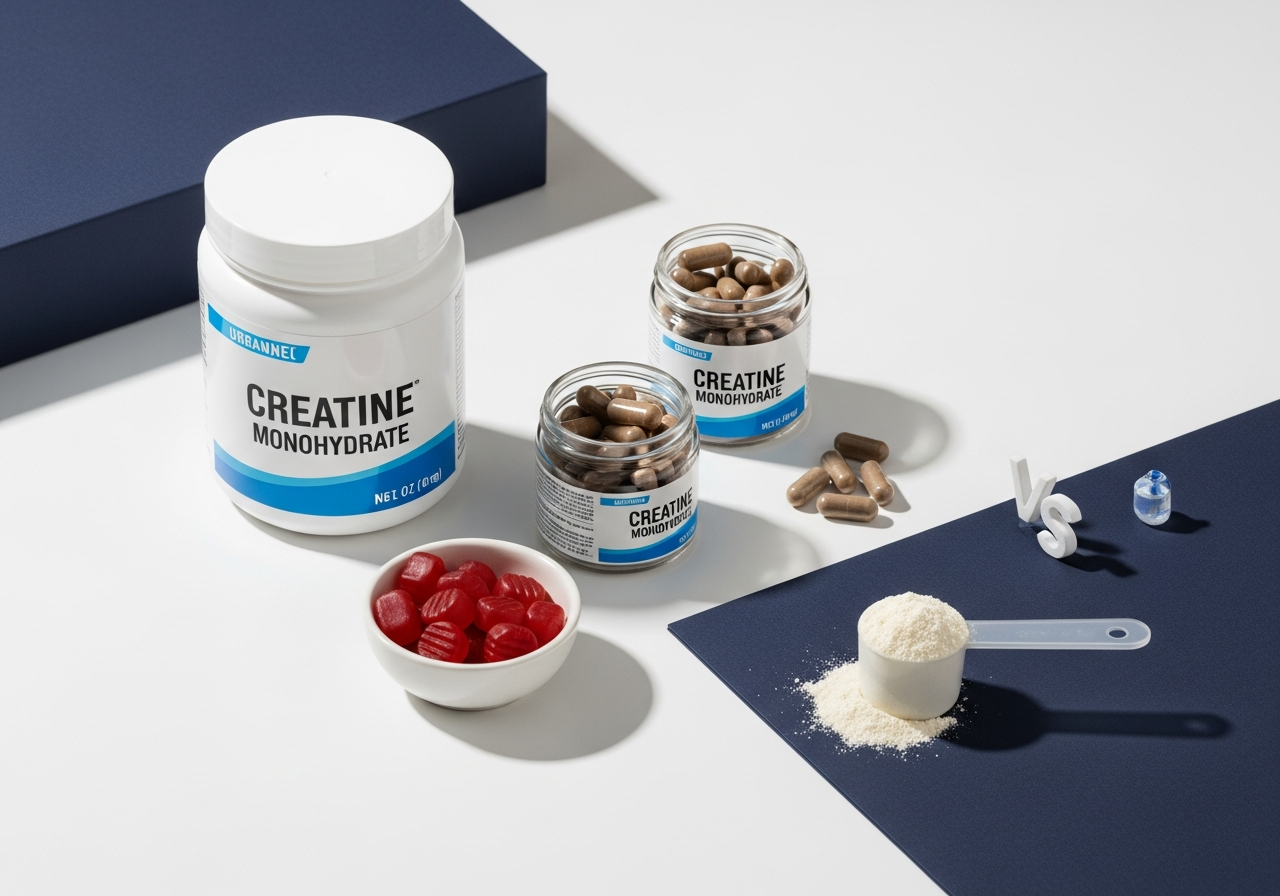
The best creatine to buy in Nova Scotia is usually plain creatine monohydrate because it has the strongest evidence, the lowest typical cost per effective dose, and the fewest unnecessary add-ons. In most cases, paying extra for a more heavily marketed form does not buy you better real-world results.
Creatine works after it accumulates in muscle, not because it feels stimulating the day you take it. That matters when you shop, because many premium creatine products are sold on the promise of better absorption, less bloating, or faster effects, even though monohydrate already works extremely well for most users when taken consistently. The review by Antonio et al. (2021) directly addressed many of these misconceptions and reinforced that creatine monohydrate remains the reference form against which others are judged.
Here is what to prioritise when comparing products in Nova Scotia or Halifax:
- Single ingredient: the label should primarily list creatine monohydrate, not a "matrix".
- Dose clarity: the serving should clearly state how many grams of actual creatine monohydrate you get.
- Third-party testing or strong brand reputation: especially useful for competitive athletes concerned about contamination.
- Reasonable price per 100 g: compare total grams, not just container price.
- Minimal extras: flavours, sweeteners, or pump ingredients are optional, not performance essentials.
Micronized monohydrate can be a good choice if you care about easier mixing, but it is still fundamentally monohydrate. If you are weighing options like gummies, capsules, or flavoured blends, convenience may justify the premium, but efficacy does not usually improve. Our creatine brand reviews and best creatine rankings can help you sort practical differences from marketing noise.
In Canada, also check whether the product looks professionally labelled for the Canadian market rather than like a grey-market import. That means ingredient disclosure, serving size clarity, bilingual elements where applicable, and a proper Natural Product Number when the product is sold as a licensed natural health product. If you want a deeper explanation of that system, see the related guide on Canadian supplement regulations.
The practical conclusion is straightforward: for someone searching "best creatine Nova Scotia," the right answer is almost always a reputable creatine monohydrate powder you will actually take every day.
Creatine Halifax vs. online: which buying route actually makes more sense
If you need creatine today, Halifax stores win; if you want better selection and better value, buying creatine online in Nova Scotia usually wins. The right choice depends on urgency, not on supplement science.
Halifax has the broadest in-person creatine market in Nova Scotia because it concentrates the province's largest cluster of gyms, pharmacies, sports-nutrition shops, and general wellness retailers. That makes creatine Halifax searches very practical: you may be able to compare a few brands in one trip, ask questions in person, and leave with a tub the same day. The downside is that store shelves are limited, promotional pricing varies, and the cheapest effective option is sometimes sold out while premium products remain.
Online buying flips that equation. You can usually compare more brands, more sizes, and more formats in 10 minutes than you could by driving to multiple stores. Online also makes it much easier to compare cost per gram, read ingredient panels closely, and avoid impulse buys. For anyone outside Halifax, online ordering is often the simplest answer to "where to buy creatine in Nova Scotia" because smaller communities may only carry one or two options.
| Buying route | Best for | Main advantages | Main drawbacks |
|---|---|---|---|
| Halifax supplement stores | Same-day pickup | Immediate availability, in-person help, easy returns | Higher price per gram, less selection, stock gaps |
| Pharmacies / general retailers | Convenience errands | Easy to add to routine shopping, trusted storefronts | Often small selection, sometimes higher cost |
| Canadian online supplement stores | Best overall value | Broader range, easier comparison, frequent deals | Shipping wait, possible shipping threshold |
| Marketplace sellers | Only if verified carefully | Sometimes cheap upfront | Higher risk of poor storage, vague sourcing, listing confusion |
A sensible rule is this: buy local when you urgently need a basic monohydrate tub and can confirm the label is solid; buy online when you want the best long-term value or a specific product. If you are comparing formats, our guides on best creatine rankings and creatine product catalog can narrow the list before you shop.
The science does not change by province. Whether you buy in Halifax or online, what matters is that you get a legitimate creatine monohydrate product at an effective daily dose.
Why creatine works matters when you are deciding what to buy
Creatine works by increasing your muscle phosphocreatine stores, which helps your body regenerate ATP faster during short, intense efforts, and that mechanism is exactly why monohydrate is the form to prioritise when shopping. If a product does not improve that core job better than monohydrate, it has not earned a premium price.
ATP, or adenosine triphosphate, is the immediate energy currency your muscles use for explosive contractions. During a heavy set of squats, a sprint, a jump, or repeated high-intensity efforts, ATP is used quickly. Phosphocreatine acts like a rapid reserve that donates a phosphate group to help rebuild ATP, which can support a bit more power, a few more quality reps, or slightly better repeat performance. Over weeks of training, those small improvements can add up to greater strength and lean mass gains.
This is why creatine is not just for bodybuilders. The International Olympic Committee's 2018 consensus on dietary supplements recognised creatine as one of the few supplements with strong evidence for certain performance contexts, especially repeated high-intensity efforts. That can be relevant for hockey players, sprinters, lifters, field-sport athletes, and many recreational gym-goers in Nova Scotia alike.
It also explains why some products are oversold. Creatine is not a stimulant, a pump powder, or a magic fat burner. If a label is built around instant-feeling effects, it is probably selling the wrong expectation. Creatine's benefit is saturation, meaning your muscles gradually store more creatine over days or weeks until you reach a more effective baseline.
What should a buyer conclude from the mechanism?
- You do not need a "fast-acting" form: saturation matters more than acute sensation.
- You do not need a pre-workout blend: pure creatine works independently.
- You do need consistency: daily use matters more than perfect timing.
- You do need enough total grams: underdosed products are a bad buy, even if they look premium.
If you want a full beginner breakdown of the basics, see what creatine is and the evidence-based benefits of creatine. For this buying guide, the takeaway is simple: once you understand how creatine works, choosing the right product becomes much easier and marketing claims become much less persuasive.
For independent evidence summaries, see Kreider et al. (2017), ISSN Position Stand and Examine.com's creatine evidence summary.
A step-by-step guide to buying the right creatine in Nova Scotia
The easiest way to buy the right creatine in Nova Scotia is to decide your format, confirm the label, compare cost per gram, and buy only enough complexity to match your real needs. Most bad creatine purchases happen because shoppers skip one of those steps.
- Choose your format. Powder is best for value. Capsules are best for portability. Gummies are best only if compliance is otherwise poor.
- Default to creatine monohydrate. Unless you have a very specific reason, do not start with HCL or a multi-ingredient pre-workout.
- Check the actual dose per serving. You want a product that makes it easy to reach 3 to 5 g per day.
- Read the ingredient list. Fewer ingredients usually means fewer surprises and clearer value.
- Compare total grams, not tub size. A bigger-looking container is not always a better buy.
- Check Canadian label compliance. Look for a polished, Canada-ready label and avoid vague marketplace listings.
- Consider testing and brand transparency. This matters more if you are a competitive athlete.
- Buy for consistency. The best creatine is the one you will actually take every day for months, not the one with the flashiest claims.
Here are three practical Nova Scotia buying examples:
- Beginner in Halifax: buy an unflavoured monohydrate powder locally if you want to start today, then reorder online later if you find a better price per gram.
- Student on a budget in Nova Scotia: buy the largest reputable monohydrate tub you can reasonably finish before its best-before date and store it dry.
- Competitive athlete: prioritise single-ingredient monohydrate from a seller with strong quality-control signals and clear lot information.
If you are unsure how much to buy, use our creatine dosage calculator. If you want a practical walkthrough of daily use after purchase, read how to take creatine and how to mix creatine.
A good buying decision should feel boring in the best way: plain product, clear label, correct dose, fair price, easy daily use. That is how you avoid wasting money while still getting the benefits creatine is known for.
How much creatine to take after you buy it: exact doses, timelines, and what to expect
After you buy creatine in Nova Scotia, the standard evidence-based plan is 3 to 5 g daily, with an optional loading phase of 20 g daily split into 4 doses for 5 to 7 days if you want faster saturation. You do not need to cycle creatine, and you do not need a special workout-day-only protocol.
The most practical dosing framework is based on goal first and body size second. Smaller people can often do well at the low end of the maintenance range, while larger athletes may prefer the high end for convenience and consistency. A common research-based loading protocol is roughly 0.3 g per kg of body weight per day for 5 to 7 days, followed by maintenance at roughly 0.03 g per kg per day.
| Body weight | Maintenance dose | Optional loading dose | Best use case |
|---|---|---|---|
| 50-65 kg | 3 g/day | About 15-20 g/day split into 4 doses | Beginners, smaller adults, general fitness |
| 66-85 kg | 3-5 g/day | About 20 g/day split into 4 doses | Most adults lifting 3-5 times weekly |
| 86-105 kg | 5 g/day | About 25-30 g/day split into 4 doses | Larger lifters and team-sport athletes |
| 105 kg+ | 5 g/day | Use body-weight formula rather than guessing | Very large athletes |
What to expect:
- Days 1-7 with loading: body weight may rise modestly as muscles hold more water.
- Weeks 2-4 without loading: saturation builds gradually, often with subtle performance improvements.
- Weeks 4-8: many users notice better repeat reps, slightly stronger sets, or improved training quality.
- Months 2-3: if training and protein intake are solid, the compound effect on strength and lean mass becomes easier to appreciate.
If you want personalised math, use the creatine dosage calculator or read how much creatine per day and whether a loading phase is worth it.
The main thing to remember is that creatine is a saturation supplement. Missing one exact minute of timing does not matter much; taking the correct total amount consistently does.
When to take creatine, what to mix it with, and how to make it stick
The best time to take creatine is the time you will remember daily, because total intake and consistency matter more than precise timing. For most Nova Scotia buyers, the easiest habit is 3 to 5 g once per day with a meal, after training, or in a routine morning drink.
Creatine does not need to be taken immediately before a workout to work. Because it functions through saturation of muscle stores, timing differences are likely much smaller than marketing suggests. If you train in the evening, taking creatine at breakfast is still perfectly reasonable. If you train in the morning, taking it after the session is also fine. What matters is that your muscles stay saturated over time.
Mixing tips are simple:
- Water works. Plain water is completely acceptable.
- Protein shakes work. Many people find this easiest. See mixing creatine with protein powder.
- Warm liquids can help dissolution. Micronized powders usually mix more smoothly.
- Food is optional. Taking creatine with or without food is fine for most people.
Good adherence strategies matter more than theoretical optimisations:
- Keep the tub next to your shaker, coffee setup, or toothbrush rather than hiding it in a cupboard.
- Use the same scoop every day and level it if the serving is pre-measured.
- Set a recurring reminder for the first 3 to 4 weeks until the habit sticks.
- Take it on rest days as well as training days.
If you get minor stomach upset, split the dose into two smaller servings or take it with food. If powder texture bothers you, consider capsules, but remember they often require several capsules to reach a full daily dose and usually cost more per gram. If you are unsure about liquids, see how to mix creatine and when to take creatine.
The bottom line is practical: do not overcomplicate creatine timing. Choose a daily moment you can repeat for months, and the supplement is much more likely to do what the evidence says it can do.
Who creatine is for: beginners, women, older adults, athletes, and people who benefit most
Creatine is a sensible purchase in Nova Scotia for many more people than just young men trying to bulk. Beginners, women, older adults, vegetarians, and many competitive or recreational athletes can all be good candidates for creatine monohydrate when their goals match what creatine actually does.
Beginners often benefit because creatine is simple, affordable, and one of the rare supplements with robust evidence. It can support training quality without requiring complex timing or stacks. If you are brand new, start with plain monohydrate and a 3 to 5 g daily routine.
Women can use creatine effectively; the idea that it is only for men is a myth. Women may value creatine for strength, gym performance, lean-mass support, and potentially broader healthy-aging relevance, depending on context. If this is your situation, see our guide to creatine for women.
Older adults may benefit when creatine is combined with resistance training, particularly for supporting muscle function and fighting age-related declines in strength. Creatine is not a replacement for training, but it can be a useful add-on. See creatine for older adults for details.
Vegetarians and vegans may sometimes notice particularly meaningful responses because dietary creatine intake is often lower when little or no meat is consumed. Since supplemental creatine is typically produced synthetically rather than extracted from meat, many products are suitable for vegans; see is creatine vegan.
Athletes in sports involving repeated sprints, collisions, jumps, explosive shifts, or high-intensity intervals are among the clearest fit. In Nova Scotia, that can include hockey, field sports, football, combat sports, and strength sports. Competitive athletes should be especially careful about product quality and contamination risk.
Who should pause and ask a clinician first? People with known kidney disease, complex medical conditions, pregnancy or breastfeeding questions, or medication interactions worth reviewing. For a deeper safety dive, see is creatine safe and who should not take creatine.
The right question is not "Is creatine for people like me?" The right question is "Do I want better support for high-intensity performance, training output, or muscle maintenance?" If yes, creatine is often worth considering.
Safety, side effects, and what Nova Scotia buyers should check on Canadian labels
Creatine is widely considered safe for healthy adults when used at evidence-based doses, and the most common side effects are manageable gastrointestinal discomfort and a modest increase in body weight from intracellular water, not fat gain. For most buyers in Nova Scotia, the bigger risk is not creatine itself but buying a poor-quality or misleadingly labelled product.
The safety data on creatine are stronger than many people realise. The ISSN position stand and later reviews have consistently supported creatine monohydrate as safe in healthy populations when used appropriately. One common confusion is kidney function: creatine can increase creatinine, a breakdown product measured on blood tests, without necessarily harming kidneys. That can alarm people who do not know the distinction. If you want a detailed explanation, read creatine vs kidney concerns.
Common side effects and fixes:
- Stomach upset: reduce single-dose size, take with food, or choose micronized powder.
- Loose stools during loading: split the 20 g across 4 smaller doses rather than taking it all at once.
- Water-weight gain: normal and often a sign of increased muscle creatine storage.
- Perceived bloating: often improved by avoiding oversized loading doses or very sugary mixed products.
For Canadian buying, inspect the label carefully. A legitimate product sold in Canada should present itself like a proper Canadian-market supplement, not a vague import listing with incomplete information. A Natural Product Number, or NPN, is the licence number Health Canada assigns to approved natural health products. While label specifics can vary by product category and seller, transparent Canadian labelling is generally a good signal. If you want the deeper regulatory context, see the related guide on whether creatine is approved in Canada.
Competitive athletes should also prefer reputable brands with strong quality-control practices because contamination risk matters even when the ingredient itself is allowed. The IOC consensus emphasised that supplement quality assurance is an important real-world issue for athletes.
For external references, see Antonio et al. (2021) and the IOC consensus on dietary supplements.
The practical message is calm and clear: creatine is usually safe, but buy carefully and dose sensibly.
The biggest creatine buying mistakes in Nova Scotia, plus myths that still waste money
The biggest creatine mistakes in Nova Scotia are overpaying for the wrong form, underdosing, quitting too early, and believing myths that have survived long after the evidence moved on. If you avoid those four errors, you are already ahead of most supplement shoppers.
Mistake 1: buying a flashy form instead of monohydrate. HCL, buffered creatine, ethyl ester, and proprietary blends are often marketed as superior, but monohydrate remains the evidence benchmark. Unless you have a very specific tolerance issue, monohydrate should be your starting point.
Mistake 2: ignoring grams per container. A small tub with dramatic branding can cost more and deliver fewer effective servings than a plain bag or larger tub. Always divide price by total grams, not by scoops or packaging appeal.
Mistake 3: expecting a stimulant feeling. Creatine does not usually create a noticeable buzz. It works quietly by improving muscle energy availability over time.
Mistake 4: stopping after one week. Without loading, creatine commonly takes a few weeks to show clearer effects. People often judge it too early.
Mistake 5: fearing normal water retention. Early scale increases are typically water pulled into muscle, not body fat. See does creatine make you gain weight and does creatine cause bloating.
Now the myths:
- "Creatine is a steroid." False. It is not an anabolic steroid. See our explainer.
- "Creatine is only for men." False. Women can benefit too.
- "You must cycle creatine." False for most users. Daily long-term use is common.
- "Creatine dehydrates you and causes cramps." This is not supported the way gym lore suggests. See creatine and dehydration.
- "Loading is mandatory." False. Loading speeds saturation but is optional.
If you want a full myth-by-myth breakdown, visit creatine myths debunked.
The best buyer mindset is sceptical and simple: choose the most studied form, pay attention to effective grams, and give it enough time to work before deciding whether it is worth repurchasing.
Bottom line: the smartest way to buy creatine in Nova Scotia
The smartest way to buy creatine in Nova Scotia is to choose a reputable creatine monohydrate product, buy locally in Halifax only when you need it immediately, and buy online when you want the best value and widest selection. That answer will fit the vast majority of shoppers far better than chasing trendy formats or marketing claims.
If you want the shortest possible recommendation, it is this:
- Buy creatine monohydrate.
- Choose unflavoured powder unless convenience is your top concern.
- Check the label quality, serving size, and total grams.
- Take 3 to 5 g daily consistently.
- Expect benefits to build over weeks, not hours.
For Halifax residents, local supplement stores are useful for same-day pickup and comparing a few tubs in person. For the rest of Nova Scotia, or for anyone focused on price and range, online buying is often easier and more efficient. Either way, the right product is usually boring: plain monohydrate, transparent label, fair cost per gram, no miracle promises.
If you still need help narrowing products, browse our best creatine rankings, creatine brand reviews, and creatine product catalog. If you need help with daily use after purchase, see how much creatine per day and how long creatine takes to work.
The final takeaway is simple and evidence-based: for people searching where to buy creatine in Nova Scotia, the best answer is not "find the most advanced formula" but "buy the most proven one from a trustworthy seller and use it correctly." That is how you get better value, better consistency, and better results.
Creatine in Nova Scotia: the numbers that matter
- 3-5 g/day Standard maintenance dose — The usual long-term daily range for most adults using creatine monohydrate.
- 20 g/day Common loading protocol — Typically split into 4 doses for 5 to 7 days if faster saturation is desired.
- 5-7 days Typical loading timeline — A loading phase can raise muscle creatine stores faster than maintenance alone.
- 0.3 g/kg/day Body-weight loading formula — A standard research-based loading approach before moving to maintenance around 0.03 g/kg/day.
Frequently Asked Questions
Where can I buy creatine in Nova Scotia?
You can buy creatine in Nova Scotia from Halifax supplement stores, some pharmacies and fitness retailers, or from Canadian online supplement sites. Halifax usually offers the best in-person selection, while online buying usually gives you better price comparison, more stock options, and easier access if you live outside the city.
What is the best creatine to buy in Nova Scotia?
The best creatine to buy in Nova Scotia is usually plain creatine monohydrate. It is the most studied form, the most consistently effective for strength and high-intensity training support, and usually the most affordable per effective daily dose.
Is Halifax the best place to shop for creatine in Nova Scotia?
Yes, Halifax is generally the best place for in-store creatine shopping in Nova Scotia because it has the strongest concentration of supplement retailers and gyms. If you want same-day pickup, Halifax is your best bet; if you want best value overall, online shopping often still beats local retail.
Should I buy creatine online in Nova Scotia or in a store?
You should buy creatine online in Nova Scotia if you care most about value, selection, and easier comparison shopping. You should buy in a store if you need it immediately, want to inspect the product in person, or prefer same-day convenience over maximum price efficiency.
How much creatine should I take after buying it?
Most people should take 3 to 5 g of creatine daily after buying it. If you want faster saturation, you can use a loading phase of 20 g daily split into 4 doses for 5 to 7 days, then continue with a maintenance dose.
Do I need creatine HCL, gummies, or capsules instead of monohydrate?
No, you do not need HCL, gummies, or capsules instead of monohydrate for effectiveness. Monohydrate remains the best-supported form, while capsules and gummies mainly offer convenience and usually cost more per gram of usable creatine.
Is creatine safe to use for beginners, women, and older adults?
Yes, creatine is generally safe for healthy beginners, women, and older adults when used at sensible doses and when obvious medical cautions are respected. The most common issues are mild stomach discomfort and temporary water-weight gain, not the extreme side effects often claimed in gym myths.
How do I know if a creatine product sold in Nova Scotia is good quality?
A good-quality creatine product sold in Nova Scotia should have a clear label, a simple ingredient list, an obvious serving size, and ideally strong quality-control signals from a reputable brand. For Canadian buyers, a proper Health Canada-ready presentation and transparent retailer are both good signs.
How long does creatine take to work?
Creatine can start working within about a week if you use a loading phase, but with a standard 3 to 5 g daily plan it often takes a few weeks to reach fuller muscle saturation. The real-world effects are usually noticed as improved training quality, not as an immediate buzz.
Can I take creatine every day, even on rest days?
Yes, you can and generally should take creatine every day, including on rest days. Daily intake helps keep muscle creatine stores saturated, which matters more than matching your dose only to workout sessions.