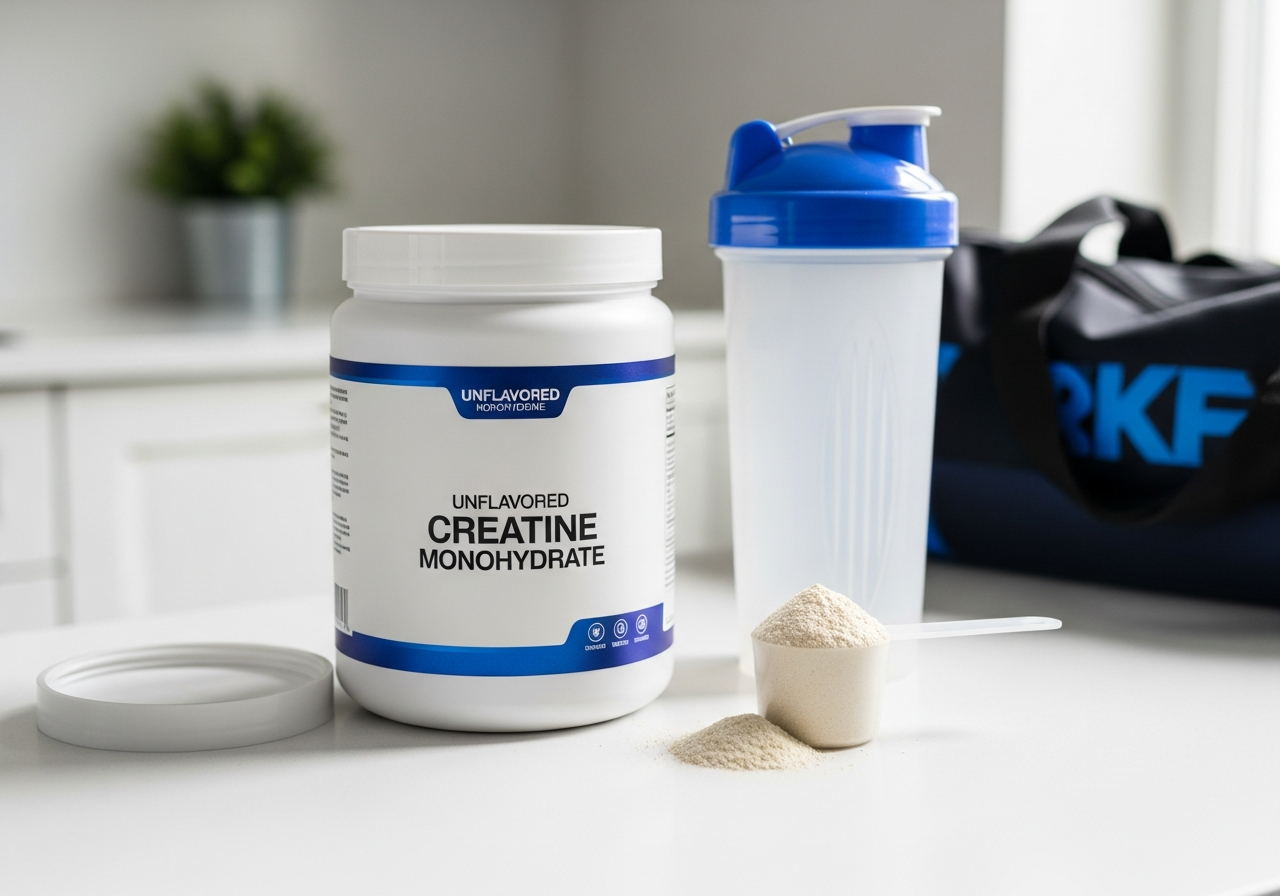
Where to Buy Creatine in New Brunswick: Local Stores and Online
By The Creatine Canada Research Team — Evidence-based supplement analysts
You can buy creatine in New Brunswick from local supplement shops, major fitness nutrition retailers, some pharmacies and big-box stores, but for the widest selection and easiest price comparison, reputable Canadian online stores usually win. If you want the safest default, choose creatine monohydrate with a Natural Product Number (NPN) or clear Health Canada-compliant labelling, simple ingredients, and transparent third-party testing.
Evidence-based · Cites 4 sources · Editorial standards
Key Takeaways
- The best all-around buy in New Brunswick is plain creatine monohydrate powder from a reputable Canadian seller.
- Look for an NPN, a short ingredient list, and preferably third-party testing before you buy creatine in NB.
- Moncton and Fredericton shoppers can often find creatine locally, but online usually offers better stock, sizes, and value.
- A standard maintenance dose is 3-5 g daily; loading is optional at 20 g daily split into 4 doses for 5-7 days.
- Creatine timing matters far less than consistency; take it every day, including rest days.
- Beginners, women, older adults, and many athletes can all use creatine safely when label directions and basic precautions are followed.
- Avoid overpaying for flashy forms like HCl or proprietary blends when monohydrate is the most studied and most cost-effective option.
Where to buy creatine in New Brunswick right now
You can buy creatine in New Brunswick from local supplement stores, select pharmacies, some big-box retailers, and Canadian e-commerce sites, but the best choice depends on whether you prioritise speed, price, or product selection. For most people in NB, the smartest default is to buy plain creatine monohydrate from a reputable Canadian retailer that clearly lists the ingredient panel, serving size, and Health Canada-compliant product details.
If you are searching where to buy creatine in New Brunswick, think in two buckets:
- Local purchase: best when you need it today, want to inspect the label in person, or prefer talking to staff.
- Online purchase: best when you want more brands, larger tubs, better stock levels, and easier comparison shopping.
In practical terms, shoppers looking for creatine Moncton or creatine Fredericton will usually find some local options, but selection can be inconsistent. Local shelves often carry only a few formats, such as unflavoured powder, capsules, or all-in-one pre-workouts that include creatine. Online Canadian stores usually carry more sizes, more brand options, and more transparent product pages.
The safest and most economical format is still creatine monohydrate. The 2017 International Society of Sports Nutrition position stand concluded that creatine monohydrate is the most effective ergogenic nutritional supplement currently available for increasing high-intensity exercise capacity and lean mass gains during training. If you need a primer before buying, start with best creatine rankings or browse a wider creatine product catalog.
When comparing products in New Brunswick, check these basics first:
- Form: plain creatine monohydrate
- Dose per serving: usually 3 g, 5 g, or similar
- Ingredient list: ideally just creatine monohydrate
- NPN or compliant Canadian label details where applicable
- Third-party testing or batch testing claims
- Cost per 5 g serving, not just sticker price
If you simply want the shortest answer to buy creatine NB: buy monohydrate, prioritise a trusted Canadian seller, and do not let fancy branding talk you into a more expensive form without better evidence.
Best local options for Moncton, Fredericton, and smaller New Brunswick cities
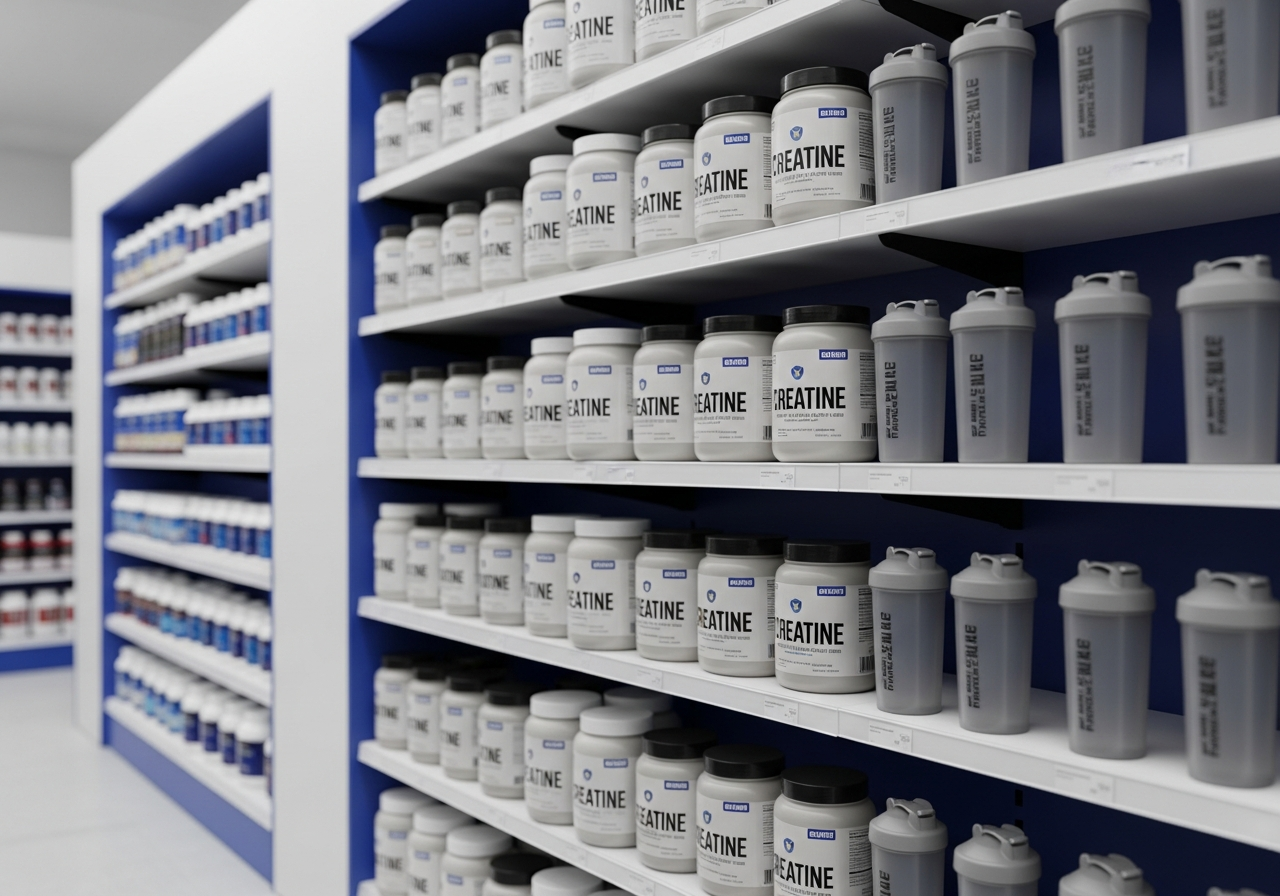
If you want creatine locally in New Brunswick, start with dedicated supplement retailers first, then check major fitness chains, pharmacies, and selected big-box stores. This is the fastest route for people searching creatine supplement stores New Brunswick, especially in Moncton and Fredericton.
For creatine Moncton, the local pattern is usually the same as in most mid-sized Canadian cities: dedicated supplement stores have the best chance of stocking multiple monohydrate options, while general retailers may have only one or two tubs or capsule products. For creatine Fredericton, expect a similar situation: decent access, but less depth than you would get online.
Use this store-order strategy to save time:
- Check dedicated supplement stores first. They are most likely to carry plain monohydrate, micronized monohydrate, and a few premium variants.
- Call ahead and ask three questions. Ask whether they have unflavoured monohydrate, what tub sizes are in stock, and the price per serving.
- Ask for the label photo if possible. That lets you verify the exact ingredient panel before driving over.
- Check pharmacies and big-box stores next. These can be convenient, but stock is often narrower.
- Avoid settling for a pre-workout blend just because it is available. Many blends underdose creatine or hide exact amounts behind proprietary formulas.
Local buying has real advantages. You can inspect packaging, avoid shipping delays, and return quickly if a seal is broken or the wrong item is handed to you. It also helps if you are a beginner who wants to compare scoop sizes and ask how to use it.
That said, local shopping often comes with two frustrations: price markups and uneven inventory. Creatine can go in and out of stock because monohydrate is the most popular form. If the exact product you want is missing, it is usually better to compare vetted options online than to buy a more expensive alternative with weaker evidence.
If you are unsure what form to choose, our guides on best creatine rankings and creatine brand reviews help narrow down which labels are worth checking in-store before you buy.
Online vs local buying in NB: which is actually better?
For most New Brunswick shoppers, buying creatine online is better for selection and value, while buying locally is better for same-day convenience. The right choice comes down to whether you need creatine today or want the most product options for your money.
Online buying is usually stronger in four ways:
- More sizes: small starter tubs, larger value tubs, and sometimes bulk pouches.
- More forms: unflavoured powder, flavoured powder, capsules, gummies, and specialty formats.
- Better comparison: you can compare ingredient lists, serving counts, and cost per gram side by side.
- Better stock visibility: you know before checkout whether the item is available.
Local buying is usually stronger in three ways:
- Immediate access: useful if you are starting this week.
- Label inspection: you can physically verify ingredients and seals.
- No shipping variables: no weather delays, porch theft risk, or packaging damage.
| Buying route | Best for | Main upside | Main downside |
|---|---|---|---|
| Local supplement store | Same-day purchase | Fastest access and in-person inspection | Higher prices and smaller selection |
| Pharmacy or big-box | Convenience errand | Easy add-on purchase | Often very limited formats |
| Canadian online retailer | Best all-around value | Largest selection and easier price comparison | Wait time for delivery |
| Marketplace seller | Occasional deal hunters | May show low sticker prices | Higher risk of poor storage, unclear sourcing, or inconsistent seller quality |
If you buy online in Canada, stick to established Canadian supplement retailers or trusted brand-direct stores rather than random third-party marketplace listings. A lower price means little if the product lacks clear lot information, arrives unsealed, or has vague seller provenance.
Another Canada-specific point: check whether the listing looks compliant and transparent. A proper product page should show the exact form of creatine, serving size, full ingredient list, and ideally an NPN or other Canadian label details if the product is sold as a natural health product. If you want more help evaluating products online, see our creatine product catalog and best creatine rankings.
The short version is simple: if you need buy creatine NB convenience, local works; if you want the best odds of getting exactly the right product at the right price, online usually wins.
How to pick the right creatine product without wasting money
The right creatine product for almost everyone in New Brunswick is plain creatine monohydrate with a simple label, a sensible serving size, and trustworthy quality controls. The biggest buying mistake is paying extra for marketing terms that do not translate into better results.
Here is the filter to use when you compare tubs in-store or online:
- Start with the form. Choose creatine monohydrate first because it is the most studied, most effective, and usually the lowest-cost format per effective dose.
- Read the ingredient list. The cleanest label is often just one ingredient: creatine monohydrate.
- Check the serving size. Most products aim to deliver about 3-5 g per serving. That is the evidence-based daily range for maintenance.
- Review the flavouring question. Unflavoured is usually cheapest and easiest to mix into water, protein, or juice. Flavoured can improve compliance if you dislike texture.
- Look for quality signals. Third-party testing, lot traceability, and transparent manufacturing details matter more than influencer branding.
- Compare price by servings or grams. Do not compare tubs by front-label size alone.
Monohydrate remains the benchmark because alternatives such as HCl, buffered creatine, ethyl ester, and nitrate have not consistently shown superior real-world outcomes. The 2021 JISSN review on common questions and misconceptions about creatine concluded that creatine monohydrate is still the form with the strongest evidence base. That is why many smart buyers ignore the flashy claims and simply choose a reputable monohydrate product.
What about micronized creatine? Micronized monohydrate can mix a bit more smoothly for some people, but it is still monohydrate. That means it can be a good convenience upgrade if the price difference is modest, not a fundamentally different supplement.
If you are stuck between several labels, work backwards from your priorities:
- Lowest cost: unflavoured monohydrate powder
- Easiest use: micronized monohydrate powder
- No mixing: capsules, but usually at higher cost per dose
one-ingredient powder
To compare options more quickly, use our creatine brand reviews, explore the creatine product catalog, or calculate your exact intake with the creatine dosage calculator.
Why creatine works: the science New Brunswick buyers should understand
Creatine works by increasing your muscle stores of phosphocreatine, which is stored creatine used to rapidly regenerate ATP, the immediate energy currency your muscles spend during hard efforts. That mechanism is why creatine is most useful for strength training, sprinting, jumping, repeated high-intensity intervals, and gaining lean mass over time.
Your body already makes creatine, and you also get some from animal foods, but supplementation raises muscle creatine stores further. When stores are more saturated, your muscles can recycle ATP faster during short, hard bursts. In practical terms, that often means an extra rep, slightly better repeated sprint output, or the ability to sustain training quality across sets. Small session-to-session improvements can add up to better training adaptations over weeks and months.
This matters when buying because the mechanism helps explain why form choice is less exciting than marketing suggests. Once a quality creatine product delivers enough creatine to saturate your stores, the muscle physiology does not suddenly become better because the powder has a trendier name.
The evidence base is strong. The 2017 ISSN position stand concluded that creatine monohydrate is the most effective supplement for increasing high-intensity exercise capacity and lean body mass during training. The 2021 JISSN review also addressed many myths, noting that creatine is not an anabolic steroid and that concerns around dehydration, cramps, and routine kidney harm in healthy users are not supported by the bulk of evidence.
What results should you expect? Creatine is not a stimulant, so you usually do not feel an immediate buzz. Instead, most people notice:
- better training performance in repeated high-effort sets
- slightly faster strength progression
- some increase in body mass from intracellular water, meaning water stored inside muscle cells
- better support for lean mass gains when paired with resistance training
If you are brand new, read what creatine is and what it does style content on-site through our related beginner resources, or jump to practical use guides like how to take creatine and how much creatine per day. Understanding the mechanism makes it much easier to buy the right product and ignore the wrong claims.
Exact dosing: how much creatine to take by body weight and goal
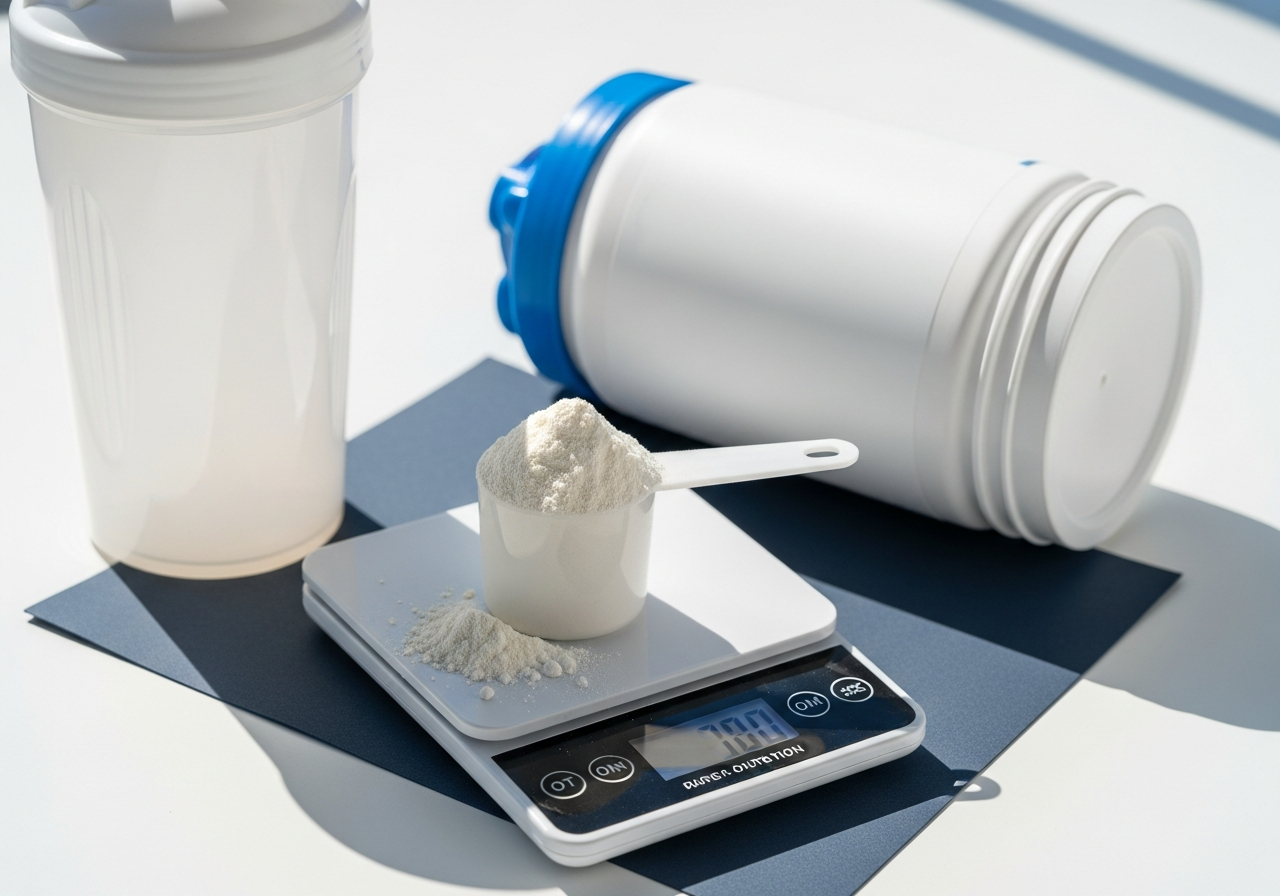
The standard creatine dose for most adults is 3-5 g per day, and a loading phase is optional rather than required. If you want muscle stores saturated faster, take 20 g per day split into 4 doses for 5-7 days, then continue with 3-5 g daily.
Here is the practical rule: if you care more about simplicity, skip loading and just take 3-5 g daily. If you care more about speed, load first. Both approaches work; loading only gets you there sooner.
| Goal or body size | Suggested approach | Notes |
|---|---|---|
| General fitness beginner | 3-5 g daily | Simple, effective, easy to tolerate |
| Need faster saturation | 20 g daily for 5-7 days, split into 4 doses, then 3-5 g daily | Can increase risk of stomach upset if taken in large single doses |
| Smaller adult | 3 g daily is often sufficient | Especially reasonable if diet already includes some meat or fish |
| Larger adult or high lean mass athlete | 5 g daily | Common practical maintenance target |
| Body-weight method | About 0.3 g/kg/day for loading, then about 0.03 g/kg/day for maintenance | Useful if you want a more individualised estimate |
Examples by body weight:
- 60 kg person: about 3 g daily maintenance is a reasonable starting point.
- 75 kg person: 3-5 g daily works well for most goals.
- 90 kg person: 5 g daily is a practical default.
For a more tailored number, use our creatine dosage calculator. If you want a full dosing breakdown, see how much creatine per day and creatine loading phase.
Consistency matters more than precision. Taking 5 g most days is generally more effective than overthinking whether 4.2 g would be optimal and then missing doses. Creatine works through tissue saturation, not because of a perfect pre-workout moment.
If you have a sensitive stomach, split your dose into smaller servings, mix it thoroughly, and take it with food. That solves most tolerance issues. If a local store in New Brunswick only has capsules, remember to check how many capsules equal one full 3-5 g dose; the convenience can be good, but the pill count is often higher than first-time buyers expect.
When to take creatine, how to mix it, and what to expect week by week
The best time to take creatine is the time you will remember to take it every day, because consistency matters far more than exact timing. You can take it before training, after training, with a meal, or on rest days at any convenient time.
Step-by-step, here is the easiest routine:
- Measure 3-5 g of creatine monohydrate.
- Mix it into water, juice, or a protein shake.
- Drink it once daily.
- Keep taking it on rest days.
- Track gym performance for at least 2-4 weeks before judging it.
Creatine monohydrate does not need a fancy transport system to work. It can be taken with or without food. Some people prefer taking it with a meal because that can reduce mild stomach upset and make the habit easier to remember.
What should you expect?
- Days 1-7 with loading: faster increase in muscle creatine stores; some people notice a small body-weight increase from water held inside muscle.
- Weeks 2-4 without loading: stores gradually rise; training quality may begin to improve.
- Weeks 4-8: performance benefits become more obvious in the gym, especially on repeated sets and hard efforts.
- Months 2-3 and beyond: the main payoff is better long-term training adaptation, not a one-day dramatic effect.
How do you know it is working? Look for better rep quality late in a session, improved recovery between short bursts, steadier strength progression, and a slight increase in scale weight that does not reflect fat gain. If you want more detail on timing, see when to take creatine. If you struggle with texture or clumping, read how to mix creatine.
A common mistake is stopping after a few days because you do not “feel” anything. Creatine is not like caffeine. Its benefits come from saturation and improved training output over time. Another mistake is taking it only on workout days; that slows or reduces saturation, especially for beginners.
For NB buyers choosing between local and online products, this is where simple powder often wins. It is easier to dose accurately, easier to take daily, and usually cheaper than formats built around convenience marketing.
Who creatine is for: beginners, women, older adults, and athletes in New Brunswick
Creatine is a good fit for many New Brunswick adults who want better high-intensity performance, strength, or lean mass support, and it is not just for bodybuilders. The evidence is strongest for people doing resistance training or repeated high-intensity sport, but several groups can benefit in slightly different ways.
Beginners: Creatine is one of the simplest and most evidence-based supplements a beginner can use. It is especially useful if your training includes lifting, circuits, sprinting, hockey, football, CrossFit-style intervals, or any repeated hard effort. Beginners should keep it boring: plain monohydrate, 3-5 g daily.
Women: Women can take creatine and often benefit just as men do for strength, training quality, and lean mass support. Creatine does not inherently “bulk” women in a magical way; any body-composition change still depends on training and diet. If that concern has held you back, our creatine for women guide addresses it directly.
Older adults: Older adults may benefit from creatine when it is paired with resistance training to support muscle function and healthy ageing. The performance mechanism is the same, but the practical goal is often preserving strength and muscle rather than chasing maximal lifts. See creatine for older adults for the deeper evidence.
Athletes: Creatine is especially relevant for hockey, sprint-based field sports, racquet sports, swimming sprints, combat sports outside of acute weight-cut periods, and strength sports. The International Olympic Committee consensus on dietary supplements recognises creatine as one of the few supplements with strong performance evidence when used appropriately.
Vegetarians and vegans: People who eat little or no meat may respond particularly well because baseline muscle creatine stores can be lower. If that is you, a simple daily monohydrate routine is still the right starting point.
Who should pause and check with a clinician first? People with known kidney disease, those under medical care for significant chronic illness, and anyone who is pregnant or breastfeeding should get personalised guidance first. That is not because creatine is known to be harmful in these cases across the board, but because the evidence and clinical context are more individual.
If you are not sure whether creatine matches your goal, start with creatine for beginners or creatine benefits before choosing a product.
Safety, side effects, and what Canadian labels should tell you
Creatine is generally considered safe for healthy people when taken at evidence-based doses, and the most common side effects are mild, manageable, and dose-related rather than dangerous. The main buying issue in New Brunswick is not whether creatine works, but whether the product is clearly labelled and sold by a trustworthy source.
The best-supported safety summary comes from the ISSN position stand and the 2021 JISSN misconceptions review: creatine monohydrate has a strong safety record in healthy users, and many common fears are overstated or incorrect. You can also review a mainstream clinical summary from Mayo Clinic or the broader evidence summary at Examine.com.
Common side effects and fixes:
- Mild stomach upset: usually improved by splitting doses, mixing better, or taking it with food.
- Temporary weight increase: often reflects more water inside muscle, not fat gain.
- Bloating complaints: more common with aggressive loading or large single doses than with steady daily maintenance.
Canadian label basics matter. In Canada, many supplement products are sold as natural health products and may carry an NPN, which stands for Natural Product Number. An NPN indicates the product has been licensed by Health Canada as a natural health product. That does not mean every product with an NPN is automatically superior, but it is a useful legitimacy signal when combined with a clean formula and reputable manufacturing.
When you inspect a product, look for:
- complete ingredient list
- recommended use or purpose
- dose directions
- lot number and expiry details
- NPN where applicable
- manufacturer or distributor information
Be cautious if a listing is vague, lacks serving details, or makes exaggerated promises. You do not need a “massive pump” formula or a proprietary matrix for creatine to work. Plain monohydrate is usually the safer and smarter buy.
If kidney concerns are your main hesitation, read is creatine safe and is creatine bad for your kidneys. If digestion is the issue, our guide on creatine digestive side effects covers practical fixes.
Biggest buying mistakes, common myths, and red flags to avoid
The biggest creatine buying mistakes in New Brunswick are overpaying for the wrong form, confusing creatine with pre-workout blends, and trusting weak marketplace listings over transparent Canadian retailers. Most bad outcomes come from bad buying decisions, not from creatine itself.
Here are the most common mistakes:
- Choosing hype over evidence. Monohydrate has the strongest support; more expensive forms are not automatically better.
- Buying a blend instead of straight creatine. A pre-workout with 1-2 g of creatine is not the same as a full daily dose.
- Ignoring cost per effective dose. Capsules, gummies, and flavoured formats can be convenient but often cost much more per 3-5 g.
- Taking it only on training days. That undermines the saturation model that makes creatine work.
- Stopping too early. Creatine needs time and consistency.
Now the myths:
“Creatine is a steroid.” False. Creatine is a naturally occurring compound involved in cellular energy, not an anabolic steroid.
“Creatine ruins kidneys in healthy people.” The bulk of evidence does not support routine kidney harm in healthy users at recommended doses, though people with known kidney disease need individual medical guidance.
“You must cycle creatine.” False for most users. Daily ongoing use is standard; cycling is not required to maintain effectiveness.
“Creatine makes you fat.” False. Early scale changes usually reflect water retained inside muscle, not fat gain. For the full explanation, see does creatine make you gain weight.
“Women should avoid creatine.” False. Women can use creatine effectively and safely under the same general evidence-based principles.
Red flags on product listings include missing ingredient panels, no serving count, exaggerated claims like “300% stronger absorption,” and sellers who cannot tell you the exact form of creatine in the tub. If you want a deeper myth-by-myth breakdown, read creatine myths debunked or creatine myths and facts.
If you remember one rule while trying to buy creatine NB, make it this: if a product sounds dramatically better than monohydrate, the evidence usually is not.
Bottom line: the best way to buy creatine in New Brunswick
The best way to buy creatine in New Brunswick is to choose a reputable Canadian seller and buy plain creatine monohydrate that has a clean label, a clear dose, and trustworthy quality signals. If you need it today, start with local supplement stores in Moncton, Fredericton, or your nearest city; if you want better comparison shopping and selection, buy online from an established Canadian retailer.
Here is the simplest action plan:
- Pick the format: plain creatine monohydrate powder.
- Check legitimacy: look for clear ingredient listing, dose instructions, lot details, and ideally NPN or comparable compliant labelling.
- Compare value: calculate cost per 5 g serving.
- Buy the size you will actually use: a smaller tub is fine for first-timers; larger tubs make sense once you know you will stay consistent.
- Start taking 3-5 g daily: every day, not only on training days.
If you are searching where to buy creatine in New Brunswick, creatine Moncton, creatine Fredericton, or creatine supplement stores New Brunswick, the answer is not just “find any store with a tub on the shelf.” The real answer is to buy the right form, from the right seller, at the right dose, and then use it consistently enough to get the benefit.
For next steps, compare vetted options in our best creatine rankings, inspect labels through creatine brand reviews, and dial in your intake with the creatine dosage calculator. If you want broader Canada-wide guidance, our related guide on buying creatine across the country can help you compare local and online options more efficiently.
In short: monohydrate first, evidence over marketing, Canadian transparency over random listings, and daily consistency over supplement perfectionism.
Creatine buying and dosing in New Brunswick: the numbers that matter
- 3-5 g/day Standard maintenance dose — The usual evidence-based daily range for most adults using creatine monohydrate.
- 20 g/day Typical loading dose — Usually split into 4 doses for 5-7 days if you want faster saturation.
- 5-7 days Loading phase length — Optional approach to raise muscle creatine stores more quickly.
- 0.03 g/kg/day Body-weight maintenance formula — A common individualized maintenance estimate after loading.
Frequently Asked Questions
Where can I buy creatine in New Brunswick?
You can buy creatine in New Brunswick from local supplement stores, some pharmacies and big-box retailers, and reputable Canadian online stores. For the best mix of safety, selection, and value, most shoppers should start with plain creatine monohydrate from a trusted Canadian seller with clear label details and preferably an NPN or strong quality-testing transparency.
Is it better to buy creatine locally in Moncton or online?
It is better to buy creatine locally in Moncton if you need it the same day, but online is usually better for selection and price comparison. Local stores let you inspect the label and take the product home immediately, while Canadian online retailers usually offer more brands, sizes, and simpler side-by-side cost-per-serving comparisons.
Can I find creatine in Fredericton supplement stores?
Yes, you can usually find creatine in Fredericton supplement stores, though in-stock selection may vary. Dedicated supplement retailers are more likely than general stores to carry plain creatine monohydrate, micronized versions, and multiple tub sizes, so calling ahead to confirm inventory and price is the most efficient approach.
What type of creatine should I buy in NB?
The best type of creatine to buy in NB is plain creatine monohydrate. Creatine monohydrate is the most studied form, the one with the strongest evidence for strength and lean mass support, and usually the most cost-effective option compared with HCl, buffered creatine, gummies, or proprietary blends.
How much creatine should a beginner take?
A beginner should usually take 3-5 g of creatine monohydrate per day. That daily maintenance dose is enough for most adults, while a loading phase of 20 g per day split into 4 doses for 5-7 days is optional if you want to saturate muscle stores faster.
Do I need to take creatine only on workout days?
No, you should take creatine every day rather than only on workout days. Creatine works by gradually saturating muscle stores, so daily consistency matters more than taking it at a specific pre-workout time, and rest-day use helps maintain those elevated stores.
How do I know if a creatine product in Canada is legitimate?
A legitimate creatine product in Canada should have a clear ingredient list, serving size, recommended use directions, lot information, and often an NPN if sold as a natural health product. Reputable products also tend to disclose manufacturing details, avoid exaggerated claims, and provide some form of third-party testing or quality assurance transparency.
Does creatine cause bloating or weight gain?
Creatine can cause a small increase in body weight, but that is usually due to water being stored inside muscle rather than fat gain. Bloating complaints are more common with aggressive loading or large single doses, so taking 3-5 g daily or splitting larger doses often reduces the issue.
Is creatine safe for women and older adults?
Yes, creatine is generally safe for many women and older adults when taken at evidence-based doses and when individual medical circumstances are considered. Women use creatine under the same basic dosing principles as men, and older adults may benefit especially when creatine is paired with resistance training to support muscle function.
What should I avoid when buying creatine in New Brunswick?
You should avoid vague marketplace listings, proprietary blends that hide actual creatine dose, and expensive forms marketed as dramatically superior to monohydrate. The safest buying rule is to choose a trusted seller, verify the exact form and serving size, and compare value by effective daily dose rather than by packaging claims.