Creatine HCl: Benefits, Dosing, and How It Compares to Monohydrate
By The Creatine Canada Research Team — Evidence-based supplement analysts
Creatine HCl is a creatine form bound to hydrochloride that is marketed for better solubility and smaller doses, but current evidence does not show it outperforms creatine monohydrate for muscle, strength, or performance. If you tolerate it well, creatine HCl can work, but monohydrate remains the most studied, most proven, and usually best-value choice.
Evidence-based · Cites 4 sources · Editorial standards
Key Takeaways
- Creatine HCl can raise creatine intake, but it has far less direct research than monohydrate.
- There is no strong evidence that creatine HCl is better than monohydrate for strength, muscle gain, or power.
- Monohydrate is still the evidence-based first choice because it is the most studied, most effective, and usually cheapest per gram.
- Creatine HCl is often taken in smaller daily doses, commonly around 1-2 g/day depending on the product label.
- Timing matters far less than consistency; taking creatine daily is what saturates muscle over time.
- If monohydrate upsets your stomach or you strongly prefer a smaller serving, creatine HCl is a reasonable alternative to try.
- In Canada, look for a Natural Product Number (NPN), transparent dosing in grams, and ideally third-party testing.
What creatine HCl actually is, and whether it is better than monohydrate
Creatine HCl is creatine bound to hydrochloride, and the short answer is that it is not proven to be better than creatine monohydrate. The main practical difference is that creatine HCl usually dissolves more easily in water and is commonly sold in smaller scoop sizes.
Creatine itself is a naturally occurring compound stored mostly in skeletal muscle, where it helps regenerate adenosine triphosphate, or ATP, the cell’s immediate energy currency for short, hard efforts. The hydrochloride part does not create a new muscle-building mechanism; it changes the form of the ingredient, largely to improve solubility and product handling.
That distinction matters. Many shoppers search for “what is creatine hcl” or “is creatine hcl better,” but the key question is not whether it mixes nicely. The key question is whether it improves outcomes you care about: more reps, higher training volume, better sprint power, and more lean mass over time. On that standard, the broad sports-nutrition evidence still favours monohydrate because it has the overwhelming majority of direct human research behind it. The 2017 ISSN position stand concluded that creatine monohydrate is the most effective ergogenic, or performance-enhancing, nutritional supplement currently available for increasing high-intensity exercise capacity and lean body mass during training.
That does not mean creatine HCl is useless. If a creatine HCl product gives you a meaningful amount of creatine every day, it can still help support muscle creatine stores. It simply means the claims that HCl is automatically superior, requires dramatically less, causes no water retention, or bypasses the need for saturation are ahead of the evidence.
For most people, the best decision is simple:
- Choose monohydrate first if you want the most evidence for the lowest cost.
- Choose creatine HCl second if you prefer a smaller serving, better solubility, or have repeatedly found monohydrate inconvenient.
If you want a broader foundation before comparing forms, start with what creatine is and then compare this guide with creatine monohydrate vs. HCL.
How creatine HCl works in the body: same destination, less proof on the route
Creatine HCl works through the same core physiology as any useful creatine supplement: it helps increase intramuscular phosphocreatine, the stored form of creatine that rapidly donates phosphate to help regenerate ATP during repeated high-intensity effort. In plain English, creatine helps you maintain power output for short bursts and recover a bit faster between hard sets or sprints.
The mechanism is well established for creatine generally. When muscle creatine stores rise, you can often perform slightly more total work in training: one more rep here, a little more power there, and more high-quality volume across weeks and months. That extra training quality is one of the main ways creatine supports long-term gains in strength and lean mass. Creatine also increases intracellular water inside muscle cells, which can contribute to a fuller look and may support an anabolic training environment, but it is not body fat gain.
Where creatine HCl differs is mostly chemistry and formulation, not the end mechanism. HCl stands for hydrochloride, which increases acidity and typically improves water solubility. Better solubility can make a powder easier to mix and may reduce gritty residue at the bottom of the glass. However, better solubility is not the same thing as better real-world muscle uptake or better results. That is the central nuance many labels skip.
The broader evidence base on creatine, summarized by Antonio et al. (2021) and the ISSN position stand, supports creatine supplementation as a class for strength, power, lean mass, and high-intensity exercise performance. What it does not currently support is the claim that creatine HCl has unique performance advantages over monohydrate in healthy exercisers.
So if you are asking about “creatine hcl benefits,” the honest answer is this: the likely benefits are the normal benefits of creatine, not a special HCl-only effect. Expect potential improvements in:
- Repeated sprint or repeated-effort performance
- Strength training volume
- Lean mass gains over time when paired with resistance training
- Possibly recovery between hard bouts of work
If your goal is practical results, do not overcomplicate the mechanism. What matters most is getting enough creatine, consistently, for long enough to saturate muscle. For a fuller performance overview, see the evidence-based benefits of creatine.
Creatine HCl vs. monohydrate: the comparison most buyers actually need
Creatine HCl vs. monohydrate comes down to convenience versus evidence, and for most people monohydrate still wins. Creatine HCl is usually easier to dissolve and sold in smaller servings, but monohydrate remains the gold standard for effectiveness, safety data, and value.
The reason monohydrate stays on top is simple: it has decades of direct human research, while creatine HCl does not have the same volume or depth of evidence. If two products are both supposed to increase muscle creatine, the one with the stronger direct outcome data gets the recommendation.
| Feature | Creatine HCl | Creatine Monohydrate |
|---|---|---|
| Research depth | Limited direct human outcome data | By far the most studied creatine form |
| Typical daily dose | Often 1-2 g/day, depending on product | 3-5 g/day maintenance |
| Loading phase | Usually not marketed as necessary | Optional: about 20 g/day split into 4 doses for 5-7 days |
| Mixability | Usually very good | Good, especially micronized forms |
| Evidence for strength/muscle | Plausible, but indirect and less proven | Strong, consistent evidence |
| Cost per effective dose | Usually higher | Usually lower |
| Best for | People who prioritize smaller servings or easier mixing | Almost everyone seeking the best evidence and value |
Common claims that creatine HCl is “better absorbed,” “does not cause water retention,” or “works at a tiny dose because it is stronger” should be viewed cautiously. The current evidence does not show that HCl produces superior performance or hypertrophy outcomes versus monohydrate when both are taken appropriately.
Monohydrate also has a strong practical advantage: it is easier to dose precisely because the evidence-based daily target is well known. If you want to double-check your intake, use a creatine dosage calculator or read how much creatine per day.
If budget, proof, and simplicity matter most, buy monohydrate. If ease of mixing and a smaller scoop matter most, creatine HCl is a reasonable alternative, but it should be chosen for convenience, not because the science shows it is a superior performer.
Creatine HCl benefits: what you can realistically expect, and on what timeline
Creatine HCl benefits are likely the standard benefits of creatine supplementation, but you should expect them on a realistic timeline rather than as an immediate stimulant-like effect. Creatine does not work like caffeine; it works by raising muscle creatine stores over days to weeks.
If your muscles become more saturated with creatine, the benefits you are most likely to notice are:
- More reps at a given weight, especially on later sets.
- Better repeated power output in sprints, jumps, or explosive intervals.
- Improved training volume, which often drives better muscle and strength gains over time.
- A slightly fuller muscular look from increased intracellular water in muscle tissue.
What should you expect week by week?
- Days 1-7: You may notice nothing obvious yet, especially without a loading strategy. Some people notice better mixability or less stomach heaviness compared with monohydrate, but performance changes are often subtle at first.
- Weeks 2-4: If your intake is consistent, workouts may feel a little more repeatable. Typical early signs are squeezing out one extra rep, holding speed better across repeated efforts, or feeling less drop-off set to set.
- Weeks 4-8: This is when training logs often reveal the clearest payoff. More total reps, more load lifted over time, or slightly faster sprint repeats can translate into measurable progress in muscle and performance.
The important point is that creatine helps performance indirectly through better energy availability and better training quality. If your training, sleep, and protein are poor, creatine HCl will not rescue the situation.
It is also worth keeping expectations grounded. Creatine is one of the best-supported supplements in sports nutrition, but it is still a supplement, not a shortcut. The International Olympic Committee’s supplement consensus recognizes creatine among a short list of supplements with evidence for certain performance uses, especially high-intensity exercise, but that does not mean every form is equally validated.
If your main goal is muscle gain or strength, judge creatine HCl by objective markers:
- Your training log improves
- Your body weight may rise modestly from muscle water and training adaptation
- Your working sets feel more sustainable
For a realistic expectations guide, see how long creatine takes to work and whether creatine builds muscle.
Creatine HCl dose: practical daily amounts by body weight, goal, and tolerance
The best creatine HCl dose is the one that gives you a consistent daily intake you can actually stick to, but unlike monohydrate, there is no equally strong universal evidence-based dosing standard for HCl. In practice, most creatine HCl products are taken at roughly 1-2 grams per day, while monohydrate’s evidence-based maintenance target remains 3-5 grams per day.
Because HCl products vary, start by checking the label for the actual grams of creatine hydrochloride per serving, not just the scoop size. Then use your goal and body size as a guide.
| Body weight | General fitness goal | Practical creatine HCl starting dose | Monohydrate evidence benchmark |
|---|---|---|---|
| Under 60 kg | Beginner, general training | About 1 g/day if label supports it | 3 g/day |
| 60-90 kg | Muscle, strength, sport | About 1-2 g/day | 3-5 g/day |
| Over 90 kg | Higher body mass, power focus | About 2 g/day if tolerated and label supports it | 5 g/day |
That table is a practical starting point, not a proof that HCl requires dramatically less creatine to work. The evidence for monohydrate dosing is much firmer, which is why it remains easier to prescribe confidently.
Here is the simplest step-by-step approach:
- Read the product label and find the dose in grams.
- Start with the lower end of the label range for 5-7 days.
- Take it daily, including rest days.
- If tolerated well, move to the full suggested daily dose.
- Track gym performance for at least 3-4 weeks before deciding whether it is helping.
If you are sensitive to supplements, split your daily amount into two smaller servings. If you are switching from monohydrate to HCl, you do not need a washout period. Just change formats and continue taking creatine daily.
If you want exact dosing help, use our creatine dosage calculator, or compare this page with maintenance dose guidance and loading phase guidance. When in doubt, consistency matters more than squeezing the dose to the decimal point.
How to take creatine HCl step by step so it actually works
The best way to take creatine HCl is simply to take it every day, at a consistent dose, mixed in enough fluid to make it easy on your stomach. Timing is secondary; consistency is primary.
Here is a beginner-friendly step-by-step system that works well for most people:
- Pick a daily anchor habit. Tie your dose to something you already do every day: breakfast, your post-workout shake, or brushing your teeth at night.
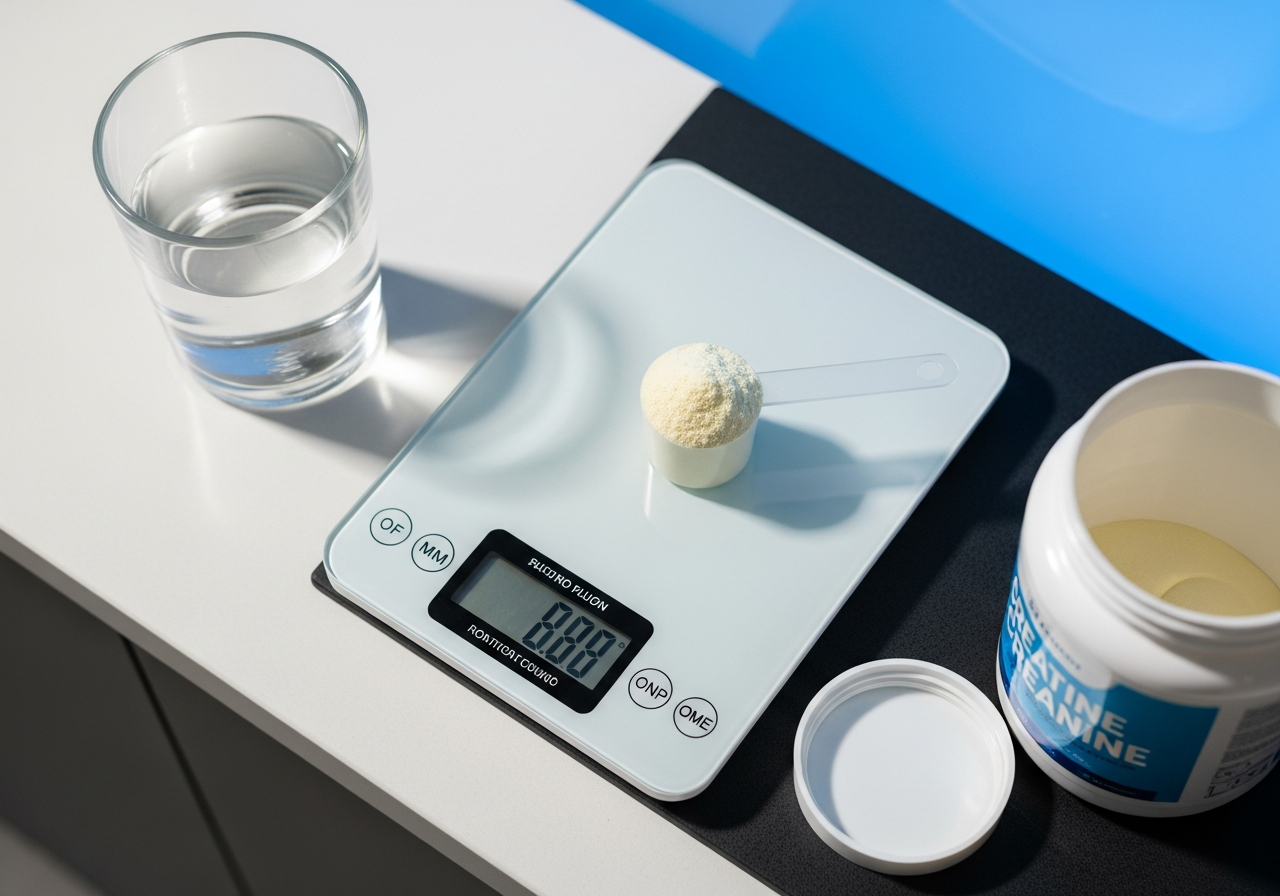
- Measure the label dose accurately. Use the scoop provided only if it clearly states the gram amount. If not, weigh it once on a kitchen scale so you know what a true serving looks like.
- Mix it with water or a shake. Creatine HCl is usually highly soluble, so 250-500 mL of water is often enough. You can also mix it into a protein shake if that makes compliance easier.
- Take it daily, including rest days. Muscle saturation is maintained by regular intake, not by only taking creatine on training days.
- Stay normally hydrated. You do not need to force extreme water intake, but do not under-drink either. Normal, adequate hydration is enough for most people.
- Give it time. Assess your results over at least 3-4 weeks, not 3-4 workouts.
You do not need to dry scoop creatine HCl, and there is no performance advantage to doing so. Mixing it properly is easier on the mouth, throat, and stomach. If you want practical mixing help, see how to mix creatine.
Can you take it with food? Yes. Can you take it without food? Also yes. Most people should simply choose the option that feels best on their stomach and is easiest to repeat daily. If you already use protein powder, combining the two is perfectly reasonable; see mixing creatine with protein powder.
How do you know it is working? Look for small but repeatable improvements in training output, not dramatic sensations. Creatine is often “quietly effective.” If your sets hold up better over time, your strength trend improves, or your body weight rises slightly while training quality improves, that is often the supplement doing its job.
When to take creatine HCl, whether to load it, and what to do on rest days
You can take creatine HCl any time of day, and for most people there is no meaningful advantage to pre-workout versus post-workout timing if total daily intake is consistent. The larger issue is whether your muscles are saturated over time, not whether the dose lands 30 minutes before or after training.
That is why the answer to “when should I take creatine HCl?” is simple: take it whenever you are least likely to forget it. A post-workout shake, breakfast, or lunch are all fine choices. If you want a full timing breakdown, read when to take creatine.
What about loading? Monohydrate has a well-established loading protocol of about 20 g/day split into 4 doses for 5-7 days, followed by 3-5 g/day maintenance. Creatine HCl is usually marketed as not requiring a loading phase, but the bigger truth is that HCl lacks the same direct dosing research. You can still become saturated without loading by taking a steady daily dose over several weeks.
In practical terms:
- If you want simplicity: take your usual daily HCl dose every day and wait a few weeks.
- If you want the fastest evidence-backed saturation method: monohydrate loading has much stronger support.
Should you take creatine HCl on rest days? Yes. Rest-day intake helps maintain elevated muscle creatine stores. Skipping every non-training day makes your routine less consistent and may slow or blunt the saturation process.
What if you miss a day? Do not panic and do not double or triple the next dose. Just resume your normal schedule the next day. Creatine works through cumulative tissue saturation, so one missed dose is not a disaster.
For athletes in weight-sensitive sports, timing is still mostly a convenience question, but form choice can matter if you are trying to limit short-term body-mass fluctuations. In that case, monitor your body weight and choose the format and dose pattern that best fits your event schedule. That said, many of those athletes still do well with plain monohydrate because the performance upside often outweighs the modest water-related scale change.
Who creatine HCl is for: beginners, women, older adults, and athletes
Creatine HCl is for the same broad groups who may benefit from creatine generally, but it is rarely the default first recommendation over monohydrate. It is best viewed as an alternative format for people who value small servings, easy mixing, or personal preference.
Beginners: Yes, beginners can use creatine HCl, but monohydrate is usually the smarter first purchase because it gives the clearest evidence-backed return on money. If you are brand new to supplements, read creatine for beginners before deciding on form.
Women: Women can benefit from creatine just as men can, particularly for strength, lean mass, performance, and healthy aging contexts. Creatine does not masculinize women and it is not a steroid. If a woman prefers a smaller scoop or finds HCl easier to take, it is a reasonable option, but the evidence base still points first to monohydrate. For more, see creatine for women.
Older adults: Older adults doing resistance training may benefit from creatine for muscle function and lean mass support, and potentially for other healthy-aging applications still being studied. Here again, the main body of evidence is on monohydrate rather than HCl, so older adults should not assume HCl is superior simply because it is newer or marketed as gentler.
Athletes: Team-sport athletes, sprinters, power athletes, lifters, and CrossFit-style trainees are among the most obvious candidates for creatine because their performance relies on repeated high-intensity effort. Endurance athletes may also use creatine strategically, especially if finishing kick, sprint capacity, or strength support matters, though body-mass changes should be considered sport by sport.
Vegetarians and vegans: People who eat little or no animal-derived creatine from food may respond especially well to creatine supplementation in general because baseline muscle stores can be lower.
Who should think twice? Anyone with a medical condition, anyone advised to monitor kidney function, anyone pregnant or breastfeeding, or anyone taking medications where supplement use should be reviewed should speak to a qualified healthcare professional first. For a fuller safety discussion, see is creatine safe and who should not take creatine.
Safety, side effects, and myths: what creatine HCl does and does not do
Creatine HCl appears likely to share the generally favourable safety profile of creatine, but the strongest long-term safety database is still for creatine monohydrate. That is the most precise and evidence-based way to frame safety in 2026.
According to the ISSN position stand and the 2021 review on common questions and misconceptions, creatine monohydrate is well supported as safe for healthy individuals when used appropriately. Common myths about creatine causing kidney damage, dehydration, cramping, or being a steroid are not supported in healthy users by the broader evidence base. You can read more at JISSN and in our creatine myths debunked guide.
What side effects can happen in real life?
- Stomach upset: This is usually dose-related, mixing-related, or product-specific rather than a sign that creatine is unsafe.
- Temporary body-weight increase: Often due to increased water inside muscle, not fat gain.
- Loose stools: More likely if you take too much at once or use a product with irritating flavour systems or sweeteners.
Some people choose creatine HCl because they believe it will eliminate bloating. That is too strong a claim. Better solubility may help some users find it easier on digestion, but HCl is not guaranteed to prevent every digestive complaint or every scale change. If you struggle with GI issues, the practical fixes are often more important than the form:
- Reduce the single dose size.
- Take it with a meal.
- Mix it in more water.
- Avoid stacking it with multiple harsh pre-workout ingredients at once.
- Check for flavour additives or sugar alcohols that may be the real trigger.
A separate blood-test issue causes confusion: creatine can increase creatinine, a breakdown marker, without meaning the kidneys are damaged. That is one reason context matters when interpreting lab work.
Bottom line on safety: healthy people usually tolerate creatine well, but if you have kidney disease, significant medical issues, or provider-specific concerns, get individual advice before using any form. If digestion is your problem, compare HCl with the troubleshooting advice in creatine digestive side effects and does creatine cause bloating.
How to buy creatine HCl in Canada without overpaying for marketing
The best way to buy creatine HCl in Canada is to treat it like any other supplement: verify the dose, check the label quality, and compare cost per gram rather than getting distracted by flashy claims. In Canada, one practical quality marker is the Natural Product Number, or NPN, which indicates the product has been licensed as a natural health product by Health Canada.
Here is a smart Canadian buying checklist:
- Look for an NPN on the label or product listing.
- Check the exact amount of creatine HCl in grams per serving.
- Calculate cost per gram and cost per 30-day supply.
- Prefer brands with third-party testing or transparent quality-control information.
- Read the non-medicinal ingredients for sweeteners, flavours, and fillers if you have a sensitive stomach.
- Be sceptical of “better than monohydrate” claims unless the company shows strong direct human evidence.
Where many buyers go wrong is comparing tubs by scoop count instead of by effective cost. A small scoop can look efficient, but if the product is much more expensive per month without better outcomes, it is not automatically the better buy.
Creatine HCl may make sense if:
- You strongly dislike gritty powders
- You travel often and want smaller servings
- You have tried monohydrate more than once and simply prefer HCl
Monohydrate usually makes more sense if:
- You want the best evidence
- You want the best value
- You are buying for long-term use
If you are comparing products now, browse our creatine product catalog, creatine brand reviews, and best creatine rankings. If your main goal is choosing the smartest form overall, also see best type of creatine and why monohydrate still wins.
Common creatine HCl mistakes to avoid, and the clear bottom line
The biggest creatine HCl mistake is assuming that a newer or more expensive form must be better. It is not enough for a supplement to sound more advanced; it has to outperform the standard in human results, and creatine HCl has not clearly done that against monohydrate.
Other common mistakes include:
- Taking it only on workout days. Creatine works best with steady daily intake.
- Expecting a stimulant effect. Creatine does not feel like pre-workout.
- Using an underdosed product. Always verify grams per serving.
- Switching forms too quickly. Give any creatine routine at least several weeks.
- Blaming creatine for every digestive issue. Flavours, sweeteners, or huge single doses are often the real cause.
- Judging it by scale weight alone. Training performance matters more than day-to-day fluctuations.
So, is creatine HCl better? For most people, no. Creatine HCl is a valid alternative form, especially if you prefer a smaller dose or better mixability, but the current evidence does not show it beats monohydrate for strength, muscle gain, or high-intensity performance. If you want the safest evidence-based bet, monohydrate remains the first recommendation.
The cleanest decision tree looks like this:
- Start with monohydrate if you are new to creatine.
- Use 3-5 g/day unless you choose to do an optional loading phase.
- Switch to HCl only if you strongly prefer the format, want a smaller serving, or personally tolerate it better.
- Track objective results for 4-8 weeks before deciding what works best for you.
If you are still comparing forms, the most useful next reads are creatine monohydrate vs. HCL, best type of creatine, and is creatine safe.
Bottom line: creatine HCl can work, but monohydrate is still the evidence-based king. Choose HCl for convenience if you want to, not because the research shows it is superior.
Creatine HCl at a glance
- 1-2 g/day Typical creatine HCl daily serving — Common label range in practice, but less firmly validated than monohydrate dosing
- 3-5 g/day Monohydrate maintenance dose — Mainstream evidence-based daily target for most adults
- 20 g/day Optional monohydrate loading dose — Usually split into 4 doses for 5-7 days
- 4-8 weeks Practical window to judge results — Track training output, not just body weight
Frequently Asked Questions
What is creatine HCl?
Creatine HCl is creatine bound to hydrochloride, a form designed mainly to improve solubility and allow smaller serving sizes. It is still a creatine supplement, so its job is to support muscle creatine stores for high-intensity performance, but it does not have the same depth of direct research as creatine monohydrate.
Is creatine HCl better than monohydrate?
No, creatine HCl is not proven to be better than monohydrate for muscle gain, strength, or power. Monohydrate remains the evidence-based standard because it has far more direct human research supporting its effectiveness, safety, and practical dosing.
What are the benefits of creatine HCl?
The benefits of creatine HCl are likely the standard benefits of creatine supplementation: better repeated high-intensity performance, improved training volume, and support for strength and lean mass gains over time. The key caveat is that those benefits are much more strongly documented for monohydrate than for HCl specifically.
How much creatine HCl should I take per day?
Most creatine HCl products are taken at about 1-2 grams per day, depending on the label and the user’s body size and goals. Because HCl does not have the same universally established dosing standard as monohydrate, you should follow the product’s gram-based directions and prioritize consistent daily use.
Do you need to load creatine HCl?
No, you do not need to load creatine HCl for it to be usable, but that does not mean it saturates muscles magically without time. Daily use over several weeks is still what matters, while the best-supported loading protocol in the literature is for monohydrate, not HCl.
Does creatine HCl cause less bloating?
Creatine HCl may feel easier on digestion for some people because it usually dissolves well, but it is not proven to eliminate bloating or water-related weight changes. Many digestive complaints come from dose size, poor mixing, or flavour additives rather than from the creatine molecule itself.
When should I take creatine HCl?
You can take creatine HCl any time of day, because consistency matters much more than exact timing. The best time is the one you will remember every day, whether that is with breakfast, after training, or with another regular habit.
Can women take creatine HCl?
Yes, women can take creatine HCl, and women can benefit from creatine for strength, performance, and lean mass just as men can. HCl is a format choice rather than a women-specific upgrade, so monohydrate is still usually the first form to consider on evidence.
Is creatine HCl safe?
Creatine HCl is generally considered likely to be safe for healthy adults when used appropriately, but the strongest long-term safety research is on creatine monohydrate. Anyone with kidney disease, other significant medical conditions, or provider-specific concerns should get medical advice before supplementing.
Why do people choose creatine HCl if monohydrate is more proven?
People often choose creatine HCl because it usually mixes more easily, comes in smaller scoops, and may suit personal preference better. Those are valid convenience reasons, but they are different from proving better strength or muscle results than monohydrate.