Creatine for Vegan Athletes: Why Plant-Based Competitors Benefit Most
By The Creatine Canada Research Team — Evidence-based supplement analysts
Yes — creatine is especially worth considering for vegan athletes because plant-based diets provide virtually no dietary creatine, so vegans often start with lower muscle creatine stores and may notice larger benefits from supplementation. For strength, sprint performance, training capacity, and possibly cognition under high demand, creatine monohydrate is the evidence-based first choice.
Evidence-based · Cites 4 sources · Editorial standards
Key Takeaways
- Vegan and vegetarian athletes often have lower baseline creatine stores because creatine is naturally found in meat and fish, not plants.
- The best-supported option is creatine monohydrate at 3–5 g daily, with or without a loading phase.
- A loading phase of 20 g per day split into 4 doses for 5–7 days saturates muscles faster; otherwise expect fuller effects in about 3–4 weeks.
- Creatine helps most with repeated high-intensity efforts such as lifting, sprinting, jumping, intervals, and team-sport bursts.
- Small early scale-weight increases are usually water pulled into muscle, not fat gain.
- For Canadian buyers, look for a Natural Product Number (NPN) and, for competitive athletes, third-party testing such as NSF Certified for Sport or Informed Sport.
- If creatine upsets your stomach, reduce the dose per serving, take it with food, and use plain monohydrate powder rather than underdosed blends.
Creatine for vegan athletes: the short answer is yes, and plant-based competitors often benefit the most
Creatine for vegan athletes is one of the most evidence-based supplement choices in sports nutrition because vegans typically consume no creatine from food and therefore often begin with lower muscle creatine stores. That matters because creatine works by increasing your stored phosphocreatine, the rapid energy reserve your muscles use to regenerate ATP, the cell’s immediate energy currency, during short, hard efforts.
In plain English, a vegan athlete creatine protocol can help you squeeze out an extra rep, maintain power across repeated sprints, recover better between explosive efforts, and support training quality over time. The 2017 International Society of Sports Nutrition position stand concluded that creatine monohydrate is the most effective ergogenic nutritional supplement currently available for increasing high-intensity exercise capacity and lean body mass during training. That matters for plant-based competitors because if baseline stores are lower, the room for improvement can be greater.
This does not mean every vegan will feel dramatic effects in a few days. Creatine is not a stimulant, and it does not create an obvious buzz. What it usually does is improve the quality of hard training once muscle stores rise. You may notice:
- better top-end reps in the gym
- more repeatable sprint or interval efforts
- slightly fuller muscles from increased intracellular water
- steadier performance during heavy training blocks
Creatine for vegetarian athletes follows the same logic, though strict vegans usually have the lowest dietary intake. For a quick primer on the basics, see what creatine is and what it does. If you already know you want to start, a plain monohydrate product from the creatine product catalog is almost always the smartest buy.
The bottom line: plant based athlete creatine use is not a workaround for a deficient diet; it is a targeted way to restore a compound omnivores routinely get from animal foods and use that restored store to support performance.
Why vegan creatine response is often stronger: lower baseline stores create more room to improve
Vegan creatine response can be stronger because response size partly depends on where your muscle creatine stores start, and plant-based eaters often start lower than meat eaters. Creatine is naturally present in animal foods, especially meat and fish, while plant foods contribute essentially none. Your body does make creatine from amino acids, mainly in the liver and kidneys, but endogenous production does not always bring muscle stores to the same level seen in habitual omnivores.
Think of muscle creatine like topping up a battery. If your battery is already near full, adding more changes less. If your battery is partly charged, the same dose can produce a more noticeable shift. That is why creatine vegans performance discussions often focus on baseline status. It is also why some studies have found vegetarians can experience larger increases in tissue creatine after supplementation.
Mechanistically, creatine helps in two main ways:
- Fast energy recycling: phosphocreatine donates a phosphate to help remake ATP during brief, intense efforts.
- Training-quality support: by improving repeated effort capacity, creatine can help you accumulate more useful training volume over weeks and months.
This is especially relevant for a creatine vegan bodybuilder, CrossFit athlete, sprinter, team-sport player, or anyone whose sport includes repeated accelerations, jumps, or sets close to failure. It is also relevant for vegans in a calorie deficit, because preserving training quality while cutting is often the difference between maintaining muscle and losing it.
What about endurance athletes? Creatine is not primarily an aerobic supplement, but plant-based competitors in sports like rowing, cycling, soccer, or middle-distance events may still benefit where races or training include repeated surges, sprint finishes, resistance training, or glycogen-demanding intervals. The International Olympic Committee consensus on supplements recognises creatine as one of the few supplements with good evidence for certain sports uses.
For a deeper explanation of saturation, see creatine muscle saturation, and for sport-specific use cases, see creatine for competitive athletes. The key practical point is simple: vegan athletes are not “cheating biology” with creatine — they are more often correcting for the absence of dietary creatine in a well-planned plant-based diet.
How creatine actually works in a plant-based athlete’s muscles, brain, and training sessions
Creatine works by increasing phosphocreatine stores inside muscle, which helps regenerate ATP faster during short bursts of hard work and can improve repeated high-intensity performance. That is the core mechanism, and it is why creatine is most reliably useful for lifting, sprinting, jumping, repeated intervals, and stop-start sports.
Here is the simple version of the energy system. When you do a heavy set of squats, a sprint off the line, or a maximal jump, ATP is used almost immediately. Your phosphocreatine system is the quickest way to restore ATP for those first seconds of intense effort. More stored creatine generally means more phosphocreatine available to help you repeat those efforts with slightly less drop-off.
Over time, those small session-level improvements can matter. If you gain one more clean rep per set, hold bar speed slightly better, or preserve power deeper into repeated sprint work, the training effect accumulates. That is the real reason creatine can support lean mass and strength gains: it does not directly build muscle the way a hormone would; it helps you train hard enough, often enough, to build more muscle over time.
There are also secondary effects worth knowing:
- Cell hydration: creatine draws water into muscle cells, which often makes muscles feel fuller and can add a small amount of body weight early on.
- Glycogen support: creatine may help with glycogen storage in some training contexts, which can be useful for athletes doing demanding blocks.
- Brain energy relevance: creatine is also used in the brain, and emerging evidence suggests possible cognitive benefits in some settings, though the performance evidence is stronger than the cognition evidence.
For vegan athletes, the brain angle gets attention because low dietary creatine may theoretically matter more when sleep is poor, mental demand is high, or training load is heavy. But the strongest, best-established use case in 2026 remains sports performance and resistance training support.
If you want the full ATP story, read creatine and ATP or the creatine phosphate energy system. The practical takeaway is straightforward: plant based athlete creatine supplementation improves the system that powers explosive effort, and that benefit can be amplified when baseline stores are lower.
Exactly how to take creatine as a vegan athlete: the simplest plan that works
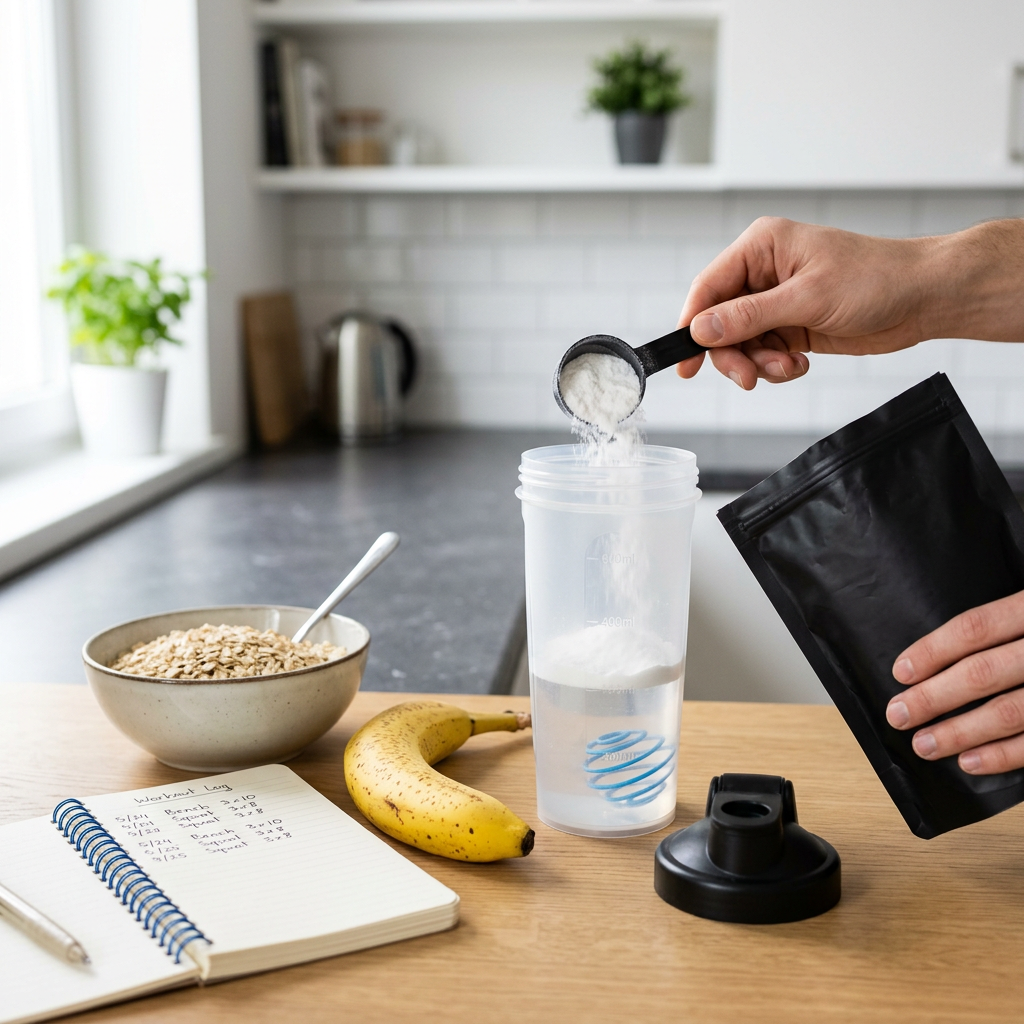
The simplest effective vegan athlete creatine plan is 3–5 g of creatine monohydrate every day, including rest days, taken consistently for weeks and months rather than only before workouts. Timing matters far less than daily adherence.
- Choose creatine monohydrate. It is the most studied, most reliable, and usually the most cost-effective form. Fancy forms rarely outperform it in real outcomes. Compare options in our best creatine rankings and creatine brand reviews.
- Pick your dose. Most adults do well with 3–5 g daily. Larger athletes and very muscular athletes often prefer the upper end.
- Decide whether to load. If you want faster saturation, take 20 g per day split into 4 doses of 5 g for 5–7 days, then continue with 3–5 g daily. If you prefer simplicity or have a sensitive stomach, skip loading and take 3–5 g daily from day one.
- Take it every day. Workout days and rest days both count. Muscle stores rise from repeated daily intake, not from acute pre-workout use.
- Mix it in whatever helps compliance. Water, a smoothie, a protein shake, or with a meal all work. If you want mixing help, see how to mix creatine.
- Track outcomes that matter. Log body weight, gym performance, sprint quality, and training feel for at least 4–8 weeks.
A good beginner timeline looks like this:
- Days 1–7 with loading: faster water uptake into muscle, possible scale increase, some people feel better repeat power by the end of the week.
- Weeks 2–4 without loading: saturation builds gradually; performance effects become more noticeable.
- Weeks 4–12: strength, lean mass support, and improved training quality are easier to detect in your logbook.
If you want a more personalised approach, use the creatine dosage calculator or read how to take creatine. For most vegan athletes, the biggest mistake is overcomplicating a supplement that works mainly through consistency.
Best creatine dose for vegans by body weight, sport, and whether you want speed or simplicity
Most vegan athletes do best with 3–5 g of creatine monohydrate per day, while a loading phase of 20 g per day for 5–7 days is the fastest way to reach full muscle saturation. The difference is not whether creatine works, but how quickly you get there.
Body weight can help you choose within that standard range. Smaller athletes often do well closer to 3 g daily; larger athletes commonly choose 5 g daily. You do not need a bodybuilding-style mega-dose, and more is not automatically better once muscle stores are saturated.
| Athlete size or goal | Practical daily dose | Best use case | Notes |
|---|---|---|---|
| Smaller athlete, lighter frame, beginner | 3 g/day | Slow, simple saturation | Good if you want minimal fuss and excellent tolerance |
| Average adult vegan athlete | 3–5 g/day | General strength, power, training support | Most evidence-based maintenance range |
| Larger athlete, high lean mass, heavy training volume | 5 g/day | Strength sports, team sports, bodybuilding | Practical upper end for most people |
| Need faster results | 20 g/day for 5–7 days, then 3–5 g/day | Rapid saturation before a training block | Split into 4 x 5 g doses to reduce stomach issues |
Examples:
- 55 kg vegan runner doing strength work twice weekly: 3 g/day is usually enough.
- 72 kg plant-based lifter or field-sport athlete: 4–5 g/day is a sensible default.
- 90 kg vegan bodybuilder in an off-season growth phase: 5 g/day is a practical maintenance dose after loading or gradual saturation.
Goal matters too. A creatine vegan bodybuilder usually cares about maximal training volume, muscle fullness, and long-term lean mass support, so 5 g/day often makes sense. A plant-based endurance athlete who worries about body mass may skip loading and use 3 g/day to reduce abrupt water-weight changes.
If you want a dedicated dose guide, read how much creatine per day and creatine loading phase. The main point is simple: vegan athlete creatine dosing is usually standard dosing; the difference is that the expected upside may be greater because baseline intake is lower.
When to take creatine, how fast it works, and what vegan athletes should expect week by week
For vegan athletes, creatine timing is much less important than daily consistency, and the first meaningful effects usually appear within days if you load or within roughly 3–4 weeks if you do not. Taking it pre-workout is fine, post-workout is fine, and with a meal is fine — the best time is the time you will remember every day.
The reason timing matters less than many people think is that creatine is not an acute stimulant. It works through saturation. Once your muscles are stocked with more creatine and phosphocreatine, you carry that benefit into training regardless of the exact hour you took your scoop.
What to expect:
- Week 1 with loading: you may gain a small amount of scale weight from water moving into muscle, and some athletes report improved repeat effort quickly.
- Weeks 2–3: gym sessions may feel more stable, especially on later sets or repeated intervals.
- Weeks 4–8: better strength progression, slightly improved sprint repeatability, and fuller muscles are commonly noticed if training and nutrition are in order.
- Months 2–3: body-composition differences become more obvious compared with not supplementing, mainly because your training quality has been better.
How do you know it is working? The most reliable signs are not subjective pumps or mood. Instead, look for:
- one more rep at a given load
- less power drop-off across sets
- better repeated sprint performance
- small increase in body weight without increased body fat
- steadier performance while dieting or during heavy training blocks
If you miss a day, do not panic. Just resume your normal dose the next day. Missing one day does not “erase” saturation. If you want more on timing, see when to take creatine, creatine on rest days, and how long creatine takes to work.
The practical bottom line: creatine for plant based competitors works on the timescale of tissue saturation and training adaptation, not on the timescale of a caffeine hit.
Who should use creatine on a plant-based diet: beginners, women, masters athletes, and serious competitors
Creatine is a strong fit for most healthy vegan and vegetarian athletes who do repeated high-intensity training, and it can be just as relevant for beginners, women, and older adults as for advanced lifters. The core reason is the same across groups: low or absent dietary creatine plus a performance mechanism that is well established.
Beginners: If you are new to lifting or sport-specific training, creatine can still be worth using. It will not replace good programming, but it may help you progress a little faster by improving repeat effort and training quality. Read creatine for beginners if you want a complete start-to-finish walkthrough.
Women: Women respond to creatine too. The common fear that creatine makes women bulky is misplaced. Any early weight gain is usually intracellular water in muscle, not fat. That can actually be useful for performance and muscle preservation. See creatine for women for a deeper dive.
Older adults and masters athletes: Creatine can be particularly valuable when combined with resistance training because maintaining muscle, strength, and function becomes harder with age. Vegan masters athletes may have two reasons to care: lower dietary creatine intake and age-related declines in muscle robustness. Related reading: creatine for older adults.
Strength and physique athletes: A creatine vegan bodybuilder, powerlifter, Olympic lifter, or CrossFit athlete is among the clearest fit cases because creatine supports the exact energy system these sports stress most.
Team-sport and repeated-sprint athletes: Soccer, hockey, basketball, rugby, and court-sport athletes often benefit because their sports involve repeated bursts with incomplete recovery.
Endurance athletes: Creatine can still make sense, especially if your training includes hills, surges, sprint finishes, or gym work. The trade-off is that some endurance athletes dislike even small water-weight increases, so the dose strategy should match the sport.
The main exceptions are not about veganism; they are about individual medical context. If you have a kidney condition, are pregnant or breastfeeding, or take relevant medications, speak with a qualified clinician before starting. For healthy athletes, though, creatine for vegetarian athletes and vegans is not niche — it is one of the most rational supplements in the whole category.
Safety, side effects, and myths: what creatine does not do to vegan athletes
Creatine monohydrate is widely considered safe for healthy people at recommended doses, and most of the scary claims vegans hear about kidneys, dehydration, cramps, or “dirty bulking” are either overstated or simply wrong. The 2017 ISSN position stand and the 2021 JISSN review on common questions and misconceptions both support creatine’s strong safety profile when used appropriately.
The most common side effects are mundane, not dangerous:
- Temporary body-weight increase: usually due to water being stored in muscle.
- Stomach upset: more likely with large single doses or poor mixing.
- Bloating sensation: often dose-related and commonly improved by splitting doses.
Myths worth debunking directly:
- “Creatine is not vegan.” Modern supplemental creatine is synthetically produced, not extracted from meat. A separate practical issue is whether the finished product uses vegan-friendly capsules, flavour systems, or manufacturing practices, but the creatine itself is generally vegan. For that angle, see is creatine vegan.
- “Creatine harms healthy kidneys.” In healthy individuals, recommended creatine use has not been shown to damage kidneys. What can happen is a rise in creatinine, a breakdown marker, which can confuse blood tests if a clinician does not know you supplement. That is not the same as kidney injury. See the creatinine confusion explained.
- “Creatine dehydrates you or causes cramps.” The evidence does not support creatine as a dehydration or cramp-causing supplement in healthy users. Hydrate normally, especially if you train hard or in heat.
- “Creatine is a steroid.” It is not. Creatine is a naturally occurring compound involved in energy metabolism, not an anabolic steroid. See how creatine differs from steroids.
Canadian note: if you are buying in Canada, check for an NPN, or Natural Product Number, on the label. That means the product is licensed as a natural health product for sale in Canada. Competitive athletes should also prefer reputable brands and, where relevant, third-party testing. For a broad myth roundup, visit creatine myths debunked.
The practical conclusion is simple: for healthy plant-based athletes using evidence-based doses, creatine’s risk profile is low and its performance upside is well established.
How to choose a vegan creatine in Canada: monohydrate, NPNs, and what labels actually matter

The best vegan creatine in Canada is usually a plain creatine monohydrate product with a clear dose per serving, an NPN on the label, and ideally third-party testing if you compete in sport. You do not need a flashy “plant-based creatine” formula, because creatine itself is not sourced from plants or animals in the finished supplement; it is manufactured synthetically and is generally suitable for vegans.
What to look for on a label:
- Ingredient: creatine monohydrate
- Dose clarity: a serving that makes it easy to get 3–5 g
- NPN: useful Canadian quality and compliance signal
- Third-party testing: especially important for drug-tested athletes
- Minimal extras: fewer unnecessary fillers, colours, and proprietary blends
What matters less than marketing suggests:
- “buffered” or “advanced” forms that cost more without clearly outperforming monohydrate
- tiny serving sizes that underdose creatine
- vegan branding that adds price without improving purity or efficacy
For competitive athletes, contamination control matters as much as the ingredient itself. If your federation tests, look for certifications such as NSF Certified for Sport or Informed Sport where available. The IOC consensus highlights the need for athletes to reduce supplement contamination risk by choosing high-quality products.
Canadian buyers can compare reputable options via best creatine rankings, creatine brand reviews, and the creatine product catalog. If you want a Canada-specific explainer, related guides like best creatine monohydrate in Canada and third-party tested creatine in Canada are especially relevant.
Here are the buying priorities in order:
- Monohydrate
- Correct dose
- NPN and trusted seller
- Third-party testing if you compete
- Price per gram
- Mixability and format preference
For most plant based competitors, the smartest buy is boring on purpose: plain creatine monohydrate, a trustworthy Canadian-compliant label, and a price that makes daily use sustainable.
Why creatine seems not to work for some vegans: the real mistakes and how to fix them fast
When creatine seems not to work for a vegan athlete, the problem is usually not that creatine failed — it is that the dose, consistency, expectations, or training context are off. Because vegans may respond well on average, a lack of obvious results often points to execution issues rather than a uniquely poor supplement fit.
The most common mistakes:
- Taking it only on workout days. Creatine works through saturation, so inconsistent use slows or blunts results.
- Expecting a stimulant effect. Creatine does not feel like caffeine. It improves output and repeatability, not alertness in the acute sense.
- Underdosing. Tiny “blend” doses often fall below the standard 3–5 g daily target.
- Judging too soon. Without loading, you may need around 3–4 weeks before effects become obvious.
- Poor training. If your program lacks progressive overload or repeated high-intensity demands, creatine has less opportunity to show its value.
- Stopping after small water-weight gain. That early increase is usually muscle water, not fat.
Quick fixes:
- Take 3–5 g every day for at least 4–8 weeks.
- If you want faster feedback, use a proper loading phase.
- Track reps, loads, sprints, and body weight rather than relying on “feel.”
- Take smaller split doses if your stomach is sensitive.
- Choose plain monohydrate and avoid underdosed proprietary formulas.
If digestion is the issue, use 3 g daily, take it with food, mix it thoroughly, and increase gradually if desired. Micronized monohydrate can sometimes improve mixability, though standard monohydrate still works. For targeted help, see creatine not working, creatine digestive side effects, and common creatine mistakes.
One more nuance: some people do have smaller measurable responses, especially if they already have relatively high baseline stores or their sport is less dependent on repeated maximal output. But for a true vegan athlete, baseline stores are often lower, which is exactly why patience and correct dosing matter. If you execute the basics well, creatine for vegan athletes is more likely to be quietly effective than dramatically disappointing.
Bottom line: if you train hard on a plant-based diet, creatine is one of the highest-value supplements you can buy
Creatine for vegan athletes is one of the clearest cases in all of supplementation because the diet provides little to none, the mechanism is well understood, and the performance evidence is strong. If you lift, sprint, jump, play a stop-start sport, or simply want to preserve more training quality on a plant-based diet, creatine monohydrate deserves a place near the top of your list.
The practical recommendation is simple:
- buy plain creatine monohydrate
- take 3–5 g every day
- use a 5–7 day loading phase only if you want faster saturation
- stay consistent on rest days
- judge results over weeks, not single sessions
For vegan and vegetarian athletes, the question is usually not whether creatine is compatible with your diet. It is whether you want to leave a well-supported performance edge on the table. In most cases, that answer should be no.
If you want to keep learning, the most useful next reads are how much creatine per day, is creatine safe, creatine on a plant-based diet, and creatine for vegetarians. If you are ready to choose a product now, start with the best creatine rankings.
For independent evidence summaries, see the ISSN position stand on creatine, the JISSN review on common questions and misconceptions, and the IOC consensus on dietary supplements.
Final verdict: for plant based athlete creatine use, the evidence supports a confident yes — especially when your sport rewards strength, power, repeated effort, and the ability to keep training quality high over time.
Creatine for Vegan Athletes: The Numbers That Matter
- 3–5 g/day Standard daily creatine monohydrate dose — Effective maintenance range for most adult athletes
- 20 g/day Typical loading dose — Usually split into 4 doses for 5–7 days
- 5–7 days How long loading usually takes — Faster route to muscle saturation
- 3–4 weeks How long no-loading protocols often take — Typical timeline for fuller saturation with daily 3–5 g use
Frequently Asked Questions
Should vegan athletes take creatine?
Yes, vegan athletes are among the best candidates for creatine because plant-based diets provide essentially no dietary creatine. Since baseline muscle creatine stores are often lower in vegans than in omnivores, supplementation with creatine monohydrate may produce a larger improvement in high-intensity training performance, muscle fullness, and training capacity.
Why do vegans respond well to creatine?
Vegans often respond well to creatine because they generally start with lower creatine stores due to the absence of meat and fish in the diet. When baseline stores are lower, daily supplementation can create a bigger relative increase in muscle creatine, which may make the performance benefits easier to notice.
Is creatine vegan or is it made from animals?
Yes, supplemental creatine is generally vegan because it is synthetically manufactured rather than extracted from animal tissue. The main thing vegan athletes should still check is the finished product label for non-vegan add-ins such as certain capsules, flavour systems, or unnecessary blend ingredients.
What is the best creatine for vegan athletes?
The best creatine for vegan athletes is plain creatine monohydrate because it is the most studied, most reliable, and usually the best value. In Canada, it is smart to choose a product with a clear dose, an NPN, and third-party testing if you are a competitive or drug-tested athlete.
How much creatine should a vegan athlete take?
Most vegan athletes should take 3–5 g of creatine monohydrate per day. If you want faster saturation, you can use a loading phase of 20 g per day split into 4 doses for 5–7 days, then continue with 3–5 g daily.
Do vegetarian athletes also benefit from creatine?
Yes, vegetarian athletes can also benefit from creatine, especially if their diet is low in creatine-rich animal foods. The same principle applies: lower habitual dietary intake can mean lower baseline stores, which can increase the chance of a noticeable response to supplementation.
Will creatine make a vegan athlete gain fat?
No, creatine does not directly cause fat gain. The small early increase on the scale is usually water drawn into muscle cells, not body fat, and over time creatine more often supports better body composition by helping you train harder and preserve or build lean mass.
Is creatine useful for plant-based endurance athletes?
Yes, creatine can help some plant-based endurance athletes, especially when training includes sprint finishes, hills, intervals, or gym work. The main trade-off is that some endurance athletes dislike even a small increase in body mass, so a gradual 3 g daily approach may be preferable to loading.
When should a vegan athlete take creatine?
A vegan athlete can take creatine at any time of day because consistency matters more than timing. Pre-workout, post-workout, or with a meal are all reasonable choices, and the best option is whichever routine makes daily use easiest to maintain.
Is creatine safe for vegan athletes to take long term?
Yes, creatine is considered safe for healthy people at recommended doses, including long-term use, according to major evidence reviews. Vegan athletes should still speak with a clinician first if they have kidney disease, are pregnant or breastfeeding, or use medications that could affect their safety profile.