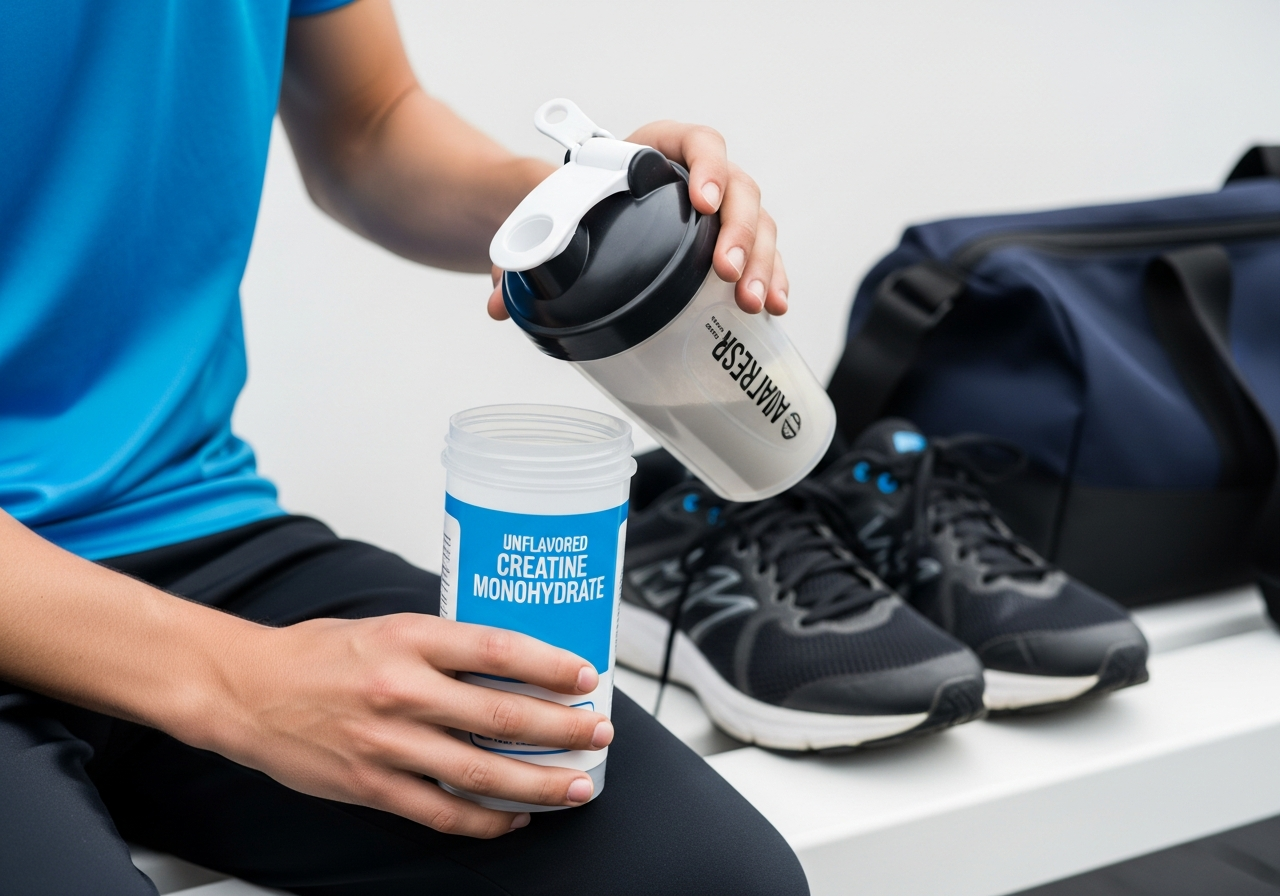
Creatine for Teenagers: Is It Safe Under 18?
By The Creatine Canada Research Team — Evidence-based supplement analysts
Yes—teenagers can take creatine, but the evidence-based answer is that it is most appropriate for healthy adolescents who train seriously, understand proper use, and have parent, coach, and ideally healthcare oversight. Creatine monohydrate is the best-studied form, it is not a steroid, and current research does not show that creatine stunts growth in teenagers.
Evidence-based · Cites 4 sources · Editorial standards
Key Takeaways
- Healthy teens under 18 can use creatine monohydrate, but it should support training and nutrition, not replace them.
- The standard evidence-based dose is 3-5 g per day, or about 0.1 g/kg/day for a smaller teen athlete.
- A loading phase of 20 g/day split into 4 doses for 5-7 days is optional, not required.
- Current evidence does not show that creatine stunts growth, damages healthy kidneys, or acts like a steroid.
- Creatine makes the most sense for adolescent athletes doing regular sprinting, lifting, repeated high-intensity efforts, or team sports.
- Teens with kidney disease, significant medical conditions, or multiple medications should not start creatine without a physician's approval.
- In Canada, choose a simple creatine monohydrate product with an NPN and preferably third-party testing.
Can teenagers take creatine? The direct answer parents and athletes need
Yes, teenagers can take creatine in some situations, but the strongest practical recommendation is that creatine should be reserved for healthy adolescents who train consistently, eat well, understand correct dosing, and use it with parent or guardian awareness. That is the short answer to queries like can teens take creatine, can a teenager take creatine, can people under 18 take creatine, and can young athletes take creatine.
Creatine is a naturally occurring compound made from amino acids and stored mostly in muscle as phosphocreatine, which is the rapidly available form used to help regenerate ATP, the cell's immediate energy currency, during short, hard efforts. In plain English, creatine helps muscles repeat powerful work such as sprinting, jumping, tackling, lifting, and repeated sport-specific bursts.
What makes the under-18 question tricky is not that creatine appears uniquely dangerous for adolescents. The real issue is that research in teens is smaller than the adult literature, and younger athletes often use supplements casually, copy peers, or take multi-ingredient pre-workouts they do not need. The 2017 ISSN position stand concluded creatine monohydrate is effective and generally safe when used appropriately, while the IOC consensus on dietary supplements identified creatine as one of the few supplements with a meaningful evidence base for performance.
So, should teenagers take creatine? Not automatically. A 14-year-old who is new to the gym and still skipping meals does not need creatine yet. A 16- or 17-year-old who plays hockey, football, sprint events, swimming, rugby, soccer, or lifts regularly may reasonably consider it once the basics are in place.
The practical rule is simple:
- Yes, possibly for healthy, training-focused teens.
- No, not yet for kids who are untrained, inconsistent, or using supplements to compensate for poor habits.
- Medical supervision first if there is any kidney issue, chronic illness, or medication use.
If you need a beginner foundation before deciding, start with what creatine is and then use a creatine dosage calculator to keep the dose conservative and accurate.
Why creatine can help teen athletes: how it works in the body
Creatine helps teen athletes for the same reason it helps adults: it increases muscle phosphocreatine stores, which improves the ability to regenerate ATP during repeated high-intensity efforts. That mechanism matters most in sports where performance depends on short bursts, repeated accelerations, strength, and power rather than steady easy movement.
During a maximal sprint, heavy set of squats, explosive swim start, or repeated basketball cut, the body burns through ATP quickly. Phosphocreatine acts like a backup battery by donating a phosphate group to help restore ATP fast. When muscle creatine stores are more saturated, an athlete can often maintain output slightly better from rep to rep, sprint to sprint, or set to set.
This is why creatine is most relevant for:
- Resistance training and bodybuilding-style lifting
- Sprinting and jumping sports
- Hockey, football, rugby, lacrosse, soccer, and basketball
- Swimming events with repeated explosive efforts
- Racquet sports and combat sports with intermittent power demands
Creatine does not act like a stimulant. It will not feel like caffeine, and it does not give an instant buzz. Instead, it works through tissue saturation over days to weeks. Once muscle stores rise, training quality can improve modestly but meaningfully over time. Better training quality can then support more strength, more lean mass, and better repeated-effort performance.
That distinction matters for adolescents. A teen asking can you take creatine as a teenager often expects a dramatic sensation. In reality, the main sign it is working is usually this: the athlete gets an extra rep, maintains sprint quality deeper into a session, or progresses training slightly faster over several weeks. For a more detailed explainer, see creatine benefits and how creatine powers muscles.
The 2021 JISSN review on common creatine questions and misconceptions reinforced that creatine monohydrate remains the reference form because its efficacy, safety, and mechanism are far better established than trendy alternatives. For teen athletes especially, simple and well-studied beats novel and heavily marketed.
One final practical point: creatine is a performance support tool, not a growth shortcut. Sleep, calories, protein intake, consistent coaching, and progressive training still matter far more than any scoop of powder.
What the research actually says about creatine under 18
The current evidence does not show that creatine is harmful for healthy teenagers when used appropriately, but the adolescent research base is smaller than the adult evidence and that nuance matters. That is the honest answer to searches such as can adolescents take creatine, can under 18 take creatine, and should teens take creatine.
Most of the high-confidence creatine data come from adult studies, where creatine monohydrate has been studied extensively for strength, lean mass, repeated-sprint performance, and general safety. The adolescent literature is more limited, but available studies and sports nutrition position papers do not indicate a unique safety problem in healthy, supervised teen athletes.
The caution from many clinicians is therefore not based on clear evidence of harm. It is based on four practical realities:
- Teenagers may mis-dose supplements.
- They may buy poor-quality or contaminated products.
- They may stack creatine with stimulants or "muscle-building" blends.
- Underlying medical issues may go unrecognized.
The ISSN position stand noted that if younger athletes are post-puberty, involved in serious competitive training, eating an adequate diet, and supervised by parents and qualified professionals, creatine may be a reasonable option. The Mayo Clinic overview is also broadly consistent with the mainstream view that creatine is likely safe for healthy people when used at recommended doses.
What the research does not support is the idea that creatine is automatically appropriate for every child who plays sports. An 11-year-old doing recreational activities is not the same case as a 17-year-old varsity sprinter or hockey player training hard 5 days per week. Age alone is a weak decision tool; maturity, health status, training level, and supervision matter more.
If you want the practical middle ground, it is this: creatine is not usually the first thing a teenager should add, but for older adolescents with structured training and informed adult oversight, it can be a rational, evidence-aligned supplement rather than a red flag.
Does creatine stunt growth in teenagers? No evidence says it does
No, current evidence does not show that creatine stunts growth in teenagers. That direct answer is important because can creatine stunt growth in teenagers is one of the most common parent concerns, yet the claim is not supported by human evidence.
The growth-stunting myth likely persists because creatine is lumped together with harder-edge gym culture, steroids, and adult performance supplements. But creatine is neither an anabolic steroid nor a hormone manipulator in the usual sense. It is a naturally occurring compound found in the body and in foods such as meat and fish, and supplementation primarily increases phosphocreatine availability in muscle.
Growth in adolescence is driven by genetics, overall energy intake, protein sufficiency, sleep, endocrine health, illness status, and broader training load recovery. Creatine does not have a known mechanism by which it would close growth plates or suppress normal height development. If a claim has no plausible mechanism and no convincing human evidence, it should not be treated as established fact.
That said, parents sometimes misread normal creatine-related scale changes as something unhealthy. Creatine can increase body mass early on because it draws more water into muscle tissue. This is intramuscular water, not body fat and not a sign of damaged growth. Many users gain roughly 0.5 to 2 kg in the early phase, especially if they do a loading protocol. If you want that explained in detail, read does creatine make you gain weight.
What can interfere with healthy adolescent development is very different: under-eating, aggressive weight cuts, poor sleep, overtraining, stimulant-heavy pre-workouts, and performance pressure. In other words, the bigger youth sport risks are often not creatine itself but the environment around supplementation.
If parents are worried about growth, the best checklist is not "ban creatine first." It is:
- Is the teen eating enough total calories?
- Are they getting protein at each meal?
- Are they sleeping adequately?
- Are they training progressively rather than excessively?
- Are they avoiding sketchy multi-ingredient products?
Creatine belongs near the end of that list, not the top.
Which teenagers might benefit most, and who should skip it
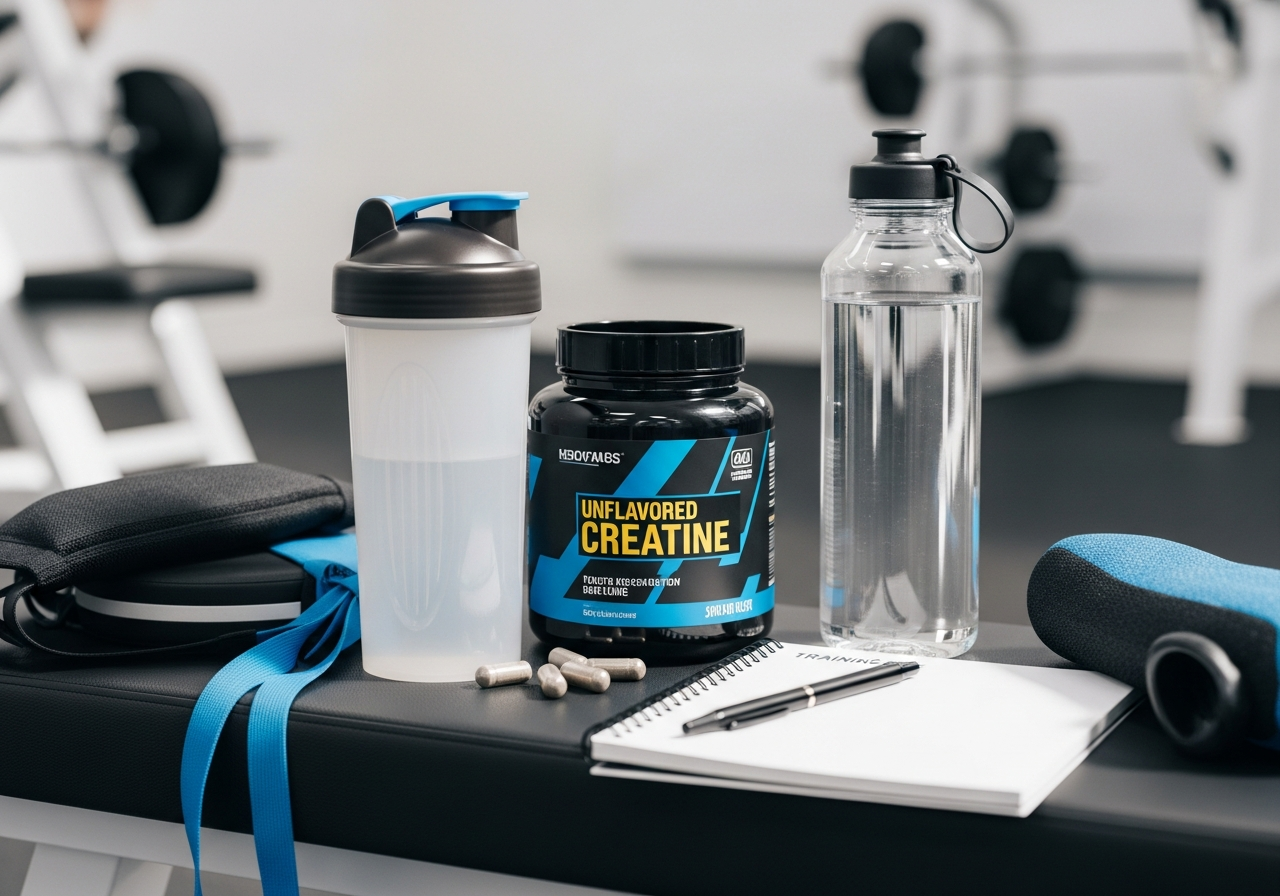
Creatine makes the most sense for older, healthy teens doing consistent high-intensity training, and it makes the least sense for untrained kids, casual exercisers, or anyone with relevant medical concerns. That is the most practical answer to should teenager take creatine and should teenagers take creatine.
Good candidates often include adolescents who:
- Train at least 3 to 5 times per week with structure
- Compete in sports requiring repeated power output
- Already have decent nutrition and hydration habits
- Want a simple single-ingredient supplement rather than a stimulant blend
- Can follow a daily routine consistently
Examples include a 16-year-old hockey player in the off-season, a 17-year-old sprinter doing strength work, or a teenage swimmer doing repeated high-intensity sets and dryland lifting.
Poor candidates include teens who:
- Have not yet built consistent training habits
- Expect supplements to replace eating properly
- Want rapid weight changes for aesthetic reasons
- Are using multiple unverified products
- Do not have parent awareness or informed consent
Teens who should not start creatine without medical approval include those with known kidney disease, unexplained kidney-related lab abnormalities, significant chronic illness, or medication regimens where a physician should review supplement use. If there is any doubt, the right first question is not "which brand?" It is "is this medically appropriate?" See also who should not take creatine and kidney safety and creatinine confusion.
Girls and young women can also use creatine; the supplement is not male-specific. The same evidence-based dosing principles apply, and there is no good evidence that creatine "bulks women up" in a way that differs from men beyond the same training-and-water effects. If relevant, our creatine for women guide covers that in more detail.
The biggest screening question is not age in isolation. It is readiness. If the teen can follow instructions, has realistic expectations, trains hard enough to benefit, and has adults in the loop, creatine is far more reasonable than many parents assume.
Teen creatine dosage: exact amounts by body weight and goal
For most teenagers, the simplest and safest creatine dose is 3 to 5 g of creatine monohydrate per day, taken every day. A body-weight-based option of about 0.1 g/kg/day is also reasonable for smaller adolescents who want a more tailored dose.
Most teens do not need anything fancy. The goal is to gradually saturate muscle creatine stores and then keep them topped up. A loading phase can get there faster, but it is optional. For a full calculator, use our creatine dosage calculator or read how much creatine per day.
| Teen body weight | Conservative daily dose | Standard simple dose | Optional loading protocol |
|---|---|---|---|
| 45-55 kg | 3 g/day | 3-5 g/day | About 15-20 g/day for 5-7 days, split into 4 doses |
| 56-70 kg | 3-4 g/day | 5 g/day | 20 g/day for 5-7 days, split into 4 doses |
| 71-90 kg | 5 g/day | 5 g/day | 20 g/day for 5-7 days, split into 4 doses |
| 90+ kg | 5 g/day | 5 g/day | 20 g/day for 5-7 days, split into 4 doses |
How to choose:
- For beginners: start with 3 g/day for one week, then move to 5 g/day if tolerated and appropriate for body size.
- For smaller teens: 3 g/day is often plenty.
- For larger teen athletes: 5 g/day is the standard maintenance dose.
- For rapid saturation before a training block: loading is optional, not necessary.
Two dosing mistakes are common in under-18 athletes. The first is underdosing because the scoop is inaccurate or only half full. The second is overdosing because the athlete assumes more must be better. Neither is helpful. Creatine works by saturation, not by megadoses.
If a teen tries creatine, the low-fuss plan is the best one: plain monohydrate, measured dose, daily use, and no stacking with random extras. Consistency beats complexity almost every time.
How a teenager should take creatine: the step-by-step plan
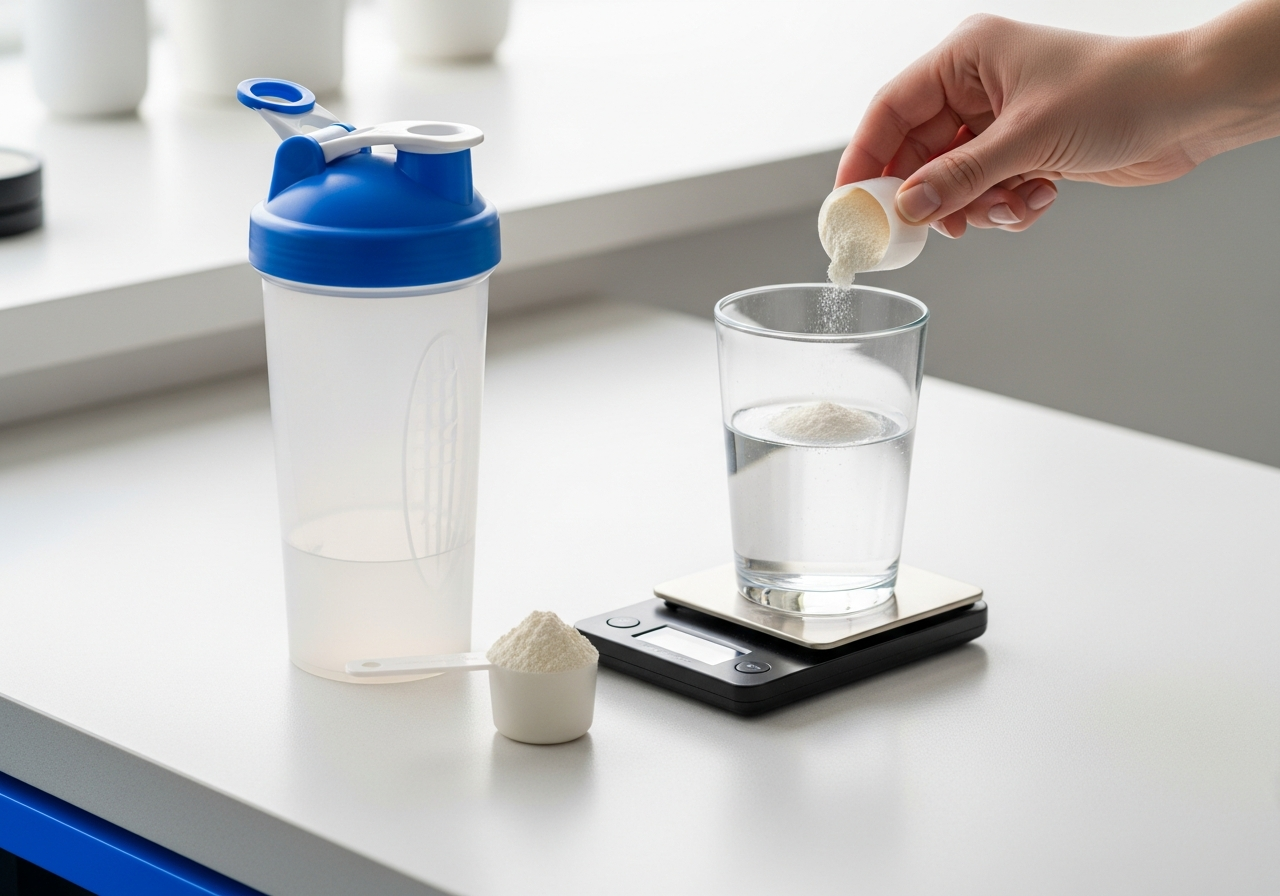
The best way for a teenager to take creatine is one measured daily dose of creatine monohydrate mixed in water or a shake, taken consistently for weeks rather than sporadically. That is the practical answer to can teenagers have creatine and can teens have creatine if the decision to use it has already been made.
- Choose plain creatine monohydrate. Skip stimulant blends, testosterone boosters, and proprietary mixes. Monohydrate is the form with the strongest evidence and usually the best value. Compare options in our best creatine rankings and creatine brand reviews.
- Measure the dose accurately. Use 3 g/day for smaller teens or 5 g/day for most larger adolescent athletes. A gram scale is ideal if the scoop is vague.
- Mix it in a simple drink. Water, juice, or a post-workout protein shake all work. If clumping is annoying, use warm water first, then top up cold. More on that in how to mix creatine.
- Take it daily. Workout days and rest days both count. Saturation depends on regular intake, not just pre-workout use.
- Keep hydration normal. Drink fluids normally through the day and around training. Creatine does not require extreme water intake, but regularly dehydrated athletes should fix hydration habits.
- Track results for 4 to 8 weeks. Log body weight, sets, reps, sprint quality, and how training feels.
A simple week-by-week expectation is realistic and helps teens avoid the "it didn't work in 2 days" trap:
- Week 1 with loading: possible small body-mass increase from muscle water.
- Weeks 2-3: subtle improvement in training quality or repeated efforts.
- Weeks 4-8: easier to notice strength progression, better session-to-session output, or improved recovery between hard bouts.
Timing is a minor factor compared with consistency. If taking it after training helps the teen remember, great. If breakfast is easier, that is also fine. Our timing guide and timeline guide go deeper.
Dry scooping is unnecessary, and cycling is usually unnecessary. A calm, boring routine is exactly what works best.
Best timing, loading, rest days, and how to tell if it is working
For teenagers, the best time to take creatine is the time they will remember every day, because consistency matters more than exact timing. That directly answers the common question behind searches like can you take creatine under 18 when the real follow-up is usually when should I take it?
Creatine does not work like pre-workout caffeine. You do not need to feel it right away for it to be working. The goal is muscle saturation over time. If you use a loading phase of 20 g/day split into 4 doses for 5 to 7 days, you may notice faster body-mass changes and a quicker training effect. If you skip loading and take 3 to 5 g/day, the effect usually builds more gradually over several weeks.
Take it on rest days as well. Creatine stores do not stay topped up just because you trained yesterday. Daily intake is what maintains saturation. If you miss one day, do not panic and do not double up aggressively the next day; just resume the normal dose. Related reading: creatine on rest days and what happens if you miss a day.
How to tell if it is working:
- Your body weight rises slightly, especially early on or after loading
- You maintain sprint speed or rep quality deeper into sessions
- You get an extra rep at a given load
- You recover better between short hard efforts
- Your training log improves over 4 to 8 weeks
How not to judge it:
- By whether you feel a stimulant-like rush
- By one single workout
- By mirror changes after only a few days
Some athletes respond more than others. People with lower baseline muscle creatine stores, including some vegetarians, often respond more noticeably because they have more room to increase stores. Others still benefit, but the change may be subtler. That does not mean the product is bad; it may simply mean the athlete started closer to saturation.
If the teen wants a straightforward default, take 3 to 5 g once daily with any meal or shake and stay consistent for at least 4 weeks before judging the result.
Safety, side effects, and the situations where a teen should stop or avoid creatine
In healthy teenagers using recommended doses, creatine monohydrate is generally well tolerated, but mild side effects can occur and certain red-flag situations require caution or medical advice. That is the balanced answer to safety concerns around can a teenager take creatine.
The most common side effects are practical rather than dangerous:
- Water-weight increase: often the first noticeable effect, especially with loading.
- Stomach upset or loose stools: more likely if large doses are taken at once.
- Bloating sensation: usually manageable by lowering the dose or skipping loading.
These issues are often fixable. If stomach discomfort happens, reduce to 3 g/day, take it with food, or split the dose. Our digestive side effects guide and bloating guide cover the troubleshooting in detail.
What about kidneys? In healthy people, mainstream evidence does not show that recommended-dose creatine harms kidney function. However, creatine can raise creatinine, which is a breakdown marker often measured on blood tests, and that can confuse interpretation if a clinician does not know the athlete supplements. That is one reason teens should tell healthcare providers they are using creatine before lab work. For the nuance, see creatine vs creatinine.
When to avoid creatine or pause and speak to a physician:
- Known kidney disease or unexplained kidney abnormalities
- Significant chronic medical conditions
- Unexplained swelling, severe GI symptoms, or unusual symptoms after starting
- Use of multiple supplements or medications where interactions should be reviewed
- Eating disorder history or supplement misuse patterns
One more important youth-sport point: the product risk can exceed the ingredient risk. A plain monohydrate powder from a reputable company is very different from a flashy gym formula with stimulants, herbs, and proprietary blends. For adolescents, minimizing unnecessary ingredients is one of the smartest safety choices.
If you want the broader adult-and-teen perspective, our full creatine safety guide expands on long-term use, hydration, and lab markers.
Creatine myths parents hear all the time, and what the evidence says instead
Most fears about teen creatine use come from myths, not from strong evidence. The fastest way to make a good decision is to separate what creatine actually does from what people assume it does.
- Myth: Creatine is a steroid.
Fact: Creatine is not a steroid, not a hormone, and not an anabolic drug. It is a naturally occurring compound involved in cellular energy production. See is creatine a steroid. - Myth: Creatine stunts growth.
Fact: There is no convincing evidence that creatine impairs height growth or growth-plate development in healthy teenagers. - Myth: Creatine ruins healthy kidneys.
Fact: Recommended doses of creatine monohydrate are not shown to damage healthy kidneys, though pre-existing kidney disease is a reason for medical review first. - Myth: Creatine causes dehydration and cramps.
Fact: Research does not support the old blanket claim that creatine causes dehydration or muscle cramps in healthy users at standard doses. - Myth: Creatine is only for bodybuilders.
Fact: Team-sport athletes, sprinters, swimmers, and other power athletes may benefit because the mechanism is repeated high-intensity energy support. - Myth: More creatine works better.
Fact: Once muscle stores are saturated, taking more than needed does not create extra benefit and is more likely to upset the stomach.
The 2021 JISSN paper on common creatine misconceptions specifically addressed many of these claims and reinforced that monohydrate remains the benchmark form with the best support. If a teen or parent is overwhelmed by internet noise, the safest filter is to distrust dramatic claims on both extremes. Creatine is neither miracle powder nor hidden menace.
When families still feel uncertain, it often helps to reframe the question. Instead of asking, "Is creatine scary?" ask, "Is a single-ingredient, well-studied supplement with a measured 3-5 g daily dose more sensible than a sugar-heavy, stimulant-loaded pre-workout marketed to teenagers?" In most cases, the answer is yes.
For a deeper myth-by-myth breakdown, visit creatine myths debunked and creatine myths vs. facts.
How to buy creatine safely in Canada for a teenager
The best creatine for a teenager in Canada is a plain creatine monohydrate product from a reputable brand, ideally with a Natural Product Number and independent quality testing. That buying rule matters as much as the dose, because under-18 athletes should avoid unnecessary ingredients and questionable manufacturing.
In Canada, many supplements carry an NPN, or Natural Product Number, which indicates the product has been licensed by Health Canada as a natural health product. An NPN is not a guarantee of elite performance quality, but it is a useful legitimacy signal when comparing products sold online or in-store.
Use this quick filter:
| Buying factor | What to look for | What to avoid |
|---|---|---|
| Form | Creatine monohydrate | Proprietary blends or exotic forms with big claims |
| Ingredients | Single ingredient or minimal additives | Stimulants, herbs, "test boosters," mega-caffeine |
| Label transparency | Exact grams per serving | Hidden blend amounts |
| Canadian compliance | NPN where applicable | Grey-market imports with vague labelling |
| Quality assurance | Third-party testing or strong brand reputation | No testing info and no accountability |
| Value | Low cost per 5 g serving | Overpriced flavoured gimmicks |
Micronized monohydrate can be a nice quality-of-life option if the teen dislikes gritty texture, but it is not meaningfully more effective than regular monohydrate. Flavoured powders, gummies, and capsules can work, but they often cost more per effective dose and sometimes make it harder to see exactly how much creatine is being taken.
If you are shopping in Canada, browse our creatine product catalog and compare evidence-first options in best creatine rankings. If a product looks like a youth-safe creatine but the label reads like a nightclub pre-workout, skip it.
For teenagers, boring is good: plain monohydrate, transparent label, reputable seller, reasonable price, and no fantasy claims.
Bottom line: should a teenager take creatine?
Yes, a teenager can take creatine, but the best evidence-based answer is that it should be a deliberate choice for a healthy, training-focused adolescent rather than a casual add-on for every kid who exercises. If the teen is under 18, serious about sport, using plain creatine monohydrate at 3 to 5 g per day, and has parent awareness plus appropriate medical caution where needed, creatine is a reasonable option.
Just as importantly, creatine is not step one. Before starting, the teen should already have these basics in place:
- Consistent training
- Adequate calories and protein
- Good hydration habits
- Reliable sleep
- Realistic expectations
If those basics are missing, fixing them will outperform any supplement. If those basics are in place, creatine is one of the few sports supplements that genuinely earns consideration because the evidence base is stronger than for most alternatives.
The cleanest practical recommendation is this:
- Choose plain creatine monohydrate.
- Use 3 g/day if smaller, or 5 g/day for most teen athletes.
- Take it daily, including rest days.
- Skip loading unless a faster effect is worth the extra hassle.
- Stop and get medical advice if there is kidney disease, unusual symptoms, or relevant medication use.
For families still deciding, the safest next reads are creatine for beginners, how to take creatine, and what age can you take creatine.
If you want one sentence to remember, make it this: Creatine is not automatically necessary for teenagers, but for healthy older adolescents in structured training, creatine monohydrate is a reasonable and generally well-supported supplement when used correctly.
Teen Creatine at a Glance
- 3-5 g/day Standard teen maintenance dose — Plain creatine monohydrate, taken daily
- 20 g/day Optional loading phase — Split into 4 doses for 5-7 days
- 0.1 g/kg/day Useful body-weight rule — Helpful for smaller adolescent athletes
- 4-8 weeks Realistic window to judge results — Track body weight, reps, sprint quality, and training output
Frequently Asked Questions
Can a 14-year-old take creatine?
A 14-year-old can take creatine in some cases, but it is usually more appropriate only if they are healthy, training seriously, and have parent and preferably healthcare oversight. For a younger teen, the bar for responsible use should be higher because habits, dosing accuracy, and product choice matter more than age alone.
Can a 16-year-old or 17-year-old take creatine?
Yes, a healthy 16- or 17-year-old can generally take creatine monohydrate if they train consistently and use an evidence-based dose. Older adolescents in structured lifting, sprinting, or team sports are the most common under-18 group where creatine use is reasonably defensible.
Should teens take creatine for sports performance?
Teens may take creatine for sports performance if they play power- or sprint-oriented sports and already have solid nutrition, sleep, and training habits. Creatine is most relevant for repeated high-intensity efforts, not as a shortcut for poor recovery or inconsistent eating.
Can teenagers take creatine every day?
Yes, teenagers who use creatine should take it every day rather than only on workout days. Daily intake is what keeps muscle creatine stores saturated, and that is why standard guidance uses a consistent 3-5 g per day maintenance dose.
Can creatine stunt growth in teenagers?
No, current evidence does not show that creatine stunts growth in teenagers. The claim is popular online, but there is no convincing human evidence that creatine impairs normal height development or growth-plate health when used appropriately.
Is creatine safe for high school athletes?
Creatine is generally considered one of the safer sports supplements for healthy high school athletes when used correctly. The bigger risks usually come from poor-quality products, stimulant-heavy blends, or unsupervised use rather than from plain creatine monohydrate itself.
What is the best creatine for teens?
The best creatine for teens is plain creatine monohydrate from a reputable brand with clear dosing and, in Canada, ideally an NPN and third-party testing. Teens usually do not need fancy forms, proprietary blends, or high-caffeine add-ons.
How much creatine should a teenager take?
Most teenagers who use creatine should take 3-5 g per day of creatine monohydrate, with smaller teens often doing well at the lower end. A body-weight rule of about 0.1 g/kg/day is also a sensible way to individualize the dose.
Do teens need to load creatine?
No, teens do not need to load creatine for it to work. A loading phase of 20 g per day for 5-7 days can saturate muscles faster, but taking 3-5 g per day without loading is simpler and still works well over time.
Should parents talk to a doctor before a teen uses creatine?
Yes, parents should strongly consider talking to a doctor before a teen starts creatine, especially if there is any kidney issue, chronic illness, unusual lab history, or medication use. Even for healthy teens, a quick medical check-in can add reassurance and help interpret future blood tests correctly.