Creatine Postpartum: Is It Safe and Does It Help Recovery After Birth?
By The Creatine Canada Research Team — Evidence-based supplement analysts
Creatine postpartum is probably safe for many healthy new mothers, but the evidence specific to the postpartum period and especially breastfeeding is still limited, so it is best treated as an individual decision made with your physician or midwife. If you are cleared to use it, plain creatine monohydrate at standard doses may support strength, training capacity, and lean-mass recovery after birth, but it is not a magic fix for sleep loss, pelvic-floor healing, or medical postpartum complications.
Evidence-based · Cites 4 sources · Editorial standards
Key Takeaways
- The best-supported form is creatine monohydrate, not newer premium forms.
- A standard postpartum dose is 3 to 5 g daily; loading is optional, not necessary.
- Postpartum creatine may help you rebuild strength and training tolerance, especially when sleep, inactivity, or muscle loss have reduced performance.
- Breastfeeding-specific safety data are limited, so discuss creatine with your care team before starting while nursing.
- Creatine does not directly burn fat or 'tighten your core'; it works by increasing phosphocreatine stores that help muscles make ATP faster.
- Common side effects are mild and dose-related, especially stomach upset or temporary water-weight gain if you load aggressively.
- In Canada, look for a creatine product with a Natural Product Number when applicable and preferably third-party testing for purity.
Creatine postpartum: the short answer for new mothers
Creatine postpartum can be a reasonable supplement for some new mothers, but the key nuance is that general creatine safety evidence is strong while postpartum- and breastfeeding-specific evidence is much thinner. That means the practical answer is not simply yes or no: if you have delivered, are medically stable, and your physician, obstetrician, midwife, or nurse practitioner has no concerns, creatine monohydrate is often the form with the best risk-benefit case.
The reason people ask about creatine after pregnancy is straightforward. Many women lose strength, routine, sleep, and training consistency after childbirth. Some are recovering from blood loss, surgery, pelvic-floor symptoms, or a long period of reduced activity. Creatine is one of the most studied sports supplements for improving high-intensity exercise capacity, strength gains, and lean mass when paired with training. The 2017 ISSN position stand concluded that creatine monohydrate is the most effective ergogenic nutritional supplement currently available for increasing high-intensity exercise capacity and lean body mass during training.
What creatine can do postpartum is support the energy system your muscles use for short, repeated efforts, help you train a little harder or recover training quality more quickly, and possibly help preserve or rebuild lean mass during a physically stressful life stage. What creatine cannot do is repair a pelvic-floor injury, treat postpartum depression, replace sleep, fix iron deficiency, or override under-eating.
For most healthy adults, the usual maintenance dose is 3 to 5 g per day. If you want the full beginner framework first, see what creatine is, how to take creatine, and our creatine dosage calculator. If breastfeeding is part of your situation, the most honest evidence-based position is caution with context: creatine is a compound your body already makes and stores, but clinical lactation data on supplementation are not robust enough to claim certainty.
Bottom line: creatine after giving birth is not automatically inappropriate, but postpartum is a medical context, not just a gym context, so a standard low dose plus professional clearance is the smart way to approach it.
How creatine may help postpartum recovery after birth
Creatine helps postpartum recovery indirectly by improving cellular energy availability in muscle, not by acting like a hormone or stimulant. Creatine is stored in muscle largely as phosphocreatine, a high-energy compound that helps regenerate ATP, the immediate energy currency your cells use for contractions. When you do a challenging set of squats, carry a car seat up stairs, or perform repeated short efforts, phosphocreatine helps restore ATP quickly so force output drops less sharply.
That mechanism matters after childbirth because postpartum recovery often includes detraining, disrupted sleep, lower training volume, and sometimes muscle loss. If you start strength training again, creatine may help you tolerate slightly more high-quality work, whether that means another rep, another set, or a better performance late in the session. Over weeks, that can translate into more effective training stimulus and a faster return toward baseline strength.
Creatine also pulls more water into muscle cells, which is one reason some people notice an early increase on the scale. This is intramuscular water, not body fat. That cell hydration may contribute to the fuller look many lifters notice and may support training adaptations, but it is not the same thing as postpartum bloating around the abdomen. If scale changes stress you, read does creatine make you gain weight and does creatine cause bloating.
There is also interest in creatine for brain energy and sleep-deprivation resilience because the brain uses creatine too. That is scientifically plausible and actively studied, and some people subjectively report less mental drag, but postpartum-specific proof is still emerging rather than settled. For that reason, any claims that creatine is a proven fix for postpartum brain fog would be too strong.
Where creatine is most likely to help new mothers is in a realistic package: returning to resistance training, rebuilding muscle, maintaining performance while calories and sleep are imperfect, and making short, demanding efforts feel a little more repeatable. It works best when paired with protein intake, progressive training, hydration, and enough overall food. If you are coming back to fitness after birth, think of creatine as an evidence-based assistant to training, not a substitute for the fundamentals.
Creatine and breastfeeding postpartum: what we know, what we do not
Creatine while breastfeeding postpartum is an area where caution is appropriate because direct human lactation research is limited. The most important point is this: the broad adult safety literature on creatine is reassuring, but that does not automatically answer the narrower question of supplementation during nursing.
Creatine is not an exotic foreign compound. Your body synthesizes it from amino acids, and it is naturally present in foods like meat and fish. That biological familiarity is part of why many clinicians view standard-dose creatine as lower concern than many other sports supplements. However, a low-concern profile is not the same thing as proven lactation safety. In evidence-based writing, that distinction matters.
The 2021 JISSN review on common questions and misconceptions about creatine reinforces that creatine has a strong overall safety record in healthy populations, but it does not provide a definitive breastfeeding endorsement. Likewise, broad overviews like Examine's creatine evidence summary are useful for mechanism and general safety but cannot replace postpartum-specific clinical advice.
If you are breastfeeding, the smartest decision path looks like this:
- Ask your care team whether there is any reason you should avoid creatine, such as kidney disease, severe hypertension concerns, medication interactions, or unresolved postpartum complications.
- Consider timing. Many mothers prefer to wait until feeding is established and their immediate postpartum course is stable before introducing any non-essential supplement.
- If cleared, use plain creatine monohydrate only. Avoid proprietary blends, stimulant products, or fat burners marketed to postpartum women.
- Start low at 3 g daily rather than doing a loading phase.
- Monitor digestion, hydration, and your own tolerance for two to three weeks.
If you want a dedicated deeper dive, see the related guide on can you take creatine while breastfeeding. The practical takeaway is balanced rather than dramatic: creatine and breastfeeding postpartum may be acceptable for some women, but because direct evidence is incomplete, you should make the decision with clinical input rather than supplement-marketing reassurance.
Who postpartum creatine is most likely to help
Postpartum creatine supplementation is most likely to help women who are returning to exercise and want support for strength, lean mass, or repeated-effort performance. It is not essential for everyone, and not every new mother needs it, but there are clear profiles where the supplement makes more sense.
- Women restarting resistance training: If you stopped lifting late in pregnancy or trained less than usual, creatine can help support your return to productive workouts.
- Women who feel weaker after birth: Strength usually drops after time away from heavier training; creatine may help you regain it faster when paired with a gradual program.
- Vegetarian or mostly plant-based mothers: People who eat little or no meat often start with lower muscle creatine stores, so they may notice a stronger response. See is creatine vegan and related beginner guides if that applies to you.
- Athletes resuming sport: CrossFit athletes, team-sport athletes, sprinters, and lifters often benefit because their sports rely on repeated high-intensity efforts.
- Women prioritizing body composition: Creatine does not directly reduce body fat, but it can help maintain training quality and lean mass during a cautious postpartum fat-loss phase.
Creatine is less likely to feel transformative if you are not doing any resistance training or higher-effort movement. You can still take creatine without working out, but the most consistent benefits appear when the supplement is paired with training stimulus. If your current phase is short walks, mobility, breathing work, and pelvic-floor rehab only, creatine is optional rather than urgent.
It is also important to separate normal postpartum fatigue from things creatine will not solve. If you are exhausted due to sleep deprivation, iron deficiency, thyroid issues, low calorie intake, depression, infection, or surgical recovery, creatine may do very little. In those cases, the limiting factor is not phosphocreatine availability; it is a larger health issue.
For a lot of new mothers, the best reason to use creatine after childbirth is simple: it is a low-effort, relatively inexpensive supplement with one of the strongest evidence bases in sports nutrition. If your goals are to feel stronger, preserve muscle, and improve training consistency as you return to exercise, creatine is one of the few supplements that genuinely deserves consideration.
Exactly how much creatine to take postpartum, by body weight and goal
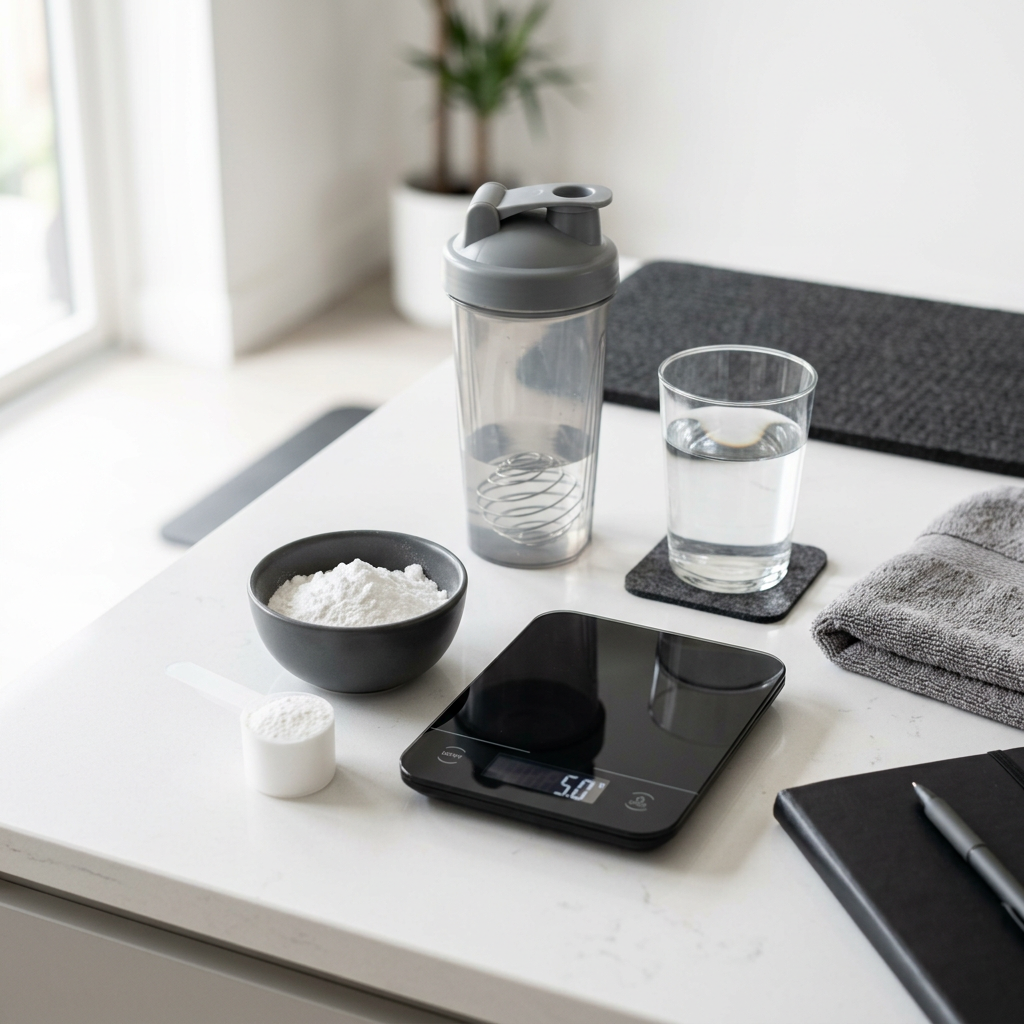
The standard postpartum creatine dose is 3 to 5 g of creatine monohydrate per day, and for most new mothers that is the best place to start. You do not need a special 'women's creatine' formula, and you do not need a massive loading phase to get results.
The two evidence-based dosing approaches are:
- Steady approach: 3 to 5 g once daily, every day. This reaches muscle saturation more gradually, usually over roughly three to four weeks.
- Loading approach: about 20 g per day split into 4 doses for 5 to 7 days, then 3 to 5 g daily. This saturates faster but is more likely to cause stomach upset or a noticeable water-weight jump.
For postpartum women, the steady approach is usually the better fit because it is simpler, gentler on digestion, and easier to stick with during an already chaotic season.
| Body weight | Goal | Simple daily dose | Practical note |
|---|---|---|---|
| Under 60 kg | General recovery / return to training | 3 g daily | Good low-friction starting point |
| 60-80 kg | Strength, lean mass, gym return | 3-5 g daily | Most women fit here |
| Over 80 kg | Higher lean mass or aggressive training return | 5 g daily | Consistency matters more than precision |
| Any body weight | Need faster saturation | 20 g/day for 5-7 days, then 3-5 g daily | Optional, not necessary |
If you want to individualize the dose more closely, use our creatine dosage calculator or read how much creatine per day. If you are breastfeeding or have a sensitive stomach, start at 3 g daily for a week and only increase if desired.
Two practical rules matter more than tiny dose differences. First, take it every day, including rest days. Second, measure grams accurately rather than guessing with a random kitchen spoon. If you are unsure, see how to measure creatine.
The best postpartum dose is the dose you will actually take consistently for the next eight weeks. In real life, 3 to 5 g daily beats a perfect protocol you abandon after four days.
Best time to take creatine after pregnancy, and how to make it effortless
The best time to take creatine after pregnancy is the time you will remember to take it daily, because consistency matters far more than exact timing. Creatine works by saturating muscle stores over time, not by creating an acute stimulant-like effect right after ingestion.
That means you can take creatine:
- With breakfast
- In a protein shake after training
- With lunch on non-training days
- In the evening if that is the easiest routine
If you want the detailed timing science, see when to take creatine. For most postpartum women, the practical solution is to anchor creatine to an existing habit. Good examples include your first water bottle of the day, your post-workout shake, or the meal you miss least often.
How to take it step by step:
- Choose plain creatine monohydrate powder.
- Measure 3 to 5 g.
- Mix it in water, a smoothie, or protein shake.
- Drink it once per day, every day.
- Continue for at least four to eight weeks before judging results.
Creatine does not need to be taken with sugar, although taking it with a meal is perfectly fine. It also does not need to be cycled. If you like, you can mix it with whey protein; see can you mix creatine with protein powder. If texture bothers you, use warm water or a shaker bottle to improve dissolving.
Hydration matters, but not because creatine is dehydrating in healthy users. It matters because postpartum women are often already under-hydrated, especially if breastfeeding. Aim for sensible daily fluid intake and monitor urine colour, thirst, and how you feel. If you are prone to headaches or GI upset, increasing fluids modestly and splitting the dose can help.
The simplest sustainable routine for a new mother is usually one scoop in a shake or glass of water at the same point each day. A boring routine is often the best routine when sleep is fragmented and your schedule changes by the hour.
What to expect week by week from creatine and postpartum recovery
Creatine postpartum usually works gradually, with the earliest noticeable effect being improved workout quality rather than a dramatic visible body change. If you use a standard daily dose without loading, expect a subtle timeline measured in weeks, not days.
A realistic progression looks like this:
- Week 1: Usually no dramatic change. Your main job is simply remembering the daily dose and watching for digestive tolerance.
- Weeks 2 to 4: As muscle stores rise, workouts may feel slightly more stable, especially in repeated sets of strength work or short intense intervals.
- Weeks 4 to 8: This is when many people notice better rep performance, improved training consistency, and sometimes a small scale increase from intramuscular water.
- Weeks 8 to 12: The biggest real-world benefits usually show up as better strength progression, improved lean-mass retention or regain, and less drop-off across sets.
If you do a loading phase, those effects can show up sooner, often within the first week, but many postpartum women do not find the trade-off worth it.
How do you tell whether creatine is working? Look for practical signs:
- You are getting an extra rep on sets that used to stall.
- Your loads or band tensions are trending up faster.
- You recover better between repeated efforts.
- Your muscles feel fuller, even before major visual changes appear.
How do you tell it is not working? Usually by six to eight weeks of consistent use, you should see at least some improvement in training quality if your program, calories, protein, and sleep are adequate. If not, check the common reasons in creatine not working: underdosing, inconsistent use, no resistance training stimulus, poor measurement, or simply expecting fat-loss effects that creatine does not provide.
One more important postpartum reality: progress may be non-linear. A bad sleep week, mastitis, illness, or a fussy baby can wipe out gym momentum. That does not mean creatine failed. It means supplementation can support adaptation, but it cannot overpower the realities of early motherhood.
Safety, side effects, and when postpartum women should not self-start creatine
Creatine is generally well tolerated in healthy adults, but postpartum women should be more careful about context than the average gym-goer. The broad safety case is strong: the ISSN position stand and other major reviews support creatine monohydrate as safe for healthy people when used at recommended doses. But postpartum is a medically complex period, so the right question is not just 'is creatine safe?' but 'is creatine appropriate for me right now?'
Common side effects are usually mild:
- Stomach upset
- Loose stools, especially with large single doses
- Temporary water-weight gain
- Occasional bloated feeling if mixed in too little fluid or taken in a large loading dose
These are usually manageable by lowering the dose, splitting it, or skipping loading altogether. For a deeper GI guide, see creatine digestive side effects.
You should not self-start creatine postpartum without medical input if you have:
- Known kidney disease or significant renal impairment
- A history of complicated postpartum hypertension or preeclampsia that is still being managed
- Serious unresolved swelling or fluid-balance issues
- Ongoing severe postpartum complications, infection, or hospital follow-up for organ-related concerns
- Medications where your clinician wants to review supplement use first
One lab-related point matters a lot. Creatine supplementation can increase creatinine, the breakdown product often used in bloodwork to assess kidney function. That does not automatically mean kidney damage, but it can confuse interpretation if your provider does not know you are taking creatine. If bloodwork is planned, tell them. Our guide on creatine vs creatinine covers this in more depth.
If you develop persistent GI symptoms, worsening swelling, unusual shortness of breath, severe headaches, chest pain, or any symptom that could reflect a postpartum medical issue, stop thinking about supplements and seek medical care. Creatine is a low-risk sports supplement; the postpartum period can still carry high-stakes medical risks.
Common myths about creatine after childbirth, debunked
Most myths about creatine postpartum come from mixing good general creatine science with poor social-media advice about women's bodies after birth. The truth is simpler and more useful.
Myth 1: Creatine is basically a steroid.
False. Creatine is not a steroid, does not work like anabolic hormones, and does not raise muscle through the same mechanism. It helps regenerate ATP so you can perform better in repeated high-effort activity.
Myth 2: Creatine will make postpartum women bulky.
False. Creatine can increase intramuscular water and support lean-mass gain with training, but it does not automatically make women bulky. The same creatine basics apply here as in our guide on creatine for women.
Myth 3: Creatine is bad for your kidneys.
False for healthy people at recommended doses, based on the mainstream evidence base, though anyone with existing kidney disease should get medical clearance. Confusion often comes from elevated creatinine on bloodwork, not proven kidney harm. See is creatine bad for your kidneys.
Myth 4: You have to load creatine for it to work.
False. Loading saturates faster, but 3 to 5 g daily works too; it just takes longer.
Myth 5: Creatine will fix postpartum fatigue.
Mostly false. Creatine may support training capacity and possibly some aspects of energy metabolism, but it is not a treatment for sleep deprivation, anaemia, depression, or endocrine issues.
Myth 6: A women's creatine blend is better than plain monohydrate.
Usually false. Fancy blends often cost more without better evidence. Plain monohydrate remains the benchmark. If a product contains stimulants, herbs, or 'fat-burning' ingredients, it is often a worse postpartum choice.
The biggest real mistake is not choosing the wrong form; it is expecting creatine to do a job it does not do. Creatine is best for strength and training support. Pelvic-floor rehab, incision healing, iron repletion, protein intake, and sleep strategy still matter more in early postpartum recovery.
How to choose a postpartum creatine supplement in Canada
The best creatine postpartum product in Canada is usually a plain, single-ingredient creatine monohydrate with transparent labelling and strong quality control. In this category, boring is good.
Because postpartum women often want to minimize unnecessary ingredients, look for:
- Creatine monohydrate as the only medicinal or active ingredient
- No stimulant blend, fat burner, or hormone-marketing language
- Clear serving size in grams
- Minimal non-medicinal ingredients, especially if flavoured
- Third-party testing when available, such as NSF Certified for Sport or Informed Sport for athletes
- Canadian-compliant labelling; many products sold in Canada carry an NPN, meaning Natural Product Number, which indicates authorization under Health Canada's natural health product framework where applicable
Use this quick comparison:
| Option | Best for | Pros | Cons |
|---|---|---|---|
| Unflavoured monohydrate powder | Most postpartum women | Best evidence, lowest cost, easy dose accuracy | Can taste chalky or feel gritty |
| Micronized monohydrate | Sensitive texture users | Mixes a bit better, same core ingredient | Sometimes costs more |
| Capsules | Convenience and travel | No mixing, easy routine | Often more expensive and many capsules needed |
| Gummies / blends | Taste-first shoppers | Convenient, pleasant flavour | Often lower value, extra ingredients, less ideal postpartum |
If you are shopping now, compare current options in our best creatine rankings, browse the creatine brand reviews, or check the full creatine product catalog. For form comparisons, start with best type of creatine and best creatine monohydrate in Canada.
The Canadian buying angle is especially relevant postpartum because a 'wellness' product marketed to mothers is not automatically safer than a plain sports-nutrition product. In fact, the simplest monohydrate formula is often the most evidence-based choice.
A simple step-by-step postpartum creatine plan you can start this week
If you want to try creatine after childbirth, the best approach is a low-friction plan that fits real postpartum life. Here is the simplest evidence-based protocol.
- Get clinical clearance first. This matters most if you are breastfeeding, had preeclampsia, have kidney disease, are on regular medication, or are recovering from a complicated delivery or C-section.
- Buy plain creatine monohydrate. Avoid blends marketed as postpartum fat burners, detoxes, or hormone balancers.
- Start with 3 g daily. Mix it in water, a smoothie, or a protein shake for 7 days.
- If well tolerated, stay at 3 g or increase to 5 g daily. There is no need to load unless you specifically want faster saturation.
- Take it every day for at least 4 to 8 weeks. Rest days count.
- Pair it with progressive return-to-training basics. Two to four weekly sessions of physician-cleared resistance work will produce far more benefit than creatine alone.
- Track signs that matter. Monitor workout performance, reps, strength, energy in training, digestive comfort, and body weight trend.
A sample beginner setup for a new mother returning to exercise might look like this:
- Morning: 3 to 5 g creatine in water or a protein shake
- Training: two to three short full-body resistance sessions per week
- Nutrition: protein included in each main meal
- Hydration: regular fluids across the day, especially if breastfeeding
When should you stop? Stop and reassess if you develop persistent GI upset, simply hate taking it, or your clinician advises against it after reviewing your health picture. You can also stop any time without tapering; creatine is not habit-forming, and muscle stores will gradually return toward baseline over time.
If you prefer a more complete fundamentals guide, combine this article with creatine for beginners, how to take creatine, and is creatine safe. For many women, the winning postpartum strategy is not a complicated stack. It is one well-chosen supplement, taken consistently, alongside a realistic return to movement.
The bottom line on creatine postpartum
Creatine postpartum is best viewed as a practical training-support supplement, not a postpartum cure-all. If you are healthy, medically stable, and cleared by your care team, plain creatine monohydrate at 3 to 5 g daily is the most evidence-based way to use it after pregnancy.
The strongest case for postpartum creatine supplementation is for women returning to resistance training or sport who want help rebuilding strength, preserving or regaining lean mass, and improving repeated-effort performance. Those benefits are consistent with decades of broader creatine research. The weakest area of the evidence is breastfeeding-specific supplementation, where the science is still too limited to make blanket claims.
So the practical answer is clear. Creatine after giving birth may help, especially if your goals are strength and physical recovery. It is usually not necessary to load, it does not need to be cycled, and the best product is usually a basic monohydrate powder rather than a flashy women's blend. But it should sit behind, not ahead of, the true postpartum priorities: medical recovery, adequate calories and protein, hydration, sleep where possible, and a gradual return to exercise.
If you are choosing whether to start, use this rule: if your postpartum life is stable enough that you are resuming training, creatine is worth considering; if your main challenges are active medical recovery, major feeding issues, or severe exhaustion, focus there first. Supplements are most effective when the bigger rocks are already in place.
For next steps, compare forms in best type of creatine, use the creatine dosage calculator, and read our dedicated guides on creatine while pregnant and creatine while breastfeeding. That is the balanced, evidence-based way to approach creatine and postpartum recovery in 2026.
Creatine Postpartum: Key Numbers at a Glance
- 3-5 g/day Standard postpartum maintenance dose — Best default for most healthy adults using creatine monohydrate
- 20 g/day Optional loading dose — Typically split into 4 daily doses for 5-7 days, then reduced to maintenance
- 3-4 weeks Time to near-saturation without loading — Typical timeline when taking 3-5 g daily
- 5-7 days Time to saturate with loading — Faster approach, but more likely to cause GI discomfort or rapid water-weight gain
Frequently Asked Questions
Can you take creatine postpartum?
Yes, many healthy women can likely take creatine postpartum, but postpartum-specific context matters and breastfeeding-specific evidence is still limited. The safest approach is to ask your physician or midwife first, then use plain creatine monohydrate at a standard 3 to 5 g daily dose if you are cleared.
Is creatine safe after pregnancy?
Creatine is generally considered safe after pregnancy for many healthy adults, but that answer is strongest for the general adult evidence base, not for every postpartum scenario. If you had a complicated delivery, kidney disease, blood-pressure issues, or are breastfeeding, get individualized medical guidance before starting.
Can I take creatine while breastfeeding postpartum?
Possibly, but the evidence specific to breastfeeding is limited, so you should not assume a blanket yes. Because creatine is naturally made by the body and has a strong general safety profile, some clinicians may be comfortable with standard-dose use, but it is still best to decide with your care team.
Does creatine help postpartum recovery?
Creatine may help postpartum recovery in the sense that it can support strength, repeated-effort performance, and lean-mass regain when you return to training. It does not directly heal pelvic-floor dysfunction, surgical wounds, or hormonal symptoms, so it should be seen as a training aid rather than a full recovery tool.
How much creatine should a new mother take?
A new mother who is cleared to use creatine will usually do well with 3 to 5 g of creatine monohydrate per day. Starting at 3 g daily is a sensible choice if you are breastfeeding, sensitive to supplements, or simply want the lowest-friction approach.
Do you need a loading phase for postpartum creatine?
No, you do not need a loading phase for postpartum creatine. Loading with about 20 g per day for 5 to 7 days works faster, but 3 to 5 g daily reaches the same destination more gradually and is usually easier to tolerate during the postpartum period.
Will creatine make me gain postpartum weight?
Creatine can increase body weight slightly at first, but that is usually from more water stored inside muscle, not from body fat gain. For postpartum women, this matters because the scale may rise before visible body-composition improvements do, especially in the first few weeks.
What is the best type of creatine after childbirth?
The best type of creatine after childbirth is plain creatine monohydrate. It has the strongest evidence, is usually the most affordable option, and avoids the unnecessary extras commonly added to trendy blends marketed to women or new mothers.
Can creatine help with postpartum fatigue?
Creatine might modestly support physical and possibly mental energy metabolism, but it should not be relied on as a fix for postpartum fatigue. If your fatigue is driven by sleep deprivation, anaemia, thyroid issues, depression, or under-fuelling, those causes need direct attention.
When should I start creatine after giving birth?
You should start creatine after giving birth only once you are medically stable and your care team is comfortable with it, especially if you are breastfeeding or recovering from complications. For many women, the most logical time is when they are beginning a structured return to exercise.