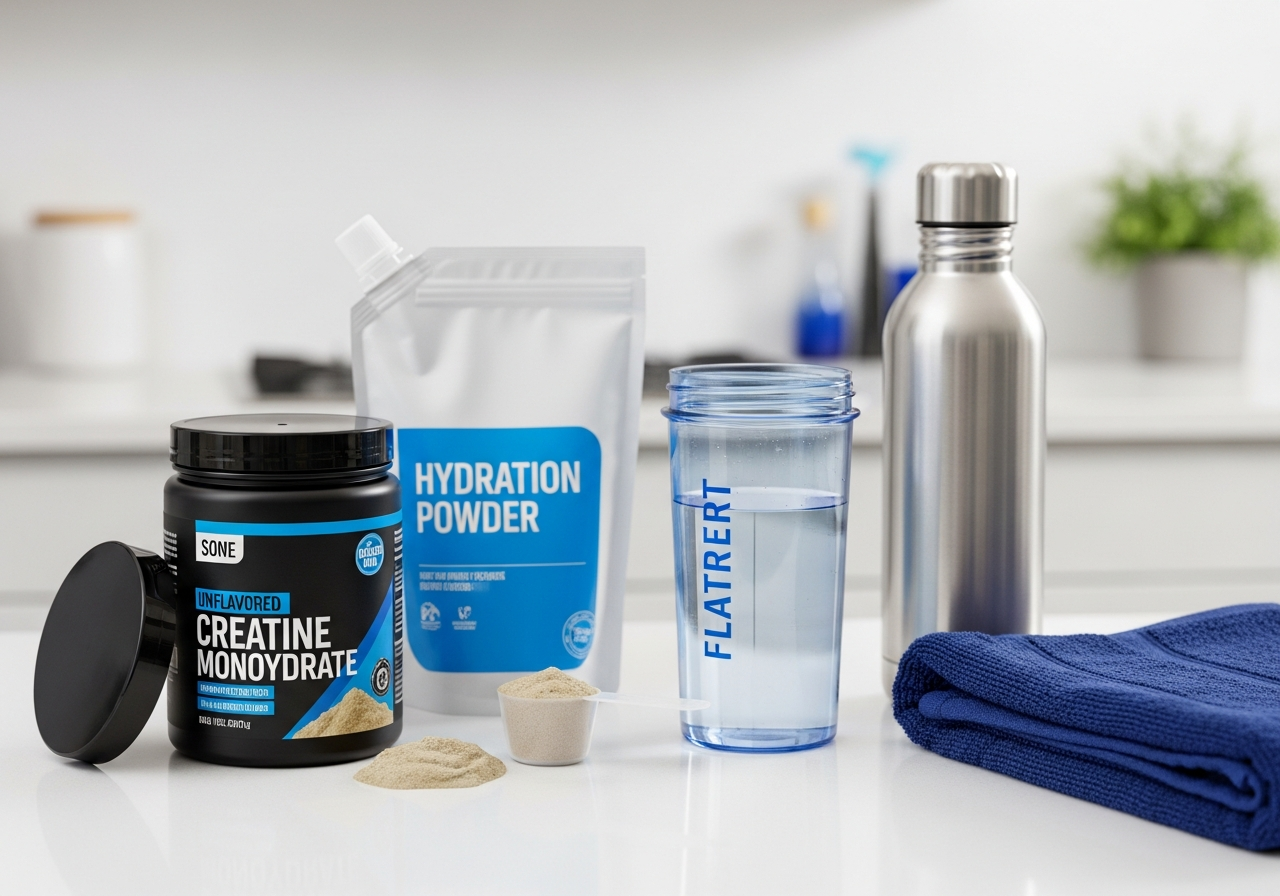
Creatine Plus Electrolytes: Why the Hydration Mashup Is 2026's Hottest Supplement Trend
By The Creatine Canada Research Team — Evidence-based supplement analysts
Yes — taking creatine and electrolytes together can make practical sense, because creatine supports water storage inside muscle cells while electrolytes help maintain fluid balance outside the cells. That does not make a creatine hydration drink inherently better than plain creatine monohydrate, but it can be a convenient, effective combo for people who train hard, sweat heavily, or simply want one product instead of two.
Evidence-based · Cites 4 sources · Editorial standards
Key Takeaways
- Creatine with electrolytes is a sensible stack, not a magic upgrade: creatine does the performance work, while electrolytes mainly support hydration and replace sweat losses.
- For most adults, 3-5 g of creatine monohydrate per day remains the evidence-based dose whether you take it alone or in a creatine electrolyte powder.
- A loading phase of about 20 g/day split into 4 doses for 5-7 days can saturate muscles faster, but it is optional.
- Electrolytes matter most for long, hot, sweaty training sessions; they matter less for a short gym workout in cool conditions.
- The best creatine electrolyte mix is the one that clearly discloses creatine dose, uses monohydrate, and is not overloaded with sugar or pixie-dusted minerals.
- Creatine does not dehydrate you; current evidence and sports-nutrition consensus do not support the old dehydration and cramping myth.
- In Canada, look for a Natural Product Number (NPN), transparent grams-per-serving, and preferably reputable third-party testing.
Creatine and electrolytes: the direct answer most people are looking for
Creatine and electrolytes work well together, but they do different jobs. Creatine increases muscle phosphocreatine stores — phosphocreatine is the stored form that helps regenerate ATP, the cell’s immediate energy currency, during short, hard efforts — while electrolytes such as sodium, potassium, and magnesium help regulate fluid balance, nerve signalling, and muscle contraction.
So should you take creatine with electrolytes? For many people, yes, because the combination is convenient and physiologically complementary. But convenience is the main advantage. The performance benefits still come primarily from getting enough creatine every day, not from the fact that it is bundled into a hydration product.
A useful way to think about the pairing is this: creatine is a muscle saturation supplement, while electrolytes are a fluid management tool. Creatine gradually pulls more water into muscle cells as stores rise, which is often described as a cell-volumizing or intracellular hydration effect. Electrolytes, especially sodium, help you retain and distribute fluid in the bloodstream and extracellular space, which supports hydration status during and after sweating.
This is why the category has taken off. Market-research estimates put the global creatine + electrolyte drinks market at about USD $4.3 billion in 2024, projected to reach roughly USD $9.1 billion by 2033 at a CAGR near 8.7%. For context, the broader hydration-supplement market was valued around USD $36 billion in 2024, while the overall creatine supplement market is estimated near USD $1.85 billion in 2026. In other words, brands are combining two familiar supplement stories into one easy pitch: hydration support plus proven creatine performance benefits.
That pitch is not nonsense, but it can be oversold. If a creatine hydration drink contains only 1-2 g of creatine per serving, it is underdosed for most adults unless you take multiple servings. The evidence-backed target is still daily saturation, typically maintained with 3-5 g of creatine monohydrate per day. If you want the fundamentals first, start with our creatine dosage calculator and the guide on how much water to drink with creatine.
Bottom line: creatine with electrolytes is a useful pairing, especially for sweaty training, but plain creatine monohydrate plus normal hydration can work just as well.
Why the combo works: inside-the-cell vs outside-the-cell hydration
The reason creatine and hydration supplements pair so naturally is that they influence different parts of the body’s fluid system. Creatine’s best-known hydration effect happens inside muscle cells, while electrolytes mainly help manage fluid balance outside cells and across membranes.
Creatine is stored in muscle as free creatine and phosphocreatine. As muscle creatine stores rise, water tends to follow into the cell, increasing intracellular water content. That is why some people notice a slightly fuller look and a small increase in body mass in the first couple of weeks. This is not fat gain. In most cases, it is water being held in muscle tissue, which is part of the normal adaptation. If you want more on that distinction, see does creatine make you gain weight.
Electrolytes do something different. Sodium is the major extracellular cation, meaning it is one of the main charged minerals in fluid outside cells, and it helps determine how much water the body retains in circulation. Potassium is the major intracellular cation and works with sodium to support nerve impulses and muscle function. Magnesium participates in many reactions linked to energy metabolism and muscle contraction, though most hydration benefits in sport formulations come from sodium more than from magnesium.
This is the key mechanism in one sentence: creatine helps muscles hold more water and high-energy phosphate, while electrolytes help the body absorb, retain, and distribute water where it is needed during exercise and sweating.
The science on creatine itself is robust. The 2017 ISSN position stand concluded that creatine monohydrate is the most effective ergogenic nutritional supplement currently available for increasing high-intensity exercise capacity and lean body mass during training. By contrast, the science on combined creatine-electrolyte products is more about plausibility and convenience than about showing they outperform well-dosed creatine alone in every setting.
That nuance matters. There is strong evidence for creatine, strong evidence for electrolyte replacement when sweat losses are meaningful, and weaker evidence that a single all-in-one product is uniquely superior to using each appropriately on its own. If you understand that distinction, you can shop much more intelligently and avoid paying a premium for branding alone.
Who should actually use a creatine electrolyte powder — and who probably does not need one
Creatine electrolyte products make the most sense for people who need both daily creatine and meaningful fluid or sodium replacement. They are not mandatory for everyone who lifts weights.
The best candidates include:
- Gym-goers who sweat heavily: If your shirt is soaked after training or you train in a hot garage gym, adding electrolytes to your creatine routine can be practical.
- Team-sport athletes: Hockey, soccer, football, basketball, and racquet-sport athletes often benefit from both creatine’s repeated-sprint support and electrolyte replacement during longer sessions.
- CrossFit and HIIT athletes: Repeated high-intensity efforts plus substantial sweat losses are exactly where the combo is most intuitive.
- Endurance athletes doing intervals or hot-weather sessions: Creatine can help power output and repeated surges, while electrolytes support longer hydration demands. The trade-off is potential water-weight gain, which matters more in weight-sensitive sports.
- Beginners who value simplicity: One scoop instead of two can improve compliance, and compliance matters more than fancy timing.
There are also groups who can benefit from creatine but may not specifically need electrolytes every day:
- Most general strength trainees: If you do a 45-minute lift in an air-conditioned gym and eat normally, plain creatine monohydrate plus water is usually enough.
- Women: Women benefit from creatine just as men do, and the old “bulking” fear is misguided. An electrolyte add-on is most useful when sweat losses are relevant, not because women need a special form. See our creatine for women guide.
- Older adults: Creatine can support muscle and strength training in older adults, but a hydration blend should be chosen carefully if sodium intake needs monitoring.
If you have high blood pressure, kidney disease, fluid restrictions, or are taking medications that affect sodium or potassium balance, you should speak with a healthcare professional before using a high-electrolyte product. That is more about the electrolyte load than the creatine itself.
One more practical point: vegetarians and vegans may respond particularly well to creatine because baseline dietary creatine intake is lower. If that describes you, the creatine portion of the product may matter more than the hydration angle.
So, who is a creatine hydration drink really for? People who want proven creatine benefits and also have a genuine reason to care about hydration support during training. For everyone else, separate products may be cheaper and just as effective.
Exactly how to take creatine with electrolytes for results you can actually feel
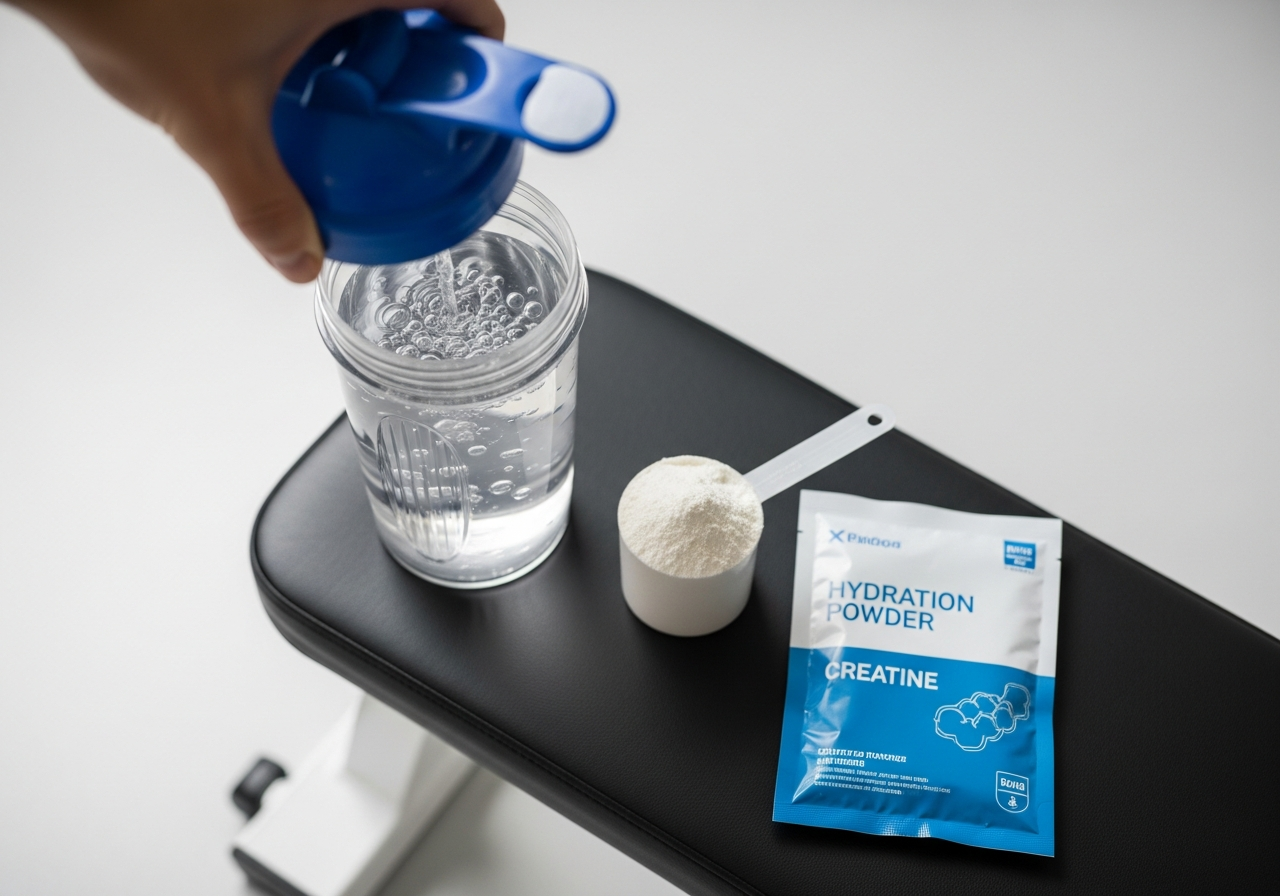
The simplest effective protocol is to take 3-5 g of creatine monohydrate daily and use electrolytes when your workout duration, heat, or sweat rate justify them. If your product combines both, your job is to make sure the creatine dose still reaches the evidence-based range.
- Check the label for actual creatine grams. Look for 3-5 g of creatine monohydrate per daily serving. If it contains less, calculate how many servings would be needed, and decide whether that is practical.
- Decide whether you want to load. A loading phase of about 20 g/day split into 4 doses for 5-7 days saturates muscles faster. After that, shift to 3-5 g/day. If you skip loading, daily saturation usually builds over several weeks. Our creatine loading phase guide covers the details.
- Mix it in enough fluid. Use a full glass or shaker bottle, not a dry scoop. Most people tolerate creatine better when it is fully dissolved or well suspended and taken with plenty of fluid.
- Use electrolytes strategically. For a short, low-sweat session, the electrolyte part is optional. For longer, hotter, or sweatier sessions, use the combined drink before, during, or after training based on comfort.
- Take it every day, including rest days. Creatine works by saturation, not by a one-time acute buzz. Rest-day consistency matters more than workout timing perfection.
- Track what changes over 2-4 weeks. Expect better performance on repeated hard efforts, a slightly fuller muscular feel, and possibly a modest increase in scale weight from water in muscle.
A practical beginner example: if you buy a creatine electrolyte powder with 5 g creatine per scoop, take one scoop daily. If the session is sweaty, have it in 500-750 mL of water around training. If it is a rest day, just drink it whenever you will remember.
A practical advanced example: if you are loading, take 5 g four times per day for 5-7 days, spacing doses out. One or two of those doses can come from a creatine-electrolyte mix around training, and the rest can be plain monohydrate to avoid excessive sodium or cost.
Week-by-week, most people notice little in the first few days unless loading, clearer training benefits by week 2, and more consistent repeated-effort performance by weeks 3-4. For more detail, see how long creatine takes to work and how to take creatine.
Best dosing for creatine and electrolytes by body weight, goal, and sweat level
The right dose depends more on the creatine target and your sweat losses than on the marketing category. For creatine, mainstream evidence still supports a maintenance dose of 3-5 g/day for most adults, with optional loading at about 20 g/day split into 4 doses for 5-7 days. Electrolyte needs are more variable and should be matched to sweat rate, climate, and session length.
| Person / goal | Creatine target | Electrolyte strategy | Best practical approach |
|---|---|---|---|
| Beginner lifting 3-4x/week | 3-5 g daily | Usually optional for short, cool workouts | Plain monohydrate or a combo product that still gives a full daily creatine dose |
| Strength or hypertrophy focus | 3-5 g daily, optional loading | Useful if you sweat heavily | Take daily; use combo on training days if convenient |
| HIIT / CrossFit / team sports | 3-5 g daily | Often useful during hard or hot sessions | Creatine electrolyte mix around training can be convenient |
| Endurance athlete adding sprints or intervals | 3-5 g daily | Often useful, especially in heat | Monitor body mass changes and performance trade-offs |
| Older adult doing resistance training | 3-5 g daily | Case by case | Prioritize creatine first; choose electrolyte level carefully |
By body weight, a larger athlete may lean toward the upper end of the 3-5 g/day maintenance range, while a smaller athlete may do fine at 3 g/day. Some practitioners also use body-weight formulas during loading, but for simplicity, the traditional 20 g/day split into 4 doses works for most adults.
Examples:
- 60 kg person: 3 g/day is often sufficient for maintenance, though 5 g/day is still commonly used and acceptable.
- 75 kg person: 3-5 g/day is a sensible target.
- 95 kg person: 5 g/day is a practical maintenance dose, especially with regular training.
Electrolytes are harder to personalize without knowing sweat sodium losses, but the principle is simple: the hotter, longer, and sweatier the session, the more useful the electrolyte side becomes. If you finish training crusted with salt, cramped from heat exposure, or down noticeably in body mass, hydration support deserves more attention than if you barely perspire.
Do not make the mistake of chasing giant “hydration” servings while missing your creatine target. An underdosed creatine electrolyte powder is still underdosed creatine. If needed, top up with plain monohydrate. Our how much creatine per day guide and dosage calculator can help you set the right baseline.
Before, during, or after training: when a creatine hydration drink makes the most sense
Creatine timing matters less than daily consistency, but electrolyte timing can matter during sweaty training. That is why a creatine hydration drink often makes the most sense before, during, or after training based on hydration needs, not because creatine itself suddenly becomes time-sensitive.
The core rule is simple: take creatine at the time you will reliably take it every day. The difference between before and after training is small compared with the difference between consistent use and missing doses. The broader literature and expert summaries, including Examine’s creatine evidence summary, support the idea that muscle saturation is the main driver.
Where timing does become practical is on the hydration side:
- Before training: Useful if you start sessions already a bit dehydrated, train early in the morning, or know you are entering a hot environment.
- During training: Best fit for long sessions, repeated intervals, field sports, or any workout where sweat losses are substantial.
- After training: Sensible if you prefer to separate fluid replacement and do not like drinking much during exercise.
A very workable strategy is to separate the decisions:
- Take your daily creatine dose no matter what.
- Use electrolytes around the session when the session actually demands them.
That means you might use a combined creatine-electrolyte scoop on hard training days and plain creatine on easy days or rest days. This can save money and prevent unnecessary sodium intake.
What about with food? Creatine can be taken with or without food, but many people find it gentler on the stomach with a meal or snack. What about with coffee? It is generally fine for most people, though some prefer not to stack all potential stomach irritants at once. If timing questions are your main concern, read when to take creatine and creatine with or without food.
The bottom line on timing is refreshingly unglamorous: for creatine, consistency beats precision; for electrolytes, session conditions determine timing. If you understand that, you can ignore most of the marketing theatre around “anabolic windows” and “rapid hydration matrices.”
Why creatine in hydration supplements is exploding in 2026
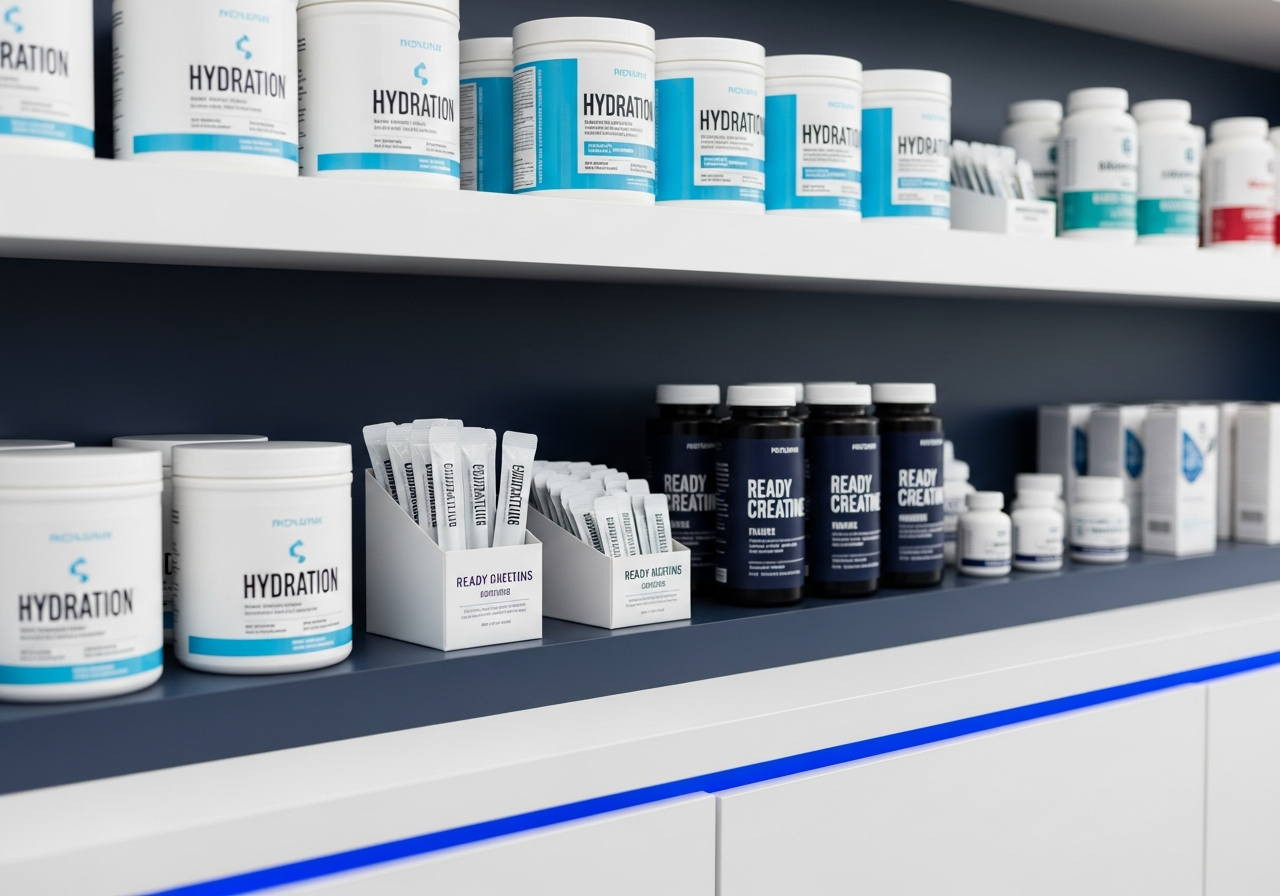
The creatine-plus-hydration boom is real, and it is being driven by both credible physiology and very smart product positioning. Brands have realised that creatine is one of the most trusted performance ingredients in sports nutrition, while hydration is one of the broadest, easiest-to-sell wellness categories. Put them together, and you get a product that sounds useful to almost everyone from lifters to office workers.
The market numbers show why brands are moving fast. Market-research estimates value the global creatine + electrolyte drinks market at about USD $4.3 billion in 2024 and project it to reach roughly USD $9.1 billion by 2033, or around 8.7% annual growth. The broader hydration-supplement market was worth around USD $36 billion in 2024, which means hydration is a far larger shelf than creatine alone. Meanwhile, the overall creatine supplement market is estimated near USD $1.85 billion in 2026, and creatine reportedly posted roughly 71.9% sales growth in the performance category in 2025.
Those are not clinical outcomes; they are market estimates. But they do explain the shelf trends Canadians are seeing: more flavoured creatine hydration powders, more stick packs, and more ready-to-drink cans promising strength plus hydration in one step.
The “inside + outside the cell” story is the marketing headline because it is easy to understand and not entirely wrong. Creatine supports intracellular water retention in muscle, while electrolytes support extracellular fluid balance. That narrative is cleaner than trying to explain phosphocreatine biochemistry on a product label.
Still, trend does not equal superiority. Many products are being launched because the category sells, not because they clearly outperform a basic tub of monohydrate from a cost-per-gram standpoint. For shoppers in Canada, that means reading labels with discipline. A slick hydration product can still be a poor creatine product if it hides the dose in a proprietary blend, underdelivers creatine per serving, or adds a lot of sugar you do not want.
If you want to compare what is actually on the market, use our best creatine rankings, creatine brand reviews, and product catalog. The 2026 trend is real, but the best buying decision still comes down to formula quality, transparent dosing, and whether the format fits your actual training.
How to choose the best creatine electrolyte mix without overpaying for hype
The best creatine electrolyte mix is the one that gives you a full effective creatine dose, sensible electrolytes for your use case, and transparent labelling. Start there, not with flavour names or influencer claims.
Use this buying checklist:
- Creatine form: Prioritize creatine monohydrate. It is the most studied, most consistently effective, and usually the most cost-effective form according to the ISSN position stand.
- Creatine dose per serving: Look for 3-5 g per daily serving. If it has only 1-2 g, ask yourself whether you will realistically take multiple servings.
- Electrolyte profile: Sodium is usually the key hydration mineral for sweaty exercise. Potassium and magnesium can be useful, but they should not distract from an anemic sodium or creatine dose.
- No proprietary blend hiding the numbers: If the label does not tell you exactly how many grams of creatine are present, skip it.
- Sugar load: Some products use sugar to improve taste or support absorption, but many people do not need a high-sugar hydration mix for ordinary gym sessions.
- Third-party testing and Canadian compliance: In Canada, a Natural Product Number, or NPN, indicates Health Canada licensing for natural health products. An NPN is not a guarantee of athletic suitability, but it is a useful legitimacy check. Third-party testing adds another layer of confidence.
Here is a simple comparison framework:
| Option | Pros | Cons | Best for |
|---|---|---|---|
| Plain creatine monohydrate | Best evidence, best value, easy dosing | No electrolytes included | Most lifters and budget-conscious users |
| Creatine electrolyte powder | Convenient, good for sweaty training, one product | Often pricier; some are underdosed in creatine | HIIT, team sports, hot training |
| Separate creatine + separate electrolytes | Maximum dose control and flexibility | Two products to manage | People who want precision or train in varied conditions |
| Ready-to-drink creatine hydration beverage | Most convenient format | Usually highest cost per gram, limited dosing flexibility | Travel or on-the-go use |
If you are shopping in Canada, also read our guides on best creatine monohydrate in Canada and Canadian supplement regulations and NPNs. Convenience is worth paying for only if the formula still does the basic job properly.
Is creatine with electrolytes safe? What the evidence supports — and what still deserves caution
For healthy adults, creatine monohydrate is widely considered safe at recommended doses, and adding electrolytes does not change that basic conclusion. The bigger safety questions usually involve total sodium or potassium intake, stomach tolerance, and whether the product is appropriate for your medical context.
The creatine safety record is strong. The 2021 JISSN review on common creatine questions and misconceptions addressed several persistent myths and reinforced that creatine does not appear to cause dehydration, muscle cramping, kidney damage in healthy people, or hair loss based on the current body of evidence. The Mayo Clinic overview also describes creatine as likely safe when used appropriately.
Common side effects are usually practical, not dangerous:
- Mild stomach upset: More likely with large single doses, insufficient fluid, or cheap gritty powders.
- Temporary body-mass increase: Often related to water being stored in muscle.
- Loose stools: More likely if you take too much at once, especially during loading.
Electrolytes introduce a second layer of caution:
- High sodium products may not suit people who have been told to restrict sodium.
- Potassium-containing products deserve caution if you have kidney disease or take medications that affect potassium handling.
- Very concentrated mixes can cause GI discomfort if chugged quickly.
You should talk to a healthcare professional before using creatine electrolyte products if you have kidney disease, uncontrolled hypertension, heart failure, are pregnant, or are on medically prescribed fluid or electrolyte restrictions.
For athletes subject to testing, the major concern is not creatine itself — creatine is allowed — but contamination risk from poor manufacturing practices. That is another reason to prefer reputable brands and transparent labels.
If your main worry is side effects, separate the issues clearly: creatine’s evidence-based safety is strong in healthy adults, while electrolyte safety depends more on dose, medical history, and the rest of your diet. For deeper dives, see is creatine safe, creatine digestive side effects, and creatine and kidney myths.
The biggest mistakes people make with creatine and hydration
The most common mistakes with creatine and electrolytes are underdosing creatine, overdosing “hydration,” and believing outdated myths about dehydration and cramping. Fix those three errors and most routines improve immediately.
Here are the main pitfalls:
- Mistake 1: Choosing a hydration product that barely contains creatine. If the label gives you less than a proper daily creatine dose, you may never meaningfully saturate muscle stores.
- Mistake 2: Taking creatine only on workout days. Creatine works through accumulation, so off-day consistency matters.
- Mistake 3: Thinking electrolytes are always necessary. They are useful in the right context, but not every 40-minute indoor lift requires a special hydration formula.
- Mistake 4: Assuming creatine dehydrates you. This myth persists because creatine increases intracellular water, but that is not the same thing as causing dehydration. Current evidence does not support the old claim that creatine inherently dries you out.
- Mistake 5: Dry scooping or using too little water. This increases the chance of throat irritation and GI issues without improving absorption.
- Mistake 6: Confusing water retention with bloating or fat gain. Some people do notice scale changes, but that is usually water in muscle, especially early on.
A few quick myth checks:
Myth: “Creatine and electrolytes together are a superior muscle-building formula.”
Fact: The superiority is not established. The main proven muscle and performance benefit still comes from creatine itself when dosed correctly.
Myth: “You need sugar with creatine for it to work.”
Fact: No. Creatine can work without sugar; carbohydrate may affect uptake dynamics, but daily saturation is still achieved with plain monohydrate over time.
Myth: “If you take creatine, you must constantly drink litres more water.”
Fact: You should hydrate sensibly, but there is no evidence-based rule that everyone on creatine needs an extreme water surplus.
If you think creatine is not working, first ask whether you are actually hitting 3-5 g/day consistently, training hard enough to notice performance changes, and giving it enough time. That solves more “non-response” cases than any exotic formula ever will. For more myth-busting, see creatine myths debunked and creatine and dehydration.
Real-world routines: simple creatine plus electrolyte setups for beginners, athletes, and older adults
The best routine is the one you will follow daily, so match the format to your schedule and sweat profile. Below are realistic setups that work without turning supplementation into a second job.
1. Beginner lifting for general fitness
Take 3-5 g creatine monohydrate once daily. If your workouts are short and indoors, plain creatine in water is enough. If you like flavoured drinks and it helps consistency, use a creatine electrolyte powder that still gives a full creatine dose.
2. Strength athlete or bodybuilder
Take 5 g daily, every day. Use separate electrolytes only on hot, long, or especially sweaty sessions. This is often the best value strategy because it keeps creatine dosing precise without paying a premium for hydration on easy days.
3. CrossFit, hockey, soccer, or repeated-sprint athlete
Take 3-5 g creatine daily. On training days, using a creatine hydration drink before or during practice can be practical because both repeated-effort performance and fluid replacement matter. On rest days, plain creatine is fine.
4. Runner or cyclist doing intervals
Take 3-5 g daily if your goal includes sprint capacity, gym support, or repeated hard efforts. Use electrolytes strategically on longer or hotter sessions. Monitor whether small water-weight changes help or hurt your specific event demands.
5. Older adult training for strength and function
Take 3-5 g daily with a meal or post-workout drink if that improves tolerance and routine. Use electrolyte-enhanced products only if there is a genuine hydration need and no medical reason to limit sodium or potassium.
How to tell it is working
- Your top sets feel a bit more repeatable.
- You recover better between short, hard efforts.
- You notice a slightly fuller muscular feel.
- Your scale weight may rise modestly in the first couple of weeks.
How to troubleshoot
- No effect after 3-4 weeks? Check dose consistency first.
- Stomach upset? Split the dose or take it with food.
- Combo product too expensive? Use plain monohydrate and a separate hydration mix only when needed.
For deeper personalization, see creatine for beginners, creatine for athletes, and creatine for older adults. The best creatine electrolyte routine is not the most complicated one; it is the one that gets the basics right every single week.
Bottom line: is creatine with electrolytes worth it in 2026?
Yes, creatine with electrolytes is a worthwhile option in 2026 — but mainly as a convenience format, not because it replaces the need to understand basic dosing. The combination makes physiological sense: creatine supports intracellular water and high-intensity performance, while electrolytes support fluid balance and sweat replacement. That is a legitimate pairing.
What it does not mean is that every creatine hydration drink is automatically a better supplement than plain creatine monohydrate. For many people, especially general gym-goers, plain monohydrate plus regular hydration habits will deliver the same core creatine benefits at a lower cost. The combo earns its keep when you train hard, sweat a lot, want one product instead of two, or simply know you adhere better to a flavoured all-in-one mix.
If you remember only four points, make them these:
- Hit the creatine dose first. Aim for 3-5 g/day of creatine monohydrate.
- Use electrolytes based on actual need. Heat, duration, and sweat losses determine whether they matter.
- Ignore the dehydration myth. Current evidence does not support the claim that creatine inherently dehydrates healthy users.
- Buy labels, not stories. Transparent dosing, monohydrate, sensible electrolyte levels, Canadian compliance, and reputable testing matter more than trend branding.
The category will keep growing because the story is easy to sell and often genuinely useful. But the smartest consumers will separate the evidence from the packaging. If your creatine electrolyte powder gives you a full effective dose of creatine, fits your training conditions, and helps you stay consistent, it can be an excellent choice. If not, a simple tub of monohydrate is still hard to beat.
Creatine + Electrolytes by the Numbers
- 3-5 g/day Evidence-based creatine maintenance dose — Applies whether taken alone or in a creatine electrolyte product.
- 20 g/day Typical loading protocol — Usually split into 4 doses for 5-7 days to saturate faster.
- USD $4.3B Estimated global creatine + electrolyte drinks market in 2024 — Market-research estimate, not a clinical measure.
- USD $9.1B by 2033 Projected creatine + electrolyte drinks market size — Projected at roughly 8.7% CAGR.
Frequently Asked Questions
Should I take creatine with electrolytes?
Yes, you can take creatine with electrolytes, and it is a sensible combo for many active people. Creatine supports muscle creatine saturation and intracellular water, while electrolytes help with fluid balance and sweat replacement. It is most useful if you train hard, sweat a lot, or want one convenient product, but plain creatine monohydrate still works extremely well on its own.
Does creatine help with hydration?
Creatine affects hydration, but not in the way most ads imply. Creatine increases water stored inside muscle cells as muscle creatine levels rise, which is often called an intracellular hydration or cell-volumizing effect. That is different from replacing sweat losses, so it does not eliminate the need for normal fluid intake or electrolytes when training in hot, sweaty conditions.
Is a creatine hydration drink better than plain creatine?
Not necessarily — a creatine hydration drink is better only if it helps you consistently hit an effective creatine dose and meets a real hydration need. The proven performance ingredient is still creatine monohydrate, and many combo products are underdosed. If the label does not provide about 3-5 g of creatine per daily serving, plain monohydrate is often the smarter buy.
Can creatine and electrolytes be mixed together in the same shaker?
Yes, creatine and electrolytes can absolutely be mixed together in the same shaker bottle. There is no evidence-based reason you must keep them separate, and many commercial products already combine them. The only practical concerns are taste, total sodium intake, and making sure the final serving still gives you a full daily creatine dose.
Does creatine dehydrate you if you do not take electrolytes?
No, current evidence does not support the idea that creatine inherently dehydrates healthy users. The old dehydration myth likely came from misunderstanding creatine’s tendency to increase water inside muscle cells. You should still hydrate normally, especially if you sweat heavily, but you do not need electrolytes simply to 'cancel out' creatine.
What is the best creatine electrolyte powder?
The best creatine electrolyte powder is one that uses creatine monohydrate, clearly lists the grams per serving, and provides a realistic full daily creatine dose. Products that hide creatine in proprietary blends or give only token amounts are poor choices. In Canada, an NPN and reputable third-party testing are useful quality signals, especially for athletes.
When should I take creatine with electrolytes?
Take creatine with electrolytes whenever it best fits your routine and hydration needs. Creatine itself is not highly timing-sensitive, so daily consistency matters most. Electrolytes make the most sense before, during, or after long, hot, or sweaty sessions, while on rest days many people can simply take plain creatine at any convenient time.
Can I use a creatine electrolyte mix every day?
Yes, you can use a creatine electrolyte mix every day if the product is appropriately dosed and fits your overall diet. The main thing to watch is whether the electrolyte load, especially sodium, makes sense for your training and health status. Some people prefer using combo products only on training days and plain creatine on rest days to save money and reduce unnecessary extras.
Do women benefit from creatine with electrolytes?
Yes, women can benefit from creatine with electrolytes for the same reasons men do: creatine supports high-intensity performance and training adaptation, while electrolytes help with hydration when sweat losses are meaningful. Women do not need a special female-only creatine formula, but they may appreciate a convenient all-in-one product if it helps with adherence.
Are ready-to-drink creatine electrolyte beverages worth it?
Ready-to-drink creatine electrolyte beverages can be worth it for convenience, travel, or athletes who dislike mixing powders. Their main drawback is usually cost per gram of creatine, and some RTDs provide less than an effective daily dose. They are best viewed as a convenience format, not automatically a superior form of creatine supplementation.