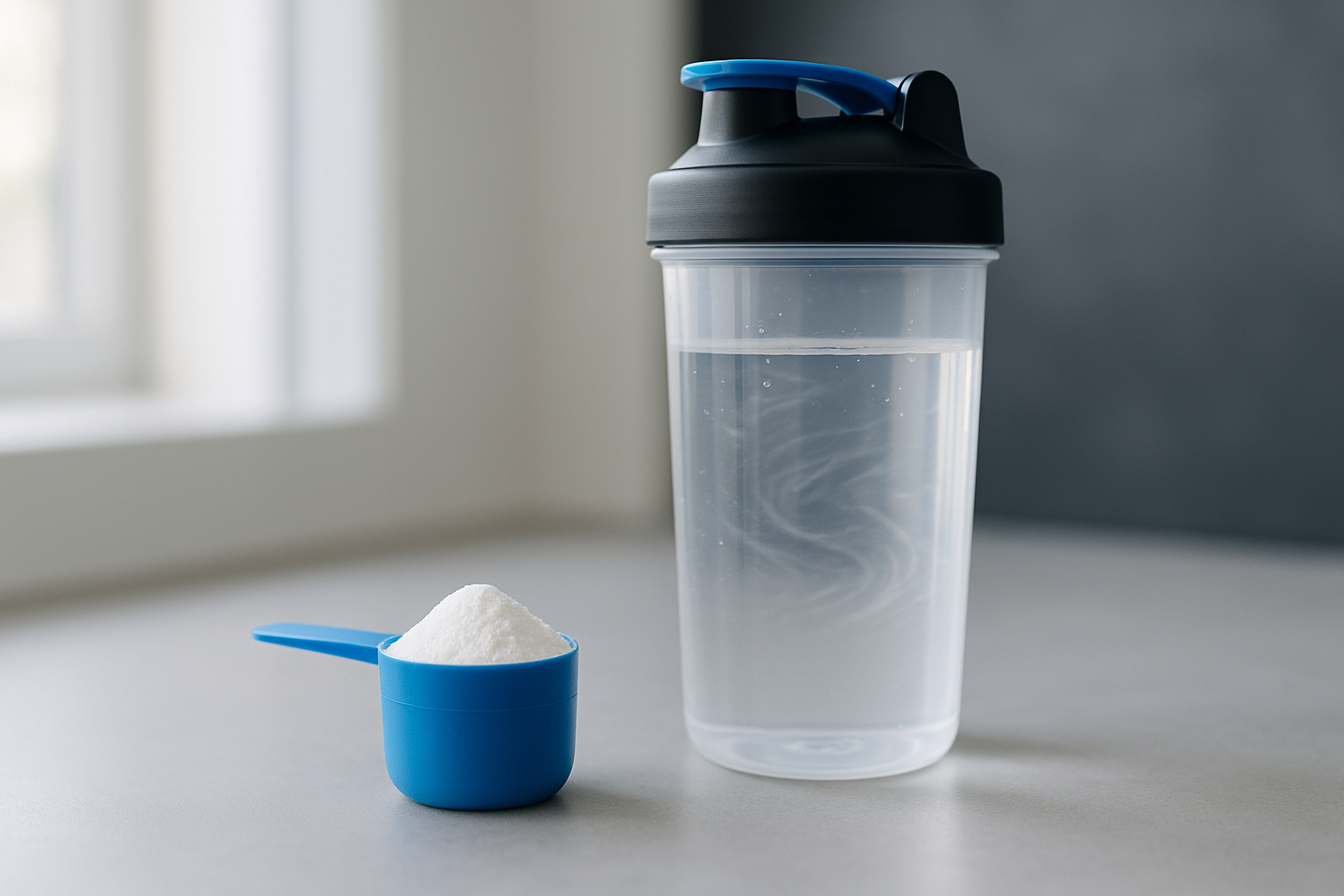
How to Dissolve Creatine Completely: Tips for a Grit-Free Shake
By The Creatine Canada Research Team — Evidence-based supplement analysts
To dissolve creatine as completely as possible, use creatine monohydrate in enough liquid, stir or shake hard, and mix it into warm water rather than cold. A little settling and slight grittiness can still be normal with monohydrate, because the goal is a well-mixed, easy-to-drink dose, not perfect invisibility in the glass.
Evidence-based · Cites 4 sources · Editorial standards
Key Takeaways
- Warm water dissolves creatine better than cold water.
- A standard 3-5 g dose mixes best in roughly 250-500 mL of liquid.
- Micronized creatine usually feels less gritty because its particles are smaller.
- If creatine won't dissolve, the usual fixes are more liquid, warmer liquid, and more mixing time.
- Clumping in the tub usually means moisture exposure, not that the creatine has stopped working.
- You do not need creatine to be fully invisible in water for it to work effectively.
How to dissolve creatine properly: the short answer first
The best way to dissolve creatine is to add your dose to warm water or another warm drink, use enough liquid, and stir or shake for 20-30 seconds before drinking. For most people, that means mixing 3-5 g of creatine monohydrate into about 250-500 mL of liquid, then giving it another quick swirl just before the last sip.
That direct answer matters because many people expect creatine to behave like table sugar, but creatine monohydrate does not fully dissolve as easily as highly soluble powders. Monohydrate is still the gold-standard form for performance, safety, and value, even though it can leave a gritty texture. The 2017 ISSN position stand concluded that creatine monohydrate is the most effective ergogenic nutritional supplement currently available for increasing high-intensity exercise capacity and lean mass, and its effectiveness does not depend on making it disappear perfectly in the glass. See Kreider et al. (2017).
If your creatine won't dissolve, the most common solutions are simple:
- Use warmer liquid, not ice-cold water.
- Increase the liquid volume so the powder has more room to disperse.
- Choose micronized creatine if you hate gritty texture.
- Shake longer and drink soon after mixing.
- Break up clumps with a dry spoon if the powder has picked up moisture.
The most important point is this: creatine can work even if some fine powder settles at the bottom. What matters most is taking the right dose consistently every day so your muscle stores become saturated over time. If you are new to supplementation, our creatine dosage calculator and guide on how to take creatine can help you set up a simple daily routine.
So if you are searching for how to dissolve creatine completely, the practical answer is to optimise mixing, not obsess over laboratory-perfect solubility. Better texture improves compliance, and compliance is what actually drives results.
Why creatine gets gritty, settles, or clumps in water
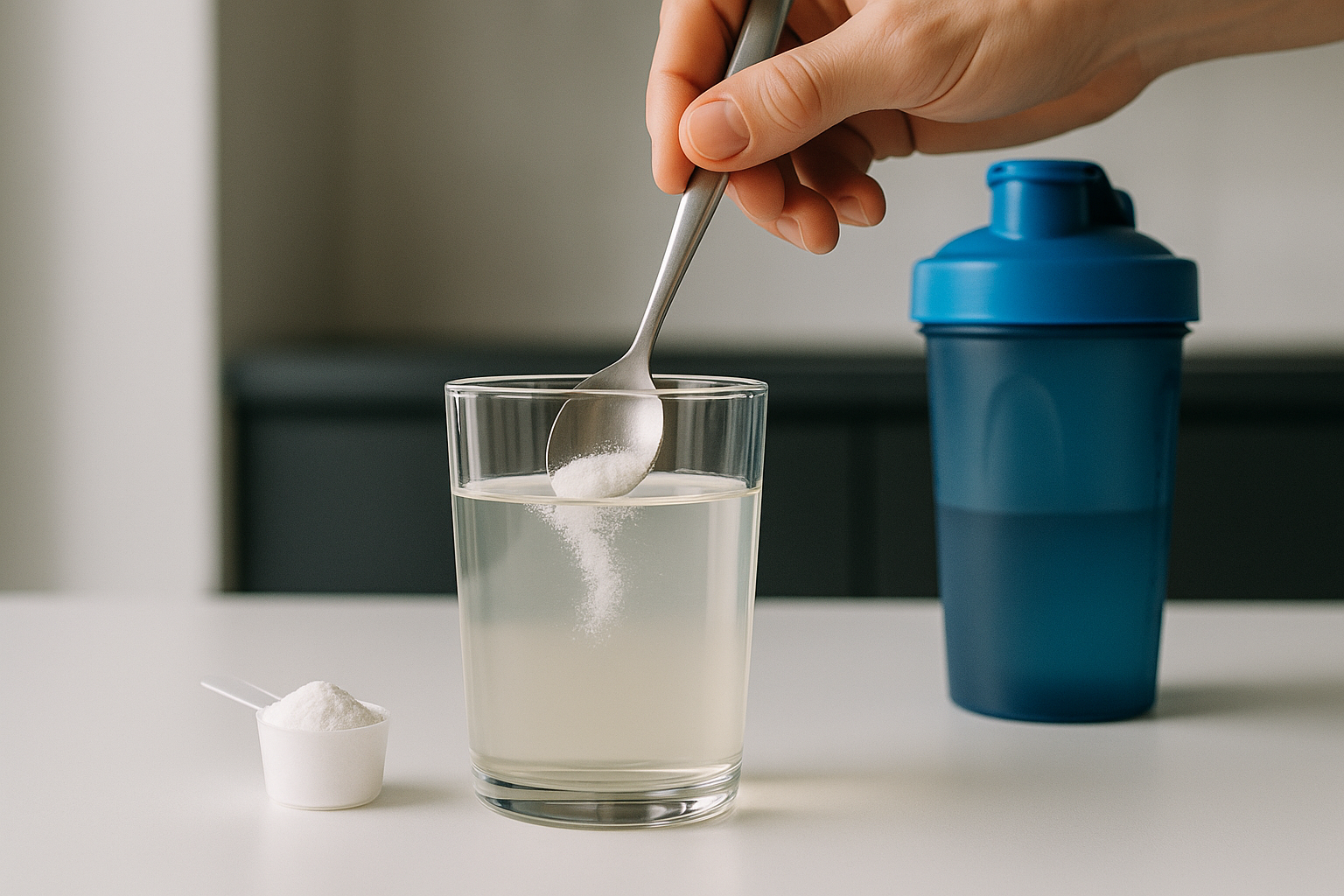
Creatine feels gritty because creatine monohydrate is only moderately soluble in water, especially in cold water. That means some particles disperse well, while others remain suspended briefly and then sink to the bottom if the drink sits still.
This is a physical mixing issue more than an absorption issue. When you add powder to water, each particle has to separate from the others and interact with the liquid. Smaller particles disperse faster, which is why micronized creatine often feels smoother. But even regular monohydrate can work perfectly well despite a sandy mouthfeel.
There are three common reasons creatine seems hard to dissolve:
- Low water temperature: colder liquid slows dissolution.
- Too little liquid: a concentrated mix leaves more undissolved powder.
- Moisture exposure in the tub: humidity can cause small hard clumps that need extra mixing.
Creatine clumps in water for a similar reason. Powder that has absorbed a bit of moisture in storage can stick together into little pellets, and those pellets dissolve more slowly than dry, loose particles. That does not automatically mean the product is bad. It often just means the container was opened in a humid kitchen or gym bag environment. If you want a deeper storage guide, see how to store creatine and why creatine clumps.
Another point beginners miss is the difference between dissolving and suspending. A fully dissolved substance disappears into the liquid at a molecular level. A suspended powder is spread throughout the liquid but may still settle later. With creatine monohydrate, you often get a mix of both. That is normal.
According to Antonio et al. (2021), many common creatine worries are based on misunderstanding rather than evidence. Grittiness falls into that category. Gritty texture can be annoying, but it does not mean the creatine is ineffective, unsafe, or poorly absorbed.
The useful mindset is this: if your powder mixes into a drink you can comfortably finish, you have solved the problem. You do not need crystal-clear water for creatine to do its job.
What the science actually says about dissolving creatine and whether it matters
Creatine does not need to be perfectly dissolved to be effective, because your results depend mainly on total daily intake and muscle saturation, not on whether the drink looks completely clear. That is the key science-based answer.
Creatine works by increasing the amount of phosphocreatine, the stored form of creatine in muscle that helps regenerate ATP, your cells' immediate energy currency, during short bursts of high-intensity effort. Over days and weeks, regular supplementation raises muscle creatine stores. That improved availability of phosphocreatine can support repeated sprints, heavy sets, power output, and training volume.
The ISSN position stand and the IOC consensus both support creatine as one of the most evidence-based supplements for high-intensity exercise performance. Neither body of guidance suggests that a perfectly dissolved drink is required for benefits. What matters is getting the dose in consistently and tolerably. See the International Olympic Committee consensus on dietary supplements and Kreider et al. (2017).
Where dissolving does matter is comfort and routine:
- Better dissolution usually means less gritty texture.
- Less grit can mean less stomach annoyance for sensitive users.
- An easier drink makes daily adherence more likely.
Temperature helps because more warmth generally improves solubility. Particle size helps because finer powder exposes more surface area to liquid. Agitation helps because stirring or shaking separates particles and keeps them suspended long enough for you to drink them.
One caution: while warm water is helpful, leaving creatine dissolved in liquid for long periods is not ideal if you can avoid it. Mix it, drink it, and move on. From a practical standpoint, fresh mixing is the easiest habit and avoids needless questions about stability over time.
If you are troubleshooting texture rather than effectiveness, think in this order: form, temperature, volume, and mixing time. If you are troubleshooting performance results, think in this order: dose, consistency, training quality, and time. Those are two different problems, and many people mix them up.
The best step-by-step method for a grit-free creatine shake
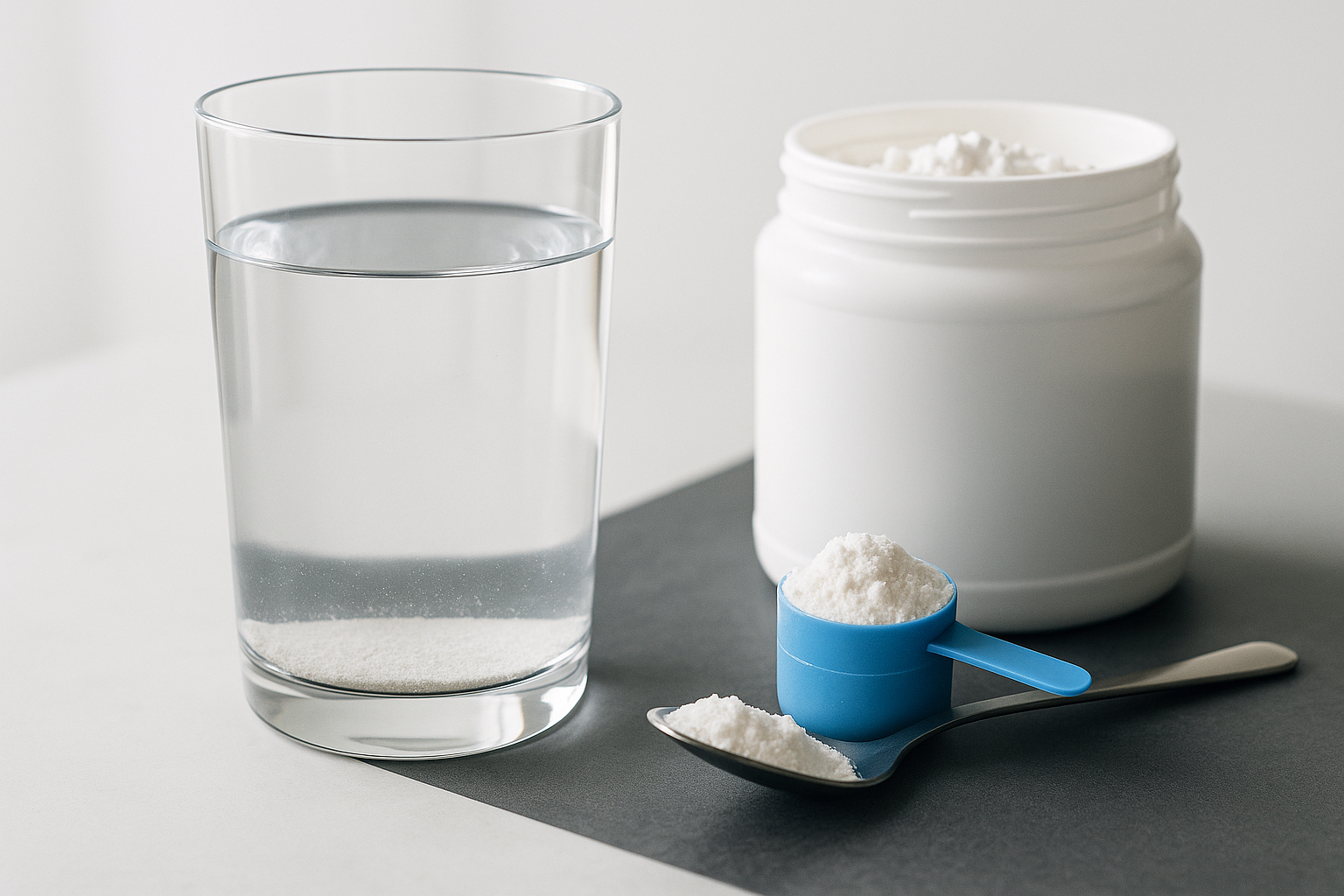
If you want the smoothest possible creatine drink, the best method is to pre-measure the dose, use warm liquid, mix thoroughly, and drink it soon after shaking. This simple routine solves most complaints about creatine gritty texture and creatine not dissolving.
- Measure your dose accurately. Use 3-5 g for a typical maintenance dose. If you are loading, use one 5 g serving at a time rather than dumping the full day's amount into one small glass. If you need help with scoop size, use our creatine dosage calculator.
- Choose 250-500 mL of liquid. More liquid usually means smoother mixing. Water works well, but juice, a protein shake, or an electrolyte drink can also work.
- Use warm, not boiling, liquid. Warm water is the easiest fix for creatine dissolving tips because it improves solubility without making the drink unpleasant.
- Add liquid first, then powder. This often reduces powder sticking to the bottom or sides.
- Shake or stir hard for 20-30 seconds. A shaker bottle works better than a spoon for most people.
- Let it sit for 30-60 seconds, then shake again. This second mix can break up the remaining fine clumps.
- Drink it promptly. If a little settles, add a splash more water, swirl, and finish the last bit.
For even better texture, try these creatine mixing tips:
- Mix it into a protein shake instead of plain water if you dislike the mouthfeel. See can you mix creatine with protein powder.
- Use micronized monohydrate for a smoother feel.
- Avoid trying to dissolve a big dose in a tiny espresso cup or shot glass.
- If using flavoured powders, shake extra well because sweeteners and flavour systems can also affect texture.
What should you expect? A good creatine shake is usually smooth enough to drink easily but not always perfectly clear. If there is a faint chalky finish or a small amount of residue, that is normal for monohydrate.
For people who absolutely hate powder texture, the problem may not be technique but format. In that case, capsules or gummies may be easier, though usually more expensive per effective dose than plain powder.
Best liquids for dissolving creatine: water, juice, shakes, coffee, and more
The best liquid for dissolving creatine is usually warm water, but the best liquid for actually taking creatine every day is the one you will use consistently. Water is simple and reliable, while juice, shakes, and some hot or warm beverages can improve texture or convenience.
Here is the practical ranking for creatine mixing:
- Warm water: best for solubility and simplicity.
- Protein shake: excellent for masking texture.
- Juice: generally mixes well and tastes better than plain water for many users.
- Cold water: works, but usually leaves more grit.
- Very thick smoothies: good for texture, though the powder may hide rather than truly dissolve.
People often ask whether they need a special liquid to improve absorption. The short answer is no. Creatine monohydrate works well without fancy stacks, and consistency beats minor theoretical optimisations. If you want deeper timing and absorption context, read when to take creatine and how to maximize creatine absorption.
What about coffee or tea? Warm coffee can help disperse creatine, and many people use it successfully. The practical issue is not usually heat itself, but whether you let the mixture sit too long before drinking it. Freshly mixed is easiest. For more detail, see can you mix creatine with coffee.
Milk is also fine if you enjoy it, and a post-workout shake is often the easiest place to hide residual grit. Athletes who want a very easy routine often just add creatine to their normal daily shake and move on.
If hydration is your bigger concern than solubility, pair your creatine habit with sensible fluid intake throughout the day rather than obsessing over one exact glass. Our guide on how much water should you drink with creatine covers that in detail.
The main takeaway is simple: temperature changes texture more than the type of liquid changes results. Choose a liquid you enjoy, use enough of it, and mix right before drinking.
How much creatine to mix by body weight, goal, and phase
The right amount of creatine to mix is usually 3-5 g per day for maintenance, or about 20 g per day split into four 5 g doses for 5-7 days if you choose a loading phase. Those are mainstream, evidence-based doses supported by the creatine literature and reflected in guidance such as the ISSN position stand.
The easiest way to reduce grit is to match the amount of powder to a realistic amount of liquid. A standard single serving of 3-5 g usually mixes comfortably in 250-500 mL. Larger one-time doses feel sandier and are more likely to upset the stomach.
| Body weight | Typical goal | Daily dose | How to mix it |
|---|---|---|---|
| Under 60 kg | General fitness, beginners | 3 g/day | Mix in 250-300 mL warm water or a shake |
| 60-90 kg | Strength, hypertrophy, team sports | 3-5 g/day | Mix in 300-400 mL warm water or a shake |
| Over 90 kg | Large athletes, heavy training volume | 5 g/day | Mix in 400-500 mL liquid for smoother texture |
| Any body weight | Loading phase | 20 g/day for 5-7 days | Split into 4 servings of 5 g, each in 250-400 mL |
These ranges are practical, not magical. A smaller person can still use 5 g, and a larger person may do fine on 3 g, especially if taken consistently. The point is that you do not need huge doses, and oversizing the scoop is one of the most common reasons creatine won't dissolve nicely.
If your goal is convenience, use one daily 3-5 g serving. If your goal is faster saturation, loading gets you there sooner, but it is optional. A no-loading approach still works; it simply takes longer to saturate muscle stores. For a full breakdown, see how much creatine per day and creatine loading phase.
For beginners, women, older adults, and most recreational athletes, the simplest protocol is usually the best: one measured daily dose, one decent-sized glass, one consistent habit. Fancy protocols rarely beat compliance.
When to mix and drink creatine, and what to expect week by week
The best time to mix and drink creatine is whenever it helps you take it every day, because daily consistency matters more than exact timing. That said, many people find it easiest to take with breakfast, after training, or in a daily protein shake.
From a dissolving perspective, timing matters mainly for freshness. Mix the drink and consume it shortly after rather than making a bottle far in advance. That keeps the process simple and avoids the powder settling for hours.
Here is a realistic timeline for what to expect:
- Days 1-7 with loading: you may notice a small increase in body mass from intracellular water and a quicker “full” muscle feel. Splitting the dose helps minimise stomach upset and grittiness.
- Weeks 2-4 without loading: stores gradually rise with steady daily use, and exercise performance benefits may start to become more noticeable.
- Weeks 3-6: many users notice better repeat-effort performance, slightly stronger later sets, or improved training capacity when programming and sleep are also on point.
- Weeks 6-12: the biggest visible payoff usually comes through better training quality over time, not from a dramatic acute feeling.
If you are asking how to tell whether creatine is working, the best signs are often:
- more reps with a given weight
- better repeated sprint output
- slightly improved recovery between hard efforts
- subtle scale increase without added fat gain if calories are controlled
You may not “feel” creatine the way you feel caffeine. Creatine is a saturation supplement, not a stimulant. That is why our guides on how long creatine takes to work and creatine muscle saturation are useful for setting expectations.
If you miss a day, just resume the next day. If you want the easiest routine, attach creatine to a habit you already never skip, such as your morning water bottle, post-workout shake, or lunch. The best timing plan is the one that survives busy real life.
Who should care most about creatine mixing technique: beginners, women, older adults, and athletes
Creatine mixing technique matters most for people who are likely to quit because of texture, stomach discomfort, or confusion about whether the powder is “working.” That includes beginners, women who have been given bad supplement advice, older adults who prefer easy routines, and athletes who need precise, repeatable habits.
Beginners often assume creatine should fully disappear in water. It often will not, and that mismatch between expectation and reality leads people to think their product is low quality. In truth, plain monohydrate is usually the right place to start. See creatine for beginners.
Women do not need a special dissolving method or a fundamentally different creatine protocol. The same evidence-based daily dose and mixing tips apply. The bigger barriers are usually marketing myths about bulk or scale weight, not biology. Our guide on creatine for women covers that in detail.
Older adults often benefit from keeping supplementation simple and gentle on the stomach. A smaller dose mixed into a morning beverage or post-walk shake can be more sustainable than large one-off servings. See creatine for older adults.
Strength and team-sport athletes may care more about exact dosing and splitting larger loading intakes. When performance matters, precise gram amounts and good tolerance matter more than chasing exotic forms. The IOC consensus identifies creatine as one of the few supplements with solid support for certain high-intensity performance contexts.
Vegetarians and vegans may respond especially well to creatine supplementation because baseline dietary creatine intake can be lower, but they do not need a unique mixing method. They may simply care more about choosing a trusted product and a routine they will stick with daily.
The common thread is this: the best creatine protocol is the one you can repeat comfortably for months. If smoother mixing helps that happen, it matters. If you can drink plain monohydrate without fuss, even better.
Why your creatine won’t dissolve: the most common mistakes and myths debunked
If your creatine won't dissolve, the usual cause is technique, not a broken supplement. Most issues come from cold water, too little liquid, oversized servings, insufficient shaking, or moisture clumps in the tub.
Here are the biggest creatine mixing mistakes:
- Using ice-cold water: this is one of the fastest ways to make monohydrate feel gritty.
- Trying to dissolve 5 g in a tiny amount of liquid: concentrated mixtures feel much worse.
- Leaving it unstirred: creatine settles quickly, so “it clumped” may just mean “it sat there.”
- Dumping a loading dose into one glass: split large intakes into smaller servings.
- Confusing clumping with spoilage: some clumping reflects humidity exposure, not immediate product failure.
Now the myths.
Myth: If creatine is not fully dissolved, your body cannot absorb it.
False. A little settling does not make the dose useless. The key determinant of results is regular intake over time.
Myth: You need a special transport system or sugary drink for creatine to work.
Overstated. Carbohydrate and insulin can influence uptake in specific contexts, but plain daily monohydrate works very well in practice.
Myth: More expensive forms are always easier and better.
Not necessarily. Some forms market better solubility, but monohydrate remains the most studied and usually the most cost-effective option. See monohydrate vs HCL.
Myth: Grit means low quality.
Not automatically. Regular monohydrate can be gritty even when it is high quality.
Myth: Dry scooping solves the problem.
No. Dry scooping does not improve absorption and can be unpleasant or risky. See dry scooping creatine.
If you want a broader myth roundup, our creatine myths debunked page and creatine myths vs. facts guide go deeper. The bottom line is that most dissolving complaints are fixable with small process changes, and most internet myths about mixing are not supported by the evidence.
Which creatine type mixes best, and what Canadians should look for when buying
If easier mixing is a priority, the best choice is usually micronized creatine monohydrate from a reputable brand. It keeps the evidence base and value of monohydrate while often improving mouthfeel because the particle size is smaller.
| Type | Mixing feel | Evidence for performance | Value |
|---|---|---|---|
| Regular creatine monohydrate | Often a bit gritty | Strongest evidence | Usually best value |
| Micronized creatine monohydrate | Smoother, less sandy | Strong evidence | Usually still very good value |
| Creatine HCl | Often mixes easily | Less robust than monohydrate | Usually more expensive per effective dose |
| Capsules or gummies | No mixing needed | Can work if dose is adequate | Usually least economical |
For Canadian buyers, practical quality checks matter:
- Look for an NPN, which is a Natural Product Number showing the product is licensed by Health Canada as a natural health product.
- Prefer clear labelling that states the exact creatine form and grams per serving.
- Look for third-party testing if you are a competitive athlete or simply want extra confidence.
- Compare cost per gram, not just tub price.
If you are shopping now, our best creatine rankings, creatine brand reviews, and creatine product catalog can help you compare options available in Canada. For athletes subject to testing, informed-sport or similar programs can add peace of mind.
The buyer's rule of thumb is simple: choose plain monohydrate unless you have a specific reason not to. If texture is your main issue, move one step up to micronized monohydrate before paying a premium for alternate forms with weaker evidence.
In other words, buying a different form should be your second fix, not your first. Start with better mixing technique, then upgrade to a smoother monohydrate if needed.
Is poorly dissolved creatine safe, and when clumping means you should replace it
Poorly dissolved creatine is usually still safe to take if the product is otherwise normal, in date, and stored properly. The bigger issue with a gritty mix is usually comfort, not danger.
Creatine monohydrate has a strong safety record in healthy people when used at standard doses, as summarised by the ISSN position stand, Antonio et al. (2021), and mainstream clinical references such as the Mayo Clinic creatine overview. Common complaints are mild and often dose-related:
- stomach upset
- bloating or fullness
- diarrhea when large doses are taken at once
- annoyance from gritty texture
You can reduce side effects by:
- using 3-5 g rather than mega-dosing
- splitting loading doses into smaller servings
- mixing in more liquid
- taking it with a meal or shake if your stomach is sensitive
When should you replace the product? Consider replacing it if you notice strong off-odours, obvious contamination, damaged packaging, persistent moisture damage, or if the product is far past expiry and has been stored badly. Simple small clumps alone are not an automatic reason to throw it out. For more, see does creatine expire.
Storage makes a real difference. Keep the tub tightly sealed, dry, and away from repeated humidity exposure. Do not leave the scoop wet inside the container. If the powder has formed a few soft clumps, you can often break them up and continue using it. If it has become heavily caked into a hard mass after major moisture exposure, replacement is often the cleaner option.
If you have kidney disease, are pregnant or breastfeeding, or take medications where supplement use should be reviewed, talk to a qualified healthcare professional before starting creatine. Healthy users using reputable products at standard doses generally do not need to panic about a little sediment in the glass.
Bottom line: the easiest way to make creatine smooth enough to drink every day
The bottom line on how to dissolve creatine is simple: use 3-5 g of creatine monohydrate, mix it into 250-500 mL of warm liquid, shake or stir thoroughly, and drink it soon after mixing. That solves the vast majority of complaints about creatine gritty texture, creatine clumps in water, and creatine not dissolving properly.
If you want the shortest possible checklist, follow this:
- Choose plain or micronized creatine monohydrate.
- Measure an accurate daily dose.
- Use warm water or a shake instead of ice-cold water.
- Mix with enough liquid.
- Shake hard, then shake again before the last sip.
- Take it daily for weeks, not randomly.
Remember the key principle: perfect dissolution is not required for perfect usefulness. Monohydrate often leaves a little residue, and that is normal. The real win is building a routine you can stick to long enough to saturate muscle stores and benefit from better high-intensity training support.
If you are still deciding what to buy, start with evidence-backed monohydrate from a reputable Canadian seller. If you are still troubleshooting results, focus on dosage, consistency, training, and patience before blaming the powder texture.
For your next steps, the most useful companion guides are how to mix creatine, how much creatine per day, is creatine safe, and best creatine monohydrate in Canada.
That is the honest answer: creatine dissolving tips matter for comfort, but your gains come from consistency.
Creatine dissolving basics at a glance
- 3-5 g/day Typical maintenance dose — The standard daily range for most adults using creatine monohydrate.
- 20 g/day Typical loading amount — Usually split into 4 doses of 5 g for 5-7 days.
- 250-500 mL Best liquid range per serving — Using more liquid usually improves mixability and reduces grit.
- 20-30 sec Minimum hard shake or stir time — A second quick shake before the last sip helps with settling.
Frequently Asked Questions
How do you dissolve creatine completely?
You usually dissolve creatine as completely as possible by using warm water, enough liquid, and vigorous stirring or shaking. With creatine monohydrate, a tiny amount of residue can still be normal, so the practical goal is a smooth, drinkable mix rather than a perfectly clear glass.
Why won't my creatine dissolve in water?
Your creatine usually will not dissolve well because the water is too cold, the liquid volume is too small, or the powder has minor moisture clumping. Creatine monohydrate is not highly soluble in cold water, so switching to warm water and using 250-500 mL per serving often fixes the problem.
Is it okay if creatine is still gritty?
Yes, it is generally okay if creatine is still a bit gritty. Slight grittiness is common with creatine monohydrate and does not mean the supplement will not work, as long as you are taking the correct dose consistently.
Does warm water dissolve creatine better than cold water?
Yes, warm water usually dissolves creatine better than cold water. Higher temperature improves solubility, which is why warm or room-temperature liquids tend to produce a smoother drink with less sediment.
Can I mix creatine with protein powder?
Yes, you can mix creatine with protein powder, and many people find it one of the easiest ways to hide grittiness. A thicker shake often makes creatine texture much less noticeable while still delivering an effective daily dose.
Does creatine need to be fully dissolved to work?
No, creatine does not need to be fully dissolved to work. Its benefits depend mainly on regular daily intake and gradual muscle saturation, not on whether every visible particle disappears in the drink.
Why does my creatine clump in the tub?
Creatine usually clumps in the tub because it has absorbed moisture from the air. Small clumps often mean humidity exposure rather than spoilage, but keeping the container tightly sealed and dry is the best way to prevent it.
What liquid is best for mixing creatine?
Warm water is usually the best liquid for dissolving creatine, but the best liquid overall is the one you will use consistently. Protein shakes and juice can improve palatability, while cold water tends to leave more grit.
Should I use micronized creatine if regular creatine feels sandy?
Yes, micronized creatine is often a good upgrade if regular monohydrate feels too sandy. Micronized creatine uses smaller particles, which usually disperse better and produce a smoother mouthfeel without changing the basic evidence-backed form.
Can I let creatine sit in water and drink it later?
You can, but it is generally better to mix creatine and drink it soon after. Fresh mixing reduces settling, keeps the routine simple, and is the easiest way to avoid texture issues or questions about leaving it in liquid for long periods.