Creatine Capsules: Pros, Cons, and How Many to Take
By The Creatine Canada Research Team — Evidence-based supplement analysts
Creatine capsules are effective if they provide the same dose of creatine monohydrate as powder, but they are usually less convenient and more expensive per gram. For most adults, the right intake is still 3 to 5 g per day, which often means swallowing several capsules daily depending on the product’s capsule strength.
Evidence-based · Cites 4 sources · Editorial standards
Key Takeaways
- Creatine capsules work as well as powder when the actual creatine dose is the same.
- Most people need 3 to 5 g of creatine monohydrate per day for maintenance.
- A loading phase is optional: 20 g/day split into 4 doses for 5 to 7 days, then 3 to 5 g/day.
- Capsules are best for convenience and travel, but powder usually wins on cost and flexibility.
- Check the label for grams per serving and grams per capsule before buying.
- Creatine monohydrate remains the best-studied, most cost-effective form in 2026.
- If capsules upset your stomach or feel impractical, switch to powder rather than quitting creatine.
What creatine capsules are, and whether they actually work
Creatine capsules are simply creatine, usually creatine monohydrate, enclosed in a capsule shell, and they work just as well as powder when you take an equivalent gram dose. The format changes convenience, taste, and price, but it does not change the core physiology of creatine supplementation.
The key point is that creatine’s benefits come from raising your body’s intramuscular creatine and phosphocreatine stores. Phosphocreatine is the stored form that helps rapidly regenerate adenosine triphosphate, or ATP, the immediate energy currency your muscles use during short, hard efforts such as sprinting, jumping, and lifting. Whether that creatine arrives in a scoop of powder or a handful of capsules, your muscle only “cares” about the amount absorbed over time.
The strongest evidence still supports creatine monohydrate as the default choice. The 2017 ISSN position stand concluded that creatine monohydrate is the most effective ergogenic nutritional supplement currently available for increasing high-intensity exercise capacity and lean body mass during training. That conclusion applies to the ingredient, not the delivery format.
So, are creatine pills effective? Yes, if the label provides enough creatine and you consistently hit the daily dose. The most common reason people think capsules “do not work” is not poor absorption; it is underdosing. Many capsule products contain only about 750 mg to 1 g per capsule, which means a full 5 g serving may require 5 to 7 capsules.
For beginners, the simplest rule is this: choose capsules if you value portability, dislike mixing powder, or want a no-mess option. Choose powder if you want the lowest cost per gram and the easiest way to take full doses. If you want a broader primer first, see what is creatine and our creatine for beginners guide.
How creatine capsules work in the body: the mechanism that matters
Creatine capsules work by increasing the creatine pool inside muscle, which helps you produce ATP faster during repeated high-intensity efforts. That is why creatine is most useful for strength training, sprinting, repeated intervals, and other short-duration, high-output work.
Your body makes some creatine from the amino acids glycine, arginine, and methionine, and you also get some from animal foods. Supplementation increases total muscle creatine stores beyond usual dietary intake, especially in people who start with lower baseline stores, such as many vegetarians and some beginners. Once muscle creatine stores become more saturated, phosphocreatine can donate a phosphate group to help rebuild ATP quickly between hard contractions.
In practical terms, this can support:
- More reps at a given weight
- Better repeat-sprint or repeat-effort performance
- Higher training quality over weeks
- Greater long-term gains in strength and lean mass when combined with resistance training
Creatine also pulls water into muscle cells, which is one reason people often notice a fuller look and a small early increase in body mass. That is intracellular water, meaning water inside muscle cells, not body fat. Over time, the better training output and recovery support are what matter most for muscle gain. If that scale increase worries you, read does creatine make you gain weight.
Capsules do not have a unique absorption advantage over powder. If anything, powder can be easier to dose precisely, while capsules are easier to carry and take without measuring. The science does not support the idea that creatine pills are “weaker” than powder; it supports the idea that the right total daily amount matters most.
The 2021 JISSN review on common questions and misconceptions about creatine reinforces that many myths around creatine’s mechanism, safety, and water balance are overstated or incorrect. For a deeper evidence summary, Examine’s creatine review is also useful.
How many creatine capsules per day? Start with grams, not pills
The right number of creatine capsules per day depends entirely on how many grams of creatine each capsule contains, so always calculate your dose in grams first. Most adults do well with 3 to 5 g per day of creatine monohydrate for maintenance, but the capsule count can vary a lot from brand to brand.
Here is the simplest way to figure it out:
- Read the label for grams per serving and capsules per serving.
- Divide the grams per serving by the number of capsules per serving.
- Take enough capsules to reach your target daily grams.
Examples:
- If 4 capsules provide 3 g total, each capsule provides 0.75 g, so 5 g would be about 7 capsules.
- If 5 capsules provide 5 g total, each capsule provides 1 g, so 3 g would be 3 capsules and 5 g would be 5 capsules.
- If 2 capsules provide 2.5 g total, each capsule provides 1.25 g, so 5 g would be 4 capsules.
For most people, the practical dosing targets are:
- Maintenance: 3 to 5 g daily
- Optional loading phase: 20 g daily, split into 4 doses, for 5 to 7 days
- Post-loading maintenance: 3 to 5 g daily
Body weight can fine-tune the target, but it rarely changes the big picture. Smaller adults may be fine at 3 g daily, while larger athletes often prefer 5 g daily to keep intake simple. If you want a personalised estimate, use our creatine dosage calculator or read how much creatine per day.
The biggest capsule mistake is assuming “one serving” means an ideal dose for you. Sometimes it does; sometimes it is a low dose dressed up in capsule form. Check the actual grams and make sure the product lets you realistically take enough every day. If swallowing 5 to 8 capsules feels annoying, powder may be the better fit long term.
The best creatine capsules dose by goal, body weight, and training style
The best creatine capsules dose is usually 3 to 5 g per day, but your ideal target can be matched to your size, goal, and urgency. Bigger athletes, people training hard most days, and anyone who wants a simple one-number plan often land at 5 g daily.
Use this dosing framework:
| Person or goal | Practical daily dose | Notes |
|---|---|---|
| Smaller adult under about 60 kg | 3 g/day | Often enough for maintenance if taken consistently |
| Most adults 60 to 90+ kg | 3 to 5 g/day | 5 g/day is the simplest default for lifters |
| Large strength or power athlete | 5 g/day | Common practical maintenance intake |
| Rapid saturation goal | 20 g/day for 5 to 7 days, then 3 to 5 g/day | Split into 4 smaller doses to reduce stomach upset |
| General health or beginner convenience | 3 g/day | Reasonable if consistency is high |
By goal, here is how to think about it:
- Strength and muscle gain: 5 g/day is a very common, evidence-based maintenance intake.
- Beginners who want the easiest entry point: 3 g/day works, especially if you do not mind waiting a few weeks longer for full saturation.
- Short-term urgency: load at 20 g/day for 5 to 7 days if you want to saturate muscle stores faster.
- Older adults: 3 to 5 g/day is commonly used, especially alongside resistance training.
- Vegetarians or vegans: standard dosing still applies, but response may feel more noticeable because baseline stores can be lower.
You do not need a special women’s dose or men’s dose. Creatine dosing is based more on muscle mass, body size, and total daily intake than on sex. For more on specific populations, see creatine for women, creatine for older adults, and creatine for athletes.
If your product requires too many capsules to hit these targets, that is not a science problem; it is a product-design problem. The best creatine capsules make it realistic to reach at least 3 to 5 g daily without swallowing a dozen pills.
How to take creatine capsules correctly: a simple step-by-step plan
The best way to take creatine capsules is to choose a daily gram target, take it every day, and stay consistent for weeks rather than chasing perfect timing. Consistency is what raises and maintains muscle creatine saturation.
- Pick your dose. Choose 3 g/day if you want a minimal effective maintenance plan, or 5 g/day if you want the standard no-fuss option for training performance.
- Check the capsule strength. Confirm how many grams of creatine each capsule contains.
- Decide whether to load. If you want faster results, take 20 g/day split into 4 doses for 5 to 7 days, then drop to 3 to 5 g/day. If not, just start daily maintenance and expect full effects to build over several weeks.
- Take capsules with water. Swallow them with a full glass of water. Some people prefer taking them with a meal for comfort.
- Take them every day. Training days and rest days both count because creatine works through saturation, not an acute stimulant effect.
- Track your response. Watch gym performance, body weight, and training volume over 2 to 6 weeks.
What should you expect?
- With loading: some people notice fuller muscles and better gym output within about 1 week.
- Without loading: noticeable benefits typically build over roughly 2 to 4 weeks, sometimes a bit longer.
- Longer term: the main payoff is better training quality and gradual improvements in strength and lean mass over months.
How do you tell if it is working? The most useful signs are one extra rep on hard sets, slightly better repeat effort performance, improved training volume, or a modest early body-weight increase from intracellular water. Creatine is not supposed to feel like caffeine. If you expect a buzz, you will miss the real benefits.
If you are unsure where to start, our guides on how to take creatine, creatine loading phase, and how long creatine takes to work go deeper.
Timing, rest days, and whether you should take capsules before or after workouts
Creatine capsules do not need to be taken at a precise time of day to work well, because total daily intake matters much more than timing. The main rule is simple: take your full dose every day, including rest days.
This point matters because creatine is not a pre-workout stimulant. It does not work by creating an immediate surge in energy the moment you swallow it. Instead, it works by gradually increasing muscle creatine stores over days and weeks. Once your muscles are saturated, the exact hour you take it becomes a minor detail for most people.
Practical timing options that work:
- After training: easy to pair with your existing post-workout routine
- Before training: fine if that helps you remember
- With a meal: useful if capsules sit better with food
- At the same time daily: often best for habit formation
On rest days, keep taking your regular maintenance dose. Skipping rest days makes it harder to maintain saturation and usually lowers the consistency that drives results. If you miss a day, do not panic and do not double up the next day; just resume your normal schedule. We cover this in more detail in creatine on rest days and what happens if you miss a day of creatine.
If you are also using coffee or pre-workout, there is no strong reason to separate creatine capsules from caffeine for most healthy users. The old idea that caffeine cancels creatine is not well supported by the totality of evidence. If you want a deeper timing breakdown, see when to take creatine and creatine and caffeine.
The best timing strategy is the one you can repeat indefinitely. For many capsule users, that means keeping the bottle beside breakfast, in a gym bag, or with another daily supplement so the habit becomes automatic.
Creatine capsules vs powder: which one should you actually choose?
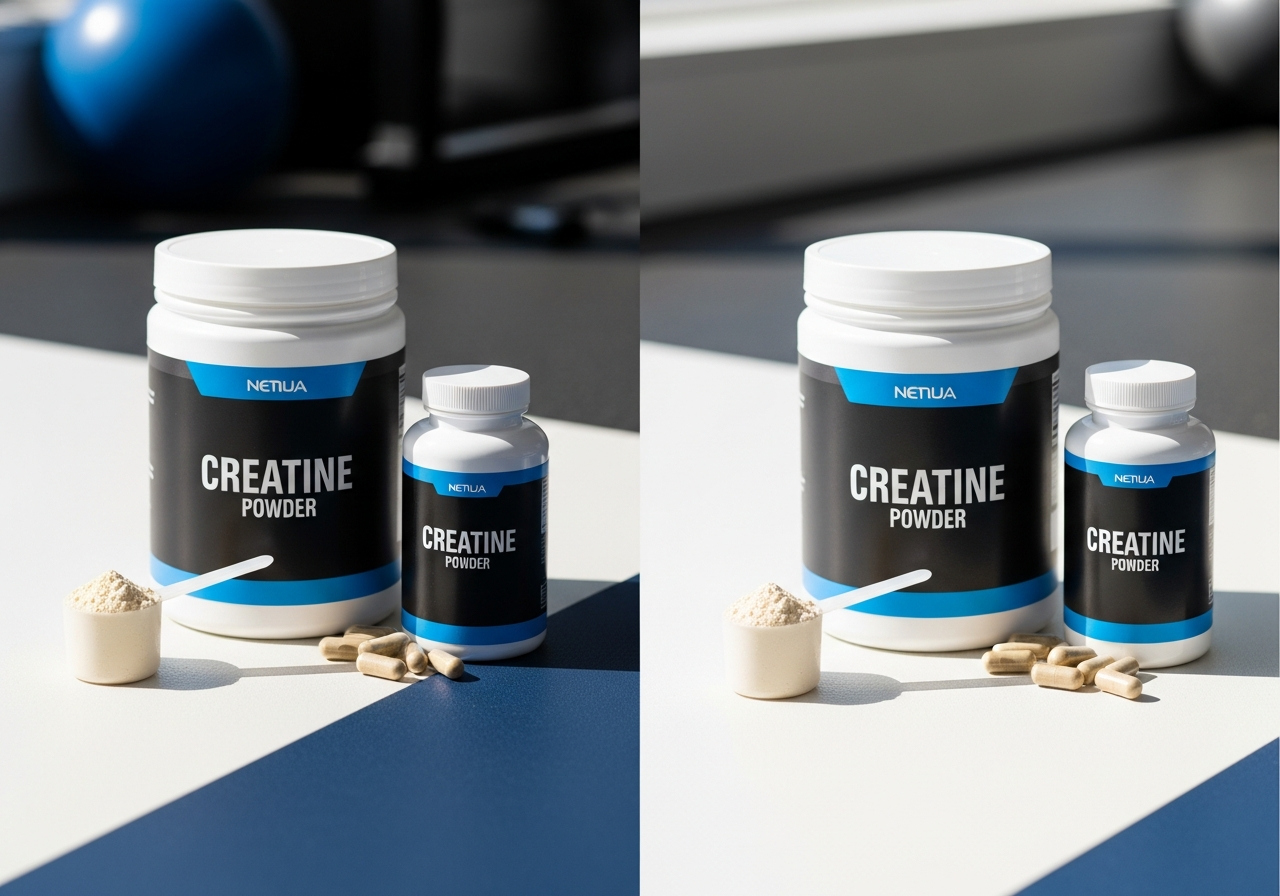
Creatine capsules and powder are equally effective per gram, but powder usually wins on price and dosing flexibility while capsules win on convenience, portability, and taste avoidance. For most buyers, the decision is not about results; it is about compliance and value.
| Factor | Creatine capsules | Creatine powder |
|---|---|---|
| Effectiveness | Equal when dose is matched | Equal when dose is matched |
| Convenience | Very high; no mixing | Moderate; requires scoop and liquid |
| Taste | Little to none | Can feel gritty or bland |
| Travel friendliness | Excellent | Good, but messier |
| Cost per gram | Usually higher | Usually lower |
| Dosing flexibility | Lower | Higher |
| Loading practicality | Often inconvenient | Much easier |
Choose capsules if:
- You hate mixing powders
- You travel often
- You want a tidy gym-bag option
- You are happy swallowing several capsules daily
Choose powder if:
- You want the best value per gram
- You may load at 20 g/day
- You want easy adjustment between 3 g and 5 g
- You already use shakes or a post-workout drink
For many people, powder is the smarter first buy because it makes proper dosing cheap and simple. Capsules make the most sense when convenience is what determines whether you will take creatine at all. If you know that scooping and mixing will cause you to skip doses, capsules can absolutely be the better real-world choice.
If you want product ideas, compare our best creatine rankings, browse the creatine product catalog, or read the full guide to creatine powder vs capsules.
Who creatine capsules are best for: beginners, women, older adults, and athletes
Creatine capsules are best for people who want the proven benefits of creatine in the easiest no-mix format, especially beginners, frequent travellers, busy professionals, and athletes who value routine. The ingredient works across many populations; the capsule format simply improves convenience for the right person.
Beginners: Capsules are beginner-friendly because they remove measuring and mixing. If a novice is intimidated by powders or supplement routines, capsules can lower the friction. The tradeoff is that beginners often underestimate how many capsules are needed to reach 3 to 5 g daily.
Women: Women can use the same evidence-based creatine monohydrate dosing as men, adjusted mainly by body size and practicality rather than sex. The common fear that creatine automatically causes bulky weight gain is misplaced. Early scale changes are usually water inside muscle, not fat. Our creatine for women guide covers this in detail.
Older adults: Creatine can be especially relevant for older adults who are resistance training and trying to preserve muscle function, strength, and lean mass. Capsules may be appealing if they already use pill organisers, though swallowing multiple capsules can also be a drawback.
Athletes: Team-sport athletes, sprinters, power athletes, and many combat-sport athletes often benefit from creatine’s support for repeated high-intensity output. The IOC consensus on dietary supplements places creatine among the few supplements with a strong evidence base for certain performance uses.
Vegetarians and vegans: Since dietary creatine intake is lower without meat or fish, supplementation may feel particularly noticeable. Standard dosing still applies. If this applies to you, see creatine for vegetarians.
Capsules may be a poor fit if you dislike swallowing pills, need to load quickly, or want the cheapest long-term option. In those cases, powder is usually the better tool. The best format is the one that lets you stay consistent for months, not just a week.
Safety, side effects, and what to check when buying creatine capsules in Canada
Creatine capsules are generally considered safe for healthy people when used at standard doses, with creatine monohydrate having the strongest long-term safety record. The main practical side effects are mild digestive discomfort, temporary water-weight gain, and the nuisance of taking many capsules if the product is underdosed.
The evidence base on creatine safety is far better than many people realise. The ISSN position stand and subsequent reviews have consistently supported creatine monohydrate as safe for healthy individuals when used appropriately. Common concerns about kidney damage in healthy users are often driven by confusion between creatine and creatinine, a breakdown product used in blood tests. If you have pre-existing kidney disease, liver disease, are pregnant, or take medications affecting kidney function, speak with a qualified healthcare professional before use. For a deeper review, see is creatine safe and is creatine bad for your kidneys.
Common side effects and fixes:
- Stomach upset: split the dose, take with food, or switch to powder if the capsule count is too high.
- Early weight gain: usually water inside muscle, not fat.
- Bloating complaints: often related to loading too aggressively or taking large single doses.
In Canada, check for a valid NPN, or Natural Product Number, on the label. An NPN means the product has been licensed by Health Canada as a natural health product. Also look for clear ingredient disclosure, capsule count, grams of creatine per serving, and ideally some form of third-party testing or brand transparency. You can compare options in our creatine brand reviews and read more on Canadian supplement regulations.
The best creatine capsules in Canada usually share the same traits: plain creatine monohydrate, realistic serving sizes, clear gram disclosure, minimal unnecessary add-ons, and trustworthy manufacturing. Fancy blends do not outperform adequate monohydrate dosing.
Common mistakes, myths, and how to troubleshoot if capsules seem not to work
If creatine capsules seem ineffective, the problem is usually underdosing, inconsistency, unrealistic expectations, or poor training and nutrition habits rather than the capsule format itself. Capsules work, but they only work if you take enough for long enough.
Here are the most common mistakes:
- Not reading the label properly: many products list grams per serving, not per capsule.
- Taking too little: 1 to 2 capsules may only provide 1 to 2 g total, which is often below a typical maintenance target.
- Skipping rest days: creatine works by saturation, so off days still matter.
- Expecting a stimulant feeling: creatine supports ATP regeneration; it is not supposed to feel like caffeine.
- Judging results too fast: without loading, full benefits often take a few weeks to build.
- Using a weak training stimulus: creatine shines most when paired with progressive resistance training or repeated high-intensity work.
Now the myths.
Myth: Creatine pills are less effective than powder. False. Equal grams of creatine monohydrate should provide equal physiological benefit.
Myth: You must cycle creatine. False for most users. Routine cycling is not required. See do you need to cycle creatine.
Myth: Creatine causes dehydration and cramps. The weight of evidence does not support that claim in healthy users using standard protocols.
Myth: Creatine is a steroid. False. Creatine is a naturally occurring compound involved in cellular energy metabolism, not an anabolic steroid.
How to troubleshoot:
- Confirm you are taking 3 to 5 g daily.
- Stay consistent for at least 2 to 4 weeks, or load properly if you want faster saturation.
- Train hard enough to notice performance changes.
- Track reps, sets, and body weight rather than “feeling”.
- Switch to powder if the required capsule count is hurting adherence.
For more myth-busting, visit creatine myths debunked and creatine myths vs facts.
Bottom line: are creatine capsules worth it?
Creatine capsules are worth it if convenience is the difference between taking creatine consistently and not taking it at all. They are effective, but only when they deliver a real creatine monohydrate dose, which for most people means 3 to 5 g daily and often several capsules per day.
If you want the shortest possible buying advice, it is this:
- Choose creatine monohydrate first.
- Check the grams per serving and grams per capsule.
- Aim for 3 to 5 g per day.
- Use loading only if you want faster saturation.
- Prefer powder if cost and flexibility matter most.
- Prefer capsules if portability and no-mix convenience matter most.
The best creatine capsules are not the ones with the flashiest claims. They are the ones that make evidence-based dosing easy, transparent, and sustainable. If a product makes you swallow an unreasonable number of capsules, it is usually not the best buy, even if the ingredient itself is sound.
For many Canadian shoppers, the smartest path is to compare reputable monohydrate products, verify NPN labelling where applicable, and choose the format you will actually use every day. If you still are not sure, start with our best creatine rankings, explore creatine product catalog, or compare formats in creatine powder vs capsules.
One final reality check: creatine is one of the few sports supplements with a deep evidence base, but it is still a supplement, not a shortcut. The real gains come from pairing it with solid training, adequate protein, enough sleep, and months of consistency. Get those pieces right, and capsules can be a perfectly effective way to use one of the most reliable supplements in sports nutrition.
Creatine Capsules at a Glance
- 3-5 g/day Standard maintenance dose — The usual daily target for most adults taking creatine monohydrate
- 20 g/day Optional loading dose — Typically split into 4 doses for 5 to 7 days
- 5-7 days Loading timeline — A faster route to muscle creatine saturation
- 2-4 weeks Typical time to notice benefits without loading — Results build gradually when taking daily maintenance only
Frequently Asked Questions
Are creatine capsules as effective as powder?
Yes, creatine capsules are as effective as powder when they provide the same total grams of creatine, ideally creatine monohydrate. The real difference is convenience and cost, not muscle absorption or performance benefit. If your capsules only provide a small amount per pill, you may need several daily to match a standard powder serving.
How many creatine capsules should I take per day?
You should take enough creatine capsules to reach 3 to 5 g of creatine per day for maintenance, based on the grams per capsule listed on the label. Some products need 3 capsules a day, while others may require 5 to 7. Always calculate from grams, not from the word serving.
Do creatine pills work for muscle growth?
Yes, creatine pills can support muscle growth if they help you consistently take an effective creatine dose while following resistance training. Creatine does not build muscle directly like a drug; it helps you train harder and recover better over time, which can translate into greater strength and lean mass gains.
What is the best creatine capsules dose for beginners?
For most beginners, 3 to 5 g per day of creatine monohydrate is the best dose, whether taken as capsules or powder. A beginner who wants the simplest entry point can start at 3 g daily, while 5 g daily is a common default for people lifting regularly. Loading is optional, not required.
Should I take creatine capsules every day or only on workout days?
You should take creatine capsules every day, not just on workout days, because creatine works by keeping muscle stores saturated over time. Skipping rest days makes your routine less consistent and can slow progress. The exact time matters less than maintaining the full daily dose.
When is the best time to take creatine capsules?
The best time to take creatine capsules is the time you will remember to take them consistently every day. Before and after workouts both work, and taking them with a meal can be more comfortable for some people. Daily intake matters much more than precise timing.
Do creatine capsules cause bloating or weight gain?
Creatine capsules can cause a small early increase in body weight, but this is usually water stored inside muscle rather than fat gain. Some people also report mild bloating, especially during loading or when taking large doses at once. Splitting the dose or using a lower maintenance intake often helps.
What should I look for in the best creatine capsules?
The best creatine capsules usually contain plain creatine monohydrate, clearly list grams per serving and per capsule, and make it realistic to reach 3 to 5 g daily. In Canada, it is also smart to look for an NPN and brand transparency around testing and manufacturing.
Are creatine capsules safe?
Creatine capsules are generally safe for healthy people when used at standard doses, with creatine monohydrate having the strongest evidence base. The most common issues are mild stomach upset, water-weight changes, or inconvenience from a high capsule count. Anyone with kidney disease or other relevant medical conditions should speak with a healthcare professional first.
Is a loading phase necessary with creatine capsules?
No, a loading phase is not necessary with creatine capsules, but it can help you saturate muscle creatine stores faster. The classic loading protocol is 20 g per day split into 4 doses for 5 to 7 days, followed by 3 to 5 g per day. Many capsule users skip loading simply because the capsule count becomes cumbersome.