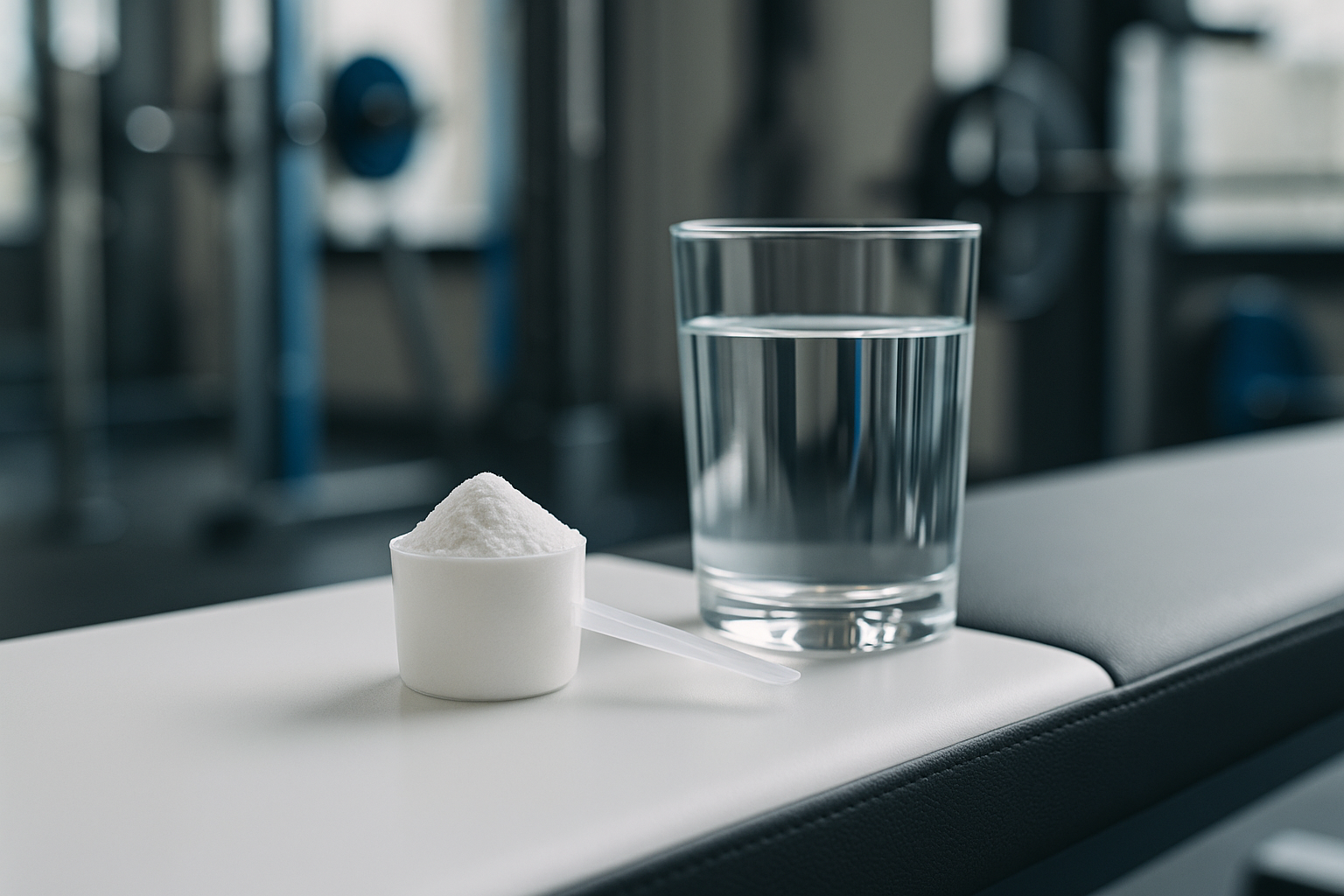
Creatine and Mitochondria: Energy Production at the Cellular Level
By The Creatine Canada Research Team — Evidence-based supplement analysts
Creatine supports mitochondrial function indirectly by making cellular energy transfer faster and more reliable, especially when energy demand spikes. In practical terms, creatine helps your cells regenerate ATP more efficiently through the phosphocreatine system and mitochondrial creatine kinase, which is why it can improve high-intensity performance, training quality, and in some contexts overall cellular energy handling.
Evidence-based · Cites 4 sources · Editorial standards
Key Takeaways
- Creatine does not "boost mitochondria" like a stimulant; it improves how cells buffer and shuttle energy.
- The key mechanism is faster ATP regeneration via phosphocreatine and mitochondrial creatine kinase.
- Creatine monohydrate is still the best-studied form for cellular energy, muscle performance, and value.
- A typical evidence-based dose is 3-5 g daily, or about 0.1 g/kg/day for larger individuals or precision dosing.
- Loading with 20 g/day split into 4 doses for 5-7 days saturates muscle faster, but is optional.
- Benefits are strongest for short, repeated, high-energy efforts rather than directly increasing VO2 max.
- For Canadians, choose a monohydrate product with an NPN and ideally third-party testing for quality assurance.
Does creatine help mitochondria? Yes — by improving cellular energy buffering, not by acting like a stimulant
Creatine and mitochondrial function are connected through energy management: creatine helps cells maintain ATP availability when demand rises quickly. That is the short answer to the question of whether creatine helps mitochondria. It does not primarily create more mitochondria in healthy people, and it is not a direct mitochondrial stimulant. Instead, it strengthens the phosphocreatine system, the rapid energy buffer that keeps ATP levels from crashing during intense work.
ATP, or adenosine triphosphate, is the immediate energy currency your cells spend to contract muscle, fire nerves, and run countless metabolic reactions. Mitochondria make much of that ATP aerobically, but ATP demand in muscle can increase far faster than mitochondria can instantly ramp production. Creatine fills that gap. Stored creatine in muscle exists partly as phosphocreatine, which can donate a phosphate group to ADP to quickly remake ATP.
This is why creatine is best understood as a cellular energy buffer and shuttle. It helps stabilise energy supply during repeated sprints, heavy sets, explosive efforts, and other situations where ATP turnover is extremely high. The 2017 ISSN position stand concluded that creatine monohydrate is the most effective nutritional supplement available for increasing high-intensity exercise capacity and lean mass during training, which fits this energy-buffering role Kreider et al. (2017), ISSN Position Stand: Safety and Efficacy of Creatine — JISSN.
When people search for creatine and cellular energy or creatine and energy production cells, the crucial nuance is this: creatine helps energy production at the cellular level by improving ATP regeneration and intracellular energy transport, not by replacing mitochondria or turning aerobic metabolism into something entirely different. It supports the system your mitochondria already work within.
If you are new to supplementation, start with plain monohydrate and a simple daily routine rather than chasing exotic forms. Our creatine dosage calculator and creatine product catalog can help you get practical quickly.
How creatine interacts with mitochondria: the phosphocreatine shuttle and mitochondrial creatine kinase
Creatine mitochondrial function is mainly about the phosphocreatine shuttle, and the key enzyme is mitochondrial creatine kinase. This enzyme sits in the mitochondrial space and helps convert creatine into phosphocreatine using ATP generated by oxidative phosphorylation.
Here is the mechanism in plain English. Mitochondria produce ATP from fuel and oxygen. Mitochondrial creatine kinase then uses some of that ATP to add a phosphate to creatine, forming phosphocreatine. Phosphocreatine can move through the cell to places where energy is being used rapidly, especially near the contractile machinery in muscle. There, another creatine kinase isoform transfers the phosphate back to ADP, instantly regenerating ATP where it is needed.
This matters because ATP itself is tightly regulated and the cell does not want big swings in ATP concentration. Creatine acts as a buffer system that helps keep ATP stable while absorbing fluctuations in demand. In other words, mitochondria make energy, but creatine helps distribute and defend it. That is why creatine and ATP mitochondria belong in the same discussion.
The best one-sentence summary is this: creatine improves cellular metabolism by linking mitochondrial ATP production to local ATP use through a fast phosphate-transfer network. This is especially relevant in tissues with high and fluctuating energy needs, such as skeletal muscle, the heart, and the brain.
There is also mechanistic interest in whether creatine may help cells cope with energetic stress, calcium handling, and oxidative stress in some settings. That science is promising but more context-dependent than the sports-performance evidence. Strong evidence supports creatine for improving high-intensity exercise capacity; weaker and more emerging evidence explores broader mitochondrial or clinical effects.
For a broader primer on the basics before diving deeper, see creatine myths debunked and the related guide on creatine and ATP if you publish this page within a broader cluster.
What better cellular energy actually feels like in the gym, on the field, and in daily training
Better cellular energy from creatine usually shows up as better repeated effort performance, not as a buzz or instant jolt. Most people do not “feel” creatine like caffeine. They notice that hard sets hold up better, sprint drop-off is smaller, and training quality improves across the session.
This happens because ATP turnover is massive during brief, intense efforts. Your phosphocreatine stores are the first rapid backup system. By increasing intramuscular creatine stores, supplementation can raise phosphocreatine availability, which supports faster ATP resynthesis between and during high-output bouts.
In practical terms, this can mean:
- one or two more reps on hard sets over time
- slightly better sprint repeatability
- better maintenance of power across intervals
- improved ability to sustain training volume
- more productive resistance-training sessions week after week
The 2018 International Olympic Committee consensus placed creatine among the few supplements with strong evidence for performance use in sport, especially where repeated high-intensity output matters International Olympic Committee consensus on dietary supplements (2018). That is the practical translation of improved creatine and cellular metabolism: your cells can keep energy available where and when it matters most.
What creatine usually does not do is dramatically increase steady-state endurance performance on its own. If your goal is a longer easy jog at the same pace, creatine is not the first supplement you would pick. But if your sport includes surges, sprints, accelerations, hills, lifting, jumping, tackling, or repeated explosive efforts, creatine’s energy-buffering effect becomes highly relevant.
Beginners often ask how to tell if it is working. The best signs are objective rather than sensory: more training volume, better rep quality, better sprint repeatability, and gradual gains in strength or lean mass. If you want a realistic timeline, pair this page with how long creatine takes to work and realistic creatine results.
How to use creatine for mitochondrial and cellular energy support: the simplest effective protocol

The simplest effective protocol for creatine and cellular energy is 3 to 5 grams of creatine monohydrate every day, with no cycling required. If you want faster saturation, use a loading phase of 20 grams per day split into 4 doses for 5 to 7 days, then switch to a maintenance dose.
- Choose creatine monohydrate. Monohydrate is the most studied, most reliable, and most cost-effective form. Marketing claims for other forms have not displaced monohydrate in the evidence.
- Pick your dose. Most adults do well with 3-5 g/day. Larger athletes can use about 0.1 g/kg/day as a practical upper maintenance guide.
- Decide whether to load. Loading is optional. It saturates muscle faster, but daily maintenance alone will also work if you are patient.
- Take it consistently. Timing matters far less than daily adherence. Pick a time you will actually remember.
- Mix it in water, a shake, or a meal. Consistency beats ritual. If it upsets your stomach, split the dose.
- Track outcomes for 4-8 weeks. Log body weight, rep performance, sprint repeatability, and how well you recover between hard efforts.
Week by week, here is a realistic expectation. With loading, some people notice fuller muscles and improved gym performance within the first week. Without loading, meaningful saturation usually builds over roughly 3 to 4 weeks. By weeks 4 to 8, performance and training-volume benefits are easier to spot if your program is demanding enough.
For the most detailed beginner instructions, read how to take creatine, creatine loading phase, and how much creatine per day. If you prefer precision, use the creatine dosage calculator.
One important reality check: creatine helps your energy system, but it cannot rescue poor sleep, under-eating, random training, or inconsistent effort. Think of it as a high-value support tool, not a shortcut.
Best creatine dose by body weight and goal for ATP support, strength, and training output
The best creatine dose for mitochondrial function and ATP support is usually the same dose used for performance: 3-5 grams daily for most adults, or roughly 0.1 g/kg/day when body size or precision matters. The goal is to saturate muscle creatine stores, because that is what improves phosphocreatine availability.
| Body weight / goal | Maintenance dose | Optional loading phase | Best for |
|---|---|---|---|
| Under 60 kg | 3 g/day | 20 g/day split into 4 doses for 5-7 days | General fitness, beginners |
| 60-90 kg | 3-5 g/day | 20 g/day split into 4 doses for 5-7 days | Strength, hypertrophy, team sports |
| Over 90 kg | 5 g/day or about 0.1 g/kg/day | 20 g/day split into 4 doses for 5-7 days | Larger athletes, high training volume |
| Need results fast | 3-5 g/day after loading | Yes | Competition prep, short timelines |
| Want simplest routine | 3-5 g/day | No | Long-term consistency |
For most people, the difference between 3 grams and 5 grams is not dramatic if you are consistent. A larger person, someone with more lean mass, or someone training hard most days will usually lean toward 5 grams. A smaller beginner can do perfectly well on 3 grams.
If your target is creatine and energy production cells rather than just muscle size, the same rule still applies: saturation is what matters. Once muscles are saturated, the system has the raw material it needs for phosphocreatine turnover.
Vegetarians and vegans sometimes respond especially well because their baseline dietary creatine intake is often lower. People who eat a lot of red meat or fish may still benefit, but sometimes with slightly less noticeable initial change. If that describes you, our related guides on is creatine vegan and creatine for vegetarians are useful context.
If you want a personalised number rather than a range, use the creatine dosage calculator or see our best creatine rankings if you still need to choose a product.
When to take creatine for cellular metabolism, and what to expect week by week
The best time to take creatine is the time you will remember every day, because consistency matters much more than timing. Creatine works by raising tissue stores over time, so it is not an acute pre-workout stimulant that must be taken at one exact hour.
You can take creatine before training, after training, with food, or on an empty stomach if you tolerate it. Some people prefer taking it with a meal or protein shake because that makes the habit stick. Others find it gentler on digestion when divided into smaller doses. If you are comparing timing options, see when to take creatine and with or without food.
Here is a realistic timeline:
- Days 1-7 with loading: muscle creatine stores rise faster; some people notice body-weight increase from intracellular water and a slightly “fuller” muscle feel.
- Weeks 1-2 without loading: subtle changes only; performance effects may not be obvious yet.
- Weeks 3-4 without loading: saturation is approaching; repeated-effort performance often becomes easier to detect.
- Weeks 4-8: the biggest visible payoff is often better training quality, which can translate into strength and lean-mass progress if nutrition and programming are solid.
For creatine mitochondrial function, remember that the mechanism is cumulative. You are not “turning on” mitochondria in the moment; you are stocking the cell with more creatine so the phosphocreatine shuttle can run more effectively day after day.
Hydration does not need to become obsessive, but normal good hydration habits matter. If you are training hard, sweating a lot, or taking larger doses during loading, simply make sure your fluid intake is sensible and your urine is not consistently dark. For more, see how much water with creatine and creatine and dehydration.
Who benefits most from creatine’s mitochondrial energy effects: beginners, women, older adults, and athletes
Creatine’s energy-buffering effects can help many groups, but the biggest practical benefits usually show up in people who do repeated high-intensity work or who may have lower baseline creatine stores. That includes beginners starting strength training, women, older adults, athletes in stop-start sports, and vegetarians or vegans.
Beginners benefit because creatine improves the energy system behind better training sessions. If you can perform slightly more quality work, you give yourself more opportunity to gain strength and lean mass. Beginners often overcomplicate dosing, but simple daily use is enough.
Women benefit just as men do, and creatine does not act like a steroid or masculinising hormone. Creatine helps ATP buffering and training capacity. Concerns about “bulking” are mostly misunderstandings about water retention and muscle fullness, not fat gain. Our guide on creatine for women goes deeper.
Older adults may benefit because preserving muscle function, strength, and training capacity becomes more important with age. Creatine is not anti-aging magic, but it is one of the more evidence-based tools to support resistance training in later decades. See creatine for older adults for age-specific context.
Athletes in sprinting, hockey, football, rugby, CrossFit, combat sports, and strength sports are the most obvious fit because their performance depends heavily on rapid ATP turnover. Endurance athletes may still use creatine strategically, especially if their events include surges, sprint finishes, or strength blocks.
Vegetarians and vegans can sometimes be especially responsive because they often start with lower muscle creatine stores. That does not mean omnivores will not benefit; it simply means the baseline may differ.
In all these groups, the mechanism remains the same: more available creatine means better phosphocreatine turnover, more efficient ATP buffering, and more reliable creatine and cellular metabolism during hard work.
Safety, side effects, and the kidney myth: what the evidence actually says

Creatine monohydrate is one of the most researched sports supplements, and for healthy people using standard doses it has a strong safety record. The 2021 JISSN review on common questions and misconceptions concluded that many long-running fears about creatine are not supported by the totality of evidence Antonio et al. (2021), Common questions and misconceptions about creatine supplementation — JISSN.
The most common side effects are practical rather than dangerous:
- temporary water-weight gain from increased intracellular water
- stomach upset if you take too much at once
- gritty texture or poor mixing with some powders
The kidney myth deserves direct clarification. Creatine supplementation can increase creatinine, a breakdown product often used on blood tests as a kidney marker. That does not automatically mean kidney damage. It can reflect higher creatine turnover. This is why creatine and creatinine get confused so often. If you have known kidney disease, only use creatine with medical guidance. If you are healthy, standard doses are generally considered safe by major evidence reviews.
Other common myths are also poorly supported: creatine does not appear to cause dehydration, cramps, hair loss, or acne in the simple way internet lore suggests. Those topics each need nuance, but the broad fear level is wildly out of proportion to the evidence. If those are your concerns, see is creatine safe, kidneys, and digestive side effects.
Who should use extra caution? People with existing kidney disease, those taking medications that may affect kidney function, pregnant or breastfeeding individuals, and anyone with a complex medical condition should speak with a qualified clinician first. For healthy athletes and recreational lifters, the evidence-based dosing ranges discussed on this page remain the standard starting point.
Common mistakes that make creatine seem like it is not working
The most common reason creatine seems ineffective is not the supplement itself; it is poor use, poor expectations, or a mismatch between the mechanism and the goal. Creatine is a saturation supplement, so the first mistake is expecting an instant energy rush. That is not how creatine and mitochondria works.
Here are the big mistakes to avoid:
- Not taking it daily. Skipping most rest days slows or disrupts saturation.
- Using too little. Tiny doses below evidence-based ranges may work poorly, especially in larger athletes.
- Quitting too soon. Without loading, it may take about 3 to 4 weeks to notice clear effects.
- Judging it only by body sensation. Measure reps, sets, sprint repeatability, and body weight rather than waiting to “feel” it.
- Buying fancy forms instead of proven monohydrate. More expensive does not mean more effective.
- Blaming creatine for bad training or sleep. It cannot compensate for weak fundamentals.
If you think you are a non-responder, troubleshoot systematically. First, confirm your dose. Second, confirm consistency for at least 4 weeks. Third, ask whether your training actually stresses the phosphocreatine system; creatine is far more noticeable in explosive or repeated high-intensity work than in easy steady-state cardio. Fourth, consider baseline diet: omnivores with already higher creatine intake sometimes notice subtler initial changes than vegans.
The Mayo Clinic and other mainstream medical sources generally describe creatine as likely safe when used appropriately, but they also note that side effects like stomach upset can occur, especially with larger doses or poor product quality Mayo Clinic — Creatine.
If results are underwhelming, review creatine not working, creatine non-responders, and common creatine mistakes. Usually the fix is simple: monohydrate, enough grams, every day, enough time.
How to choose a creatine product in Canada without getting distracted by marketing
The best creatine product for mitochondrial function is usually the simplest one: plain creatine monohydrate from a reputable brand with transparent labelling. In Canada, quality markers matter more than flashy claims about absorption, pH, or futuristic delivery systems.
Here is what to look for:
- Creatine monohydrate as the main and ideally only active ingredient
- Clear grams per serving, so you can actually hit 3-5 g/day
- NPN, which stands for Natural Product Number, the Health Canada identifier for licensed natural health products
- Third-party testing or sport certification when relevant, especially for competitive athletes
- Unflavoured options if you want the lowest cost per gram and easiest stacking
| What matters most | Why it matters | What matters less |
|---|---|---|
| Monohydrate form | Best-studied for ATP buffering and performance | Exotic branded forms |
| Accurate dose in grams | You need enough to saturate stores | Serving-size hype |
| NPN / compliant Canadian labelling | Useful quality and regulatory check | Aggressive muscle claims |
| Third-party testing | Extra confidence in purity | Overdesigned packaging |
| Cost per gram | Best indicator of long-term value | Tiny tubs with premium pricing |
If you are shopping in Canada, compare products by cost per effective gram rather than by scoop count or brand story. Competitive athletes should be especially careful about contamination risk and may want Informed Sport or similar testing when available.
To compare options, browse our best creatine rankings, creatine brand reviews, and creatine product catalog. If you want a deeper buyer’s framework, the related guides on best creatine monohydrate in Canada and third-party tested creatine in Canada are the logical next click.
Bottom line: creatine supports mitochondrial energy handling, but the real-world win is better ATP availability
Creatine and mitochondrial function are linked through energy transfer, buffering, and ATP regeneration. The most accurate bottom line is that creatine helps your cells use and stabilise energy better, especially during short, intense, repeated demands, by supporting the phosphocreatine system and mitochondrial creatine kinase network.
That distinction matters because it keeps expectations realistic. Creatine is not a mitochondrial miracle cure, not a stimulant, and not a shortcut around training. What it is, based on decades of evidence, is one of the most reliable, best-supported supplements for improving the cellular energy conditions that let you train harder and recover repeated effort better.
If you want the highest-evidence protocol, it is straightforward:
- Buy creatine monohydrate from a reputable source.
- Take 3-5 g daily, every day.
- Optionally load with 20 g/day split into 4 doses for 5-7 days if you want faster saturation.
- Stay consistent for at least 4 weeks if you do not load.
- Judge results by performance and training quality, not by a stimulant-like feeling.
For most healthy adults, that is enough to support better creatine and cellular energy handling. If your goals include strength, muscle, sprint performance, or repeated high-intensity output, creatine is one of the easiest evidence-based wins in sports nutrition.
Need your next step? Use the creatine dosage calculator, compare options in the creatine product catalog, or read the full beginner-friendly walkthrough in creatine for beginners.
Creatine and Mitochondrial Function: The Numbers That Matter
- 3-5 g/day Standard daily maintenance dose — The evidence-based range most adults use to maintain elevated muscle creatine stores.
- 20 g/day Typical loading dose — Usually split into 4 doses for 5-7 days to saturate muscle faster.
- 5-7 days Fast saturation timeline — Expected when using a standard loading phase.
- 3-4 weeks No-loading saturation timeline — Approximate time to meaningfully raise stores with daily maintenance dosing alone.
Frequently Asked Questions
Does creatine improve mitochondrial function?
Yes, creatine can support mitochondrial function indirectly by improving how cells buffer and shuttle energy. It mainly works through the phosphocreatine system and mitochondrial creatine kinase, which help regenerate ATP rapidly and move high-energy phosphate where it is needed most, especially during intense muscular work.
What is mitochondrial creatine kinase?
Mitochondrial creatine kinase is an enzyme associated with mitochondria that helps convert creatine into phosphocreatine using ATP produced in the mitochondria. That phosphocreatine then helps transport usable energy through the cell so ATP can be rapidly regenerated at sites of high demand.
How does creatine affect ATP in mitochondria?
Creatine affects ATP handling by helping preserve and rapidly regenerate ATP rather than by replacing mitochondrial ATP production. Mitochondria generate ATP, and creatine helps capture some of that energy as phosphocreatine, which can then restore ATP quickly when cellular demand spikes.
Does creatine increase mitochondria?
Creatine does not reliably increase mitochondrial number in healthy people the way endurance training can. Its main established role is improving cellular energy buffering and ATP regeneration, though some mechanistic and clinical research is exploring broader effects on mitochondrial health under stress or disease conditions.
Is creatine good for cellular energy?
Yes, creatine is one of the best-studied supplements for cellular energy in high-demand tissues like muscle. It increases the availability of phosphocreatine, which helps maintain ATP during short, intense, repeated efforts and can improve training output over time.
What is the best creatine dose for cellular metabolism?
The best practical dose for most adults is 3 to 5 grams of creatine monohydrate per day. Larger individuals and athletes with more lean mass may use around 0.1 g/kg/day, while people wanting faster saturation can load with 20 grams daily split into 4 doses for 5 to 7 days.
How long does creatine take to help cellular energy production?
Creatine can start raising muscle stores within days, but noticeable functional benefits depend on your dosing strategy and training. With loading, some people notice effects within about a week; without loading, it commonly takes around 3 to 4 weeks of daily use to approach meaningful saturation.
Is creatine monohydrate the best form for mitochondrial support?
Yes, creatine monohydrate is still the best form to choose for mitochondrial and cellular energy support because it is the most studied, the most consistently effective, and usually the best value. Other forms are heavily marketed, but they have not clearly outperformed monohydrate in the evidence.
Can creatine help fatigue by improving cellular energy?
Creatine can help certain kinds of fatigue, especially fatigue tied to repeated high-intensity muscular effort. It is less useful as a cure-all for general tiredness, because its strongest evidence is in ATP buffering, sprint performance, strength work, and repeated-effort exercise rather than nonspecific daytime fatigue.
Is creatine safe for long-term use when taken for energy support?
Yes, creatine appears safe for long-term use in healthy people when taken at standard evidence-based doses. The main issues are usually mild, such as water-weight gain or stomach upset, but people with kidney disease or complex medical conditions should speak with a clinician before using it.