Creatine and Hormonal Birth Control: Does the Pill Affect Creatine Results?
By The Creatine Canada Research Team — Evidence-based supplement analysts
Yes—based on current evidence, hormonal birth control does not appear to reduce creatine’s core benefits, and most women on the pill can take creatine monohydrate normally. The bigger practical point is that birth control can change water balance, appetite, training consistency, and cycle symptoms, which may change how creatine feels and how you judge your results—not whether creatine works at all.
Evidence-based · Cites 4 sources · Editorial standards
Key Takeaways
- There is no strong evidence that the birth control pill blocks creatine absorption or muscle saturation.
- For most adults, 3–5 g of creatine monohydrate per day is still the standard dose whether or not you use hormonal contraception.
- Creatine works by increasing phosphocreatine stores in muscle, which helps you regenerate ATP faster during hard efforts.
- Hormonal contraception may affect fluid retention and symptom patterns, so scale weight and bloating can be harder to interpret in the first 1–3 weeks.
- If you want faster results, a loading phase of 20 g/day split into 4 doses for 5–7 days is optional; it is not required.
- The best way to tell if creatine is working is improved training performance over weeks, not just day-to-day body-weight changes.
- In Canada, choose a plain creatine monohydrate product with an NPN when applicable, clear gram dosing, and preferably third-party testing.
Does hormonal birth control affect creatine results? The direct answer
No—current evidence does not show that hormonal birth control meaningfully reduces creatine’s main performance benefits, so most women on the pill can use creatine the same way as women who are not on hormonal contraception. If you are searching for creatine and birth control, creatine birth control pill, or does birth control affect creatine, the practical answer is simple: the standard creatine guidance still applies unless your clinician has told you otherwise for a separate medical reason.
Creatine is a compound stored mainly in muscle as phosphocreatine, a rapidly available phosphate donor that helps your body remake ATP, the cell’s immediate energy currency, during short, hard efforts. Hormonal contraception, by contrast, changes the hormonal environment primarily through synthetic oestrogen and/or progestin, depending on the method. These are different systems. There is no established mechanism showing that common hormonal contraceptives prevent creatine from being absorbed, transported into muscle, or stored effectively enough to cancel its normal effects.
What can happen is more subtle. Birth control may alter water retention, appetite, menstrual symptoms, mood stability, or training patterns. Those factors can change how your first few weeks on creatine feel and how obvious your results seem. For example, if your pill already makes you retain some fluid, the small early rise in intracellular water that often comes with creatine can feel more noticeable, even though that does not mean creatine is “not working” or causing fat gain. If your contraception reduces cycle-related performance dips or symptom fluctuations, creatine may actually feel easier to evaluate because your training becomes more consistent.
The strongest evidence base still supports creatine monohydrate as the most studied, most reliable, and most cost-effective form. The 2017 International Society of Sports Nutrition position stand concluded that creatine monohydrate is the most effective ergogenic nutritional supplement currently available for increasing high-intensity exercise capacity and lean mass during training. That conclusion applies broadly and is not limited away by hormonal contraceptive use. If you need a basics refresher, our guides on what creatine is and creatine for women cover the foundation.
The bottom line: being on hormonal birth control is not a reason to avoid creatine, lower the dose, or expect poor results. The more important questions are whether creatine fits your goal, whether you are training consistently, and whether you are choosing the right product and dose.
How creatine works—and why the pill is unlikely to interfere
Creatine works through muscle energy metabolism, and that is why the pill is unlikely to interfere with its main effect. After supplementation, creatine increases total muscle creatine stores, including phosphocreatine, which helps regenerate ATP faster during repeated sprints, lifting sets, jumps, and other high-intensity efforts.
That mechanism matters because it is not dependent on a “testosterone boost,” a stimulant effect, or a direct hormonal signal. Creatine does not work like a steroid, and it does not need natural menstrual cycling to be effective. Instead, it supports the phosphagen energy system—the short-duration energy pathway that powers explosive effort. When phosphocreatine availability is higher, you can often sustain slightly more total training volume, maintain power output better across sets, and recover marginally faster between repeated hard bouts. Over weeks and months, that can translate into better strength and lean-mass gains.
Where sex hormones may matter is not whether creatine works, but how performance and fluid balance vary across the month. Some researchers have proposed that fluctuating ovarian hormones could affect creatine metabolism, substrate use, fluid shifts, thermoregulation, or exercise performance in women. That is scientifically interesting, but it is not the same as evidence that oral contraceptives blunt creatine supplementation. Current guidance has not changed: women, including many women using hormonal contraception, can use standard creatine monohydrate dosing.
Another reason the pill is unlikely to “block” creatine is that muscle creatine uptake is driven by transport into tissues and gradual saturation over time. If you take 3–5 g daily, stores rise whether you take it in water, with a meal, pre-workout, post-workout, on training days, or on rest days. Timing differences are small compared with daily consistency. If you want a deeper timing breakdown, see when to take creatine and how to take creatine.
The more useful real-world lens is this: if your hormonal contraception makes your month more predictable, your training output may become more predictable too. That can make creatine’s effects easier to notice. If it causes bloating or scale variability, you may need to judge creatine by gym performance rather than mirror panic. Those are interpretation issues, not proof of interference.
For the best-supported overview of creatine’s mechanism and efficacy, see the ISSN position stand and the broader evidence summary at Examine.com.
What the research actually says about creatine on the pill
The evidence gap is this: we have strong evidence for creatine in women overall, but limited direct research specifically comparing women on hormonal birth control versus women not using it. That means the safest expert answer is not “proved identical,” but rather “no good evidence currently shows a meaningful negative interaction.”
Creatine is one of the most studied sports supplements in the world, with decades of data supporting benefits for high-intensity performance, strength, and lean mass when combined with training. The 2021 review on common questions and misconceptions about creatine supplementation reinforced that creatine monohydrate remains highly effective and broadly safe for healthy individuals. However, the research base is much thinner when you narrow the question to creatine and hormonal contraception.
Why does that matter? Because women’s sports nutrition research has historically under-sampled female participants, and many trials have not adequately tracked menstrual status, oral contraceptive use, or menopausal stage. So when someone asks, “Does the birth control pill affect creatine?” the honest answer is that direct head-to-head data are limited. Still, absence of strong direct evidence is not the same as evidence of a problem. If there were a large, consistent negative interaction, we would expect clearer reports of reduced uptake, failed saturation, or systematically worse outcomes in women using hormonal contraception. That pattern has not emerged.
The best interpretation of the current literature is this:
- Well established: creatine monohydrate improves phosphocreatine availability and supports performance in repeated high-intensity work.
- Well established: women can benefit from creatine, especially for strength training, sprint-type efforts, and preserving or building lean mass.
- Less certain: the extent to which menstrual phase or hormonal contraception changes the magnitude of response.
- Not supported: the claim that birth control “cancels out” creatine or makes it useless.
For a general fitness user, that nuance points to a practical decision: use creatine normally, track outcomes objectively, and do not invent a problem that the evidence has not shown. If you are worried that creatine is not working, the more likely explanations are under-dosing, inconsistent use, poor training progression, unrealistic expectations, or confusing normal water shifts with failure. Our pages on how long creatine takes to work and creatine non-responders can help troubleshoot that.
In short, the science supports confidence with humility: creatine is evidence-based; the pill-specific literature is limited; there is no strong reason to expect the pill to meaningfully reduce creatine results.
How to take creatine if you’re on hormonal contraception: the simple step-by-step plan
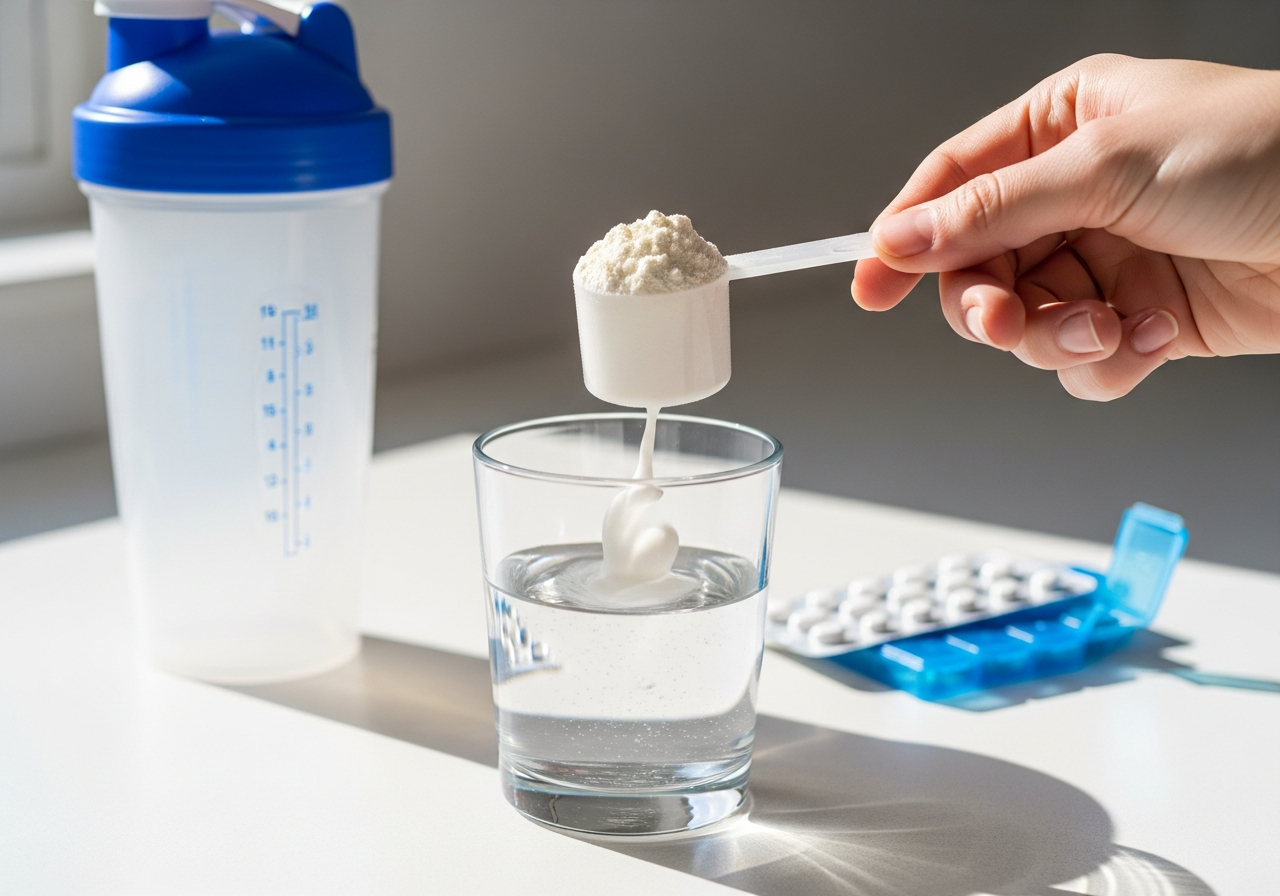
If you take hormonal birth control, the simplest effective creatine plan is 3–5 g of creatine monohydrate every day, with or without food, at whatever time you are most likely to remember it. You do not need a special women-only protocol, and you do not need to cycle it because you are on the pill.
- Choose the right form. Buy plain creatine monohydrate powder first. It is the most studied, most cost-effective, and easiest to dose accurately. If you are comparison-shopping, start with our best creatine rankings, creatine brand reviews, or product catalog.
- Pick your daily dose. Most adults do well on 3–5 g daily. If you are smaller-bodied and just want general performance support, 3 g can be enough. If you are larger-bodied, highly active, or want the standard gym dose, 5 g is straightforward.
- Decide whether to load. If you want faster saturation, take 20 g/day split into 4 doses of 5 g for 5–7 days, then drop to 3–5 g/day. If you do not load, just take 3–5 g/day and expect benefits to build more gradually over roughly 3–4 weeks.
- Take it daily, including rest days. Creatine works by saturating muscle stores over time, not by producing an acute pre-workout buzz. Daily consistency matters more than exact timing.
- Mix and drink normally. Stir it into water, a smoothie, or a protein shake. If your stomach is sensitive, take it with food and avoid taking large single doses.
- Track the right signals. Monitor gym performance, total reps, top-set quality, sprint repeatability, and recovery across weeks—not just body weight.
- Give it enough time. Without loading, judge results after at least 3–4 weeks of consistent intake and training.
If your goal is exact dosing by size or preference, use our creatine dosage calculator or read how much creatine per day. If you are just starting out, creatine for beginners is the best companion guide.
The most important habit is boring consistency. Taking a perfect dose at the “perfect” time matters less than simply taking creatine every day for long enough to saturate muscle stores.
Best creatine dose by body weight and goal when you’re on the pill
Your best creatine dose does not fundamentally change because you use hormonal birth control; it changes more by body size, training goal, and how quickly you want saturation. For most women on the pill, 3–5 g/day of creatine monohydrate remains the evidence-based default.
| Body weight / goal | Simple daily dose | Optional loading phase | Best for |
|---|---|---|---|
| Under 60 kg, general fitness | 3 g/day | 20 g/day split into 4 doses for 5–7 days if faster saturation is desired | Beginners, light-bodied users, maintenance |
| 60–90 kg, strength or muscle gain | 5 g/day | 20 g/day split into 4 doses for 5–7 days | Most lifters and team-sport athletes |
| Over 90 kg or very high training volume | 5 g/day is still reasonable; some prefer modestly higher intakes based on size | 20 g/day split into 4 doses for 5–7 days | Larger athletes wanting simple dosing |
| Cutting or recomping | 3–5 g/day | Optional, not required | Preserving training quality while dieting |
| Older adults | 3–5 g/day | Usually optional | Strength, function, lean-mass support with resistance training |
Why not overcomplicate it? Because creatine’s key variable is saturation. Once muscle stores are meaningfully elevated, benefits depend more on your training stimulus than on fancy dose manipulation. A 55 kg beginner doing two to three resistance sessions per week does not need an aggressive strategy. A 75 kg field-sport athlete in heavy training may simply choose 5 g/day for convenience. Both can do very well.
If you are worried about bloating while on the pill, start with 3 g/day for a week, then move to 5 g/day if desired. That slower ramp will not make creatine more effective physiologically, but it can improve comfort and confidence. If you are prone to stomach upset, split the dose into 2 smaller servings. If you are using capsules instead of powder, check the label carefully; many capsules contain much less than people assume, so reaching an actual 3–5 g dose can require several capsules.
For more precision, see creatine maintenance dose, creatine loading phase, and how to measure creatine. The pill does not require a different formula; it mainly requires that you stay consistent and judge progress against your actual goal.
Timing, water retention, and what to expect week by week on creatine and birth control
If you are on birth control, creatine timing is still flexible, and what you should expect is gradual improvement in training performance rather than an immediate dramatic body change. Most users do best by taking it at the same time daily simply to stay consistent.
Week 1 with loading: If you load at 20 g/day split into 4 doses for 5–7 days, muscle stores rise quickly. Some people notice fuller muscles, a small scale increase, or mild GI discomfort if they take doses too large at once. If you also tend to retain water on hormonal contraception, the scale may be noisier than usual.
Weeks 1–2 without loading: At 3–5 g/day, the early phase often feels uneventful. That is normal. Creatine is not a stimulant and does not create a noticeable “hit.”
Weeks 2–4: Many users start noticing that reps hold up better, heavy sets feel slightly more repeatable, sprint efforts fade less, or recovery between hard intervals improves modestly. This is the window where creatine usually becomes more obvious if training is structured.
Weeks 4–8: The bigger benefit is often cumulative. Because creatine supports slightly better performance session after session, total training volume can increase over time, which helps drive strength and lean-mass gains.
If you use hormonal contraception continuously and have more stable symptoms month to month, you may actually find this easier to monitor than naturally cycling athletes do. If you use a pill that causes bloating or fluid fluctuation, track a wider data set than body weight alone:
- Top working weights
- Total reps at a fixed load
- Sprint split consistency
- Perceived recovery between sets
- Workout completion and energy consistency
- Waist measurement and photos, if body composition is a goal
Take creatine before or after training if that helps you remember, but do not obsess over the timing. Daily use beats perfect timing. If this topic matters to you, read creatine on rest days and how long creatine takes to work.
The key mindset shift is this: creatine’s first visible effect may be water inside muscle, but its most valuable effect is better training quality over time. That distinction matters even more when birth control already affects how your body holds water.
Who should consider creatine on hormonal contraception—and who should ask a clinician first
Most healthy adults using hormonal contraception can reasonably consider creatine if their goal is strength, power, lean mass, high-intensity performance, or preserving training quality during a fat-loss phase. Being on the pill does not remove you from the population creatine is most useful for.
Beginners: Creatine can absolutely be useful for beginners, especially if it helps you train harder and recover better while you build lifting skill. It is not “too advanced,” and you do not need to earn the right to take it.
Women lifting for strength or body composition: This is one of the clearest use cases. Creatine helps support the training quality that drives muscle retention and gain. It does not make women bulky on its own, and it is not a hormone disruptor in the way many social-media posts imply.
Team-sport and sprint athletes: Repeated high-intensity efforts are where creatine shines. If your sport involves accelerations, jumps, collisions, or repeated sprints, creatine is especially relevant.
Vegetarians and vegans: People who eat little or no meat often start with lower baseline creatine intake from food, so supplementation can be particularly useful. See is creatine vegan if you want the sourcing details.
Older adults: Creatine plus resistance training can be worthwhile for muscle and function as we age. Hormonal contraceptive use is less common in this group, but the principle is the same: contraception status does not meaningfully rewrite the dosing basics.
Who should pause and ask a clinician first? People with known kidney disease, complex medical conditions, medication questions specific to their case, unexplained swelling, or a history of supplement-related adverse reactions should get individual guidance. Creatine is widely regarded as safe for healthy individuals, but “safe in general” is not the same as “automatically right for every medical scenario.” Our pages on is creatine safe and who should not take creatine go deeper.
A special note: birth control and pregnancy are not the same topic. If you are trying to conceive, pregnant, or breastfeeding, use pregnancy-specific guidance rather than assuming this article applies unchanged. Those evidence questions are different.
So who is creatine for on hormonal birth control? In practice: the same broad group it is for off hormonal birth control—people who want better support for repeated hard training.
Safety, side effects, and whether creatine interacts with the pill
There is no well-established evidence that creatine interacts negatively with hormonal birth control or makes the pill less effective. Creatine is not known to reduce contraceptive efficacy, and hormonal contraception is not known to meaningfully impair creatine’s core mechanism.
The main side effects people notice with creatine are practical rather than dangerous: mild gastrointestinal upset, temporary scale increases from water held inside muscle, and occasional bloating if large doses are taken too quickly. These effects can happen whether or not you use hormonal contraception. If you already feel puffy or fluid-sensitive on the pill, creatine’s early water shift may be more noticeable to you psychologically, but that does not mean there is a harmful interaction.
The 2017 ISSN position stand and the 2021 JISSN review both support creatine monohydrate as a safe supplement for healthy individuals when used appropriately. The Mayo Clinic also notes that creatine appears to be safe when used orally at appropriate doses for up to several years in many adults. That said, side effects and lab interpretation still matter.
- Kidney confusion: Creatine can raise blood creatinine, which is a breakdown product measured on lab work. That does not automatically mean kidney damage, but your clinician should know you are taking creatine so results are interpreted properly.
- GI upset: More likely with a loading phase, poor mixing, or very large single doses.
- Water weight: Usually intracellular water in muscle, not fat gain.
- Dehydration myth: Creatine does not reliably dehydrate healthy users when normal fluid intake is maintained.
If you are on the pill and experience swelling, headaches, blood-pressure concerns, or anything that feels unusual, do not assume creatine is automatically the cause—or automatically innocent. Look at the full context, including dose, hydration, training load, sodium intake, and the contraceptive itself. But based on current evidence, the question creatine on the pill is not primarily a drug-interaction story.
For more on safety, see the JISSN misconceptions review, Mayo Clinic’s creatine overview, and our guides on creatine and kidneys and digestive side effects.
Common mistakes and myths: ‘The pill cancels creatine,’ ‘creatine causes fat gain,’ and other bad advice
The biggest myth is that the birth control pill cancels creatine, and current evidence does not support that claim. If creatine seems not to be working while you use hormonal contraception, the explanation is usually a dosing, expectation, or tracking problem—not proof that the pill blocks creatine.
Myth 1: Birth control stops creatine absorption.
There is no strong evidence for this. Creatine uptake is a saturation process that occurs with regular dosing over time.
Myth 2: If the scale goes up, creatine made you gain fat.
False. Early weight gain on creatine is typically water in muscle, not fat tissue. If your pill also affects fluid retention, the scale can become even less useful as a stand-alone metric.
Myth 3: Women on hormonal birth control need a tiny ‘female dose.’
Usually false. The evidence-based daily range is still 3–5 g for most adults.
Myth 4: You must take creatine immediately post-workout or it won’t work.
False. Timing is secondary to total daily consistency.
Myth 5: Creatine causes dangerous bloating in everyone.
False. Some people notice transient water shifts or stomach discomfort, especially with loading, but many tolerate it easily.
Now the troubleshooting checklist:
- You are taking too little because your scoop is inaccurate.
- You are missing days, especially weekends or rest days.
- You expected a pre-workout buzz instead of a subtle training benefit.
- Your program lacks progressive overload, so creatine has little meaningful training stimulus to amplify.
- You stopped after one week without loading and declared it ineffective.
- You are using an overpriced alternative form when plain monohydrate would have done the job.
If bloating worries you, skip loading and start at 3 g/day. If stomach upset occurs, take it with a meal or split the dose. If you are still unsure whether it is worth it, compare your logbook over 4–8 weeks. Creatine’s value usually shows up as better repeated performance, not magic transformation.
For a broader reality check, read creatine myths debunked and does creatine make you gain weight. The pill does not change the fundamentals: consistent monohydrate, enough time, and sensible tracking still win.
How to choose a good creatine in Canada if you use hormonal contraception
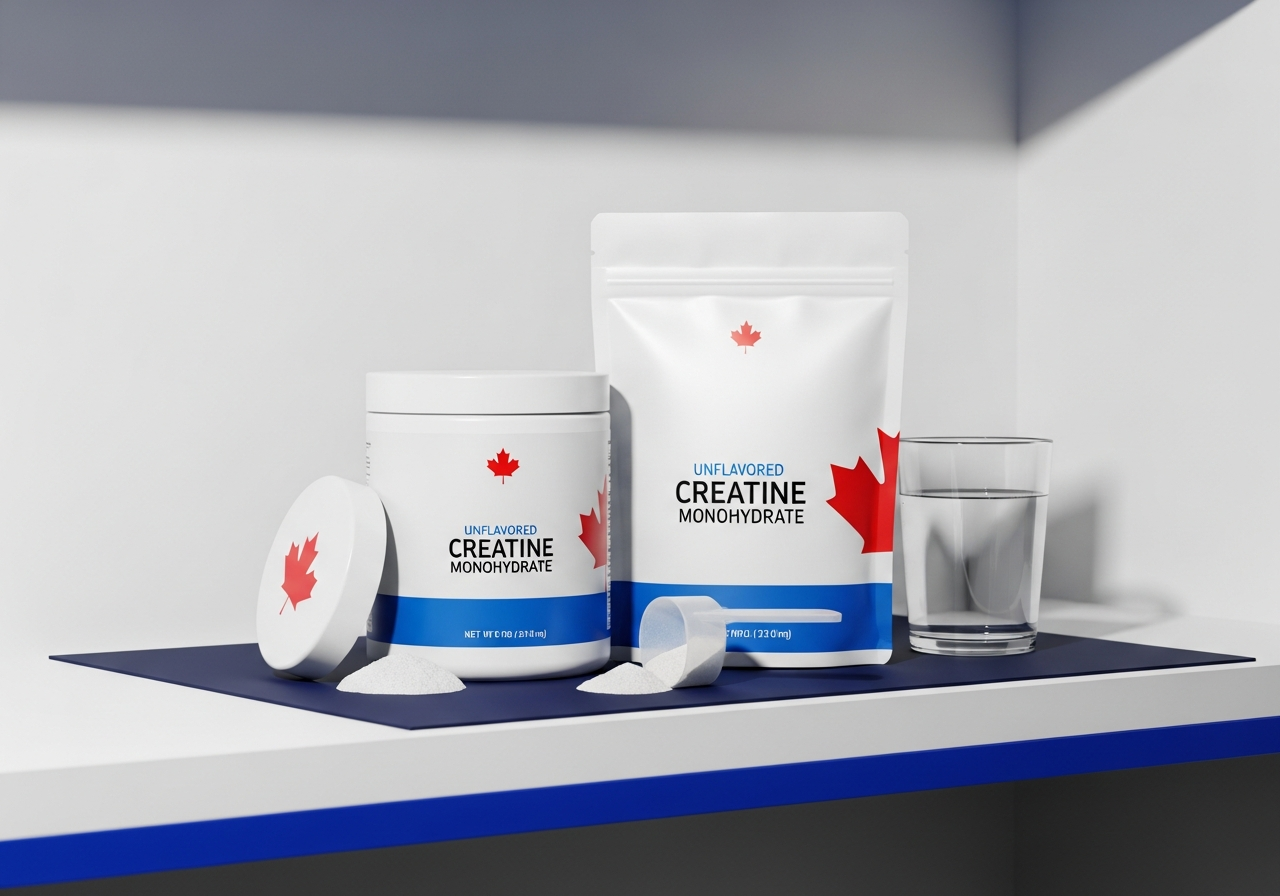
If you are in Canada and want creatine while on hormonal birth control, buy the same kind of product experts would recommend for almost anyone: plain creatine monohydrate with transparent dosing, minimal add-ins, and a trustworthy label. Your contraception status does not require a special formula, a women’s pink label, or a hormonal ‘balance’ blend.
Here is what to look for:
- Form: Creatine monohydrate first.
- Dose clarity: The label should clearly state grams per serving, ideally 3 g or 5 g.
- Minimal extras: Fewer unnecessary stimulants, herbs, or proprietary blends means fewer variables if you are troubleshooting.
- Third-party testing: Prefer brands that disclose quality testing.
- Canadian compliance: In Canada, many supplements carry an NPN, or Natural Product Number, which indicates the product has been licensed by Health Canada under the Natural and Non-prescription Health Products framework.
Avoid being upsold by weak claims like “better absorption for women,” “no water retention,” or “pill-friendly creatine.” Those are usually marketing angles, not evidence-based upgrades. Micronized monohydrate can improve mixability for some people, but it is still fundamentally monohydrate.
If you want a shopping shortcut, compare products in our best creatine rankings, browse the catalog, or read best creatine monohydrate in Canada. If you are learning the regulatory side, our guide to creatine approval in Canada is useful.
One more practical tip: if you are sensitive to flavourings or sugar alcohols, an unflavoured powder is often the safest starting point because it removes confounders. That matters if you are trying to separate normal pill-related bloating from supplement-related digestive issues.
The best buying rule is boring and effective: choose reputable monohydrate, confirm the grams, and ignore “women’s hormone” marketing unless it is backed by real evidence.
Bottom line: should you take creatine if you’re on the pill?
Yes—if you are healthy, train hard, and want the usual benefits of creatine, taking creatine while on hormonal birth control is generally reasonable and the pill is not known to meaningfully reduce creatine results. For most users, the right move is plain creatine monohydrate at 3–5 g/day, taken consistently for weeks, while judging progress by performance and body-composition trends rather than short-term scale noise.
The most evidence-based summary is straightforward:
- Creatine works by increasing phosphocreatine availability for high-intensity energy production.
- Hormonal birth control does not have a well-established negative interaction with that mechanism.
- The strongest benefits are in strength, power, repeated hard efforts, and supporting lean mass gains with training.
- Loading is optional; daily consistency matters more.
- Early weight changes are usually water-related, not fat gain.
The main nuance is not whether creatine works on the pill, but how birth control can affect your interpretation of the first few weeks. If your contraception changes fluid retention, appetite, or symptom patterns, use a broader scorecard: gym logbook, measurements, workout quality, and patience. That is how you avoid blaming creatine for normal body noise—or dismissing a useful supplement too early.
If you want the shortest practical prescription, here it is:
- Buy plain creatine monohydrate.
- Take 3–5 g every day.
- Skip loading if you are worried about bloating.
- Keep training hard for at least 3–4 weeks.
- Reassess using objective performance markers.
If you have kidney disease, unusual medical complexity, or a clinician has specifically warned you about supplements, get personalised advice first. Otherwise, most women asking about creatine and hormonal contraception do not need a special workaround—they need the same evidence-based basics that work for everyone else.
That is the honest 2026 answer: creatine and birth control are generally compatible, the evidence does not support the internet panic, and monohydrate plus consistency is still the smart play.
Creatine and Birth Control: The Practical Numbers
- 3–5 g/day Standard creatine monohydrate maintenance dose — Applies to most adults, including most women using hormonal contraception.
- 20 g/day Typical loading protocol — Usually split into 4 doses for 5–7 days, then reduced to maintenance.
- 5–7 days How fast loading can raise stores — Loading is optional; daily lower-dose use works too.
- 3–4 weeks Typical timeline without loading — Common window for meaningful muscle saturation and clearer gym-performance changes.
Frequently Asked Questions
Does birth control affect creatine absorption?
There is no strong evidence that hormonal birth control meaningfully impairs creatine absorption or muscle saturation. Most women on the pill can use standard creatine monohydrate dosing, and any differences they notice are more likely to involve water retention, appetite, or symptom patterns than blocked uptake.
Can you take creatine on the birth control pill?
Yes, most healthy adults can take creatine while on the birth control pill. Creatine is not known to reduce pill effectiveness, and the pill is not known to cancel creatine’s main performance benefits, although anyone with a relevant medical condition should ask a clinician first.
Does creatine make pill-related bloating worse?
It can make early fluid changes feel more noticeable in some people, but that does not automatically mean harmful bloating. Creatine often increases water stored inside muscle, while some contraceptives can also affect fluid balance, so the scale and how “puffy” you feel may be noisier for a couple of weeks.
What is the best creatine dose for women on hormonal birth control?
The best starting dose for most women on hormonal birth control is still 3–5 g of creatine monohydrate per day. Smaller beginners may start at 3 g, while many lifters and athletes simply use 5 g daily for convenience and consistency.
Should women on the pill do a creatine loading phase?
A loading phase is optional, not required. If you want faster saturation, 20 g/day split into 4 doses for 5–7 days works, but if you are worried about GI upset or fluid shifts, taking 3–5 g/day without loading is a perfectly effective slower approach.
Does creatine affect birth control effectiveness?
There is no well-established evidence that creatine reduces the effectiveness of hormonal birth control. Creatine is a performance supplement that works through energy metabolism, not a hormone-altering drug known to interfere with contraceptive action.
How do I know if creatine is working if I’m on the pill?
The best way to know creatine is working is better training performance over several weeks. Look for improved reps at a fixed weight, more consistent sprint efforts, slightly better recovery between sets, or stronger training sessions rather than relying only on scale weight.
Is creatine safe for women using hormonal contraception?
For most healthy women, creatine monohydrate appears safe when used at standard doses, even if they use hormonal contraception. The usual cautions still apply: choose a reputable product, avoid megadosing, and speak to a clinician if you have kidney disease or another relevant medical issue.
What type of creatine is best if you’re on birth control?
Creatine monohydrate is still the best choice if you’re on birth control because it is the most studied, most reliable, and usually the best value. You do not need a women-specific or hormone-specific creatine formula to get the core benefits.
Can hormonal contraception change how fast creatine works?
It might change how obvious the effects feel, but it is not known to meaningfully change the basic saturation timeline. With loading, many people saturate faster in about 5–7 days; without loading, noticeable benefits commonly build over roughly 3–4 weeks of daily use.