
Creatine and Heart Health: What the Research Shows
By The Creatine Canada Research Team — Evidence-based supplement analysts
Creatine is not established to be bad for your heart in healthy adults when used at standard doses, and current evidence does not show cardiovascular harm from creatine monohydrate itself. The important distinction is that creatine supports cellular energy, while many “creatine heart” complaints are actually tied to stimulant-heavy pre-workouts, dehydration, anxiety, or pre-existing heart issues rather than pure creatine.
Evidence-based · Cites 4 sources · Editorial standards
Key Takeaways
- Pure creatine monohydrate has not been shown to harm heart health in healthy adults at standard doses.
- The heart is a high-energy organ that uses the phosphocreatine system, so creatine is biologically relevant to cardiac energy metabolism.
- Heart palpitations blamed on creatine are commonly confounded by caffeine, yohimbine, fat burners, poor sleep, or dehydration.
- A practical maintenance dose is 3-5 g daily; loading is optional and does not appear necessary for safety.
- If you have a heart condition, arrhythmia history, chest pain, or use cardiovascular medications, speak with your clinician before using creatine.
- For blood-pressure-specific concerns, the better question is separate from heart health and is covered in our blood pressure guide.
- In Canada, choose a plain creatine monohydrate product with an NPN and, ideally, third-party testing.
Is creatine bad for your heart? The short answer most people need first
Creatine is not established to be bad for your heart when healthy adults use standard doses of creatine monohydrate, and that is the most important answer up front. The best available safety literature, including the 2017 ISSN position stand and the 2021 JISSN review on creatine misconceptions, does not identify cardiovascular harm from normal creatine use in healthy people.
That answer needs context, because “creatine and heart health” can mean several different things. Some people mean cardiovascular safety: does creatine raise heart rate, trigger arrhythmias, worsen blood pressure, or strain the heart? Others mean cardiac biology: does creatine matter because the heart is an energy-hungry organ that uses phosphocreatine, a stored high-energy phosphate compound that helps regenerate ATP, the cell’s direct energy currency? Both questions matter, but they are not the same question.
In healthy adults, standard creatine supplementation is mainly discussed in sports nutrition because it helps saturate muscle with creatine and phosphocreatine, improving high-intensity performance and training capacity. If you are brand new, start with our beginner guide to what creatine is and our creatine for beginners guide. From a heart-health perspective, the key point is simple: the evidence does not support the claim that pure creatine monohydrate is inherently cardiotoxic.
Where caution is appropriate is in people with existing cardiovascular disease, known arrhythmias, unexplained palpitations, chest pain, structural heart disease, kidney disease, or those taking prescription medications that affect fluid balance, rhythm, or blood pressure. In those cases, creatine should be discussed with a physician or pharmacist before use. That is not because creatine is known to damage the heart, but because the person’s baseline risk is higher and symptoms deserve medical interpretation.
One more distinction matters for searchers asking about “creatine cardiovascular” effects: creatine is not a stimulant. It does not work like caffeine or pre-workout formulas. So if a product gives you jitters or makes your pulse feel fast, check whether you actually took a blended pre-workout rather than plain creatine. We break that difference down in creatine vs. pre-workout.
Medical disclaimer: this guide is educational and not personal medical advice. Seek urgent medical care for chest pain, fainting, severe shortness of breath, or persistent palpitations.
Why creatine even matters to the heart: the phosphocreatine energy system explained
Creatine matters to the heart because the heart is a nonstop, high-energy organ that uses the creatine-phosphocreatine system to buffer and shuttle energy inside cardiac cells. In plain English, phosphocreatine acts like a rapidly available energy reserve that helps regenerate ATP wherever energy demand spikes.
Here is the mechanism. Creatine inside cells can be converted into phosphocreatine by the enzyme creatine kinase. When a cell needs immediate energy, phosphocreatine donates a phosphate group to help rebuild ATP from ADP. That matters in skeletal muscle during sprinting and lifting, but it also matters in heart muscle because the heart contracts continuously, not just during exercise.
The heart therefore relies on a tightly regulated energy system. ATP turns over rapidly, and phosphocreatine helps maintain energy availability between production and use. This is why researchers have long been interested in cardiac creatine metabolism: not because athletes need creatine for heart performance in the consumer sense, but because the molecule plays a real role in how heart tissue handles energy.
That biological role does not mean healthy people should take creatine specifically to “boost the heart.” It means there is a credible physiological reason creatine is discussed in cardiovascular research. In some disease states, including heart failure, impaired myocardial energy handling has been explored as a research target. That area remains specialist territory, not a DIY treatment plan. Consumer advice should stay conservative: creatine’s established use is for exercise performance, strength, lean mass support, and potentially some other emerging areas, not for self-treating cardiac conditions.
The practical implication is reassuring. If the question is “does creatine make the heart work dangerously harder?” current mainstream evidence does not support that claim in healthy adults at standard doses. Creatine supports cellular energy availability; it is not a stimulant that forces the heart to beat faster.
If you want a broader primer on how creatine powers muscle and performance, see does creatine give you energy? and the evidence-based benefits of creatine. Those guides cover the same energy chemistry from the gym side, while this article stays focused on heart health and cardiovascular concerns.
What human safety research actually shows about creatine and cardiovascular risk
Human safety research does not show established cardiovascular harm from standard creatine monohydrate use in healthy adults. That is the evidence-based answer to the query “is creatine bad for your heart?”
The strongest practical takeaway from the sports-nutrition literature is that creatine monohydrate is one of the most studied supplements on the market. The ISSN position stand concluded creatine monohydrate is both effective and generally safe when used appropriately, and later reviews have reinforced that many common fears about creatine outpace the evidence. The Mayo Clinic summary is also broadly aligned in describing creatine as likely safe for many people when used as directed.
What does that mean specifically for cardiovascular questions?
- Heart rate: creatine is not known to directly raise resting heart rate in the way stimulants can.
- Palpitations: there is no established causal evidence that plain creatine monohydrate commonly causes palpitations in healthy users.
- Blood pressure: this is a separate question from heart health overall, and the blood-pressure-specific evidence should be reviewed on its own in our creatine and blood pressure guide.
- Cholesterol: creatine is not a cholesterol supplement, and there is no strong mainstream evidence to use it for improving lipid markers in the general population.
What the research does not prove is equally important. It does not prove creatine is risk-free for every individual in every context. It also does not justify using creatine as a treatment for cardiovascular disease without medical supervision. Absence of established harm in healthy populations is not the same as a clinical recommendation for people with cardiac disease.
For cautious readers, the sensible reading of the literature is this: if you are healthy, use plain creatine monohydrate, stay within standard dosing, and avoid stacking it with aggressive stimulant products, current evidence does not indicate that creatine itself is damaging your heart. If you are not healthy, or if you have relevant symptoms, the right next step is a clinician conversation rather than guesswork.
For a wider safety overview beyond the heart, read is creatine safe? and our creatine myths debunked page.
Creatine heart palpitations: why anecdotes happen and what is usually really going on
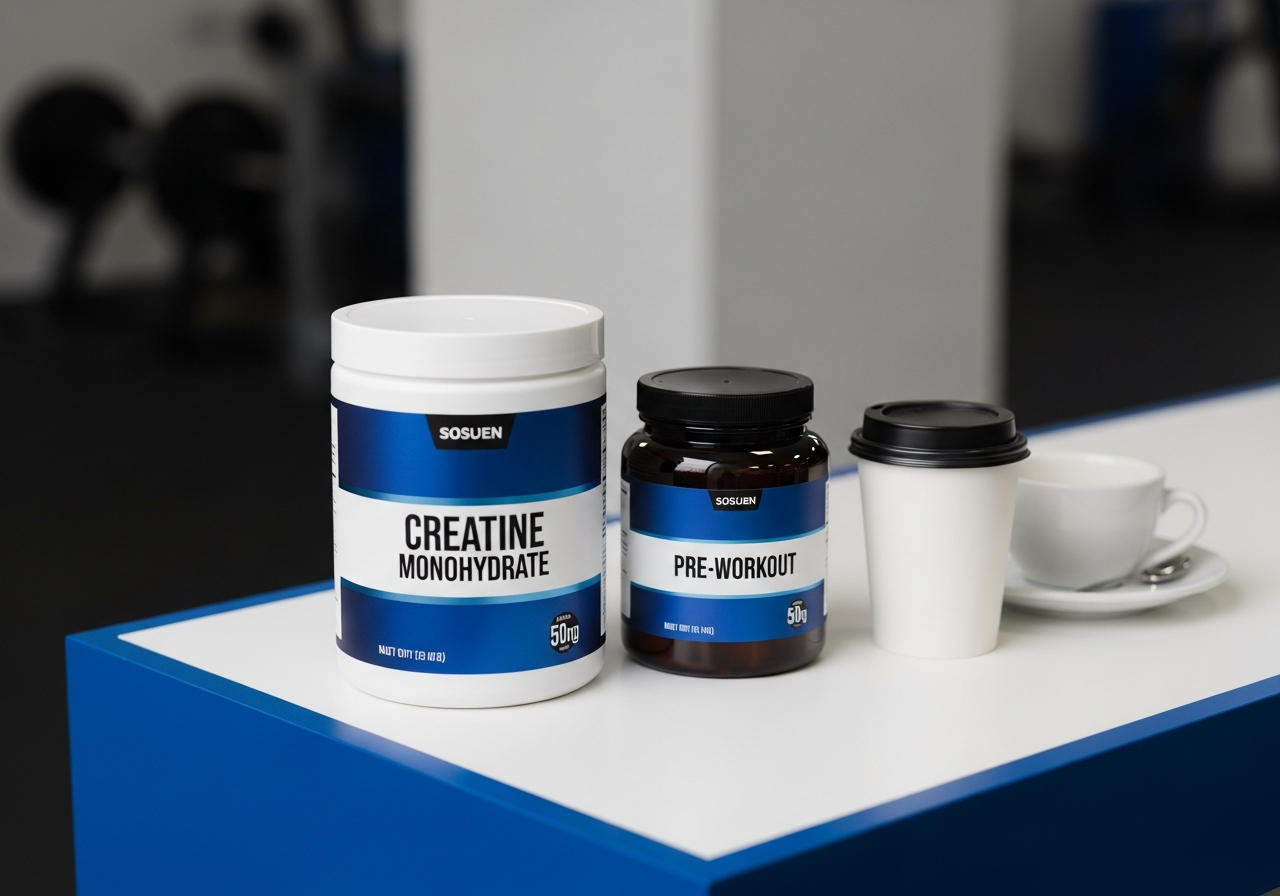
Most reports of “creatine heart palpitations” are more likely to be confounded by other factors than caused by plain creatine monohydrate itself. The most common confounder is that many people say “creatine” when they actually mean a multi-ingredient pre-workout containing caffeine and other stimulants.
Palpitations are the sensation of feeling your heartbeat as pounding, fluttering, racing, or skipping. They can be harmless, but they can also signal something important. If palpitations began after starting a supplement, ask these questions in order:
- Was it pure creatine or a pre-workout? Many pre-workouts include caffeine, synephrine, yohimbine, or other ingredients more plausibly linked to a racing heartbeat.
- How much caffeine did you take that day? Coffee, energy drinks, and pre-workout can stack.
- Were you dehydrated, under-slept, or anxious? All can make palpitations more noticeable.
- Did you dry scoop? Dry scooping can worsen throat irritation, anxiety, and dosing errors.
- Did you already have occasional palpitations? A new supplement often gets blamed for an old problem.
Creatine itself is not a central nervous system stimulant, so its mechanism does not fit the classic “jittery heart” pattern. It increases intramuscular creatine stores over days to weeks; it does not produce an acute stimulant hit. That is why timeline matters. If your heart feels racy 20 minutes after a scoop, look first at caffeine, flavour systems, sweeteners, a fasted state, panic, or the rest of the formula.
Here is a practical troubleshooting rule. If you are concerned, stop the entire supplement stack, not just the creatine blend. Then, if your clinician says it is appropriate, reintroduce only plain unflavoured creatine monohydrate at 3 g daily with water and no stimulants. If the symptom disappears without the pre-workout, the blend was the more likely issue.
Use our creatine vs. pre-workout comparison if you are unsure what product category you have. Also avoid assuming all heartbeat sensations are benign. If palpitations are new, frequent, prolonged, associated with dizziness, chest pain, or shortness of breath, seek medical care promptly.
Creatine, heart rate, cholesterol, and blood pressure: separating three different questions
Creatine and heart health gets confusing because people often bundle heart rate, cholesterol, and blood pressure into one question even though they are different physiological issues. The clean answer is that creatine monohydrate is not established to directly raise heart rate, is not a cholesterol-lowering supplement, and should not be judged on blood pressure claims without looking at that evidence separately.
Heart rate: plain creatine does not behave like a stimulant. It does not have the typical pharmacology of ingredients that acutely increase pulse or make you feel wired. If you notice a faster heartbeat, first inspect total stimulant intake, hydration, stress, illness, and training load.
Cholesterol: searches for “creatine and cholesterol” often come from people looking for a hidden downside or an unexpected benefit. At this point, creatine should not be used with the expectation that it will meaningfully improve cholesterol in the general population. That is not one of its established evidence-based uses.
Blood pressure: blood pressure deserves its own article because it is a common but separate concern. Current mainstream guidance does not support a blanket statement that creatine raises blood pressure in healthy users, but the answer depends on context, co-ingredients, fluid changes, and underlying health. Read does creatine raise blood pressure? for the full evidence review.
A useful rule for beginners is this: if you want to assess creatine fairly, isolate it. Use plain creatine monohydrate, not a “performance matrix.” Track your resting heart rate, how you feel during workouts, and any symptoms. If you want to be especially methodical, note your morning pulse for two weeks before starting and two weeks after starting. Most people will see no meaningful stimulant-like change.
Finally, remember that symptoms and biomarkers are not the same thing. Feeling your heart pound after training can happen because the training was hard. That sensation alone does not prove creatine had a harmful cardiovascular effect.
How to take creatine with heart-health caution in mind: a simple step-by-step plan
If your goal is to use creatine conservatively with heart-health caution in mind, the safest practical approach is to use plain creatine monohydrate, standard doses, and no stimulant stack at first. This lets you judge tolerance without muddying the picture.
- Choose the right product. Buy a single-ingredient creatine monohydrate powder. In Canada, look for a Natural Product Number, or NPN, on the label and ideally third-party testing. Our best creatine rankings, brand reviews, and product catalog can help you compare options.
- Start with 3 g daily. A conservative start is 3 g once daily with water or a meal. This is enough to build stores over time without requiring a loading phase.
- Skip loading if you are cautious. Loading typically means about 20 g daily split into 4 doses for 5-7 days. It works, but it is optional. A slower start is simpler for people worried about side effects.
- Take it consistently. Creatine works by saturation, meaning tissue stores gradually rise when you take it daily. Consistency matters more than exact timing.
- Keep the rest of the routine boring. Avoid introducing a new pre-workout, fat burner, or high-caffeine routine at the same time.
- Hydrate normally. You do not need absurd amounts of water, but do not underdrink. If hydration is confusing, read how much water should you drink with creatine?
- Track symptoms. Note resting pulse, training energy, digestion, and any unusual sensations for the first two to four weeks.
What should you expect? In week 1, probably nothing dramatic beyond perhaps fuller muscles if you load. By weeks 2-4, you may notice slightly better repeated-effort performance in the gym. What you should not expect from pure creatine is a stimulant rush, pounding pulse, or immediate buzz.
If you want a personalised estimate, use our creatine dosage calculator and see how to take creatine for a more detailed routine.
Dosing specifics by body weight and goal, with realistic timelines and what to expect
For most adults, the right creatine dose for both effectiveness and conservative safety is 3-5 g per day, while an optional loading phase is about 20 g per day split into 4 doses for 5-7 days. Those are the standard evidence-based numbers worth remembering.
The reason dose matters in a heart-health article is simple: when people take far more than necessary, stack products, or use scoop sizes carelessly, they create noise that gets blamed on creatine. Staying within standard dosing keeps the signal clean.
| Body weight / goal | Practical daily dose | Best for | What to expect |
|---|---|---|---|
| Under 60 kg, general fitness | 3 g/day | Beginners, cautious users | Gradual saturation over several weeks |
| 60-90 kg, general fitness or strength | 3-5 g/day | Most adults | Performance benefits typically noticed within weeks |
| Over 90 kg or larger lean athletes | 5 g/day | Bigger lifters, team-sport athletes | Standard maintenance once saturated |
| Rapid saturation wanted | 20 g/day for 5-7 days, then 3-5 g/day | People who want faster uptake | Quicker fullness and earlier performance effects |
Here is the week-by-week reality:
- With loading: muscle creatine stores rise quickly, often within a week.
- Without loading: full saturation generally takes longer, often several weeks of daily use.
- Visible signs it is working: a small increase in scale weight from intracellular water, improved repeated sprint or lifting performance, slightly better training volume.
- Signs it is not “working” yet: you miss doses, your product underdoses, or you expected a stimulant-like feeling.
Body weight is a practical guide, not a reason to mega-dose. More is not better once stores are saturated. For a deeper dosing breakdown, read how much creatine per day, maintenance dosing, and how long creatine takes to work.
Who should talk to a doctor before using creatine, and who can usually use it normally
Most healthy adults can usually use standard-dose creatine monohydrate without specific heart-related concern, but some groups should talk to a doctor first because their baseline risk is different. This is especially true for anyone with an existing heart condition or unexplained cardiovascular symptoms.
Speak with a clinician before starting creatine if you have:
- Known arrhythmia, atrial fibrillation, or a history of significant palpitations
- Heart failure, cardiomyopathy, prior heart attack, or structural heart disease
- Uncontrolled high blood pressure
- Chest pain, fainting, severe shortness of breath, or exercise intolerance not yet evaluated
- Kidney disease or abnormal kidney labs
- Use of diuretics, rhythm medications, blood-pressure medications, or other prescriptions where fluid status and lab interpretation matter
Who can usually use creatine more normally? Healthy beginners, recreational gym-goers, athletes, women, men, and many older adults can often use 3-5 g daily of plain creatine monohydrate as part of a straightforward training routine. Women and older adults are often underrepresented in casual supplement discussions, but standard creatine guidance usually applies to them as well. For more on those groups, see creatine for women and creatine for older adults.
One underappreciated issue is lab interpretation. Creatine use can raise serum creatinine, which is a breakdown product often used as a kidney marker, without meaning creatine has damaged the kidneys. That matters because people with heart disease are more likely to get regular blood work. If you use creatine, tell your clinician so your labs are interpreted in context. Our guide on creatine vs. creatinine explains the confusion.
The safest mindset is not fear, but matching your supplement routine to your health status. Healthy people can usually keep it simple. Medically complex people should not self-diagnose around heart symptoms or supplement interactions.
Buying creatine in Canada for safety: what to look for on the label and what to avoid
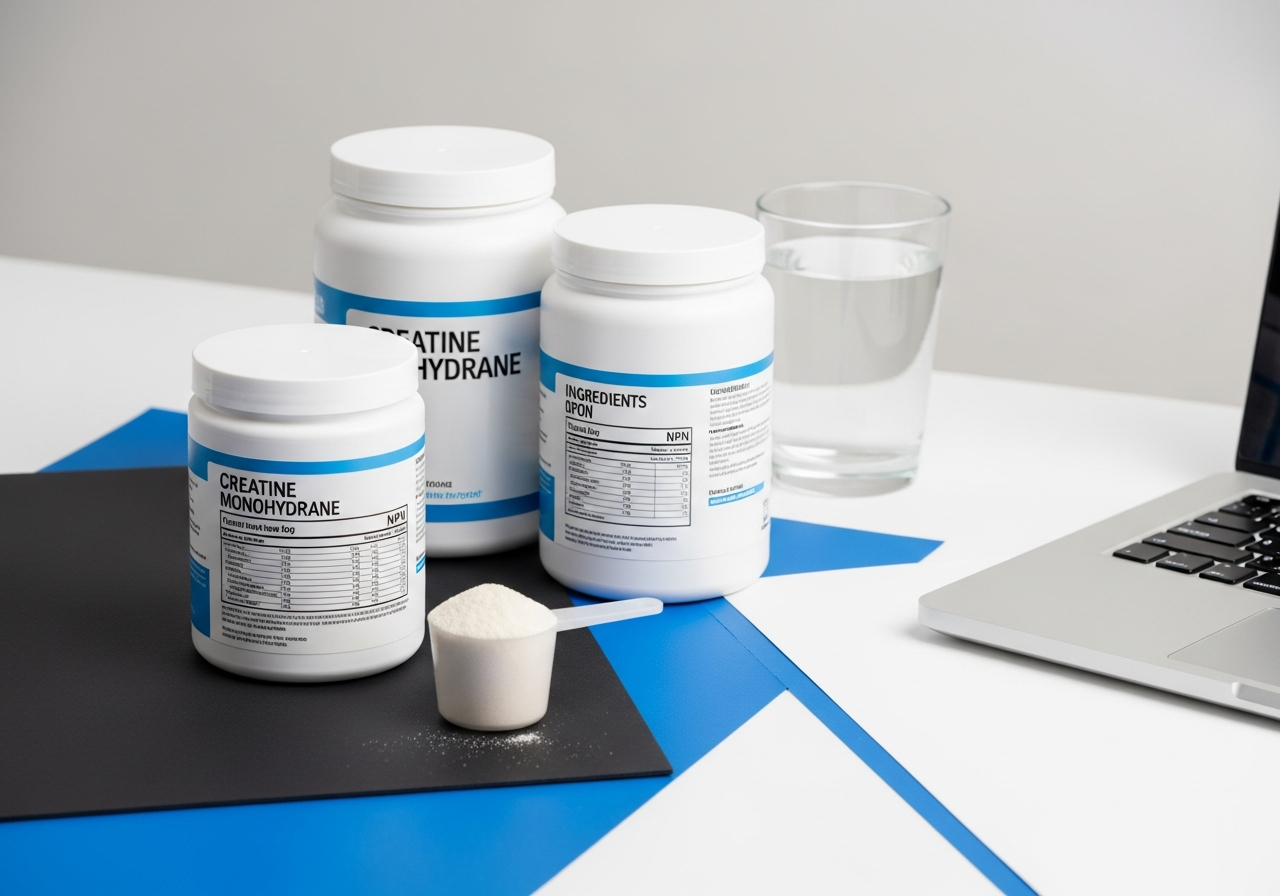
If heart-health reassurance matters to you, the best buying move in Canada is to choose a single-ingredient creatine monohydrate product with clear labelling rather than a flashy blend. Product quality does not change creatine’s basic physiology, but it does reduce the chance that hidden ingredients or poor labelling are driving symptoms.
In Canada, start with the label:
- NPN: a Natural Product Number indicates the product is licensed by Health Canada as a natural health product.
- Ingredient list: ideally just creatine monohydrate, or creatine monohydrate plus minimal flavouring if flavoured.
- Dose transparency: grams per scoop should be obvious.
- Third-party testing: this adds confidence around identity and contaminants.
Avoid products that blur the line between creatine and pre-workout. If the front label says “energy,” “thermogenic,” “pump matrix,” or “extreme focus,” assume you need to inspect the stimulant profile before blaming creatine for any cardiovascular sensation.
Here is a practical comparison:
| Product type | Heart-health caution level | Why | Best use case |
|---|---|---|---|
| Plain creatine monohydrate | Lowest | Single ingredient, easiest to assess | Most users |
| Flavoured creatine monohydrate | Low | Usually still simple, but check extras | People who want convenience |
| Creatine + electrolytes | Moderate | Still usually manageable, but read full label | Heavy sweaters, long sessions |
| Creatine pre-workout blend | Highest | Stimulants and multiple actives confound symptoms | Only if you understand every ingredient |
Market-research and industry estimates show creatine has moved far beyond niche bodybuilding into mainstream fitness, active aging, and women’s wellness conversations. That growth makes label literacy more important, not less, because more formats now compete for your attention. For quality-focused picks, compare our best creatine monohydrate in Canada, where to buy creatine in Canada, and Canadian supplement regulations guide.
Common myths and mistakes: what creatine does not do to your cardiovascular system
Many worries about creatine and cardiovascular health come from mixing up myths, side effects from other products, and normal exercise sensations. The fastest way to think clearly is to separate what creatine actually does from what people often assume it does.
- Myth: Creatine is a stimulant. False. Creatine supports phosphocreatine storage and ATP regeneration; it does not act like caffeine.
- Myth: If your heart races after a scoop, creatine caused it. Not necessarily. Timing, caffeine, anxiety, dehydration, and blended products are more plausible causes.
- Myth: More creatine gives more benefit. False after saturation. Once stores are full, extra intake mainly adds cost and potentially digestive issues.
- Myth: You need to cycle creatine to protect your heart. There is no standard evidence-based reason to cycle creatine for heart safety in healthy adults.
- Myth: Creatine and cholesterol are strongly linked. Current mainstream evidence does not support using creatine as a cholesterol tool in the general population.
- Myth: Water retention from creatine means cardiovascular strain. Creatine’s usual water effect is primarily intracellular, meaning inside muscle cells, not a sign that your heart is being harmed.
The most common mistakes are practical:
- Buying a stimulant blend and calling it “creatine”
- Taking random scoop sizes without checking grams
- Starting creatine during a stressful, sleep-deprived, high-caffeine week
- Ignoring symptoms that deserve medical care
- Confusing temporary water weight with a dangerous reaction
If you want a cleaner experience, keep your variables controlled. Use one product, one dose, one routine. If something feels off, stop and simplify before jumping to conclusions. Our pages on creatine myths vs. facts, whether you need to cycle creatine, and dry scooping creatine go deeper on these misconceptions.
Where the research is going, and why heart-safety questions are rising as creatine goes mainstream
Heart-safety questions about creatine are rising partly because creatine is now a mainstream supplement category, not just a bodybuilding staple, while cardiac research interest remains a separate scientific discussion. That distinction matters: consumer popularity is not clinical proof, and early disease-focused research is not a self-treatment guide.
On the science side, researchers remain interested in creatine because the heart uses the creatine-phosphocreatine system as part of energy handling. In conditions such as heart failure, altered cardiac energetics have been studied for years. But this remains researcher territory. Healthy readers should not interpret mechanistic plausibility as permission to self-prescribe creatine for a heart condition.
On the market side, industry and market-research estimates indicate creatine is being adopted by broader groups, including women, older adults, hybrid athletes, and general wellness consumers. That broader reach naturally increases searches like “is creatine bad for your heart,” “creatine heart rate,” and “creatine cardiovascular.” In other words, the safety question is now mainstream because the user base is mainstream.
This trend creates two predictable problems. First, more first-time users encounter creatine inside all-in-one products, then misattribute stimulant effects to creatine. Second, more medically complex consumers are trying sports supplements without distinguishing between established sports-nutrition use and disease management. Both increase confusion.
The best modern guidance is conservative and clear:
- Use plain monohydrate if you want the most evidence-backed form.
- Do not use creatine as a treatment for heart disease.
- Do discuss it with your clinician if you have cardiovascular disease or take related medication.
- Do separate creatine from pre-workout in your thinking.
If you want the simplest evidence-backed form, read why monohydrate still wins and the best type of creatine. Those guides help keep your choice anchored to the form with the deepest safety and efficacy record.
Bottom line: how to think about creatine and heart health without fear or hype
The bottom line is that creatine monohydrate is not established to be harmful to heart health in healthy adults when used at standard doses. That is the direct answer most readers came for, and the current evidence supports saying it plainly.
Here is the practical version. If you are healthy, want to use creatine for performance or training, and choose a plain monohydrate product at 3-5 g daily, there is no strong evidence-based reason to expect cardiovascular harm from creatine itself. If you notice palpitations, a racing heartbeat, or jitters, your first suspicion should usually be a stimulant blend, stacked caffeine, dehydration, anxiety, or an underlying issue rather than pure creatine.
At the same time, this is not a “take it no matter what” message. If you have a heart condition, a history of arrhythmia, unexplained symptoms, kidney disease, or medications that affect cardiovascular function, it is worth having a clinician review your plan. That is simply good risk management.
If you want the safest next step today, do this:
- Buy plain creatine monohydrate from a reputable Canadian brand.
- Confirm the label clearly shows grams per serving and, ideally, an NPN.
- Take 3 g daily for the first week, then 3-5 g daily ongoing.
- Do not introduce stimulant pre-workouts at the same time.
- Track how you feel, and seek medical care for any true warning signs.
For the rest of your decision tree, the most relevant follow-up reads are is creatine safe?, creatine and blood pressure, who should not take creatine, and how much creatine per day.
Educational only: this article is not personal medical advice. Chest pain, fainting, severe shortness of breath, or persistent palpitations require prompt medical assessment.
Creatine and Heart Health: The Numbers That Matter
- 3-5 g/day Standard maintenance dose — Typical evidence-based daily amount for most adults using creatine monohydrate.
- 20 g/day Optional loading dose — Usually split into 4 doses for 5-7 days to saturate stores faster.
- 5-7 days Typical loading timeline — Rapid saturation approach; not required if you prefer a slower start.
- Several weeks No-loading saturation timeline — Daily 3-5 g use gradually raises muscle creatine stores without a loading phase.
Frequently Asked Questions
Is creatine bad for your heart?
No, creatine monohydrate is not established to be bad for your heart in healthy adults when used at standard doses. Current evidence supports its general safety in healthy users, while the main cautions apply to people with existing heart conditions, unexplained symptoms, or those using stimulant-heavy supplement blends.
Can creatine cause heart palpitations?
Pure creatine monohydrate is not known to commonly cause heart palpitations, and many anecdotal reports are likely confounded by pre-workouts, caffeine, anxiety, dehydration, or poor sleep. If palpitations are new, persistent, or paired with dizziness or chest pain, stop the supplement and get medical advice.
Does creatine raise heart rate?
Creatine is not established to directly raise resting heart rate like a stimulant. If your heart rate feels elevated after taking a product labelled as creatine, check whether it also contains caffeine or other stimulants before assuming creatine itself is responsible.
Is creatine safe for someone with a heart condition?
Creatine may not be appropriate to start without medical guidance if you have a heart condition, arrhythmia history, heart failure, or unexplained cardiovascular symptoms. The issue is not proven creatine toxicity, but the need to assess your individual risk, medications, and lab interpretation with a clinician.
Does creatine affect cholesterol?
Creatine is not an established cholesterol-lowering supplement, and current mainstream evidence does not support taking it to improve lipid markers in the general population. It is better understood as a sports-nutrition supplement that supports high-intensity performance and training capacity.
Can creatine cause arrhythmia?
There is no established evidence that standard-dose plain creatine monohydrate commonly causes arrhythmia in healthy adults. Anyone with known rhythm disorders, or symptoms such as prolonged palpitations, fainting, or chest discomfort, should treat that as a medical question rather than a supplement experiment.
Should I stop creatine if I feel my heart racing?
Yes, you should stop the product and simplify the situation if you feel your heart racing after taking a supplement. Then check whether the product included stimulants, review your caffeine intake and hydration, and seek medical evaluation if symptoms are significant, persistent, or associated with other warning signs.
Is creatine cardiovascularly safe compared with pre-workout?
Plain creatine monohydrate is usually easier to assess from a cardiovascular perspective because it is not a stimulant and works through saturation rather than an acute buzz. Pre-workouts are more likely to create racing-heart or jittery sensations because they often contain caffeine and multiple active ingredients.
Can older adults take creatine if they care about heart health?
Many healthy older adults can use standard-dose creatine monohydrate, but they should be more deliberate if they have cardiovascular disease, kidney disease, or multiple medications. A plain product, a standard dose, and a clinician check-in are sensible if there is any medical complexity.
What is the safest way to start creatine if I am worried about my heart?
The safest practical way is to use plain creatine monohydrate at 3 g daily, avoid loading at first, and do not combine it with pre-workout stimulants. Track your resting pulse and symptoms for a couple of weeks, and talk to a clinician first if you have any relevant medical history.