Dry Scooping Creatine: Is It Safe or Pointless?
By The Creatine Canada Research Team — Evidence-based supplement analysts
Yes, you can dry scoop creatine, but it is usually pointless and can be less comfortable and less safe than simply mixing it with water. Dry scooping does not make creatine work faster or better, and it raises avoidable risks like coughing, throat irritation, choking, stomach upset, and taking the wrong dose.
Evidence-based · Cites 4 sources · Editorial standards
Key Takeaways
- Dry scooping creatine works only because you still swallow and absorb the creatine, not because the powder is taken dry.
- Mixing creatine monohydrate in water is the safer, easier, and usually better-tolerated option for almost everyone.
- Dry scooping does not improve absorption, speed up results, or create a special pre-workout effect.
- A standard maintenance dose is 3-5 g daily; loading is optional at 20 g daily split into 4 doses for 5-7 days.
- If dry scooping makes you cough, hurts your throat, or upsets your stomach, stop doing it and switch to dissolved creatine.
- Micronized creatine mixes more easily, but plain creatine monohydrate remains the best-studied and most cost-effective form.
- In Canada, look for clear dosing, an NPN when applicable, and preferably third-party testing when choosing a creatine product.
Can you dry scoop creatine? Yes — but it is mostly unnecessary and sometimes a bad idea
Yes, you can dry scoop creatine, but there is no meaningful advantage to doing it dry instead of mixing it into a drink first. If you are asking, can I dry scoop creatine, the practical answer is that you physically can, yet for most people it is less comfortable, less precise, and no more effective than taking it with water.
Creatine is not a stimulant, so it does not produce an immediate 'hit' the way some people expect from pre-workout culture. Creatine works by gradually increasing your muscle phosphocreatine stores, where phosphocreatine is the stored form that helps regenerate ATP, the cell's immediate energy currency, during short, intense efforts. That means the key factor is regular daily intake over time, not whether the powder touched your tongue dry or was dissolved in a glass.
If you are wondering is dry scooping creatine bad or is it okay to dry scoop creatine, the best evidence-based answer is this: dry scooping is not inherently toxic, but it adds avoidable downsides without adding benefits. Common problems include:
- Coughing or inhaling powder, especially with fine micronized products
- Throat irritation from dry powder sticking to the mouth and throat
- Choking risk if you try to swallow a heaped scoop too fast
- Stomach upset if a concentrated dose lands in the gut without enough fluid
- Dosing errors if the scoop is packed, heaped, or not level
The 2017 ISSN position stand concluded that creatine monohydrate is the most effective ergogenic nutritional supplement currently available for increasing high-intensity exercise capacity and lean mass gains during training, but that evidence is about creatine itself, not dry scooping as a delivery method. The method that makes adherence easiest and side effects least likely is usually best.
For most people, the simplest rule is: take 3-5 g of creatine monohydrate daily with water and be consistent. If you want a full beginner walkthrough, see how to take creatine, and if you need a personalised amount, use our creatine dosage calculator.
Does dry scooping creatine have the same effect? Usually yes — but not because dry scooping is special
Dry scooping creatine usually has the same eventual effect as mixed creatine if you swallow the full dose and keep taking it daily. If you are searching does dry scooping creatine work or does dry scooping creatine have the same effect, the answer is yes in principle, because creatine's benefits come from muscle saturation over days to weeks, not from a special absorption trick.
Here is the important nuance: dry scooping can become effectively less effective in real life if it causes you to lose part of the dose, mis-measure the powder, cough some out, or skip doses because the experience is unpleasant. So if you ask does dry scooping creatine make it less effective, the physiological answer is no clear advantage or disadvantage once swallowed, but the practical answer is that it can reduce consistency and comfort, which are what actually drive results.
Creatine absorption does not require it to be held in the mouth, taken under the tongue, or slammed immediately before training. After you ingest it, your digestive tract absorbs the creatine, your bloodstream transports it, and over time your muscles increase total creatine stores. According to Antonio et al. (2021) in JISSN, many creatine myths persist despite strong evidence for simple daily monohydrate use.
What determines whether creatine 'works' for you?
- Enough total daily dose: usually 3-5 g per day
- Enough time: often 2-4 weeks without loading, or about 1 week with loading
- Training match: biggest performance benefits show up in repeated high-intensity exercise
- Baseline stores: people with lower starting creatine stores, including many vegetarians, may notice a bigger change
In other words, the body cares far more about how much creatine you absorb over time than how theatrically you take it. If your goal is better strength, power, training volume, or muscle gain, mixing the powder is usually the smart play. For more on the mechanism and what to expect, read what creatine is and what it does and how long creatine takes to work.
Why the powder format barely matters: creatine works through saturation, not an instant boost
Creatine works by saturating muscle creatine stores over time, so whether you take it dry or dissolved matters far less than taking the right amount consistently. This is the central reason dry scooping creatine is mostly pointless.
About 95% of the body's creatine is stored in skeletal muscle, where it helps recycle ATP during short bursts of hard effort such as sprinting, jumping, lifting, and repeated intervals. ATP, or adenosine triphosphate, is the molecule your cells use for immediate energy. When ATP loses a phosphate, it becomes ADP and energy is released; phosphocreatine donates a phosphate to help regenerate ATP quickly. More stored creatine means a better buffer for repeated high-output work.
That mechanism explains why creatine does not need to 'hit' you in the moment. Unlike caffeine, creatine is not mainly about acute stimulation. It is more like topping up a tank. Once muscle stores are meaningfully elevated, many users notice better training quality: an extra rep, slightly better repeated sprint performance, or more total volume across hard sessions. Over weeks and months, those small improvements can support greater gains in strength and lean mass.
The ISSN position stand by Kreider et al. (2017) and the International Olympic Committee consensus on dietary supplements both place creatine among the more evidence-backed supplements for high-intensity performance. None of that evidence suggests dry scooping offers a superior pathway.
What can matter slightly is solubility and tolerance. Creatine monohydrate is reasonably absorbed whether or not it is fully dissolved, but many people find it easier on the stomach when mixed well in enough fluid. Warm water can improve dissolving, and micronized powders often suspend more smoothly. If you routinely get grittiness, clumping, or sediment, that is a mixing issue rather than proof the creatine is ineffective.
The takeaway is straightforward: creatine works through tissue saturation and training support, not mouthfeel, ritual, or timing hype. If you want the best odds of sticking with it long enough to benefit, make it easy and boring. That usually means one measured daily dose in water, a shake, or another drink you already use.
Is dry scooping creatine bad for you? The real risks are throat irritation, coughing, choking, and stomach upset
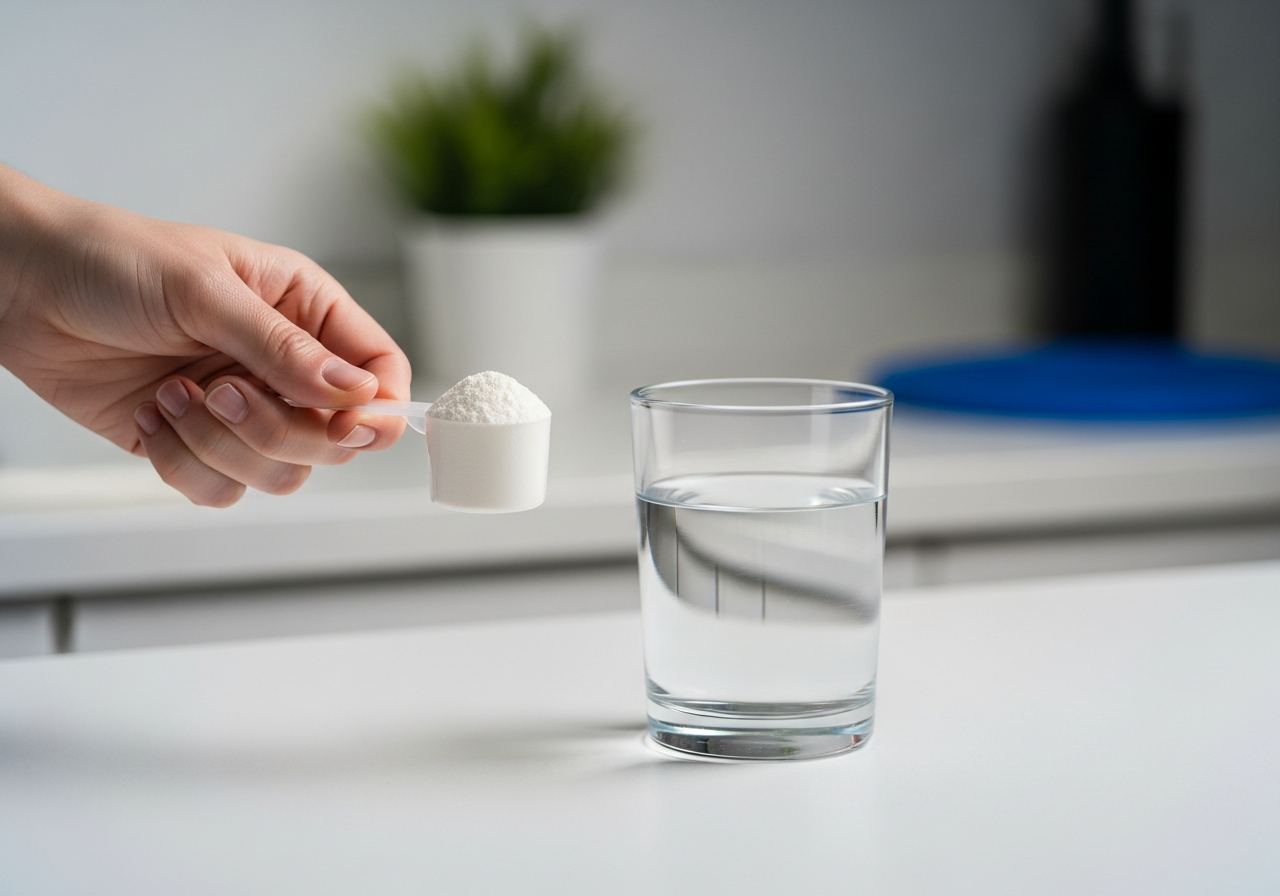
Dry scooping creatine is not usually dangerous in the way a toxic dose would be dangerous, but it does create avoidable safety and comfort risks. If you are asking is it bad to dry scoop creatine or can dry scooping creatine hurt your throat, the honest answer is yes, it can irritate your throat and trigger coughing, and for some people that alone is reason enough to stop.
Creatine powder is often very fine. When you dump a dry scoop into your mouth, some particles can stick to the tongue, palate, and throat while others can be inhaled accidentally. That can lead to:
- Burning or scratchy throat
- Coughing fits
- Temporary gagging
- Choking risk if swallowed too fast
- Chest discomfort from inhaled powder
People sometimes assume that because creatine is 'just a powder', there is no issue. But the problem is mechanical, not chemical. A dry bolus of powder is simply harder to swallow cleanly than a diluted drink. This matters even more if you have asthma, swallowing difficulties, reflux, a sensitive gag reflex, or you are trying to take a larger loading dose.
Stomach comfort is the other major issue. A concentrated dose of creatine without enough fluid may increase the chance of nausea, cramping, or loose stools in sensitive users, particularly with doses above 5 g at one time. This is one reason standard loading protocols split the daily 20 g into four smaller doses rather than one large serving. If digestion has already been an issue for you, read creatine digestive side effects explained.
Dry scooping is especially poor fit for beginners. New users often overpack the scoop, swallow awkwardly, then assume creatine 'doesn't agree with them' when the real problem was the delivery method. Switching to dissolved creatine fixes that for many people.
If you ever feel the powder catch in your throat, force a cough, or trigger nausea, that is your sign. You do not need to push through it. The safer move is to put the same dose into water, shake or stir, and drink it normally. For a broader review of side-effect questions, see is creatine safe.
The better alternative: exactly how to take creatine for results without dry scooping
The best way to take creatine is to measure the dose accurately, mix it in fluid, and take it every day. If you have been wondering are you supposed to dry scoop creatine or do you dry scoop creatine, the answer is no — you are not supposed to, and there is no best-practice guideline that recommends it.
Use this simple step-by-step method:
- Choose creatine monohydrate. It is the most studied and usually the best value. If you are shopping, compare options in our best creatine rankings and creatine brand reviews.
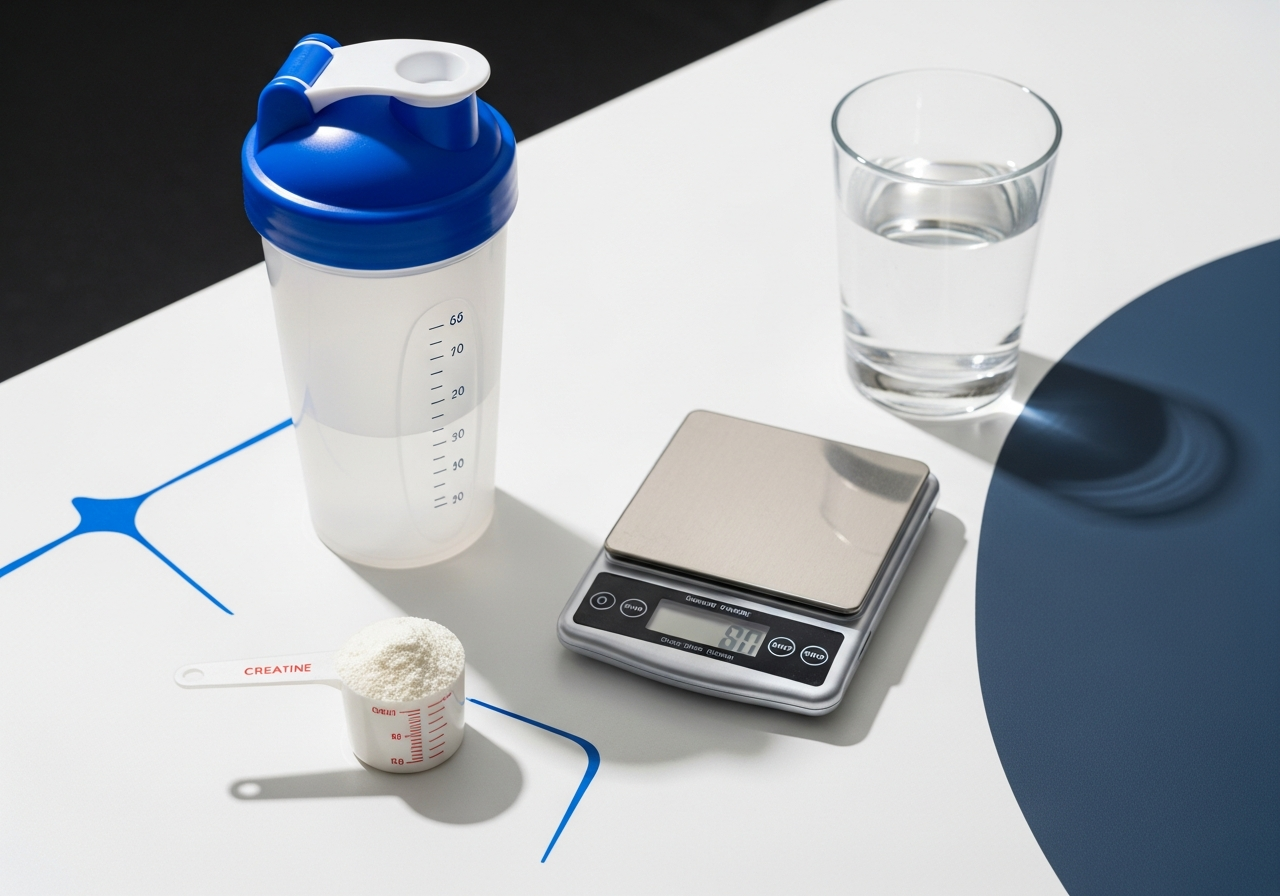
- Measure 3-5 g. A level scoop is common, but scoops vary, so check the label. If precision matters, use a small gram scale.
- Add it to 250-500 mL of water. More fluid can improve comfort, especially if you have had stomach issues.
- Stir or shake for 10-20 seconds. Micronized powder tends to disperse better. Warm water can help if your creatine settles.
- Drink it once daily. Take it with breakfast, post-workout, or any consistent time you will remember.
- Keep going daily. Rest days count. Saturation is maintained by consistency, not workout timing alone.
If you want loading for faster saturation, take 20 g per day split into four 5 g doses for 5-7 days, then continue with 3-5 g daily. If you do not load, expect roughly 3-4 weeks to reach similar saturation on a maintenance dose.
Good practical mixes include:
- Water
- A protein shake
- A smoothie
- Juice if you prefer the taste
- Pre- or post-workout drinks, provided the total formula still sits well
You do not need a fancy stack. The lowest-friction routine usually wins. Keep the tub next to something you already use each day, like your coffee mug, shaker bottle, or toothbrush cup. If you need help with dissolving or clumps, see how to mix creatine. If you want the complete beginner system, read creatine for beginners.
How much creatine to take instead of guessing: doses by body size, goal, and loading choice
The right creatine dose is usually 3-5 g daily for maintenance, with optional loading at 20 g daily split into 4 doses for 5-7 days. If you dry scoop, the biggest practical risk is not the powder itself but taking the wrong amount.
Most adults do well with a flat daily maintenance dose, but body size and training goal can guide the details. A larger athlete may choose the high end of the range, while a smaller recreational lifter may do perfectly well at 3 g daily. The evidence base strongly supports creatine monohydrate in these standard ranges.
| Body weight / goal | Simple daily dose | Optional loading | Notes |
|---|---|---|---|
| Smaller adult under about 60 kg | 3 g/day | 20 g/day split into 4 x 5 g for 5-7 days | 3 g is often enough if taken consistently |
| Most adults 60-90 kg | 3-5 g/day | 20 g/day split into 4 x 5 g for 5-7 days | 5 g/day is the common default |
| Larger adult over about 90 kg | 5 g/day | 20 g/day split into 4 x 5 g for 5-7 days | Some choose slightly above 5 g, but 5 g works well for most |
| General fitness / health habit | 3-5 g/day | Optional, not required | Prioritise convenience and adherence |
| Fastest route to saturation | 3-5 g/day after loading | Yes | Split doses reduce stomach upset |
If your goal is muscle gain, strength, sprint performance, repeated high-intensity intervals, or better training volume, these same core doses apply. Women, men, older adults, and athletes generally use similar daily dosing principles, though individual response can differ based on baseline stores, diet, and training type.
Do not confuse 'more' with 'better'. Taking a huge dry scoop does not supercharge results and is more likely to cause digestive issues. The smart approach is measured dosing plus consistency over weeks and months.
If you want a tailored estimate, use our creatine dosage calculator or read how much creatine per day and whether a loading phase is worth it.
When to take creatine, what to mix it with, and how much water you actually need
Creatine timing matters much less than daily consistency, so there is no special reason to dry scoop it before a workout. If you are thinking can you take creatine dry scoop pre-workout, you can, but there is no evidence that the dry format creates a better pre-training effect.
Most research and consensus guidance suggest that the exact time of day is a secondary detail. What matters most is hitting your daily dose often enough to keep muscle stores elevated. That means any of these can work well:
- With breakfast if mornings are easiest
- Post-workout if you already use a shaker
- With a meal if that helps routine and stomach comfort
- On rest days at the same general time for habit consistency
As for fluid, you do not need to flood yourself, but enough water improves comfort and makes the dose easier to swallow and disperse. A practical target is about 250-500 mL of fluid with a 3-5 g serving. If you are loading, using fluid with each split dose becomes even more helpful.
Good mixing options include plain water, protein shakes, smoothies, and many common sports drinks. Creatine monohydrate is stable enough in a typical mixed drink for normal use, though leaving it dissolved for very long periods is not ideal. If you want more detail, see when to take creatine, whether to take creatine with food, and how much water to drink with creatine.
One practical tip: if you dislike gritty sediment, stir, wait a minute, then stir again before drinking the last sip. Micronized powders often help here, but ordinary monohydrate still works perfectly well even if some powder settles.
So, do people dry scoop creatine? Yes, some do. Should they? Usually no. Timing does not rescue an awkward method. A consistent, mixed daily dose remains the better routine for performance, comfort, and long-term adherence.
Who can use creatine safely — and who should be especially careful with dry scooping
Creatine monohydrate is appropriate for many healthy adults, but dry scooping is a worse fit for certain groups because it adds unnecessary swallowing and tolerance issues. If you are asking can we dry scoop creatine, the more useful question is whether you should, and for many people the answer is still no.
Beginners should almost always skip dry scooping. New users benefit from a simple, repeatable habit with accurate dosing and minimal side effects. Mixing the powder helps both. Women can use the same evidence-based creatine doses as men, and there is nothing about female physiology that makes dry scooping preferable; if anything, comfort and adherence still dominate. For more, see creatine for women.
Older adults can also benefit from creatine, particularly when paired with resistance training, but swallowing dry powder is not a smart tradeoff if there is any concern about reflux, dry mouth, dental issues, or swallowing difficulty. A dissolved dose is simply easier and safer. Learn more in creatine for older adults.
Athletes in strength, sprint, team-sport, and repeated high-intensity settings are among the groups most likely to benefit from creatine overall, according to the IOC consensus. But competitive athletes should care about product quality as much as dose. In Canada, that means checking labels carefully, looking for an NPN, or Natural Product Number, when applicable, and preferring reputable brands with clear testing practices. You can browse options in our creatine product catalog.
People who should use extra caution with any creatine routine, and especially avoid dry scooping, include those with:
- Known swallowing difficulties
- Chronic reflux or frequent nausea
- Asthma or sensitivity to inhaled powders
- Prior stomach upset from supplements
- Medical conditions where a clinician has advised caution with supplements
Dry scooping is not a badge of seriousness. It is a delivery choice, and usually not the best one. The users most likely to benefit from creatine are also the users most likely to do well by making the habit sustainable, measured, and low-friction.
Common dry-scooping myths, debunked: faster absorption, better pumps, and other social-media nonsense
Most dry scooping myths collapse once you understand how creatine actually works. If you have seen claims that taking creatine dry makes it absorb faster, hit harder, or work like a pre-workout, those claims are not supported by mainstream creatine science.
Myth 1: Dry scooping makes creatine work faster.
No. Creatine's main benefits come from increasing muscle creatine stores over repeated daily use. A single dry scoop does not create a special fast lane to your muscles.
Myth 2: Dry scooping gives better workout energy.
No. Creatine is not a stimulant and does not reliably produce an immediate rush. If you feel a sudden effect, that is more likely expectation, caffeine from another product, or the excitement of the ritual itself.
Myth 3: Water dilutes creatine and makes it weaker.
No. Mixing creatine in water does not 'weaken' the dose. If you still consume 5 g, you still took 5 g.
Myth 4: If it tastes gritty, it is low quality or not working.
No. Creatine monohydrate often has some sediment, especially in cold water. Solubility and efficacy are not the same thing.
Myth 5: You need exotic forms if you do not like dry scooping.
No. Plain monohydrate is still the benchmark for evidence, value, and results. Alternative forms are often marketed harder than they are proven.
Myth 6: Dry scooping proves toughness.
No. Good supplementation is about consistent execution, not theatre.
Antonio et al. (2021) specifically addressed the fact that creatine is surrounded by persistent misconceptions despite decades of data. If you want a deeper roundup, visit creatine myths debunked and creatine myths vs. facts.
The strongest evidence-backed creatine claims remain refreshingly boring: creatine monohydrate, taken regularly at standard doses, can improve high-intensity exercise capacity and support greater training adaptations over time. Dry scooping adds noise, not magic.
Buying creatine in Canada: what matters more than the dry-scoop trend
If you are choosing a creatine product in Canada, focus on form, label clarity, and quality control rather than whether influencers dry scoop it. The best product for most people is still a straightforward creatine monohydrate powder from a reputable company.
Here is what to look for:
- Creatine monohydrate as the main ingredient
- Clear serving size in grams, ideally making it easy to hit 3-5 g daily
- Minimal unnecessary add-ins if you want flexibility and value
- Micronized texture if you care about easier mixing
- Third-party testing or strong quality transparency
- NPN on label when applicable in Canada, which indicates Health Canada product licensing for natural health products
Monohydrate remains the most studied and most cost-effective form. That is the key reason it continues to beat trendier formats in evidence-based buying guides. If you are comparing products, our best creatine rankings and best creatine monohydrate in Canada can help narrow the list.
Choose capsules or gummies only if convenience clearly outweighs cost and you are willing to check the serving size carefully. Many people underestimate how many capsules or gummies it takes to reach a full daily dose. Powder is still usually the simplest way to get an evidence-based amount.
If you are buying online, double-check:
- Seller legitimacy
- Sealed packaging
- Lot or batch information where available
- No proprietary-blend nonsense hiding the actual creatine amount
The ideal creatine purchase is boring in the best way: plain monohydrate, honest label, fair price, and a serving you will take every day. That matters far more than social media habits like dry scooping.
For a plain-language evidence summary, see Examine.com's creatine evidence summary and Mayo Clinic's creatine overview.
Bottom line: you can dry scoop creatine, but the smarter move is to mix it and move on
Yes, creatine can be dry scooped, but for most people it is a worse method than simply mixing it in water. That is the clearest answer to can you dry scoop creatine, can creatine be dry scooped, and can I dry scoop my creatine.
Dry scooping does not improve the core outcome that matters: raising muscle creatine stores over time. It does not make creatine act like a stimulant, it does not create superior absorption in any meaningful real-world way, and it does not beat a normal mixed serving for results. What it can do is make the experience less pleasant, increase the chance of coughing or throat irritation, and make dosing sloppier than it needs to be.
If your current routine is dry scooping and it causes zero issues, you are probably still getting the benefits so long as you swallow the full measured dose consistently. But that does not make it best practice. The better routine is still:
- Use creatine monohydrate
- Take 3-5 g daily
- Mix it with water or another drink
- Optionally load at 20 g daily split into 4 doses for 5-7 days
- Stay consistent for weeks, not just workouts
If your goal is better strength, power, training volume, recovery between repeated efforts, or support for lean mass gains with training, creatine remains one of the highest-value supplements you can buy. Just do not confuse a social-media delivery method with a performance advantage.
Start simple, dose accurately, and choose the method you can stick to every day. In practice, that usually means a scoop, a shaker, some water, and far less drama.
Dry Scooping Creatine: What Actually Matters
- 3-5 g/day Standard maintenance dose — The common evidence-based daily range for creatine monohydrate.
- 20 g/day Optional loading dose — Typically split into 4 doses of 5 g for 5-7 days.
- 5-7 days Typical loading phase length — Used to raise muscle creatine stores faster.
- 2-4 weeks Typical timeline without loading — How long many users need to approach saturation with daily maintenance dosing alone.
Frequently Asked Questions
Can you dry scoop creatine?
Yes, you can dry scoop creatine, but it is usually unnecessary and offers no proven advantage over mixing it first. As long as you swallow the full dose, the creatine can still work, but dry scooping is more likely to cause coughing, throat irritation, choking discomfort, or stomach upset than taking it with water.
Is dry scooping creatine bad?
Dry scooping creatine is not usually 'bad' in the sense of being toxic, but it is often a poor method. The main downsides are mechanical and practical: powder can be inhaled, catch in the throat, trigger coughing, or make you take an imprecise dose. Mixing it is the safer and easier default.
Does dry scooping creatine work the same as mixing it?
Yes, dry scooping creatine can work the same as mixing it if you swallow the same full dose consistently over time. The catch is that dry scooping is more likely to reduce real-world effectiveness by causing spillage, coughing, poor adherence, or stomach discomfort that makes you skip doses.
Can dry scooping creatine hurt your throat?
Yes, dry scooping creatine can hurt or irritate your throat because the fine powder can stick to the mouth and throat or be partly inhaled. A scratchy feeling, coughing, or gagging is common enough that many people are better off dissolving it in water instead.
Are you supposed to dry scoop creatine?
No, you are not supposed to dry scoop creatine, and no mainstream creatine guideline recommends it as the preferred method. Best practice is simply to take an accurate daily dose of creatine monohydrate in a drink so it is easier to swallow, easier to tolerate, and easier to repeat consistently.
Is it okay to dry scoop creatine before a workout?
It is okay in the sense that some people do it, but there is no special pre-workout advantage to taking creatine dry. Creatine is not mainly an acute-performance stimulant; it works by building up muscle stores over time, so pre-workout dry scooping is mostly ritual rather than science.
Does dry scooping creatine make it less effective?
Dry scooping does not appear to make creatine inherently less effective once the full dose is swallowed and absorbed. However, it can become less effective in practice if it leads to inaccurate dosing, powder loss, poor stomach comfort, or missed days, which are the habits that actually determine results.
Can I dry scoop my creatine with no water?
You can dry scoop your creatine without mixing it first, but you should still drink water right away. Taking dry powder with no follow-up fluid increases the chance that it will stick in your throat, trigger coughing, or sit heavily in your stomach.
Do people dry scoop creatine because it absorbs faster?
Many people assume that, but there is no good evidence that dry scooping creatine produces a meaningfully faster or better absorption outcome. The benefits of creatine come from reaching and maintaining saturated muscle stores, which depends on daily intake over time, not on a special dry delivery effect.
What is the best way to take creatine instead of dry scooping?
The best way to take creatine is to measure 3-5 g of creatine monohydrate, mix it into water or another drink, and take it every day. That method improves comfort, reduces throat and coughing issues, and makes it easier to be consistent enough for creatine to actually work.