Does Creatine Make You Look Bigger? Water Weight vs. Real Muscle Explained
By The Creatine Canada Research Team — Evidence-based supplement analysts
Yes—creatine can make you look a bit bigger, but usually in a good way: fuller muscles from extra water stored inside muscle cells first, then potentially more real muscle over time if you train properly. It does not directly make you look fatter, though some people notice temporary puffiness or mild bloating if they load too aggressively or use poor dosing habits.
Evidence-based · Cites 4 sources · Editorial standards
Key Takeaways
- Creatine usually makes muscles look fuller, not fatter, because it increases water inside muscle cells.
- Most visible changes happen in the first 1-3 weeks, especially if you use a loading phase.
- A standard maintenance dose is 3-5 g of creatine monohydrate daily; loading is optional.
- If creatine makes you look puffy, the fix is often smaller doses, better hydration, and skipping loading.
- Creatine does not cause body fat gain by itself because it contains no calories.
- The most reliable form is creatine monohydrate; fancy forms have not outperformed it consistently.
- If appearance matters most, judge creatine by gym performance, muscle fullness, and waist measurements—not scale weight alone.
Does creatine make you look bigger? Yes—but the first change is muscle fullness, not fat
Yes, creatine can make you look bigger, but the first visible change is usually fuller-looking muscles from extra water stored inside muscle cells, not body fat gain. That distinction matters because many people worry that creatine makes them look soft, puffy, or overweight when the typical early effect is actually a denser, more filled-out appearance.
Creatine works by increasing your muscles’ stores of phosphocreatine, a high-energy compound that helps regenerate ATP, the immediate fuel used for short, hard efforts like lifting, sprinting, and jumping. When muscle creatine stores rise, water follows into the muscle cell. That cell volumization can make shoulders, arms, chest, glutes, and quads look a little rounder and more “on” even before any meaningful new muscle tissue has been built.
That is why a creatine before-and-after look can change fairly quickly. In the first days to weeks, the most common appearance change is not dramatic mass gain but a subtle increase in scale weight and visible muscle fullness. Over the following weeks and months, if creatine helps you train harder, recover better between repeated high-intensity efforts, and accumulate more quality volume, you may also build more actual lean mass. The 2017 ISSN position stand concluded that creatine monohydrate is the most effective ergogenic nutritional supplement currently available for increasing high-intensity exercise capacity and lean body mass.
If you are asking, “Does creatine change your appearance?”, the practical answer is yes, but usually in two stages:
- Short term: fuller muscles and a modest increase in body weight from intracellular water.
- Long term: potentially more real muscle if your training and nutrition are in place.
If you are asking, “Will creatine make me look fat?”, the answer is usually no. Creatine contains no calories, so it does not directly add body fat. However, the scale can rise, and a small minority of users report temporary puffiness, especially if they do a fast loading phase or already retain water easily. If that is a concern, using a simple daily dose without loading is often the best approach. For a broader foundation, see what creatine is and what it does and our creatine myths debunked guide.
Water weight vs. real muscle: what your mirror is actually showing
When creatine makes you look bigger, the early visual change is mostly water weight inside muscle, while later changes can include real muscle gain from better training performance. This is the key to understanding creatine water weight appearance without panicking over the scale.
“Water weight” sounds negative, but with creatine it is usually not the same as the under-skin, soft, undefined look people fear. The water associated with creatine is primarily intracellular, meaning it is drawn into muscle cells. Intracellular water tends to support a firmer, fuller appearance. By contrast, the “puffy” or “bloated” look people complain about is more often related to digestive discomfort, large single doses, sodium swings, menstrual-cycle fluid shifts, or simply interpreting any scale increase as fat gain.
Real muscle is different. Real muscle gain means adding contractile tissue over time through progressive resistance training, adequate protein, sufficient total calories for your goal, and recovery. Creatine helps indirectly by improving repeated high-intensity performance, which can let you get more quality reps, maintain bar speed better, and sustain training output over weeks and months. That improved training stimulus is what can drive actual hypertrophy.
A practical way to think about creatine visual changes is this:
- Days 3-10 with loading: you may notice a faster jump in body weight and a slightly fuller look.
- Weeks 2-4 without loading: similar fullness can appear more gradually.
- Weeks 4-12: performance benefits can compound into better training and, for many people, more lean mass.
Creatine does not rearrange where your body stores fat, and it does not selectively make your stomach bigger. If your midsection looks softer while taking creatine, it is more likely due to food volume, digestion, a calorie surplus, or temporary water shifts rather than the creatine somehow turning into belly fat. If scale changes are stressing you out, compare:
- waist measurement
- gym logbook performance
- progress photos under the same lighting
- how your shirts, sleeves, and waist fit
For a deeper breakdown of scale changes, see does creatine make you gain weight. If you specifically feel soft, distended, or uncomfortable, our guide on does creatine cause bloating is the next stop.
Why creatine changes your appearance: the mechanism in plain English
Creatine changes your appearance because it increases muscle creatine stores, which pulls water into muscle cells and helps you produce energy faster during hard training. That one-two effect explains both the near-term “fuller” look and the longer-term potential for more muscle.
Your body stores creatine mainly in skeletal muscle, where a portion is kept as phosphocreatine, a rapidly available phosphate donor used to regenerate ATP. ATP, or adenosine triphosphate, is the immediate energy currency your muscle burns during explosive work. During a heavy set of squats or a 10-second sprint, ATP gets used quickly. Phosphocreatine helps restore it fast enough to maintain performance for a little longer or recover a little better between bouts.
Supplementing with creatine monohydrate raises total intramuscular creatine stores over time. Two appearance-related things can follow:
- Cell volumization: more creatine inside muscle increases osmotic pull, so water shifts into the muscle cell.
- Training support: better repeated-effort capacity can help you perform more high-quality training over time.
That first effect is why creatine can make you look bigger quickly. That second effect is why creatine can eventually help you actually become bigger if you are lifting and eating appropriately. The 2021 JISSN review on common questions and misconceptions notes that many fears around water retention are overstated and that creatine’s effects are often misunderstood.
Importantly, creatine is not a steroid, does not directly spike muscle-building hormones to unnatural levels, and does not create muscle out of nowhere. It is better understood as an energy and hydration support compound for muscle tissue. That is why the visual effect is usually subtle-to-moderate, not overnight transformation.
Some people respond more strongly than others. People with lower baseline creatine stores, including many vegetarians and vegans, may notice a bigger change because they have more room to increase muscle creatine. Bigger muscles also simply have more space to store creatine and water, so trained lifters sometimes notice more obvious fullness than beginners. If you want the basics before choosing a protocol, see creatine for beginners and how muscle saturation works.
How fast will you look different on creatine? A realistic week-by-week timeline
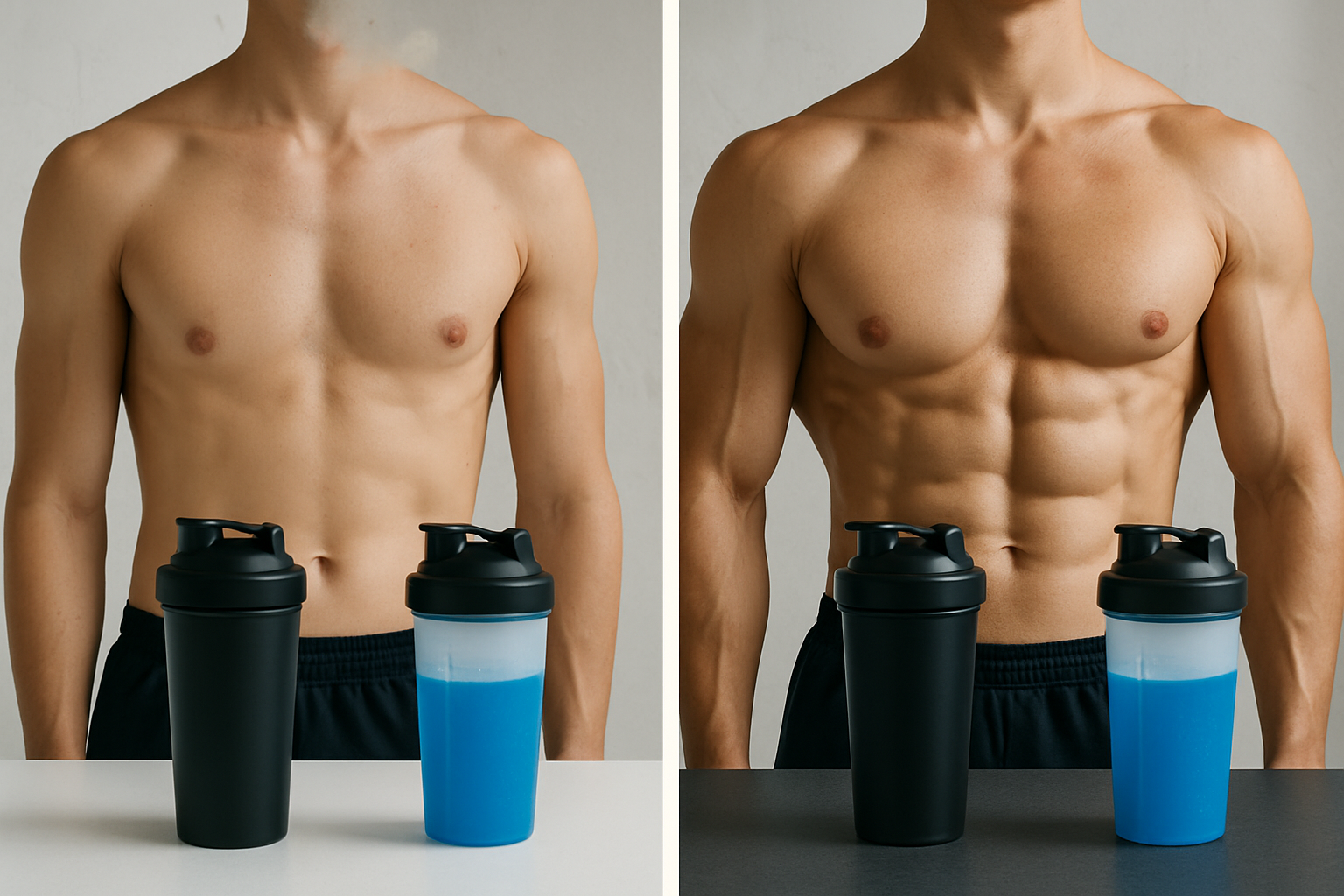
You can look slightly different on creatine within a few days if you load, or within 2-4 weeks if you take a steady daily dose without loading. The speed of change depends more on how fast you saturate muscle creatine stores than on the time of day you take it.
Here is the realistic timeline most people can expect:
- Days 1-3: often no obvious visual change yet, especially without loading.
- Days 4-7 with loading: some people notice a modest scale increase and fuller muscles, particularly in arms, shoulders, and legs.
- Weeks 2-4 with 3-5 g/day: muscle fullness becomes more noticeable as stores approach saturation.
- Weeks 4-8: workout quality may improve enough that pump, strength, and training volume start affecting how you look.
- Weeks 8-12: if training and diet are good, this is where real body-composition changes become more credible.
If you are searching for a “creatine before and after look,” remember that most dramatic online transformations combine creatine with a new training phase, more total calories, better sleep, and favourable lighting. Creatine is effective, but it is not magic. The best evidence supports modest, meaningful performance and lean-mass benefits rather than movie-montage transformations.
How do you tell if it is working visually?
- Your muscles look a bit rounder or denser at the same body fat level.
- Your body weight rises slightly without your waist expanding much.
- Your gym performance improves on repeated efforts.
- Your “flat” days become less common.
If nothing changes after a month, the issue is usually one of five things: you are underdosing, missing days, not training hard enough, expecting too much from mirror changes alone, or you were already near full creatine stores. A so-called “non-responder” may still benefit, just less obviously. See how long creatine takes to work and why creatine might not seem to be working if you want a deeper troubleshooting framework.
Timing matters far less than consistency. Taking creatine every day is what saturates muscle; taking it at the perfect minute does not. If timing is on your mind, our guide on when to take creatine covers the evidence.
The best creatine dosing strategy if you want to look fuller, not puffy
If your goal is to look fuller without feeling puffy, the simplest evidence-based strategy is 3-5 g of creatine monohydrate daily with no loading phase. This slower approach still works; it just reaches saturation more gradually and often causes fewer complaints about stomach upset or sudden scale jumps.
The classic loading protocol is also evidence-based: about 20 g per day for 5-7 days, split into 4 doses of 5 g, followed by 3-5 g per day as maintenance. Loading gets you to full stores faster, which is useful if you want quicker performance and visual changes. But it also increases the chance that someone will say, “Creatine makes me look bloated,” even if the real issue is rapid water shift or taking too much at once.
For most general fitness goals, use this framework:
| Goal | Best approach | What to expect visually |
|---|---|---|
| Minimize puffiness | 3-5 g/day, no loading | Gradual fullness over 2-4 weeks |
| Faster visible effect | 20 g/day split into 4 doses for 5-7 days, then 3-5 g/day | Quicker scale and fullness change in the first week |
| Smaller body size or cautious start | 3 g/day | Slower but steady saturation |
| Larger athlete or high lean mass | 5 g/day maintenance | Reliable maintenance once saturated |
Body-weight examples can help:
- 55-65 kg person: 3 g/day is often enough, though 5 g/day is still commonly used.
- 65-90 kg person: 3-5 g/day is the standard sweet spot.
- 90 kg+ athlete: 5 g/day is a reasonable default.
If you want precision rather than guesswork, use our creatine dosage calculator and then compare with how much creatine per day. The important thing is not to bounce between random protocols. Pick one, take it daily, and give it enough time.
Also choose plain creatine monohydrate unless you have a specific reason not to. Monohydrate remains the best-studied and most cost-effective form. Fancy forms often market “less bloating,” but the evidence has not shown them to outperform monohydrate consistently.
A step-by-step plan to use creatine for a better look without unnecessary wateriness
If you want creatine to improve your appearance without needless puffiness, take creatine monohydrate daily, train hard, keep hydration steady, and judge progress by the mirror and waistline rather than the scale alone. That is the practical formula that works for most people.
- Choose plain creatine monohydrate. Look for a simple ingredient panel and a product sold legally in Canada with a Natural Product Number, or NPN, which is the licence number used on many Health Canada-regulated natural health products.
- Start with 3-5 g daily. If you are especially sensitive to stomach issues or worried about creatine puffiness, start at 3 g/day for two weeks.
- Take it with a meal or post-workout shake if that improves consistency. Timing is secondary to adherence.
- Drink normal, steady fluids. You do not need to flood yourself with water, but dehydration and erratic sodium intake can make you feel worse.
- Train with progressive overload. Creatine helps most when you are giving your muscles a reason to adapt.
- Track the right markers for 4 weeks. Measure body weight, waist, one front/side progress photo, and key lifts.
- Adjust only if needed. If you feel bloated, do not quit immediately; first reduce dose size per serving, avoid loading, and split doses if necessary.
What should a beginner expect?
- Week 1: possibly nothing obvious, or slightly better pumps and a minor scale shift.
- Week 2: subtle fullness and improved repeat-effort performance.
- Weeks 3-4: clearer muscle fullness if you are consistent.
- After 1-3 months: better odds of actual lean-mass gain if training and diet support it.
Common mistakes that worsen appearance worries include taking giant single doses, dry scooping, skipping days, switching brands every week, or combining creatine with a high-calorie “bulk” and then blaming creatine for fat gain. If you want the cleanest possible setup, pair creatine with stable nutrition and a measured training plan rather than a chaotic mass-gain approach.
For more practical setup help, see how to take creatine, how to mix creatine, and how much water you should drink with creatine.
Who notices the biggest visual change from creatine: beginners, women, older adults, and athletes
The people most likely to notice a visual change from creatine are those with room to increase muscle creatine stores, enough muscle mass to show fullness, and training that actually uses the phosphocreatine energy system. In plain terms, some groups predictably notice more than others.
Beginners often notice a difference because almost any decent training block improves muscle glycogen, training quality, and pump, and creatine can amplify that process. The challenge is that beginners also misread normal day-to-day body fluctuations as “fat gain,” so education matters.
Women often ask whether creatine will make them bulky or puffy. The evidence does not support the idea that creatine inherently makes women look bulky. In many women, creatine simply supports fuller muscles, better training output, and lean mass retention. Hormonal water fluctuations from the menstrual cycle can make it harder to isolate creatine’s effect, which is one reason some women think creatine is the cause when the pattern is more complex. Our guide on creatine for women goes deeper.
Older adults may not chase a cosmetic change, but creatine combined with resistance training can support lean mass and strength, which can improve body composition and function over time. The benefit is less about looking “bigger” and more about preserving muscle and not appearing frail.
Athletes in power and sprint sports often notice the clearest functional and visual benefits because creatine directly supports repeated high-intensity efforts. Hockey players, sprinters, lifters, CrossFit athletes, and team-sport athletes often report better muscular fullness when training volume is high.
Vegetarians and vegans may respond especially well because dietary creatine intake is typically lower, leaving more room for supplementation to raise stores.
Who may want to be more strategic?
- Physique athletes near a shoot or competition
- Weight-class athletes managing scale weight
- Endurance athletes highly sensitive to even modest weight gain
- Anyone prone to GI discomfort from supplements
These groups do not necessarily need to avoid creatine, but they may prefer a slower protocol, smaller divided doses, or careful timing around events. If you fit one of those categories, focus on consistency and symptom management rather than assuming creatine is a poor fit.
Will creatine make you look fat, puffy, or bloated? Usually no—and here’s why people think it does
Creatine usually does not make you look fat, and true creatine puffiness is less common than people think. Most complaints come from confusing intracellular water, digestive bloating, rapid loading-related weight gain, or normal day-to-day water shifts with fat gain.
Let’s separate the common fears:
- “Creatine will make me look fat.” False in mechanism. Creatine has no calories, so it does not directly add body fat.
- “Creatine makes everyone puffy.” False in general. Many users look fuller, not softer.
- “Creatine makes you bloated.” Sometimes, but often because of large doses, GI irritation, or loading too fast.
- “If the scale goes up, it must be fat.” False. Early weight gain on creatine is commonly water stored with higher muscle creatine.
There is also a psychological piece. When people start creatine, they often watch the scale more closely than usual. A 0.5-1.5 kg increase over the early period can feel dramatic if you were expecting zero change, even though that range is entirely different from adding body fat. The mirror may even look better while the scale looks worse.
What if you genuinely do look puffy?
- Stop loading and switch to 3-5 g/day.
- Split your dose into smaller servings if digestion is the issue.
- Check sodium swings, menstrual-cycle timing, and carb intake before blaming creatine alone.
- Take progress photos only under matched conditions.
- Give it 2-3 weeks before deciding.
The Mayo Clinic overview and the larger sports-nutrition literature both support the idea that creatine is generally safe for healthy adults when used appropriately. The appearance myths persist mostly because “water retention” is an imprecise phrase. Water retained in muscle is not the same as looking smooth under the skin.
If you want a full myth-by-myth teardown, read creatine myths vs. facts or our focused guide on creatine bloating. If your main worry is belly softness, creatine and belly fat addresses that specifically.
Safety, side effects, and when appearance concerns are actually a dosing problem
For healthy adults, creatine monohydrate is generally considered safe at recommended doses, and appearance-related complaints are usually dosing or digestion issues rather than dangerous side effects. That is the practical takeaway from the best available evidence.
The ISSN position stand and the International Olympic Committee consensus on supplements both recognize creatine as one of the better-supported sports supplements for performance. In healthy people, the usual maintenance range of 3-5 g/day has a strong safety record.
Common side effects are usually mild and manageable:
- GI discomfort: more likely with large single doses or taking it on an empty stomach if you are sensitive.
- Temporary weight increase: usually related to muscle water and not inherently a health problem.
- Perceived puffiness: often related to loading, diet changes, or fluid shifts rather than creatine alone.
When should you be more cautious?
- If you have existing kidney disease or have been told to restrict supplements, speak with your physician first.
- If you take medications that affect kidney function or fluid balance, get medical guidance.
- If you are pregnant or breastfeeding, the evidence base is still not strong enough for casual supplementation advice.
- If you are a weight-class athlete close to weigh-in, trial creatine well before competition.
One common confusion in lab work is creatinine, a breakdown product related to creatine metabolism. Creatinine can be used as a kidney marker, but a higher creatinine blood value in a muscular person or creatine user does not automatically mean kidney damage. This nuance is why context matters. Our guide on creatine and kidneys explains the difference.
From a Canadian buying perspective, choose products with clear ingredient panels, an NPN where applicable, and ideally third-party testing if you are an athlete subject to anti-doping rules. You can compare options in our best creatine rankings, browse the product catalog, or review brands in our creatine brand reviews.
What type of creatine should you buy in Canada if you care about how you look?
If you care about appearance, reliability, and value, buy plain creatine monohydrate from a reputable Canadian seller rather than chasing exotic forms marketed as “non-bloating.” Monohydrate is still the benchmark because it is the most studied, the most proven, and usually the best value per gram.
Many products claim they prevent water retention or make you look harder. The problem is that these claims often rely more on marketing than on better evidence. If a product works by delivering creatine effectively, it still has to raise muscle creatine stores; that same process is tied to the fuller-muscle look people notice with monohydrate.
| Form | Evidence level | Appearance claim | Practical verdict |
|---|---|---|---|
| Creatine monohydrate | Strongest | May cause fullness; sometimes blamed for bloating | Best first choice for almost everyone |
| Micronized monohydrate | Strong, effectively same active ingredient | Often easier to mix | Good if you want better texture |
| Creatine HCl | Less robust | Often marketed as less bloating | No consistent proof it outperforms monohydrate |
| Buffered/alkaline forms | Weak-to-mixed | Marketed as better absorption | Usually not worth the premium |
| Gummies/capsules | Can work if dose is adequate | Convenience-focused, not appearance-focused | Useful if you hate powder, but costlier |
In Canada, a few label checks matter:
- NPN: a Natural Product Number can indicate the product is regulated as a natural health product.
- Third-party testing: especially valuable for competitive athletes.
- Transparent serving size: know whether one scoop gives 3 g, 5 g, or something awkward.
- Minimal extras: if you only want creatine, do not overpay for pixie-dust blends.
If you want help choosing, start with the best type of creatine, compare local options in where to buy creatine in Canada, or read our guide to third-party-tested creatine in Canada. For most readers, the winner is boring in the best possible way: unflavoured or lightly flavoured creatine monohydrate from a trustworthy brand.
Bottom line: how creatine changes your look, and the smartest way to use it
Creatine can make you look bigger, but the usual first effect is fuller muscles from intracellular water, not fat gain. Over time, creatine may also help you build more real muscle by improving training quality, which is why the best answer to “does creatine change your appearance?” is yes—usually in a positive, performance-linked way.
If your main concern is looking soft or puffy, do not overcomplicate it. Use plain creatine monohydrate, take 3-5 g daily, skip loading if you are appearance-sensitive, train consistently, and evaluate progress over at least 3-4 weeks. Most people who think creatine “made them fat” are misreading a normal short-term water shift, a calorie surplus, or digestive bloating.
The smartest practical approach is simple:
- Choose creatine monohydrate.
- Take it every day.
- Use 3-5 g/day unless you specifically want to load.
- Track body weight, waist, photos, and training performance together.
- Judge it after a month, not after two days.
If your goal is to look fuller and perform better, creatine is one of the few supplements that genuinely earns its reputation. If your goal is to stay absolutely scale-static or avoid any fluid change before a weigh-in or photo shoot, you may need to be more strategic about timing and dosing—but that is a special case, not the rule.
For your next step, use the creatine dosage calculator, read whether you need a loading phase, and review the full creatine safety guide. Done properly, creatine usually makes you look more muscular, not more fat.
Creatine and Your Appearance: The Numbers That Matter
- 3-5 g/day Standard maintenance dose — The evidence-based daily range most adults use to stay saturated.
- 20 g/day Classic loading dose — Typically split into 4 doses for 5-7 days to raise muscle stores faster.
- 2-4 weeks Typical no-loading timeline — How long daily creatine often takes to noticeably saturate muscles without loading.
- 5-7 days Typical loading timeline — How long a classic loading phase usually takes to create faster visual and performance changes.
Frequently Asked Questions
Does creatine make you look bigger right away?
Creatine can make you look slightly bigger within days if you use a loading phase, but most people need 2-4 weeks of daily use to notice clear visual changes without loading. The first change is usually fuller-looking muscles from extra water inside muscle cells, not instant muscle growth.
Will creatine make me look fat?
Creatine does not directly make you look fat because it has no calories and does not cause fat gain by itself. What some people notice is a small increase in body weight from muscle water, which can be mistaken for fat if they only watch the scale.
Does creatine make you puffy?
Creatine can make a small number of people feel puffy, especially during a fast loading phase, but that is not the typical result. Most users experience muscle fullness rather than a soft, under-the-skin puffiness, and smaller daily doses often reduce the issue.
Why does creatine make me look bloated?
If creatine makes you look bloated, the cause is often large single doses, digestive irritation, rapid loading, or other diet-related water shifts rather than creatine itself. Switching to 3-5 g/day, splitting doses, and taking it with food usually helps.
Is creatine water weight visible?
Yes, creatine water weight can be visible, but it usually shows up as fuller muscles rather than obvious fatness. Because the water is stored mainly inside muscle cells, the visual effect is often a denser, more filled-out look in the arms, shoulders, chest, glutes, and legs.
Does creatine change your face?
Creatine is not known to specifically change your face, though some people blame it for facial puffiness during periods of overall water fluctuation. If facial puffiness appears, it is more likely related to total fluid balance, sodium intake, hormones, or a rapid loading phase than to a face-specific effect of creatine.
Can creatine make your stomach look bigger?
Creatine does not selectively make your stomach bigger through fat gain, but digestive bloating or a temporary feeling of fullness can happen if you take too much at once. If your stomach looks distended, the best first fix is to reduce serving size and stop loading.
How can I take creatine without looking bloated?
The best way to take creatine without looking bloated is to use 3-5 g of creatine monohydrate daily, skip loading, split doses if needed, and keep hydration and sodium intake fairly steady. This slower approach usually gives the benefits with fewer appearance complaints.
Does creatine make women look bulky?
Creatine does not inherently make women look bulky. In most women, creatine supports better training performance and fuller muscles, while actual 'bulk' would require sustained muscle-building training and enough food intake to grow significantly.
How do I know if creatine is working if I do not look different yet?
If you do not look different yet, creatine may still be working if your strength, repeated-effort performance, training volume, or muscle pump improves. Visual changes often lag behind performance changes, especially when you use a steady no-loading protocol.