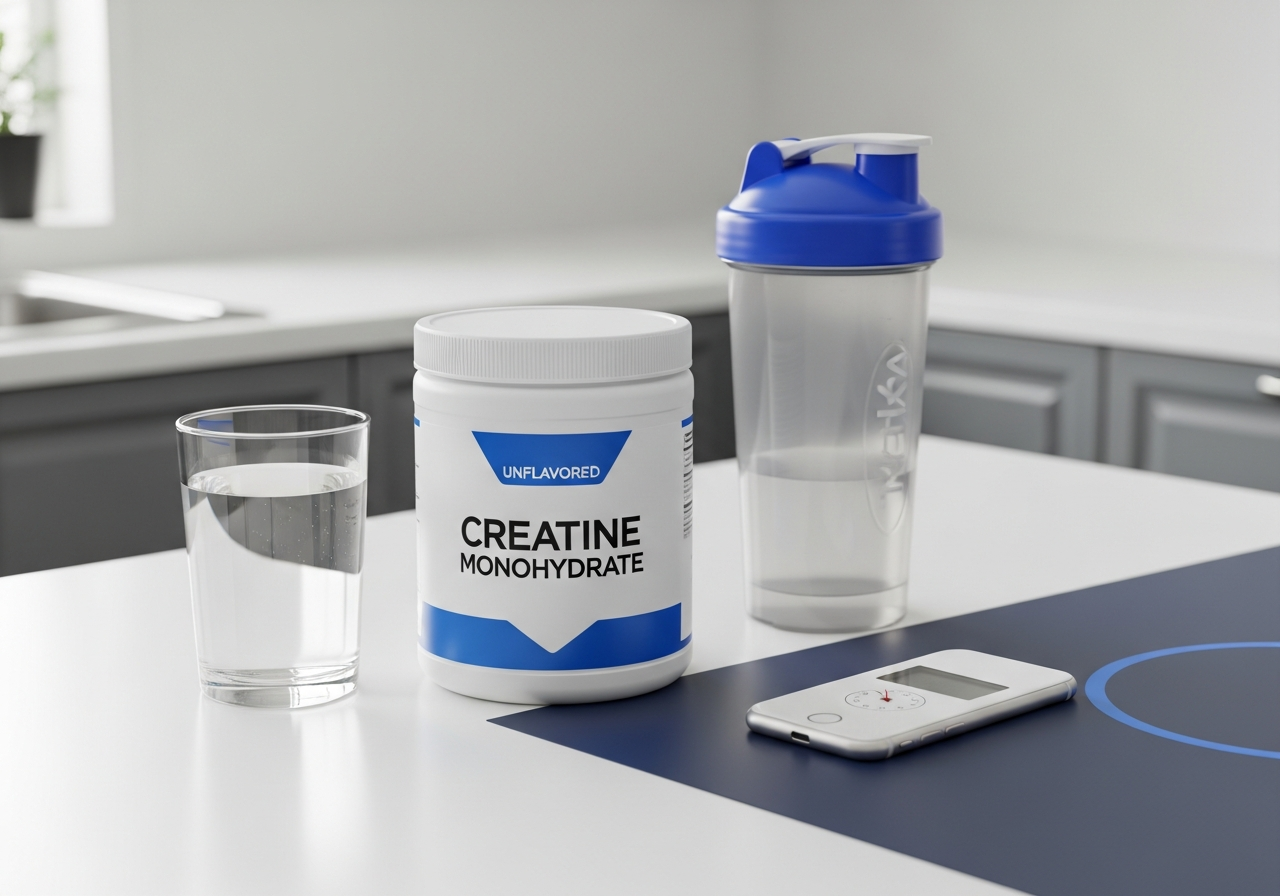
Does Creatine Break a Fast? The Definitive Answer
By The Creatine Canada Research Team — Evidence-based supplement analysts
No, plain creatine monohydrate does not meaningfully break a fast in the usual intermittent-fasting sense because it provides no meaningful calories, no sugar, and little reason to expect a significant insulin response. If your goal is fat-loss fasting or metabolic simplicity, you can usually take unflavoured creatine during the fasting window; if your goal is a strict religious or medical fast, the answer depends on the rules of that fast.
Evidence-based · Cites 4 sources · Editorial standards
Key Takeaways
- Plain, unflavoured creatine monohydrate is generally considered compatible with intermittent fasting.
- Creatine works by saturating muscle creatine stores over time, so daily consistency matters more than exact timing.
- A standard maintenance dose is 3-5 g/day; loading is optional at about 20 g/day split into 4 doses for 5-7 days.
- Flavoured creatine, gummies, or blends with carbs, amino acids, or protein can break a fast even if plain creatine does not.
- If fasting training feels better with fewer supplements, take creatine with your first meal and you will still get the benefits.
- Mild water-weight gain and occasional stomach upset are the most common early effects; both are usually manageable.
- For Canadians, choose a simple creatine monohydrate product with a Natural Product Number when applicable and preferably third-party testing.
Does creatine break a fast? The short answer most people actually need
No, plain creatine monohydrate usually does not break a fast for intermittent-fasting purposes because it contains no meaningful calories and is not typically taken with sugar, protein, or other energy-containing ingredients. When people ask, does creatine break a fast, will taking creatine break a fast, or can you take creatine while fasting, they are usually asking about fat loss, insulin, and whether the fasting window still “counts”; for that practical goal, plain creatine is generally fine.
The important nuance is that “breaking a fast” depends on why you are fasting. If you are doing a standard 14:10, 16:8, or 18:6 intermittent-fasting routine for calorie control, body composition, or convenience, unflavoured creatine powder in water is usually considered compatible with the fast. If you are doing a fast for bloodwork, a medical procedure, or religious observance, you should follow the exact rules given by your clinician or faith tradition, because those standards can be stricter than fitness-world fasting.
Creatine is not a stimulant and it does not “work” acutely the way pre-workout does. Creatine works by gradually increasing your muscle phosphocreatine stores; phosphocreatine is the stored form that helps rapidly regenerate ATP, the immediate energy currency your muscles use during short, hard efforts. Because the mechanism depends on saturation, meaning filling muscle stores over days and weeks, taking creatine at 7 a.m. while fasting versus noon with food rarely changes the outcome much.
This is why the practical answer to can I still take creatine while fasting is yes: use a plain product, mix it with water, and keep the dose consistent. If you prefer to keep your fasting window completely supplement-free, taking the same daily dose with your first meal is also a perfectly good strategy. For a broader overview of the supplement itself, see what creatine is and what it does.
One more caveat: many products sold as “creatine” are not just creatine. Flavoured powders, gummies, pre-workout blends, or formulas with dextrose, amino acids, electrolytes, or protein can add calories and are far more likely to break a fast. In other words, plain creatine monohydrate is one thing; a sweetened creatine blend is another.
What it means to “break a fast” depends on your goal
Whether creatine breaks a fast depends less on creatine itself and more on the definition of fasting you are using. The same scoop can be acceptable in an intermittent-fasting plan for fat loss and unacceptable before bloodwork or surgery, so context matters.
For general fitness, most people use “break a fast” to mean one of three things:
- Calorie-based fasting: anything with meaningful calories ends the fast.
- Insulin/minimal-metabolic-interference fasting: anything likely to trigger a notable insulin or digestive response ends the fast.
- Strict zero-intake fasting: anything other than water, and sometimes black coffee or plain tea, ends the fast.
Plain creatine monohydrate fits comfortably into the first two categories for most people because it is not a meaningful source of calories and is not normally taken in a dose that behaves like sugar or protein. That is why the answer to searches like does taking creatine break a fast, would creatine break a fast, and can creatine be taken during fasting is usually “no, not for ordinary intermittent fasting.”
Where confusion comes from is that many people are not actually taking plain creatine. If your product includes sweeteners, carbohydrates, branch-chain amino acids, collagen, electrolytes with sugar, or a pre-workout matrix, then you are no longer evaluating creatine alone. If you want fasting simplicity, the best choice is basic monohydrate. Our best creatine rankings and creatine brand reviews can help you sort simple products from flashy blends.
There is also a psychological side. Some people find intermittent fasting easier when the rules are clean and simple: water, black coffee, plain tea, and nothing else. If that helps adherence, it is completely reasonable to move your creatine dose into the feeding window even though you likely do not need to. Fasting success often comes down to consistency, and consistency is easier when your routine feels obvious.
So if you are asking is it okay to take creatine while fasting, the best answer is this: for body-composition-focused intermittent fasting, yes; for strict medical or religious fasting, verify the rules before taking anything besides water.
Why creatine usually does not interfere with fasting benefits
Creatine usually does not interfere with the main benefits people seek from intermittent fasting because its core job is to increase muscle phosphocreatine stores, not to provide energy as calories. In plain language, creatine helps your muscles recycle ATP faster during short bursts of hard effort, but the supplement itself is not acting like food.
The 2017 ISSN position stand concluded that creatine monohydrate is the most effective ergogenic nutritional supplement currently available for increasing high-intensity exercise capacity and lean mass during training. That conclusion matters here because it reminds us that creatine’s benefits come from changing tissue stores over time, not from an immediate meal-like effect. The 2021 JISSN review on common questions and misconceptions about creatine also reinforced that monohydrate remains the reference form with the strongest evidence base.
Mechanistically, creatine enters muscle cells through a transporter and accumulates over repeated daily dosing. Once stored, some of it becomes phosphocreatine, which donates phosphate groups to help regenerate ATP during high-power efforts such as lifting, sprinting, jumping, or repeated intervals. This is why creatine helps more with performance in brief, repeated, intense work than with long, easy steady-state cardio.
From a fasting perspective, this matters because the key variable is daily saturation, not whether you happened to swallow the powder inside or outside your eating window. Taking 3-5 g every day is what keeps intramuscular stores topped up. If you miss the exact “best” timing but stay consistent for weeks, you still get the main benefit.
Does creatine affect insulin? Creatine can be taken with carbohydrate or protein, and some protocols do that for convenience, but creatine itself is not mainly useful because it spikes insulin. In practice, a plain dose in water is not the same thing as drinking juice, eating protein, or consuming a meal. If your fast is aimed at calorie control, appetite management, and maintaining a fasting routine, plain creatine is a low-risk addition.
If you want a deeper primer on how saturation works, see how long creatine takes to work and whether a loading phase is necessary.
Plain powder vs gummies vs blends: which creatine products can break a fast?
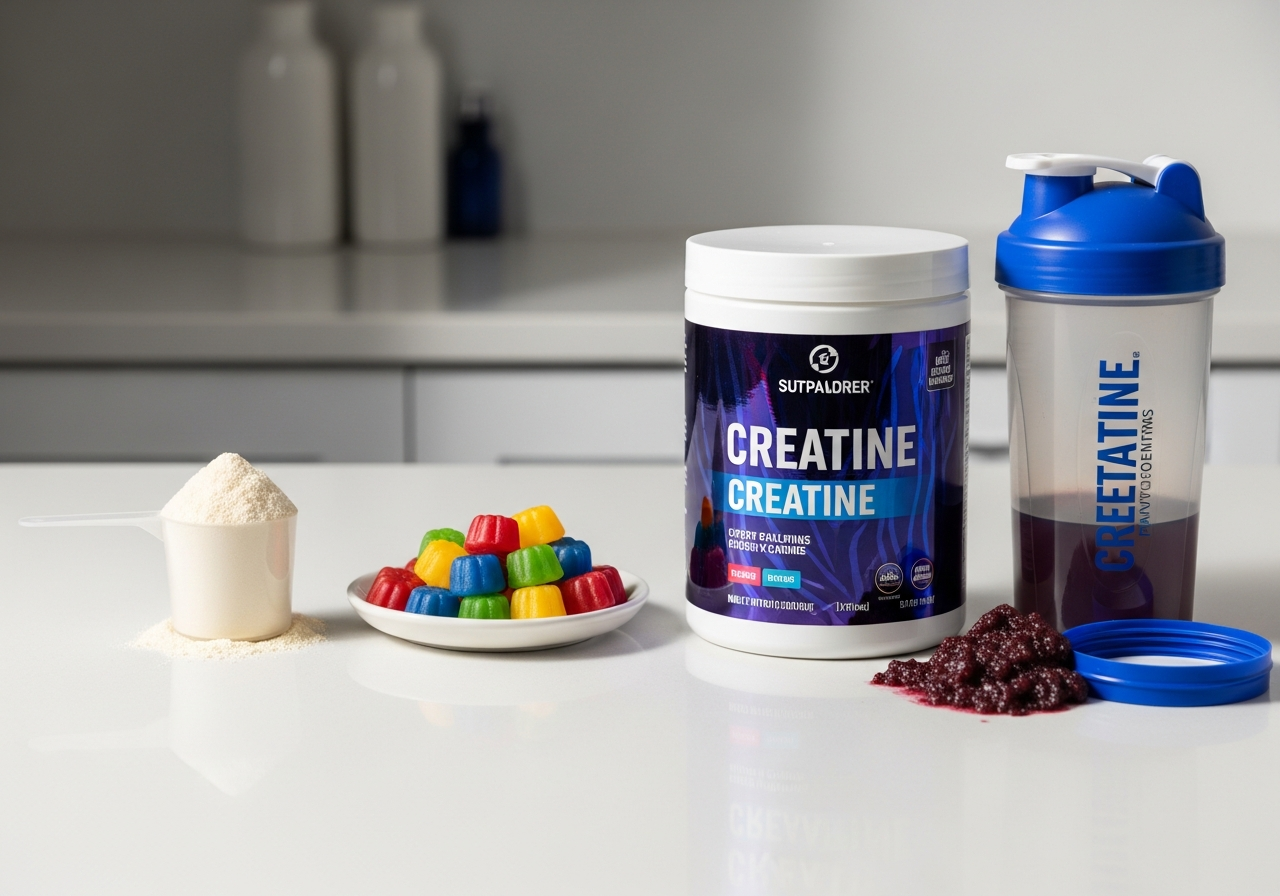
Plain unflavoured creatine monohydrate is the fasting-friendly option; gummies, sweetened drink mixes, and multi-ingredient blends are the forms most likely to break a fast. If you are wondering will creatine powder break a fast or does creatine powder break a fast, the answer is usually no for plain monohydrate powder mixed in water.
The fastest way to answer the question is to read the ingredient panel rather than the front label. “Creatine” on the tub does not guarantee “creatine only” inside the tub.
| Product type | Typical fasting compatibility | Why | Best use case |
|---|---|---|---|
| Unflavoured creatine monohydrate powder | Usually compatible | No meaningful calories; no added carbs or protein | Intermittent fasting, lowest cost, easiest dosing |
| Micronized unflavoured monohydrate | Usually compatible | Same active ingredient, finer powder for mixing | People who want easier dissolving |
| Flavoured creatine powder | Depends on formula | May include sweeteners, carbs, or extras | Feeding window if label is not truly zero-calorie |
| Creatine gummies | Usually not compatible | Often contain sugar or syrup | Convenience, but usually not ideal for fasting |
| Creatine + pre-workout blend | Often not ideal | May include calories, amino acids, or ingredients that irritate an empty stomach | Training sessions during feeding window |
| Creatine + protein/carb shake | Not compatible | Contains energy-yielding nutrients | Post-workout meal replacement |
For most fasters, the safest purchase is a single-ingredient monohydrate. In Canada, look for a clear ingredient list, a Natural Product Number where applicable, and preferably third-party testing or a strong quality-control reputation. Our guides on creatine product catalog and best creatine rankings can help you compare options.
A good rule: if the product tastes sweet, has a supplement facts panel longer than one line, or markets itself as a performance matrix, do not assume it behaves like plain creatine during a fast. Treat the extras as the deciding factor, not the creatine.
Exactly how to take creatine while fasting without overthinking it
You can take creatine while fasting by using 3-5 g of plain creatine monohydrate in water once daily and keeping the routine consistent. If you prefer not to consume any supplements during the fasting window, take the same dose with your first meal instead; the long-term result will be very similar because creatine works through saturation.
- Choose the right product. Buy plain creatine monohydrate, ideally unflavoured and single-ingredient. Avoid gummies and “all-in-one” powders if fasting compatibility matters.
- Measure the dose accurately. Use a scale if possible, or follow the serving size on the label. Most people do well with 3-5 g/day. For help, use our creatine dosage calculator or read how much creatine per day.
- Mix it simply. Stir into water. Warm water can dissolve it more easily, though it is not required. If you struggle with clumps, see how to mix creatine.
- Pick a routine anchor. Good anchors include first glass of water, pre-workout, post-workout, or first meal. The best time is the time you will remember every day.
- Stay consistent for weeks. Creatine is not a one-dose performance trick. Think in terms of days and weeks, not minutes.
- Adjust if your stomach disagrees. If you feel mild nausea or GI upset on an empty stomach, take it with food or split the dose into smaller servings.
Here are two easy templates:
- Strict fasting routine: water, coffee, tea during the fast; 3-5 g creatine with the first meal.
- Performance-first routine: 3-5 g creatine in water during the fasting window, especially if that helps you remember it before morning training.
If you are loading, you can still do it while fasting by splitting about 20 g/day into four 5 g doses for 5-7 days, but many people find that easier in the feeding window because large doses on an empty stomach are more likely to cause discomfort. For a full routine, see how to take creatine and whether to take creatine with or without food.
Creatine dose by body weight, goal, and fasting style
The right creatine dose while fasting is the same as the right creatine dose when not fasting: usually 3-5 g/day for maintenance, with optional loading if you want faster saturation. Fasting does not create a special creatine dose requirement.
Mainstream evidence-based practice uses two common approaches:
- No-loading approach: 3-5 g/day, every day. This is the simplest plan and reaches full saturation more gradually, often over roughly 3-4 weeks.
- Loading approach: about 20 g/day split into 4 doses of 5 g for 5-7 days, then 3-5 g/day after that. This reaches saturation faster but is more likely to cause stomach upset or temporary water-weight gain.
Body size matters at the margins. Larger athletes often gravitate to the upper end of the maintenance range, while smaller adults often do fine at the lower end.
| Body weight | Typical maintenance dose | Best for | Notes while fasting |
|---|---|---|---|
| Under 60 kg | 3 g/day | Smaller adults, beginners | Good starting point if empty-stomach dosing feels sensitive |
| 60-90 kg | 3-5 g/day | Most adults | Most common evidence-based range |
| Over 90 kg | 5 g/day | Larger lifters and athletes | Upper end is often practical and simple |
Goal also matters:
- Strength and muscle gain: 3-5 g/day consistently, with loading optional if you want faster early saturation.
- Fat loss while preserving performance: 3-5 g/day, often ideal during a cut because it helps support training quality.
- General fitness and healthy ageing: 3-5 g/day, no fancy timing required.
- Vegetarians or vegans: the same dose applies, though response can sometimes feel more noticeable because baseline dietary creatine intake is lower.
If you train early and fasted, it is fine to take the dose before training, after training, or with the first meal later. Timing matters far less than adherence. For the deeper dosing logic, see creatine maintenance dose and the right daily amount by body weight and goal.
Morning fasted workouts, timing, and how to tell creatine is working
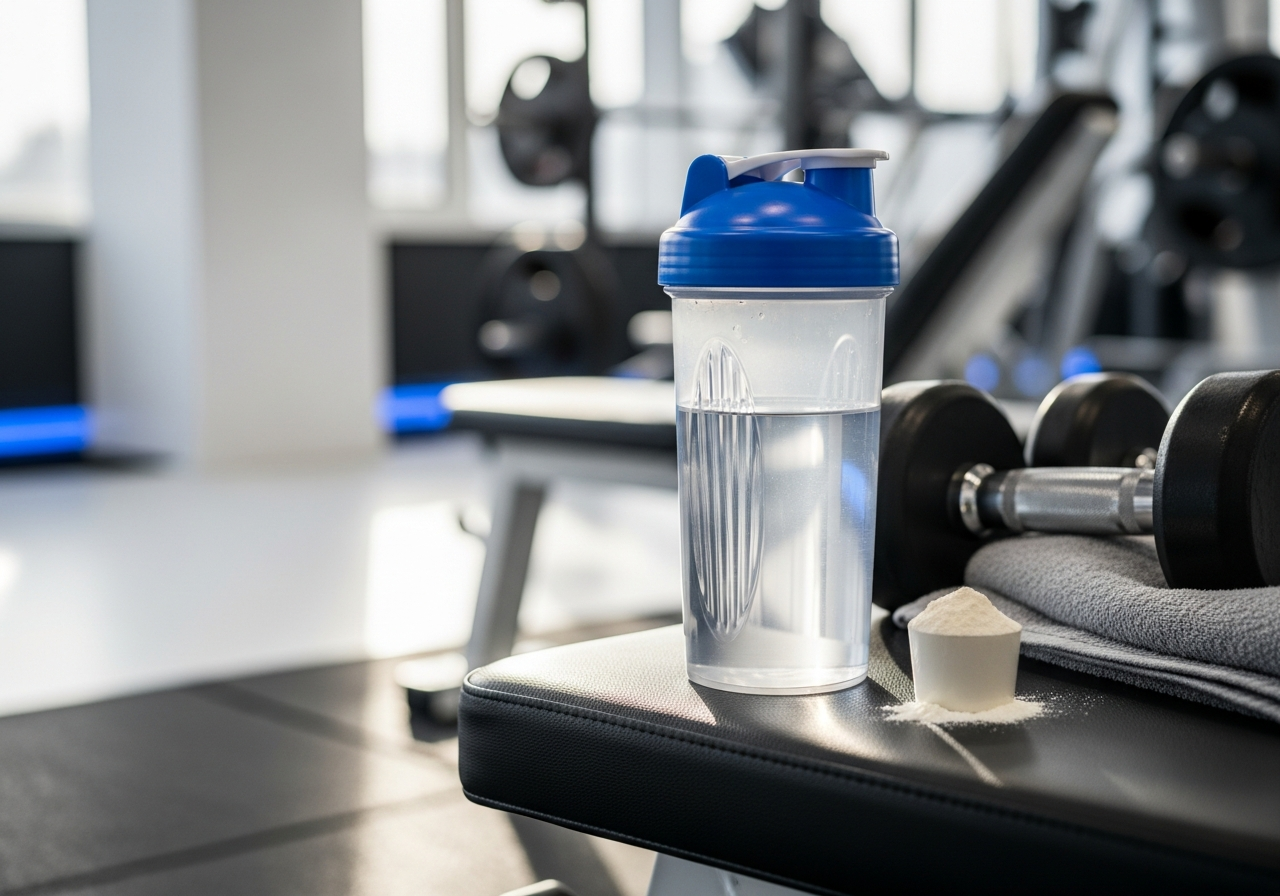
If you train in a fasted state, you can take creatine before the workout, after the workout, or with your first meal later; the difference is usually small compared with simply taking it every day. Creatine is not a stimulant, so do not expect a buzz, pump, or immediate energy spike after one scoop.
What should you expect instead? A gradual change in training capacity once muscle stores rise. The exact timing varies, but a useful real-world timeline looks like this:
- Days 1-7 with loading: saturation rises quickly; some people notice fuller muscles or a small scale increase from intracellular water.
- Weeks 2-4 without loading: this is when many people start noticing better repeat effort performance, an extra rep here and there, or slightly better output across sets.
- Weeks 4-8: training quality improvements can translate into better strength and lean-mass progress if your programming and protein intake are solid.
The most reliable signs that creatine is working are subtle but measurable:
- you maintain power better across repeated hard sets or sprints
- you squeeze out 1-2 extra reps at a given load more often
- your body weight may increase modestly early on from water stored inside muscle
- your training log trends up more consistently over several weeks
If you are doing intermittent fasting for fat loss, that early water-weight change can be psychologically annoying even though it is not body-fat gain. If that bothers you, read does creatine make you gain weight. Most of the initial change reflects water pulled into muscle tissue, not fat accumulation.
For morning fasters, the best schedule is often the simplest:
- Option A: wake up, drink water, take 3-5 g creatine, train.
- Option B: wake up, train fasted, take 3-5 g creatine with your first meal.
Both approaches can work. If one feels easier on your stomach or fits your fasting mindset better, choose that one and stay with it. For timing details, see when to take creatine.
Who should consider creatine during fasting, and who may want a different approach
Creatine can be a smart fit during fasting for beginners, lifters, team-sport athletes, women, older adults, and many people dieting for fat loss because it helps support high-intensity performance without requiring calories. The key is matching the routine to the person rather than forcing everyone into the same timing rule.
Beginners: Creatine is often worth taking from day one because beginners benefit from better training quality and do not need a complicated stack. A plain 3 g/day habit is enough to start.
Women: Women can use the same evidence-based creatine approach as men. Creatine does not automatically make women “bulky,” and during dieting phases it can help support strength and training output. See creatine for women for specifics.
Older adults: Older adults may benefit from creatine alongside resistance training because maintaining muscle and function becomes more important with age. If fasting compresses meal timing, creatine is still practical because it is easy to fit into one feeding window. See creatine for older adults.
Athletes and high-intensity trainees: Sprinters, power athletes, CrossFit athletes, and lifters tend to get the clearest performance upside because their sports rely heavily on repeated high-power output.
Vegetarians and vegans: Creatine can be especially relevant because dietary creatine intake is usually lower when you eat no meat or fish. For many plant-based athletes, that makes supplementation a very efficient addition.
Who may want a different approach?
- People with sensitive stomachs: take creatine with a meal instead of during the fasting window.
- People doing strict religious or medical fasts: follow the rules of that fast rather than fitness convention.
- Anyone with a medical condition or medication concerns: ask a qualified clinician before starting.
If you are uncertain whether you should use creatine at all, our guides on creatine for beginners and who should not take creatine will give you the broader picture.
Safety, side effects, and what to look for when buying creatine in Canada
Creatine monohydrate is well-studied and generally considered safe for healthy people at recommended doses, including long-term use, but product quality and practical tolerability still matter. The 2018 International Olympic Committee consensus on dietary supplements and the 2017 ISSN position stand both place creatine among the better-supported sports supplements for performance use.
The most common side effects are not dramatic. They are usually:
- Temporary water-weight gain: especially in the first days or weeks, because creatine increases intracellular water storage in muscle.
- Stomach upset: more likely with large doses, poor mixing, or taking it on an empty stomach when you are sensitive.
- Bloating complaints: often overstated, but some people do feel GI discomfort if they load too aggressively.
What creatine does not reliably do is dehydrate you, wreck your kidneys in healthy users, or require cycling simply because you have been on it for a while. Those are recurring myths that we cover in creatine myths debunked, the kidneys guide, and whether you need to cycle creatine.
For Canadians, buying quality matters because supplement labels vary widely. Practical checkpoints include:
- a single active ingredient: creatine monohydrate
- a clear serving size in grams, not vague scoops alone
- a Natural Product Number where applicable under Canadian supplement rules
- third-party testing or a reputable brand with transparent quality control
- minimal extras if your goal is fasting compatibility
Micronized monohydrate can be worth considering if you dislike gritty texture, but it is not a fundamentally different active ingredient. More exotic forms often cost more without outperforming monohydrate in the evidence. If you are shopping now, compare options in our brand reviews and product catalog.
As always, if you have kidney disease, are pregnant, or are managing a medical condition, get personalised guidance instead of relying on general supplement content.
Common mistakes and myths: what people get wrong about creatine and fasting
The biggest mistake people make is assuming that all creatine products are fasting-neutral when only plain creatine monohydrate usually is. The second biggest mistake is obsessing over timing while ignoring consistency.
Here are the most common myths and the reality behind them:
- Myth: Creatine breaks a fast because it is a supplement.
Reality: A supplement is not automatically food. Plain creatine monohydrate has no meaningful calories and is usually treated differently from protein, carbs, or meal replacements in intermittent-fasting practice. - Myth: You must take creatine with sugar or it will not work.
Reality: Creatine works perfectly well without sugar because its main driver is regular daily intake and eventual muscle saturation. - Myth: Fasted creatine is wasted because you feel nothing.
Reality: Creatine is not supposed to feel like caffeine. Its benefits appear in training output over time. - Myth: Loading is mandatory.
Reality: Loading is optional. It speeds saturation, but 3-5 g/day without loading still works. - Myth: Creatine causes fat gain.
Reality: Early scale increases are usually water inside muscle, not body fat. - Myth: If you fast, you should skip creatine on rest days.
Reality: Rest-day dosing matters because saturation is maintained by ongoing daily intake.
The practical mistakes are just as important:
- buying gummies or sweetened blends and assuming they are equivalent to plain powder
- taking random doses instead of a measured 3-5 g/day
- stopping after one week because there was no immediate sensation
- loading with big empty-stomach doses and blaming creatine for GI issues
- forgetting that adherence beats optimisation
If your question is can I drink creatine during fasting, the cleanest answer is yes, if it is plain creatine in water. If your question is actually about a flavoured supplement, gummy, or stacked formula, inspect the non-creatine ingredients first. That is usually where the fast gets broken.
Bottom line: the practical verdict on creatine and intermittent fasting
Plain creatine monohydrate does not meaningfully break a fast for most intermittent-fasting goals, so yes, you can usually take creatine while fasting. If your creatine is unflavoured, mixed with water, and free of calories or added macros, it is generally compatible with fasting for fat loss, appetite control, and routine-building.
The best real-world approach is simple:
- Buy plain creatine monohydrate.
- Take 3-5 g daily.
- Use water, not a sugary mixer, if you want to stay in your fasting window.
- If empty-stomach dosing bothers you, take it with your first meal instead.
- Judge success over weeks of training, not one workout.
If you remember only one thing, make it this: creatine is a consistency supplement, not a timing supplement. The effect comes from saturating muscle stores over time, which is why a routine you can repeat daily is more valuable than a theoretically perfect protocol you keep changing.
There are only a few situations where the answer becomes less straightforward: strict religious fasting, medical fasting before tests or procedures, or products that add sugar, amino acids, protein, or calories. In those cases, the details matter and plain-water monohydrate should not be assumed equivalent to every creatine product on the shelf.
For most healthy adults doing intermittent fasting, though, the verdict is clear: plain creatine is usually fine during a fast, and taking it with your first meal is also fine if that suits your routine better. If you want to go deeper next, the most useful companion reads are when to take creatine, how to take creatine, and whether creatine is safe.
Creatine and Fasting: The Numbers That Matter
- 3-5 g/day Standard maintenance dose — Works for most adults whether fasting or not
- 20 g/day Typical loading dose — Usually split into 4 doses for 5-7 days
- 5-7 days Typical loading phase length — Optional if you want faster saturation
- 3-4 weeks Time to similar saturation without loading — Approximate timeline with daily maintenance dosing
Frequently Asked Questions
Does creatine break a fast for intermittent fasting?
No, plain creatine monohydrate generally does not break a fast for typical intermittent-fasting goals because it provides no meaningful calories and is not usually taken with sugar or protein. If your fast is for fat loss, appetite control, or routine, plain creatine in water is usually acceptable. If your fast is medical or religious, follow those specific rules instead.
Can I take creatine while fasting in the morning?
Yes, you can take plain creatine while fasting in the morning. The simplest method is 3-5 g of unflavoured creatine monohydrate mixed in water. If it bothers your stomach on an empty stomach, take the same dose with your first meal instead, because consistency matters more than exact timing.
Will creatine powder break a fast?
Plain unflavoured creatine powder usually will not break a fast in the practical intermittent-fasting sense. The important qualifier is plain: flavoured powders or blends may include carbs, amino acids, or other ingredients that do break the fast. Always check the ingredient panel, not just the product name.
Can you drink creatine while fasting during a 16:8 fast?
Yes, most people can drink plain creatine during a 16:8 fast without meaningfully disrupting the fast. Mix unflavoured creatine monohydrate with water and avoid sugary mixers or gummies. If you prefer stricter fasting rules for personal adherence, move the dose to your eating window instead.
Is it okay to take creatine when fasting for fat loss?
Yes, it is generally okay to take creatine when fasting for fat loss. Creatine can help preserve training quality during a calorie deficit, which supports strength and lean mass retention while dieting. Just remember that early water-weight gain on the scale is common and is not the same as gaining body fat.
Can I take creatine with black coffee while fasting?
Yes, many people take creatine with black coffee while fasting, although mixing it with plain water is often simpler and easier on the stomach. The main fasting question is still whether your drink contains calories or extras. Plain black coffee and plain creatine are very different from a sweetened latte or flavoured performance drink.
Should I take creatine during the fast or with my first meal?
Either can work, and the best option is the one you will do every day. If your stomach tolerates it well and you want a simple morning routine, take it during the fast. If you prefer a stricter fasting window or feel GI discomfort, take it with your first meal and expect essentially the same long-term benefit.
Does flavoured creatine break a fast?
Sometimes yes, which is why flavoured creatine is less reliable for fasting than plain monohydrate. Some flavoured products use non-caloric sweeteners only, while others include carbohydrates or additional active ingredients. Read the label carefully and do not assume every flavoured product is fasting-compatible.
Can creatine break a fast if I mix it with juice?
Yes, mixing creatine with juice will usually break a fast because the juice contains calories and sugar, even though the creatine itself is not the issue. If you want to stay within a fasting window, mix creatine with plain water instead.
Do I need to stop creatine on fasting rest days?
No, you should usually keep taking creatine on rest days even if you are fasting. Creatine works by maintaining saturated muscle stores over time, so skipping rest days is not ideal. A steady daily dose of 3-5 g is the simplest and most effective long-term routine.