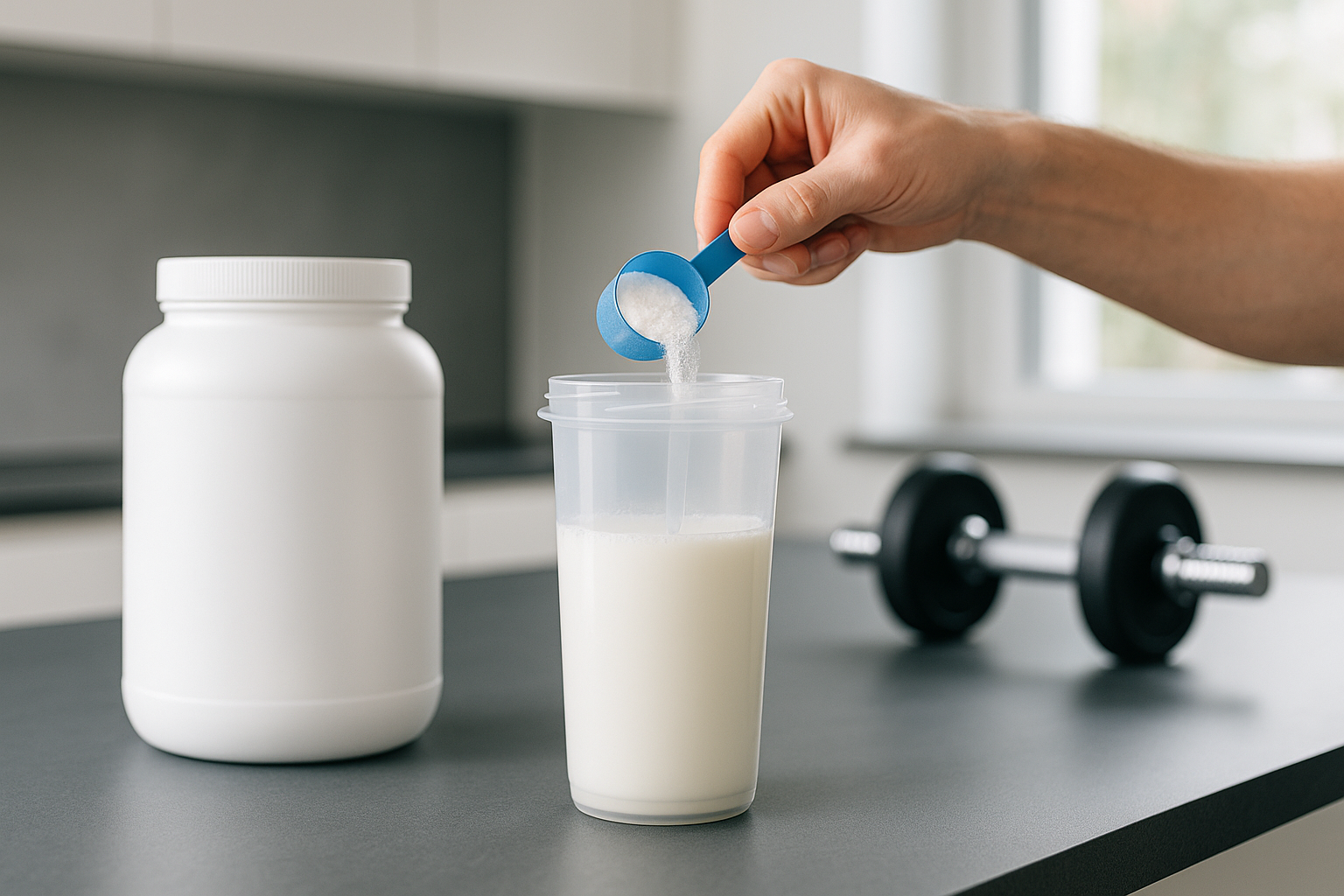
Creatine with Milk: Does It Affect Absorption or Results?
By The Creatine Canada Research Team — Evidence-based supplement analysts
Yes — you can mix creatine with milk, and for most people it does not reduce absorption or blunt results. Creatine monohydrate works by saturating your muscles over days to weeks, so the liquid you mix it into matters far less than taking the right dose consistently; milk can actually be a practical option if it helps you take creatine every day.
Evidence-based · Cites 4 sources · Editorial standards
Key Takeaways
- Yes, creatine in milk works; milk does not meaningfully block creatine absorption.
- The evidence-backed default is 3–5 g of creatine monohydrate per day, whether you mix it with water, milk, or a shake.
- Whole milk, skim milk, and chocolate milk can all work; the main differences are calories, protein, carbs, and digestion comfort.
- A loading phase of 20 g/day split into 4 doses for 5–7 days saturates muscles faster, but it is optional.
- If milk upsets your stomach, use lactose-free milk or switch to water and take creatine with a meal instead.
- Creatine timing is secondary to daily consistency; taking it with breakfast or post-workout in a milk shake is fine.
- For Canadians, plain creatine monohydrate with a valid NPN and preferably third-party testing is still the safest, simplest buy.
Yes, you can mix creatine with milk — and for most people it works just as well
Yes, you can mix creatine with milk, and for most people it will work just as well as mixing creatine with water. The key reason is simple: creatine monohydrate improves performance by raising muscle creatine stores over time, not by needing a special liquid for immediate absorption.
When people ask whether creatine with milk is a good idea, they are usually worried about one of three things: absorption, stomach comfort, or whether dairy somehow “cancels out” creatine. None of those concerns are strong reasons to avoid the combination. Milk is simply a food matrix containing water, protein, carbohydrate, minerals, and fat. Once swallowed, the creatine is still absorbed through the gut and transported into muscle. The 2017 International Society of Sports Nutrition position stand concluded that creatine monohydrate is the most effective ergogenic nutritional supplement currently available for increasing high-intensity exercise capacity and lean mass gains during training, and it does not require a special mixer to do that. See Kreider et al. (2017).
In practical terms, if mixing creatine in milk helps you remember your daily dose, that is a net positive. A habit you can repeat every day beats a theoretically perfect protocol you skip three times a week. For many people, adding 3–5 g to a breakfast glass of milk, a protein shake, or a post-workout creatine milk shake is one of the easiest ways to stay consistent.
There are, however, a few useful nuances. Milk can slow stomach emptying compared with plain water, especially if it is higher in fat, but slower emptying is not the same thing as worse results. Creatine is not a stimulant you need to “feel” within minutes. It is more like topping up a storage tank. If you reach saturation, you get the benefit. If you want the broader beginner context, read what creatine is and how to take creatine.
The short version is this: can you mix creatine with milk? Yes. Can I take creatine with milk every day? Yes, if it agrees with your digestion and fits your calorie goals. Choose the liquid you will actually use consistently.
How creatine and milk interact in your body: absorption, insulin, and what actually matters
Milk does not meaningfully impair creatine absorption, and the factor that matters most is reaching full muscle saturation through regular dosing. To understand why, it helps to know what creatine is doing after you drink it.
Creatine is absorbed from the intestine into the bloodstream, then transported into tissues such as skeletal muscle by a specific transporter. Inside muscle, some of it is stored as phosphocreatine, which is creatine bound to a phosphate group and used to rapidly regenerate ATP, the cell’s immediate energy currency, during short, intense efforts like sprinting, jumping, and heavy sets. More total creatine stored in muscle generally means a better ability to repeat high-power efforts and, over time, potentially gain more strength and lean mass from training.
Where does milk fit in? Milk contains water plus lactose carbohydrate, protein, and in whole milk, fat. Carbohydrate and protein can stimulate insulin release, and insulin can assist creatine uptake into muscle when creatine is taken alongside nutrients. That does not mean you need milk for creatine to work, but it does mean milk is at least a reasonable pairing rather than a harmful one. The 2021 JISSN review on common questions and misconceptions about creatine notes that many practical concerns around dosing, retention, and safety are overstated, while the core evidence continues to support simple daily monohydrate use. See Antonio et al. (2021).
A common misunderstanding is that creatine and dairy somehow clash because milk contains calcium, casein, or fat. There is no good evidence that these normal components of milk “neutralize” creatine. Another misconception is that creatine must dissolve perfectly to be absorbed. Better dissolution can improve texture and may reduce sediment at the bottom of your shaker, but undissolved particles that you still swallow can still be absorbed.
What actually matters most for results is:
- Total daily dose: usually 3–5 g/day for maintenance.
- Consistency: every day, including rest days.
- Time to saturation: roughly 3–4 weeks with 3–5 g/day, or about 5–7 days with a loading phase.
- Training quality: creatine amplifies training adaptations; it does not replace training.
If you want deeper detail on timing and uptake, see when to take creatine and how to maximize creatine absorption. For the specific question of creatine and milk absorption, the practical conclusion is straightforward: milk is fine, and the evidence does not show that milk undermines the benefit of creatine monohydrate.
Whole milk, skim milk, chocolate milk, or lactose-free: which kind makes the most sense?
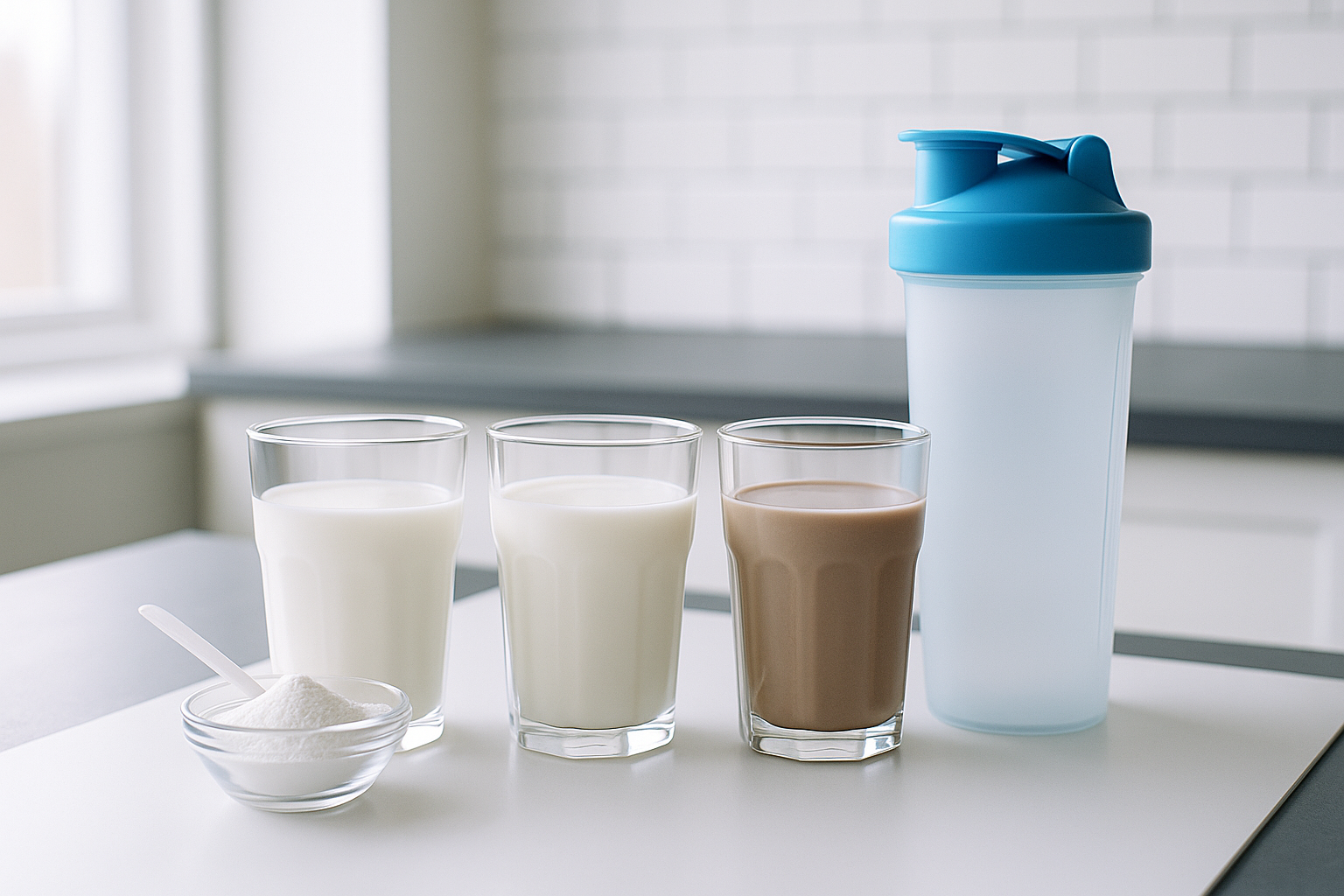
The best milk to mix with creatine is the one you digest well and that fits your nutrition goals, because the creatine dose matters more than the milk type. Whole milk is not inherently better for creatine than skim milk, and creatine with whole milk is mainly a calorie and digestion choice, not an absorption hack.
Different milk options change the experience more than the effectiveness. Higher-fat milk usually tastes better and may feel more filling, but it can sit heavier in the stomach. Lower-fat milk is lighter and lower in calories. Chocolate milk can make unflavoured creatine far more pleasant and adds carbohydrate, which is one reason many athletes already use it post-workout.
| Milk option | Best for | Potential upside | Possible downside |
|---|---|---|---|
| Skim or 1% | Cutting, lighter shakes, easy digestion | Lower calories, mixes easily | Less creamy taste |
| 2% or whole milk | Bulking, higher-calorie shakes, fullness | Better texture, more satiating | Heavier on the stomach for some |
| Chocolate milk | Post-workout recovery shakes | Better taste, adds carbs and protein | More sugar and calories |
| Lactose-free milk | People sensitive to lactose | Same basic function with less GI stress | Can cost more |
| High-protein filtered milk | Convenience when you want protein too | Combines creatine + protein in one drink | Usually pricier |
If your goal is muscle gain, a creatine milk shake with milk and protein powder is a convenient all-in-one option. If your goal is fat loss, using lower-fat milk or simply taking creatine with a regular meal may make more sense. If lactose gives you gas, bloating, or loose stools, the issue is usually the milk rather than the creatine itself.
From a Canadian buying standpoint, the creatine product itself matters more than whether you use dairy. Look for creatine monohydrate, ideally plain and unblended, with a valid Natural Product Number if sold as a regulated natural health product in Canada. If you are comparing options, our best creatine rankings, creatine brand reviews, and product catalog can help narrow things down.
The main takeaway is simple: creatine in milk is effective across milk types. Choose based on calories, flavour, texture, and digestion comfort, not because one milk type magically improves creatine results.
Exactly how to mix creatine in milk so it dissolves well and tastes better
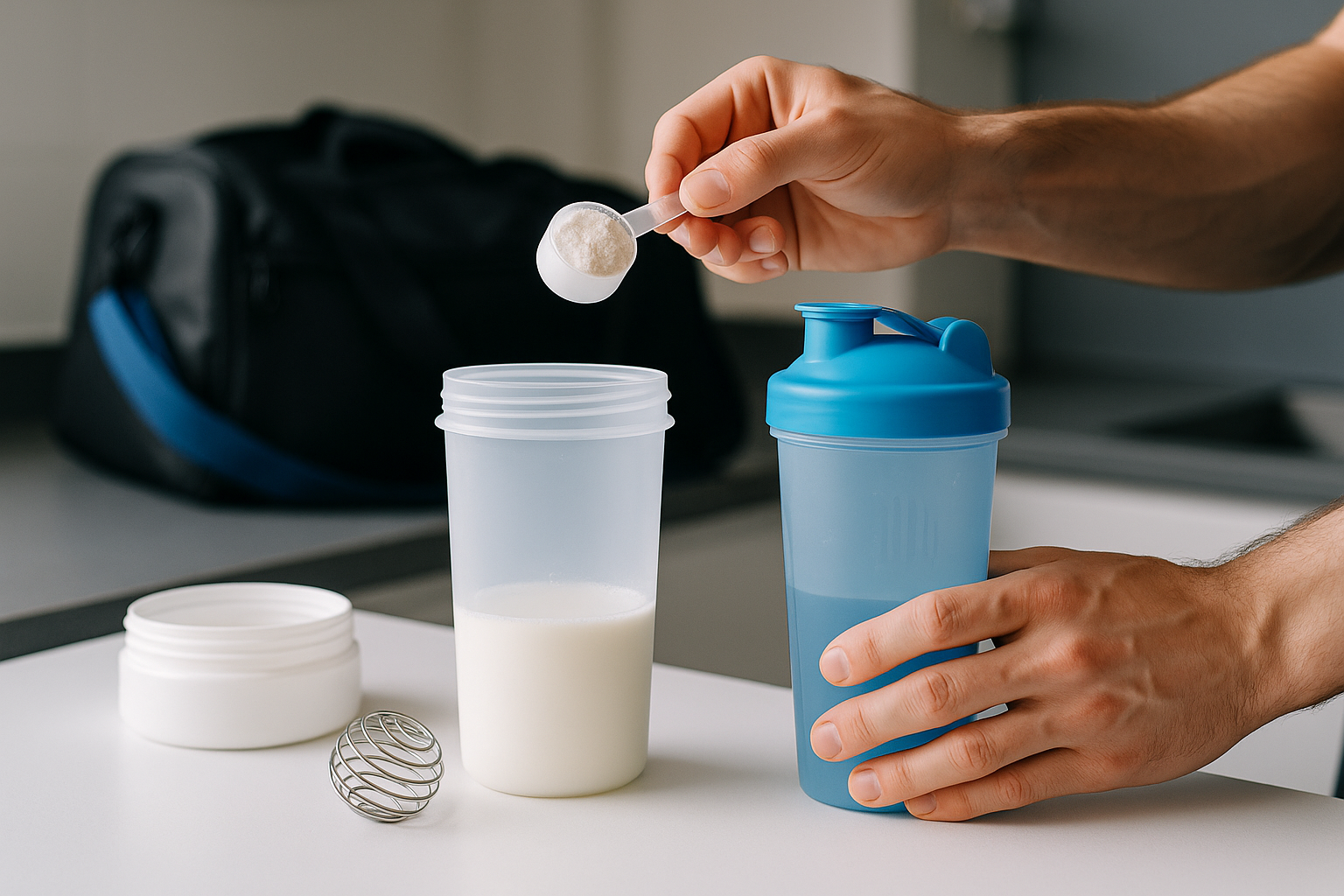
The easiest way to mix creatine with milk is to use 3–5 g of creatine monohydrate, add it to 250–500 mL of milk, and shake or stir thoroughly for 20–30 seconds. That simple method works for most people, but a few technique tweaks can make it smoother and easier to drink.
- Measure the dose accurately. Use a scale if possible, or a scoop you trust. If you are unsure, use our creatine dosage calculator or read how much creatine per day.
- Start with a smaller amount of liquid if you hate grit. Mix the powder into a small amount of milk first to create a slurry, then top up with more milk.
- Use a shaker bottle or blender bottle. This is more effective than a spoon, especially with cold milk.
- Let it sit for 30–60 seconds, then shake again. Micronized creatine usually disperses better than coarser powder.
- Drink the full mixture. If some powder settles at the bottom, add a splash more milk, swirl, and finish it.
Cold milk tends to make creatine a little less soluble than warmer liquid, but that is mostly a texture issue rather than a performance problem. If you want near-complete dissolution, use slightly cool rather than ice-cold milk, or dissolve the creatine in a small amount of lukewarm water first and then add milk. If you want a full troubleshooting guide, see how to mix creatine and how to dissolve creatine completely.
Two easy examples:
- Breakfast option: 300 mL milk + 5 g creatine + oats or cereal on the side.
- Post-workout shake: 300–400 mL milk + 5 g creatine + whey protein + fruit.
If you are asking, can I take creatine with milk and protein powder together? Yes. That is one of the most common ways people use it. Creatine is not a protein, but it stacks well with protein because they support different parts of the adaptation process. For more on that combo, see creatine and protein powder.
The most important habit is not making the shake fancy. It is making it repeatable. If milk makes daily creatine easier, that alone makes it a very good mixing option.
The right creatine dose with milk: maintenance, loading, body weight, and goal-specific examples
The correct creatine dose does not change because you use milk; for most adults, the evidence-based maintenance dose is 3–5 g of creatine monohydrate per day. Whether you stir that into water, milk, or a smoothie, the same dosing rules apply.
The standard options are:
- Maintenance-only approach: 3–5 g daily, every day.
- Loading approach: about 20 g daily split into 4 doses of 5 g for 5–7 days, then 3–5 g daily.
The loading phase saturates muscle faster, but it is optional. If you skip loading, you still get there; it just takes longer. This aligns with the ISSN position stand and broad evidence summaries such as Examine.com’s creatine evidence summary.
Here is a practical way to think about dosing by person and goal:
- Smaller adult, beginner, general fitness: 3 g/day is often enough if taken consistently.
- Average gym-goer training for strength or muscle: 5 g/day is a simple default.
- Larger athlete with high lean mass: 5 g/day is still common, though some prefer a body-weight-based approach around 0.03 g/kg/day for maintenance.
Examples:
- 60 kg woman starting out: 3 g/day in milk with breakfast is reasonable.
- 75 kg recreational lifter: 5 g/day in a milk shake post-workout is a strong default.
- 95 kg field sport athlete: 5 g/day is still standard; loading can help if results are needed sooner.
If you want exact body-weight guidance, use our creatine dosage calculator. If you want the long explanation on saturation, see creatine muscle saturation and creatine loading phase.
One caution: people often assume “more is better” and start taking 10–20 g every day indefinitely. That is usually unnecessary once your muscles are saturated, and it increases the odds of stomach upset. Another common mistake is underdosing flavoured blends that provide only a small amount of actual creatine per scoop. Read labels carefully.
The practical answer for mixing creatine in milk is therefore simple: put your normal daily dose into milk, not a special “milk dose.” Milk is just the delivery vehicle; the science is in the grams.
When to take creatine with milk, and what results to expect week by week
The best time to take creatine with milk is the time you will remember every day, because timing matters less than consistent daily intake. You can take creatine in milk in the morning, pre-workout, post-workout, or on rest days with any regular meal.
There is no strong evidence that milk makes one timing window uniquely better. The reason is that creatine’s main effect comes from gradually increasing total muscle creatine stores, not from an acute stimulant-like effect right after you drink it. If a post-workout milk shake fits your routine, use that. If breakfast milk is easier, use that.
What should you expect?
- Days 1–7 with loading: muscle stores rise quickly; some people notice a slightly fuller look or a small uptick in body weight from more intracellular water.
- Weeks 1–2 without loading: not much “feeling” yet, which is normal.
- Weeks 2–4: better repeat performance on hard sets, sprints, or explosive efforts often becomes noticeable.
- Weeks 4–8: strength progression and training volume may improve if your programme and nutrition are solid.
- After 8+ weeks: the biggest advantage is often cumulative — you may recover a bit better between repeated efforts and get more quality work done over time.
How do you know it is working? Most people do not get a dramatic sensation. Better markers are:
- One extra rep on later sets
- Less drop-off across repeated sprints or intervals
- Slight increase in training load over several weeks
- A modest increase in body mass from water stored inside muscle, especially early on
If you are using creatine with milk and do not notice anything after a month, the issue is usually not the milk. More likely causes are missed doses, inconsistent training, low total intake, or unrealistic expectations. See how long creatine takes to work and why creatine might not be working.
For the specific question can you mix creatine with milk after a workout? Yes, and that is one of the simplest protocols to follow. If the shake helps you take creatine daily, it is good timing by definition.
Who benefits most from taking creatine with milk: beginners, women, older adults, and athletes
Creatine with milk is a practical option for almost any healthy adult who already tolerates dairy, especially if it helps them build a consistent routine. The combination is not reserved for bodybuilders; it can make sense for beginners, women, older adults, and athletes in many sports.
Beginners often overcomplicate creatine. For them, milk is useful because it turns supplementation into a familiar daily habit. A glass of milk at breakfast or a simple shake after training is easier to maintain than a “perfect” protocol built around niche timing rules.
Women can take creatine with milk using the same basic rules as men. Creatine does not work differently because of dairy, and women do not need a separate “female” form of creatine. If milk helps add protein and calcium to the diet, that can be an added practical benefit. For more, see creatine for women.
Older adults may benefit from creatine as part of resistance training for muscle function and healthy aging, and mixing it into milk can be an easy route if appetite is lower or swallowing capsules is inconvenient. A protein-plus-creatine milk drink can be especially practical after training.
Strength and team-sport athletes often use a creatine milk shake because it combines convenience and calories. Hockey, football, rugby, sprint, and power athletes often care more about repeated high-intensity output than scale weight alone, so a milk-based shake is often a good fit.
Endurance athletes can also use creatine, but should think more carefully about body-mass changes. If a cyclist or distance runner wants the performance upside without unnecessary calories, lower-fat milk or a smaller milk serving may make more sense.
Who may prefer not to use milk?
- People with lactose intolerance or dairy-triggered bloating
- Those cutting calories very aggressively
- Anyone who simply dislikes the texture of creatine in milk
If dairy is the issue, not creatine, lactose-free milk is often an easy fix. If you avoid dairy entirely, there is no special loss; water or a non-dairy shake can still work. The main decision is lifestyle fit.
The bottom line is that can I take creatine with milk? is less about physiology than practicality. If you digest milk well and it helps you be consistent, you are very likely a good candidate for this approach.
Safety, digestion, bloating, and other side effects: what is creatine, what is milk, and what is dose-related
Creatine with milk is generally safe for healthy adults, and most side effects people notice are due to dose size, loading, or dairy tolerance rather than a harmful interaction between creatine and milk. This distinction matters because it tells you what to fix.
According to the ISSN position stand and the 2021 JISSN review, creatine monohydrate is well supported for safety in healthy individuals when used at recommended doses. See Kreider et al. (2017) and Antonio et al. (2021). Mayo Clinic also notes that creatine appears to be safe for up to several years when used appropriately in healthy adults: Mayo Clinic — Creatine.
Here is how to separate the usual issues:
- Bloating or stomach discomfort right after a large dose: often from taking too much at once, especially during loading.
- Gas, cramping, or loose stools after milk: often a dairy or lactose issue.
- Scale weight increase: commonly from more water stored inside muscle, not fat gain.
- Gritty texture: a mixing issue, not a safety issue.
Simple fixes include:
- Use 3–5 g/day instead of large single doses.
- If loading, split 20 g/day into 4 smaller doses.
- Switch from whole milk to lower-fat or lactose-free milk if your stomach feels heavy.
- Take creatine with a meal rather than on an empty stomach if you are sensitive.
- Stay adequately hydrated, though you do not need absurd amounts of water.
If you have known kidney disease, are pregnant or breastfeeding, or take medications that raise questions about kidney function or fluid balance, speak with a qualified clinician before supplementing. That is sensible caution, not because milk makes creatine dangerous, but because medical context always matters.
For deeper dives, see is creatine safe, creatine digestive side effects, and creatine and kidney concerns.
The practical message is reassuring: creatine and dairy is usually a comfort question, not a safety problem. If you feel fine drinking milk, adding creatine to it is usually uneventful.
Common myths about creatine in milk — and the mistakes that actually hurt results
Most myths about creatine with milk are false, and the real problems are usually inconsistency, poor dosing, or buying the wrong product. If you want better results, fix the basics first.
Myth 1: Milk blocks creatine absorption.
There is no good evidence that normal milk consumption prevents creatine from being absorbed or from saturating muscle. The bigger determinant of results is taking enough creatine often enough.
Myth 2: Whole milk is the best possible way to take creatine.
Whole milk is not superior in any proven way for creatine outcomes. It is simply higher in calories and fat, which may or may not suit your goals.
Myth 3: You need sugar for creatine to work.
Creatine works without sugar. Carbohydrate and protein can support uptake, but plain creatine monohydrate taken daily still works very well on its own.
Myth 4: Creatine only works if you feel an instant boost.
Creatine is not a stimulant. Its main benefits build as your muscle stores increase over days and weeks.
Myth 5: Dairy plus creatine causes dangerous water retention.
Creatine can increase intracellular water in muscle, but that is part of how it works and is not the same as becoming “puffy” from a bad supplement interaction.
The mistakes that actually matter are more mundane:
- Skipping days: the fastest way to blunt progress.
- Underdosing: tiny proprietary scoops in flavoured blends can leave you below the effective range.
- Taking huge single doses: this raises the chance of GI distress without improving maintenance results.
- Judging it after three days: most people need longer than that.
- Blaming milk for a bad product: cheap blends with fillers are a bigger issue than the liquid you mix them into.
If you enjoy myth-busting, see creatine myths debunked and creatine myths vs facts. If you are trying to troubleshoot poor results, our guides on common creatine mistakes and creatine not working will help.
The blunt truth is this: can you mix creatine with milk? Yes. The question people should ask more often is, “Am I taking the right amount every day for long enough to matter?”
What to buy in Canada if you plan to use creatine with milk every day
If you plan to take creatine with milk daily, the best product to buy in Canada is usually plain creatine monohydrate from a reputable brand with transparent labelling. The milk matters for convenience; the product matters for quality, dose accuracy, and trustworthiness.
Start with these checkpoints:
- Form: choose creatine monohydrate first. It remains the most studied and most cost-effective form.
- Ingredient panel: plain creatine monohydrate is ideal if you do not need flavouring.
- Serving size: make sure each scoop gives a true 3–5 g dose.
- Canadian compliance: look for a valid Natural Product Number when applicable.
- Third-party testing: particularly valuable for competitive athletes.
In Canada, an NPN, or Natural Product Number, means the product has been licensed by Health Canada as a natural health product. It does not guarantee athletic superiority, but it is a useful legitimacy signal. Competitive athletes may also prefer certifications such as NSF Certified for Sport or Informed Sport where available, because contamination control matters more than marketing buzzwords.
Because you are likely taking this product daily, value matters too. Creatine is one supplement where flashy branding often adds less than people think. A plain tub that supplies a reliable 5 g dose and mixes reasonably well into milk is usually enough. Micronized powder can improve texture in cold milk, but it is not mandatory for effectiveness.
If you want help comparing options, start with our best creatine rankings, creatine brand reviews, and creatine product catalog. For specialised shopping advice, related guides such as best creatine monohydrate in Canada and third-party tested creatine in Canada are worth reading.
The key buying lesson is that the question is not “what creatine works with milk?” Almost all decent monohydrate powders do. The real question is whether you are buying a clean, correctly dosed, trustworthy product that you can afford to use every day for months.
Bottom line: creatine with milk is a perfectly solid option if it helps you stay consistent
Yes, you can mix creatine with milk, and for most people it will not hurt absorption, safety, or results. If anything, milk can make creatine easier to take consistently by improving taste, adding protein and calories when desired, and fitting naturally into breakfast or post-workout routines.
The evidence-backed formula is uncomplicated:
- Choose creatine monohydrate.
- Take 3–5 g daily, or use a 5–7 day loading phase if you want faster saturation.
- Mix it in milk if you like — whole, skim, chocolate, or lactose-free all work.
- Keep taking it every day, including rest days.
- Judge results over weeks, not hours.
If milk suits your digestion, this is a good strategy. If milk does not suit your digestion, that does not mean creatine is the problem; use lactose-free milk, a different drink, or simply take creatine with a meal. The success of creatine depends far more on total dose and long-term adherence than on the liquid in your shaker.
For most readers, the smartest next steps are:
- Use our creatine dosage calculator to confirm your daily dose.
- Read how to take creatine if you want a full daily routine.
- Check how long creatine takes to work so your expectations are realistic.
- Compare trusted options in our best creatine rankings.
If you wanted a one-line answer to save for later, here it is: creatine in milk works, because creatine’s benefits come from saturating your muscles over time, and milk does not meaningfully interfere with that process.
Creatine With Milk: The Numbers That Actually Matter
- 3–5 g/day Standard maintenance dose — The same whether you mix creatine with milk or water.
- 20 g/day Typical loading dose — Usually split into 4 doses for 5–7 days.
- 5–7 days Time to saturate with loading — Faster approach for people who want results sooner.
- 3–4 weeks Time to saturate without loading — Typical timeline with consistent daily 3–5 g dosing.
Frequently Asked Questions
Can you mix creatine with milk?
Yes, you can mix creatine with milk, and for most people it works perfectly well. Milk does not meaningfully stop creatine from being absorbed, so the bigger factors are using creatine monohydrate, taking the right dose, and being consistent every day.
Can I take creatine with milk instead of water?
Yes, you can take creatine with milk instead of water. Water is not required for creatine to work, and milk can be a convenient option if you prefer the taste or already drink a shake with breakfast or after training.
Does milk affect creatine absorption?
No, milk does not appear to meaningfully hurt creatine absorption in a way that changes real-world results. Creatine works by building up muscle stores over time, and that process depends much more on daily intake than on whether you used milk or water.
Is creatine with whole milk better than skim milk?
No, whole milk is not proven to be better than skim milk for creatine results. The main differences are calories, fat content, fullness, and digestion comfort, so choose the milk that fits your goals and stomach best.
Can you put creatine in a milk shake?
Yes, putting creatine in a milk shake is one of the easiest ways to take it. A shake can improve taste, add protein and calories if you want them, and make it easier to remember your daily dose.
Can I mix creatine with milk and protein powder together?
Yes, you can mix creatine with milk and protein powder in the same shake. Creatine and protein do different jobs, and combining them is a common, practical way to support strength, muscle gain, and post-workout nutrition.
Will creatine in milk cause bloating?
Creatine in milk can cause bloating for some people, but the cause is often the milk, the dose, or both rather than a special interaction. If you feel bloated, try a smaller dose at one time, lactose-free milk, or lower-fat milk before blaming creatine itself.
Is it okay to take creatine with dairy every day?
Yes, it is generally okay to take creatine with dairy every day if you tolerate dairy well and have no medical reason to avoid creatine. Daily use is actually how creatine works best, because consistent intake is what keeps muscle stores saturated.
Does mixing creatine in milk make it less effective?
No, mixing creatine in milk does not make it meaningfully less effective for most users. The form of creatine, the total dose, and daily consistency are far more important than the liquid you choose.
What is the best way to take creatine with milk?
The best way to take creatine with milk is to mix 3–5 g of creatine monohydrate into 250–500 mL of milk and drink it once daily. A shaker bottle, lactose-free milk if needed, and taking it at the same time each day usually make the routine easiest to maintain.