Creatine for Powerlifting: Dosing, Timing, and Meet-Day Strategy
By The Creatine Canada Research Team — Evidence-based supplement analysts
Yes — creatine helps powerlifters by improving the rapid energy system that drives heavy sets, repeated efforts, and long-term strength progress, and for most lifters the right plan is simple: take 3–5 g of creatine monohydrate daily, load only if you need faster saturation before a meet, and manage water weight based on your weight class strategy.
Evidence-based · Cites 4 sources · Editorial standards
Key Takeaways
- Creatine monohydrate is the best creatine for powerlifting because it is the most studied, most effective, and usually the best value.
- Most powerlifters do well on 3–5 g per day; a loading phase of 20 g per day split into 4 doses for 5–7 days works if you need faster results.
- Creatine timing matters far less than daily consistency; take it every day, including rest days.
- Creatine can increase body mass through intracellular water retention, which matters for weigh-ins and weight-class planning.
- If you compete soon, do not experiment in peak week; use the same creatine dose and routine you already tolerate well.
- Mild stomach upset is usually a dosing or mixing problem, not a reason to quit; smaller doses and more fluid usually fix it.
- Creatine is well-supported for strength and high-intensity performance and is considered one of the most evidence-based sports supplements available.
Does creatine help powerlifters? Yes — especially for heavy sets, repeated efforts, and total strength progress
Yes, creatine helps powerlifters because it increases the amount of phosphocreatine stored in muscle, and phosphocreatine is the stored high-energy compound your body uses to rapidly regenerate ATP, the immediate fuel for short, maximal efforts like heavy squats, benches, and deadlifts.
That matters because powerlifting is built on brief, explosive work. A competition single lasts only seconds, and even in training most performance-limiting sets happen in the range where the phosphagen system dominates. When muscle creatine stores are saturated, you can typically maintain force output a little better across repeated heavy sets, recover faster between sets, and accumulate slightly more high-quality training volume over time. That is where much of the real-world benefit shows up: not just in one magical PR session, but in months of better training.
The strongest evidence supports creatine for high-intensity exercise performance and lean mass gains alongside resistance training. The 2017 ISSN position stand concluded that creatine monohydrate is the most effective nutritional supplement currently available for increasing high-intensity exercise capacity and lean body mass during training. For powerlifters, that translates most directly into better quality work on repeated sets, better tolerance for hard training blocks, and a modest but meaningful edge in strength development.
In practical terms, powerlifters usually notice creatine in three ways:
- More stable bar speed across work sets.
- Better repeat performance on doubles, triples, and back-off sets.
- Gradual strength improvement over weeks as training quality compounds.
Does creatine guarantee a bigger total on meet day? No supplement can promise that. But creatine improves the physiology most relevant to strength sports, and that makes it highly relevant to powerlifting.
If you are new to the topic, our guides on creatine dosage calculator and best creatine rankings can help you choose a straightforward starting plan.
How creatine works for squat, bench, and deadlift performance
Creatine works for powerlifting by increasing intramuscular phosphocreatine, which helps your muscles regenerate ATP faster during very short, high-force efforts.
Here is the mechanism in plain English. Your body stores a small amount of ATP directly in muscle, but that supply is depleted quickly during a heavy attempt or a near-max set. Phosphocreatine acts as a rapid backup system by donating a phosphate group to restore ATP. More phosphocreatine available in muscle means more rapid energy turnover exactly when you need it most: unracking a max bench, driving out of the hole in a squat, or breaking the floor on a deadlift.
Creatine does not work like a stimulant. It does not give you a caffeine-like buzz, and you will not feel it “kick in” from one scoop taken before a session. Instead, it works through saturation. Saturation means gradually filling your muscle creatine stores until they remain elevated day to day. Once saturated, many lifters can perform a bit more work before fatigue, recover somewhat better between hard sets, and train harder often enough to gain more strength over time.
There are likely secondary benefits too. Creatine can increase cell hydration inside muscle tissue, which may support training capacity and muscle protein accretion when paired with progressive lifting. It may also reduce the drop-off in performance between repeated high-intensity bouts, which is especially useful during volume blocks, heavy singles practice, and meet prep where repeated exposures to near-max loads matter.
The evidence base is broad. The 2021 JISSN review on common creatine questions and misconceptions reinforces that creatine is one of the most researched and effective ergogenic aids for high-intensity exercise. The IOC consensus on dietary supplements also places creatine among the small number of supplements with strong evidence for performance benefits in the right setting.
For powerlifters specifically, the key point is simple: creatine supports the energy system that matters most in heavy resistance exercise. That is why it fits powerlifting far better than many flashy supplements marketed for pumps, focus, or fatigue masking.
The best creatine for powerlifting is still monohydrate — here is why
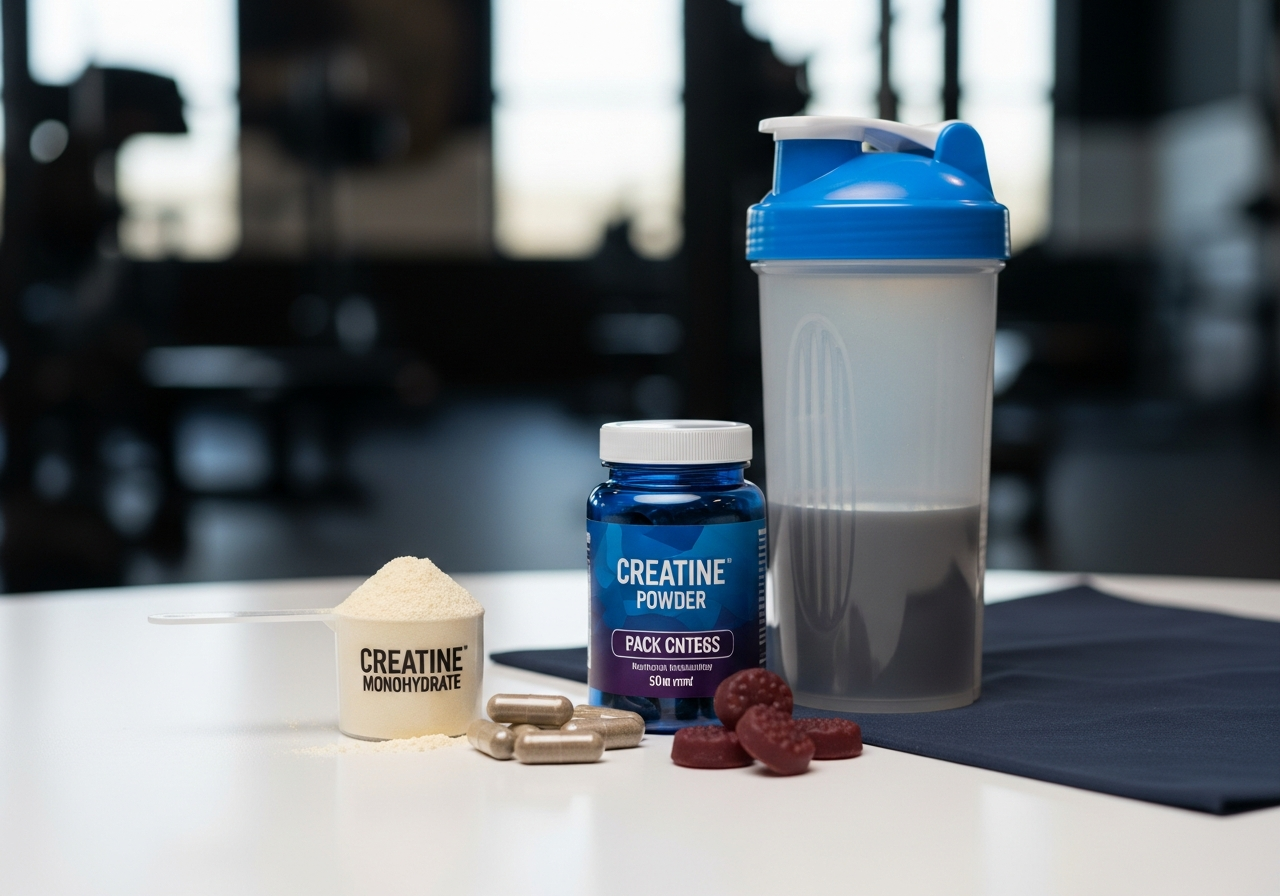
The best creatine for powerlifting is creatine monohydrate because it is the most studied form, the form used in the bulk of strength-performance research, and usually the most cost-effective option per effective dose.
This is one of the easiest supplement decisions in strength sport. Monohydrate has decades of evidence behind it, works at standard doses, and does not require brand-specific tricks to be effective. Other forms such as HCL, buffered creatine, nitrate, ethyl ester, or gummies may be convenient or marketable, but they have not consistently outperformed monohydrate in the evidence that matters most: strength, power, tolerability, and value.
Micronized monohydrate can be a good choice if you want easier mixing, but it is still monohydrate. A branded raw material such as Creapure can be attractive if you value manufacturing reputation, but it is not a different active ingredient. The core decision is still monohydrate versus everything else, and monohydrate remains the default winner for powerlifters.
For Canadian buyers, check for a valid NPN, or Natural Product Number, on products sold as regulated supplements. An NPN indicates the product is licensed by Health Canada for sale as a natural health product. Also look for third-party testing or transparent lot-based quality information where available, especially if you compete and want lower contamination risk.
| Form | Best use case | Evidence for powerlifting | Verdict |
|---|---|---|---|
| Creatine monohydrate | Nearly everyone | Strongest by far | Best default choice |
| Micronized monohydrate | Easier mixing | Same active ingredient as monohydrate | Good if you prefer texture |
| Creatine HCL | Convenience preference | Not better than monohydrate overall | Usually not worth extra cost |
| Buffered or alkalized creatine | Marketing-heavy products | No consistent advantage | Pass for most lifters |
| Capsules or gummies | Travel or no-mix convenience | Can work if total dose is adequate | Convenient but often pricier |
If you want product picks, compare our best creatine rankings, browse the creatine product catalog, or review specific creatine brand reviews before you buy.
Creatine powerlifting dose: the exact grams to take by goal, body size, and timeline
The standard creatine powerlifting dose is 3–5 g per day of creatine monohydrate, and that is enough for most lifters to maintain full or near-full muscle creatine saturation over time.
If you want the simple answer, use this:
- Most powerlifters: 5 g daily.
- Smaller lifters under about 60 kg: 3 g daily is often sufficient, though 5 g is still commonly used.
- Larger lifters or those with more lean mass: 5 g daily is the most practical standard.
- Need faster saturation: 20 g per day split into 4 doses of 5 g for 5–7 days, then 3–5 g daily.
Body-weight formulas exist, including roughly 0.3 g/kg/day for loading and around 0.03 g/kg/day for maintenance, but most real lifters do not need to overcomplicate this. A 67.5 kg lifter can use 5 g daily. A 90 kg lifter can use 5 g daily. A 120 kg superheavy can also use 5 g daily in most cases. The main difference is not that larger lifters need radically more, but that smaller lifters may do fine at the low end.
Here is a practical dosing table for powerlifting:
| Lifter profile | Fastest route | Low-fuss route | Best for |
|---|---|---|---|
| Meet is 3+ weeks away | Optional load 20 g/day for 5–7 days, then 5 g/day | 5 g/day | General strength prep |
| Meet is 1–2 weeks away | Only load if you know you tolerate it | 5 g/day | Avoiding GI surprises |
| Cutting for a weight class | Case-by-case | 3–5 g/day if body mass allows | Stable routine with close monitoring |
| Very small lifter | Loading optional | 3 g/day | Maintenance with minimal GI risk |
If you miss a day, do not double up dramatically the next day. Just resume your usual dose. Creatine works through saturation, not acute megadosing.
For a more customised plan, use our creatine dosage calculator and see the deeper guide on how much creatine per day.
How to take creatine for powerlifting: a step-by-step plan you can start today
The best way to take creatine for powerlifting is to choose a daily dose you will actually stick to, take it every day, and give it enough time to saturate muscle stores.
- Choose creatine monohydrate. Plain powder is usually the simplest and cheapest effective option.
- Pick your protocol. Use 5 g daily if you want simplicity, or load with 20 g daily split into 4 doses for 5–7 days if you want faster saturation.
- Mix it well. Stir it into water, a shake, or another drink you tolerate well. If it settles, swirl and finish the glass.
- Take it daily. Training days and rest days both count because muscle saturation is the goal.
- Pair it with an existing habit. Breakfast, post-workout shake, or dinner all work if they improve consistency.
- Track body mass and performance. Watch your morning body weight, top-set quality, and ability to repeat hard sets across 2–4 weeks.
- Adjust only for tolerance or weigh-in needs. If you get stomach upset, split the dose; if you are cutting hard for a class, plan water-weight management early rather than improvising in peak week.
What should you expect week by week?
- Days 1–7 with loading: saturation rises quickly; some lifters notice a small body-mass increase and fuller muscles.
- Weeks 2–4 with daily maintenance only: stores gradually approach saturation; training benefits become easier to notice.
- Weeks 4+: benefits show up mostly as better training quality and more consistent high-intensity output.
How do you tell it is working? The best signs are not dramatic. Look for one more rep at a given load, less drop-off between heavy sets, slightly better bar speed retention, and a bit more confidence under repeated near-max efforts. Creatine is a compounding supplement, not a flashy one.
If mixing, measuring, or routine-building is where you get stuck, our guides on how to take creatine and how to measure creatine make the process easier.
Creatine timing and meet-day strategy: what matters, what does not, and what to do before a meet
Creatine timing matters far less than total daily intake, and the best meet-day strategy is usually to stay with the routine that already has you saturated rather than trying to get a last-minute boost.
This is the most important timing principle for powerlifters: creatine is not a true acute performance booster in the way caffeine can be. A scoop taken 30 minutes before squats does not suddenly elevate muscle creatine enough to change performance that day if you were not already using it consistently. Once your muscles are saturated, though, when you take your daily dose becomes much less important than whether you take it.
So what should you do before a meet?
- If you are already taking creatine: keep taking your normal daily dose.
- If your meet is more than 3 weeks away: either start 5 g daily now or use a loading phase if you want faster saturation.
- If your meet is 1–2 weeks away: only load if you have used creatine before and know you tolerate it well.
- If weigh-ins are tight: consider the water-weight section below before making any peak-week changes.
A simple meet-week plan looks like this:
- Keep your normal monohydrate dose.
- Take it with a meal or shake you already use.
- Do not dry scoop or stack extra doses “just in case.”
- Prioritise sleep, hydration, sodium, carbohydrate intake, and attempt selection over supplement tinkering.
On meet day itself, creatine is optional only in the sense that missing one single day is not catastrophic if you are already saturated. If taking it adds stress or GI uncertainty, you can simply resume after weigh-ins or after the meet. But if you routinely take 5 g with breakfast and it sits fine, there is no reason to stop.
For a full timing breakdown, see when to take creatine. For rest-day consistency, the related principle is covered in creatine on rest days.
Creatine and water weight in powerlifting: how much it matters for weight classes and weigh-ins
Creatine can increase body mass through water retained inside muscle cells, and for powerlifters in weight classes that effect is useful if you have room in the class and important to manage if you are already close to the limit.
The key distinction is where the water goes. Creatine primarily increases intracellular water, meaning water stored inside muscle cells rather than simply making you look puffy under the skin. That is one reason many lifters feel “fuller” on creatine. It is not body fat gain, and for performance it is often beneficial. However, the scale does not care whether a kilogram came from water, glycogen, food bulk, or fat — if you must make weight, body mass is body mass.
How much water weight? It varies. Some lifters see very little change. Others notice a clear jump in the first 1–2 weeks, especially with loading. The practical takeaway is not to fear creatine, but to test your own response well before meet week.
Here is a useful way to think about it:
- You are comfortably under your class: creatine is usually an easy yes.
- You are within a small margin of the class limit: monitor morning scale weight for 2–3 weeks before deciding.
- You are planning an aggressive water cut: do not make random creatine changes late; plan them as part of the full weigh-in strategy.
For 24-hour weigh-ins, some lifters can carry the extra intracellular water without issue and still perform very well. For tighter same-day situations, margins can matter more. That does not mean creatine is bad for powerlifting; it means weight-class sport requires planning.
If your main concern is scale movement, read does creatine make you gain weight and does creatine cause bloating. Those guides explain the difference between useful water retention, digestive fullness, and true fat gain.
The practical rule is simple: never discover your personal water-weight response for the first time in the week of your meet.
Who should use creatine in powerlifting: beginners, women, masters, vegetarians, and elite lifters
Creatine is appropriate for most healthy powerlifters, from beginners to elite competitors, because the underlying energy system it supports is the same regardless of training age.
Beginners can absolutely use creatine. In fact, beginners often benefit from simple, proven supplements more than advanced stacks because they are still building training consistency. The biggest caution is behavioural, not physiological: do not let supplementation distract from learning technique, following a programme, eating enough protein, and recovering well.
Women can use creatine just as effectively as men. The common fear that creatine causes “bulking” in an undesirable sense is misplaced. Creatine may increase scale weight through muscle water retention, but that is not the same as gaining body fat. Women in strength sports often benefit from the same 3–5 g daily protocol, with weight-class planning handled individually. For more on that, see creatine for women.
Older or masters powerlifters may find creatine especially useful because preserving training quality, lean mass, and recovery capacity becomes more important with age. The same standard daily dose applies unless a clinician has advised otherwise.
Vegetarians and vegans may respond particularly well because they often start with lower baseline dietary creatine intake. Since creatine is found naturally in animal foods, athletes who avoid them may experience a more noticeable effect from supplementation.
Advanced and elite lifters still use creatine because it improves the margins that matter. When progress is slower and every extra high-quality rep counts, an evidence-based supplement that supports repeated high-intensity output remains relevant.
Who should be more cautious? Anyone with a medical condition affecting kidney function, those taking medication where supplement use should be reviewed, and anyone who has been told by a healthcare professional to avoid creatine should get individual guidance first. That is prudence, not a sign that creatine is broadly unsafe.
If you want a broader overview, read creatine for competitive athletes and creatine for beginners.
Safety, side effects, and what Canadian powerlifters should check before buying
Creatine monohydrate is widely considered safe for healthy people at recommended doses, and the most common side effects are mild, manageable, and usually related to dosing habits rather than toxicity.
The safety profile is one of the biggest reasons creatine is so popular in strength sports. The ISSN position stand and the Mayo Clinic overview both reflect the mainstream position that creatine is generally safe for healthy adults when used appropriately. Long-standing fears about healthy kidneys, dehydration, or cramping have not held up well as universal claims in the research.
That said, safe does not mean side-effect free for everyone. Common issues include:
- Stomach upset or loose stools: more likely with large single doses, poor mixing, or taking it on an empty stomach if you are sensitive.
- Temporary body-mass increase: usually related to intracellular water retention.
- Mild bloating sensation: often improved by splitting the dose or choosing micronized monohydrate.
Simple fixes work well:
- Use 3–5 g daily instead of one oversized scoop.
- If loading, split 20 g into four 5 g doses.
- Mix in plenty of fluid and drink normally through the day.
- Take it with food if your stomach is sensitive.
For Canadian shoppers, pay attention to quality signals. Look for:
- NPN on label: a Natural Product Number for licensed products in Canada.
- Third-party testing: especially valuable for competitive lifters concerned about contamination risk.
- Transparent ingredient list: plain monohydrate with no unnecessary proprietary blend is often ideal.
If you want a deeper safety review, see is creatine safe, is creatine bad for your kidneys, and creatine digestive side effects.
Common powerlifting creatine mistakes and myths, debunked clearly
The biggest creatine mistakes in powerlifting are choosing fancy forms over monohydrate, expecting an acute pre-workout effect, changing protocols right before a meet, and misunderstanding water weight as fat gain or “bloating” in every case.
Myth 1: You need a special strength-sport creatine. No. Plain creatine monohydrate is still the best-supported choice for powerlifters.
Myth 2: More is better. No. Once muscle stores are saturated, taking much more than the standard maintenance range does not create proportionally better results and is more likely to upset your stomach.
Myth 3: Creatine is only for bodybuilders. False. Creatine supports the ATP-phosphocreatine energy system, which is highly relevant to maximal and repeated strength efforts.
Myth 4: Creatine makes you fat. False. Any early weight gain is usually water retained in muscle, not fat tissue.
Myth 5: You must cycle creatine. False for most users. Cycling is not required for effectiveness in healthy users taking recommended doses.
Myth 6: You should stop creatine before a meet to “dry out.” Not automatically. That may help a lifter fighting for a weight class, but it can also disrupt a routine that supports performance. The decision should be based on weigh-in strategy, not gym folklore.
Myth 7: Creatine and caffeine cancel each other out. The evidence does not support a simple blanket rule that normal creatine and caffeine use are incompatible. Many lifters successfully use both. The main issue is personal tolerance and total meet-day GI load.
Practical mistakes are just as important as myths:
- Guessing at scoop size instead of measuring grams.
- Skipping rest days.
- Starting a loading phase during peak week.
- Blaming creatine for every stomach issue when the real problem is poor mixing or oversized doses.
If you want a full evidence-based cleanup of internet confusion, see creatine myths debunked and creatine myths vs. facts.
Bottom line: the simplest effective creatine plan for powerlifters
The bottom line is that creatine monohydrate is one of the best supplements a powerlifter can use, and the simplest effective plan for most lifters is 5 g per day, every day, for the long term.
If you want the highest-confidence recommendation in one paragraph, here it is: buy a plain creatine monohydrate product from a reputable brand, take 3–5 g daily, use 20 g daily split into 4 doses for 5–7 days only if you want faster saturation, and do not obsess over exact timing as long as you are consistent. If you are in a weight class, monitor scale weight early enough to understand your own water-retention response before meet week.
Creatine is especially well-matched to powerlifting because it supports the energy system behind short, explosive, high-force efforts. The benefit is rarely dramatic in a single workout, but over weeks and months it can help you maintain output across hard sets, train with slightly better quality, and build more strength. That is exactly the kind of edge serious powerlifters want: boring, reliable, and evidence-based.
For most people, the priority order is:
- Programme quality and technique.
- Energy intake, protein, sleep, and recovery.
- Creatine monohydrate used consistently.
- Everything else.
If you are ready to act, start with 5 g daily today and keep it simple. If you still need help choosing a product or dose, use the creatine dosage calculator, compare our best creatine rankings, and browse the creatine product catalog for Canadian-friendly options.
Creatine for Powerlifting: the numbers that actually matter
- 3–5 g/day Standard maintenance dose — Enough for most powerlifters to maintain saturation over time.
- 20 g/day Typical loading dose — Usually split into 4 doses for 5–7 days to saturate faster.
- 5–7 days Loading phase timeline — Useful when a lifter wants faster saturation before a training block or meet prep.
- 4 doses of 5 g Best way to load — Splitting the daily total improves tolerance versus one large serving.
Frequently Asked Questions
Does creatine help powerlifters specifically, or just bodybuilders?
Yes, creatine helps powerlifters specifically because it supports the phosphocreatine system used in short, maximal efforts like heavy singles and repeated hard sets. Bodybuilders use it too, but the mechanism is highly relevant to powerlifting performance, especially for training volume, recovery between sets, and long-term strength gains.
What is the best creatine for powerlifting?
The best creatine for powerlifting is creatine monohydrate. It has the strongest evidence base, is the form used in most performance research, and is usually the most cost-effective option. Micronized monohydrate is fine if you want easier mixing, but you do not need an exotic form to get results.
What creatine dose should a powerlifter take?
Most powerlifters should take 3–5 g of creatine monohydrate per day, with 5 g being the simplest standard choice. If you want faster saturation, use 20 g per day split into 4 doses of 5 g for 5–7 days, then return to 3–5 g daily for maintenance.
Should I take creatine before a powerlifting meet?
Yes, you can take creatine before a powerlifting meet if it is already part of your normal routine. The key is not last-minute timing but being saturated ahead of time, so most lifters should keep their regular daily dose rather than experimenting with loading or stopping suddenly in peak week.
Should I stop creatine before weigh-ins?
Not necessarily — you should only consider stopping creatine before weigh-ins if body-mass margin is very tight and the decision fits your full weight-cut plan. Creatine-related water retention can affect scale weight, but for many lifters the performance benefit outweighs that concern when they are not scraping the top of a class.
How much water weight can creatine add for a powerlifter?
Creatine can add some body mass through water stored inside muscle cells, but the exact amount varies widely by individual and protocol. Loading tends to reveal the effect faster than straight maintenance dosing, so weight-class athletes should test their response weeks before a meet rather than guessing in peak week.
Does creatine make you stronger immediately?
No, creatine does not usually make you stronger immediately from a single dose. It works by gradually increasing muscle creatine stores over days to weeks, after which many lifters notice better repeat performance, more stable bar speed, and improved training quality that can lead to strength gains.
Can women powerlifters take creatine?
Yes, women powerlifters can take creatine and generally use the same evidence-based dosing range as men. The main consideration is the same one men face in weight-class sports: monitor body mass response and fit creatine use into your class and weigh-in strategy.
Do I need to cycle creatine for powerlifting?
No, most powerlifters do not need to cycle creatine. Creatine monohydrate is commonly used continuously at maintenance doses, and cycling is not required to keep it effective in healthy users following recommended dosing.
Can I take creatine with pre-workout or coffee before lifting?
Yes, you can take creatine with pre-workout or coffee if your stomach tolerates the combination. Creatine does not need to be taken pre-workout to work, so if the combo causes GI discomfort, simply move creatine to another meal or shake later in the day.