Creatine for Athletes Going Through Menopause: Muscle, Bone, and Brain Support
By The Creatine Canada Research Team — Evidence-based supplement analysts
Yes — creatine for women during menopause is one of the most evidence-based, practical supplements for supporting muscle, strength, training capacity, and possibly some aspects of cognitive function, especially when paired with resistance training. For active women in perimenopause and menopause, the best-supported choice is plain creatine monohydrate at 3–5 g daily, taken consistently.
Evidence-based · Cites 4 sources · Editorial standards
Key Takeaways
- Creatine monohydrate is the best-studied and most cost-effective form for menopausal women athletes.
- A standard maintenance dose is 3–5 g per day; loading at 20 g per day for 5–7 days is optional if you want faster saturation.
- Creatine helps most with muscle, strength, repeated high-intensity effort, and preserving lean mass during hormonal transition.
- Creatine is not a hormone and does not replace oestrogen therapy, but it can complement training, protein intake, and overall menopause care.
- The biggest benefits usually show up when creatine is paired with resistance training 2–4 times per week.
- A small scale increase early on is usually water drawn into muscle, not body fat gain.
- If you are choosing a product in Canada, prioritize creatine monohydrate with a Natural Product Number and ideally third-party testing.
Should athletes going through menopause take creatine? For many active women, yes
Yes — creatine for women during menopause is a sensible, evidence-based supplement for many active women because it can help support muscle, strength, training quality, and lean mass at a time when those become harder to maintain. For creatine for menopause athletes, the key point is simple: the strongest evidence supports creatine monohydrate, not fancy blends or 'women-specific' formulas.
Menopause and perimenopause often bring shifts that matter directly to training: lower oestrogen, more difficulty recovering, a greater tendency to lose lean mass, and a higher long-term risk of bone loss. None of that means performance has to slide quickly, but it does mean the basics matter more. Creatine works by increasing the amount of phosphocreatine in muscle, which is stored creatine bound to phosphate and used to rapidly regenerate ATP, the cell's immediate energy currency during short, hard efforts.
That mechanism is why creatine is especially useful for lifting, sprinting, jumping, interval work, repeated efforts, and keeping training quality high as fatigue builds. In practical terms, a menopausal woman athlete may notice she gets an extra rep, holds power better across sets, or maintains strength better during a cut or busy training block. Over time, those small advantages can translate into more productive training and better lean-mass retention.
Creatine is not a magic fix for every menopause symptom. It does not replace good programming, adequate dietary protein, sleep, or medical care for vasomotor symptoms, low bone density, or hormone therapy decisions. But it is one of the few sports supplements with decades of research support. The 2017 ISSN position stand concluded that creatine monohydrate is the most effective nutritional supplement currently available for increasing high-intensity exercise capacity and lean body mass during training.
If you are new to the topic, start with our creatine for women guide and creatine dosage calculator. If you want the short version, the answer is this: creatine and menopause fitness are a strong match when your goal is to protect muscle, support performance, and age more athletically.
Why creatine matters more in perimenopause and menopause than it did in your 20s
Creatine can matter more during perimenopause and menopause because the training environment inside your body changes in ways that make muscle and power harder to maintain. That is why searches for creatine perimenopause athletes and creatine for active women in menopause are asking the right question.
As oestrogen declines, many women notice a combination of changes that affect fitness outcomes: reduced anabolic signalling, slower recovery, a drop in explosive performance, increased fatigue, and a gradual shift toward losing lean tissue if training and nutrition are not dialled in. Menopause also coincides with aging-related risks such as sarcopenia, which is age-related loss of muscle mass and function, and lower bone density over time. Creatine cannot stop menopause, but it can make your resistance training and power work more effective.
The logic is important. Creatine does not build muscle directly the way a drug would. It increases phosphocreatine availability, helping you regenerate ATP faster during short, hard contractions. That means a better chance of maintaining bar speed, completing another high-quality set, or doing more total work over a training cycle. More quality work is one of the main reasons creatine supports strength and lean-mass gains over time.
There is also growing interest in brain-related effects because the brain uses creatine as part of cellular energy metabolism too. Evidence is stronger for physical performance than for menopause-specific cognitive outcomes, but there is enough mechanistic rationale and emerging data to say creatine may be worth considering if brain fog, mental fatigue, or sleep disruption are affecting training consistency. For a deeper look, see creatine and the brain.
Bone is the most nuanced area. Creatine is not a proven bone-density treatment on its own, but by helping women train harder and preserve lean mass, it may indirectly support the kinds of exercise that are best for bone health. The best interpretation is that creatine is a useful training support tool during menopause, not a standalone bone intervention.
In real life, creatine menopausal women athletes often benefit for the same reason masters athletes do: every bit of training quality matters more now, not less. That makes creatine one of the higher-value additions to a menopause fitness plan.
How creatine works for muscle, bone support, and brain energy during menopause
Creatine works by increasing tissue stores of creatine and phosphocreatine, which helps your muscles and brain recycle ATP faster when energy demand spikes. That single mechanism explains most of creatine's benefits for menopausal women athletes.
In muscle, ATP gets used rapidly during heavy lifts, sprints, jumps, and intervals. Phosphocreatine donates a phosphate group to help regenerate ATP quickly. When your muscle creatine stores are higher, you can sustain intense output a little longer before performance drops. The effect is not dramatic in one second, but across weeks of training it can mean more completed reps, more load lifted, and better adaptation.
For creatine women menopause muscle outcomes, that matters because muscle retention becomes more challenging during the menopausal transition. If creatine helps you preserve training quality, it can help preserve the training stimulus that keeps muscle on your frame. The most consistent evidence supports improvements in high-intensity exercise capacity and lean mass when supplementation is paired with resistance training.
For brain function, creatine's role is more biologically plausible than many people realize. Brain cells also use creatine in energy buffering. That does not mean everyone will feel a dramatic mental boost, but it is one reason researchers continue to study creatine for cognitive resilience, sleep deprivation, and aging. The evidence here is promising but still less settled than the muscle data. Examine's evidence summary is a useful overview of where the science is strongest and where it is still emerging: Examine.com — Creatine evidence summary.
For bone, the evidence is mixed. Creatine does not clearly increase bone density on its own in the way some consumers hope. Its more credible role is indirect: stronger muscles create better training outputs, and resistance plus impact training are the primary drivers of bone-preserving exercise adaptations. So if you are asking whether creatine and menopause fitness can help bone, the most honest answer is yes, through better training support, but it should not be sold as a bone cure.
The common thread is this: creatine helps energy-demanding tissues do hard work better. During menopause, when muscle, power, recovery, and sometimes mental sharpness can feel less predictable, that mechanism becomes more useful, not less.
Exactly how to start creatine during menopause: the simplest effective protocol
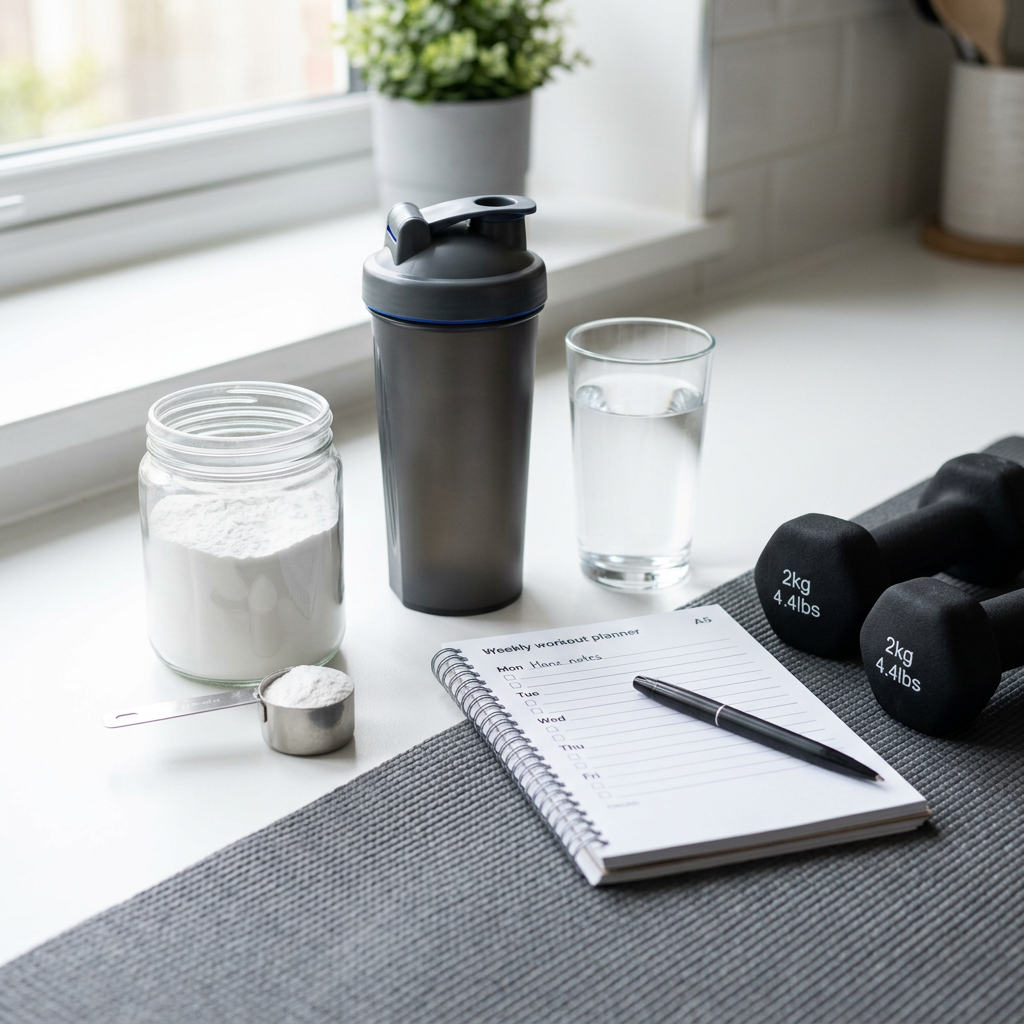
The simplest effective way to start creatine during menopause is to take 3–5 g of creatine monohydrate every day and keep doing it for at least 4–8 weeks. Consistency matters far more than timing tricks.
- Choose the right form. Buy plain creatine monohydrate powder unless you strongly prefer capsules. Monohydrate is the most studied form and usually the best value. If you are shopping in Canada, look for a product with a Natural Product Number and ideally third-party testing. Our best creatine rankings and creatine brand reviews can help you compare options.
- Pick your dose. Most women can use 3–5 g daily. Use 3 g if you are smaller, sensitive to GI upset, or simply want the minimum effective routine. Use 5 g if you are larger, train hard, eat little red meat, or want the standard athletic dose. For more precision, see how much creatine per day.
- Decide whether to load. If you want faster results, take 20 g per day split into 4 doses of 5 g for 5–7 days, then move to 3–5 g daily. If you prefer fewer side effects and less fuss, skip loading and just take your daily dose. You will still saturate more gradually.
- Take it at a time you will remember. Breakfast, post-workout, or with your evening meal all work. What matters is daily adherence. More on that in when to take creatine.
- Mix it simply. Stir it into water, a protein shake, yogurt, or a smoothie. If texture bothers you, use warm water or a shaker bottle. See how to mix creatine.
- Pair it with training. The best outcomes happen when creatine supports a structured programme, especially resistance training 2–4 times per week.
- Track what actually matters. Watch strength, reps, training quality, recovery, and body composition over 4–12 weeks, not just scale weight.
If you are a beginner, this does not need to be complicated. One scoop per day, every day, with a sensible lifting plan is enough to make creatine for menopause athletes worthwhile.
Best creatine dose for menopausal women by body weight, training goal, and urgency
The best creatine for menopause dose is usually 3–5 g per day, but body size, training style, and how quickly you want results can help fine-tune the plan. For most active women in menopause, there is no need to overcomplicate it.
| Body weight / goal | Daily dose | Loading option | Best for |
|---|---|---|---|
| Under 60 kg, general fitness | 3 g/day | Optional: 20 g/day split into 4 doses for 5–7 days | Beginners, lighter women, lower GI risk |
| 60–80 kg, strength or mixed training | 3–5 g/day | Optional: 20 g/day split into 4 doses for 5–7 days | Most active perimenopausal and menopausal women |
| Over 80 kg or very high training volume | 5 g/day | Optional: 20 g/day split into 4 doses for 5–7 days | Larger athletes, heavy lifters, team sport athletes |
| Rapid saturation priority | 3–5 g/day after loading | Yes | Women wanting faster training effects |
| Sensitive stomach or bloating concern | 3 g/day or split 2 x 2.5 g | No | Women troubleshooting side effects |
These numbers are consistent with mainstream creatine science and with the practical guidance summarized in the 2021 JISSN review on common questions and misconceptions about creatine. More is not better once stores are saturated. Taking 10 g every day when 3–5 g would maintain saturation usually just wastes product and may increase the chance of digestive discomfort.
How quickly does it work? With loading, many women notice gym effects within about a week. Without loading, benefits more often appear over roughly 3–4 weeks as muscle stores gradually rise. If you want a full timeline, see how long creatine takes to work.
If your main goal is preserving muscle during menopause, the sweet spot is usually 3–5 g daily plus resistance training and adequate protein. If your main goal is repeated sprint power, CrossFit-style intervals, or heavy barbell performance, the same dose still applies; the difference is in how obvious the workout effect may feel.
The practical rule: use the smallest dose you can stick to consistently, because consistency is what saturates muscle.
When to take creatine, what week-by-week results look like, and how to know it is working
The best time to take creatine is the time you will remember every day, because timing matters far less than saturation. For creatine and menopause fitness, consistency beats perfection.
You can take creatine in the morning, after training, with lunch, or on rest days with dinner. The body benefit comes from raising muscle stores over time, not from an immediate stimulant-like effect. Unlike caffeine, creatine does not need to be 'felt' acutely to be working. If you want a detailed timing breakdown, see when to take creatine and creatine on rest days.
What to expect, week by week:
- Week 1 with loading: You may notice a small body-weight increase and fuller muscles as water shifts into muscle tissue. Some women also notice improved gym pop or repeated-effort capacity quickly.
- Weeks 2–4 without loading, or after loading settles: Strength sessions may feel slightly more stable. You may recover a bit better between sets or maintain performance deeper into a workout.
- Weeks 4–8: If training is structured, you may start seeing better rep performance, improved top-set quality, or better retention of lean mass while dieting.
- Weeks 8–12: The compounding benefit becomes clearer. More productive training can translate into measurable gains in strength, work capacity, and body composition.
How to tell creatine is working:
- Your 6–12 rep sets hold up better.
- You recover a little faster between hard intervals or sets.
- Your body weight may rise slightly at first without waist gain.
- Your training log trends upward more steadily over several weeks.
How not to judge it: Do not expect dramatic fat loss from creatine alone, and do not use bloating myths as proof it 'does not suit women'. Also, do not stop after six days because you did not feel a buzz. Creatine is a saturation supplement.
If you miss a day, nothing disastrous happens. Just resume your usual dose the next day. Long-term adherence matters much more than occasional imperfection.
Who benefits most from creatine during perimenopause and menopause — and who may not notice much
Creatine can benefit many women in perimenopause and menopause, but the biggest payoff usually goes to active women who resistance train, do intervals, or want to preserve muscle and strength as hormones shift. Creatine for active women in menopause is most useful when there is a real performance or body-composition goal attached to it.
Women most likely to benefit include:
- Resistance trainers: If you lift 2–4 or more times weekly, creatine can support more quality training volume and better lean-mass retention.
- Masters athletes: Women competing or training seriously in their 40s, 50s, or beyond often value every edge in recovery and repeated effort.
- Women in a calorie deficit: During fat-loss phases, creatine can help defend training quality and preserve lean mass.
- Plant-based eaters or low-meat eaters: Women who eat little or no meat may start with lower baseline creatine stores and sometimes respond especially well. See is creatine vegan.
- Beginners starting strength training in menopause: This is often an excellent time to start because you are building habits that directly counter age-related muscle loss.
Women who may notice less:
- Those doing only low-intensity steady-state cardio may feel fewer obvious effects, because creatine is strongest for short-duration, high-intensity energy demands.
- Women expecting a direct menopause symptom cure, such as a treatment for hot flashes, should recalibrate expectations. That is not what the best evidence supports.
- Women already highly saturated from diet and long-term creatine use may feel little dramatic change because they are already getting the benefit.
Even if your goal is not competition, creatine menopausal women athletes should think beyond race day or PRs. Being able to get off the floor more easily, carry groceries with less strain, preserve glute and thigh muscle, and feel more physically capable all matter. Those are athletic outcomes too.
If you are unsure where you fit, use this simple filter: if you want stronger training performance, better lean-mass retention, or healthier aging with exercise, creatine is worth considering. If you want a full overview of audience fit and cautions, see creatine for older adults and who should not take creatine.
Is creatine safe for women during menopause? Usually yes, with a few important cautions
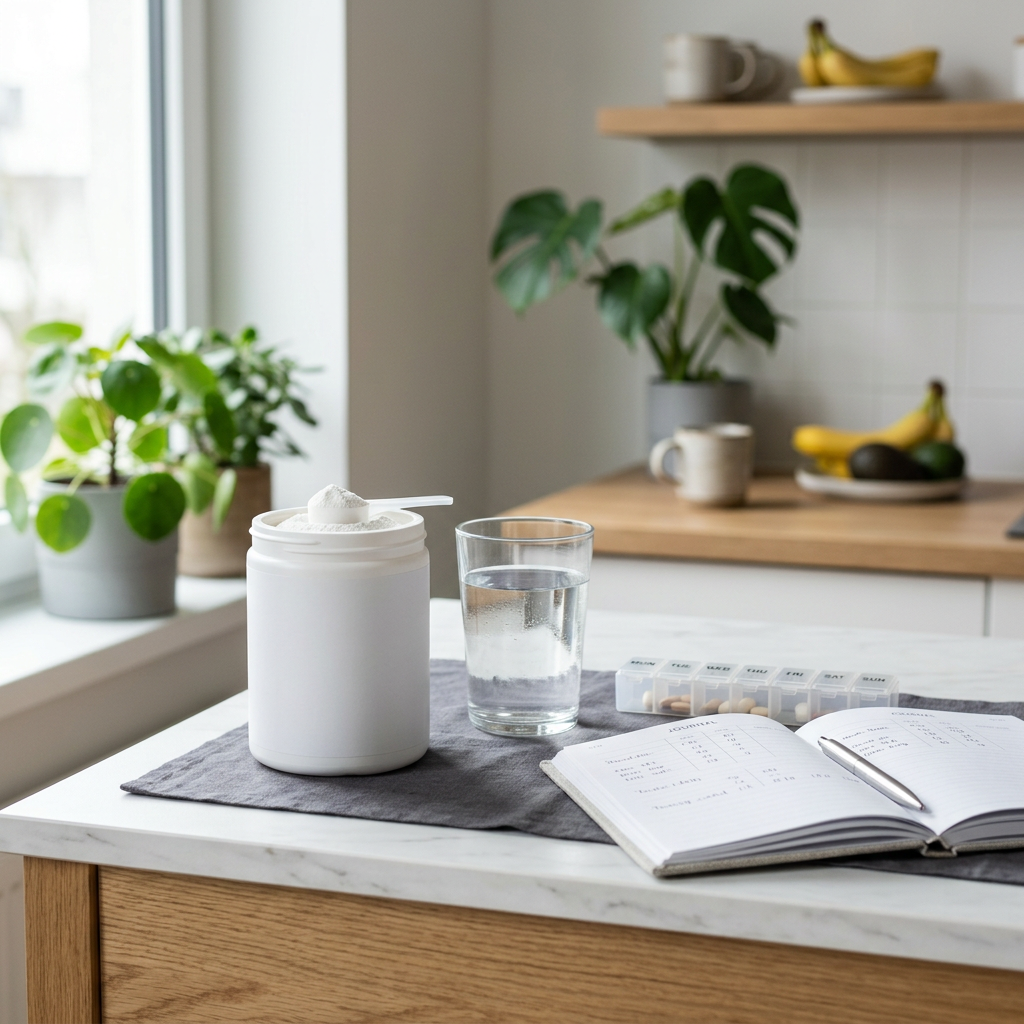
Creatine is generally considered safe for healthy women during menopause when used at standard doses, and the safety profile of creatine monohydrate is one of the strongest in sports nutrition. The most common issues are mild digestive upset and a small early increase in body weight from water inside muscle.
The 2017 ISSN position stand and the 2021 JISSN review both support creatine's overall safety in healthy populations. The Mayo Clinic overview also notes that creatine appears to be safe for many people when used appropriately. That said, 'safe for most' is not the same as 'right for every person'.
Common side effects:
- Temporary water weight: Usually a modest increase early on, especially with loading.
- GI discomfort: More likely with large single doses, dry scooping, or poor mixing.
- Perceived bloating: Often overstated, and usually manageable by skipping loading or splitting doses.
Practical fixes:
- Use 3 g daily instead of loading if you are sensitive.
- Split 5 g into two smaller servings.
- Take it with food or in a shake if your stomach prefers that.
- Stay on top of normal hydration; you do not need to force excessive water intake.
When to talk to your clinician first:
- Known kidney disease or significant kidney impairment
- Complex medication regimens where supplement interactions need review
- Unexplained abnormal renal lab work
- Pregnancy or breastfeeding, which are separate evidence questions from menopause
One medical nuance matters for midlife women: creatine supplementation can raise creatinine on a blood test because creatinine is a breakdown product of creatine. That does not automatically mean kidney damage. It means your clinician should interpret the result in context. See the creatinine confusion explained.
Bottom line: for healthy women, standard-dose creatine is usually low risk and high value. But if you have a medical condition, medications, or lab concerns, it is sensible to clear it with your healthcare provider rather than guessing.
Menopause creatine myths to ignore — from 'bulking' fear to hormone confusion
Most myths about creatine for women during menopause are wrong, outdated, or based on confusing water retention with fat gain. The biggest mistake is avoiding one of the best-supported supplements in sports nutrition because of bad internet advice.
Myth 1: Creatine will make menopausal women bulky.
No — creatine does not force large muscle gain by itself. It supports training performance and may increase intracellular water in muscle, which can make muscles feel fuller. Actual muscle growth still requires resistance training, nutrition, and time. See water vs. fat vs. muscle.
Myth 2: Creatine is a hormone or affects menopause hormones directly.
No — creatine is not oestrogen, testosterone, or a steroid. It is a compound involved in cellular energy metabolism. It does not replace menopause hormone therapy and should not be marketed that way.
Myth 3: Women should take a special 'female creatine' formula.
Usually no — plain creatine monohydrate works. Extra ingredients often raise the price without improving the evidence.
Myth 4: You must load or it will not work.
No — loading only saturates stores faster. Daily use at 3–5 g still works well.
Myth 5: Creatine dehydrates you or causes cramps.
Evidence does not support the idea that standard creatine use inherently dehydrates healthy users. It pulls water into muscle cells, which is different from causing dehydration. Normal hydration habits are enough for most women.
Myth 6: If the scale goes up, you gained fat.
No — the early increase is usually water inside muscle tissue. Judge outcomes by strength, measurements, fit of clothes, and body composition trends.
Common mistakes to avoid:
- Buying expensive forms instead of monohydrate
- Taking random doses instead of daily supplementation
- Stopping after one week without loading
- Expecting fat loss without improving training and diet
- Blaming creatine for every GI issue when dose size or mixing is the real problem
If you want a dedicated myth breakdown, read creatine myths debunked and creatine myths vs. facts. For most women in menopause, the real risk is not that creatine is too powerful — it is that they never use it consistently enough to benefit.
Best creatine for menopause: what to buy, what to skip, and what Canadians should check
The best creatine for menopause is plain creatine monohydrate powder from a reputable brand with transparent labelling, and in Canada that ideally means an NPN-listed product with quality testing. Most women do not need HCL, gummies, proprietary blends, or menopause-branded formulas.
What to prioritize:
- Creatine monohydrate as the only active ingredient, or nearly so
- Simple dosing that clearly provides 3–5 g per serving or makes serving size easy to measure
- Natural Product Number, which is Health Canada's product licence identifier for approved natural health products sold in Canada
- Third-party testing or strong manufacturing transparency, especially if you compete in drug-tested sport
- Cost per gram, not just tub price
| Option | Good choice? | Why |
|---|---|---|
| Unflavoured creatine monohydrate powder | Yes | Best evidence, best value, easiest to dose |
| Micronized monohydrate | Yes | Same core ingredient, sometimes mixes a bit better |
| Capsules | Sometimes | Convenient, but often pricier and require many capsules |
| Gummies | Usually not ideal | Convenient, but often expensive for an effective daily dose |
| HCL or buffered creatine | Usually unnecessary | Marketing is stronger than evidence versus monohydrate |
| 'Women's menopause creatine blend' | Often skip | Usually adds cost more than proven benefit |
If you are buying in Canada, use trusted retailers and cross-check labels. An NPN is a useful sign that the product is regulated as a natural health product. Competitive athletes should also look for programmes such as Informed Sport or NSF where relevant. You can compare options in our creatine product catalog and best creatine monohydrate in Canada guide.
The short answer for best creatine for menopause is boring on purpose: plain monohydrate still wins because it is the most proven, the most practical, and the least likely to waste your money.
How to combine creatine with training, protein, and lifestyle habits for the biggest menopause payoff
Creatine works best during menopause when it is part of a broader performance and healthy-aging plan, not a substitute for one. The best stack is usually simple: creatine, resistance training, enough protein, and consistent sleep and hydration habits.
1. Prioritize resistance training.
If you do nothing else, lift weights or perform resistance exercise 2–4 times weekly. Creatine amplifies the usefulness of that training by supporting repeated high-quality effort. Compound lifts, machine work, bodyweight progressions, and progressive overload all count.
2. Eat enough protein.
Creatine helps you train better; protein provides the building blocks for adaptation. If you are under-eating protein, creatine cannot fully compensate. Many active midlife women do better when each meal contains a meaningful protein dose rather than saving it all for dinner.
3. Use creatine during dieting phases.
When body-fat loss is a goal, creatine can help preserve performance and lean mass. That makes it valuable during cuts even if the scale is not moving exactly how you expect in week one.
4. Keep hydration normal and sensible.
You do not need gallons of water. Drink to thirst, use normal athlete hydration habits, and increase attention in hot weather or long sessions. If this is a concern, see how much water with creatine.
5. Consider easy stacks, not noisy stacks.
Creatine mixes well with protein powder, and there is no issue taking both together. See creatine and protein powder. Coffee is also usually fine for most users if your stomach tolerates it.
6. Use training metrics that matter in menopause.
Track strength, muscle retention, functional capacity, energy in the gym, and how robust you feel under load. Midlife performance is not just about body weight or mirror changes.
For athletes going through menopause, the real win is not that creatine does one glamorous thing. It is that it supports the habits most likely to keep you strong, capable, and competitive for longer. That is exactly why creatine for menopause athletes has become such a practical topic rather than just a trend.
Bottom line: creatine is one of the best low-effort, high-upside tools for menopausal women athletes
Creatine for women during menopause is worth serious consideration because it is one of the few supplements with strong evidence for helping support muscle, strength, and high-intensity training performance during a life stage when those qualities become harder to maintain. If you are active, lift weights, do intervals, play sport, or simply want to age more athletically, creatine belongs near the top of your supplement shortlist.
The best-supported protocol is straightforward: use creatine monohydrate at 3–5 g daily, every day, for at least several weeks, and pair it with resistance training and enough protein. Loading at 20 g daily split into 4 doses for 5–7 days is optional if you want faster saturation, but it is not necessary.
The biggest realistic benefits are better repeated effort, improved strength training quality, fuller muscle stores, and better odds of preserving lean mass over time. Possible brain-related benefits are promising, but still less definitive than the muscle and performance evidence. Bone benefits are most likely indirect through better training support rather than direct supplementation effects alone.
For buying, keep it simple: plain monohydrate, reputable brand, transparent label, and in Canada preferably an NPN-listed product with strong quality controls. If you want to compare formats or brands, start with our best creatine rankings and creatine product catalog.
The honest final answer is this: creatine and menopause fitness are a smart match, especially for women who care about muscle, strength, performance, and long-term physical independence. It is not a cure-all, but it is one of the highest-confidence, lowest-drama tools you can add to your routine.
Creatine for Menopause: The Numbers That Matter
- 3–5 g/day Standard daily dose — The usual maintenance range for most active women.
- 20 g/day Optional loading dose — Typically split into 4 doses for 5–7 days to saturate faster.
- 5–7 days Fast-saturation timeline — Typical timeframe when using a loading phase.
- 3–4 weeks Gradual saturation without loading — Typical timeframe before effects become more noticeable with daily maintenance dosing alone.
Frequently Asked Questions
Is creatine good for women during menopause?
Yes, creatine is a good option for many women during menopause because it can support muscle, strength, and training capacity when those become harder to maintain. The strongest evidence is for creatine monohydrate at 3–5 g daily, especially when combined with resistance training.
What is the best creatine for menopause?
The best creatine for menopause is plain creatine monohydrate. It is the most studied, most cost-effective, and most consistently supported form for muscle and performance, while premium forms like HCL or menopause-branded blends usually offer more marketing than added evidence.
Can creatine help menopausal women build or keep muscle?
Yes, creatine can help menopausal women build or preserve muscle by supporting better training quality and lean-mass retention over time. It works best when paired with progressive resistance training and adequate protein rather than used on its own.
Does creatine help with menopause belly fat or weight loss?
Creatine does not directly burn menopause belly fat, but it can support body recomposition by helping you train harder and preserve muscle while dieting. Early scale increases are usually water stored in muscle, not fat gain, so judge progress by strength and measurements as well as weight.
How much creatine should a woman in perimenopause or menopause take?
Most women in perimenopause or menopause do well with 3–5 g of creatine monohydrate daily. A loading phase of 20 g per day split into 4 doses for 5–7 days is optional if you want faster saturation, but it is not required.
When should women during menopause take creatine?
Women during menopause can take creatine whenever they are most likely to remember it, because daily consistency matters more than timing. Taking it with breakfast, after training, or with another routine meal are all practical choices.
Is creatine safe for older women and menopausal athletes?
Yes, creatine is generally safe for healthy older women and menopausal athletes when used at standard doses. Women with kidney disease, unusual renal lab results, or complex medical conditions should still speak with a healthcare professional before starting.
Will creatine make menopausal women bulky or bloated?
No, creatine does not automatically make menopausal women bulky. It may cause a small initial increase in water stored inside muscle, which can make muscles feel fuller, but that is different from gaining body fat or becoming overly muscular.
Can creatine help with menopause brain fog?
Creatine may help with some aspects of mental energy or cognitive resilience, but the evidence for menopause-specific brain fog is still emerging. The strongest and most reliable evidence remains for muscle, strength, and high-intensity exercise performance.
Do menopausal women need a special women's creatine supplement?
No, menopausal women usually do not need a special women's creatine supplement. Plain creatine monohydrate provides the same core ingredient with the best evidence base, and specialty formulas often cost more without proving better results.