
Creatine for Masters Athletes (35+): Why Age Changes Everything
By The Creatine Canada Research Team — Evidence-based supplement analysts
Yes—creatine is one of the best-supported supplements for masters athletes because it helps preserve power, strength, lean mass, and training quality as recovery slows and age-related muscle loss begins to matter more. For most athletes 35 and over, 3 to 5 g of creatine monohydrate daily is the simplest, safest, and most evidence-based starting point.
Evidence-based · Cites 4 sources · Editorial standards
Key Takeaways
- Creatine monohydrate is the gold-standard form for masters athletes and older athletes.
- A daily 3 to 5 g dose works for most people; loading is optional if you want faster saturation.
- Masters athletes often benefit more than younger athletes because phosphocreatine availability, lean mass retention, and recovery capacity matter more with age.
- Expect possible scale weight gain of roughly 1 to 2 kg early on from intracellular water, not body fat.
- Take creatine every day, including rest days; timing matters far less than consistency.
- Women, plant-based athletes, strength athletes, and athletes in heavy training blocks can all use the same evidence-based core protocol.
- If you compete in drug-tested sport, choose a product with strong quality control and preferably third-party sport certification.
Why creatine matters more after 35
Creatine for masters athletes matters because the exact qualities that often decline first with age—explosive power, repeated-effort capacity, muscle retention, and recovery resilience—are the same qualities creatine supports best. If you are a competitive older adult, veteran athlete, or simply training hard in your late 30s, 40s, 50s, or beyond, creatine is one of the few supplements with decades of evidence behind it.
Creatine is a compound stored mostly in muscle, where it helps regenerate ATP, the cell’s immediate energy currency, during short, hard efforts. In plain language, creatine helps you repeat forceful work a little better: one more rep, a slightly better sprint, a stronger final interval, or less drop-off across repeated efforts. The 2017 ISSN position stand concluded that creatine monohydrate is the most effective ergogenic nutritional supplement currently available for increasing high-intensity exercise capacity and lean body mass during training.
Age changes the value proposition. Masters sport is often limited less by motivation and more by recovery speed, injury history, declining anabolic sensitivity, and gradual losses in type II muscle fibre function. Those fast-twitch fibres are especially important for sprinting, lifting, jumping, change of direction, and finishing strong. Creatine does not stop ageing, but it can help reduce the performance cost of it.
For masters competition, that means creatine may be useful across many sports:
- Strength and power sports: improved training volume, power output, and strength progression.
- Team and racquet sports: better repeated sprint ability and less power drop-off.
- Combat and field sports: stronger repeated explosive efforts, with body-mass tradeoffs to manage.
- Endurance athletes: most useful when events include surges, hills, sprint finishes, or strength work in the gym.
If you are new to supplementation, start here: plain creatine monohydrate, taken daily, is usually enough. If you want a broader primer first, see our beginner’s guide to what creatine is and our guide to creatine for older adults. The short version is simple: creatine is not just for bodybuilders, and for ageing athletes it is often more relevant, not less.
The mechanism: how creatine supports performance in ageing athletes
Creatine works by increasing muscle phosphocreatine stores, and that matters to masters athletes because phosphocreatine is the rapid energy buffer that helps regenerate ATP during maximal and near-maximal effort. When your event or training session includes hard accelerations, explosive lifts, jumps, throws, repeated intervals, or decisive finishing efforts, that system matters.
Phosphocreatine is the stored form of creatine in muscle. During intense work lasting seconds, your body splits ATP for energy, and phosphocreatine donates a phosphate to help remake ATP quickly. More stored creatine usually means better ability to maintain output during repeated hard bouts. That is why creatine tends to help more in sports with repeated bursts than in steady-state efforts.
For older athletes, there are at least three reasons this mechanism becomes more meaningful:
- Training quality is harder to preserve with age. If creatine lets you sustain a bit more quality across sets or intervals, the long-term training effect can compound.
- Lean mass is easier to lose with age. Creatine appears especially helpful when combined with resistance training because it supports the kind of training stimulus that preserves or builds muscle.
- Explosive power tends to decline earlier than aerobic base. Masters athletes often notice first-step speed, jump height, or finishing kick slipping before they notice basic endurance slipping.
Creatine does not directly act like a stimulant, fat burner, or hormone booster. It supports cellular energy availability and, through better training, can indirectly improve strength, body composition, and functional performance. The 2021 JISSN review on common creatine questions and misconceptions also reinforces that many fears around water retention, kidney harm in healthy users, or inevitable bloating are overstated or context-dependent.
There is also growing interest in creatine beyond muscle, including brain energy metabolism and healthy ageing, but the strongest evidence for masters sport remains physical performance, lean mass, and support during resistance training. If you want the full physiology, our guides on creatine and ATP and creatine saturation go deeper.
The practical takeaway is this: creatine helps you train like a slightly fresher version of yourself, and that is precisely why it is so relevant for creatine and masters sport.
Where masters athletes benefit most: strength, sprinting, recovery, and lean mass

Creatine helps masters athletes most when their sport or training depends on high force, high velocity, repeated bursts, or preserving muscle as they age. The bigger your need for strength, power, or repeated hard efforts, the stronger the case for creatine.
In resistance training, the benefit is usually straightforward: creatine supports more high-quality work over time, which can translate into better strength gains and more lean mass when paired with training. In practical terms, that may mean squeezing out an extra rep on your working sets, holding bar speed a little better, or tolerating a demanding block with less performance drop-off.
For sprint and field sports, creatine is useful because few masters athletes lose motivation before they lose repeatability. You may still produce a good first effort, but your fifth hard effort often fades faster than it used to. Creatine can help blunt that fade. That is why it is commonly used in masters hockey, soccer, tennis, track sprinting, rowing, and CrossFit-style mixed-modality training.
For endurance-focused older athletes, the answer is more nuanced. Creatine is not a classic aerobic supplement, and it will not reliably raise VO2 max. But it can still be helpful when your event includes:
- surges or breakaways
- hill attacks
- sprint finishes
- strength training to support durability
- training blocks where preserving lean mass matters
The tradeoff is scale weight. Some athletes gain around 1 to 2 kg early from water held inside muscle cells. That can be beneficial for strength and repeated power, but it may be less attractive in weight-sensitive sports, climbing, or long steady endurance events.
Women masters athletes should not assume creatine is “for men.” It supports the same muscle energy system in women and may be especially interesting through perimenopause and menopause, where maintaining muscle and performance becomes more challenging. See our dedicated guide on creatine for women if that is your use case.
Beginners can use creatine too. You do not need to “earn” it by reaching an advanced level first. In fact, masters beginners often benefit because the supplement supports the exact adaptation they most need: preserving and rebuilding strength while learning to train consistently.
Bottom line: creatine for veteran athletes is most compelling when the goal is to stay powerful, recover your output between efforts, and hold onto the muscle that makes every sport easier.
Exactly how to start: a simple creatine protocol for athletes 35 and over
The best way to start creatine for masters athletes is to take 3 to 5 g of creatine monohydrate every day, with loading optional. The protocol is simple enough that most people overcomplicate it.
- Choose creatine monohydrate. This is the most studied, most reliable, and usually most cost-effective form. If you are comparing options, start with our best creatine rankings or browse the product catalog.
- Pick your daily dose. Most masters athletes do well with 3 to 5 g daily. Larger athletes and those with more lean mass often sit closer to 5 g.
- Decide whether to load. A loading phase of about 20 g per day split into 4 doses for 5 to 7 days saturates muscle faster. If you prefer simplicity or have a sensitive stomach, skip loading and just take 3 to 5 g daily.
- Take it every day. Consistency matters more than workout timing. Use it on training days and rest days.
- Mix it in any convenient drink or shake. Water, protein shakes, or a meal-adjacent drink all work. If you need practical mixing help, see how to take creatine.
- Track a few markers. Body weight, gym performance, repeated-sprint quality, and subjective recovery are more useful than expecting a dramatic “feeling.”
What should you expect?
- Week 1 with loading: quicker water uptake into muscle, possible slight body-mass increase, and some people notice better training pop.
- Weeks 2 to 4 without loading: saturation builds gradually, and performance benefits often become more noticeable.
- Weeks 4 to 12: the clearest benefits usually show up through improved training quality and better retention or gain of strength and lean mass.
If you miss a day, do not double up aggressively the next day. Just resume your normal dose. If you are unsure about the right amount for your size or goal, use our creatine dosage calculator.
The most important principle is boring consistency. Creatine is not a pre-workout rush supplement; it is a saturation supplement. Masters athletes who do best with it are usually the ones who treat it like brushing their teeth: small daily habit, long-term payoff.
Dose it properly: by body weight, sport goal, and competition calendar
For most masters athletes, the right creatine dose is still the standard one: 3 to 5 g daily for maintenance, with optional loading if faster saturation matters. You do not need an exotic protocol because you are over 35, but body size, sport demands, and competition timing can change the details.
| Athlete type | Typical daily approach | When it makes sense | Main watch-out |
|---|---|---|---|
| Smaller masters athlete under ~60 kg | 3 g/day | General strength, fitness, racquet sports | Still take daily for saturation |
| Average-size athlete ~60 to 90 kg | 3 to 5 g/day | Most masters sport use cases | Do not skip rest days |
| Larger athlete over ~90 kg or high lean mass | 5 g/day | Strength, power, collision, throwing events | Water-weight changes may be more noticeable |
| Need faster effect before a training block | 20 g/day split into 4 doses for 5 to 7 days, then 3 to 5 g/day | Pre-season, camp, or fast ramp-up | Higher chance of GI upset if taken in big single doses |
| Weight-sensitive endurance or skill athlete | 3 g/day, often without loading | Minimize sudden body-mass increase | Benefits may take longer to notice |
Use loading strategically. If your masters competition is close and you want to maximize muscle creatine stores quickly, loading can make sense. If you are months away from your event, there is no urgent need; daily maintenance alone gets you there more gradually.
In-season versus off-season also matters:
- Off-season: easiest time to load or accept a small body-mass increase while pushing strength and muscle gain.
- Pre-season: useful for repeated sprint and power sports where training density rises.
- In-season: continue maintenance daily; do not stop unless body-mass sensitivity is a serious issue.
- Taper or peak week: most athletes should simply maintain their normal dose rather than make sudden changes.
For body-weight examples and a more granular framework, see how much creatine per day and creatine maintenance dose. The principle is simple: dose enough to saturate, keep it consistent, and match your strategy to your sport’s tolerance for extra water weight.
Timing, loading, and rest days: what actually matters and what does not
For masters athletes, daily consistency matters far more than taking creatine at the perfect minute. If you take the right dose every day, timing is a minor detail compared with total intake and adherence.
This is because creatine works through saturation of muscle stores rather than an acute stimulant effect. You do not need to “feel” it kick in before a workout. Once muscle creatine stores rise, the benefit is available whenever you train.
That means these practical rules cover almost everyone:
- Take it whenever you will remember it. Breakfast, post-workout, lunch, or evening all work.
- Take it on rest days too. Rest-day dosing helps maintain saturation.
- With or without food is fine. Some athletes find it gentler on the stomach with a meal or shake.
- Post-workout is acceptable if that habit helps compliance. It is a routine advantage, not a magic window.
Loading is optional, not mandatory. A full loading phase saturates faster, but it does not create a special long-term benefit beyond reaching full stores sooner. Many older athletes choose not to load because they prefer less stomach risk and less sudden scale change. Others like loading before a camp, tournament, or hard mesocycle.
You also do not need to cycle creatine. There is no evidence-based reason healthy athletes must go on and off it in fixed blocks. Daily use is the normal evidence-based model. If you stop, muscle stores gradually return toward baseline over time, but there is nothing inherently unhealthy about continuous use in healthy people.
If you want a deeper dive, see when to take creatine, creatine loading phase, and creatine on rest days.
The age-specific note for masters athletes is this: because consistency and recovery habits matter more as you age, attach creatine to a routine you never miss. The best creatine timing plan is the one that survives business travel, family life, deloads, and off-season transitions.
Is creatine safe for older athletes? What the evidence really says
Yes, creatine is considered safe for healthy older athletes when used at standard doses, and this is one of the most consistent findings in the literature. The ISSN position stand and subsequent reviews support creatine monohydrate as a well-studied supplement with a strong safety profile in healthy individuals.
The most common side effects are practical rather than dangerous:
- Early weight gain: often about 1 to 2 kg from water pulled into muscle cells.
- Mild stomach upset: more likely if you take large doses at once, especially during loading.
- Occasional bloating perception: often solved by splitting doses, choosing monohydrate powder carefully, or skipping loading.
What about kidneys? This is the question masters athletes ask most, especially if they are already monitoring health markers. In healthy people, standard creatine use has not been shown to damage kidneys. The confusion often comes from creatinine, a breakdown product measured on blood tests. Creatinine can rise without that meaning creatine caused kidney disease. That said, anyone with known kidney disease, reduced kidney function, or a physician’s warning about kidney-related conditions should speak with a qualified clinician before starting creatine.
Extra caution also makes sense if you:
- have diagnosed kidney disease
- use medications that affect kidney function
- have complex medical conditions requiring regular lab monitoring
- are pregnant or breastfeeding
Masters athletes often have more medications and more routine lab work than younger athletes, so context matters. Bring the supplement tub or ingredient panel to your clinician if needed. Our guides on is creatine safe, creatine and kidneys, and creatine and medication interactions can help you prepare better questions.
The practical safety rule is simple: if you are a healthy masters athlete, standard-dose creatine monohydrate is one of the lower-risk supplements you can choose. If you have a medical condition, do not guess—individualize the decision.
Common mistakes masters athletes make with creatine—and how to fix them
The biggest creatine mistakes for masters athletes are underdosing, inconsistency, expecting a stimulant effect, and quitting too early. Creatine works very well, but it works best when used correctly and judged by the right markers.
Here are the most common problems and fixes:
- “I took it for five days and felt nothing.” Creatine is not a pre-workout buzz. Without loading, many users need a few weeks of daily use before performance changes are obvious.
- “I only take it on workout days.” That slows or disrupts saturation. Take it daily.
- “I gained weight, so it must be fat.” Early gain is usually water inside muscle, not fat. See our guide on creatine and weight gain.
- “It upset my stomach.” Split the dose, take it with a meal, reduce to 3 g/day, or avoid loading. For more, see digestive side effects explained.
- “I bought a flashy blend instead of plain monohydrate.” More expensive does not mean better studied.
- “I stopped during travel, weekends, or rest weeks.” This is a habit problem, not a supplement problem.
Now the myths:
- Myth: Creatine is a steroid. False. It is not hormonally active like anabolic steroids.
- Myth: Creatine dehydrates you. False in the simplistic sense. It shifts water into muscle but is not proven to cause dehydration when normal hydration is maintained.
- Myth: Older athletes should avoid creatine. Backwards. Many older athletes have more to gain from preserving strength and lean mass.
- Myth: Creatine only helps bodybuilders. False. It can help many forms of masters competition involving repeated effort, power, or resistance training.
If you think you are a “non-responder,” first check the basics: Are you using monohydrate? Taking enough? Taking it every day? Giving it enough time? Are you judging success by performance trends instead of expecting a dramatic sensation? Our creatine myths debunked and creatine not working? resources go deeper.
For most competitive older adults, troubleshooting creatine is less about advanced biochemistry and more about removing simple execution errors.
What to buy in Canada: monohydrate, labels, testing, and competition-safe picks
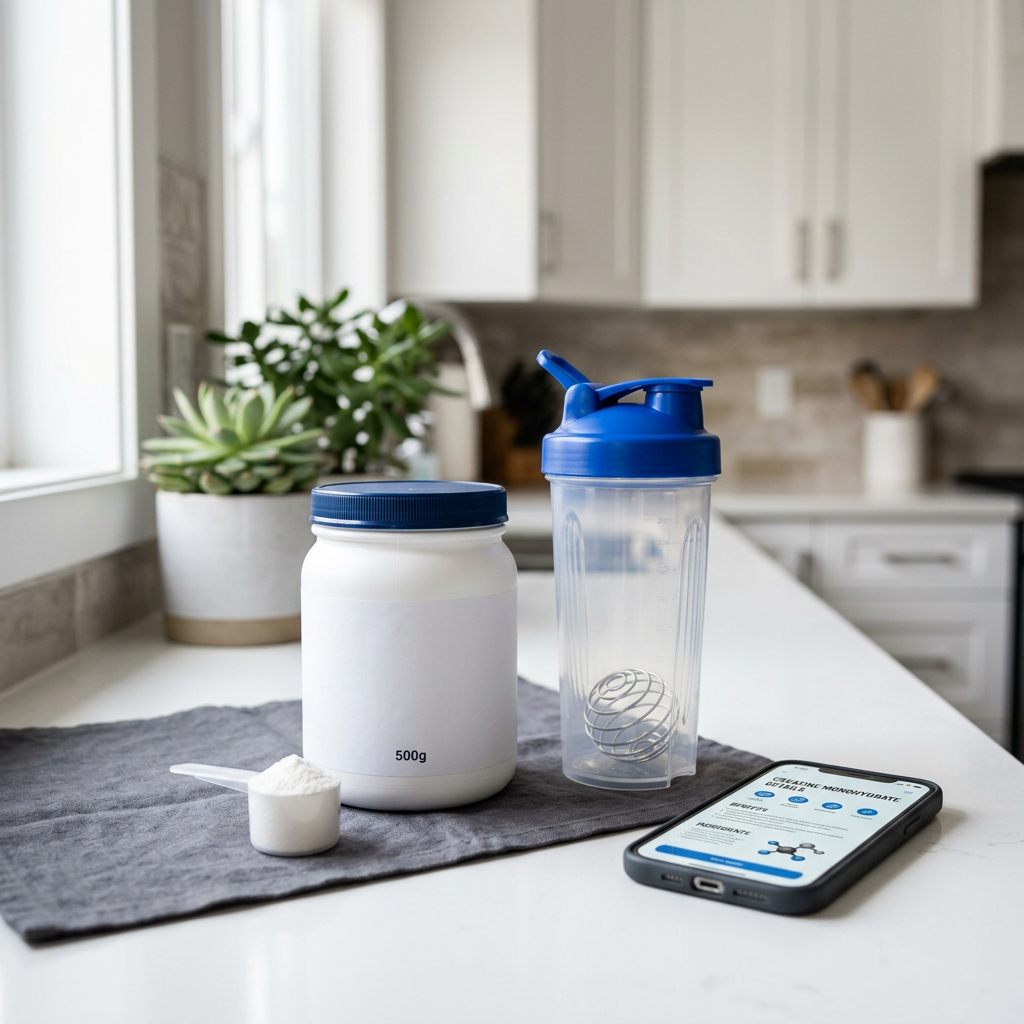
The best creatine for masters athletes in Canada is usually a plain creatine monohydrate product with clear dosing, minimal extra ingredients, and strong quality controls. Fancy forms rarely beat monohydrate on evidence, and they often cost more per effective gram.
When buying in Canada, check for:
- Creatine monohydrate as the main ingredient.
- A clear serving size in grams. Do not assume one scoop always equals 5 g unless the label says so.
- An NPN where applicable. NPN means Natural Product Number, showing the product is licensed by Health Canada as a natural health product.
- Third-party testing or sport certification. This matters more if you compete in tested sport and want to reduce contamination risk.
- Unflavoured simplicity. Fewer extras usually means fewer variables and better value.
| Feature | Best choice for most masters athletes | Why it matters |
|---|---|---|
| Form | Creatine monohydrate | Most studied and most cost-effective |
| Format | Powder | Easiest to dose 3 to 5 g accurately |
| Flavour | Unflavoured or lightly flavoured | Less filler, more flexible mixing |
| Testing | Third-party tested when possible | Useful for purity and banned-substance reassurance |
| Competition use | Sport-certified where available | Extra confidence for drug-tested athletes |
The International Olympic Committee consensus on dietary supplements emphasizes that supplement contamination is a real risk for athletes, even when the ingredient itself is permitted. Creatine is not banned, but poor-quality manufacturing can still create problems in tested competition.
If you are shopping now, compare our creatine brand reviews, best creatine rankings, and guides on best creatine monohydrate in Canada and third-party tested creatine in Canada.
The simplest buying advice is the right advice: buy monohydrate, buy from a reputable brand, verify the label, and avoid paying a premium for marketing language that adds little or no evidence-backed benefit.
Who should use creatine in masters sport—and who should think twice
Creatine is a strong fit for most healthy masters athletes, including beginners, women, strength athletes, sprint athletes, team-sport competitors, and many endurance athletes who also care about strength or repeated surges. The core protocol is broadly similar across these groups, but expectations should match the sport.
Excellent candidates include:
- athletes 35 and over lifting weights to preserve or build strength
- masters sprinters, throwers, rowers, hockey players, football players, and court-sport athletes
- endurance athletes using gym work to maintain lean mass and power
- plant-based athletes, who may respond especially well because dietary creatine intake is lower
- women navigating perimenopause or menopause while trying to retain muscle and performance
More nuanced candidates include:
- distance runners, climbers, and weight-sensitive athletes who are concerned about added body mass
- combat-sport athletes near a weight class
- aesthetic-sport athletes who dislike any transient change in scale weight or muscle fullness
People who should pause and ask a clinician first include:
- those with kidney disease or impaired renal function
- those on medications where renal monitoring matters
- people with complex medical histories involving fluid balance or regular lab interpretation
Masters beginners often ask whether they should wait until training is “serious enough.” The answer is no. If your goal is to gain or preserve muscle, improve gym performance, or support repeated hard efforts, creatine is reasonable from the beginning. It works best when paired with a program that includes progressive resistance training, adequate protein, and enough recovery.
If your main concern is healthy ageing alongside sport, our guides on creatine and aging, creatine and sarcopenia, and creatine and cognition are useful next reads.
In other words, creatine for competitive older adults is not a niche strategy. It is often a foundational one—as long as your health context and sport demands make sense for it.
The bottom line: should masters athletes take creatine?
Yes—most healthy masters athletes should strongly consider creatine monohydrate because it directly supports the physical qualities that become harder to maintain with age: power, strength, lean mass, and repeated-effort performance. If your sport rewards explosiveness, resilience, and productive training, creatine is one of the highest-confidence supplement choices you can make.
The simplest winning protocol is this:
- Buy plain creatine monohydrate from a reputable brand.
- Take 3 to 5 g every day.
- Use a loading phase only if you want faster saturation.
- Keep taking it on rest days and during most competition phases.
- Judge results over weeks, not hours.
Expect a possible early increase in body weight from water stored inside muscle, especially if you load. For most athletes, that is a feature rather than a bug because it reflects fuller muscle creatine stores. Still, if you compete in a weight-sensitive or mass-sensitive sport, use a slower, non-loading approach and test it well before key competition dates.
Creatine is not magic, and it does not replace smart training, protein intake, sleep, or event-specific programming. But as the years add up, small edges in training quality matter more, not less. That is why creatine for older athletes is such a practical tool: the supplement itself is simple, but the accumulated effect on months and years of training can be meaningful.
If you want the most actionable next step, use the creatine dosage calculator, then compare products in our catalog. For deeper reading, continue with how long creatine takes to work, creatine safety, and creatine for competitive athletes.
For masters competition, the answer is not complicated: if you are healthy, train hard, and want evidence-based support for performance and muscle preservation, creatine is very likely worth it.
Creatine for Masters Athletes: The numbers that matter
- 3–5 g/day Standard maintenance dose — Works for most athletes 35 and over.
- 20 g/day Optional loading dose — Typically split into 4 doses for 5–7 days.
- 5–7 days Fast saturation window — Approximate timeframe when using a loading phase.
- 1–2 kg Typical early weight change — Usually intracellular water, not fat gain.
Frequently Asked Questions
Is creatine good for masters athletes?
Yes, creatine is one of the best-supported supplements for masters athletes because it helps support strength, power, lean mass, and repeated high-intensity performance. It is especially relevant after 35 because recovery, muscle retention, and explosive output often become harder to maintain with age.
Should older athletes take creatine every day?
Yes, older athletes should usually take creatine every day, including rest days, because muscle saturation depends on consistent intake. Skipping non-training days makes the protocol less effective and can slow the buildup and maintenance of muscle creatine stores.
What is the best creatine dose for athletes over 35?
The best creatine dose for most athletes over 35 is 3 to 5 g of creatine monohydrate daily. Larger athletes and those with more lean mass often do well at 5 g, while smaller athletes may be fine at 3 g, with loading optional if faster saturation is needed.
Does creatine help masters competition performance?
Yes, creatine can help masters competition performance when the sport includes sprinting, lifting, jumping, repeated bursts, or gym-based strength development. It is less about a dramatic meet-day feeling and more about improving the quality of training and repeated-effort capacity over time.
Is creatine safe for older adults who train hard?
Yes, creatine is generally considered safe for healthy older adults who train hard when used at standard doses. People with kidney disease, complex medical issues, or medications affecting kidney function should get personalized medical advice before using it.
Will creatine make masters athletes gain weight?
Yes, creatine can make masters athletes gain some weight early on, but it is usually water stored inside muscle rather than fat gain. A typical short-term increase is around 1 to 2 kg, especially if a loading phase is used.
Is creatine worth it for endurance-focused older athletes?
Yes, creatine can still be worth it for endurance-focused older athletes, but the benefits are more situational than for strength or sprint athletes. It is most useful when your sport includes surges, hills, sprint finishes, or resistance training to maintain muscle and durability.
Do women masters athletes benefit from creatine too?
Yes, women masters athletes benefit from creatine because the same phosphocreatine energy system exists regardless of sex. It may be especially useful when the goals include preserving muscle, improving training quality, and supporting performance through perimenopause or menopause.
What type of creatine is best for veteran athletes?
Creatine monohydrate is the best type of creatine for veteran athletes because it is the most studied, most cost-effective, and most consistently effective form. Other forms are often marketed as superior, but monohydrate remains the evidence-based default.
Can masters athletes take creatine during competition season?
Yes, masters athletes can usually take creatine during competition season, and most should simply continue their maintenance dose. The main exception is a sport where any extra body mass could clearly hurt performance or affect a weight class.