Creatine for Karate: Striking Power, Kata Explosiveness, and Kumite Conditioning
By The Creatine Canada Research Team — Evidence-based supplement analysts
Yes—creatine can help karate by improving the short-burst energy system that powers explosive strikes, fast entries, repeated kumite exchanges, jumps, and hard training rounds. For most karate athletes, 3 to 5 g of creatine monohydrate daily is the simplest, best-supported way to boost power and training quality, with the main trade-off being possible small water-weight gain.
Evidence-based · Cites 4 sources · Editorial standards
Key Takeaways
- Creatine helps karate most in explosive, repeated efforts: striking flurries, blitzes, sprawls, jumps, pad rounds, and hard intervals.
- Creatine monohydrate is the most studied and most cost-effective form for karate supplements.
- A standard dose is 3 to 5 g daily; a loading phase of 20 g/day split into 4 doses for 5 to 7 days works faster but is optional.
- Expect benefits in training quality and repeated power within about 1 week with loading, or 3 to 4 weeks without it.
- The biggest downside for karateka is usually 0.5 to 2 kg of early water-weight gain, which matters more near weigh-ins.
- Take creatine every day, including rest days; timing matters far less than consistency and full muscle saturation.
- Choose products sold in Canada with clear monohydrate labelling, an NPN when applicable, and preferably third-party testing for competitive athletes.
Does creatine help karate? Yes—especially for explosive techniques and repeated rounds
Yes, creatine helps karate most when your performance depends on fast, hard, repeated efforts rather than steady aerobic output. That makes it highly relevant for kumite exchanges, explosive kata transitions, pad work, sprint-style conditioning, plyometrics, and strength training that supports karate.
Karate is not one energy demand. A typical training week can include short maximal actions such as punches, kicks, jumps, blitz entries, and reactive footwork, plus repeated high-intensity rounds with incomplete recovery. Creatine is most useful in exactly those situations because it supports the phosphocreatine system, the muscle energy system that helps rapidly regenerate ATP, or adenosine triphosphate, the direct fuel for contraction. When that system is better stocked, you can often hit a bit harder, move a bit more explosively, and maintain quality across repeated bursts.
What creatine does not do is magically improve technical skill, timing, distance management, flexibility, or tactical decision-making. It is a performance support tool, not a substitute for good karate training. If your kihon is inconsistent, your guard drops under pressure, or your conditioning base is poor, creatine will not fix those issues by itself. What it can do is make productive training more productive.
This is why the supplement conversation around creatine for karate should be practical, not theoretical. If you are a karateka doing any of the following, you are the kind of athlete most likely to benefit:
- Explosive kumite drills with repeated attacking bursts
- Kata training where speed and snap matter
- Heavy bag, mitt, shield, or pad intervals
- Strength and power work in the gym
- Sprint intervals, shuttle work, and HIIT-style conditioning
- Tournament prep where you need to hold output over many rounds
The broad sports-nutrition evidence is strong. The 2017 ISSN position stand concluded that creatine monohydrate is the most effective nutritional supplement available for increasing high-intensity exercise capacity and lean mass during training. That statement was not karate-specific, but karate’s explosive demands line up well with the types of efforts creatine reliably supports.
If you are brand new, start with plain monohydrate and keep it simple. Our creatine dosage calculator can help you pick an easy daily dose, and our guide to best creatine rankings can help you compare products without overpaying for marketing.
How creatine works for kata and kumite: the ATP-phosphocreatine advantage
Creatine works for karate by increasing intramuscular phosphocreatine stores, which helps your muscles regenerate ATP faster during short, intense efforts. In plain English, it helps you reproduce power with less drop-off when a round, drill, or combination gets demanding.
Your body stores creatine in muscle mostly as phosphocreatine. During a hard punch, kick, jump, sprawl, or explosive stance transition, ATP is broken down quickly to release energy. Because ATP stores are small, the body needs a rapid way to restore them. Phosphocreatine donates a phosphate group to help rebuild ATP fast. That is why the system matters so much in efforts lasting only a few seconds, and in repeated bursts where the rest between efforts is limited.
For kumite, this matters because sparring is intermittent. You may have a quick entry, a sharp exchange, then a brief reset, then another high-speed action. Better phosphocreatine availability can support:
- Faster repeated attacking bursts
- Less decline in snap and speed across rounds
- Better training quality in pad or partner intervals
- Stronger output in supplemental sprint and lifting sessions
For kata, creatine is less about endurance and more about explosive expression. Kata performance depends on acceleration, rapid deceleration, crisp changes of direction, tension-relaxation timing, and visible power. Creatine will not improve artistry or memorization, but it may help the physical side of explosiveness by supporting higher-force, higher-speed muscular contractions and better training output over repeated runs.
Creatine may also indirectly help body composition and training adaptation. By improving performance quality in resistance training and repeated-power work, it can help athletes accumulate more useful work over time. That is one reason creatine is so consistently associated with better strength and lean-mass gains alongside training. For karate, that can mean more force production potential without needing a complicated supplement stack.
The 2021 JISSN review on creatine misconceptions reinforced that creatine is one of the most researched sports supplements and that many common fears around safety and side effects are overstated or unsupported in healthy people. If you want the deeper science, see our beginner explainer on what creatine is and our guide to creatine and ATP.
The main performance caveat is specificity. Creatine helps the energy system; your coach and training plan determine whether that improved energy translates into sharper karate performance.
Who should use creatine in karate—and who should be more cautious
Creatine is a strong fit for most healthy karate athletes who want more explosive power, better repeated-effort performance, or improved training adaptation. It is especially useful when your programme includes sparring, intervals, resistance training, or plyometrics.
Creatine can make sense for several types of karateka:
- Beginners: If you are just starting karate and also doing basic strength work, creatine can support training quality without requiring advanced supplement knowledge.
- Intermediate and competitive kumite athletes: This group often benefits the most because repeated bursts and short recovery periods are central to performance.
- Kata competitors: Creatine may support the physical qualities behind more explosive execution, though the benefit is less direct than in kumite.
- Women in karate: Women can absolutely use creatine; the evidence does not support the myth that it is only for men. For more, see creatine for women.
- Older adults and masters athletes: Creatine is often valuable here because it can support strength, muscle retention, and training quality alongside age-related changes in muscle function.
- Vegetarian or vegan karate athletes: They may respond particularly well because baseline dietary creatine intake is usually lower.
Who should be more cautious? The main group is athletes close to a weigh-in. Because creatine often increases intracellular water, scale weight can rise early in the process. That does not mean fat gain, but it can still matter if you compete in a weight class or need to make a tight tournament limit. In that case, use creatine strategically in the off-season or well before competition, and read our combat-sport-adjacent guide on creatine for MMA and combat sports for weight-cut considerations that also apply to karate.
You should also speak with a qualified healthcare professional before starting creatine if you have known kidney disease, are pregnant or breastfeeding, or take medications that warrant caution around supplements. Healthy people generally tolerate creatine well, but “generally safe” is not the same as “appropriate for every individual.”
For teens, context matters. Competitive youth athletes sometimes use creatine under informed supervision, but the quality of coaching, nutrition, hydration, and parent guidance should come first. Our guide on creatine for teenagers covers that nuance in detail.
Bottom line: if you are a healthy karateka training hard and not immediately cutting weight, creatine is one of the few supplements with a strong case for real performance value.
The right creatine dose for karate: daily use, loading, and body-weight examples
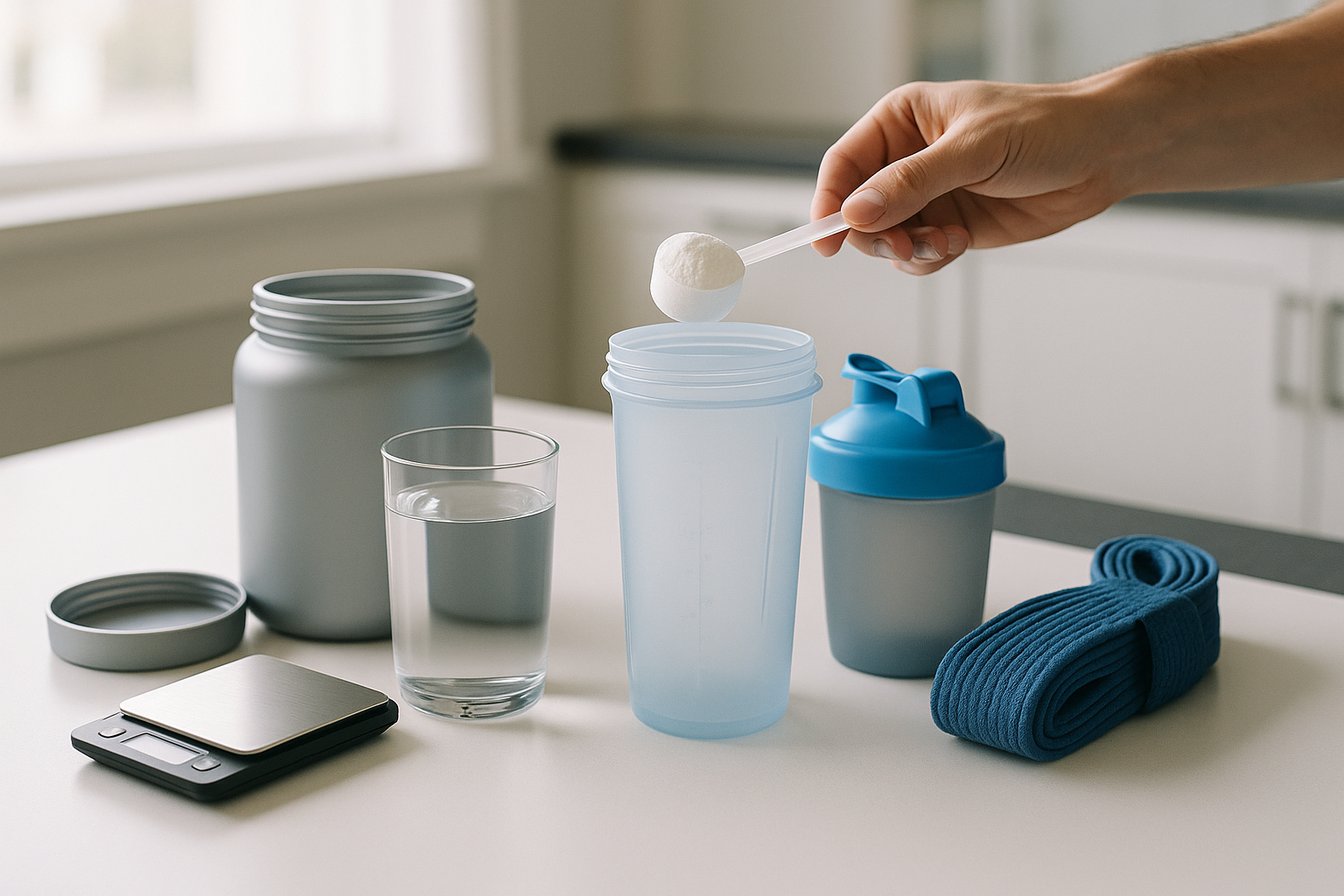
For karate, the evidence-based dose is usually 3 to 5 g of creatine monohydrate per day, with an optional loading phase of 20 g per day split into 4 doses for 5 to 7 days if you want faster results.
The goal of dosing is muscle saturation, meaning filling your muscles’ creatine stores enough to support performance consistently. You can get there two main ways:
- No loading: Take 3 to 5 g daily. This is the simplest approach and usually reaches effective saturation in about 3 to 4 weeks.
- Loading: Take 20 g daily for 5 to 7 days, split into 4 doses of 5 g, then continue with 3 to 5 g daily. This reaches saturation faster, often within about 1 week.
For most karate athletes, the best choice depends on urgency. If you have 4 or more weeks before you care about results, skip loading. If you want benefits sooner for a training block, a camp, or a tournament prep phase, loading is reasonable if your stomach tolerates it.
| Karate athlete profile | Simple daily protocol | Fast-start protocol | Best use case |
|---|---|---|---|
| 55 to 65 kg kata athlete | 3 g/day | 20 g/day split into 4 doses for 5 to 7 days, then 3 g/day | Explosiveness without overcomplicating intake |
| 65 to 85 kg recreational or competitive karateka | 3 to 5 g/day | 20 g/day split into 4 doses for 5 to 7 days, then 3 to 5 g/day | General kumite, pad work, lifting, intervals |
| 85 kg+ strength-focused karate athlete | 5 g/day | 20 g/day split into 4 doses for 5 to 7 days, then 5 g/day | Large athletes with high training volume |
| Weight-class athlete near weigh-in | Usually avoid starting close to weigh-in | Usually avoid loading close to weigh-in | Minimize water-weight uncertainty |
If you want more personalized guidance, use our creatine dosage calculator and see how much creatine per day.
Two important dosing notes for karate:
- More is not better. Once stores are saturated, taking much more does not create extra benefits and can increase GI upset.
- Daily consistency matters more than exact body-weight math for most people. A regular 3 to 5 g habit beats a “perfect” plan you forget half the time.
If you are sensitive to stomach issues, split your daily intake into smaller doses or take it with food. Micronized powders may mix a bit easier, but standard monohydrate still works extremely well. We cover that in our comparison of best type of creatine and creatine loading phase.
When to take creatine for karate training, sparring, and rest days
The best time to take creatine for karate is the time you will remember every day, because consistency matters far more than pre-workout timing. Creatine is not a stimulant, and it does not need to be taken right before class to “kick in.”
Creatine works by raising muscle stores over time, not by delivering an acute same-session boost like caffeine. That means your daily habit is the priority. If you train in the evening, morning works. If you train before work, after training works. If you only remember with dinner, dinner is fine.
That said, some practical timing patterns work well for karate athletes:
- After lifting or hard conditioning: Easy to pair with your post-workout shake or meal.
- With a main meal: Often easier on the stomach and easier to remember.
- After karate class: Convenient if class already anchors your routine.
- Rest days: Take the same maintenance dose with any meal; do not skip just because you are not training.
If you use a loading phase, spread doses across the day rather than taking all 20 g at once. Four 5 g servings is the standard way to reduce digestive problems and improve practicality.
For kumite competitors doing two-a-days or combined gym-plus-dojo sessions, there is still no strong need to “micro-time” creatine around one session versus another. The bigger wins come from:
- Taking it daily
- Taking enough to stay saturated
- Drinking to thirst and normal hydration needs
- Keeping your strength and conditioning work specific to karate demands
You can mix creatine with water, a protein shake, or most non-acidic beverages you will drink soon after mixing. If you want practical mixing guidance, see how to take creatine, when to take creatine, and how to mix creatine.
Can you take it before a tournament match? Yes, but it will not matter much unless you have already been taking it consistently. Think of creatine like filling a battery over days and weeks, not flipping a switch 20 minutes before you bow in.
The practical rule for creatine and karate is simple: pick a daily cue, stick to it, and keep using it through training days, rest days, and deloads unless you have a specific reason, such as a weight cut, to change course.
What results to expect: striking power, kata snap, kumite conditioning, and body weight
Most karate athletes should expect creatine to improve training quality and repeated explosive output more reliably than it improves visible one-day performance miracles. The first thing many people notice is not a knockout-level jump in power, but better maintenance of power across sets, rounds, and sessions.
A realistic timeline looks like this:
- Days 1 to 7 with loading: Muscle stores rise quickly; some athletes notice fuller muscles or a small scale increase before obvious performance changes.
- Weeks 1 to 2: Hard bag rounds, sprint intervals, and gym sessions may feel slightly more repeatable, especially late in the session.
- Weeks 3 to 4 without loading, or after loading maintenance: This is when many athletes clearly feel more “pop” in explosive work and less drop-off between efforts.
- Weeks 4 to 12: The bigger payoff is often indirect: better strength and power training quality, which can then carry over to karate performance.
In karate-specific terms, signs creatine may be helping include:
- Less fade in hand speed during mitt or pad rounds
- Better sharpness in later sparring rounds
- More consistency in jump squats, medicine-ball throws, or sprint repeats
- Improved gym numbers in squats, pulls, presses, and explosive lifts that support karate
- More snap in repeated kata runs when fatigue would normally dull tension and acceleration
The main short-term trade-off is body weight. Early gain is usually water held inside muscle, not fat. For some karateka, that is a non-issue and may even improve leverage and training feel. For others, especially those managing weight classes, it is the main reason to periodize creatine use more carefully. If that concern is front and centre, read does creatine make you gain weight and creatine and weight management.
Also remember that response varies. Athletes with lower baseline creatine stores, including many vegetarians, may notice a stronger effect. Others may feel only subtle changes even though the supplement is working. That is why tracking matters. Monitor:
- Body weight 2 to 3 mornings per week
- Pad-round output or rep quality
- Sprint or shuttle repeat times
- Gym performance on key lifts
- How well you hold speed late in practice
If you want a broader expectation framework, our guide on how long creatine takes to work covers realistic timelines in more detail.
Safety, side effects, and the big karate-specific issue: making weight
Creatine monohydrate is well supported as safe for healthy people at standard doses, but karate athletes need to think carefully about water-weight gain if they compete in weight classes.
The safety profile is one reason creatine remains a staple in evidence-based sports nutrition. The ISSN position stand and the 2021 JISSN review both support its safety in healthy populations when used appropriately. Common side effects are usually mild and manageable:
- Water-weight gain: Often the most noticeable early effect.
- Stomach upset: More likely with large single doses or poor mixing.
- Bloating complaints: Usually dose-related or temporary, and often overstated compared with real-world experience.
For healthy athletes, the common online fears are weaker than the evidence suggests. Standard creatine use is not the same thing as using a steroid, and the research does not support the idea that creatine dehydrates you or causes muscle cramps in a predictable way. For myth-busting, see creatine myths debunked and is creatine safe.
The more important karate-specific discussion is weigh-ins. If you compete in a division with a strict limit, creatine’s performance upside must be balanced against possible scale movement. The practical rules are:
- Do not start creatine for the first time in the final days before a weigh-in.
- Avoid loading close to a weigh-in if your class margin is tight.
- Test your body’s response in an off-season or lower-stakes period first.
- If making weight is difficult, work with a coach or sports dietitian rather than guessing.
Creatine can also affect bloodwork interpretation because it may raise creatinine, a breakdown product commonly used in kidney tests, without meaning kidney damage in a healthy person. That distinction matters. If you get labs done, tell your clinician you use creatine. Our guide on creatine vs creatinine explains the difference.
When should you avoid self-prescribing and ask a professional first? If you have known kidney disease, unexplained swelling, a complex medication list, or are under active medical monitoring, get individualized advice before use. The Mayo Clinic overview on creatine also recommends caution in people with certain medical issues.
Used sensibly, creatine is one of the lowest-drama, highest-evidence supplements in sport. In karate, the main drama comes from the scale, not from the science.
Creatine karate myths: bulky muscles, stiffness, bad kidneys, and other misconceptions
Most creatine myths in karate are either exaggerated or simply wrong, and the most common confusion is mistaking temporary water retention for harmful or unwanted bulk.
Let’s tackle the big ones directly.
Myth 1: Creatine will make me bulky and slow for karate.
Creatine does not automatically make you bulky. It can increase water inside muscle and support lean-mass gains over time if your training and food intake support that, but it does not force bodybuilder-sized growth. Many karateka use creatine mainly to improve power and repeated-effort capacity.
Myth 2: Creatine makes you stiff and hurts flexibility.
The evidence does not support a blanket claim that creatine reduces flexibility. Some athletes feel “tighter” if they gain scale weight quickly, but that is not the same as an actual meaningful loss of range of motion. If mobility worsens, the likely issue is training balance, not creatine itself.
Myth 3: Creatine is bad for your kidneys.
In healthy people using standard doses, creatine is generally considered safe in the evidence base. Confusion often comes from creatinine on blood tests, which can rise without indicating kidney damage. That does not mean people with kidney disease should self-supplement, but it does mean the internet often overstates the risk.
Myth 4: Creatine is a steroid or banned in sport.
Creatine is not a steroid. It is a naturally occurring compound involved in energy metabolism. It is also not generally banned in sport. The International Olympic Committee consensus on dietary supplements recognizes creatine as one of the few supplements with strong evidence for performance benefit in certain contexts.
Myth 5: If I do kata instead of kumite, creatine is useless.
Not true. The case is somewhat stronger for kumite because repeated bursts are obvious, but kata still relies on high-rate force production, acceleration, bracing, and repeated explosive practice. Creatine may still help, just through a slightly less direct pathway.
Myth 6: Fancy forms like HCL are always better for martial arts.
The evidence still favours monohydrate as the most studied and most cost-effective option. Marketing often outruns the data. See creatine monohydrate vs HCL and why monohydrate still wins.
If you want a no-nonsense reality check, our full creatine myths vs facts guide goes deeper into the claims people repeat most often.
Best creatine for karate in Canada: what to buy, what to skip, and how to read the label
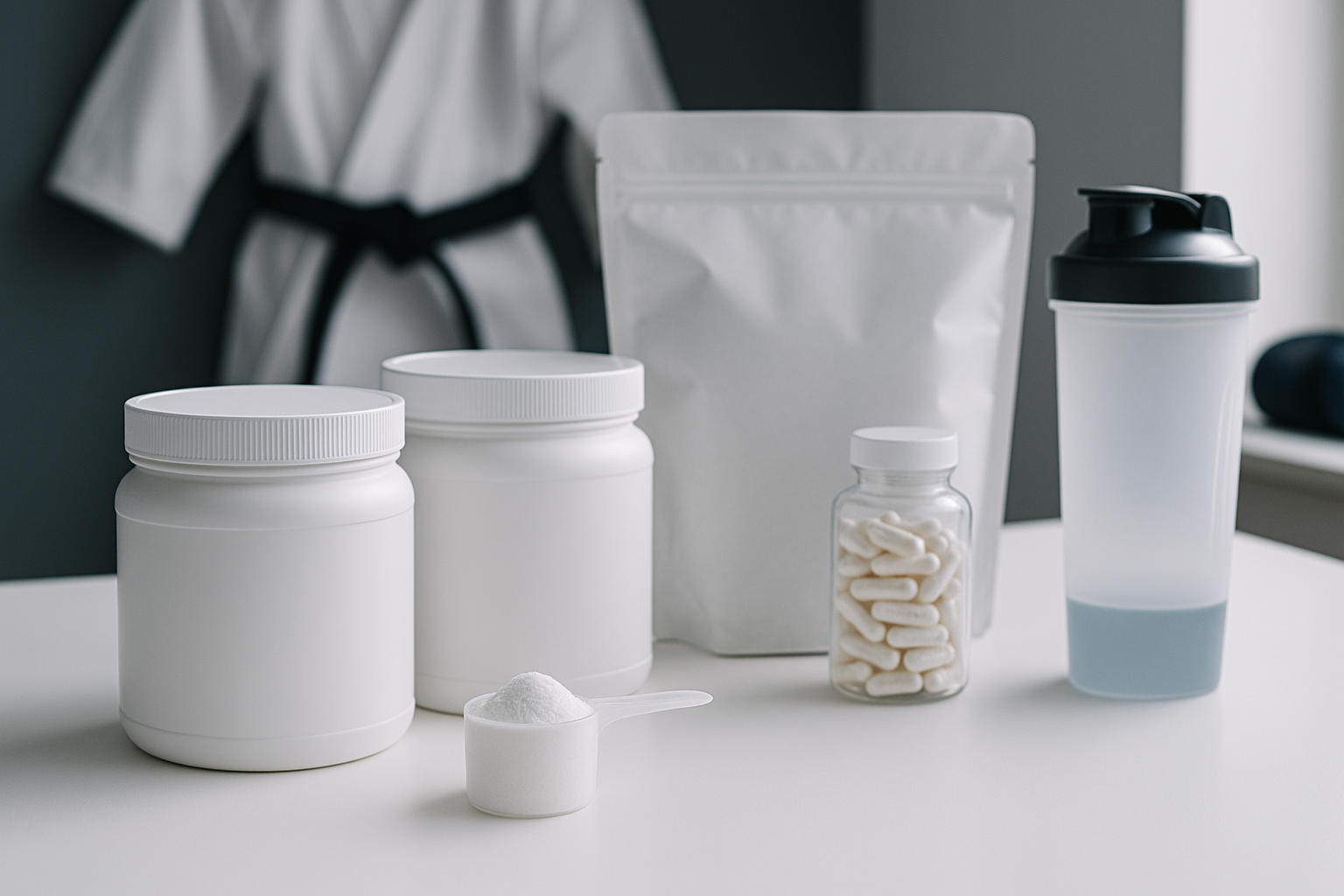
The best creatine for karate is usually plain creatine monohydrate powder from a reputable brand sold in Canada with clear dosing, clean ingredient labelling, and preferably third-party testing if you compete.
Here is the shortest buying advice that actually matters: ignore flashy “fight formula” marketing and start with monohydrate. It is the form backed by the strongest evidence, the best value per gram, and the clearest track record for effectiveness.
When buying in Canada, look for:
- Creatine monohydrate as the main and ideally only active ingredient
- Simple serving size, usually around 3 to 5 g
- NPN, or Natural Product Number, when applicable under Health Canada rules
- Third-party testing or sport certification if you are drug-tested
- Transparent brand information, batch details, and sensible pricing
For competitive karateka, certification can matter because contamination risk is a bigger issue than creatine itself. A pure ingredient is only useful if the product is what it claims to be.
| Option | Good for karate? | Why | Downside |
|---|---|---|---|
| Creatine monohydrate powder | Yes, best default | Most studied, cheapest, reliable | Can be gritty if mixed poorly |
| Micronized monohydrate | Yes | Same core ingredient, often mixes easier | Sometimes costs more for little functional difference |
| Capsules | Sometimes | Travel-friendly, no mixing | Often expensive and requires many capsules for a full dose |
| Gummies or flavoured blends | Usually not first choice | Convenient or tastier | Higher cost, sometimes lower dose accuracy, added extras |
| HCL, buffered, ester forms | Usually skip | Heavy marketing appeal | Less evidence, often worse value than monohydrate |
If you are shopping now, compare our creatine brand reviews, browse the creatine product catalog, and read best creatine monohydrate in Canada. For label literacy, our guide to how to read a creatine label is useful too.
In short: the best karate supplements creatine choice is rarely the coolest-looking tub. It is the boring, pure, properly labelled monohydrate you will actually take every day.
How to use creatine for karate: a simple 7-step plan you can start today
The simplest effective creatine plan for karate is to choose monohydrate, take 3 to 5 g daily, stay consistent for at least 4 weeks, and track a few karate-relevant performance markers.
- Buy the right product. Choose plain creatine monohydrate from a reputable Canadian seller. If you compete, prioritize third-party tested options.
- Pick your protocol. Use either 3 to 5 g daily with no loading, or 20 g daily split into 4 doses for 5 to 7 days if you want faster saturation, then 3 to 5 g daily.
- Choose a routine cue. Tie creatine to breakfast, your post-training shake, or dinner. The best timing is the one you will repeat every day.
- Mix it properly. Stir or shake it into water, juice, or protein. If it settles, that is not a problem; drink the residue too. Warm liquid can improve dissolving.
- Keep expectations realistic. Do not expect instant fight-night magic. Expect better repeated power, better training quality, and possible small water-weight gain.
- Track useful metrics. Use body weight, pad-round quality, sprint repeats, jump performance, and late-session sharpness in kumite or kata.
- Troubleshoot instead of quitting early. If your stomach feels off, split the dose. If the scale jumps before a weigh-in, rethink timing, not necessarily the supplement forever.
A sample beginner routine for recreational karate looks like this:
- Week 1 to 4: 5 g creatine monohydrate once daily after class or with dinner
- Training focus: 2 to 3 dojo sessions, 2 strength sessions, 1 interval session
- Track: body weight, 3-round bag output, squat or trap-bar strength, and sparring sharpness late in class
A competitive kumite athlete might do:
- Loading phase 5 to 7 days, then 5 g/day maintenance
- Continue through sparring blocks, lifting blocks, and conditioning blocks
- Reduce experimentation near competition and avoid last-minute protocol changes
Key mistakes to avoid:
- Taking it only on training days
- Using random tiny doses hidden in proprietary blends
- Starting right before an important weigh-in
- Switching products constantly
- Confusing normal water retention with fat gain
Need a deeper walkthrough? Use our creatine starter pack, common creatine mistakes, and creatine not working guides to dial in your plan.
What to stack with creatine for karate—and what is mostly unnecessary
Creatine stacks well with protein powder, caffeine, and a sound hydration plan, but most karate athletes do not need a large supplement stack to get results.
If your budget is limited, creatine should usually come before trendier options because its evidence base is stronger. A sensible minimalist stack for karate often looks like this:
- Creatine monohydrate: For repeated power and training quality
- Protein powder if needed: To help meet daily protein targets conveniently
- Caffeine strategically: For acute alertness or hard training sessions if you tolerate it
- Electrolytes when appropriate: Useful in long, sweaty sessions or hot environments, but not a replacement for creatine
Creatine and protein can be mixed together without any problem. Creatine and coffee or pre-workout can also be used together by most people. The old idea that caffeine “cancels out” creatine is overstated and not a good reason to avoid the combination if it works for you. For the details, see creatine and protein powder and creatine and caffeine.
What about beta-alanine? It has a different job. Creatine supports short-burst ATP regeneration; beta-alanine helps raise muscle carnosine, which can support buffering in harder efforts of somewhat longer duration. Some karate athletes doing repeated intense rounds may choose both, but creatine is usually the more foundational starting point. We compare them in creatine vs beta-alanine.
What is mostly unnecessary for most karateka?
- Multiple exotic creatine forms
- Proprietary “combat blends” with tiny underdosed ingredients
- Anything promising instant striking power after one serving
- Supplements used to compensate for poor sleep, low calories, or weak programming
The IOC consensus on supplements emphasized that only a small number of supplements have good evidence for improving performance, and creatine is on that short list. That is exactly why it deserves attention: not because it is flashy, but because it repeatedly clears the evidence bar that many products never reach.
If you want a performance-first rather than hype-first framework, read creatine stacking guide and creatine in sports nutrition.
Bottom line: is creatine worth it for karate?
Yes, creatine is worth serious consideration for karate if your goal is better explosive output, better repeated-effort performance, and higher-quality training over time. Among legal sports supplements, it is one of the strongest evidence-based options available.
The case is strongest for kumite athletes, because the demands of repeated bursts, quick re-acceleration, and incomplete recovery line up directly with creatine’s main mechanism. The case is still good for kata athletes, especially those who want more speed, snap, and power expression in repeated technical runs and in the gym work that supports them.
The formula is simple:
- Choose creatine monohydrate
- Take 3 to 5 g every day
- Load only if you want faster saturation
- Keep taking it on rest days
- Track performance, not just scale weight
- Be strategic if you compete in a weight class
If you are asking, does creatine help karate? the honest answer is yes, but in the way good sports nutrition usually works: it supports the underlying physiology that lets quality training produce better outcomes. It does not replace skill, tactics, discipline, or coaching. It makes a well-run karate programme work a little better.
If you want to start today, use the creatine dosage calculator, compare options in our best creatine rankings, and review is creatine safe if you still have concerns. If you compete and making weight is a major factor, plan your use early rather than improvising close to tournament day.
For most healthy karateka, creatine is not a gimmick. It is the boring, proven supplement that earns its place by helping you hit harder, repeat better, and train at a higher quality across weeks and months.
Creatine for Karate: The Numbers That Matter
- 3–5 g/day Standard maintenance dose — Best default for most karate athletes using creatine monohydrate.
- 20 g/day Optional loading phase — Split into 4 doses for 5–7 days to saturate muscle faster.
- 5–7 days Fastest typical time to feel it — Usually when using a loading phase before moving to maintenance.
- 3–4 weeks No-loading saturation timeline — Typical timeframe when taking a steady daily dose only.
Frequently Asked Questions
Does creatine help karate performance?
Yes, creatine can help karate performance, especially in explosive and repeated efforts. It is most likely to improve things like striking flurries, quick entries, repeated sparring exchanges, jump training, sprint intervals, and the gym work that supports karate. It will not improve technique by itself, but it can help you express power and maintain output better across training.
Is creatine good for kumite?
Yes, creatine is particularly well suited to kumite because kumite relies on short bursts repeated with limited recovery. By helping restore ATP more quickly through the phosphocreatine system, creatine may help you keep speed, snap, and explosiveness from dropping off as rounds accumulate. That makes it more relevant to kumite than to purely steady-state conditioning.
Does creatine help kata?
Yes, creatine may help kata, though the benefit is usually less direct than in kumite. Kata relies on acceleration, braking, explosive transitions, bracing, and repeated high-quality practice runs, all of which draw on high-rate force production. Creatine will not improve rhythm, precision, or memorization, but it may support the physical explosiveness behind sharper execution.
What is the best creatine for karate?
The best creatine for karate is usually plain creatine monohydrate. It is the most studied form, the most cost-effective, and the one most consistently supported by sports-nutrition evidence. In Canada, look for a reputable brand with clear labelling, simple dosing, and preferably third-party testing if you compete in drug-tested events.
How much creatine should a karate athlete take?
Most karate athletes should take 3 to 5 g of creatine monohydrate daily. If you want faster saturation, you can use a loading phase of 20 g per day split into 4 doses for 5 to 7 days, then return to 3 to 5 g daily. The most important factor is consistency, not taking a huge dose.
When should I take creatine for karate training?
You should take creatine whenever you can remember it every day, because timing matters less than consistency. Taking it after training, with a meal, or at the same time each day are all reasonable options. Creatine is not a stimulant, so taking it right before karate class does not create an immediate same-session effect.
Will creatine make a karateka gain weight?
Yes, creatine can cause a small increase in body weight, usually from water stored inside muscle rather than fat gain. That is not automatically a problem, but it can matter for karate athletes in weight classes. If you have to make a strict limit, avoid starting creatine close to weigh-in and test your response well in advance.
Is creatine safe for martial artists?
Creatine is generally considered safe for healthy martial artists when used at standard doses. The evidence base on creatine monohydrate is extensive, and major sports-nutrition reviews support its safety in healthy people. Athletes with kidney disease, complicated medical issues, or special medical monitoring should speak with a healthcare professional first.
Can beginners in karate take creatine?
Yes, beginners in karate can take creatine if they are healthy and want to support training. Beginners do not need a complicated protocol; 3 to 5 g of creatine monohydrate daily is usually enough. However, basics such as regular training, adequate calories, enough protein, sleep, and hydration still matter more than any supplement.
Do I need to cycle creatine for karate?
No, you do not need to cycle creatine for karate. Once your muscles are saturated, daily use of 3 to 5 g is the normal maintenance approach, and there is no good evidence that routine cycling is necessary for healthy users. The main reason to pause is practical, such as a planned weight cut or a personal preference.