Creatine Biosynthesis: How Your Body Makes Its Own Creatine
By The Creatine Canada Research Team — Evidence-based supplement analysts
Your body makes creatine through a two-step process that combines the amino acids arginine, glycine, and methionine, mainly across the kidneys and liver. In plain English, endogenous creatine synthesis produces about 1 gram per day, then sends creatine into muscle and other tissues where it helps rapidly regenerate ATP, your cells’ immediate energy currency.
Evidence-based · Cites 4 sources · Editorial standards
Key Takeaways
- The body makes creatine from arginine, glycine, and methionine in a two-step biosynthesis pathway.
- Step 1 happens mainly in the kidneys; step 2 happens mainly in the liver.
- An average adult makes about 1 gram of creatine per day and gets the rest from food if they eat animal products.
- About 95% of the body’s creatine is stored in skeletal muscle, mostly as phosphocreatine.
- Vegetarians and vegans often start with lower muscle creatine stores because plant foods provide virtually none.
- Supplemental creatine monohydrate raises muscle creatine beyond what normal diet and biosynthesis usually provide.
- For most people, 3-5 g/day of creatine monohydrate is the evidence-based way to increase stores safely.
How the body makes creatine: the direct answer in one minute
Your body makes creatine by combining arginine and glycine first, then adding a methyl group derived from methionine to form creatine. That is the core answer to how does the body make creatine, and the process is called creatine biosynthesis or endogenous creatine synthesis.
Here is the short version of the pathway:
- Step 1: The enzyme AGAT transfers part of arginine to glycine to create guanidinoacetate, often abbreviated GAA, plus ornithine.
- Step 2: The enzyme GAMT adds a methyl group to guanidinoacetate, producing creatine.
- Step 3: The newly made creatine enters the bloodstream and is transported into tissues, especially skeletal muscle, heart, and brain.
Most people produce roughly 1 gram of creatine per day, though actual output depends on body size, muscle mass, diet, and possibly genetics. Most of your total creatine pool then lives in muscle, where it exists either as free creatine or as phosphocreatine, the high-energy form that helps rapidly recycle ATP during short, intense effort.
This is why the body makes its own creatine even if you never take a supplement: creatine is not a stimulant and not a hormone, but a normal compound your body needs for high-speed energy transfer. If you are brand new to the topic, our guides on what creatine is and creatine and ATP explain the bigger picture.
Diet also matters. People who eat meat or fish usually get some creatine from food, while strict vegans rely almost entirely on creatine production in the body unless they supplement. That helps explain why plant-based athletes often respond particularly well to creatine monohydrate supplementation.
For context, making creatine is not the same as fully saturating muscle with it. Your body’s baseline synthesis is enough for normal physiology, but supplementation can raise intramuscular stores further, which is one reason it improves high-intensity performance. The 2017 ISSN position stand concluded that creatine monohydrate is the most effective nutritional supplement for increasing high-intensity exercise capacity and lean mass during training.
Where is creatine made in the body? Mostly kidneys and liver, then stored in muscle
Creatine is made mainly across the kidneys and liver, although other tissues can contribute to a smaller extent. If you are asking where is creatine made in body, the practical answer is: the first step occurs largely in the kidneys, the second largely in the liver, and the final destination is mostly skeletal muscle.
The pathway is split across organs because the enzymes are concentrated in different places:
- AGAT is found highly in the kidneys and pancreas, where arginine and glycine are combined into guanidinoacetate.
- GAMT is found highly in the liver, where guanidinoacetate is methylated into creatine.
- Transporters then move creatine from the bloodstream into tissues that need fast energy buffering, especially muscle and brain.
Once made, creatine does not just sit in the liver. It circulates and is actively taken up by tissues through a specific transporter called SLC6A8, often called the creatine transporter. Muscle takes up the lion’s share because muscle mass is large and because repeated contractions demand rapid ATP regeneration.
About 95% of the body’s creatine is stored in skeletal muscle. The remainder is found in tissues with high and fluctuating energy demand, including the brain, heart, and testes. This distribution is one reason creatine keeps showing up not only in sports-nutrition discussions but also in research on cognition and healthy aging.
It is helpful to distinguish site of production from site of action. The body does not primarily make creatine inside the muscle itself, but muscle is where most of it is stored and used. That is also why muscle creatine content, not blood creatine alone, matters most for performance outcomes.
If you want the full beginner view of what happens after creatine reaches muscle, see the creatine phosphate energy system and creatine muscle saturation. Those pages explain why even though the body makes its own creatine, additional intake can still matter for training results.
The creatine synthesis pathway step by step: arginine, glycine, methionine, then creatine
The creatine synthesis pathway has two enzyme-driven steps, and each step has a clear chemical job. If you searched creatine arginine glycine, this is the section that connects those amino acids to the finished molecule.
Step 1: AGAT forms guanidinoacetate. The enzyme arginine:glycine amidinotransferase, abbreviated AGAT, transfers an amidino group from arginine to glycine. The result is guanidinoacetate plus ornithine. This is the rate-limiting step in creatine biosynthesis, meaning it often acts as the main bottleneck controlling how much creatine the body can produce.
Step 2: GAMT methylates guanidinoacetate. The enzyme guanidinoacetate methyltransferase, abbreviated GAMT, adds a methyl group to guanidinoacetate. That methyl group comes from S-adenosylmethionine, or SAM, which is generated from the amino acid methionine. After methylation, guanidinoacetate becomes creatine.
That means methionine matters not because it is built into creatine directly in the same way arginine and glycine are, but because it donates the methyl group needed to complete the molecule. This is why textbook summaries often say creatine is synthesised from arginine, glycine, and methionine.
Once formed, creatine can be phosphorylated by the enzyme creatine kinase to become phosphocreatine. Phosphocreatine is a stored high-energy phosphate compound that can rapidly donate its phosphate to ADP to remake ATP during intense effort. That is the performance-relevant endpoint of the entire pathway.
The pathway also has a built-in feedback mechanism. When creatine intake rises, either through diet or supplements, the body can downregulate some endogenous creatine synthesis. In other words, your body is smart: it does not keep manufacturing maximal amounts when stores are already being topped up from outside sources.
For a practical primer on what extra creatine intake changes, see how to take creatine and how much creatine per day. They explain how supplementation works with, rather than against, your body’s existing production system.
Why your body bothers making creatine: fast ATP recycling for high-energy tissues
Your body makes creatine because creatine is one of the fastest ways cells can buffer and regenerate ATP during sudden energy demand. In simple terms, creatine exists so your muscles and other high-energy tissues can keep working when energy needs spike faster than slower metabolic systems can respond.
ATP, or adenosine triphosphate, is the immediate energy currency of the cell. The problem is that ATP stores inside muscle are small. During a heavy set of squats, a sprint, a jump, or a repeated hockey shift, ATP is broken down rapidly. If it is not rebuilt quickly, force output drops.
This is where the creatine system steps in. Phosphocreatine donates a phosphate group to ADP through the enzyme creatine kinase, instantly regenerating ATP. That makes the phosphocreatine system the body’s rapid-response energy buffer for short, explosive work.
Creatine also appears to do more than just cover the first few seconds of effort. Higher muscle creatine stores can help athletes sustain performance across repeated bouts, improve training quality, and indirectly support greater strength and lean-mass gains over time. That is why creatine works best when paired with resistance training or other high-intensity training.
The benefits are not limited to bodybuilders. The brain and heart also use creatine because they have high and variable energy demands. Research interest in cognitive and neurological applications has expanded, but the strongest and most consistent evidence still sits with high-intensity exercise performance and lean mass support.
The 2018 International Olympic Committee consensus on dietary supplements recognised creatine as one of the few supplements with a strong evidence base for certain performance contexts. That matters because it reinforces that creatine is not fringe sports-nutrition lore; it is a central part of human energy metabolism.
If your goal is gym performance, the practical takeaway is straightforward: your body makes creatine because it is useful, and supplementation works because it expands this existing energy system beyond baseline levels. For a plain-English overview, read creatine benefits and does creatine give you energy.
How diet, meat intake, and supplementation affect endogenous creatine synthesis
Diet changes how much creatine you need to make yourself, and supplementation usually reduces how much your body needs to synthesise. That is the simplest answer to how endogenous creatine synthesis interacts with food and supplements.
Animal foods such as red meat and fish contain creatine, so omnivores generally rely on both diet and internal production. Plant foods provide virtually no creatine, so vegetarians and vegans depend much more heavily on their own synthesis unless they use a supplement. Because of that lower habitual intake, plant-based eaters often begin with lower muscle creatine stores and may experience a larger increase when supplementing.
Supplementation changes the equation through feedback regulation. When muscle and blood creatine availability rise, the body can dial back parts of the biosynthetic pathway, especially the AGAT step. That does not mean your body “forgets” how to make creatine; it means it temporarily reduces production because supply is already adequate.
There is no good evidence that this normal feedback shutdown is harmful in healthy people. When supplementation stops, endogenous production gradually returns as your body rebalances. This is one reason there is no physiological need to “cycle” creatine in healthy adults.
Practical examples:
- Omnivore beginner: You likely already get some dietary creatine, but 3-5 g/day can still raise muscle stores further.
- Vegan lifter: You may benefit more noticeably because your diet adds little or none.
- Older adult: Even though the body still makes creatine, supplementation may support training quality and lean mass retention when paired with resistance exercise.
If you want to estimate an appropriate daily amount, use our creatine dosage calculator. For a deeper look at food sources, see foods high in creatine, and for plant-based context, see is creatine vegan.
The broad research consensus is that creatine monohydrate remains the reference form for raising body stores. The 2021 JISSN review on common questions and misconceptions about creatine reinforced that many fears around creatine are overstated and that monohydrate remains the most evidence-backed option.
How to support your creatine status: a practical step-by-step plan for real life
If your goal is to support or increase creatine availability, the most effective practical plan is to eat enough protein overall and, if desired, take creatine monohydrate daily in evidence-based doses. You cannot meaningfully “hack” creatine biosynthesis with exotic tricks, but you can support the system intelligently.
- Decide your goal. If you simply want to cover the basics, aim for daily consistency. If you want faster saturation, use a short loading phase.
- Choose the right form. Pick plain creatine monohydrate unless you have a very specific reason not to. It is the most studied and usually the best value. Our best creatine rankings and creatine product catalog can help you compare options.
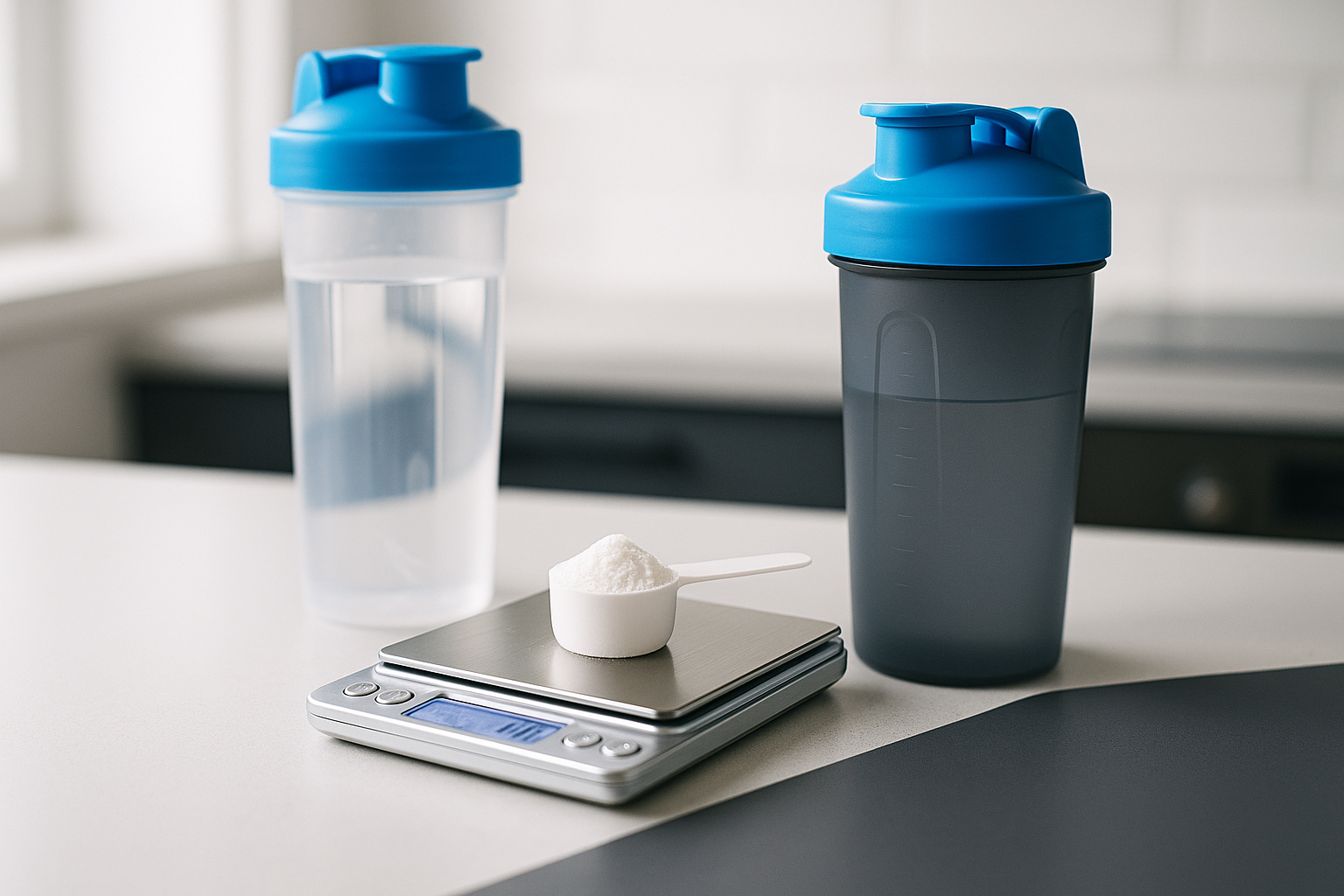
- Use the standard dose. Take 3-5 g/day for maintenance or gradual saturation. If you want faster saturation, take roughly 20 g/day split into 4 doses for 5-7 days, then continue with 3-5 g/day.
- Take it every day. Timing matters less than consistency. Training days and rest days both count.
- Mix it with water or a meal. Creatine does not need a special delivery system. A meal is fine, a shake is fine, and plain water is fine.
- Expect a timeline, not a jolt. You will not “feel” creatine like caffeine. With loading, benefits may begin within about a week; without loading, it commonly takes around 3-4 weeks to meaningfully saturate stores.
- Track useful signs. Look for better training volume, an extra rep on repeated hard sets, slightly improved sprint repeatability, or a modest increase in scale weight from intracellular water.
By body weight, a 60 kg person usually does fine with 3 g/day, a 75-90 kg person often lands in the 3-5 g/day range, and larger athletes with high lean mass may prefer 5 g/day. For loading, a body-weight method of about 0.3 g/kg/day is commonly used.
For exact dosing frameworks, see how much creatine per day, creatine loading phase, and how long creatine takes to work.
Dosing, timing, and what to expect week by week if you supplement
The best creatine dose for most adults is 3-5 g of creatine monohydrate per day, and the best timing is simply the time you will remember consistently. For most users, saturation matters far more than clock timing.
| Goal | Protocol | How fast it works | Best for |
|---|---|---|---|
| Gradual saturation | 3-5 g once daily | Usually about 3-4 weeks | Most beginners, sensitive stomachs, simple routines |
| Fast saturation | 20 g/day split into 4 doses for 5-7 days, then 3-5 g/day | Often within about 1 week | Athletes wanting faster results |
| Body-weight loading | About 0.3 g/kg/day for 5-7 days, then 3-5 g/day | Similar to standard loading | Larger or more precision-focused athletes |
Here is a realistic timeline:
- Week 1 with loading: Muscle creatine rises quickly. Some people notice slightly fuller muscles or a small scale-weight increase from water held inside muscle.
- Weeks 1-2 without loading: You may not notice much yet, which is normal.
- Weeks 3-4 without loading: Stores are typically approaching saturation. Training may feel more repeatable on hard sets or repeated sprints.
- Weeks 4-12: The bigger effect usually comes indirectly through better training quality over time, not a dramatic acute sensation.
Take creatine on rest days too. Missing a single day is not a disaster, but daily consistency is how you maintain elevated stores. If you want more detail on daily use, see creatine on rest days and what happens if you miss a day.
Creatine timing around workouts is a minor variable at best. Post-workout, pre-workout, breakfast, or before bed can all work if total daily intake is consistent. For a full timing breakdown, see when to take creatine.
If you are not sure whether it is working, judge it by training outcomes over several weeks, not by an immediate buzz. Creatine is a saturation supplement, not a stimulant.
Who benefits most from creatine if the body already makes it?
The people who benefit most from creatine supplementation are those who want more high-intensity energy availability than baseline diet and biosynthesis provide. Your body already makes creatine, but that does not mean your tissues are maximally saturated.
Beginners can absolutely benefit. Creatine is not only for advanced lifters. If you are just starting resistance training, creatine may help you do a bit more quality work over time, which compounds into better results. Our creatine for beginners guide covers the basics.
Women benefit too. Creatine is not a “men’s supplement,” and it does not inherently make women bulky. Evidence supports its use for strength, lean mass support, and performance, especially when paired with training. See creatine for women for the specifics.
Older adults are a particularly important group. Aging is associated with lower muscle mass, reduced power, and higher risk of sarcopenia. Creatine, combined with resistance training, can support muscle function and training adaptations. See creatine for older adults.
Vegetarians and vegans often respond strongly because they typically consume little to no dietary creatine. Lower baseline stores create more room for improvement.
Athletes in explosive or repeated-sprint sports often get the clearest payoff. Think hockey, football, sprinting, CrossFit, weightlifting, and team sports with repeated bursts. That said, endurance athletes may also use creatine strategically, especially when strength, sprint finish, or glycogen support matters.
Some people notice less dramatic change. Those who already have relatively high muscle creatine stores from diet and muscle mass may respond less visibly, sometimes called “non-responders,” though true non-response is often overstated and sometimes just reflects poor tracking or insufficient time. If that sounds familiar, see creatine non-responders and creatine not working.
The key principle is simple: endogenous creatine synthesis keeps you functioning, but supplementation can push muscle stores higher than normal baseline, and that can matter for performance and training adaptation.
Safety, side effects, and how to buy creatine well in Canada
Creatine monohydrate is widely considered safe for healthy adults when used in standard doses, and the most common side effects are mild and manageable. The main practical risks are buying low-quality products, taking more than needed, or misreading normal lab changes.
The strongest evidence-backed side effects are usually:
- Temporary water-weight gain: often from increased intracellular water in muscle, especially early on.
- Digestive upset: more likely with large single doses or poor mixing.
- Misinterpretation of creatinine: creatine can increase creatinine, a breakdown product, without meaning kidney damage in healthy users.
The Mayo Clinic overview on creatine notes that creatine appears safe for many people when used appropriately, and sports-nutrition position stands have consistently supported its safety profile in healthy populations. For deeper myth-busting, see creatine myths debunked, is creatine safe, and creatine and kidneys.
In Canada, pay attention to product quality signals:
- NPN: An Natural Product Number indicates the product is licensed by Health Canada as a natural health product.
- Third-party testing: Look for programmes such as NSF Certified for Sport or Informed Sport if you are a tested athlete.
- Simple label: Ideally, the ingredient panel says creatine monohydrate and not much else.
- Value per gram: Fancy formats often cost more without better results.
| What to check | Why it matters | Best sign |
|---|---|---|
| Form | Monohydrate has the strongest evidence | Creatine monohydrate |
| Regulatory status | Shows Canadian compliance | NPN on label |
| Sport testing | Reduces contamination risk | NSF or Informed Sport |
| Ingredient list | Avoid unnecessary fillers | One active ingredient |
If you are shopping now, compare options through our creatine brand reviews and best creatine rankings. For most Canadians, plain monohydrate from a reputable brand is still the smartest buy.
Common mistakes and myths: what people get wrong about how the body makes creatine
The biggest mistake people make is assuming that because the body makes its own creatine, supplementation must be useless. That is false. Endogenous production covers normal physiological need, but supplementation can raise muscle stores above usual baseline and improve high-intensity performance.
Here are the most common myths and the reality behind them:
- Myth: “Creatine is a steroid.” False. Creatine is a naturally occurring compound involved in energy metabolism, not an anabolic steroid. See is creatine a steroid.
- Myth: “If your body makes creatine, you should not take more.” False. The same logic would wrongly dismiss many nutrients and ergogenic aids. What matters is whether extra intake safely increases useful tissue levels.
- Myth: “Creatine only works for men.” False. Women, older adults, vegetarians, and recreational lifters can all benefit.
- Myth: “You need to cycle creatine.” Usually false. Healthy adults generally do not need cycling because endogenous production naturally readjusts. See do you need to cycle creatine.
- Myth: “More is better.” False. Once stores are saturated, extra intake does not keep scaling benefits and is more likely to cause GI issues.
- Myth: “Creatine damages kidneys.” The evidence does not support kidney harm in healthy adults using recommended doses, but people with kidney disease or specific medical concerns should speak with a clinician first.
- Myth: “You should feel it immediately.” False. Creatine is not a stimulant. Judge it over weeks of better training, not minutes after a scoop.
Another subtle mistake is confusing creatine with creatinine. Creatinine is a breakdown product measured on blood tests. A higher creatinine reading after supplementation can reflect higher creatine turnover rather than kidney damage, which is why context matters. Our creatine vs creatinine guide explains this clearly.
Finally, do not overcomplicate absorption. You do not need a proprietary stack, expensive delivery system, or exact workout-minute timing. The boring truth is still the correct one: monohydrate, 3-5 g/day, every day, long enough to saturate.
Bottom line: the body makes creatine, but supplementation can still meaningfully raise your stores
Your body makes creatine through a two-step biosynthesis pathway using arginine, glycine, and methionine, mainly across the kidneys and liver, then stores most of it in skeletal muscle. That is the direct answer to how does the body make creatine, and it explains why creatine is a normal part of human physiology rather than a foreign performance trick.
The bigger practical point is this: baseline production is not the same as maximal muscle saturation. Endogenous creatine synthesis supports everyday function, but creatine monohydrate supplementation can raise muscle creatine and phosphocreatine stores further. For many people, that translates into slightly better repeated high-intensity performance, better training quality, and more lean-mass gain over time when training is in place.
If you want the simplest evidence-based plan, take 3-5 g of creatine monohydrate daily. If you want faster saturation, use about 20 g/day in 4 divided doses for 5-7 days, then return to 3-5 g/day. Take it consistently, do not expect a stimulant-like sensation, and assess results over several weeks.
Choose a reputable Canadian product, ideally with an NPN and solid quality signals, especially if you compete in tested sport. And remember that creatine is not a replacement for training, protein, sleep, or total calories; it is a reliable helper layered on top of those basics.
If you want to go deeper next, the most relevant reads are what is creatine, how much creatine per day, when to take creatine, and the complete creatine guide.
Creatine Biosynthesis at a Glance
- ~1 g/day Typical creatine made by the body — Varies with body size, muscle mass, diet, and individual factors.
- 2 steps Main biosynthesis pathway — AGAT forms guanidinoacetate; GAMT converts it to creatine.
- ~95% Of body creatine stored in skeletal muscle — Mostly as free creatine and phosphocreatine.
- 3-5 g/day Standard evidence-based supplemental dose — Used to gradually increase and maintain muscle creatine stores.
Frequently Asked Questions
How does the body make creatine naturally?
The body makes creatine naturally through a two-step process involving arginine, glycine, and methionine. First, arginine and glycine form guanidinoacetate through the enzyme AGAT, then guanidinoacetate is methylated by GAMT using a methyl group derived from methionine to become creatine.
Where is creatine made in the body?
Creatine is made mainly in the kidneys and liver. The first step of creatine biosynthesis happens largely in the kidneys, while the second step happens largely in the liver before creatine is released into the bloodstream and taken up mostly by skeletal muscle.
What amino acids are used to make creatine?
Creatine is synthesised from arginine, glycine, and methionine. Arginine and glycine directly form guanidinoacetate, and methionine contributes the methyl group needed to convert guanidinoacetate into creatine.
Does the body make enough creatine on its own?
The body usually makes enough creatine to support normal physiology, but not necessarily enough to maximise muscle creatine stores for performance. That is why creatine supplementation can still improve high-intensity training outcomes even though creatine is made naturally.
Why do people take creatine if the body already makes it?
People take creatine because supplementation can raise muscle creatine and phosphocreatine stores above usual baseline levels. Higher stores help regenerate ATP faster during repeated hard efforts, which can improve training quality, power output, and lean-mass gains over time.
Do vegetarians and vegans make less creatine?
Vegetarians and vegans do not necessarily make less creatine, but they usually consume much less from diet because plant foods provide virtually none. As a result, they often start with lower muscle creatine stores and may respond more strongly to supplementation.
Does taking creatine stop your body from making its own?
Taking creatine can temporarily reduce endogenous creatine synthesis, but it does not permanently stop your body from making its own. This is a normal feedback response to higher creatine availability, and production typically readjusts when supplementation is reduced or stopped.
How much creatine does the body produce per day?
An average adult produces about 1 gram of creatine per day. The exact amount varies with body size, muscle mass, diet, and individual biology, but that figure is the standard ballpark used in mainstream creatine science.
Is creatine biosynthesis the same as creatine storage?
No, creatine biosynthesis and creatine storage are different. Biosynthesis is the process of making creatine from amino acids, while storage refers to how much creatine and phosphocreatine your tissues, especially skeletal muscle, hold at a given time.
What is the best supplement form if I want to increase body creatine stores?
Creatine monohydrate is the best-supported supplement form for increasing body creatine stores. It is the most studied, the most consistently effective, and usually the most cost-effective option compared with newer forms that have much more marketing than evidence.