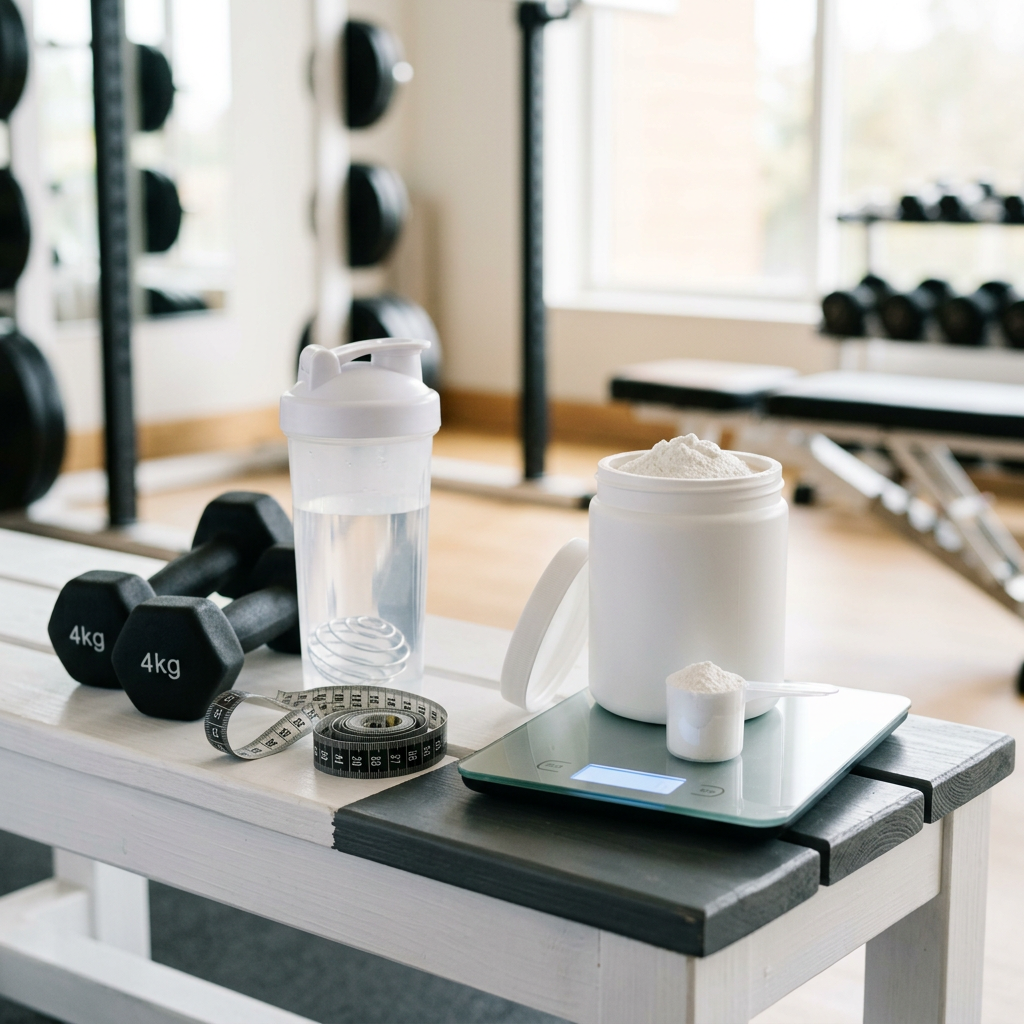
Creatine and Weight Management: Scale Weight vs. Body Composition Reality
By The Creatine Canada Research Team — Evidence-based supplement analysts
Creatine can support weight management, but not by directly burning fat or suppressing appetite. Its real value is that it often increases muscle phosphocreatine stores, helps you train harder and preserve lean mass, and may raise scale weight early from intracellular water rather than body fat.
Evidence-based · Cites 4 sources · Editorial standards
Key Takeaways
- Creatine is better for body composition management than simple scale-weight control.
- A normal maintenance dose is 3-5 g of creatine monohydrate daily.
- Early weight gain from creatine is usually water stored inside muscle, not fat gain.
- Creatine is especially useful during a cut, recomp, or weight-maintenance phase with resistance training.
- Loading at about 20 g/day for 5-7 days works faster, but is optional.
- If the scale matters for your sport, start creatine well before weigh-ins rather than last minute.
- Creatine monohydrate is the most studied, most effective, and usually the best-value form.
Does creatine help with weight management? Yes — but mainly by improving body composition, not by lowering body weight
Creatine for weight management works best when your real goal is better body composition, not a lower number on the scale. That is the most important point to understand up front. Creatine does not function like a stimulant, fat burner, or appetite suppressant. Instead, it helps increase intramuscular phosphocreatine, which is the stored form of creatine in muscle that helps regenerate ATP, the cell’s immediate energy currency during short, intense effort.
Why does that matter for weight control? Because better training quality usually means more productive lifting sessions, a greater ability to maintain performance while dieting, and a better chance of preserving or gaining lean mass over time. In practical terms, creatine often helps people look leaner and perform better even if scale weight stays the same or rises slightly.
This is why creatine and weight management can be confusing. If someone expects the scale to drop immediately, creatine may seem like it is working against them. In reality, early weight gain is commonly related to water being drawn into muscle cells. That is very different from fat gain. Muscle fullness can increase before you see any visible change in body fat.
The 2017 ISSN position stand concluded that creatine monohydrate is the most effective ergogenic nutritional supplement currently available for increasing high-intensity exercise capacity and lean body mass during training. That makes it highly relevant for anyone trying to manage weight in a way that protects strength, muscle, and long-term metabolism.
If your goal is:
- Fat loss: creatine can help you keep training quality high while dieting.
- Body recomposition: creatine can support muscle gain while you reduce fat slowly.
- Weight maintenance: creatine can help you hold onto lean mass and performance.
- Scale-weight reduction only: creatine is not the best tool if every kilogram on the scale matters in the short term.
For beginners, the simplest takeaway is this: if you lift weights, do intervals, play power-based sports, or want to keep more muscle during a calorie deficit, creatine is often a smart supplement even when body-weight change is part of the goal. If you want a broader primer first, see what creatine is and our creatine for beginners guide.
Creatine and scale weight: why the number can go up even when your weight-management plan is working
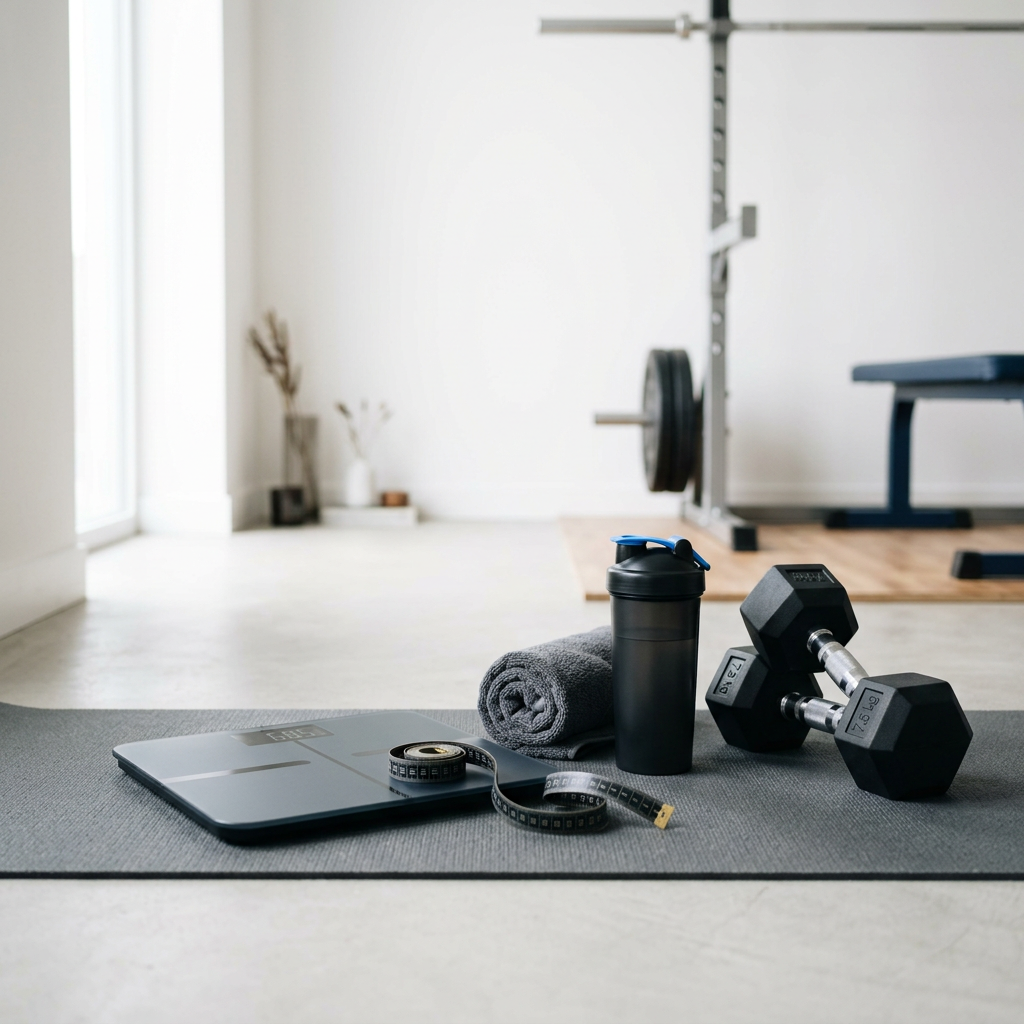
Creatine can increase scale weight without causing fat gain, because it tends to increase water stored inside muscle. This is the key distinction between creatine and body weight versus creatine and body composition management. The scale measures total mass. It does not tell you whether that mass is fat, muscle, glycogen, gut content, or water.
When muscle creatine stores rise, water follows into the muscle cell. This is called intracellular water retention. Intracellular means inside the muscle cell, not under the skin. That matters, because many people worry that creatine will make them look puffy or soft. In most cases, the effect is more “full” than “bloated,” especially when dose and hydration are sensible.
Typical real-world patterns look like this:
- With loading: scale weight can rise within 5-7 days.
- Without loading: weight changes usually appear more gradually over 2-4 weeks.
- During a calorie deficit: the scale may stall or drop more slowly than expected, even while waist measurements and gym performance improve.
This is why people using creatine for managing weight should not rely on body weight alone. Better markers include:
- Waist circumference
- Progress photos in the same lighting
- Strength retention during a cut
- Reps completed at a fixed load
- How your clothes fit
- Body-composition scans, if available
One of the most common mistakes is quitting creatine because the scale jumps in week one. That reaction usually confuses water with fat. If your calories are controlled and training is consistent, that early gain is not evidence that creatine is sabotaging fat loss.
The nuance is that scale weight still matters in some situations. Weight-class athletes, physique competitors close to stage, and endurance athletes who are highly sensitive to body mass should plan creatine use strategically. For them, creatine while maintaining weight may require starting earlier, monitoring response, and avoiding last-minute loading. For everyone else, a small rise in scale weight is often a trade-off worth making for better training, recovery support, and lean-mass retention.
If this is your main concern, our deeper explainer on does creatine make you gain weight goes further into water, fat, and muscle differences.
How creatine actually supports weight goals: ATP, training quality, muscle retention, and recomp
Creatine supports weight goals indirectly by helping you do more high-quality work in training and by improving the odds of maintaining lean mass in a calorie deficit. That mechanism is much stronger than the idea that creatine somehow “melts fat.”
Here is the physiology in plain English. During short, intense efforts such as heavy sets, sprints, jumps, or repeated intervals, your muscles rapidly use ATP for energy. Phosphocreatine helps regenerate ATP quickly. When creatine stores are higher, you can often sustain output a little better across repeated efforts. That might mean an extra rep, slightly better bar speed, or less drop-off from set one to set four. Over weeks and months, those small differences add up.
That matters for weight control because muscle is expensive tissue to keep. During a cut, your body is under pressure to reduce total mass. If training quality collapses, you are more likely to lose lean mass along with fat. Creatine helps resist that slide by supporting performance despite lower calorie intake.
There are four main ways creatine fits weight goals:
- It helps preserve strength during dieting. Strength maintenance is one of the best practical signs that you are keeping muscle.
- It supports lean mass gains when paired with resistance training. More lean mass usually improves body composition even if scale weight rises.
- It may improve training volume. More total quality work can support better long-term energy expenditure and adaptation.
- It increases cell hydration inside muscle. This may contribute to a fuller appearance and can coincide with lean-mass increases over time.
The 2021 JISSN review on common questions and misconceptions about creatine reinforces that creatine’s weight gain is not synonymous with fat gain and that many fears around bloating and water retention are overstated or misunderstood.
What the evidence does not strongly support is creatine as a direct fat-loss supplement independent of training and diet. If you do not resistance train, you may still get some benefit from saturation, but the effect on body composition will usually be much smaller. Creatine is a force multiplier for a good plan, not a substitute for one.
If you want the full physiology, our guides on creatine and ATP and creatine saturation break down the system in more detail.
When creatine makes the most sense: cutting, recomposition, and maintaining weight
Creatine is most useful for weight management when you are cutting fat, recomposing, or trying to maintain your weight while keeping muscle and performance. Those are the scenarios where its benefits line up best with your goal.
During a fat-loss phase, creatine can help offset one of dieting’s biggest problems: reduced training performance. Less food often means less energy, weaker sessions, and more difficulty keeping strength up. Creatine does not replace calories, but it can help support repeated high-intensity effort enough to make your workouts more productive. That is why many coaches prefer creatine during a cut, not just during a bulk.
During body recomposition, creatine is one of the better-supported supplements because recomp depends on doing two hard things at once: losing fat while building or preserving muscle. Better training output and greater muscle creatine stores make that process more realistic, especially for beginners, returners, and people with decent protein intake.
During weight maintenance, creatine can help keep lean mass from drifting downward. This matters after a successful diet, when people often eat at maintenance but train less aggressively and slowly lose muscle. Creatine can make maintenance look more like consolidation rather than backsliding.
Where creatine is less ideal:
- Making weight in the next few days: avoid starting creatine right before a weigh-in.
- Sports where every gram matters acutely: decide case by case based on response and performance benefit.
- People who refuse any scale fluctuation: expectations need to be corrected before starting.
Beginners often ask whether creatine is only for gaining size. It is not. In fact, one of its smartest uses is to make a calorie deficit less destructive to strength and lean mass. Older adults can benefit because preserving muscle is central to healthy ageing and body-weight management. Women can benefit for the same reason, and the old “it will make me bulky” fear does not match the evidence. Athletes in team and power sports often benefit most, while pure endurance athletes need to weigh any mass increase against sport-specific demands.
If your current goal is specifically cutting fat, see does creatine help you lose fat. If you are trying to stay the same body weight while improving composition, creatine for body recomposition is the closest match.
Exactly how to use creatine for weight management: the simplest step-by-step plan
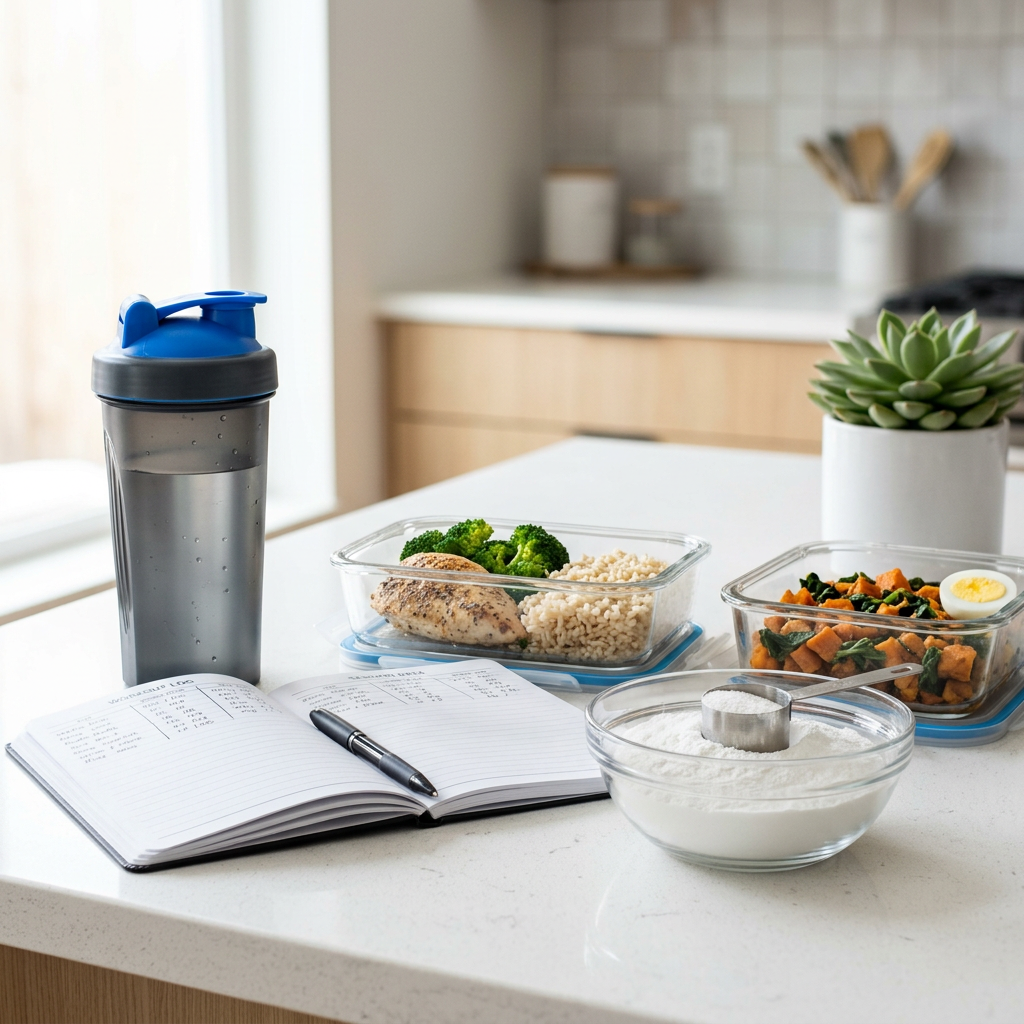
The best way to use creatine for weight management is to take creatine monohydrate every day, pair it with resistance training, and judge progress by body composition markers rather than scale weight alone. Most people do well with a very simple protocol.
- Choose creatine monohydrate. It is the most studied, most cost-effective form, and the form supported most clearly by the ISSN and the IOC consensus on supplements.
- Pick your dosing approach. Either take 3-5 g daily from day one, or load with about 20 g daily split into 4 doses for 5-7 days, then switch to 3-5 g daily.
- Take it every day. Workout days and rest days both count, because the goal is to keep muscle stores saturated.
- Lift weights or do repeated-intensity training. Creatine shines most when your training includes strength work, sprinting, intervals, or sport efforts with repeated bursts.
- Keep protein intake adequate. Creatine helps training output, but protein provides the building blocks for muscle retention and growth.
- Track more than the scale. Use waist measurements, photos, and performance logbook entries weekly.
- Give it time. Judge results over 4-8 weeks, not 4 days.
A realistic beginner timeline:
- Week 1: possible small scale increase, especially with loading; workouts may feel subtly better.
- Weeks 2-4: fuller muscles, better repetition quality, possibly better strength retention in a deficit.
- Weeks 4-8: easier to see whether body composition is improving through strength, photos, and measurements.
- After 8+ weeks: benefits are clearer if training and nutrition are consistent.
How do you know it is working? The best signs are not dramatic. You may notice less drop-off across sets, slightly better work capacity, a fuller look in trained muscles, and better maintenance of loads while dieting. If you expected a stimulant-like sensation, you are looking for the wrong signal.
To dial in your intake, use our creatine dosage calculator. For a complete walk-through, read how to take creatine and how much creatine per day.
Creatine dose by body weight and goal: practical amounts for cutting, maintaining, and performance
For most adults using creatine for weight management, 3-5 g of creatine monohydrate per day is enough, while a loading phase only speeds saturation. There is no special “fat-loss dose” of creatine.
The reason dose does not change much by goal is that creatine works by saturating muscle stores, not by stimulating calorie burn. Once you are saturating stores, more is not usually better. The practical decision is whether you want to saturate faster or more gradually.
| Goal | Best daily approach | When results show up | Notes |
|---|---|---|---|
| Fat loss / cut | 3-5 g daily | 2-4 weeks without loading | Helps maintain training quality and lean mass |
| Body recomposition | 3-5 g daily or load first | 5-7 days with loading; slower without | Good fit if lifting consistently |
| Weight maintenance | 3-5 g daily | 2-4 weeks without loading | Useful for preserving muscle and performance |
| Rapid saturation before a training block | ~20 g/day split into 4 doses for 5-7 days, then 3-5 g daily | About 1 week | More likely to cause stomach upset if taken in large single doses |
Body-weight examples:
- 60 kg person: 3 g daily is often sufficient, though 5 g daily is also commonly used.
- 75 kg person: 3-5 g daily is standard.
- 95 kg person: 5 g daily is a common practical dose.
- Large athlete wanting fast saturation: a classic loading phase of about 20 g/day split into 4 smaller doses for 5-7 days can be used, then 3-5 g daily.
If your stomach is sensitive, avoid taking the entire loading dose at once. Split doses across meals or mix in more liquid. Micronized monohydrate can sometimes improve mixability, though plain monohydrate still works perfectly well.
Importantly, more creatine will not produce proportionally more fat loss. If your goal is creatine weight control, the fundamentals still decide the outcome: calorie balance, protein intake, progressive training, sleep, and consistency. Creatine simply helps you execute those fundamentals better.
For a more precise framework, see creatine maintenance dose and creatine loading phase.
Best timing for creatine when managing weight: before or after workouts, with food, and on rest days
When managing weight, the best time to take creatine is the time you will actually remember every day, because consistency matters more than exact timing. Creatine does not act like a pre-workout stimulant that must be taken minutes before training to work.
Muscle saturation is the main objective. That is why total daily intake matters more than whether you take it pre-workout, post-workout, in the morning, or at night. Many people simply add it to a post-workout shake or a daily meal because the habit is easier to sustain.
Practical timing options:
- After training: convenient if you already use a shake or recovery meal.
- Before training: also fine if that helps you remember.
- With a meal: often easier on the stomach and fits daily routine.
- On rest days: still take it, because stores are maintained by daily intake.
Hydration is another common concern. Creatine does not dehydrate healthy users, but because it draws water into muscle, it makes sense to keep fluid intake reasonable. You do not need to force litres beyond thirst, but do not combine creatine with chronically low fluid intake and expect to feel your best in training either.
For weight-management phases, three habits help most:
- Take creatine at the same time daily.
- Use enough water to mix it comfortably.
- Keep sodium, fluids, and carbohydrates fairly consistent so scale readings are easier to interpret.
If you are monitoring scale weight closely, weigh yourself under the same conditions each morning and use weekly averages. Day-to-day changes reflect hydration and glycogen as much as anything else. Creatine can amplify those fluctuations if your routine is inconsistent.
The International Olympic Committee’s supplement consensus recognises creatine as one of the few supplements with strong evidence for performance support, especially in high-intensity exercise. That benefit depends on regular intake, not perfect clock timing.
For timing specifics, read when to take creatine. If hydration is your worry, see how much water should you drink with creatine and creatine on rest days.
Who creatine is best for — and who should use it more strategically for body-weight goals
Creatine is a strong fit for most healthy adults who want to improve body composition, preserve muscle, or support training performance, but some people need to plan around the scale more carefully.
Beginners often benefit more than they expect because creatine pairs well with the fast early gains that come from starting resistance training. A beginner in a calorie deficit can use creatine to help maintain strength while learning movement patterns and building consistency.
Women can absolutely use creatine for weight management. The idea that creatine makes women bulky is a myth. What it more realistically does is support performance, lean mass, and training quality. Some women notice a small early increase on the scale, which is usually water in muscle rather than fat. Our dedicated guide on creatine for women goes deeper.
Older adults are often excellent candidates because body-weight management after 50 is not just about losing fat; it is about preserving muscle, function, and strength. Losing body weight while also losing muscle is not a win. Creatine plus resistance training can help tilt that equation in a better direction.
Vegetarians and vegans may respond especially well because baseline dietary creatine intake is typically lower. That can make supplementation more noticeable, especially for performance and fullness. See is creatine vegan if that is relevant.
Athletes in team sports, sprint sports, and strength sports usually have the clearest upside. Better repeated-effort performance can improve training output and competition readiness.
Who should be more strategic?
- Weight-class athletes: timing matters; avoid beginning creatine right before weigh-ins.
- Physique competitors nearing stage: assess individual response well in advance.
- Endurance athletes highly sensitive to mass: weigh performance benefit against any body-mass increase.
- Anyone with a medical condition or taking medications: discuss use with a qualified clinician first.
The Mayo Clinic overview on creatine takes a cautious but generally supportive stance on appropriate use, while also reminding users that product quality and individual medical context matter.
If you want a targeted safety screening, see who should not take creatine and is creatine safe.
Safety, side effects, and what to do if creatine makes you nervous about weight gain
Creatine monohydrate is well supported for safety in healthy people when taken at standard doses, and the most common issues are mild stomach upset, temporary scale increases, and confusion about creatinine on lab tests.
The strongest evidence-based concern in normal use is not that creatine is dangerous, but that people misunderstand what they are seeing. A slight weight increase early on can trigger unnecessary panic. If you know in advance that this is usually intracellular water, you are less likely to abandon a useful supplement.
Possible side effects and what to do:
- Stomach upset or loose stool: reduce dose size, split doses, take with meals, or skip loading.
- Feeling “puffy”: check sodium intake, hydration consistency, and whether you are interpreting normal glycogen-plus-water shifts as fat gain.
- Scale stress: use waist and performance measures for 2-4 weeks before deciding creatine is a problem.
- Lab confusion: creatine can affect creatinine readings, which are not the same thing as kidney damage in a healthy user.
The 2017 ISSN position stand and the 2021 JISSN misconceptions review both support creatine’s safety profile in healthy populations at recommended intakes. That does not mean “everyone should take it no matter what.” People with known kidney disease, unusual medical histories, or medication concerns should involve a healthcare professional. Sensible caution is not anti-creatine; it is good practice.
Another frequent myth is that creatine causes dehydration, cramps, or hair loss by default. Those claims are either unsupported or heavily overstated in mainstream evidence. If you hear them often, our creatine myths debunked page and kidney guide unpack the details.
If scale anxiety is your main obstacle, try this rule: do not evaluate creatine by scale weight for the first 14 days. Evaluate it by workout quality, pumps, training log performance, and how your waist and photos look after a few weeks. That is a much fairer test of whether creatine and scale weight are helping or hurting your actual goal.
What to buy in Canada: the best creatine form for weight goals, label checks, and value
If your goal is weight management, buy plain creatine monohydrate from a reputable brand, not a flashy fat-loss blend with underdosed creatine and unnecessary extras. The best product for this job is usually the boring one.
Creatine monohydrate remains the benchmark because it is the most studied, the most consistently effective, and usually the cheapest per effective dose. More exotic forms often cost more without better outcomes for body composition or scale management.
| Option | Best for | Pros | Cons |
|---|---|---|---|
| Creatine monohydrate powder | Most people | Best evidence, best value, flexible dosing | Needs mixing |
| Micronized monohydrate | People who want easier mixing | Similar efficacy, often smoother texture | Sometimes higher price |
| Capsules | Travel or convenience | No mixing, portable | Usually more expensive per gram; many capsules needed |
| Gummies / blends | Convenience-focused users | Easy to take | Often pricier, can add sugar, may underdose per serving |
For Canadians, useful buying checks include:
- NPN on the label: an NPN is a Natural Product Number showing the product is licensed as a natural health product in Canada.
- Third-party testing: especially valuable for competitive athletes who care about contamination control.
- Ingredient simplicity: ideally just creatine monohydrate, or that plus flavouring/sweetener if preferred.
- Cost per effective gram: compare based on actual grams of creatine, not serving-count marketing.
Do not pay extra because a product is advertised as “lean,” “cutting,” or “weight-control” creatine unless the label genuinely offers something meaningful. Creatine itself does the useful work; the rest is often packaging and positioning.
If you are shopping now, browse our best creatine rankings, creatine brand reviews, and creatine product catalog. For Canadian regulations and labelling context, our guide on Canadian supplement regulations is worth reading.
Common creatine-and-weight myths, biggest mistakes, and the real bottom line
The biggest mistake with creatine for weight management is judging it by short-term scale changes instead of long-term body composition and training outcomes. Most confusion comes from that single error.
Let’s clear up the main myths directly:
- “Creatine makes you fat.” False. Creatine itself does not add body fat. Early weight gain is usually water in muscle.
- “Creatine is bad if I’m trying to lose weight.” Usually false. During fat loss, creatine can be especially useful for preserving lean mass and workout quality.
- “Creatine only works if you bulk.” False. It works during maintenance, recomposition, and cuts too.
- “If the scale goes up, my plan failed.” False. Body composition can improve while body weight stays flat or rises slightly.
- “Fancy forms are better for staying lean.” Not supported. Monohydrate still wins on evidence and value.
The most common practical mistakes are:
- Starting creatine a few days before a weigh-in-heavy event.
- Using too many variables at once, so you cannot tell what changed.
- Taking it inconsistently.
- Expecting it to replace a calorie deficit or training plan.
- Stopping after one week because of normal water shifts.
Here is the concise bottom line on creatine for weight management: if your real goal is to look leaner, keep muscle, maintain strength, and improve body composition, creatine is one of the best-supported supplements you can use. If your only goal is to make the scale drop as fast as possible, creatine may temporarily obscure progress even while helping the things that matter more.
For most people, the answer is simple: take 3-5 g of creatine monohydrate daily, train hard, keep protein high, and track waist, performance, and photos along with body weight. That is how to use creatine for managing weight intelligently rather than emotionally.
If you want to keep learning, the best next reads are creatine during a cut, creatine in a caloric deficit, and realistic creatine results.
Creatine for Weight Management: The Numbers That Matter
- 3-5 g/day Standard maintenance dose — Enough for most adults once muscle stores are saturated
- ~20 g/day Typical loading dose — Usually split into 4 doses for 5-7 days
- 5-7 days Fast saturation timeline — What a loading phase is designed to achieve
- 2-4 weeks Gradual saturation timeline — Typical if taking 3-5 g daily without loading
Frequently Asked Questions
Can you take creatine while trying to lose weight?
Yes, you can take creatine while trying to lose weight, and it is often a smart choice if you want to preserve muscle and training performance during a calorie deficit. Creatine does not directly burn fat, but it can help you maintain better workout quality and lean mass, which supports better body composition while dieting.
Does creatine make the scale go up?
Yes, creatine can make the scale go up, especially in the first week if you use a loading phase. That increase is usually from water being stored inside muscle cells rather than body fat gain, so a higher scale reading does not automatically mean your weight-management plan is failing.
Is creatine bad for weight control?
No, creatine is not bad for weight control unless your only definition of success is a lower scale number in the very short term. For most people, creatine improves weight management by supporting lean mass, performance, and body composition even if body weight changes little or rises slightly at first.
Does creatine help you lose belly fat?
Creatine does not directly target or burn belly fat, so it should not be treated like a spot-fat-loss supplement. What it can do is help you train harder and hold onto muscle while dieting, which may improve overall fat loss and body composition over time, including around the waist.
Should I stop creatine if I am cutting?
No, most people should not stop creatine during a cut because that is often when it is most useful. Creatine can help preserve strength, support training quality, and reduce the chance that a calorie deficit will cost you unnecessary lean mass.
How much creatine should I take for weight management?
For weight management, most people should take 3-5 g of creatine monohydrate daily. There is no special fat-loss dose, because creatine works by saturating muscle stores rather than by increasing calorie burn directly.
Can creatine help maintain weight after dieting?
Yes, creatine can help maintain weight after dieting by supporting lean mass and training performance while you transition back to maintenance calories. That matters because many people regain fat or lose muscle after a diet when training quality and consistency start to slip.
Will creatine make women look bulky?
No, creatine does not make women bulky in the way people often fear. It may slightly increase scale weight at first because of water inside muscle, but its main practical effect is supporting strength, performance, and lean mass rather than causing rapid visible bulk.
Is creatine useful if I am maintaining my weight, not gaining or losing?
Yes, creatine is useful if you are maintaining weight because maintaining body weight is not the same as maintaining body composition. Creatine can help you keep more muscle, train better, and avoid the slow loss of strength and lean mass that often happens when people drift at maintenance.
What is the best creatine for body composition management?
The best creatine for body composition management is plain creatine monohydrate from a reputable brand. It has the best evidence, the strongest safety record, and the best value, while newer forms have not consistently shown better results for fat loss, scale control, or lean-mass support.