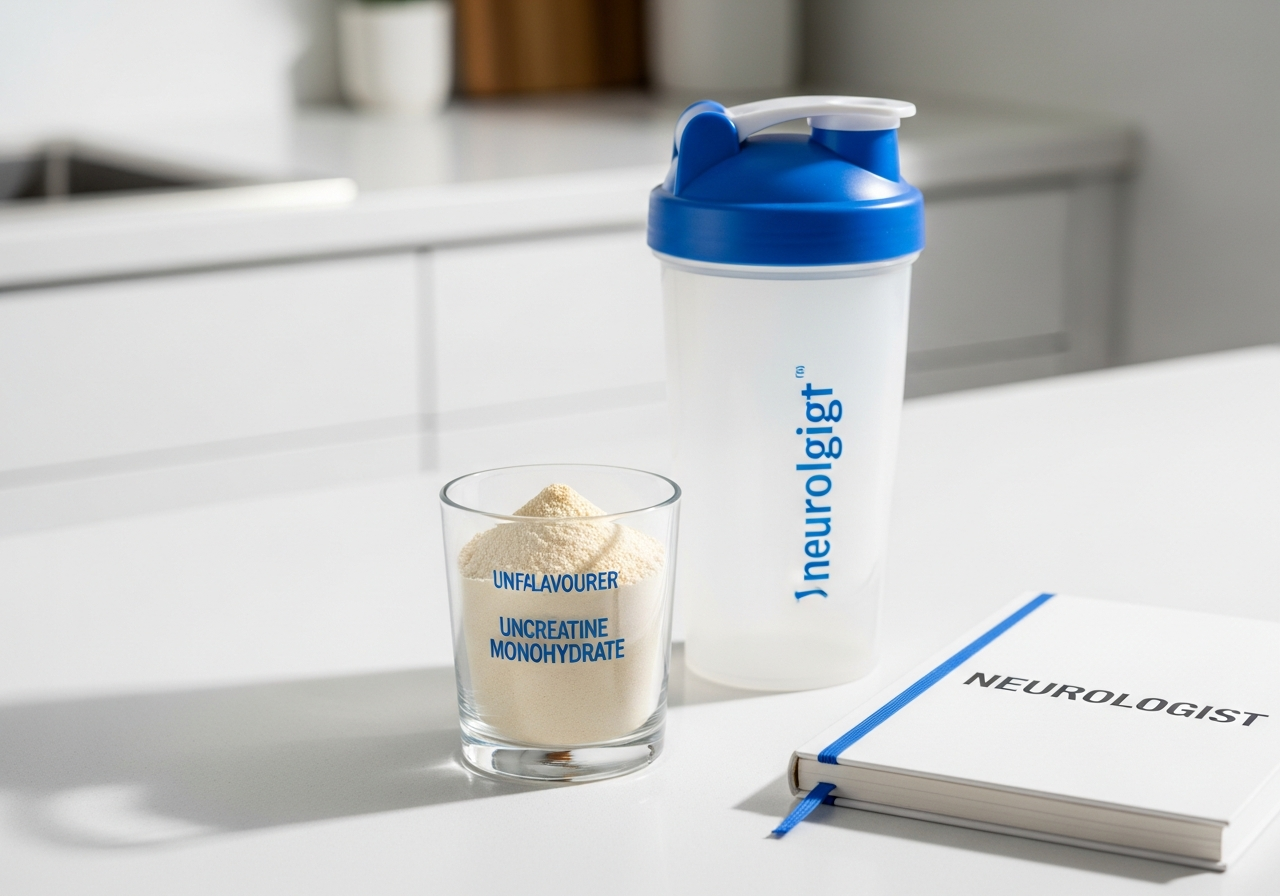
Creatine and Parkinson's Disease: What the Clinical Evidence Shows
By The Creatine Canada Research Team — Evidence-based supplement analysts
Creatine has not been shown to slow Parkinson’s disease progression, and it is not a proven treatment for Parkinson’s symptoms. Although creatine looked biologically promising as a neuroprotective supplement, large clinical research — including the major NINDS trial — did not demonstrate meaningful disease-modifying benefit for people with Parkinson’s disease.
Evidence-based · Cites 4 sources · Editorial standards
Key Takeaways
- The short answer is no: current clinical evidence does not support creatine as an effective treatment to slow Parkinson’s disease.
- Creatine was studied because it helps cellular energy production and may reduce stress on vulnerable neurons in theory.
- The large NINDS-funded phase 3 Parkinson’s trial was stopped for futility, meaning creatine was unlikely to provide the hoped-for benefit.
- Creatine monohydrate remains one of the best-supported sports supplements for strength and high-intensity performance, but that evidence does not translate to Parkinson’s disease treatment.
- People with Parkinson’s who want to use creatine for general training, muscle support, or nutrition should discuss it with their neurologist, especially if they have kidney disease or complex medication regimens.
- Typical sports-nutrition dosing is 3-5 g/day, with optional loading at 20 g/day split for 5-7 days, but Parkinson’s-specific clinical use is not established.
- In Canada, choose plain creatine monohydrate with an NPN where applicable and reputable third-party testing rather than making decisions based on neurological claims.
Does creatine help Parkinson’s disease? Here is the direct evidence-based answer
No, creatine is not supported by current clinical evidence as a treatment that slows Parkinson’s disease progression. The best available human research, including a major National Institute of Neurological Disorders and Stroke-funded trial often referred to as the creatine NINDS trial, did not show meaningful benefit on disease progression outcomes.
That direct answer matters because the phrase creatine and Parkinson’s disease can easily blur two very different questions. The first question is whether creatine helps athletes, older adults, or people doing rehab maintain muscle and performance; the answer there is often yes. The second question is whether creatine works as a neuroprotective therapy for Parkinson’s disease; the answer, based on current clinical evidence, is no.
Parkinson’s disease is a progressive neurodegenerative disorder involving loss of dopamine-producing neurons, especially in the substantia nigra, a brain region important for movement control. Because creatine helps buffer cellular energy through the phosphocreatine system, researchers reasonably hypothesized that it might protect stressed neurons from mitochondrial dysfunction, oxidative stress, and energy failure. That hypothesis was scientifically plausible, which is why creatine for Parkinson’s patients was studied seriously rather than dismissed out of hand.
But plausible mechanisms are not the same thing as proven clinical benefit. Many compounds that look promising in cell and animal models fail in large human trials because the dose, target, disease biology, or timing does not translate well into real patients. Parkinson’s is especially challenging because by the time symptoms appear, substantial neuronal loss has often already occurred.
If you are searching “does creatine help Parkinsons,” the most accurate plain-language answer is this: creatine does not currently have evidence strong enough to recommend it as a disease-modifying Parkinson’s therapy. If you are instead interested in creatine for resistance training, preserving muscle mass, or supporting exercise tolerance as part of living with Parkinson’s, that becomes a different conversation about general supplementation, not Parkinson’s-specific disease treatment.
For a primer on what creatine actually is in the first place, see our complete beginner’s guide to creatine. If your main concern is safety, our full safety guide covers the evidence in more detail.
Why creatine looked promising for Parkinson’s neuroprotection in the first place
Creatine looked promising for Parkinson’s disease because it supports rapid cellular energy recycling, and Parkinson’s involves impaired energy handling in vulnerable brain cells. That mechanistic fit is the main reason creatine neuroprotection in Parkinsons became a serious research question.
Creatine is stored partly as phosphocreatine, a high-energy compound that helps regenerate adenosine triphosphate, or ATP, the cell’s immediate energy currency. In muscles, this system helps fuel short bursts of intense effort. In the brain, the same buffering system helps cells maintain energy availability during periods of stress. Neurons are especially energy-hungry, so anything that stabilizes ATP supply can appear attractive in neurodegenerative disease research.
Researchers also considered several secondary mechanisms. Creatine may help stabilise mitochondrial function, and mitochondria are the energy-producing structures inside cells that appear to be involved in Parkinson’s disease biology. Creatine was also explored for possible effects on oxidative stress, excitotoxicity, and calcium handling, all of which can contribute to neuronal injury. In simple terms, creatine was not expected to replace dopamine; it was investigated as a possible cellular shield.
That distinction matters. Creatine was never a conventional symptomatic Parkinson’s drug like levodopa. Instead, it was studied as a potential disease-modifying or neuroprotective strategy, meaning an intervention meant to slow the underlying damage process rather than simply improve tremor, stiffness, or slowness in the moment.
However, a good mechanism is only the starting point. Human diseases are more complex than isolated pathways. The brain concentration achievable with oral creatine may not be high enough, early enough, or in the right tissues to alter real-world Parkinson’s progression. In addition, even if creatine improves cellular energetics modestly, that may not be enough to overcome the broader disease cascade.
So if you see older articles claiming creatine for Parkinsons patients is “promising,” that usually reflects preclinical logic or early-stage enthusiasm rather than settled clinical proof. Mechanistically, the theory was sensible. Clinically, the benefits did not hold up.
For broader context on creatine’s effects beyond muscle, see our guide on creatine and the brain.
The creatine NINDS trial: what the big Parkinson’s study actually found
The major NINDS-funded phase 3 trial found that creatine did not provide the hoped-for clinical benefit in Parkinson’s disease and was stopped early for futility. In trial language, futility means interim analysis showed the study was very unlikely to demonstrate a meaningful advantage even if it continued to completion.
This is the key fact behind searches for “creatine NINDS trial.” The trial was designed specifically to test whether long-term creatine supplementation could slow clinical decline in people with Parkinson’s disease. That makes it far more important than small pilot studies, animal experiments, or mechanistic speculation. When a large, well-designed phase 3 study fails, it should carry much more weight than earlier positive hints.
Why was this so significant? Because the trial was not asking a vague wellness question. It was asking the most important practical question: if people with Parkinson’s take creatine over time, do they do better in ways that matter clinically? The answer was no clear disease-modifying benefit.
This is a classic example of why evidence hierarchy matters. Early studies can overestimate benefits because they are smaller, shorter, or less able to separate signal from noise. Larger trials are better at showing whether a therapy truly helps patients in day-to-day function, disability progression, and quality-of-life related endpoints.
Importantly, the failed Parkinson’s outcome does not mean creatine is a “bad supplement” overall. It means the evidence does not support using creatine as a Parkinson’s treatment. Those are different conclusions. Creatine still has strong evidence in sports nutrition, especially for strength, lean mass support, and repeated high-intensity efforts, as summarised by the 2017 ISSN position stand.
If you are reading anecdotal claims online that creatine reversed Parkinson’s symptoms or clearly slows progression, weigh those claims against the phase 3 evidence. Anecdotes can be sincere but still misleading because symptoms fluctuate, medications change, exercise habits differ, and placebo effects are real.
The most evidence-based takeaway is simple: the strongest human trial evidence did not show that creatine helps Parkinson’s disease progression in a clinically meaningful way.
What creatine can still do for a person with Parkinson’s — and what it cannot
Creatine may still be useful for general muscle and training support in some people with Parkinson’s, but it should not be expected to treat the disease itself. That distinction is the most practical way to think about creatine for Parkinson’s patients in 2026.
Many people with Parkinson’s benefit from structured exercise, especially resistance training, balance work, gait practice, and aerobic activity. If a person with Parkinson’s is lifting weights, doing supervised rehab, or trying to preserve strength and muscle mass, creatine monohydrate may be considered for the same reasons it is used in other older adults: it can help saturate muscle creatine stores and improve performance in repeated high-effort work.
What creatine cannot do, based on present evidence, is replace Parkinson’s medication, slow disease progression reliably, or serve as a stand-alone neuroprotective strategy. It should not delay evaluation by a neurologist or evidence-based treatment planning.
Where creatine may still fit is in a broader supportive plan. For example, someone with Parkinson’s who is losing strength during reduced activity, or who is beginning a resistance-training programme, may discuss creatine as a low-cost, well-studied supplement for muscle performance. In that case the goal is not neuroprotection, but helping training quality and possibly lean mass retention.
Older adults often ask whether creatine is “worth it” if they are not bodybuilders. Sometimes yes — but only if expectations are realistic. You are looking for small but meaningful support for exercise capacity or training adaptation, not a dramatic neurological improvement. Our guides on creatine for older adults and creatine benefits explain that broader evidence.
For people who are frail, under-eating, or struggling with unintentional weight loss, food quality, total protein intake, medication timing, sleep, and supervised exercise usually matter more than creatine. Creatine is a possible add-on, not a foundation.
The practical rule is this: use creatine, if at all, for the things creatine is actually good at. Do not use creatine because you hope it has proven Parkinson’s-specific neuroprotective effects, because the current evidence does not support that expectation.
If someone with Parkinson’s wants to try creatine anyway, here is the safest practical approach
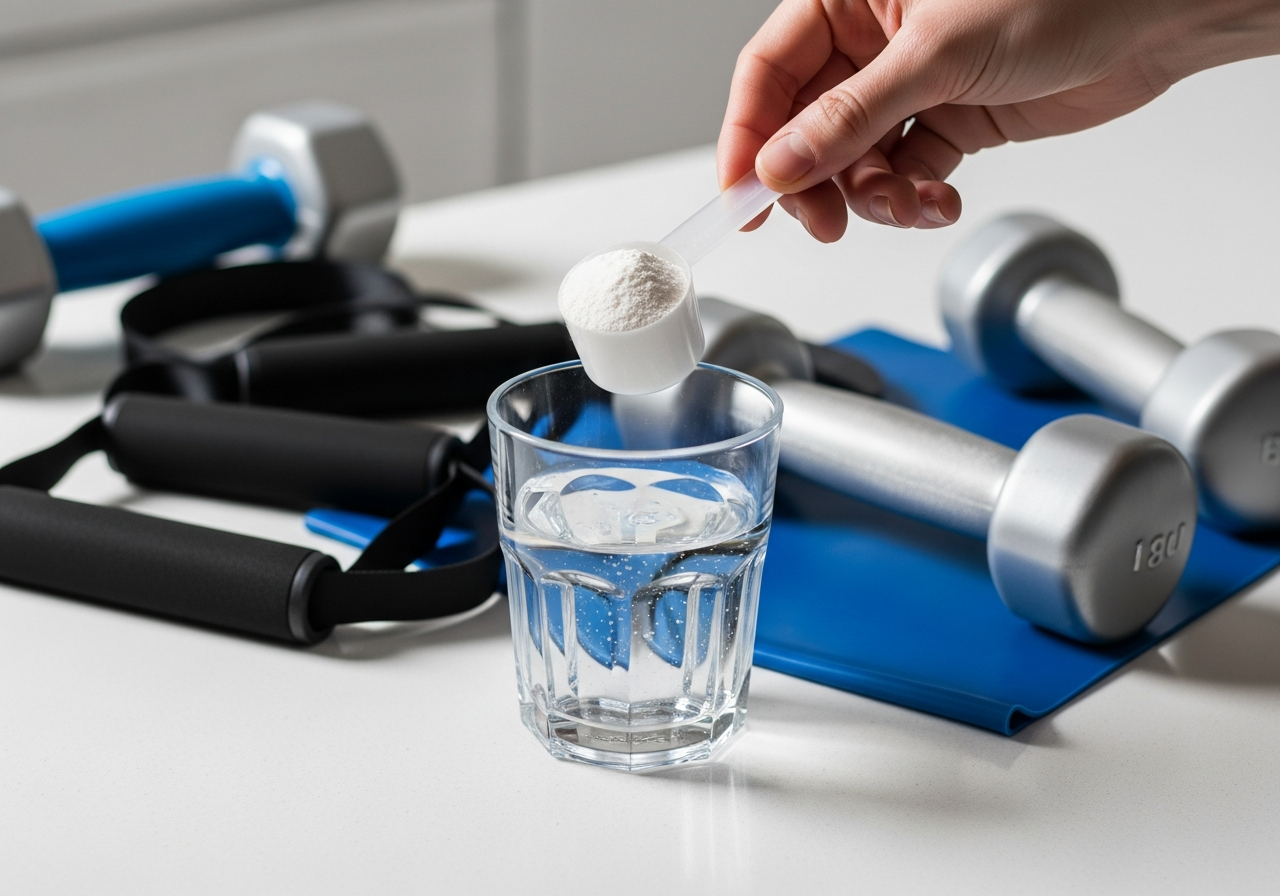
If a person with Parkinson’s wants to use creatine for general exercise support rather than Parkinson’s treatment, the safest approach is to treat it like any other basic creatine monohydrate protocol and clear it with their clinician first. The aim should be conservative dosing, symptom tracking, and realistic expectations.
- Ask the right clinician. Bring it up with a neurologist, family physician, pharmacist, or dietitian who knows your medical history. This matters most if you have kidney disease, significant dehydration risk, swallowing issues, or multiple medications.
- Choose plain creatine monohydrate. Monohydrate is the most studied, most cost-effective form. Fancy neurological marketing claims do not make other forms better. Our best type of creatine guide explains why monohydrate still wins.
- Start low. A practical starting point is 3 g/day mixed into water, juice, yogurt, or a protein shake. Starting low reduces the chance of stomach upset.
- Take it daily. Creatine works by saturating tissue stores over time, not by producing an acute stimulant-like effect. Consistency matters more than exact timing. See how to take creatine for mixing and routine tips.
- Pair it with exercise. The most logical use case is alongside resistance training or rehab, not instead of it. Think 2-4 sessions per week of clinician-approved strength work.
- Track specific outcomes. Useful markers include training tolerance, number of reps completed, ease of stair climbing, grip strength trends, or whether you recover better between sessions.
- Stop if it clearly does not fit. If it causes ongoing gastrointestinal discomfort, worsens fluid-management issues, or becomes one more burden without noticeable training value, discontinue and re-evaluate.
What should you expect? If you use a standard non-loading dose, any muscle-performance benefit usually takes a few weeks to build as stores approach saturation. For a realistic timeline, see how long creatine takes to work.
The important mindset is this: you are testing creatine as a basic exercise-support supplement, not as a Parkinson’s cure. That keeps the decision grounded in what the evidence actually supports.
Creatine dose for Parkinson’s patients using it for training support: practical amounts, timing, and examples
There is no established Parkinson’s-specific creatine dose proven to slow disease progression, so dosing should follow standard creatine monohydrate practice when the goal is general training support. For most adults, that means 3-5 g/day, with an optional loading phase of 20 g/day split into 4 doses for 5-7 days if faster saturation is desired.
The 2017 ISSN position stand and later reviews continue to support creatine monohydrate as the reference form and 3-5 g/day as a standard maintenance intake for most adults. Loading is optional, not required. If you dislike larger doses or have a sensitive stomach, skip loading and take a steady daily amount.
| Body weight / goal | Practical daily dose | When to use it | Notes |
|---|---|---|---|
| Under 60 kg, general exercise support | 3 g/day | Any consistent time | Good conservative starting dose for smaller adults or sensitive stomachs |
| 60-90 kg, general strength or rehab support | 3-5 g/day | Any consistent time, often with a meal or shake | Most common evidence-based range |
| Over 90 kg, regular resistance training | 5 g/day | Any consistent time | Useful simple maintenance target |
| Faster saturation desired | 20 g/day for 5-7 days, split into 4 doses, then 3-5 g/day | Spread across the day | Can increase stomach upset in some people |
Exact timing is much less important than adherence. Taking creatine with food may make it easier on the stomach. If you want a deeper timing breakdown, see when to take creatine. If you want a more tailored number, use our creatine dosage calculator.
Examples:
- A 55 kg older adult beginning twice-weekly resistance training could start with 3 g/day.
- A 72 kg adult with Parkinson’s doing supervised strength work three times weekly could use 3-5 g/day.
- A 98 kg recreational lifter living with Parkinson’s could reasonably choose 5 g/day.
Hydration matters, but you do not need to force excessive water intake. Drink normally and especially pay attention during hot weather, long exercise sessions, or if medications already affect blood pressure or fluid balance. Our guide on how much water with creatine covers the practical details.
The key point is straightforward: standard sports-nutrition dosing is reasonable when the goal is muscle support, but no specific dose is proven to change Parkinson’s disease itself.
Safety, side effects, kidney questions, and when people with Parkinson’s should be extra cautious
Creatine monohydrate is generally considered safe for healthy adults at standard doses, but people with Parkinson’s often have enough medical complexity that extra caution is sensible. The supplement itself is not uniquely dangerous in Parkinson’s disease; the issue is that coexisting health problems and medication management can change the risk-benefit calculation.
According to the ISSN position stand and the 2021 JISSN review on common creatine questions and misconceptions, creatine monohydrate has a strong safety profile in healthy populations. Common side effects are usually mild and include stomach upset, loose stools when doses are too large at once, and a small increase in body mass from increased intracellular water in muscle.
Who should be more careful?
- People with known kidney disease. Creatine is not automatically harmful, but kidney disease warrants physician oversight.
- People with swallowing difficulties or frequent nausea. Powder format and fluid intake need to be practical.
- People prone to dehydration, low blood pressure, or heat intolerance. Parkinson’s and its treatments can sometimes complicate fluid management.
- People taking multiple medications. Creatine does not have famous major drug interactions, but a pharmacist should still review the whole picture.
A major point of confusion is creatinine. Creatinine is a breakdown product measured on blood tests, and creatine supplementation can sometimes affect interpretation of kidney-related labs without necessarily indicating kidney injury. That does not mean labs should be ignored; it means results should be interpreted by a clinician who knows you are taking creatine. Our guide on creatine vs. creatinine explains this clearly.
Another practical issue is weight gain. Creatine can increase scale weight modestly because it draws water into muscle cells. For some people that is irrelevant; for others with mobility limitations, tight clothing, or concern about sudden scale changes, it is worth discussing in advance. See does creatine make you gain weight for more detail.
The bottom line on safety is balanced: creatine is not proven for Parkinson’s disease, but if used conservatively for exercise support, standard monohydrate doses are generally well tolerated in appropriate patients with medical guidance.
Common myths about creatine and Parkinson’s disease that need to be cleared up
The biggest myth is that because creatine helps cellular energy, it must therefore help Parkinson’s disease in patients. That leap is not justified by the human trial evidence.
Here are the most common misconceptions:
- Myth: “Creatine is proven neuroprotective for Parkinson’s.”
Fact: Creatine was a plausible neuroprotective candidate, but large clinical data did not confirm meaningful disease-modifying benefit. - Myth: “The NINDS trial failed only because the dose was too low.”
Fact: It is easy to speculate after a negative study, but there is no accepted clinical evidence showing a different practical oral dose would have changed the outcome. - Myth: “If creatine helps muscles, it will automatically help tremor, rigidity, and movement symptoms.”
Fact: Muscle-energy support and dopaminergic neurodegeneration are different problems. Better training support does not equal a neurological treatment effect. - Myth: “Creatine is unsafe for older adults or anyone with a neurological condition.”
Fact: Standard creatine monohydrate dosing is widely considered safe for many adults, but older adults and medically complex patients should personalise the decision with a clinician. - Myth: “More expensive forms like HCl or buffered creatine work better for Parkinson’s.”
Fact: There is no good evidence that alternative forms are superior for Parkinson’s disease, and monohydrate remains the evidence benchmark.
The most common mistake is using creatine as a substitute for the basics that actually matter. For Parkinson’s management, that means specialist care, medication optimisation, exercise, fall prevention, adequate protein and total calories, sleep, and physical or occupational therapy when indicated. Supplements sit on top of that foundation, not underneath it.
Another mistake is expecting to “feel” creatine like a stimulant. Creatine is not caffeine or a pre-workout. If it helps, it usually helps gradually by improving your ability to train or repeat high-effort work over time. If your goal is symptom control in the short term, creatine is the wrong tool.
For a broader myth-by-myth breakdown, visit our creatine myths debunked hub and our detailed guide to creatine myths vs. facts.
Buying creatine in Canada when health claims matter: what to choose and what to ignore

If you are buying creatine in Canada and Parkinson’s disease is part of the conversation, the right choice is usually a plain, reputable creatine monohydrate product with compliant labelling rather than a “brain health” formula making aggressive claims. Marketing language should never outrun the evidence.
In Canada, many supplements carry a Natural Product Number, or NPN, which indicates a product has been licensed by Health Canada under the natural health products framework. An NPN does not mean a product is proven to treat Parkinson’s disease; it means the product meets regulatory requirements for sale under its approved conditions of use and labelling. If a label implies neurological treatment effects beyond what is supported, that is a red flag.
| What to look for | Why it matters | What to avoid |
|---|---|---|
| Creatine monohydrate as the main ingredient | Most studied and most cost-effective form | Exotic forms claiming superior brain delivery without evidence |
| Clear gram amount per serving | Makes dosing practical and transparent | Proprietary blends that hide actual dose |
| NPN where applicable and compliant Canadian labelling | Basic regulatory reassurance in Canada | Imported products with unclear labelling or unsupported claims |
| Third-party testing or strong brand reputation | Helps with purity and quality confidence | Unknown sellers with no quality information |
| Unflavoured powder if swallowing many capsules is difficult | Often easiest and cheapest format | Overpriced novelty formats marketed as medical breakthroughs |
If you are comparison shopping, our best creatine rankings, creatine brand reviews, and creatine product catalog can help you evaluate options. For Canadian rules and labels, see our guide on Canadian supplement regulations.
The practical buying advice is refreshingly simple: pick a trusted monohydrate powder, verify the grams per serving, and ignore any product implying it is a proven Parkinson’s therapy. The evidence does not support paying a premium for that claim.
Who might reasonably consider creatine, and who should probably skip it
The people with Parkinson’s most likely to consider creatine are those using exercise strategically, especially resistance training, and looking for a simple, inexpensive supplement to support muscle performance. The people who should probably skip it are those hoping it will slow the disease itself, or those with medical issues that make supplementation more hassle than help.
Reasonable candidates may include:
- Adults with Parkinson’s doing supervised strength training or rehab
- Older adults trying to preserve muscle mass and functional capacity
- Women with Parkinson’s who want a low-stimulant supplement to support training consistency
- Athletic or highly active adults who already know they tolerate creatine well
Less suitable candidates may include:
- People seeking a neuroprotective Parkinson’s treatment from a supplement
- People with untreated kidney disease or unclear renal status until medically reviewed
- People with severe gastrointestinal sensitivity to powders
- People overwhelmed by complex regimens who need to simplify rather than add another product
Women and older adults often ask whether creatine is somehow “for men” or “for bodybuilders only.” It is not. Creatine works through basic muscle-energy physiology and can be relevant across sexes and ages. If you want more on those groups specifically, see creatine for women and creatine for older adults.
Beginners also ask whether they need to be training hard for creatine to be worth it. Generally, the better question is whether you have a clear goal. If the goal is improved performance in exercise sessions, creatine can make sense. If the goal is symptom control without exercise, the rationale is much weaker. Our creatine for beginners guide can help you decide.
Athletes with Parkinson’s or early-stage disease may fit the usual creatine profile even more closely, because they are often engaging in structured training where creatine’s performance effects are easier to notice. But again, that is sports supplementation logic, not proof of Parkinson’s-specific benefit.
Use the right lens: take creatine because you train and want the usual creatine advantages, not because you believe it is a validated therapy for Parkinson’s disease.
Bottom line: what the evidence really says about creatine and Parkinson’s disease
Creatine and Parkinson’s disease is a story of good theory but disappointing clinical results. Creatine made sense mechanistically as a possible neuroprotective strategy, yet the human evidence — especially the large NINDS-funded trial — did not show that it meaningfully slows Parkinson’s progression.
That means the evidence-based answer to “does creatine help Parkinsons” is no, not as a proven Parkinson’s treatment. It should not be recommended as a disease-modifying therapy based on what we know today.
At the same time, it would be too simplistic to say creatine has no place at all for someone living with Parkinson’s. If the goal is general exercise support, muscle performance, or helping a resistance-training programme, creatine monohydrate may still be a sensible option, provided expectations are realistic and safety considerations are reviewed. In that role, creatine is being used as a standard sports-nutrition supplement, not as a neurological intervention.
The best practical decision framework is:
- Do not use creatine in place of proven Parkinson’s care.
- Do consider it only if you have a training or rehab goal it might realistically support.
- Use plain creatine monohydrate at standard doses, not expensive “brain” versions.
- Check with your clinician if you have kidney issues, complex medications, or fluid-management concerns.
If you want to go deeper on standard use, read our guides on how much creatine per day, the creatine loading phase, and who should not take creatine.
One sentence summary: creatine is still one of the best-supported supplements in sports nutrition, but current evidence does not support creatine as an effective therapy for Parkinson’s disease progression.
Creatine and Parkinson’s Disease: The numbers that actually matter
- 3-5 g/day Standard creatine monohydrate maintenance dose — Useful for general training support, not proven Parkinson’s treatment
- 20 g/day Optional loading dose — Typically split into 4 doses daily for 5-7 days
- 5-7 days Typical loading-phase duration — Speeds muscle saturation but is not required
- Phase 3 trial stopped Outcome of the major NINDS Parkinson’s creatine study — Stopped for futility because meaningful benefit was unlikely
Frequently Asked Questions
Does creatine help Parkinson’s disease?
No, creatine has not been shown to meaningfully help Parkinson’s disease progression in clinical trials. Although it was studied as a possible neuroprotective therapy, the strongest human evidence did not confirm that it slows decline or serves as a proven Parkinson’s treatment.
What was the creatine NINDS trial?
The creatine NINDS trial was a major phase 3 study designed to test whether long-term creatine could slow Parkinson’s disease progression. It was stopped early for futility, which means interim analysis suggested the trial was unlikely to show a meaningful clinical benefit even if it continued.
Is creatine neuroprotective in Parkinson’s disease?
Creatine is not proven to be neuroprotective in Parkinson’s disease in humans. The neuroprotection idea came from plausible mechanisms such as improved cellular energy buffering and mitochondrial support, but those theoretical benefits did not translate into convincing clinical disease-modifying effects.
Can a person with Parkinson’s still take creatine?
Yes, some people with Parkinson’s may still choose to take creatine for general exercise or muscle support, but not as a Parkinson’s treatment. Standard creatine monohydrate use may be reasonable if approved by a clinician, especially when paired with resistance training or rehab.
What creatine dose is used for Parkinson’s patients?
There is no established Parkinson’s-specific dose proven to treat the disease. If creatine is used for general training support, most adults use standard monohydrate dosing of 3-5 g/day, with an optional loading phase of 20 g/day split into 4 doses for 5-7 days.
Is creatine safe for older adults with Parkinson’s?
Creatine is often well tolerated in older adults at standard doses, but Parkinson’s can add medical complexity that makes individual review important. People with kidney disease, dehydration risk, swallowing problems, or multiple medications should discuss creatine with their clinician before starting.
Can creatine replace Parkinson’s medication?
No, creatine cannot replace Parkinson’s medication. Creatine does not reliably improve dopamine-related symptoms the way evidence-based Parkinson’s treatments are designed to, and it should never delay neurologic assessment or established therapy.
What type of creatine is best if someone with Parkinson’s wants to try it?
Plain creatine monohydrate is the best choice if someone with Parkinson’s wants to try creatine for exercise support. Monohydrate is the most studied, most cost-effective form, and there is no good evidence that more expensive forms are superior for Parkinson’s-related goals.
How long would creatine take to do anything?
If creatine helps at all, it usually helps gradually over days to weeks by increasing tissue creatine stores rather than producing an immediate feeling. With loading, saturation can occur faster; without loading, noticeable exercise-related effects often take a few weeks of daily use.
Should people in Canada look for an NPN on creatine?
Yes, looking for an NPN where applicable is a sensible quality and compliance check in Canada, but it does not mean the product is proven to treat Parkinson’s disease. The better buying priorities are plain monohydrate, clear dosing, reputable manufacturing, and avoidance of unsupported neurological claims.