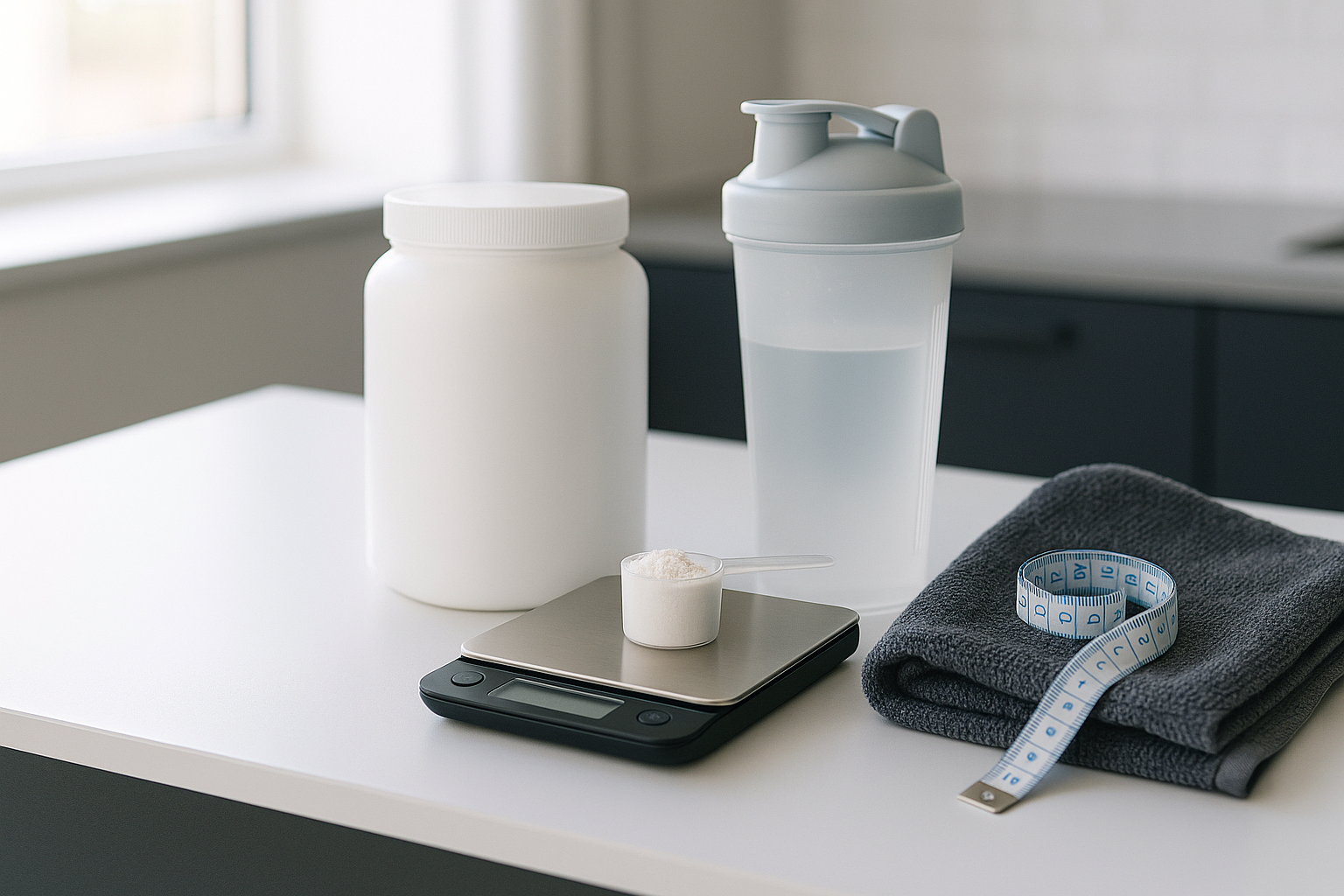
Creatine and Belly Fat: Does It Make You Gain Weight Around the Waist?
By The Creatine Canada Research Team — Evidence-based supplement analysts
No—creatine does not cause belly fat or preferential fat gain around your waist. What it can do is increase body weight slightly at first by pulling more water into muscle cells, and in some people that fuller look or temporary stomach discomfort gets mistaken for abdominal fat.
Evidence-based · Cites 4 sources · Editorial standards
Key Takeaways
- Creatine does not directly increase body fat or shift fat distribution to your abdomen.
- Early scale gain from creatine is usually water stored inside muscle, not belly fat under the skin or around organs.
- A standard maintenance dose is 3–5 g of creatine monohydrate daily; loading at ~20 g/day for 5–7 days is optional.
- If your stomach looks or feels bigger, the more likely culprits are water retention, bloating, a calorie surplus, or constipation—not new abdominal fat from creatine itself.
- Micronized creatine monohydrate, smaller split doses, and taking it with a meal can reduce digestive side effects.
- To judge whether creatine is ‘working’, look for better training performance, improved muscle fullness, and strength progress over 2–6 weeks—not just scale weight.
- In Canada, choose a simple creatine monohydrate product with a Natural Product Number (NPN) when applicable and ideally third-party testing for sport.
The direct answer: creatine does not cause belly fat
No, creatine does not cause belly fat, abdominal fat, or a special pattern of fat distribution around the waist. Creatine is a non-caloric compound stored largely in skeletal muscle, and its primary effect is to increase muscle phosphocreatine, which helps your body regenerate ATP, the immediate energy currency used during short, hard efforts.
If you searched for does creatine cause belly fat, creatine belly fat, creatine and stomach fat, or even the French query creatine fait grossir le ventre, the evidence-based answer is the same: creatine itself is not a fat-gain supplement. It does not contain meaningful calories, it does not directly stimulate fat storage, and it is not known to redirect fat to the abdominal area.
What creatine can do is make the scale go up a little, especially in the first one to two weeks. That is why many people assume, incorrectly, that creatine is making them fatter. The more accurate explanation is that creatine increases water stored inside muscle cells. That intracellular water can make muscles feel fuller and body weight rise before any visible muscle gain occurs. If your waist feels puffier, that sensation is more likely to be temporary bloating, gastrointestinal upset, constipation, or simply a normal fluctuation in hydration and food volume.
The 2017 ISSN position stand concluded that creatine monohydrate is the most effective nutritional supplement currently available for increasing high-intensity exercise capacity and lean body mass during training. That statement matters here because the expected body-composition shift with creatine is toward more lean mass support, not more fat mass.
If your goal is to stay lean while supplementing, your big levers are still total calorie intake, protein, training, sleep, and step count. Creatine is a support tool, not a fat-gain trigger. For a fuller primer on how it works, see creatine myths debunked and our guide to does creatine make you gain weight.
Why people think creatine makes their stomach bigger
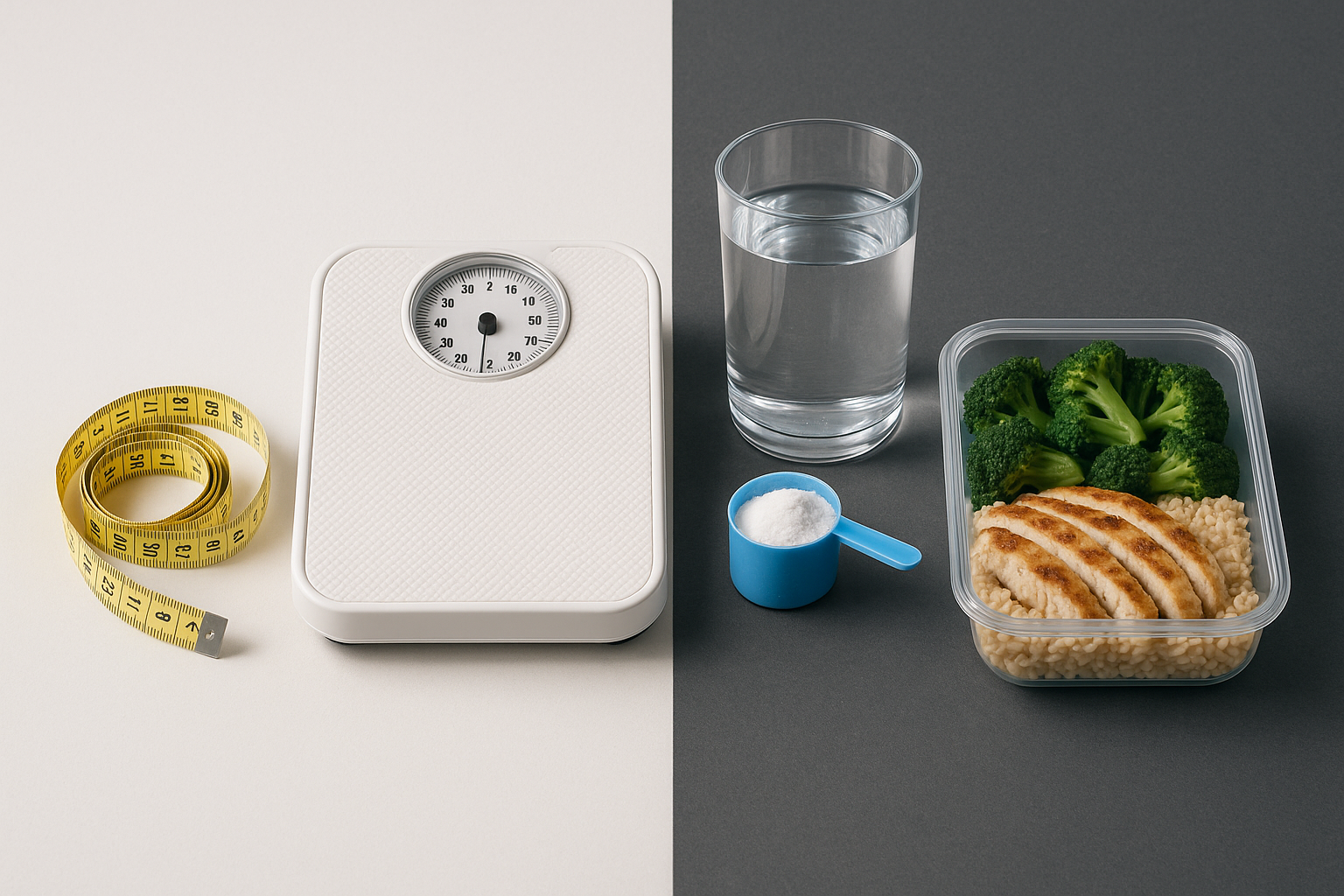
People usually think creatine makes their stomach bigger because they notice rapid scale gain, a fuller look, or temporary digestive bloating—not because creatine is actually creating abdominal fat. The difference between fat gain, water retention, and gut fullness is the key to understanding the myth.
There are four common reasons the confusion happens:
- Rapid water gain: Creatine can raise body weight quickly because muscle cells hold more water once creatine stores increase. Fat gain does not happen that fast unless calorie intake is very high.
- Loading-phase side effects: A classic loading protocol of ~20 g/day split into 4 doses for 5–7 days can cause stomach upset in some users, especially if doses are too large or poorly mixed.
- Normal waist fluctuations: Sodium intake, menstrual cycle changes, fibre intake, constipation, and hard training soreness can all alter how your midsection looks from day to day.
- Bulking context: Many people start creatine during a bulk. When body fat rises from a calorie surplus, creatine gets blamed for fat gain that is actually coming from food intake.
A useful rule of thumb is this: if your weight jumps within days of starting creatine, that is almost certainly not new fat tissue. Body fat accumulates from sustained excess energy intake over time, whereas creatine-related water shifts can happen much faster. This is why does creatine make your stomach bigger is often the wrong question. The better question is whether your bigger-looking stomach is fat, bloat, food volume, constipation, or temporary water changes.
The 2021 JISSN review on common questions and misconceptions about creatine specifically addressed several persistent myths and reinforced that many fears about side effects are overstated or misunderstood. See Antonio et al. (2021) for the broader myth-busting context.
If you feel distension low in the abdomen, have burping, cramping, or loose stools, think digestion first. If your abs look softer everywhere after weeks of overeating, think body fat first. If your muscles look fuller and your weight is up slightly but your waist measurement is stable, think intracellular water first. Those are very different scenarios and should be treated differently.
The science: how creatine works, and why that is not the same as waist fat
Creatine works by increasing phosphocreatine stores in muscle, and that mechanism supports energy production during short, intense effort rather than fat storage around the waist. Phosphocreatine is the stored form of creatine phosphate that helps rapidly regenerate ATP during heavy sets, sprints, jumps, and repeated bursts of work.
Here is the simplified mechanism:
- You ingest creatine. Most evidence supports creatine monohydrate as the reference form.
- Muscles store more creatine and phosphocreatine. This increases your capacity to resynthesize ATP during high-intensity exercise.
- Training quality can improve. You may get an extra rep, maintain sprint power better, or handle slightly more volume.
- Over weeks and months, better training can support greater lean mass and strength gains.
- Water shifts into muscle cells. This contributes to the fuller look and some early weight gain.
That last point is where the belly-fat myth starts. Creatine-associated water is primarily discussed as intracellular water, meaning water held inside muscle cells, not as new adipose tissue. Abdominal fat, by contrast, is stored energy in fat tissue. Subcutaneous belly fat sits under the skin. Visceral fat sits deeper around organs. Creatine does not have a known mechanism that specifically increases either one.
Could creatine indirectly contribute to fat gain in real life? Yes, but only in the same ordinary way almost anything can: if someone eats more calories than they burn while taking it. Creatine is not metabolically magic in either direction. It does not override energy balance. It may support training performance enough to help body recomposition in some people, especially when combined with resistance training, but it does not melt fat on its own either. For that topic, see does creatine help you lose fat.
The IOC supplement consensus and ISSN position stand both place creatine among the most evidence-backed sports supplements for high-intensity performance, not for causing central fat gain. That distinction matters because many internet claims confuse visual fullness, total mass, and actual body fat. Mechanistically and clinically, those are not the same outcome.
If the scale goes up, here is what that weight usually is
If the scale goes up after starting creatine, the increase is usually water and eventually some lean mass support—not abdominal fat. That is the most important practical distinction for anyone worried about creatine waist gain.
In the first days to two weeks, the most common change is a small increase in total body water associated with higher muscle creatine storage. This is especially common with a loading phase. Later on, if you train hard and eat appropriately, creatine may help you build a bit more lean mass over time by improving training quality and recovery between repeated intense efforts.
Use this checklist to interpret scale changes correctly:
- Weight up, waist unchanged: likely water and/or lean mass.
- Weight up, strength up, muscles look fuller: likely expected creatine response.
- Weight up, waist up, calories also up: likely calorie-surplus fat gain, not a creatine-specific effect.
- Weight up, stomach feels hard or gassy: likely bloating, food volume, or constipation.
The best way to know whether creatine is causing a real problem is to track more than body weight. Measure your waist at the navel under the same conditions once or twice weekly, take progress photos, note gym performance, and monitor how your clothes fit. One isolated weigh-in is noisy data.
Creatine can also create a visual effect people describe as “bigger”. Often that is a positive effect: fuller shoulders, arms, chest, and legs from more intracellular water and later better hypertrophy support. It does not selectively target the stomach. If your midsection is the only area looking larger, investigate meal timing, sodium, fibre, digestive tolerance, menstrual-cycle changes, and calorie intake before blaming the supplement.
For a more complete breakdown of water versus fat versus muscle, read does creatine make you gain weight and does creatine make you look bigger. Those guides explain why the scale can rise even while body composition improves.
How to take creatine without feeling bloated or puffy
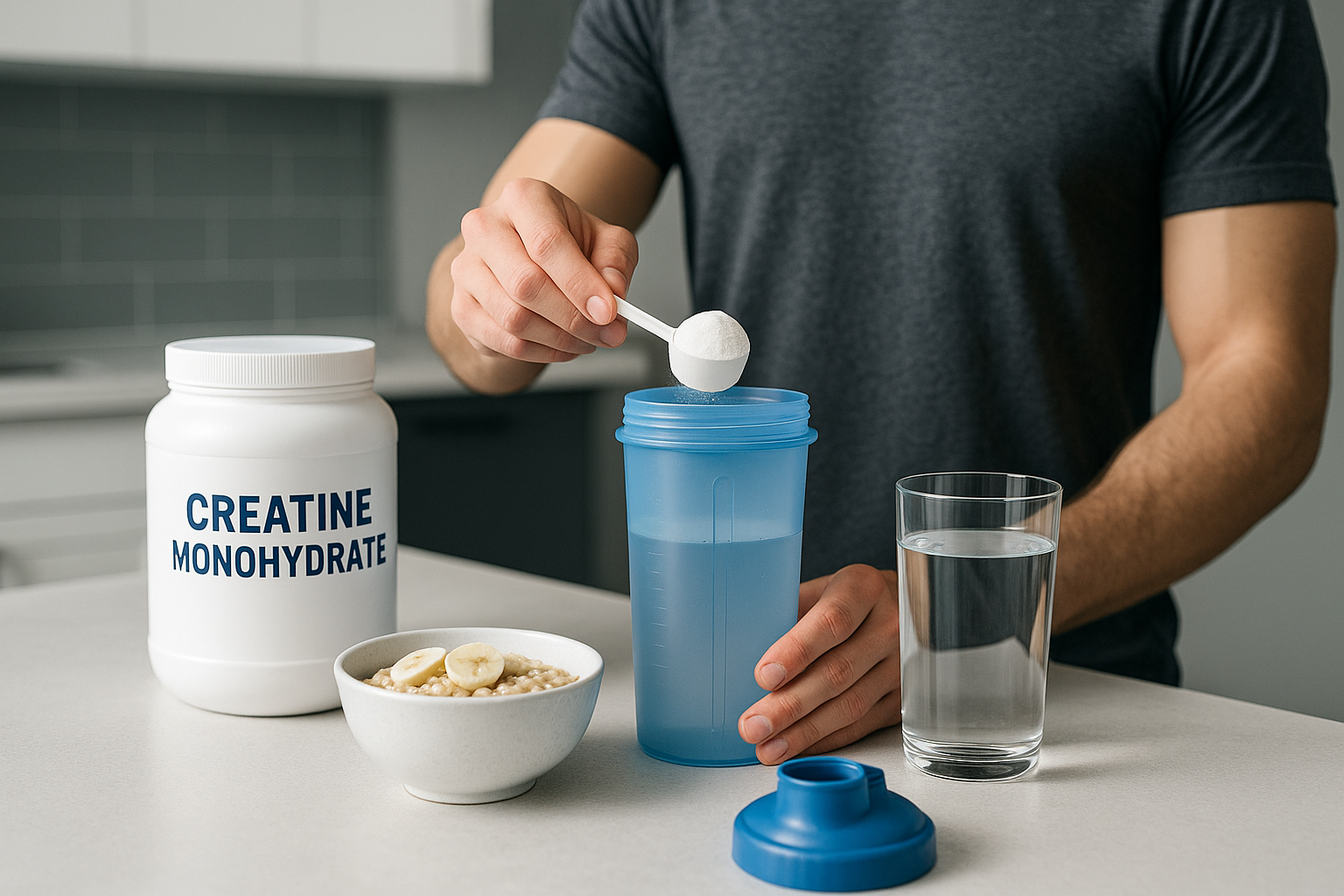
You can reduce the chance of bloating or stomach discomfort by using a simple daily protocol: 3–5 g of creatine monohydrate once daily, mixed well, taken consistently, and adjusted if your gut is sensitive. For most people, this works just as well as a loading phase; it only takes longer to fully saturate muscle stores.
- Choose creatine monohydrate. It is the most studied, most reliable, and usually the best value. Our best creatine rankings and creatine brand reviews can help you compare options.
- Start with 3 g daily if you are cautious. After several days, move to 5 g if desired and tolerated.
- Skip loading if you are prone to digestive issues. You do not need to load to get results.
- Mix it thoroughly. Gritty undissolved powder can bother some stomachs. Use warm water if needed. See how to mix creatine.
- Take it with a meal if your stomach is sensitive. This often improves tolerance.
- Split the dose if needed. Instead of 5 g once, try 2.5 g twice daily.
- Hydrate normally. You do not need extreme water intake, but being underhydrated can make you feel off.
If you want faster saturation, a standard loading protocol is about 20 g/day divided into 4 doses of 5 g for 5–7 days, followed by 3–5 g/day. Loading is effective, but it is also the protocol most likely to be blamed for “creatine belly” because large repeated doses are more likely to cause temporary digestive upset.
What should you expect week by week?
- Week 1 with loading: possible small weight increase and muscle fullness; possible GI discomfort if doses are too large.
- Weeks 2–4: steadier training performance, especially on repeated hard efforts.
- Weeks 4–8: easier to notice gym progress, work-capacity benefits, and training-volume improvements.
If you want a personalised dose, use our creatine dosage calculator or read how much creatine per day.
Best creatine dose by body weight, goal, and stomach sensitivity
The best creatine dose for most adults is 3–5 g of creatine monohydrate per day, but body size, performance goals, and digestive tolerance can help you fine-tune the plan. Bigger athletes and those chasing maximal saturation may sit near the upper end; smaller beginners can often start lower.
| Body weight / situation | Practical daily dose | Best use case | Notes |
|---|---|---|---|
| Under 60 kg | 3 g/day | Beginners, smaller adults, cautious starters | Often enough to build stores gradually with low GI risk |
| 60–90 kg | 3–5 g/day | Most recreational lifters and athletes | Standard evidence-based maintenance range |
| Over 90 kg | 5 g/day | Larger athletes, higher lean mass | Simple practical target for most users |
| Want fastest saturation | ~20 g/day for 5–7 days, then 3–5 g/day | Competition prep, impatient starters | Split into 4 doses; higher risk of stomach upset |
| Sensitive stomach | 2–3 g/day to start, or 2.5 g twice daily | People worried about bloating or loose stools | Increase only if well tolerated |
Goal also matters:
- Strength and muscle: 3–5 g/day consistently is enough for most people.
- Cutting or recomp: stay at 3–5 g/day to support training and lean mass retention without changing the basic strategy.
- Older adults: 3–5 g/day is still the usual practical range, ideally paired with resistance training.
- Women: the same evidence-based dose range generally applies; dosing is not fundamentally different because of sex.
Timing matters much less than consistency. Taking creatine post-workout, pre-workout, with breakfast, or on rest days can all work if you actually remember it. For timing specifics, see when to take creatine and creatine on rest days.
If you are the person Googling creatine abdominal fat or creatine makes belly bigger, the low-bloat move is simple: start at 3 g/day, avoid loading, mix thoroughly, and take it with food. That protocol is boring, but boring is often what works best.
Who creatine is for, and who should be more cautious
Creatine is appropriate for many healthy adults, including beginners, women, older adults, and athletes, but a few groups should be more cautious and speak with a healthcare professional first. The belly-fat question is often really a comfort and suitability question, so it helps to know where you fit.
Beginners: Yes, beginners can use creatine. In fact, it is one of the few supplements with strong evidence for strength and high-intensity performance support. If you are new to training, keep expectations realistic: creatine helps you train better; it does not replace training.
Women: Creatine does not make women gain belly fat. Women may still notice temporary weight fluctuations from water, but the same is true of men. If anything, confusion is more common because many women are understandably more scale-sensitive. Our guide on creatine for women covers this in depth.
Older adults: Creatine can be useful for preserving strength and lean mass, especially when paired with resistance training. Age does not make creatine more likely to cause abdominal fat.
Vegetarians and vegans: People who eat little or no creatine from meat and fish may respond particularly well because baseline stores may be lower. That can mean noticeable benefits, not more belly fat.
Weight-class or aesthetic athletes: Creatine may still be useful, but the short-term water increase can matter if you need to make weight or look extremely dry. In those cases, timing and individual response matter more.
Who should be cautious:
- People with known kidney disease or significant renal concerns unless cleared by a physician.
- Anyone pregnant or breastfeeding unless guided by a qualified healthcare professional.
- People taking medications or managing medical conditions that warrant supplement review first.
The Mayo Clinic notes that creatine appears to be generally safe for many people when used appropriately, but medical context matters. If you need a deeper safety review, read is creatine safe and who should not take creatine.
The real side effects to watch: bloating, digestion, and false alarms around the waist
The main side effects people confuse with belly fat are bloating, stomach upset, loose stools, and short-term water-related scale changes. Those are real experiences for some users, but they are not the same thing as gaining abdominal fat.
Potential issues include:
- Stomach discomfort: more common with large doses, especially during loading.
- Loose stools or diarrhoea: often from taking too much at once or from poorly tolerated flavoured formulas.
- Bloating: usually temporary and more related to digestion or rapid dosing than to fat gain.
- Weight increase: often expected; not inherently a side effect if it reflects intracellular water and later lean mass support.
How do you tell whether your waist gain is real fat?
- Measure, do not guess. Use a tape measure at the same time of day, ideally morning before eating.
- Track for 2–4 weeks. One puffy day means little.
- Compare with calories. If you are in a surplus, fat gain is possible regardless of creatine.
- Note symptoms. Gas, pressure, constipation, and irregular bowel movements point to GI causes.
One overlooked factor is product format. A plain unflavoured monohydrate powder often causes fewer issues than heavily flavoured blends with sweeteners, gums, and added pre-workout ingredients. If you feel “creatine and stomach fat” are linked for you, inspect the whole product label, not just the creatine dose.
For digestive troubleshooting, see creatine digestive side effects and does creatine cause bloating. Those guides cover clumping, mixing, empty-stomach dosing, and how to separate true intolerance from a fixable setup problem.
Finally, remember that creatine can raise blood creatinine, which is a breakdown product measured on labs, without meaning it harmed your kidneys. That separate confusion drives a lot of safety panic. If bloodwork is part of your concern, read creatine vs creatinine and is creatine bad for your kidneys.
Myths debunked: creatine does not target your stomach, hormones, or fat distribution
Creatine does not specifically enlarge your stomach, create abdominal fat, or alter body-fat distribution toward the waist. Those are persistent myths, but they are not supported by mainstream creatine science.
Myth 1: Creatine turns into fat if you do not work out.
False. Creatine is not converted into body fat. If you take creatine without training, you may still increase muscle creatine stores, but you will not somehow “store the creatine as belly fat”.
Myth 2: Creatine causes a beer-belly look.
False. If someone looks puffier in the midsection, the likely causes are diet, sodium, digestion, stress, poor sleep, menstrual-cycle changes, or an aggressive loading phase.
Myth 3: Creatine changes hormones in a way that sends fat to the stomach.
Not supported. Creatine is not an anabolic steroid and does not have a recognised mechanism that redistributes fat to the abdomen. For readers worried about hormones, see does creatine affect testosterone and is creatine a steroid.
Myth 4: If your weight goes up, you gained fat.
False. Weight is not the same as fat mass. Scale weight includes water, glycogen, digestive contents, muscle, and fat.
Myth 5: Fancy creatine forms prevent belly gain better than monohydrate.
Usually marketing. Some alternative forms may dissolve differently, but monohydrate remains the most studied and cost-effective option. The burden of proof is on newer forms to show better outcomes, not on monohydrate to defend itself against marketing claims.
The evidence hierarchy here is important. The strongest evidence supports creatine monohydrate for performance and lean-mass support. The claim that creatine causes stomach fat is not a recognised benefit-risk conclusion from position stands or major evidence summaries. Examine's evidence summary also consistently treats creatine as a performance and body-composition support supplement, not as a driver of central fat gain.
For more myth-busting, see creatine myths debunked and creatine myths and facts.
Buying creatine in Canada: what to choose if you want results without the fluff
If you want creatine without unnecessary bloating anxiety, buy a simple creatine monohydrate product in Canada with a clean label, appropriate regulatory information, and ideally third-party testing. The fewer extras in the tub, the easier it is to judge whether creatine itself agrees with you.
Here is what to look for:
- Form: creatine monohydrate.
- Ingredient list: ideally just creatine monohydrate, especially if you are troubleshooting digestion.
- Dose clarity: a serving that makes it easy to reach 3–5 g/day.
- Quality signals: third-party testing, informed-sport style certification for athletes, or strong brand transparency.
- Canadian compliance: where applicable, check for proper Natural Product labelling and an NPN, which stands for Natural Product Number, showing the product has been authorised for sale as a natural health product in Canada.
| Option | Best for | Pros | Potential downside |
|---|---|---|---|
| Unflavoured monohydrate powder | Most people | Best evidence, best value, easiest to dose | Can be gritty if mixed poorly |
| Micronized monohydrate | Sensitive stomachs, easier mixing | Often dissolves a bit better | Usually similar results to regular monohydrate |
| Capsules | Convenience, travel | No taste, no mixing | More expensive per gram; lots of capsules needed |
| Flavoured blends | People who dislike plain powder | More palatable | Extra ingredients can muddy GI troubleshooting |
Canadian buyers should also pay attention to where they purchase. Reputable domestic retailers and transparent brand sites reduce the risk of poor storage, counterfeit stock, or vague labels. Start with our creatine product catalog, best creatine rankings, and related guide on best creatine monohydrate in Canada.
If you are drug-tested, quality matters even more. The IOC consensus on supplements stresses contamination risk across the industry broadly, so certification and sourcing are not trivial details for competitive athletes.
Bottom line: what to do if you want creatine benefits without worrying about your waist
Creatine does not cause belly fat, and for most people the smartest approach is to use a plain monohydrate product at 3–5 g/day, track waist and performance separately from scale weight, and avoid blaming creatine for fat gain caused by diet or temporary bloating. That is the bottom line.
If you want the shortest possible action plan, do this:
- Buy creatine monohydrate.
- Take 3–5 g daily.
- Skip loading if you are stomach-sensitive.
- Take it with food and mix it well.
- Track waist, body weight, and gym performance for 4 weeks.
- If your stomach feels worse, split the dose or switch to a simpler formula.
When should you stop and reassess? If you get repeated digestive distress despite lowering the dose, if you are in a weight-class sport and the water increase matters strategically, or if you have a medical condition that needs clinician oversight.
When should you relax? If your body weight rose a bit, your lifts improved, and your waist measurement stayed stable. That is often exactly what normal creatine use looks like.
For most healthy adults, creatine is one of the most evidence-backed and least mysterious supplements in sports nutrition. The real challenge is not whether it causes stomach fat; it is learning how to interpret normal water shifts and choosing a sensible protocol. If you want to go deeper next, read what is creatine, how to take creatine, and how long does creatine take to work.
Creatine and belly fat: the numbers that matter
- 3–5 g/day Standard daily maintenance dose — The usual evidence-based range for most adults using creatine monohydrate.
- ~20 g/day Typical loading dose — Usually split into 4 doses for 5–7 days if faster saturation is desired.
- 5–7 days Typical loading phase length — Loading is optional and more likely than maintenance dosing to trigger stomach upset.
- 2–4 weeks Typical time to notice benefits without loading — Consistent daily use can gradually saturate muscle stores even without a loading phase.
Frequently Asked Questions
Does creatine cause belly fat?
No, creatine does not cause belly fat. Creatine can increase body weight slightly at first because it raises water stored inside muscle cells, but it does not directly create abdominal fat or move fat storage to your waist.
Does creatine make your stomach bigger?
Creatine can make your stomach feel or look bigger temporarily if it causes bloating, digestive upset, or if you start with a loading phase, but that is not the same as gaining stomach fat. If your waist measurement stays stable, it is unlikely to be true fat gain.
Why do I look puffy after starting creatine?
You may look puffier after starting creatine because of water shifts, higher sodium intake, digestive bloating, or normal day-to-day fluctuations in food volume. Creatine-related water is usually associated with muscle fullness rather than selective fat gain in the abdomen.
Can creatine change fat distribution?
There is no good evidence that creatine changes fat distribution in a way that makes you store more fat around your stomach. Fat distribution is influenced far more by genetics, sex hormones, age, stress, sleep, and total energy balance than by creatine supplementation.
Does creatine abdominal fat go away if I stop taking it?
If what you noticed was true abdominal fat, stopping creatine will not remove it; only a sustained calorie deficit and time will. If what you noticed was water retention or bloating, that usually settles after stopping creatine or adjusting the dose and routine.
Is creatine bloating the same as belly fat?
No, creatine bloating is not the same as belly fat. Bloating is usually a temporary sensation or appearance related to digestion, fluid balance, or large doses, whereas belly fat is stored adipose tissue that changes more slowly and is driven by longer-term calorie surplus.
Should I avoid creatine if I am trying to lose belly fat?
No, you do not need to avoid creatine just because you are trying to lose belly fat. Creatine can help support training performance and lean mass retention during a cut, although it does not directly burn fat by itself.
Does creatine make women gain weight around the waist?
No, creatine does not specifically make women gain weight around the waist. Women can experience the same temporary water-related scale changes as men, but creatine is not known to cause female-specific belly fat gain.
How can I take creatine without getting bloated?
The best way to reduce bloating is to use creatine monohydrate at 3–5 g/day, skip loading if you are sensitive, mix it well, and take it with food or in split doses. Many people who feel bloated on creatine improve simply by lowering the single-dose size.
If I gain weight on creatine, how do I know whether it is fat or water?
Track your waist measurement, gym performance, and calorie intake alongside body weight. If weight rises quickly within days, your waist stays stable, and your training improves, that points much more strongly to water and muscle-related changes than to body fat gain.