Sports Research Creatine Monohydrate Review: Creapure Quality?
By The Creatine Canada Research Team — Evidence-based supplement analysts
Sports Research Creatine Monohydrate is a solid creatine product, but the best answer depends on which version you are buying and what proof you want. If the label explicitly states Creapure, you are getting the well-known German-sourced creatine raw material; if it does not, judge it on monohydrate form, label transparency, third-party testing, price per gram, and Canadian compliance rather than brand marketing alone.
Evidence-based · Cites 4 sources · Editorial standards
Key Takeaways
- Sports Research creatine can be a good buy, but check the actual label to confirm whether the tub you are viewing is truly Creapure.
- Creatine monohydrate remains the gold-standard form, and 3 to 5 g daily is the evidence-based maintenance dose for most adults.
- Creapure is a raw-material trademark, not a guarantee that every product from a brand uses it across all lots or SKUs.
- For Canadians, an NPN and clear importer or seller information matter just as much as branding if you are buying online.
- The main value test is cost per gram of creatine monohydrate, not cost per tub or flashy packaging.
- If you want faster saturation, use 20 g per day split into 4 doses for 5 to 7 days, then continue with 3 to 5 g daily.
- Most people should expect water-weight gain and improved training performance before visible muscle gain.
Direct verdict: is Sports Research Creatine Monohydrate worth buying?
Yes, Sports Research Creatine Monohydrate can be worth buying if the product is plain creatine monohydrate, clearly labelled, fairly priced per gram, and sold through a legitimate channel in Canada. The biggest caveat is that many shoppers search “sports research creatine review” expecting a simple yes-or-no, when the smarter answer is to verify the exact version and seller before you buy.
Creatine is unusual in supplements because the ingredient matters far more than the brand story. If Sports Research is selling pure creatine monohydrate with no underdosed proprietary blend, that already checks the most important scientific box. The 2017 ISSN position stand concluded that creatine monohydrate is the most effective nutritional supplement available for increasing high-intensity exercise capacity and lean body mass during training. That means your first question should not be “Is this brand cool?” but “Is this actually straight monohydrate, at a full dose, from a transparent label?”
For anyone searching “sports research creatine monohydrate review”, here is the practical summary:
- Strengths: simple formula, evidence-based ingredient, easy dosing, and potentially premium sourcing if the label genuinely states Creapure.
- Possible downsides: premium-branded products can be overpriced compared with equally effective monohydrate from other brands.
- Canadian concern: imported supplements may vary in listing quality, compliance details, shipping cost, and return practicality.
If your goal is muscle, strength, sprint performance, or better repeated efforts in training, Sports Research creatine quality only needs to be “good enough” because monohydrate itself does the heavy lifting. If you are choosing between several tubs, compare it with our best creatine rankings, browse more creatine brand reviews, and use a cost-per-gram mindset rather than a label-hype mindset.
The short version is this: buy Sports Research creatine if the label is clean, the dose is standard, the seller is trustworthy, and the price per gram is competitive in Canada. If any of those four points fail, there is nothing magical about the brand name itself.
Is Sports Research creatine Creapure? Here is how to tell for sure
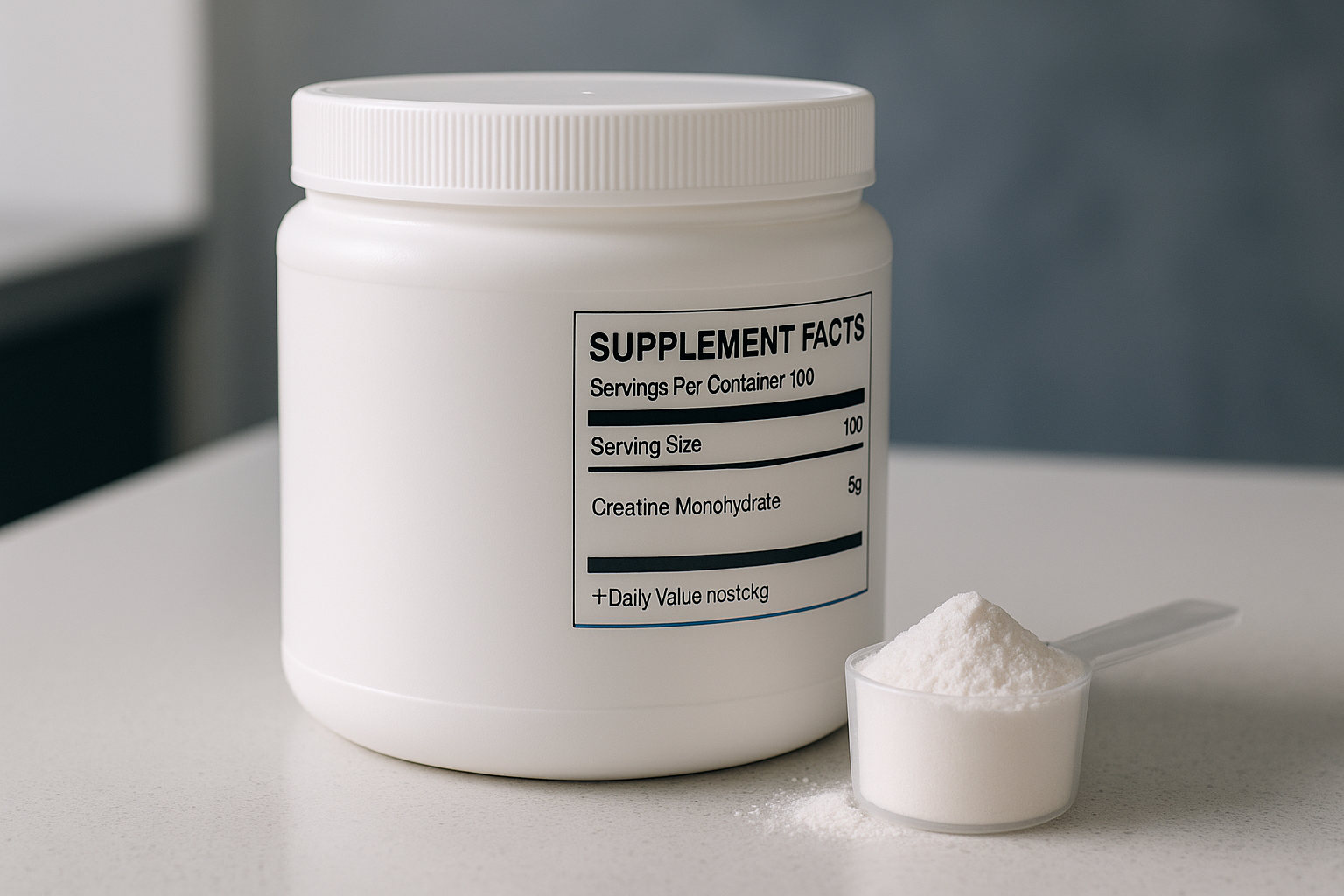
Sports Research creatine is only Creapure if the specific product label explicitly says Creapure. That sounds obvious, but it is the single most important answer for anyone searching “is Sports Research creatine Creapure”.
Creapure is a branded raw material made in Germany and used by multiple supplement companies. It is not a synonym for creatine monohydrate, and it is not a quality term a reviewer should assume from the brand name alone. If a listing says only “creatine monohydrate” without naming Creapure, you should not describe it as Creapure. The reverse is also true: if the front or back label clearly states Creapure, that is a meaningful quality signal because the source material is identified rather than hidden.
Why do people care? Mostly for three reasons:
- Traceability: a named raw material is easier to verify than a generic one.
- Purity reputation: Creapure has a strong reputation in sports nutrition for tight manufacturing standards.
- Consumer confidence: shoppers often prefer a known input over a vague sourcing claim.
That said, Creapure is not the only creatine that works. The evidence base supports creatine monohydrate broadly, not only one trademarked version. A non-Creapure monohydrate can still be effective, safe, and excellent value if it is properly manufactured and tested. This is where many reviews get lazy: they treat “not Creapure” as automatically bad, which the evidence does not support.
Use this quick checklist before you buy:
- Look for “Creapure” printed on the label, not buried in a vague seller bullet point.
- Confirm the ingredient panel says creatine monohydrate, with no filler blend replacing part of the dose.
- Check whether the seller shows clear batch, lot, or testing information.
- For Canada, look for NPN details where applicable and realistic shipping terms.
If you want a full primer on the trademark and what it does and does not guarantee, see our guide to what Creapure is. If you are deciding between Creapure and plain monohydrate more generally, our breakdown of the best type of creatine explains why monohydrate still wins regardless of fancy branding.
Bottom line: Sports Research creatine may be Creapure, but you should verify the exact SKU and label rather than assume it from search results, reseller copy, or older reviews.
Why this product works at all: the creatine mechanism matters more than the logo
Sports Research creatine works for the same reason any effective creatine monohydrate works: it raises intramuscular phosphocreatine, which helps your body regenerate ATP faster during short, intense efforts. ATP, or adenosine triphosphate, is the immediate energy currency your muscles use for explosive contractions. Phosphocreatine is stored creatine with a phosphate attached, and it acts as a rapid backup system for ATP regeneration.
When you supplement daily, your muscles gradually become more saturated with creatine. Higher creatine stores usually translate into better performance in repeated high-intensity efforts such as sprint intervals, heavy sets, jumps, and explosive team-sport movements. That better training output is the real reason creatine can support more muscle and strength over time. Creatine is not building muscle directly like a steroid; it helps you train harder, recover between repeated bouts more effectively, and often maintain more training quality across a session.
The 2021 review of common creatine questions and misconceptions in JISSN notes that creatine is one of the most researched supplements in sport and clinical nutrition, with strong support for efficacy and safety in healthy populations when used appropriately. See Antonio et al. (2021) for a practical research summary.
Here is what that means in plain English:
- Week 1: you may notice a slight increase in body weight from water drawn into muscle cells.
- Weeks 2 to 4: many users notice improved rep quality, better repeated sprint ability, or less drop-off late in workouts.
- Weeks 4 to 12: visible body-composition and strength differences become more noticeable when training and protein intake are in place.
This is also why “sports research creatine quality” matters, but only to a point. Once a product delivers real creatine monohydrate at the labelled dose, there is no special brand-specific mechanism that makes one plain monohydrate dramatically outperform another. Better mixability may improve convenience. Better testing may improve confidence. Better price may improve value. But the biological mechanism is the same.
If you are new to this topic, read what creatine is and how creatine supports ATP. Those guides make it easier to understand why a boring, unflavoured powder can outperform much flashier supplements.
Exact dosing for Sports Research creatine: maintenance, loading, and body-weight examples
The correct dose for Sports Research creatine is the same as for any creatine monohydrate: either 3 to 5 g daily for maintenance or about 20 g daily split into 4 doses for 5 to 7 days if you want faster saturation. This is the evidence-based dosing framework that has held up for years.
For most people, the simplest plan is 5 g once daily. That covers nearly everyone training recreationally for muscle, strength, or general performance. A smaller person may do well on 3 g daily, while a larger athlete often chooses 5 g daily for simplicity and consistency. If you prefer a body-weight method, loading is commonly estimated at about 0.3 g per kg per day for 5 to 7 days, followed by a lower maintenance intake.
| Body weight | Simple daily maintenance | Optional loading phase | Best for |
|---|---|---|---|
| 55-70 kg | 3-5 g/day | ~20 g/day split into 4 doses for 5-7 days | Beginners, smaller adults, general fitness |
| 70-90 kg | 5 g/day | ~20 g/day split into 4 doses for 5-7 days | Most lifters and team-sport athletes |
| 90 kg+ | 5 g/day | ~20 g/day split into 4 doses for 5-7 days | Larger athletes wanting faster saturation |
Goal-specific recommendations:
- Muscle and strength: 5 g daily, every day, with or without loading.
- Beginners: 3 to 5 g daily; skip loading if you want the easiest routine.
- Cutting or fat loss phases: keep taking 3 to 5 g daily to support training quality and lean mass retention.
- Older adults: 3 to 5 g daily is common, especially alongside resistance training.
- Vegetarians or vegans: 5 g daily often makes sense because baseline creatine stores may be lower.
Two common mistakes are underdosing and inconsistency. A scoop that only provides around 2.5 g is not wrong if you take two servings, but many users forget and end up chronically underdosed. Another mistake is taking creatine only on workout days. Muscle saturation depends on daily intake, not on a pre-workout feeling.
For precise math, use our creatine dosage calculator and read how much creatine per day. If you want a faster-start protocol with fewer stomach issues, our guide to the creatine loading phase covers how to split doses properly.
How to take Sports Research creatine properly, step by step
The best way to take Sports Research creatine is to measure a full 3 to 5 g dose, mix it in water or a shake, and take it every day without skipping rest days. That is the whole protocol in one sentence, but execution matters if you want smooth digestion and reliable results.
- Check the serving size. Do not assume one scoop equals 5 g unless the label says so. Some scoops are rounded, some are heaped, and some products list multiple scoops per full dose.
- Choose your daily target. For most adults, use 5 g daily. If you are smaller or especially cautious with digestion, start at 3 g daily for a week and move up.
- Mix it well. Add the powder to 250 to 500 mL of water, juice, or a protein shake and stir or shake thoroughly.
- Take it daily. Workout day, rest day, travel day, it all counts. Consistency beats perfect timing.
- Optionally load. If you want faster results, take 4 doses of about 5 g across the day for 5 to 7 days, then return to 3 to 5 g daily.
- Keep expectations realistic. You may feel nothing acutely; creatine is about saturation, not a stimulant buzz.
What should you mix it with? Water is fine. Protein shakes are fine. Juice is fine. Coffee is usually fine if it agrees with your stomach. The old idea that caffeine “cancels” creatine is overstated and not a reason to avoid the combination for most people. If you want practical mixing help, read how to take creatine, how to mix creatine, and whether to take creatine with food.
Useful troubleshooting tips:
- Stomach upset? Split the dose into 2 smaller servings and take it with meals.
- Gritty texture? Use more liquid, warm water, or a shaker bottle.
- Missed a day? Resume the next day; do not panic and do not double up unless you are in a loading phase and know what you are doing.
- No visible effect? Give it 2 to 4 weeks, track body weight and gym performance, and check that you are not underdosing.
The best review of a creatine product is often your adherence. A plain, easy-to-use powder you will actually take every day will outperform a fancier product you use inconsistently.
Does timing matter, and how long until Sports Research creatine starts working?
Timing matters far less than daily consistency, and Sports Research creatine usually starts “working” once your muscle creatine stores rise meaningfully over days to weeks. If you load, that can happen within roughly 5 to 7 days. If you simply take 3 to 5 g daily, full saturation usually takes longer, often around 3 to 4 weeks.
This directly answers two common buyer questions: “When should I take it?” and “How long does creatine take to work?” For most users, taking it at the time of day you are least likely to forget is the best timing strategy. There is no strong evidence that a standard monohydrate product becomes dramatically better just because it is taken pre-workout rather than post-workout.
What to expect:
- First week with loading: possible 0.5 to 1.5 kg increase in body weight, usually from intracellular water.
- First 2 to 4 weeks without loading: training may feel more repeatable, especially across multiple hard sets or sprint intervals.
- 1 to 3 months: clearer strength and lean-mass benefits show up if your training and nutrition are aligned.
The reason is simple: creatine is not acting like caffeine. It is not about a same-day subjective hit. It is about filling the tank. Once your muscles are more saturated, you have more phosphocreatine available to help regenerate ATP during demanding efforts.
If you want to maximise adherence, tie creatine to an existing habit:
- with breakfast every morning
- in your post-workout shake
- with your evening meal on both training and rest days
For deeper timing guidance, see when to take creatine and how long creatine takes to work. If your concern is hydration or thirst, pair this with how much water to drink with creatine.
Best practice: pick one daily time, stick to it for at least a month, and judge the product by performance trends, body weight, and consistency rather than whether you “feel” it within an hour.
Who Sports Research creatine is best for in Canada: beginners, women, older adults, and athletes
Sports Research creatine is best for adults who want a simple creatine monohydrate powder and do not need a flashy formula, with especially good fit for beginners, women, older adults, strength trainees, and team-sport athletes. Creatine is not just for male bodybuilders, and that outdated stereotype leaves a lot of people under-supplemented.
Beginners: Creatine is one of the few supplements a true beginner can use from day one because the mechanism is straightforward and the evidence base is strong. If you are learning the basics, a plain monohydrate product is exactly what you want, not a high-stim pre-workout blend.
Women: Women respond to creatine too, and the common fear that it causes “bulky” weight gain is misleading. The early scale increase is usually water stored inside muscle, not body fat. Our guide on creatine for women explains why many female lifters, runners, and recreational athletes benefit from the same 3 to 5 g daily protocol.
Older adults: Creatine paired with resistance training can support strength, lean mass, and functional performance with age. Older adults may also appreciate the simplicity of a single-ingredient powder with minimal additives.
Athletes: The International Olympic Committee consensus on supplements recognises creatine as one of the more evidence-backed performance supplements for specific use cases. It is especially relevant for repeated high-intensity efforts, sprinting, jumping, power sports, and collision sports. See the IOC consensus statement for the broader performance context.
Vegetarians and vegans: Because dietary creatine intake from meat and fish is absent or lower, plant-based athletes often have more room to benefit from supplementation.
Who may want something else?
- People who hate powder may prefer capsules, even though they are usually worse value.
- High-level tested athletes may prioritise specific sport-certification marks from certain brands.
- Budget-focused buyers may find a cheaper equivalent monohydrate in Canada.
For Canadians, the practical question is not only “Who is this for?” but “Can I buy it conveniently and confidently here?” That means checking availability, landed cost, NPN status where applicable, and whether a more local option from our creatine product catalog gives the same result for less.
Sports Research creatine in Canada: price, NPNs, shipping, and what to compare before you order
If you are buying Sports Research creatine in Canada, the smart comparison is price per gram plus compliance and shipping realities, not just the sticker price on the tub. This section matters because “sports research creatine Canada” and “sports research creatine price” are often more about shopping friction than supplement science.
Canadian buyers should check four things before clicking buy:
- Price per gram of actual creatine. A larger tub can look expensive but still be better value if the cost per 5 g serving is lower.
- NPN status. In Canada, an NPN is a Natural Product Number showing the product has been licensed as a natural health product. Not every listing displays this clearly, especially on marketplaces.
- Seller legitimacy and storage. Marketplace inventory can be fine, but also harder to verify for freshness, returns, and lot traceability.
- Total landed cost. Shipping, taxes, exchange rates, and possible import friction can erase any apparent deal.
| What to compare | Why it matters | Good sign | Red flag |
|---|---|---|---|
| Ingredient form | Monohydrate is the evidence-based standard | 100% creatine monohydrate | Blend, filler, or vague formula |
| Creapure claim | Confirms named raw material if present | Creapure stated on label | Seller mentions it, label does not |
| NPN / Canadian listing details | Helps confirm legal retail status in Canada | Clear product details | Missing or inconsistent info |
| Price per gram | Best way to assess value | Competitive cost per 5 g serving | Premium price for generic monohydrate |
| Third-party testing | Improves confidence in purity and contaminants | Transparent testing language | No testing discussion at all |
Because monohydrate is a commodity-like ingredient, the wrong time to overpay is when the formula is just plain creatine. If Sports Research costs materially more than comparable monohydrate products in Canada, ask what you are actually getting for that premium: better sourcing, verified testing, easier return policy, or simply nicer branding.
To compare alternatives, start with our best creatine rankings, best creatine monohydrate in Canada, and cheapest creatine in Canada. If your focus is regulation rather than price, read is creatine approved in Canada.
Bottom line for Canadian buyers: Sports Research creatine is only a great deal when the effective cost, compliance confidence, and convenience make sense against local alternatives.
Safety, side effects, and what a good review should say honestly
Creatine monohydrate is widely considered safe for healthy people when taken at recommended doses, but a trustworthy Sports Research creatine review should still mention predictable side effects, sensible cautions, and the difference between evidence and myth.
The strongest mainstream consensus supports creatine safety in healthy populations. The ISSN position stand and later reviews have repeatedly concluded that creatine monohydrate is safe and effective when used appropriately. The Mayo Clinic overview likewise describes creatine as likely safe when used orally at appropriate doses for up to several years in adults.
Common and usually manageable side effects include:
- Temporary weight gain: often from water retained inside muscle.
- Stomach upset: more likely with large single doses, poor mixing, or unnecessary loading mistakes.
- Grittiness or bloating sensation: often improved by splitting doses and taking with meals.
Important nuance: creatine can raise creatinine on a blood test because creatinine is a breakdown product related to creatine metabolism. That does not automatically mean kidney damage. This confusion causes a huge amount of unnecessary fear. If you have kidney disease, take nephrotoxic medication, or have a medical condition affecting fluid balance, speak to your clinician first. For healthy people, the evidence does not support the blanket claim that normal-dose creatine harms the kidneys.
Who should be more cautious:
- people with known kidney disease
- people under medical care for significant chronic illness
- pregnant or breastfeeding individuals, because evidence is more limited than in healthy non-pregnant adults
- anyone taking medication where clinician review is prudent
A fair review should also say what creatine does not usually do. It does not dehydrate you by default, it is not a steroid, and it does not need to be cycled. For deeper myth-busting, see our creatine myths debunked, creatine safety guide, and kidney guide.
The right conclusion is balanced: Sports Research creatine is not special because it avoids all side effects; it is good if it gives you standard monohydrate benefits with the same well-understood, manageable side-effect profile as other reputable creatines.
Common mistakes with Sports Research creatine, plus the biggest myths to ignore
The most common reason a creatine review seems disappointing is user error, not product failure. Sports Research creatine, like any monohydrate, can appear to “not work” when the dose, timing consistency, or expectations are off.
Here are the most common mistakes:
- Taking it only on workout days. Creatine works through saturation, so skipping rest days slows or limits results.
- Using too small a dose. Many people take a partial scoop and never reach 3 to 5 g daily.
- Expecting a stimulant feeling. Creatine should not feel like pre-workout; it works quietly over time.
- Stopping after one week. Without loading, you may need several weeks to saturate muscle stores.
- Overpaying for “advanced” forms. Monohydrate is still the benchmark, so HCl or buffered forms are not automatic upgrades.
Now the myths:
Myth 1: Creatine is only for bodybuilders.
False. Creatine helps many lifters, sprinters, older adults, team-sport athletes, and some recreational exercisers.
Myth 2: Creatine causes fat gain.
False in the usual sense. Early weight gain is typically water in muscle, not added body fat.
Myth 3: You need to cycle creatine.
False for most users. Daily ongoing use is standard practice.
Myth 4: Creapure is the only effective creatine.
False. Creapure is a respected source trademark, but the evidence supports creatine monohydrate broadly.
Myth 5: Creatine ruins your kidneys.
False as a blanket statement for healthy users at standard doses, though people with pre-existing kidney disease need medical guidance.
If you think Sports Research creatine is not working, troubleshoot in this order:
- Confirm your full daily dose in grams.
- Check whether you take it every day.
- Give it at least 3 to 4 weeks if you did not load.
- Track body weight, training volume, and repeated-effort performance.
- Make sure your training and protein intake are not the real weak links.
For deeper troubleshooting, visit why creatine may not be working, non-responder guide, and common creatine mistakes.
The best myth filter is boring science: if a claim makes plain creatine sound excitingly instant or uniquely brand-dependent, it is usually more marketing than physiology.
Bottom line: our final Sports Research creatine review for Canadian buyers
Our final Sports Research creatine review is positive but conditional: it is a good product if the exact tub you are buying is straightforward creatine monohydrate, clearly labelled, fairly priced, and sold through a reliable Canadian channel.
Here is the final scoring logic in plain language:
- Science: excellent, because creatine monohydrate is the most validated form.
- Formula simplicity: usually excellent if it is just monohydrate with no fluff.
- Creapure value: a plus if explicitly stated, but not mandatory for effectiveness.
- Canadian buying practicality: variable, depending on seller, NPN clarity, shipping, and total cost.
- Overall value: good only if the price premium is justified by sourcing, testing, or convenience.
If your main question is “Should I buy Sports Research creatine in Canada?”, the answer is: buy it if you verify the label and the math. Verify the label for creatine monohydrate, and ideally Creapure if that matters to you. Verify the math by comparing grams, servings, and total landed cost against competing products. If Sports Research wins that comparison, it is an easy recommendation. If it does not, another plain monohydrate will likely work just as well.
For most people, the next steps are simple:
- Pick a reputable monohydrate product.
- Take 3 to 5 g daily.
- Stay consistent for at least a month.
- Track gym performance, body weight, and recovery.
If you want alternatives before deciding, explore our creatine brand reviews, compare products in the creatine product catalog, and use the creatine dosage calculator to set your plan. If you want the broader educational foundation, our complete creatine guide ties everything together.
Final verdict: Sports Research Creatine Monohydrate is not magic, and that is exactly why it can be a good buy. When a creatine product is transparent, properly dosed, and competitively priced, boring is beautiful.
Sports Research Creatine Review: the numbers that actually matter
- 3-5 g/day Standard maintenance dose — Suitable for most adults using creatine monohydrate
- ~20 g/day Typical loading dose — Usually split into 4 doses for 5-7 days
- 5-7 days Fast saturation timeline — When using a standard loading phase
- 3-4 weeks Gradual saturation timeline — Common when taking 3-5 g daily without loading
Frequently Asked Questions
Is Sports Research creatine actually good quality?
Yes, Sports Research creatine can be good quality if the label shows plain creatine monohydrate, transparent sourcing, and credible selling information. The main thing to understand is that quality in creatine is judged less by branding and more by ingredient form, dose accuracy, testing transparency, and whether the price is reasonable for what is essentially a simple raw material.
Is Sports Research creatine Creapure?
Sports Research creatine is only Creapure if the specific product label explicitly says Creapure. Do not rely on reseller copy or old reviews alone, because Creapure is a trademarked raw material designation, not a generic synonym for creatine monohydrate.
How much Sports Research creatine should I take per day?
Most adults should take 3 to 5 g of Sports Research creatine per day, with 5 g being the simplest standard choice. If you want faster saturation, a common loading approach is about 20 g per day split into 4 doses for 5 to 7 days, then 3 to 5 g daily after that.
Does Sports Research creatine work the same as other creatine monohydrate brands?
Yes, Sports Research creatine should work similarly to other properly made creatine monohydrate products because the active ingredient and mechanism are the same. Differences between brands usually come down to sourcing, testing, mixability, and value rather than dramatic differences in muscle-building effectiveness.
Can I buy Sports Research creatine in Canada?
Yes, Canadians can often buy Sports Research creatine through online retailers, but availability and listing quality can vary. Before ordering, check shipping cost, seller reputation, label details, and whether the product listing clearly reflects Canadian compliance expectations such as NPN information where applicable.
Is Sports Research creatine overpriced?
Sports Research creatine is overpriced only if its cost per gram is meaningfully higher than comparable monohydrate products without giving you better sourcing confidence, testing, or convenience. The right way to compare price is by grams of actual creatine, not by tub size or brand prestige.
When should I take Sports Research creatine?
You can take Sports Research creatine any time of day, and consistency matters more than exact timing. Taking it daily with a meal, in a shake, or at another repeatable time is usually more important than whether it is technically before or after your workout.
How long does Sports Research creatine take to work?
Sports Research creatine usually starts working once your muscles become more saturated with creatine, which can happen in about 5 to 7 days with loading or around 3 to 4 weeks with standard daily dosing. You are more likely to notice better repeated-effort performance before obvious visual muscle changes.
Does Sports Research creatine cause bloating or weight gain?
Sports Research creatine can cause a modest early increase in body weight, but this is usually water retained inside muscle rather than fat gain. Some people describe this as bloating, although true digestive bloating is more often related to taking too much at once or mixing it poorly.
Is Sports Research creatine safe for women and beginners?
Yes, Sports Research creatine can be safe and appropriate for women and beginners when used at standard doses, just as other creatine monohydrate products are. Women do not need a different basic creatine formula, and beginners can start with 3 to 5 g daily without needing a complicated stack.