Does Creatine Stunt Growth? No — Here's What the Research Actually Shows
By The Creatine Canada Research Team — Evidence-based supplement analysts
No, creatine does not appear to stunt growth or stop height growth in healthy adolescents when used appropriately. The bigger issue for teens is not growth-plate damage from creatine itself, but whether supplementation is necessary at all, whether the product is trustworthy, and whether a parent, coach, or clinician is supervising the decision.
Evidence-based · Cites 4 sources · Editorial standards
Key Takeaways
- There is no good evidence that creatine monohydrate stunts growth or reduces adult height.
- Creatine works by increasing muscle phosphocreatine stores, not by altering growth plates, puberty, or bone lengthening.
- For teens, food, sleep, training, and overall energy intake matter far more for growth than creatine does.
- If a teenager uses creatine, monohydrate is the evidence-based form and 3-5 g/day is the standard maintenance dose.
- Loading is optional; 20 g/day split into 4 doses for 5-7 days saturates faster but is not required.
- Teens with kidney disease, major medical conditions, or unsupervised supplement habits should not start creatine without medical clearance.
- In Canada, choose products with clear Health Canada labelling when applicable, an NPN if listed, and third-party testing to reduce contamination risk.
The direct answer: creatine does not appear to stunt growth
No, creatine does not appear to stunt growth, stunt your growth, affect height growth, or make you stop growing in healthy adolescents based on the evidence we have. That is the short answer parents and teens are usually looking for.
The reason this myth persists is simple: creatine is associated with strength training, muscle gain, and sports supplements, so many people assume it must somehow interfere with normal development. But creatine is not an anabolic steroid, it is not a hormone, and it does not act on the growth plates in bones. Creatine is a naturally occurring compound made from amino acids and stored mostly in muscle, where it helps regenerate ATP, the cell's immediate energy currency, during short, intense efforts.
The 2017 ISSN position stand concluded that creatine monohydrate is the most effective ergogenic nutritional supplement currently available for increasing high-intensity exercise capacity and lean body mass during training, and it did not identify evidence that creatine impairs normal growth. The 2021 JISSN review on common questions and misconceptions also addressed major creatine myths and did not support the idea that creatine harms healthy growth.
What we can say confidently is this:
- There is no established mechanism showing creatine would stunt height growth.
- There is no good human evidence showing creatine use reduces adult height.
- The best-supported form is creatine monohydrate, not designer forms marketed as safer for teens.
What we cannot say is that every teen should take it. That is a different question. Safety is not the same as necessity. For a 13-, 14-, 15-, or 16-year-old athlete, the more practical questions are whether training and nutrition are already in order, whether the dose is appropriate, whether the product is clean, and whether parents understand why it is being used. If you want a full primer first, see creatine for beginners and what creatine is and what it does.
Why creatine would not be expected to affect height or bone growth
Creatine would not be expected to affect height because its main job is energy recycling inside cells, not regulating growth plates, growth hormone, or puberty. In other words, the biology of creatine does not line up with the claim that it stunts growth.
About 95% of the body's creatine is stored in skeletal muscle, much of it as phosphocreatine, a stored high-energy compound that helps rapidly remake ATP during explosive activity like sprinting, jumping, and lifting. When you supplement with creatine monohydrate, muscle creatine stores rise over time. That can improve repeated high-intensity performance and help support better training quality.
Height growth happens through epiphyseal growth plates, the cartilage zones near the ends of long bones that lengthen during childhood and adolescence. These plates are influenced by genetics, overall nutrition, energy availability, sex hormones, growth hormone, IGF-1, thyroid status, health conditions, and age-related maturation. Creatine is not known to close growth plates early or reduce their activity.
This matters because many parents asking "can creatine affect growth" are really asking about two separate things:
- Can creatine change how tall my child gets? Current evidence does not support that.
- Can creatine change body weight? Yes, often slightly, mostly from increased intracellular water in muscle early on, which is not the same thing as becoming shorter or stopping growth.
Creatine can cause a modest scale increase, especially during a loading phase, because it pulls more water into muscle cells. That can confuse people into thinking it is altering the body in a risky way. But more water inside muscle is not the same as bloating around the stomach, and it has nothing to do with reduced height potential. If that side effect is a concern, read does creatine make you gain weight and does creatine cause bloating.
The stronger evidence-based concern for growing teens is inadequate sleep, chronic dieting, low energy intake, or overtraining. Those factors can affect development and performance far more directly than creatine ever would. So if the real goal is protecting growth, prioritise calories, protein, school-life balance, and sensible training before worrying that creatine itself will affect height.
What the research actually says about creatine in teens and adolescents
The research does not show that creatine stunts growth in teenagers, but it is also fair to say the teen-specific evidence base is smaller than the adult evidence base. That is the balanced interpretation parents should hear.
Much of the long-term creatine literature comes from adults, athletes, and clinical settings, where creatine monohydrate has been studied extensively for performance and safety. The ISSN position stand and later reviews consistently support creatine monohydrate as the most studied form with a strong safety record in healthy people when used at recommended doses. The International Olympic Committee's supplement consensus also recognises creatine as one of the few supplements with strong performance evidence for specific use cases.
For adolescents, the main theme in the literature is not "creatine is proven harmful," but rather "use should be thoughtful and supervised." That distinction matters. Researchers and clinicians are appropriately cautious with minors because teenagers vary in maturity, diet quality, training age, and ability to follow directions. A 16-year-old competitive sprinter training with structured coaching is a different case from a 13-year-old buying random pre-workout products online.
Here is the practical reading of the evidence:
- No evidence shows creatine reduces final height.
- No evidence shows creatine damages growth plates.
- Evidence in healthy teens suggests creatine can improve high-intensity training performance, but supplementation is optional, not essential.
- Product quality and supervision matter more in adolescents than chasing aggressive doses or fancy stacks.
If you are specifically asking "does creatine stunt growth at 13," "does creatine stunt growth at 14," "does creatine stunt growth at 15," or "does creatine stunt growth at 16," the answer remains the same: there is no good evidence that creatine itself stunts growth at those ages. The younger the teen, however, the higher the bar should be for parent involvement, medical common sense, and making sure basics are already covered.
For a deeper age-specific discussion, see creatine for teenagers, what age can you take creatine, and is creatine safe.
The real risks parents should care about are not growth stunting
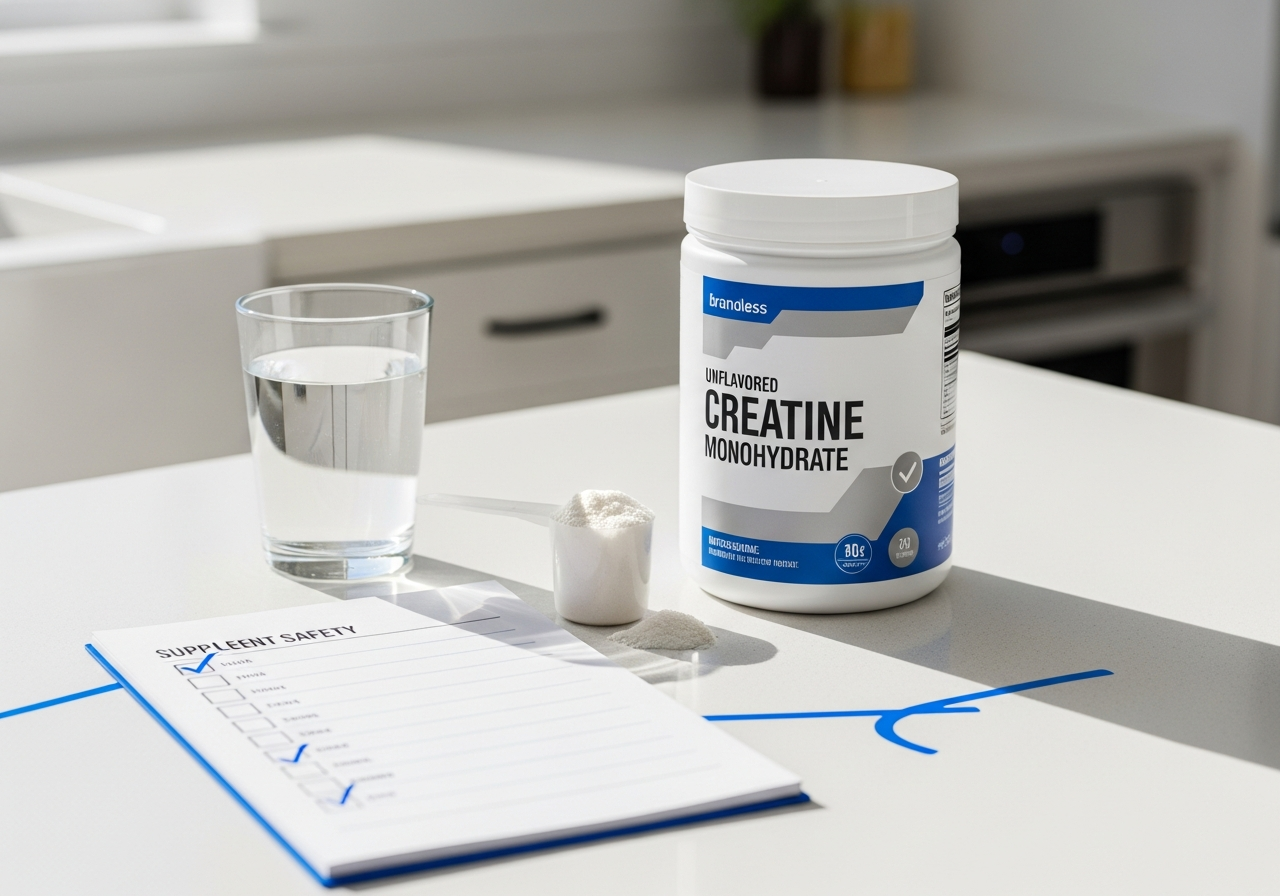
The real risks for teens using creatine are poor supplement habits, contaminated products, unrealistic expectations, and ignoring basic nutrition, not growth stunting. That is where parents should focus their attention.
Creatine is often lumped together with muscle-building products generally, but the category matters. A plain creatine monohydrate powder is very different from a multi-ingredient pre-workout, proprietary mass gainer, or stimulant-heavy training formula. Many problems blamed on creatine actually come from products that contain much more than creatine.
Here are the main practical risks:
- Contamination or mislabelling. Choose reputable brands, ideally with third-party testing. In Canada, look for clear ingredient labelling and, where applicable, an NPN, which is a Natural Product Number issued under Health Canada rules for approved natural health products.
- Taking too much at once. Large single doses are more likely to cause stomach upset or diarrhea.
- Using supplements before fixing the basics. A teen sleeping 6 hours, skipping breakfast, and under-eating needs lifestyle support before supplements.
- Believing creatine is a shortcut. Creatine helps training quality; it does not replace training effort, food, or recovery.
- Using stacked products. Caffeine, stimulants, or undeclared ingredients create a much bigger safety question than plain creatine monohydrate.
Side effects from standard creatine monohydrate doses are usually mild when they happen at all. The most common issues are temporary water-weight gain and occasional digestive discomfort. These are generally manageable by using 3-5 g/day, splitting loading doses, and taking it with fluid. For troubleshooting, see creatine digestive side effects and how much water to drink with creatine.
If a teen has known kidney disease, is taking medications that affect kidney function, has a chronic medical condition, or has a history of disordered eating, supplement decisions should involve a physician or sports dietitian. The concern there is not that creatine will stunt height, but that any supplement use should fit the person's full medical picture.
Put bluntly: if a parent wants to reduce risk, the best move is not panicking about growth plates. It is insisting on a plain, well-sourced monohydrate product, a sensible dose, and a reason for using it that goes beyond internet hype.
Should a 13-, 14-, 15-, or 16-year-old take creatine at all?
A teenager does not need creatine for normal growth, general health, or beginner fitness, but some teen athletes may reasonably choose it for performance if parents and coaches approach it carefully. That is the nuanced answer.
For most young teens, the best order of operations is straightforward:
- Build the base first. Consistent meals, enough calories, enough protein, enough fluids, and 8-10 hours of sleep do more for development and performance than creatine.
- Train properly. A good strength and conditioning plan matters more than any supplement.
- Decide whether there is a real need. Creatine is most relevant for repeated short, intense efforts: sprinting, football, hockey, rowing, swimming sprints, wrestling, and resistance training.
- Use a plain product. Creatine monohydrate is the first choice. Skip exotic forms and stimulant stacks.
- Get parent buy-in. Teens should not hide supplement use.
Age matters mainly because younger teens often have less training history, less dietary consistency, and more impulsive supplement behaviour. If you are asking "can creatine stunt growth at 14" or "does creatine stunt your growth at 15," the answer is still no based on current evidence, but the decision quality around using it should be better than "my teammates take it."
A useful screening question is this: Would this athlete still make progress for the next 3-6 months just by improving food, sleep, and training consistency? If yes, creatine is optional rather than urgent.
Teens who are probably not good candidates right now include:
- those who cannot follow a simple daily routine
- those already using multiple supplements without supervision
- those with medical red flags
- those expecting rapid visible muscle growth without training
Teens who may be more reasonable candidates include competitive older adolescents in organised sport who already eat and train well, understand what creatine does, and use a parent-approved product at a standard dose. If you want the full safety decision tree, see who should not take creatine and creatine for athletes.
How to use creatine safely: the parent-and-teen step-by-step plan
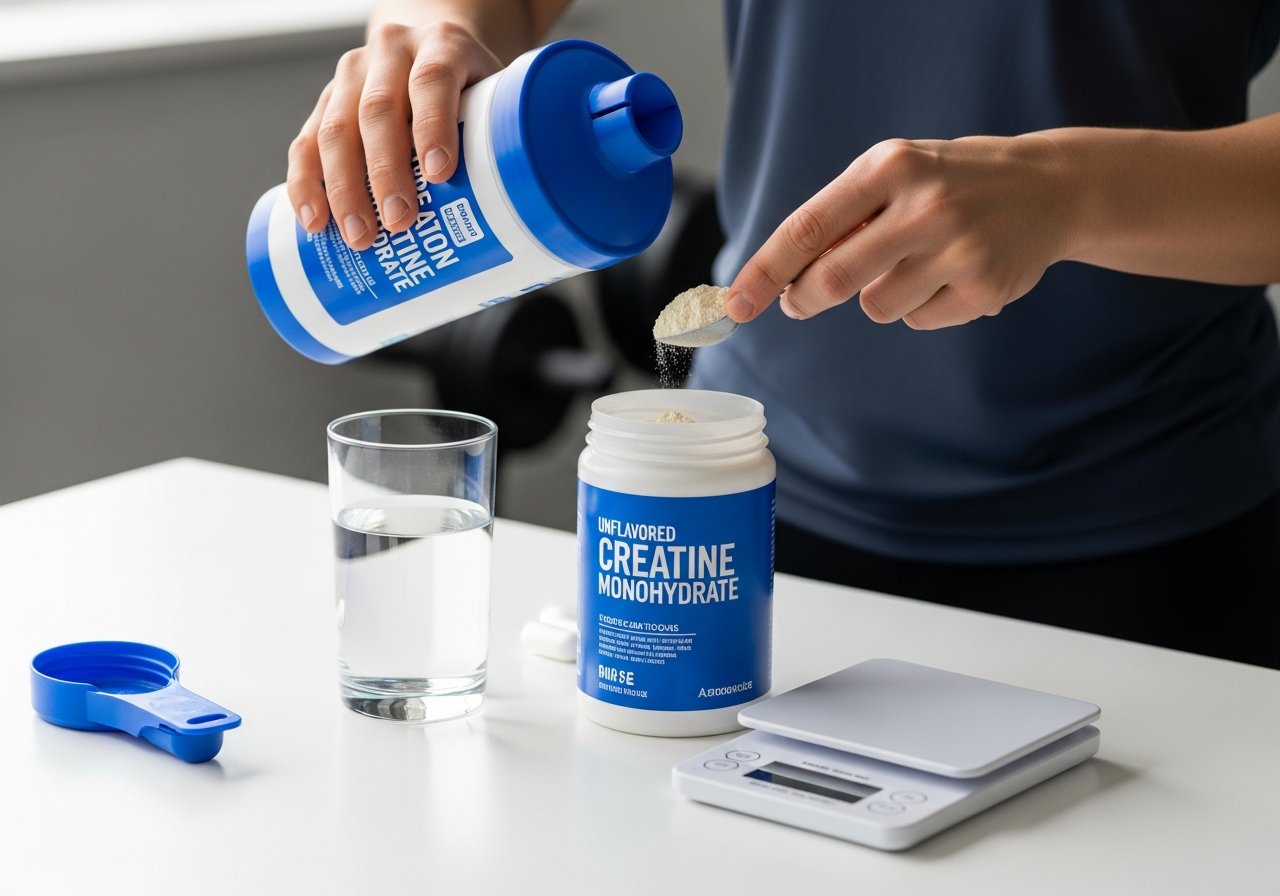
If a teenager is going to use creatine, the safest practical approach is simple: choose plain creatine monohydrate, use a standard dose, take it daily, and monitor for tolerance. Complicated protocols are unnecessary.
- Choose the right product. Buy plain creatine monohydrate with minimal ingredients. Avoid products that bundle creatine with stimulants, mystery blends, or testosterone-boosting claims. In Canada, look for reputable sellers, transparent labels, and preferably third-party testing. Our best creatine rankings, creatine brand reviews, and creatine product catalog can help compare options.
- Start with maintenance dosing. For most teens and adults, 3-5 g once daily is the simplest evidence-based approach. It reaches saturation more slowly than loading but is easier on the stomach.
- Skip loading unless there is a reason to saturate quickly. Loading means about 20 g/day split into 4 doses for 5-7 days, then 3-5 g/day after that. This works faster but is not safer, more necessary, or more effective long term.
- Mix it in plenty of fluid. Water is fine. A shake is fine. Taking it with food is also fine. Consistency matters more than timing. See how to take creatine and when to take creatine.
- Take it every day. Rest days count. Creatine works by building muscle stores over time, not by delivering an instant pre-workout hit.
- Track simple markers for 4-6 weeks. Look for better repeat sprint performance, a few extra reps, small strength improvements, or slightly improved training quality.
- Stop and reassess if side effects show up. If a teen gets stomach upset, reduce the single dose, split it, or take it with meals.
One easy mistake is expecting dramatic visual changes in one week. Creatine is subtle. It helps you train a bit better, recover a bit better between hard efforts, and over time that can support better results. If a teenager cannot explain that mechanism, they probably are not ready to use it responsibly.
Creatine dosing by body weight and goal, including teens
The standard evidence-based creatine dose for most people, including many older teens, is 3-5 g/day of creatine monohydrate, with loading optional. That single rule covers the vast majority of use cases.
Some people prefer weight-based math. A common loading protocol is about 0.3 g/kg/day for 5-7 days, followed by a maintenance dose around 0.03 g/kg/day. In practice, however, fixed daily doses are usually simpler and work well for general fitness and sport.
| Body weight | Simple maintenance dose | Optional loading phase | Best use case |
|---|---|---|---|
| 40-55 kg | 3 g/day | 12-16 g/day split into 4 doses for 5-7 days | Smaller teens, cautious first-time users |
| 56-75 kg | 3-5 g/day | 17-23 g/day split into 4 doses for 5-7 days | Most teens and adults |
| 76-95 kg | 5 g/day | 23-29 g/day split into 4 doses for 5-7 days | Larger athletes wanting faster saturation |
| 95+ kg | 5 g/day | 29+ g/day split into 4 doses for 5-7 days | Very large athletes; often simpler to just use 5 g/day |
For parents worried about safety, the key point is that more is not better. Once muscle stores are saturated, taking extra creatine does not create extra growth, extra height change, or extra performance magic. It mostly increases the chance of digestive issues and wastes product.
Here is the practical goal-based breakdown:
- Teen beginner in school sport: usually 3 g/day is plenty if using it at all.
- Older teen or adult strength athlete: 3-5 g/day.
- Athlete wanting faster effects before a block of competition or training camp: optional loading, then 3-5 g/day.
- People prone to stomach upset: use the low end, such as 3 g/day, and take it with meals.
If you want personalised math, use our creatine dosage calculator, and for deeper dosing detail read how much creatine per day and creatine maintenance dosing.
What to expect week by week, and how to tell if creatine is working
Creatine does not work by making a teen suddenly taller, heavier in muscle overnight, or wildly stronger in a few days; it works by gradually increasing muscle creatine stores and improving high-intensity training capacity. That is why the results are usually noticeable but not dramatic.
If using a loading phase, muscle stores can rise quickly over about 5-7 days. Without loading, full saturation usually takes several weeks of daily use. The visible and performance effects depend on training quality, baseline diet, muscle creatine levels, and sport.
A realistic timeline looks like this:
- Week 1 with loading: possible small body-weight increase from water in muscle; maybe better repeated sprint or lifting performance.
- Weeks 2-3 without loading, or after loading: training sessions may feel slightly more productive, especially on repeated hard sets.
- Weeks 4-8: better consistency in reps, sprint repeats, jumps, or total training volume becomes easier to notice.
- Months 2-3: body-composition and strength differences, if they happen, are usually due to better training output over time rather than a direct instant muscle-building effect.
How do you know it is working? Use objective markers:
- Track your top sets in the gym.
- Track sprint repeat times or power output if relevant.
- Track whether you can maintain performance deeper into a session.
- Note any small scale increase in the first 1-2 weeks without assuming it is fat.
Some people respond more than others. Those with lower baseline muscle creatine stores, including many vegetarians, may notice stronger effects. Others may feel very little directly but still get a small training advantage over time. That does not mean creatine affects growth differently; it just means response varies.
If nothing changes after 6-8 weeks, the usual explanations are poor adherence, under-dosing, weak training stimulus, or simply being a lower responder. See how long creatine takes to work and creatine non-responders for troubleshooting.
Myths debunked: growth stunting, kidney damage, steroids, and dehydration
The biggest creatine myths are that it stunts growth, damages healthy kidneys, acts like a steroid, or dehydrates you, and none of those claims is supported in the way social media often presents them. Each myth mixes a small grain of truth with a wrong conclusion.
Myth 1: Creatine stunts growth. There is no good evidence that creatine reduces height or stops normal growth. This is the central myth, and it is not supported by the known mechanism or available human data.
Myth 2: Creatine is a steroid. Creatine is not a steroid and does not work like one. Steroids are hormone-like drugs that can affect endocrine function. Creatine helps regenerate ATP in muscle. If you need the full distinction, see is creatine a steroid.
Myth 3: Creatine wrecks your kidneys. In healthy people, standard creatine monohydrate doses have not been shown to damage kidneys. One common source of confusion is creatinine, a breakdown product measured on blood tests, which may rise slightly without meaning injury. That is why context matters. Read is creatine bad for your kidneys and creatine vs creatinine.
Myth 4: Creatine causes dehydration or cramps. The evidence does not support the old claim that creatine inherently dehydrates athletes or causes cramping when used normally. Good hydration still matters, but that is because good hydration always matters in sport, not because creatine is uniquely dangerous. See creatine and dehydration.
Myth 5: If a teen gains weight on creatine, it must be bad. Early weight gain is usually water retained inside muscle, not fat, and not evidence of growth suppression.
Parents often hear these myths from teammates, gym chatter, or outdated school policies. A better filter is to ask whether the claim matches the biology of creatine and whether respected reviews support it. On both counts, the growth-stunting claim comes up short. For a roundup, visit creatine myths debunked and creatine myths vs facts.
How to buy creatine in Canada without overpaying or buying junk
The best creatine for teens and adults in Canada is usually a plain creatine monohydrate powder from a reputable brand with transparent labelling and, ideally, third-party testing. Fancy formulas rarely offer better results.
Because the worry around "does creatine stunt your growth" is often really a worry about supplement safety in general, buying well matters. Here is what to look for in Canada:
- Ingredient simplicity: ideally just creatine monohydrate.
- Clear serving size in grams: avoid vague proprietary blends.
- Third-party testing: valuable for purity and contamination control.
- NPN where applicable: an NPN is a Natural Product Number that indicates a natural health product has been authorised for sale by Health Canada under applicable rules.
- Brand reputation: choose companies that can explain sourcing and testing.
| Option | Pros | Cons | Best for |
|---|---|---|---|
| Plain monohydrate powder | Most studied, cost-effective, easy to dose | Needs mixing, can feel gritty in some products | Almost everyone |
| Micronized monohydrate | Often mixes better, same core ingredient | May cost slightly more | People who dislike texture |
| Capsules | Convenient, portable | Usually more expensive per gram, many capsules needed | Travel or no-mix convenience |
| Gummies or flavoured blends | Taste and convenience | Often pricier, may include sugar or extras | People who value convenience over cost |
For most families, the practical value play is still monohydrate powder. It is the form supported by the strongest evidence, including the ISSN and major evidence summaries such as Examine's creatine review. If you want help narrowing choices, see best creatine monohydrate in Canada, where to buy creatine in Canada, and buying creatine online in Canada.
If a brand makes extreme claims about teenage growth, hormones, or "safe muscle gains without any water," treat that as a red flag. Good creatine products sell on purity, dose accuracy, and trust, not miracle marketing.
Bottom line: what parents should do next
No, creatine does not appear to stunt growth, affect height growth, or make healthy teens stop growing, but that does not mean every teenager needs it. The smartest next step is a calm, structured decision rather than a fear-based one.
If you are a parent, use this quick decision framework:
- Rule out the myth. There is no good evidence that creatine stunts growth.
- Ask whether supplementation is necessary. If food, sleep, and training are weak, fix those first.
- Choose the evidence-based form. Use creatine monohydrate, not exotic versions.
- Keep the dose simple. Usually 3-5 g/day, with loading optional.
- Buy carefully. Prioritise quality, testing, and reputable Canadian retailers.
- Get medical input when needed. Especially for kidney disease, chronic illness, or medication use.
If you are a teenager asking "will creatine stunt your growth" or "can creatine stunt your growth," the answer is no based on current evidence. But the more mature question is whether you are already doing the boring basics consistently enough to benefit from it. Creatine can support hard training; it cannot replace it.
The best evidence-based perspective in 2026 is still this: creatine monohydrate is one of the best-studied sports supplements available, and the claim that it stunts growth is not supported. For healthy teens, the decision is mainly about appropriateness, supervision, product quality, and expectations.
Parents do not need to fear that creatine will make a healthy teen shorter; they should focus on whether the teen is using a plain, reputable monohydrate product for a sensible reason and at a sensible dose.
For related reading, continue with is creatine safe, creatine for teenagers, how to take creatine, and how much creatine per day.
Creatine and Growth: The Numbers Parents Should Know
- 0 evidence that creatine monohydrate stunts height growth — Current mainstream evidence does not support the growth-stunting claim.
- 3-5 g/day standard maintenance dose — The usual evidence-based daily dose for most users.
- 20 g/day optional loading dose — Typically split into 4 doses for 5-7 days to saturate faster.
- 5-7 days to saturate faster with loading — Without loading, saturation generally takes several weeks of daily use.
Frequently Asked Questions
Does creatine stunt growth?
No, creatine does not appear to stunt growth based on current evidence. Creatine monohydrate increases muscle phosphocreatine stores to support short, intense exercise, and there is no good evidence that it reduces adult height or damages growth plates.
Does creatine stunt your growth at 13?
No, there is no good evidence that creatine stunts growth at 13. That said, a 13-year-old usually needs close parent supervision, strong nutrition and sleep habits, and a clear reason for using any supplement before creatine is even considered.
Does creatine stunt growth at 14?
No, creatine does not appear to stunt growth at 14. The more important issue at that age is whether the teen is already eating enough, sleeping enough, and training properly, because those factors matter far more for development and performance.
Does creatine stunt growth at 15?
No, the evidence does not show that creatine stunts growth at 15. For a 15-year-old athlete, the safest approach is plain creatine monohydrate, a standard 3-5 g daily dose if used, and parent-approved, reputable products only.
Does creatine stunt growth at 16?
No, there is no good evidence that creatine stunts growth at 16. Older teens in organised sport are often better able to use supplements responsibly, but the same rules still apply: simple dosing, quality products, and no expectation that creatine replaces training or food.
Can creatine affect growth or height?
Creatine does not appear to affect height growth in the sense of making someone shorter or stopping normal growth. It can affect body weight slightly, especially early on, because it increases water stored inside muscle, but that is not the same as affecting height.
Does creatine make you stop growing?
No, creatine does not appear to make healthy people stop growing. Growth in adolescence is driven mainly by genetics, hormones, overall nutrition, energy availability, sleep, and health status, not by creatine supplementation.
Is creatine safe for teenagers?
Creatine monohydrate appears reasonably safe for healthy teenagers when used appropriately, but supervision matters. The biggest concerns are poor-quality products, unnecessary use, excessive dosing, and using supplements before getting food, sleep, and training habits in order.
What is the safest creatine dose for a teenager?
For most teens who use creatine, 3-5 g/day of creatine monohydrate is the simplest standard dose. Smaller or cautious first-time users can start at 3 g/day, while loading is optional rather than necessary.
Should teens use creatine before or after workouts?
Teens do not need to stress about exact timing because creatine works by saturating muscle over time. Taking it daily is more important than taking it pre-workout or post-workout, so the best time is the time they will remember consistently.