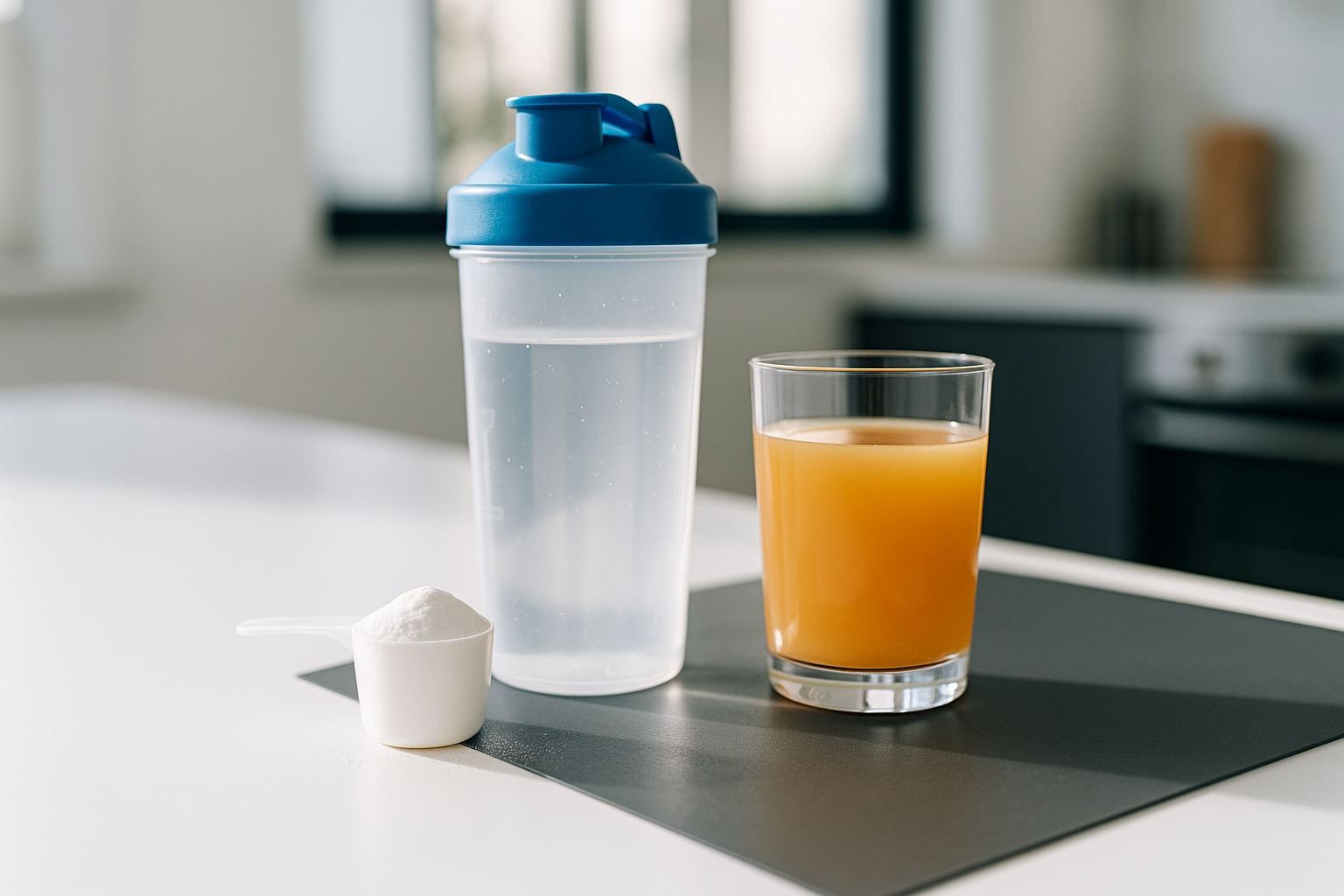
What Does Creatine Taste Like? Unflavored, Flavored, and How to Make It Palatable
By The Creatine Canada Research Team — Evidence-based supplement analysts
Creatine usually tastes very mild: unflavoured creatine monohydrate is mostly neutral to slightly chalky, faintly bitter, or a little sandy rather than strongly “bad.” If your creatine tastes intensely sour, sweet, chemical, or gritty, that is usually due to flavouring, sweeteners, micronization level, or how well it dissolved—not the creatine itself.
Evidence-based · Cites 4 sources · Editorial standards
Key Takeaways
- Unflavoured creatine monohydrate has a mild, almost neutral taste with a slightly chalky or bitter finish.
- Texture matters as much as flavour: undissolved creatine often feels gritty or sandy.
- Warm water, more liquid, and thorough stirring make creatine noticeably more palatable.
- Flavoured creatine tastes better for many people, but plain monohydrate is usually simpler and better value.
- Creatine should not taste intensely harsh; if it does, check the ingredient list, storage, and product quality.
- Most people can take 3-5 g daily regardless of taste, as long as they use a form they will actually take consistently.
What creatine tastes like in plain English
Unflavoured creatine monohydrate usually tastes mild, nearly neutral, and only slightly chalky, bitter, or mineral-like. That direct answer surprises people because “creatine taste” is often blamed for what is really a texture issue: the powder does not always fully dissolve, so the last sip can feel gritty even when the flavour itself is faint.
If you are asking what does creatine taste like, the honest answer is that most plain creatine is far less offensive than many pre-workouts, amino drinks, or greens powders. Many users describe creatine taste unflavoured as similar to watered-down flour, a weak mineral note, or plain water with a slightly dry aftertaste. Micronized creatine, which has smaller particles, often feels smoother in the mouth, but it still may not dissolve perfectly.
What people commonly notice with plain creatine:
- A very mild taste up front
- A slight bitterness at the finish
- A chalky mouthfeel if mixed poorly
- A sandy texture in the bottom of the glass
Flavoured creatine is different. The underlying creatine itself is still mild, but manufacturers add sweeteners, acids, and flavour systems that can make it taste like lemonade, fruit punch, blue raspberry, or candy. In those products, the dominant creatine flavour is really the flavouring system, not the creatine raw material.
If your concern is does creatine taste bad, the answer is usually no, not inherently. For most people, plain monohydrate is tolerable enough to disappear in a shake, juice, or even just a larger glass of water. If taste is a barrier, start with 3 g mixed into a flavoured drink and focus on consistency. You can also read our guides on how to take creatine and how to mix creatine for the easiest beginner-friendly setups.
One useful reality check: taste has nothing to do with effectiveness. The 2017 ISSN position stand concluded that creatine monohydrate is the most effective ergogenic nutritional supplement currently available for increasing high-intensity exercise capacity and lean mass gains during training, and that evidence says nothing about it needing to taste good to work. The only taste that matters is the one you can live with every day.
Why creatine has that mild, chalky, sometimes gritty taste
Creatine tastes the way it does because creatine monohydrate is a small organic compound with limited solubility in water, not because it is acidic, sugary, or strongly flavoured on its own. In practice, that means the sensory experience of creatine and taste is driven more by mouthfeel and mixing than by a strong intrinsic flavour.
Creatine monohydrate contains creatine bound with one water molecule. It is stable, well studied, and relatively cheap, but it is not especially soluble compared with something like sugar. When you stir a typical 3-5 g serving into cold water, some powder may stay suspended and some may settle. That undissolved material is what creates the familiar gritty, sandy finish.
Three factors shape creatine palatability most:
- Particle size: Micronized creatine has smaller particles, so it disperses better and feels smoother.
- Water temperature: Warmer liquid improves dissolution, which usually improves texture.
- Flavour system: In flavoured products, citric acid, sweeteners, and aromas can completely change the taste profile.
Bitterness can also vary slightly by formula. Plain monohydrate may have a faint bitter or mineral finish. By contrast, flavoured creatine often includes acids to create a tart fruit profile, so people sometimes think the sourness is “the creatine” when it is really the flavouring package.
This is also why two products can both say “creatine monohydrate” yet taste different in the glass. One may be more finely milled, one may clump more from moisture exposure, and one may include other ingredients. If you want a cleaner sensory experience, look for a short ingredient list and reputable quality control. In Canada, that means checking the label carefully and preferring brands with a Natural Product Number when applicable and, ideally, third-party testing or athlete-suitable certifications. Our best creatine rankings and creatine brand reviews can help you compare options.
For the broader science, Kreider et al. (2017), ISSN Position Stand: Safety and Efficacy of Creatine — JISSN and Antonio et al. (2021), Common questions and misconceptions about creatine supplementation — JISSN both reinforce the core point: monohydrate remains the reference form because of evidence, not flavour marketing.
Unflavoured vs flavoured creatine: which actually tastes better?
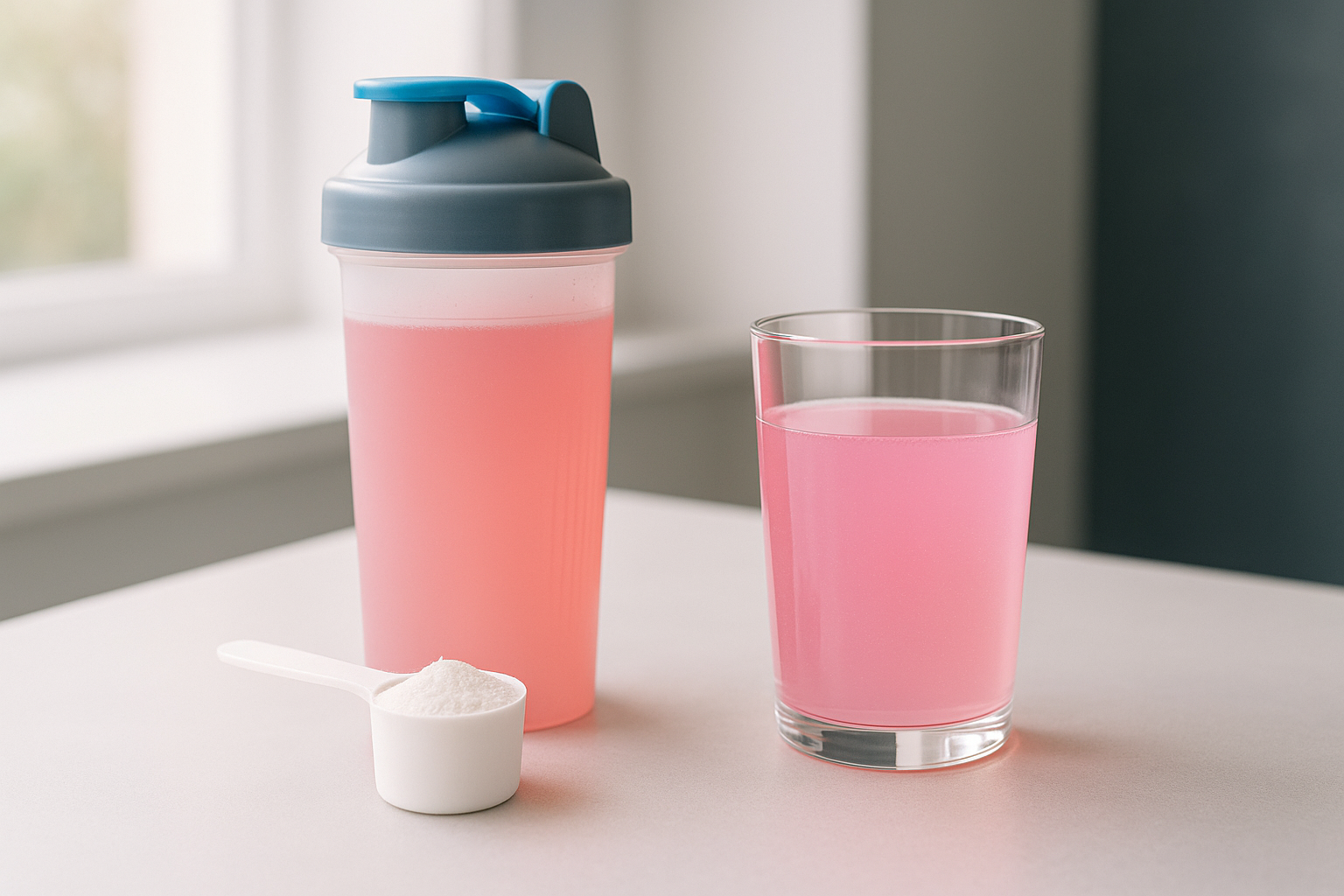
Flavoured creatine usually tastes better sip-for-sip, but unflavoured creatine is often easier to use long term because you can hide it in drinks you already like. The right choice depends less on the raw creatine flavour and more on whether you value flexibility, sweetness, price, or simplicity.
Unflavoured creatine is the default recommendation for most people because it is versatile. You can mix it into water, protein shakes, juice, smoothies, or coffee alternatives without being locked into one taste profile. That matters because many people get tired of aggressively sweet sports supplement flavours after a few weeks.
Flavoured creatine solves the immediate palatability problem. If you know you hate chalky or bitter notes, a good lemon, berry, or fruit punch formula can make daily use much easier. The tradeoff is that flavouring adds variables: sweetness level, tartness, aftertaste from sucralose or stevia, and sometimes higher cost per serving.
| Option | Typical taste | Texture | Best for | Main downside |
|---|---|---|---|---|
| Unflavoured monohydrate | Neutral to faintly bitter or chalky | Can be gritty if poorly mixed | People who want flexibility and value | Less pleasant in plain water |
| Micronized unflavoured | Similar mild taste | Smoother mouthfeel | People sensitive to grittiness | May cost slightly more |
| Flavoured creatine | Fruit, candy, or sports-drink style | Usually smoother overall | People who need taste compliance | Can be too sweet or artificial |
| Capsules or gummies | Little to no powder taste | No grittiness | People who strongly dislike powder | Usually worse value and less dose-flexible |
If you are undecided, start with plain creatine monohydrate and put it into a drink you already tolerate well. That usually gives you the best mix of price, evidence, and convenience. If you still find the creatine taste guide answer disappointing in real life, switch formats rather than force yourself through a tub you dread using.
Before buying, compare cost, testing, and formula details through our creatine product catalog and see the guide on best type of creatine if you are weighing monohydrate against trendier forms.
How to make creatine taste better today: the step-by-step fix
You can make creatine taste better immediately by improving dilution, dissolution, and drink choice. If you are searching how to make creatine taste better, the fastest wins are simple: use more liquid, mix longer, and pair plain creatine with a stronger-tasting drink.
- Measure your dose accurately. Use 3-5 g for most maintenance use. If you need help, use our creatine dosage calculator or read how much creatine per day.
- Choose 300-500 mL of liquid. A larger volume reduces concentration and makes any bitterness less noticeable.
- Use room-temperature or slightly warm water. Creatine dissolves better in warmer liquid, which reduces grit.
- Stir or shake for 20-30 seconds. Then let it sit for 30-60 seconds and stir again.
- Pick a masking drink if needed. Juice, a protein shake, or a flavoured electrolyte drink can hide the taste effectively.
- Drink it promptly. Waiting too long can let particles settle at the bottom, making the last sip worse.
Best mixers for palatability:
- Orange juice or other fruit juice
- Protein shakes
- Smoothies
- Flavoured water or zero-sugar drink mixes
- Chocolate milk if it fits your diet
Less ideal choices:
- A tiny shot of water, which makes the texture more obvious
- Dry scooping, which is unpleasant and unnecessary
- Ice-cold water only, which often leaves more undissolved powder
Two practical tricks work especially well for beginners. First, mix creatine into a drink with some body, like a protein shake, because thicker liquids hide grit better than plain water. Second, use a blender bottle and add the powder after some liquid is already in the cup; that reduces clumping on the bottom.
If you still dislike it, do not assume creatine is not for you. Switch to micronized powder, capsules, or a well-reviewed flavoured option. Adherence matters more than supplement stoicism. For more troubleshooting, see how to mix creatine and how to dissolve creatine completely.
The best drinks and foods to mask creatine taste without hurting results
The best way to hide creatine taste is to mix unflavoured creatine into a drink or meal you already consume consistently, because creatine effectiveness depends on daily saturation, not on taking it in a perfect “special” beverage. Taste convenience beats theoretical perfection here.
Good options include water with a squeeze of citrus, juice, milk, smoothies, and protein shakes. None of these are known to “cancel” creatine. The bigger issue is whether the creatine dissolves well enough that you will drink it every day. If you already make a post-workout shake, that is the easiest home for plain creatine.
Best pairings by goal:
- Minimal taste: Mix 3-5 g into a whey or plant protein shake.
- Fastest masking: Add it to orange juice or another strong-flavoured juice.
- Lowest sweetness: Use extra water with a squeeze of lemon or lime.
- Convenience: Add it to your usual breakfast smoothie.
- Sensitive stomach: Take it with food rather than on an empty stomach.
You can also stir creatine into soft foods like yoghurt or oatmeal if that helps. Just make sure you consume the full serving. A little residue left in the bowl is common, so scraping it clean matters if you want consistent dosing.
What about hot drinks? Creatine is reasonably stable in normal day-to-day use, but from a practical standpoint it is better not to leave it dissolved in liquid for extended periods. Mixing and drinking it soon after preparation is the simplest approach. If you want more on beverage compatibility, see creatine with juice, can you mix creatine with protein powder, and can you mix creatine with coffee.
The wider research base summarised by Examine.com — Creatine evidence summary supports the practical takeaway: daily use matters more than a fancy delivery method. The best-tasting creatine routine is the one you repeat for weeks, because muscle creatine stores rise through consistent intake, not through one perfect serving.
Dose by body weight and goal, with the least unpleasant way to take it
Most adults do well with 3-5 g of creatine monohydrate per day, and taking the smallest effective dose in enough fluid is one of the easiest ways to improve taste. If you are focused on creatine palatability, a huge concentrated scoop in a tiny glass is the wrong move.
The standard evidence-based approaches are straightforward. The 2017 ISSN position stand and the 2021 JISSN misconceptions review both describe a loading option of about 20 g per day, split into four 5 g doses, for 5-7 days, followed by a maintenance dose of 3-5 g per day. The alternative is skipping loading and just taking 3-5 g daily, which saturates muscle stores more gradually over several weeks.
| Body size / goal | Typical daily approach | Taste-friendly strategy | Notes |
|---|---|---|---|
| Smaller adult, general fitness | 3 g daily | Mix in 300-400 mL water or a shake | Good starting point for beginners |
| Average adult, strength or muscle gain | 5 g daily | Mix in 400-500 mL liquid | Most common maintenance dose |
| Faster saturation desired | 20 g/day in 4 x 5 g for 5-7 days | Never take all at once; split into separate drinks | Can increase GI discomfort if rushed |
| Older adults or sensitive stomachs | 3 g daily to start | Take with a meal or smoothie | Build consistency first |
| Athletes with heavy training blocks | 5 g daily, sometimes after loading | Use flavoured or mixed format if compliance is an issue | Consistency matters more than taste purity |
If taste is your main problem, do not load unless you specifically want faster saturation and know your stomach handles creatine well. Four separate 5 g servings are far more tolerable than one large slurry. For most beginners, 3-5 g once daily is easier and still effective.
If you are unsure how much is right for you, start at 3 g daily for a week, assess taste and digestion, then move to 5 g if desired. You can refine the numbers with our creatine dosage calculator or the guide on creatine maintenance dose.
When to take creatine, and who should care most about taste and format
Creatine timing matters far less than daily consistency, so the best time to take it is the time when you will reliably consume it in a form you do not dread. That is especially useful for beginners, women, older adults, and athletes with different routines and taste preferences.
For beginners, morning with breakfast or post-workout in a shake is usually easiest. Those moments already involve food or fluids, which helps hide taste and reduce the chance of stomach upset. If you are new to supplementation, read creatine for beginners and when to take creatine.
For women, the practical advice is the same as for men: taste does not change the physiology. A 3-5 g daily dose of monohydrate is still the standard option, and many women prefer mixing unflavoured creatine into a smoothie, iced drink, or protein shake to avoid overly sweet “sports candy” formulas. For more, see creatine for women.
For older adults, taste and texture may matter more because appetite, digestion, and medication routines can already be complicated. A smaller starting dose such as 3 g daily with food is often a practical entry point. If someone dislikes gritty drinks, capsules can be reasonable despite the higher cost.
For athletes, especially tested athletes, format choice should also consider certification and contamination risk. A flavoured creatine that tastes great is not automatically the better choice if it adds proprietary blends, stimulants, or less transparent sourcing. The International Olympic Committee consensus on supplements stresses the importance of quality assurance and product choice in sport. In Canada, that often means reading labels carefully and preferring simpler formulas from reputable brands.
Simple timing rules that work:
- Take it once daily whenever you remember best
- With food if your stomach is sensitive
- After training if it helps anchor the habit
- On rest days too, because saturation is the goal
If your taste issue is preventing adherence, change the vehicle, not the science. A supplement only works if it gets used.
When a bad taste is a red flag: quality, storage, and buying in Canada
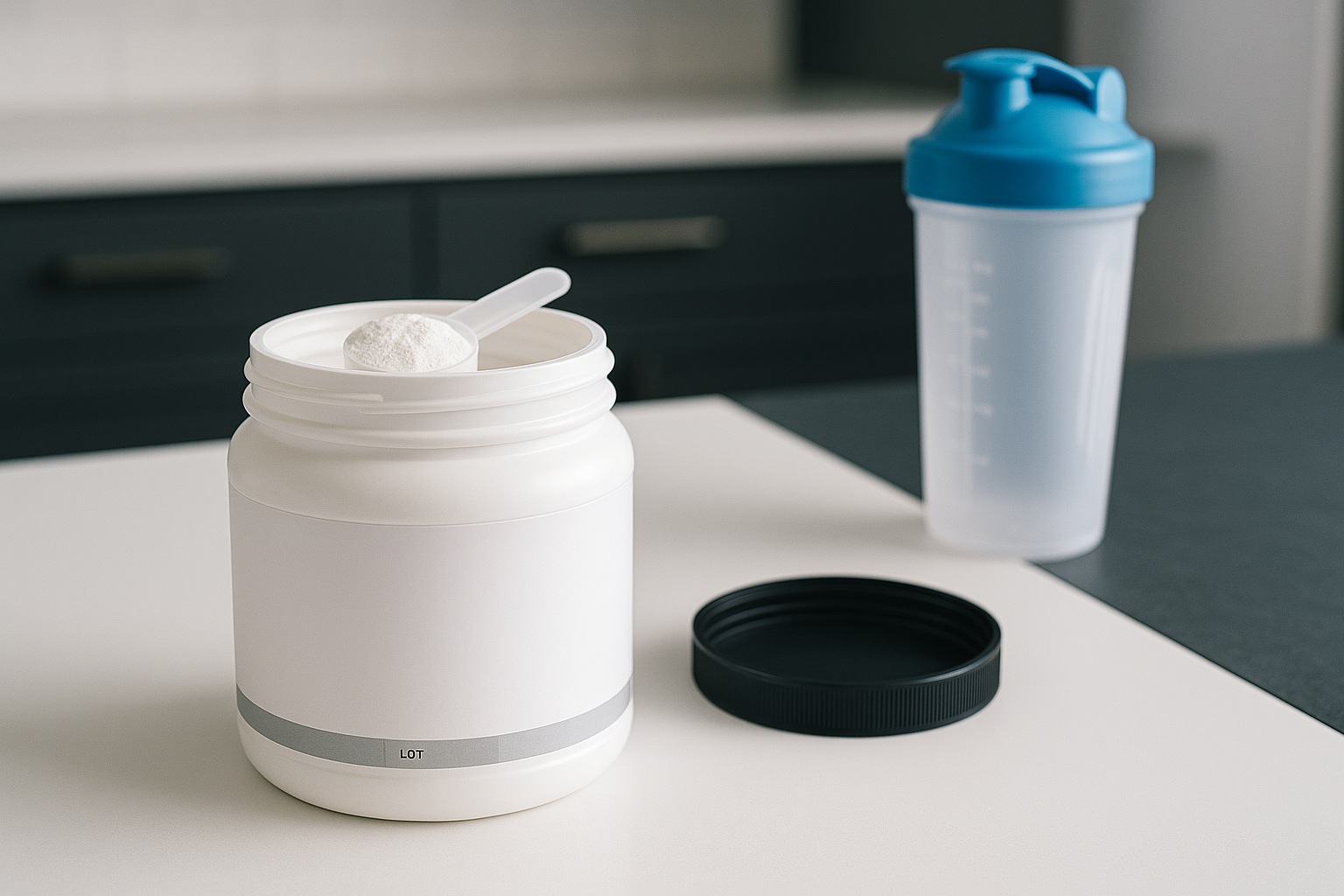
Creatine should not taste aggressively foul, so a truly strange taste can be a sign to inspect the product rather than force it down. Mild bitterness or chalkiness is normal; sharp chemical odours, obvious spoilage, or unusual clumping deserve a closer look.
Normal signs:
- Little to no smell
- White powder appearance
- Mild neutral, chalky, or slightly bitter taste
- Some settling in water
Potential warning signs:
- Strong sweet or sour taste in a product sold as unflavoured
- Harsh chemical smell
- Heavy moisture exposure or hard clumping
- Discolouration
- Missing or unclear lot, seal, or ingredient information
Storage matters. Creatine powder should be kept sealed, dry, and away from repeated humidity exposure. A bathroom cabinet is usually a worse choice than a cool pantry. Clumping alone does not always mean the product is unsafe; it often just means moisture got in. But if the taste, smell, and appearance all changed, replace it.
For Canadian buyers, label scrutiny is worth the extra minute. Check for a clear ingredient panel, serving size in grams, brand contact information, and where relevant a Natural Product Number, which is the Health Canada identifier used for licensed natural health products. An NPN is not a guarantee of elite quality, but it does indicate the product has gone through a regulated pathway. Third-party testing and athlete-suitable certifications add another layer of confidence.
If you are shopping around, compare options in our creatine product catalog, browse creatine brand reviews, and read third-party tested creatine in Canada if purity matters to your sport. The Mayo Clinic overview is also useful for broad safety context: Mayo Clinic — Creatine.
Bottom line: “bad taste” is usually just mild chalkiness, but an unusually intense or off taste is a quality-control question, not a badge of potency.
Taste, side effects, and the biggest myths people confuse with each other
Creatine taste does not predict side effects, quality, or effectiveness. People often conflate “this tastes weird” with “this must be stronger” or “this must upset my stomach,” but those are separate issues.
The best-supported side effects of creatine monohydrate are relatively modest and usually manageable: some people experience temporary water-weight gain from increased intracellular water, and some get stomach discomfort if they take too much at once or mix it poorly. Neither effect means the product should taste awful. In fact, a more concentrated, gritty mix is often what causes the unpleasant experience.
Common myths worth debunking:
- Myth: Bitter creatine is more potent. Fact: Taste intensity is not a reliable marker of potency.
- Myth: If creatine does not dissolve fully, it is fake. Fact: Monohydrate naturally has limited solubility, especially in cold water.
- Myth: Flavoured creatine absorbs better. Fact: Better taste may improve compliance, but the creatine itself is not inherently superior.
- Myth: Creatine should be dry scooped to avoid bad taste. Fact: Dry scooping is unnecessary and can be unpleasant or irritating.
- Myth: Creatine with any aftertaste is spoiled. Fact: A mild chalky or slightly bitter finish is normal.
Antonio et al. (2021) specifically addressed many broader misconceptions around creatine safety and use, reinforcing that creatine monohydrate is well supported in healthy populations when used appropriately. If you are worried about kidneys, bloating, or other concerns, see creatine myths debunked, is creatine safe, and creatine digestive side effects.
The practical takeaway is simple: judge creatine first by evidence, label quality, and whether you can take it consistently. Taste matters only insofar as it affects adherence. If plain creatine tastes a bit bland or gritty, that is normal; if it tastes truly wrong, investigate the product.
If you hate the taste, here is the best creatine form to choose
If you strongly dislike creatine taste, the best form is the one you will use daily without missing doses, and for most people that means either micronized unflavoured powder in another drink or capsules if budget is less important. The science still points to monohydrate as the default winner.
Powder remains the best-value format and the easiest way to hit an evidence-based 3-5 g daily dose. If you hate grittiness but not the idea of powder, try a micronized monohydrate and mix it into a shake rather than plain water. That solves the problem for many people.
Capsules eliminate most taste entirely, but they usually require swallowing multiple capsules to reach a full daily dose. That can be convenient for travel but less cost-effective. Gummies avoid the powder issue too, but they can add sugar, cost more per gram, and make dose precision less elegant.
Choose based on your real barrier:
- You dislike mild bitterness: Use flavoured creatine or mix plain powder into juice.
- You dislike texture: Use micronized powder, more liquid, or capsules.
- You travel often: Capsules may be worth the premium.
- You want the cheapest effective option: Plain monohydrate powder still wins.
Be cautious about claims that specialty forms such as hydrochloride, buffered creatine, or liquid creatine are dramatically better because they taste smoother. Better flavour does not automatically mean better results, and these forms generally do not have the same depth of evidence as monohydrate. The 2017 ISSN position stand remains clear that creatine monohydrate is the most studied and most effective reference form.
If you are deciding what to buy next, use our best creatine rankings, compare options in the creatine product catalog, and read creatine powder vs capsules or creatine gummies vs powder if taste is your main selection criterion.
Bottom line: what creatine tastes like, and what to do next
Creatine tastes mildly neutral to slightly chalky or bitter, and for most people the bigger issue is texture, not flavour. If you came here asking what does creatine taste like, the simplest accurate answer is that unflavoured creatine monohydrate is usually bland and tolerable, while flavoured creatine tastes mostly like whatever sweetened drink profile the brand created.
For nearly everyone, the best first move is this:
- Buy a reputable creatine monohydrate.
- Start with 3-5 g daily.
- Mix it into 300-500 mL of water, juice, or a protein shake.
- Use room-temperature or slightly warm liquid.
- Take it every day, including rest days.
If plain water still makes the creatine taste too noticeable, do not overcomplicate things. Switch to a smoothie, shake, or a flavoured version you enjoy. Compliance is the real win. Daily intake raises muscle creatine stores over time; one missed serving because you hated the taste matters more than whether your drink was perfectly minimalist.
Remember the evidence hierarchy. Creatine monohydrate remains the gold standard because it works, is well studied, and is generally safe for healthy people when used appropriately. Taste is a practical issue, not a performance mechanism. Strong flavour does not mean stronger results, and a neutral taste does not mean weak quality.
If you want the next step, use the creatine dosage calculator, read how to take creatine, and compare products through our best creatine rankings. The best creatine for you is the one with solid quality, a simple formula, and a taste setup you will actually stick with for months.
Creatine taste and use: the numbers that matter
- 3-5 g/day Standard daily creatine dose — The usual maintenance range for most adults.
- 20 g/day Typical loading dose — Usually split into 4 doses of 5 g for 5-7 days.
- 300-500 mL Best liquid volume for taste — More fluid usually reduces both bitterness and grit.
- 5-7 days Loading timeline — Fastest common approach to saturate stores before maintenance.
Frequently Asked Questions
What does unflavoured creatine taste like?
Unflavoured creatine usually tastes nearly neutral with a slight chalky, bitter, or mineral-like finish. For most people, the bigger issue is texture rather than flavour, because undissolved particles can make it feel gritty or sandy in the last sip.
Does creatine taste bad?
Creatine usually does not taste strongly bad; it is more bland than offensive. Most complaints come from poor mixing, too little water, or a gritty mouthfeel rather than from a harsh natural creatine flavour.
Why is my creatine gritty?
Your creatine is gritty because creatine monohydrate does not fully dissolve easily, especially in cold water. Using more liquid, warmer water, and longer mixing time usually improves the texture noticeably.
How can I make creatine taste better?
You can make creatine taste better by mixing 3-5 g into more liquid and pairing it with a stronger-flavoured drink like juice or a protein shake. Room-temperature or slightly warm liquid also helps reduce grit and makes the drink smoother.
Does flavoured creatine work better than unflavoured?
Flavoured creatine does not inherently work better than unflavoured creatine if both provide the same effective dose of creatine monohydrate. The advantage of flavoured creatine is mostly better palatability, which can help you take it more consistently.
Why does my unflavoured creatine taste sour or chemical?
Unflavoured creatine should not taste strongly sour or chemical, so that flavour is a reason to inspect the product. Check whether it is truly unflavoured, whether moisture got into the tub, and whether the seal, ingredient list, and storage conditions look normal.
Can I mix creatine with juice to hide the taste?
Yes, you can mix creatine with juice to hide the taste, and many people find it one of the easiest options. Juice masks the mild bitterness well and makes daily creatine intake easier without reducing its core effectiveness.
Is gritty creatine fake or low quality?
Gritty creatine is not automatically fake or low quality, because monohydrate naturally has limited solubility in water. Quality concerns are more about unusual smell, strange colour, missing product information, or a taste that seems far stronger than mild chalkiness.
What is the best creatine for people who hate the taste?
The best creatine for people who hate the taste is usually micronized creatine monohydrate mixed into another drink, or capsules if powder texture is the real problem. Those options keep the evidence-based form while making daily use easier.
Should I take creatine in water or a shake?
You can take creatine in either water or a shake, but a shake is often better if taste or texture bothers you. Protein shakes and smoothies hide both the mild flavour and the gritty feel more effectively than plain water.