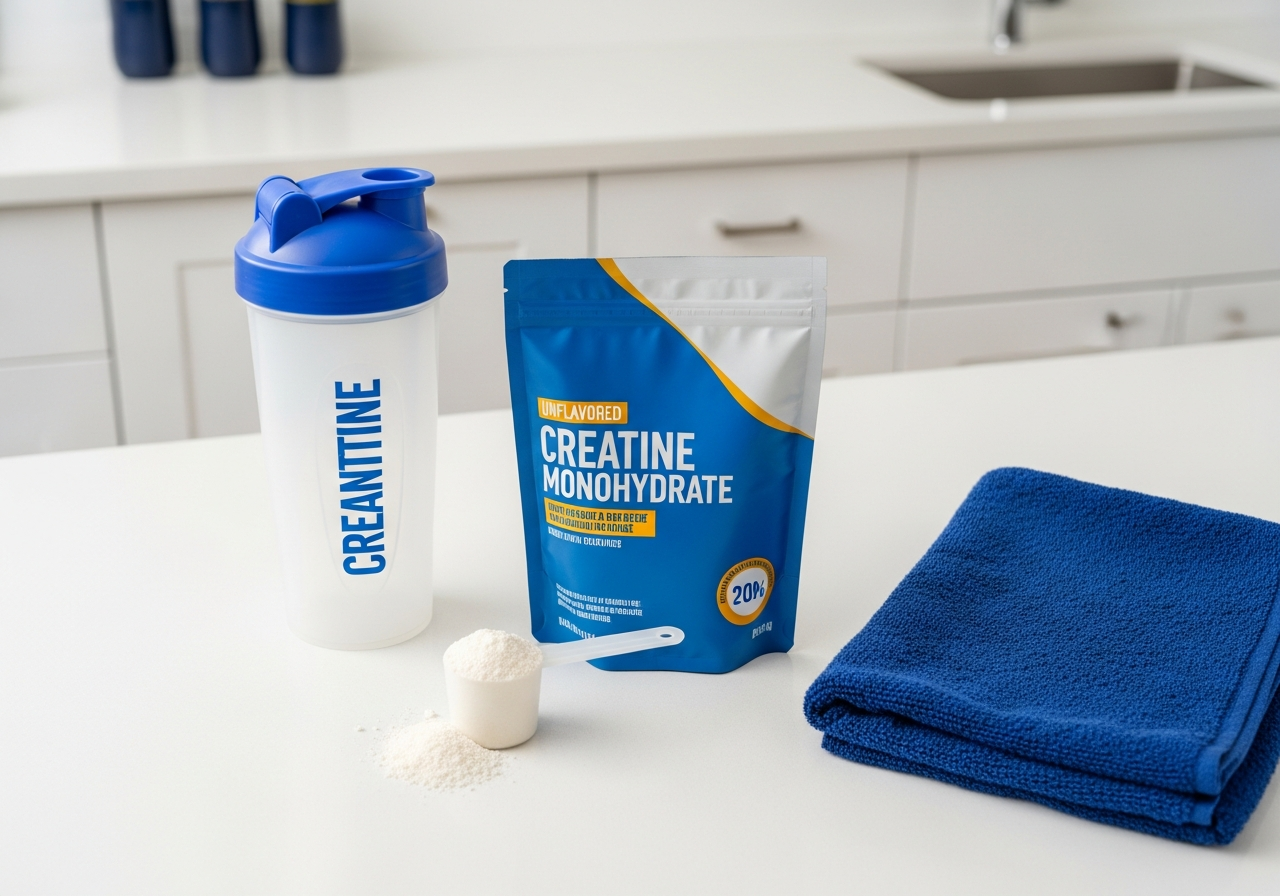
Buying Creatine in Alberta: Calgary, Edmonton, and Online
By The Creatine Canada Research Team — Evidence-based supplement analysts
Yes, you can easily buy creatine in Alberta, including in Calgary and Edmonton, but the smartest choice is usually a plain creatine monohydrate powder from a reputable Canadian retailer or supplement store with proper Health Canada labelling. For most Albertans, the best buy is a third-party-tested monohydrate product that delivers 3 to 5 g per serving without unnecessary blends, stimulants, or inflated pricing.
Evidence-based · Cites 4 sources · Editorial standards
Key Takeaways
- Creatine monohydrate is the best-studied, most effective, and most cost-effective form to buy in Alberta.
- Look for a Canadian Natural Product Number (NPN) or compliant Health Canada labelling when possible.
- Most adults do well with 3 to 5 g daily; loading at 20 g/day for 5 to 7 days is optional, not required.
- Online buying often gives Albertans better selection and price transparency than local shelves in Calgary or Edmonton.
- Avoid proprietary blends, underdosed gummies, and flashy pre-workouts if your goal is simple creatine supplementation.
- Expect faster gym performance benefits within about a week if you load, or within 3 to 4 weeks with daily maintenance only.
- A good Alberta creatine purchase is boring on purpose: one ingredient, clear grams per serving, and credible quality control.
Where to buy creatine in Alberta: the direct answer for Calgary, Edmonton, and online
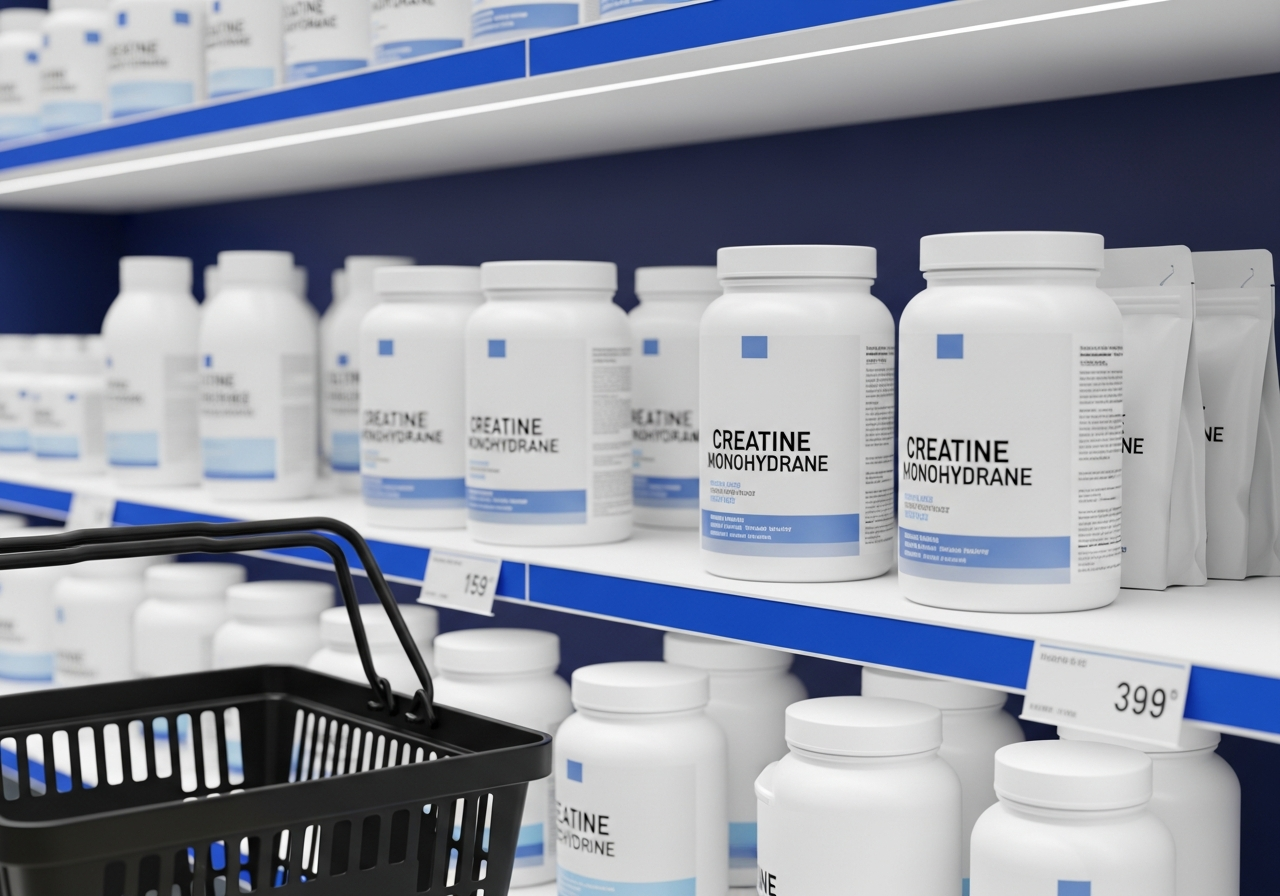
You can buy creatine in Alberta from supplement stores, some pharmacies, many fitness retailers, and Canadian online shops, but the best option for most people is a simple creatine monohydrate powder from a reputable seller with clear labelling and reliable stock. If your search is "creatine in Alberta", "buy creatine Calgary", or "where to buy creatine Edmonton", the practical answer is the same: prioritise product quality and dose accuracy over the store format.
In Calgary and Edmonton, brick-and-mortar stores can be useful if you need creatine today, want to inspect the label in person, or prefer advice from staff. The trade-off is that local shelves often carry fewer sizes, more flavoured variants, and more premium-priced formats like capsules, gummies, or blended pre-workouts. Online shopping usually gives Alberta buyers better selection, easier comparison of cost per 100 g, and a better chance of finding plain monohydrate without extra ingredients.
The smartest buying checklist is short:
- Choose creatine monohydrate first. It is the most studied form and remains the reference standard for performance and muscle benefits.
- Read the supplement facts panel. You want the actual creatine dose in grams, ideally 3 g, 5 g, or easy-to-measure powder.
- Prefer a single-ingredient product. A plain powder is easier to dose, cheaper per serving, and less likely to hide stimulants or filler ingredients.
- Check for Canadian compliance. In Canada, many natural health products carry an NPN, which stands for Natural Product Number, indicating authorised sale under Health Canada rules.
- Look for quality signals. Third-party testing, lot numbers, tamper seals, and transparent ingredient sourcing all matter.
If you are not sure what type to choose, start with our best creatine rankings and compare labels in the creatine product catalog. If you want Alberta-specific buying logic in one sentence, it is this: buy the plainest, most transparent creatine monohydrate you can find at a fair cost from a Canadian seller you trust.
The reason this matters is simple: creatine works because of the molecule itself, not because of flashy marketing, exotic forms, or a special Alberta-only product. A good tub bought in Calgary, Edmonton, Red Deer, Lethbridge, or online should deliver the same result if it contains the right form at the right dose.
Why creatine monohydrate is still the best thing to buy in Alberta
Creatine monohydrate is still the best creatine to buy in Alberta because it has the strongest evidence, the most predictable dosing, and usually the lowest cost per effective gram. That conclusion is not a trend claim; it is the long-standing evidence-based position supported by sports nutrition literature, including the 2017 ISSN position stand.
Creatine works by increasing intramuscular phosphocreatine, which is the stored form of creatine your muscles use to rapidly regenerate ATP, the cell's immediate energy currency during short, hard efforts. When your muscles have more phosphocreatine available, you can usually perform slightly more high-intensity work, recover faster between repeated efforts, and over time accumulate more productive training volume. That is why creatine tends to help with strength, sprinting, repeated efforts, and lean mass gains when paired with resistance training.
This is also why the buying decision is simpler than supplement marketing makes it seem. The performance benefit comes from saturating muscle creatine stores, not from choosing the fanciest delivery system. Monohydrate has repeatedly shown it can do that well. Other forms such as HCl, buffered creatine, ethyl ester, nitrate, and many blends are often sold as cleaner, more absorbable, or easier on digestion, but they generally do not have stronger evidence than monohydrate and often cost more for the same functional outcome.
For Alberta shoppers, that means the best buy is usually one of these:
- Unflavoured creatine monohydrate powder
- Micronized creatine monohydrate powder if you value easier mixing
- Capsules only if convenience matters more than price per gram
What should you skip? In most cases, skip proprietary blends, muscle-building powders that hide the exact creatine amount, and products that make dramatic absorption claims without giving better real-world results. If you want a deeper explainer on forms, our guides on best creatine rankings and creatine brand reviews break this down further.
One practical Alberta-specific point: shipping conditions matter less than many people think. Creatine monohydrate is generally stable as a dry powder when stored sealed and dry, so normal warehouse and household conditions are not usually a problem. The key is keeping moisture out after opening, not worrying about whether it crossed the province in winter.
Calgary and Edmonton stores vs buying online: which option is actually better?
If you are deciding between local stores in Calgary or Edmonton and buying creatine online in Alberta, online usually wins on selection and value, while local stores win on speed and convenience. There is no universal winner, but there is a clear best choice for each situation.
Buy in-store if you need creatine the same day, want to avoid shipping, or prefer to inspect the package before paying. This can be especially helpful for beginners who want to verify the serving size, ingredient list, and whether the product is plain monohydrate rather than a blend. In-person shopping is also useful if you only need a small container to trial creatine before committing to a larger bag.
Buy online if you care about comparing price per gram, reading labels carefully, checking reviews, and finding specific formats that local shops may not stock. For many Alberta shoppers, online stores also make it easier to find plain, unflavoured monohydrate rather than being funnelled toward stimulant-heavy pre-workouts or trendy creatine gummies.
| Buying option | Best for | Main advantages | Main drawbacks |
|---|---|---|---|
| Calgary or Edmonton supplement store | Same-day purchase | Immediate pickup, inspect label, ask questions | Higher shelf price, smaller selection, more upsells |
| Pharmacy or general retailer | Convenience | Easy add-on purchase, familiar stores | Limited forms and sizes, inconsistent stock |
| Canadian online retailer | Best overall value | More brands, easy comparison, often better price per gram | Shipping wait, must vet seller carefully |
When evaluating a creatine seller in Alberta, ask five practical questions:
- Is the product clearly labelled as creatine monohydrate?
- Does the label show grams per serving, not just a scoop size?
- Is there an NPN or otherwise compliant Canadian label where applicable?
- Does the seller show lot details, ingredient transparency, or third-party testing?
- What is the real cost per 100 g or per 5 g serving?
If you are comparing options, use our creatine product catalog and creatine brand reviews to narrow down trustworthy choices. Alberta buyers often overpay because they compare tub price rather than usable grams of creatine. A smaller local tub can look cheaper upfront but cost more per effective dose than a larger online option.
The bottom line is simple: if you need creatine tonight, buy local in Calgary or Edmonton; if you want the best overall selection and value, buy from a credible Canadian online retailer.
How creatine works, and what Albertans should expect after they start taking it
Creatine helps performance by increasing stored phosphocreatine in muscle, which improves your ability to regenerate ATP during short, intense efforts like lifting, sprinting, jumping, and repeated intervals. In plain language, creatine gives your muscles a slightly bigger rapid-energy reserve, and that usually lets you do a little more high-quality work over time.
This is why creatine does not feel like caffeine. It is not a stimulant, and it does not create an instant buzz. Instead, creatine works by gradually saturating muscle stores. Once those stores rise, the benefits show up as better training output and recovery between hard efforts rather than a dramatic subjective feeling.
What you may notice depends on your training style:
- Strength training: a small but meaningful improvement in repeated sets, reps, or total training volume
- Sprinting or team sports: better repeated high-intensity efforts
- Hypertrophy training: improved long-term training capacity that can support more muscle gain
- Vegetarians and vegans: sometimes a more noticeable response because baseline muscle creatine stores may be lower
Expected timeline:
- With loading: many people reach near-saturation in about 5 to 7 days by taking 20 g/day split into 4 doses.
- Without loading: 3 to 5 g/day usually takes about 3 to 4 weeks to reach a similar end point.
A common early sign that creatine is working is a modest body-mass increase from water moving into muscle tissue, not fat gain. Some people also notice better muscular fullness or the ability to squeeze out an extra rep on later sets. If you want a realistic timeline, our guide on how long creatine takes to work goes deeper.
The evidence base for creatine's muscular performance effects is strong. The ISSN position stand and the broad summary on Examine's creatine evidence page both reflect the consensus that creatine monohydrate is one of the most effective legal sports supplements available. The strongest support is for high-intensity exercise performance, lean mass, and strength, while areas like cognition and healthy ageing are promising but more context-dependent.
For Alberta buyers, this matters because the product should match the expected mechanism. If a label promises fat-melting, testosterone-boosting, or stimulant-like energy, it is selling something creatine is not. Good creatine is effective precisely because it is simple.
A step-by-step checklist for buying good creatine in Alberta without wasting money
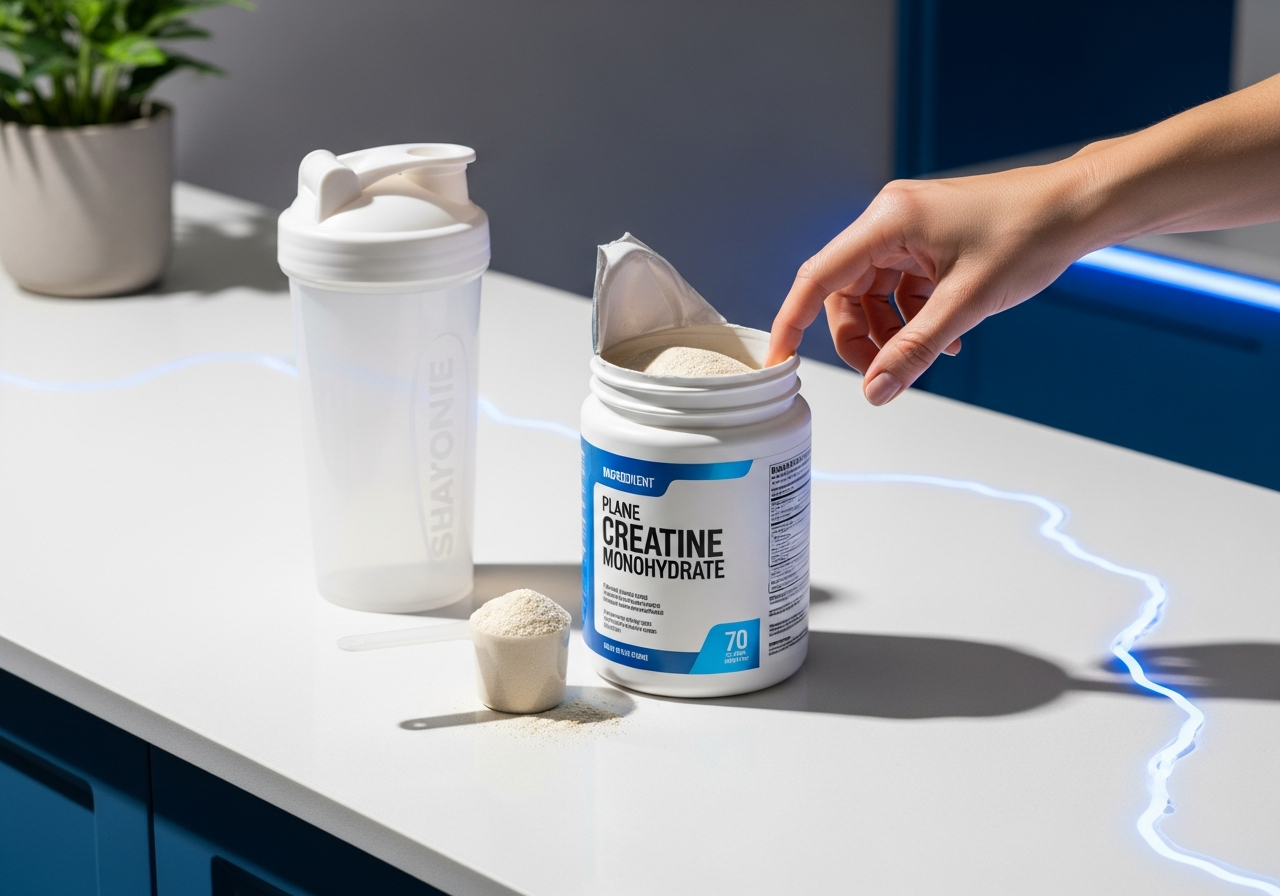
The best way to buy creatine in Alberta is to use a short checklist that filters out overpriced, underdosed, and overcomplicated products. If you follow the steps below, you can make a good purchase whether you are standing in a Calgary store aisle or ordering online from Edmonton, Medicine Hat, or anywhere else in the province.
- Pick the form first. Choose creatine monohydrate unless you have a very specific reason not to. It is the benchmark form for both evidence and value.
- Check the ingredient list. Ideally it should say only creatine monohydrate. Flavours are optional, but avoid unnecessary blends if your goal is simple creatine supplementation.
- Verify the dose. Look for a serving that clearly provides 3 g or 5 g of creatine, or a powder that lets you measure that amount accurately. If you need help, use our creatine dosage calculator.
- Look for Canadian compliance signals. An NPN, bilingual packaging, lot number, and importer or manufacturer details are all useful trust markers in Canada.
- Check quality control. Third-party testing, tamper seals, and transparent manufacturing details reduce the risk of contamination or label sloppiness.
- Calculate value properly. Compare cost per 100 g or cost per 5 g serving, not just tub price.
- Choose the format that fits your habits. Powder is usually cheapest, capsules are easiest to travel with, and gummies are often the most expensive per effective dose.
Here are common buying mistakes Alberta consumers make:
- Paying more for HCl or proprietary blends without better evidence
- Buying a pre-workout just to get creatine, even though the creatine dose may be hidden or too low
- Assuming “micronized” means stronger rather than simply easier to mix
- Ignoring serving count manipulation, where a small scoop size makes the package look like better value
If you want to compare products quickly, start with the best creatine rankings and then cross-check individual labels in the creatine product catalog. If a product makes bold claims that sound too good to be true, our creatine myths debunked page can help you sort hype from evidence.
A final practical tip for Alberta winters and dry indoor homes: keep the container sealed tightly and use a dry scoop. Clumping does not necessarily mean the product is bad, but moisture exposure can make any powder less pleasant to use.
Creatine dose by body weight and goal: exact amounts that work
Most Alberta adults do well with 3 to 5 g of creatine monohydrate per day, and larger or more muscular people often prefer the upper end of that range. The goal is muscle saturation, not chasing a special timing trick or an oversized scoop.
There are two evidence-based ways to start:
- Loading approach: 20 g/day for 5 to 7 days, split into 4 doses of 5 g, then 3 to 5 g/day as maintenance.
- No-loading approach: 3 to 5 g/day every day from the start.
The loading approach works faster; the no-loading approach reaches a similar place more slowly and is often easier on digestion. Both are valid. The 2021 JISSN review on common questions and misconceptions about creatine reinforces that the standard practical dose remains simple monohydrate in the usual daily range.
| Body weight | General fitness goal | Daily maintenance dose | Optional loading phase |
|---|---|---|---|
| Under 60 kg | Strength, gym performance, muscle | 3 g/day | 20 g/day split for 5 to 7 days if faster saturation is desired |
| 60-90 kg | Strength, muscle, team sport performance | 3-5 g/day | 20 g/day split for 5 to 7 days |
| Over 90 kg | Large body size, high lean mass, intense training | 5 g/day | 20 g/day split for 5 to 7 days |
Examples:
- A 55 kg beginner in Edmonton starting resistance training can take 3 g daily.
- A 75 kg recreational lifter in Calgary can take 5 g daily or load first if they want quicker results.
- A 105 kg power athlete in Alberta will usually choose 5 g daily after loading or from day one.
Take creatine daily, including rest days. Missing one day is not a disaster, but long gaps slow or reduce saturation. If you want a more tailored estimate, use our creatine dosage calculator or read how much creatine per day.
Do not confuse more with better. Once your muscles are saturated, taking far beyond the standard dose does not reliably improve outcomes and is more likely to cause stomach upset. A proper creatine plan is not complicated: buy the right product, take it consistently, and give it enough time to work.
When to take creatine, what to mix it with, and how to use it every day
The best time to take creatine is the time you will remember to take it every day, because consistency matters more than timing. For most Albertans, that means mixing 3 to 5 g into water, a protein shake, or another convenient drink once daily.
Timing is not irrelevant, but it is secondary. Some people prefer taking creatine after training because it naturally attaches to an existing routine. Others take it with breakfast or lunch on both training and rest days. The reason timing matters less than many people think is that creatine works through saturation over days and weeks, not through an acute same-hour effect.
Simple daily-use rules:
- Take your creatine every day, including rest days.
- Use a level scoop or a scale if the product does not provide a precise measure.
- Mix it into enough liquid that you can drink it comfortably.
- If it settles, swirl and finish the rest; complete dissolution is not required for effectiveness.
Good mixing options include water, juice, or a post-workout protein shake. If you want convenience, mixing creatine with protein is a very practical habit, and our guide on mixing creatine with protein powder explains exactly how to do it. If you are worried about coffee, see can you mix creatine with coffee.
How much water should you use? There is no magic amount required for absorption, but enough fluid to make the dose comfortable and easy on your stomach is sensible. Hydration matters for overall training, not because creatine is inherently dehydrating. If you want a fuller hydration guide, read how much water to drink with creatine.
If creatine upsets your stomach, the first fix is not to abandon it. Instead:
- Reduce to 3 g/day for a week.
- Skip loading if you were loading.
- Take it with food.
- Split 5 g into two smaller doses.
- Try micronized monohydrate if texture is the issue.
The practical takeaway is this: you do not need a complicated stack, a workout-only protocol, or a special Alberta climate hack. You need a daily habit. Pick a time, tie it to an existing routine, and repeat it consistently for weeks rather than obsessing over the perfect minute.
Who creatine is for: beginners, women, older adults, and athletes in Alberta
Creatine is appropriate for many healthy adults in Alberta, including beginners, women, older adults, vegetarians, and athletes, because its main benefits are not limited to bodybuilders. The key is matching your expectations to your goal and health context.
Beginners: Creatine is often a better first supplement than most flashy alternatives because it is simple, evidence-based, and affordable. A beginner lifting 2 to 4 times per week can start with 3 to 5 g/day and focus on consistency, protein intake, and progressive training.
Women: Women respond to creatine too, and the common fear of becoming bulky from creatine is misplaced. Creatine can support strength, training quality, and lean mass, and any early weight increase is typically intracellular water in muscle rather than fat gain. Our dedicated guide on creatine for women covers the details.
Older adults: Older Albertans doing resistance training may benefit from creatine as part of a broader strategy for maintaining muscle and function. Evidence is strongest when creatine is paired with training rather than used passively on its own. See creatine for older adults for a deeper look.
Athletes: Creatine is especially relevant for sports involving power, sprinting, repeated efforts, collisions, or heavy training blocks. The International Olympic Committee consensus on supplements recognises a limited group of supplements with good evidence in sport, and creatine belongs in that evidence-based conversation.
Vegetarians and vegans: Because dietary creatine is found mainly in animal foods, plant-based eaters may have lower baseline stores and sometimes see a more noticeable response to supplementation.
Who should pause and ask a clinician first? People with known kidney disease, complex medical conditions, pregnancy-specific concerns, or a history of confusing lab values should get personalised advice. For healthy individuals, standard creatine monohydrate use is generally considered safe, but context always matters.
If you are brand new and want the complete setup, read creatine for beginners and how to take creatine. The main point for Alberta shoppers is that the right buyer is not defined by city or gender. It is defined by whether better training quality, strength, or lean mass is actually useful to you.
Safety, side effects, and what Canadian labelling should tell you
Creatine monohydrate is generally considered safe for healthy people when used at standard doses, and the most common side effects are mild digestive issues or a small early increase in body mass from water retained inside muscle. That overall safety picture is consistent with the ISSN position stand, the 2021 JISSN misconceptions review, and mainstream clinical summaries such as the Mayo Clinic overview of creatine.
The side effects that Alberta buyers most often worry about are usually misunderstood:
- Water retention: yes, creatine can increase intracellular water in muscle tissue; that is not the same as getting fatter.
- Bloating: some people experience stomach discomfort, especially with large single doses or loading done too aggressively.
- Kidney concerns: in healthy people, standard creatine use is not the same as kidney damage, but creatinine on a blood test can be misinterpreted without context.
- Cramps or dehydration: evidence does not support the popular idea that creatine inherently causes dehydration or cramping.
How to reduce side effects:
- Stay within standard dosing.
- Split large doses during loading.
- Take creatine with food if your stomach is sensitive.
- Use plain monohydrate rather than stimulant-heavy blends.
- Maintain normal hydration habits.
For Canadian shoppers, label quality is part of safety. An NPN, or Natural Product Number, indicates a natural health product has been authorised for sale by Health Canada under the applicable framework. An NPN does not guarantee perfect quality by itself, but it is a useful legitimacy signal alongside ingredient clarity, lot numbers, manufacturer contact details, and third-party testing.
Be wary of products sold through sketchy marketplaces with incomplete labels, impossible claims, or no clear company details. That matters online and in-store. If you want a deeper dive on risk questions, our guides on is creatine safe, creatine and kidneys, and creatine digestive side effects address the common concerns in detail.
The sensible bottom line is that plain creatine monohydrate has a strong safety record in healthy users, but buying from a credible Canadian source and using a normal dose is part of using it safely.
The biggest creatine myths Alberta buyers still fall for
The biggest creatine myths in Alberta are the same myths seen everywhere: that you need an expensive form, that creatine is a steroid, that it damages healthy kidneys, that it must be cycled, or that women should avoid it. None of those claims reflects the best current evidence.
Myth 1: HCl or fancy forms are clearly better than monohydrate. The evidence does not show that newer forms outperform monohydrate in real-world outcomes like strength or lean mass. Many simply cost more.
Myth 2: Creatine is a steroid. Creatine is not an anabolic steroid. It is a naturally occurring compound involved in cellular energy metabolism. If you want the full distinction, see is creatine a steroid.
Myth 3: You have to cycle creatine. Cycling is not required for healthy users. Daily use is the standard approach because muscle creatine stores are maintained by ongoing intake. Read do you need to cycle creatine for the full explanation.
Myth 4: Creatine only helps bodybuilders. Creatine can also help sprinters, team-sport athletes, older adults doing resistance training, and many general gym-goers.
Myth 5: Creatine makes you puffy or fat. Early scale changes are usually water stored inside muscle cells, not body fat gain. Our guide on does creatine make you gain weight explains the difference.
Myth 6: If you do not feel it immediately, it is not working. Creatine is not supposed to feel like a stimulant. It works through saturation and training output over time.
The buying mistakes tied to these myths are costly. People in Calgary or Edmonton often buy a fancy capsule, gummy, or pre-workout blend because the marketing sounds more advanced, but they end up paying more for less creatine. Others underdose because the serving size is vague or because they only take creatine on workout days.
If you want a simple filter for every Alberta purchase, ask this one question: does this product help me take a proven daily dose of creatine monohydrate consistently and affordably? If the answer is no, move on. For a fuller myth breakdown, visit creatine myths debunked.
Bottom line: the best way to buy creatine in Alberta in 2026
The best way to buy creatine in Alberta in 2026 is to choose a reputable plain creatine monohydrate product, verify the label, and then take 3 to 5 g daily with consistency. Whether you buy creatine in Calgary, Edmonton, or online, the winning formula is the same.
If you want the shortest possible buying recommendation, use this one:
- Buy plain creatine monohydrate powder
- Prefer transparent Canadian labelling and credible quality controls
- Take 3 to 5 g every day
- Use loading only if you want faster saturation
- Ignore hype around exotic forms unless there is a specific practical reason
For most Alberta shoppers, online buying is the best blend of value and selection, while local stores in Calgary and Edmonton are best when you need creatine immediately. In either case, do not judge a product by the marketing front label alone. Judge it by form, dose, transparency, and cost per effective serving.
What should you expect after buying a good product? If you load, expect a faster change in training feel over roughly the first week. If you do not load, expect a more gradual effect over about 3 to 4 weeks. In both cases, the payoff comes through better repeated efforts, a bit more training volume, and over time, better support for strength and lean mass goals.
If you are ready to choose, start with the best creatine rankings, compare options in the creatine product catalog, and calculate your exact intake with the creatine dosage calculator. For broader context, related guides like how to take creatine and buying creatine online in Canada can help you refine the decision.
The final answer to "creatine in Alberta" is reassuringly uncomplicated: yes, it is easy to find, and the best choice is usually the least flashy one. Buy the proven form, use the proven dose, and let consistency do the work.
Creatine in Alberta: the numbers that matter
- 3-5 g/day Standard daily maintenance dose — The usual evidence-based range for most adults using creatine monohydrate.
- 20 g/day Optional loading dose — Typically split into 4 x 5 g doses for 5 to 7 days.
- 5-7 days Time to faster saturation with loading — Loading speeds up the rise in muscle creatine stores.
- 3-4 weeks Time to similar saturation without loading — Daily maintenance-only use reaches a similar end point more gradually.
Frequently Asked Questions
Where can I buy creatine in Alberta?
You can buy creatine in Alberta from supplement stores, some pharmacies, fitness retailers, and Canadian online shops. For most people, the best choice is a reputable source selling plain creatine monohydrate with clear dosing, compliant Canadian labelling, and strong quality signals such as lot numbers or third-party testing.
Where should I buy creatine in Calgary?
You should buy creatine in Calgary from a trusted supplement retailer if you need it right away, or from a Canadian online store if you want better selection and value. The key is not the city itself but the product: choose plain creatine monohydrate, check the grams per serving, and avoid proprietary blends.
Where to buy creatine in Edmonton without getting ripped off?
The best way to buy creatine in Edmonton without overpaying is to compare cost per gram rather than just tub price. Local stores are fine for convenience, but online Canadian retailers often offer better pricing on plain monohydrate, especially in larger sizes with transparent serving counts.
What type of creatine should I buy in Alberta?
The best type of creatine to buy in Alberta is creatine monohydrate. It is the most studied form, the standard used in most of the evidence, and usually the most cost-effective option compared with HCl, buffered creatine, gummies, or flashy multi-ingredient blends.
Is creatine legal to buy in Alberta?
Yes, creatine is legal to buy in Alberta. In Canada, many supplement products are sold as natural health products, and a Natural Product Number, or NPN, is a useful sign that the product has been authorised under Health Canada rules for sale in the Canadian market.
Should I buy creatine powder, capsules, or gummies?
Creatine powder is usually the best buy because it is the cheapest way to get an effective daily dose. Capsules are convenient for travel and routine, while gummies are often the most expensive per gram and can make it harder to reach the standard 3 to 5 g daily target efficiently.
How much creatine should I take after buying it?
Most adults should take 3 to 5 g of creatine monohydrate daily after buying it. You can also choose an optional loading phase of 20 g per day split into 4 doses for 5 to 7 days if you want faster saturation, but loading is not necessary for creatine to work.
How long does creatine take to work?
Creatine usually starts working faster in about 5 to 7 days if you use a loading phase, or in about 3 to 4 weeks if you take only a daily maintenance dose. The effect is not stimulant-like; it shows up as better repeated efforts, slightly improved gym performance, and gradual training benefits.
Is online creatine in Alberta safe to buy?
Yes, online creatine in Alberta can be safe to buy if you choose a credible Canadian seller and check the label carefully. Look for clear ingredient disclosure, grams per serving, proper contact information, lot numbers, and ideally an NPN or other strong Canadian compliance and quality signals.
Do I need a special creatine for women or beginners?
No, most women and beginners do not need a special creatine product. Plain creatine monohydrate at the standard daily dose works for beginners, women, and men alike, and the biggest difference should be your routine and consistency, not a gendered label or marketing angle.