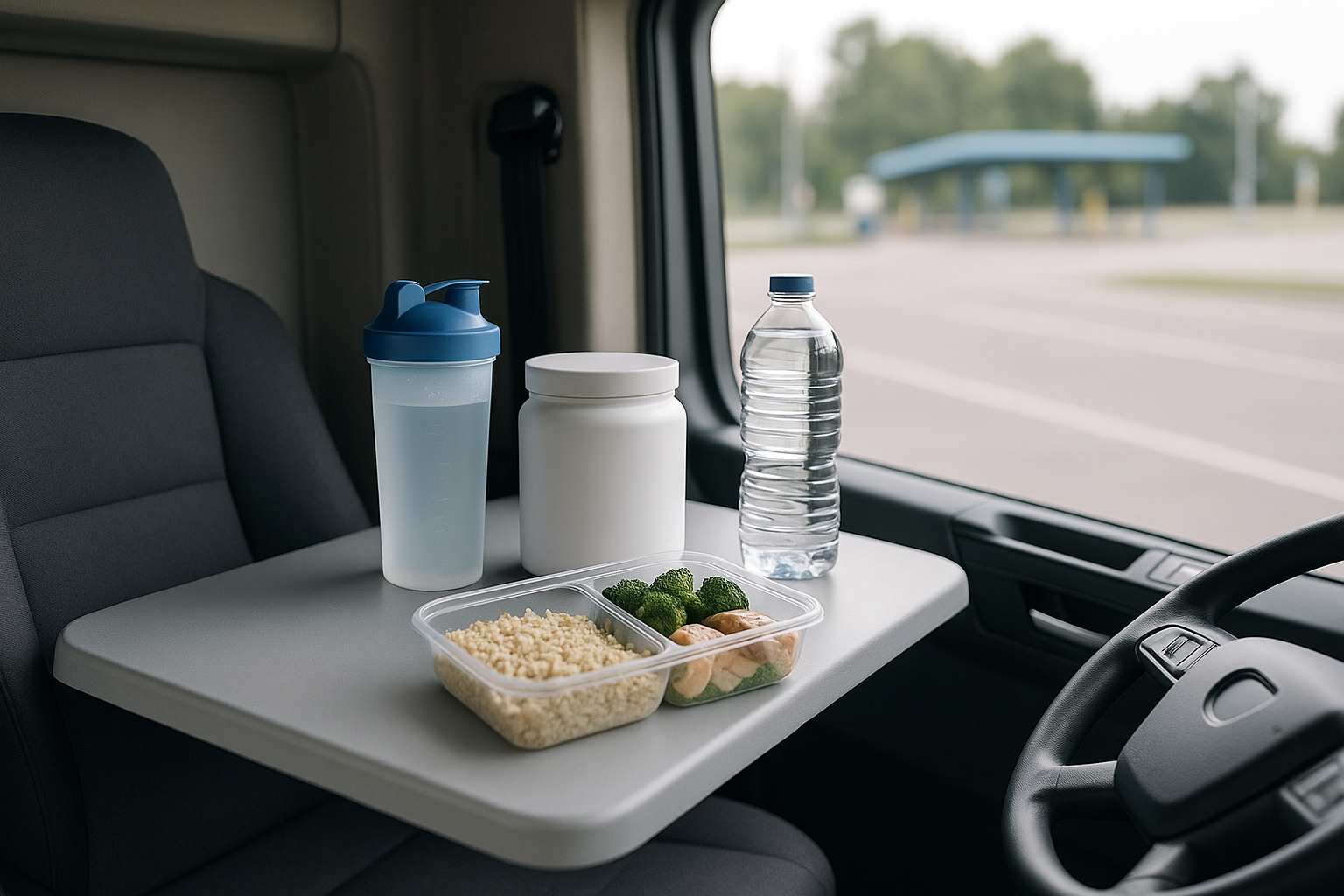
Creatine for Truck Drivers: Cognitive Focus, Anti-Fatigue, and Sedentary Health
By The Creatine Canada Research Team — Evidence-based supplement analysts
Yes—creatine can be a smart, evidence-based supplement for truck drivers because it helps maintain muscle and strength during long sedentary stretches and may support cognitive performance under mentally demanding, sleep-challenged conditions. It is not a substitute for sleep, rest breaks, hydration, or safe driving practices, but 3 to 5 grams of creatine monohydrate daily is a reasonable protocol for many drivers.
Evidence-based · Cites 4 sources · Editorial standards
Key Takeaways
- Creatine for truck drivers is mainly about preserving muscle, supporting training off the road, and potentially helping mental performance when fatigue is a factor.
- The best-supported form is creatine monohydrate, taken at 3 to 5 g daily; loading at 20 g/day for 5 to 7 days is optional.
- Creatine does not work like caffeine and will not acutely “wake you up” for a night drive.
- Long-haul drivers with sedentary work, plant-based diets, low meat intake, or regular gym training may benefit the most.
- Mild water-weight gain of roughly 1 to 2 kg can happen early because creatine pulls water into muscle, not because it adds body fat.
- Take creatine consistently every day, including non-training days, and pair it with hydration, walking breaks, and resistance training for the biggest payoff.
- Choose a simple Canadian product with a clear dose, an NPN where applicable, and preferably third-party testing rather than flashy blends.
Is creatine for truck drivers actually worth it?
Yes, creatine for truck drivers can be worth it when the goal is better support for muscle, training capacity, and possibly cognitive resilience under demanding work conditions. The short version is that creatine is not a stimulant, not an energy drink replacement, and not a fix for drowsy driving, but it is one of the most researched sports supplements for helping the body regenerate quick energy and maintain performance.
For drivers, the value is usually in three areas. First, long hours sitting reduce daily movement and can make it harder to maintain lean mass, strength, and metabolic health. Creatine helps saturate muscle with phosphocreatine, the stored form of creatine that helps regenerate ATP, the cell’s immediate energy currency during short, intense efforts. That matters if you lift weights before or after shifts, do bodyweight work at rest stops, or simply want to hang onto muscle despite a sedentary job. If you need a deeper primer, see what creatine is and what it does.
Second, creatine may have useful brain-related effects in situations where mental demand is high or sleep is limited. Evidence for cognition is not as settled as it is for strength and muscle, but research interest is strong enough that creatine is now discussed beyond the gym. That said, no supplement should be treated as permission to drive tired. Safe driving still depends on sleep, scheduling, rest breaks, and compliance with fatigue rules.
Third, creatine is practical. It is inexpensive per dose, has decades of safety data in healthy people, and does not require cycling. The 2017 ISSN position stand concluded that creatine monohydrate is both effective and generally safe when used appropriately, and the 2021 JISSN review on common questions and misconceptions reinforced that many popular fears about creatine are overstated or wrong.
If you are a truck driver who never exercises and expects a dramatic boost in alertness tomorrow morning, creatine will probably disappoint you. If you are a long-haul driver trying to protect muscle, improve gym results, and support overall physical function while spending much of the day seated, creatine is one of the more rational supplements to consider.
How creatine may help drivers: mental energy, fatigue resistance, and sedentary-job health
Creatine may help drivers by increasing phosphocreatine stores in muscle and possibly in the brain, which can improve rapid energy buffering when physical or mental demand is high. That is the mechanism-based reason creatine shows the strongest benefits in repeated high-intensity exercise, and why it is also being studied for cognition, sleep deprivation, and mental fatigue.
In muscle, the story is straightforward. Phosphocreatine donates a phosphate group to help regenerate ATP during short bursts of effort. More stored creatine generally means a better ability to repeat hard efforts, maintain training quality, and recover between sets. For truck drivers, that matters less during the act of driving and more during everything around it: climbing into cabs, loading or securing equipment, resisting deconditioning from prolonged sitting, and making off-duty workouts more productive. The International Olympic Committee’s supplement consensus recognises creatine as one of the few supplements with strong evidence for performance use.
In the brain, the picture is promising but more nuanced. Brain tissue also uses creatine and phosphocreatine as part of cellular energy homeostasis. When sleep is reduced or cognitive demand is elevated, creatine may help some aspects of mental processing, especially in people with lower baseline stores such as vegetarians, vegans, or those under sleep stress. This is why the phrase “creatine and driving fatigue” is partly grounded in biology. But the key caveat is essential: creatine is not an anti-sleep substitute and should never be used to push through unsafe fatigue behind the wheel.
There is also a sedentary-health angle. Long-haul driving is a classic high-sitting occupation. High sitting time is associated with reduced activity, poorer body composition, and gradual loss of strength if training is neglected. Creatine will not offset sitting by itself, but it can make a simple resistance plan more effective. That is why creatine for sedentary jobs often makes sense when paired with even modest exercise, such as 20-minute dumbbell sessions, resistance bands in the cab, or 5-minute bodyweight circuits at fuel stops.
One more practical point: people who eat little red meat or fish often start with lower creatine stores. That means plant-based drivers may notice more from supplementation than heavy meat eaters. If that sounds like you, our guides on creatine for vegetarians and creatine and the brain add useful context.
What creatine can and cannot do for driving fatigue
Creatine can support the biology of energy availability, but it cannot make unsafe fatigue safe. That single distinction matters more for truck drivers than for almost any other audience.
Here is what creatine can reasonably do. Over days to weeks, consistent creatine use can raise muscle creatine stores and may support some cognitive tasks, particularly when sleep debt, stress, or low baseline creatine status are present. Some drivers describe this as feeling a bit more mentally steady or less “flat” during long runs, especially when they are also eating better and training regularly. Creatine may also help off-duty exercise feel stronger, and better training can indirectly improve daytime energy, posture, and physical resilience.
Here is what creatine cannot do. It does not work like caffeine, amphetamine-based medications, or a strong stimulant pre-workout. It does not have a reliable acute effect within 30 minutes of taking a scoop. It does not restore reaction time to normal after severe sleep loss. It does not override circadian rhythm. And it should never be used to justify stretching a shift when you are too tired to drive safely.
This is where many “creatine anti-fatigue driving” claims go wrong. They take a real mechanism—better cellular energy buffering—and oversell it into a road-safety promise the evidence does not support. The honest evidence-based position is this: creatine may be a useful background supplement for drivers, but the frontline tools against driving fatigue are sleep, schedule management, strategic breaks, movement, hydration, and when appropriate, caffeine used responsibly.
If your main problem is true sleep deprivation, address that first. If your main problem is that long-haul driving leaves you detrained, stiff, and physically drained, creatine makes more sense. If your main problem is brain fog during stretches of poor sleep, creatine may be worth trying, but it should be treated as supportive rather than corrective.
Best one-sentence summary: Creatine may help truck drivers tolerate physical and mental demands better over time, but it is not a wakefulness drug and does not replace sleep or legal fatigue management.
That balanced view is the one most consistent with the current state of evidence in 2026 and with the practical realities of safe commercial driving.
The simplest dosing plan for truck drivers, long-haul drivers, and other sedentary workers
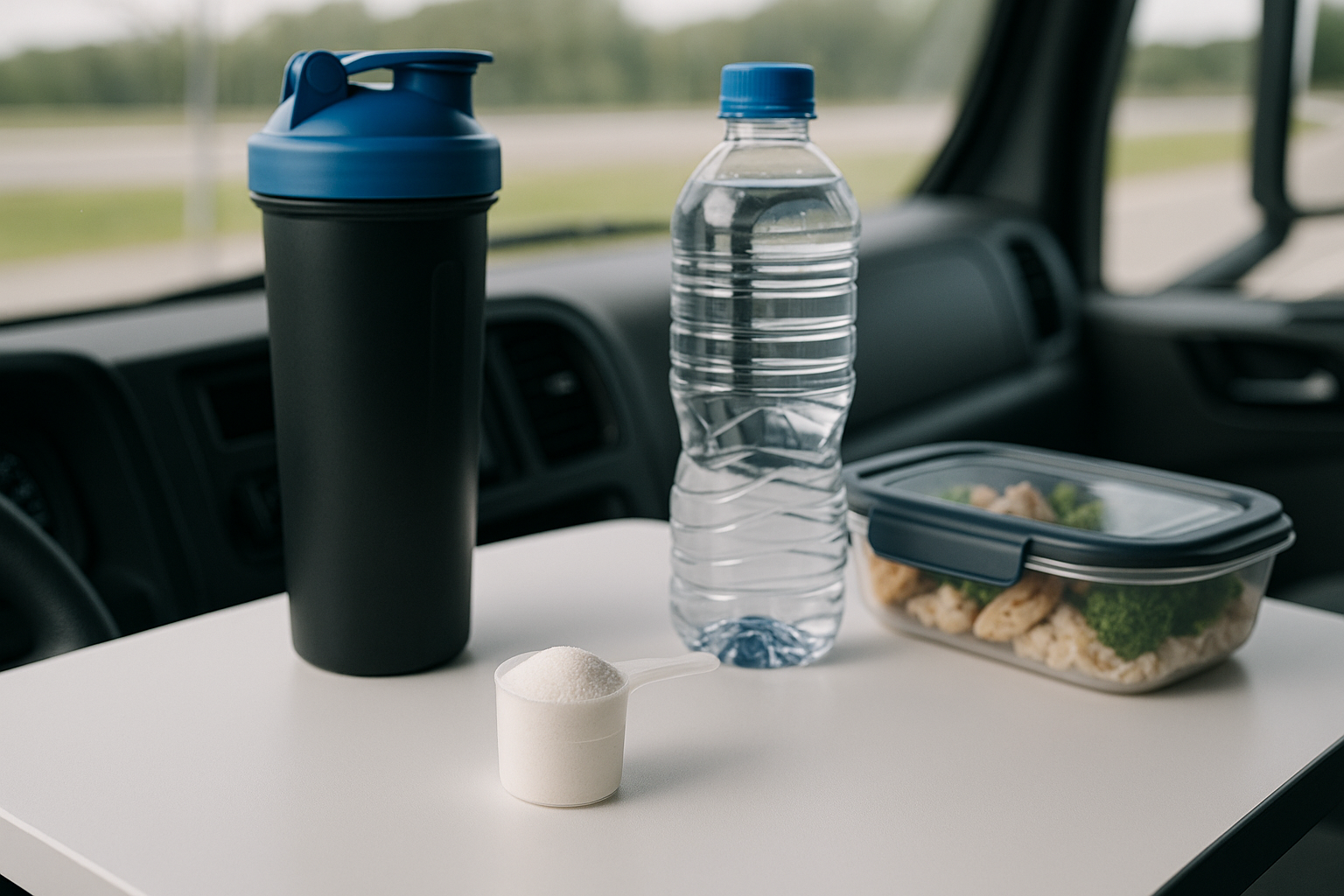
The best dosing plan for most truck drivers is 3 to 5 grams of creatine monohydrate once daily, every day, with or without food. That protocol is effective, easy to remember, and aligns with mainstream sports-nutrition guidance.
You have two valid ways to start:
- No loading: take 3 to 5 g daily. Muscle stores usually rise gradually over about 3 to 4 weeks.
- Loading phase: take about 20 g daily for 5 to 7 days, split into 4 doses of 5 g, then continue with 3 to 5 g daily. This saturates stores faster but causes more stomach upset in some people.
For drivers, the no-loading option is often the best fit because it is simpler on the road and gentler on the stomach. If you want help matching your dose to your size and goal, use our creatine dosage calculator or read how much creatine per day.
| Body weight | Simple daily dose | Who this suits |
|---|---|---|
| Under 70 kg | 3 g/day | Smaller adults, lighter women, lower body mass |
| 70-100 kg | 4-5 g/day | Most male and female truck drivers |
| Over 100 kg | 5 g/day | Larger individuals, strength trainees, bigger athletes |
Goal-specific adjustments are simple:
- For general health and training support: 3 to 5 g/day.
- For fastest saturation before a training block: use the loading protocol, then 3 to 5 g/day.
- For beginners worried about bloating or digestion: start at 3 g/day for one to two weeks, then move to 5 g if desired.
Do not overcomplicate timing. If you drive early, keep a measured dose in your lunch bag and mix it with water at your first meal. If you train after your route, take it with your post-workout shake or supper. If your schedule changes every week, anchor creatine to a habit you rarely miss, such as breakfast, your first refill stop, or brushing your teeth before bed. Consistency matters much more than timing precision; our step-by-step creatine guide covers the details.
Take it on non-training days too. Creatine works by building and maintaining saturation, not by acting as a one-time performance hit.
When to take creatine on the road, and what results to expect week by week
For truck drivers, the best time to take creatine is the time you will actually remember every day. Timing matters far less than consistency because creatine works by saturating tissue stores over time rather than by producing an immediate stimulant effect.
If you train regularly, taking creatine near your workout is perfectly reasonable. If you do not train at a fixed time, taking it with any meal is fine. If you work rotating schedules, choose a repeatable anchor habit: first coffee stop, first meal, after your walk-around inspection, or your evening meal in the sleeper. For more on the timing question, see when to take creatine.
What should you expect?
- Days 1-7 without loading: usually not much you can feel, aside from occasionally a slight increase in thirst or a fuller muscle feel.
- Days 1-7 with loading: some people notice a body-weight increase of roughly 1 to 2 kg from increased water held inside muscle, plus a quicker “fuller” look and better gym pumps.
- Weeks 2-4: if you are training, workouts may start to feel a bit stronger, with better quality on repeated sets or sprints. If your diet is low in meat, effects may be more noticeable.
- Weeks 4-8: this is when many users can more clearly tell it is working—slightly more reps at a given weight, better training consistency, less drop-off across sets, and easier maintenance of muscle while working a sedentary job.
- Months 2-3: the biggest visible payoff is often indirect. Better training performance repeated over weeks can lead to more strength and lean mass than training alone.
For “creatine cognitive truck driving” expectations, keep them realistic. The effect is usually subtle rather than dramatic. You are not supposed to feel wired. Instead, if it helps, the effect is more likely to show up as steadier mental energy under stress or less subjective mental drag when you are otherwise doing the basics right.
How do you know it is working? The best markers are not “Do I feel a buzz?” but:
- slightly higher scale weight early on from intramuscular water
- better reps or power in training
- better maintenance of strength during busy work weeks
- less physical deconditioning over months of high sitting time
If you want a more detailed progression, our guide on how long creatine takes to work lays out the full timeline.
Who should consider creatine most: beginners, women, older drivers, and plant-based eaters
Creatine is not only for bodybuilders; it can be a sensible option for beginners, women, older adults, and plant-based truck drivers when the goal is muscle support, training quality, or cognitive support. The audience most likely to benefit is broader than many people think.
Beginners: If you are just starting to train because driving has left you stiff, weak, or heavier than you want to be, creatine is still appropriate. In fact, it often helps beginners get more from simple resistance training. The key is to keep expectations realistic: it amplifies good habits rather than replacing them. Pair 3 to 5 g/day with two to four weekly strength sessions, even if those are just 20-minute workouts using bands, dumbbells, or bodyweight at home. Our creatine for beginners guide goes deeper.
Women drivers: Women respond to creatine too. The outdated idea that creatine is a “bulking” supplement for men is false. Women often use the same 3 to 5 g/day range, and potential benefits can include improved training capacity, support for lean mass, and possible cognitive benefits. More detail is in creatine for women.
Older drivers: Long-term driving plus ageing can be a rough combination for muscle, posture, and function. After about age 50, preserving muscle becomes more important, not less. Creatine is especially relevant when combined with resistance training, because that pairing may help counter age-related declines in strength and lean mass. See creatine for older adults for the broader evidence picture.
Vegetarians and vegans: People who eat little or no meat often have lower baseline creatine stores because dietary creatine is concentrated in animal foods. That means supplementation may produce a stronger response in some plant-based users.
Athletic or gym-focused drivers: If you lift before dawn, train after your shift, or compete recreationally on weekends, creatine is one of the most sensible supplements you can take. It supports the kind of repeated effort that strength training demands and is usually more worth the money than trendy “energy” powders.
The drivers least likely to benefit are those expecting an immediate alertness hit with no training, poor sleep, and no change in habits. Creatine is best seen as a foundation supplement, not a rescue supplement.
Safety, side effects, hydration, and real-world road use
Creatine monohydrate is generally safe for healthy adults at recommended doses, but truck drivers still need to think about hydration, digestion, and medical context. The weight of evidence, including the ISSN position stand and the Mayo Clinic overview, supports its overall safety profile in healthy people.
The most common side effects are practical rather than dangerous:
- Water-weight gain: often about 1 to 2 kg early on, especially with loading. This is usually water drawn into muscle, not fat gain.
- Stomach upset: more likely if you take too much at once, dry scoop it, or use a loading phase aggressively.
- Temporary bloating sensation: some users report it, though true whole-body “puffiness” is often exaggerated.
For truckers, hydration deserves special attention. Creatine does not dehydrate you by itself, but people often misunderstand the water-shift effect. Creatine increases intracellular water in muscle, so you should still drink fluids normally and pay extra attention during hot weather, summer loading, or physically active routes. You do not need absurd amounts of water; you do need consistent, sensible hydration. Our water with creatine guide covers this in detail.
Kidneys are the other big concern people raise. In healthy individuals using recommended doses, creatine has not been shown to damage kidneys in the way internet myths claim. The confusion often comes from creatinine, a breakdown product that may rise on lab work and can be mistaken for kidney trouble if context is ignored. That said, anyone with known kidney disease, a history of significant renal issues, or relevant medications should speak with a physician or pharmacist first. See our kidney guide if this is your main concern.
Road-use tips:
- pre-portion doses into small containers or baggies
- mix with water, protein, or a meal shake rather than dry scooping
- avoid loading during a week when bathroom access is poor or your stomach is already off
- keep the tub sealed and dry in the cab to prevent clumping
If you have high blood pressure, diabetes, kidney concerns, or take medications that affect renal function or fluid balance, get personalised advice first. Safe supplementation starts with the right person using the right dose for the right reason.
Common mistakes truck drivers make with creatine, and the myths that waste money
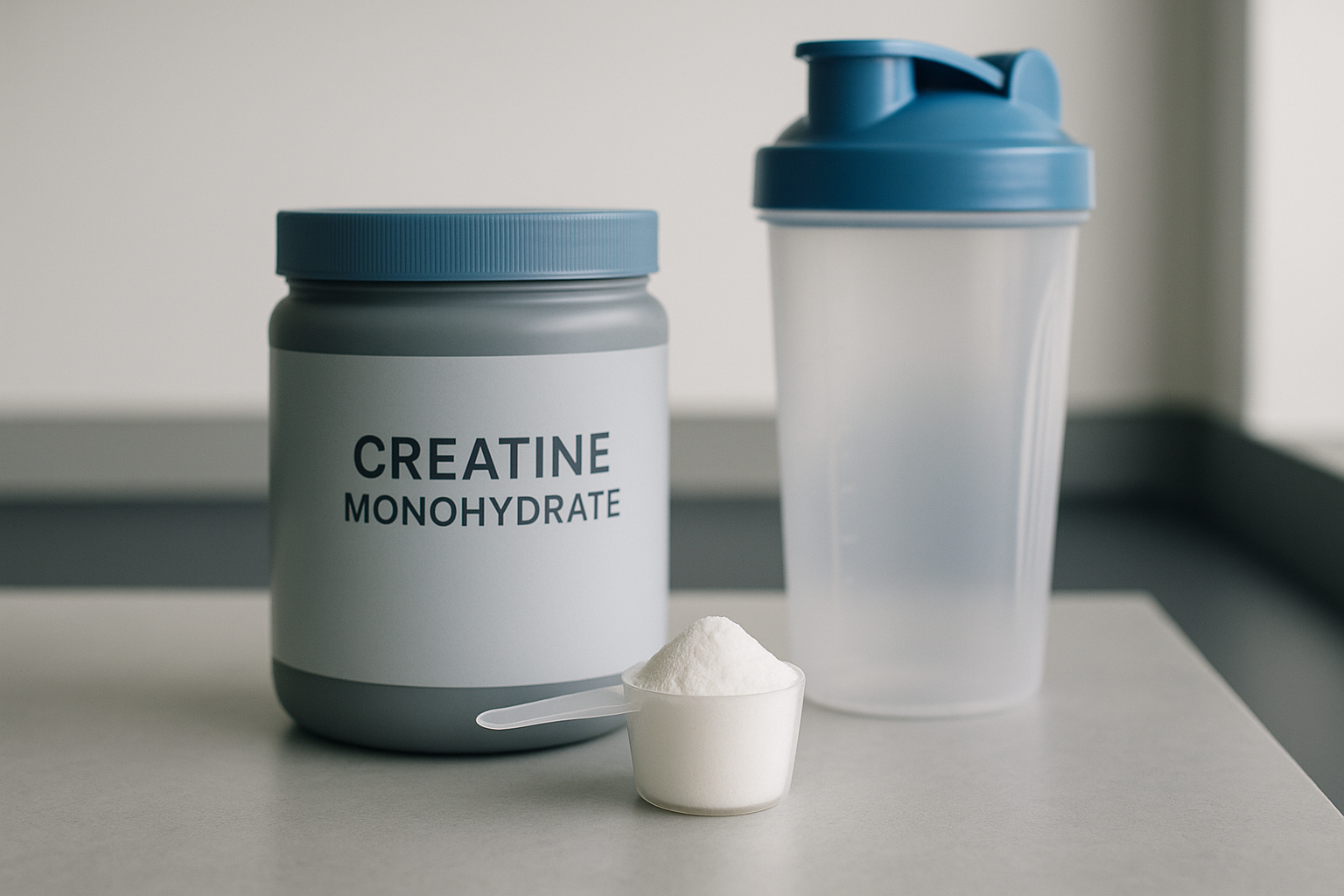
The biggest creatine mistakes are inconsistency, chasing fancy forms, and expecting it to act like a stimulant. Most disappointing creatine experiences come from poor use, not from the supplement itself.
Mistake 1: taking it only on workout days. Creatine is not a pre-workout hit. Skipping non-training days slows or undermines saturation.
Mistake 2: buying “driver focus” blends instead of plain monohydrate. Many blends underdose creatine, add unnecessary stimulants, or hide amounts in proprietary formulas. For most users, plain monohydrate wins on evidence and value.
Mistake 3: thinking more is better. Once stores are saturated, mega-dosing does not keep improving results. It more often increases GI upset and wastes money.
Mistake 4: quitting after one week. Without a loading phase, creatine needs time. Many users stop just before it would have become useful.
Mistake 5: blaming creatine for any scale increase. Early gain is usually water in muscle, not body fat. If this worries you, read does creatine make you gain weight.
Now the common myths:
- “Creatine is a steroid.” False. Creatine is a naturally occurring compound involved in energy metabolism, not an anabolic steroid.
- “Creatine ruins your kidneys.” False for healthy users at normal doses; context and medical history still matter.
- “Creatine causes dehydration and cramps.” This is not supported the way many people think. Sensible hydration is still important, especially for drivers in heat.
- “Creatine only helps bodybuilders.” False. Recreational trainees, women, older adults, and people in sedentary jobs can all use it meaningfully.
- “Creatine works instantly for focus.” Usually false. It is not an acute nootropic in the way caffeine is.
The 2021 JISSN misconceptions paper is particularly useful here because it directly addresses several of these claims. We also break them down in plain language in creatine myths debunked.
If you remember only one rule, make it this: buy plain creatine monohydrate, take the right amount every day, and judge it over weeks, not hours.
How to choose the right creatine in Canada without overpaying
The best creatine for truck drivers in Canada is usually a plain creatine monohydrate powder with a clear dose, minimal ingredients, and trustworthy quality controls. You do not need an expensive “transport performance” formula to get the main benefits.
Start with form. Creatine monohydrate remains the gold standard because it is the most studied, most effective for most people, and usually the most cost-effective. Micronized monohydrate may mix a bit easier, but it is still monohydrate. Forms like HCL, buffered creatine, or gummies may be convenient for some users, but they are rarely better on evidence.
For Canadian buyers, look for:
- Ingredient simplicity: ideally just creatine monohydrate.
- Dose clarity: a serving should state exactly how many grams of creatine you get.
- NPN where applicable: in Canada, an NPN is a Natural Product Number, showing the product has been licensed by Health Canada under natural health product rules.
- Third-party testing: especially helpful for purity reassurance.
- Value per gram: tubs can look cheap or expensive depending on serving-count tricks.
| Option | Pros | Cons | Best for truck drivers? |
|---|---|---|---|
| Creatine monohydrate powder | Best evidence, cheapest per gram, flexible dosing | Needs mixing, can be messy in cab | Yes, best overall |
| Micronized monohydrate | Mixes a bit better, same core ingredient | Sometimes costs more | Yes, if you dislike grit |
| Capsules | Very convenient for travel | Usually more expensive, many capsules needed | Good backup option |
| Gummies/chews | Portable, easy to take | Often underdosed or costly per gram | Usually not best value |
| HCL/buffered forms | Marketed as gentler or stronger | Less evidence, often pricier | Usually no advantage |
If you are comparison shopping, our best creatine rankings, creatine brand reviews, and product catalog can save time. For a deeper buying framework, see best creatine monohydrate in Canada.
A final Canadian note: buying from reputable domestic retailers can make returns, shipping, and product legitimacy easier than chasing random marketplace listings. For a supplement you may use every day for months, boring reliability beats flashy marketing.
A practical step-by-step creatine plan for a working truck driver
The best way for a truck driver to use creatine is to make it frictionless. If a supplement adds complexity to a job that already runs on time pressure and changing schedules, adherence usually collapses.
- Buy the right product. Get a plain creatine monohydrate powder or, if convenience matters most, capsules. Avoid proprietary “energy” blends.
- Pick your dose. Start with 3 to 5 g daily. If you are cautious or small-bodied, use 3 g. If you are average to large or train hard, use 5 g.
- Decide on loading or not. Most drivers can skip loading. If you want faster saturation, use 5 g four times daily for 5 to 7 days, then drop to 3 to 5 g/day.
- Choose an anchor habit. Example: take it with breakfast before departure, with your first stop meal, or with your post-route shake.
- Pack for the week. Pre-portion seven servings into small containers or packets so you do not need to handle a full tub in the cab.
- Hydrate normally and consistently. Keep water accessible and increase fluid attention in heat, during loading, or if your route includes physical labour.
- Pair it with movement. Use creatine to support a simple plan: two to four weekly resistance sessions plus 5-minute walk or band breaks during long sitting days.
- Track useful outcomes. Watch body weight, training performance, and consistency rather than hunting for a “buzz.”
- Assess after 4 to 8 weeks. If you are more consistent in the gym, maintaining strength better, or feeling less run down physically, it is doing its job.
Example routines:
- Long-haul beginner: 3 g with breakfast daily, two 20-minute hotel-gym or home workouts per week.
- Experienced lifter driver: 5 g post-workout or with dinner daily, no cycling, keep using it on off days.
- Plant-based female driver: 3 to 5 g daily with lunch, expect benefits to build over several weeks.
If stomach upset appears, split the dose into 2 to 3 smaller servings or take it with food. If you miss a day, do not panic and do not double up aggressively the next day; just resume normal dosing. Our guides on missing a day of creatine and creatine not working cover those scenarios.
This kind of simple system is why creatine can fit a trucker’s life better than many supplements that demand precise timing or pre-workout routines.
Bottom line: the evidence-based verdict on creatine for drivers
Creatine for truck drivers is a sensible, evidence-based option when used for the right reasons: preserving muscle during a sedentary job, improving training quality off the road, and possibly supporting mental performance under demanding conditions. The strongest evidence remains in muscle, strength, and repeated high-intensity performance; the cognitive and anti-fatigue story is promising but still more nuanced.
If you want the most practical answer possible, it is this: take 3 to 5 grams of creatine monohydrate daily, every day, and judge it over at least 4 weeks. Use loading only if you want faster saturation and tolerate it well. Do not expect an instant alertness boost, and do not confuse a supportive supplement with a safe-fatigue strategy.
For long-haul drivers and others in sedentary jobs, creatine works best as part of a bigger system:
- adequate sleep
- legal and sensible fatigue management
- regular hydration
- resistance training two to four times per week
- walking and mobility breaks during long sitting days
That broader framework matters because creatine is an amplifier. It can make a good routine more productive, but it cannot rescue a bad one on its own.
If you are healthy, want one low-drama supplement with a very strong evidence base, and you can commit to daily use, creatine monohydrate is one of the best options available. If you have kidney disease, major medical conditions, or medication concerns, get professional guidance before starting.
For next steps, the most useful follow-up reads are how much creatine per day, is creatine safe, and creatine and cognition. Those will help you tailor the basics to your own schedule, training level, and health context.
In plain language: creatine will not make an exhausted driver safe, but it can help a truck driver build a stronger, more resilient body and support better performance over the long haul.
Creatine for Truck Drivers: the numbers that matter
- 3-5 g/day Standard daily creatine monohydrate dose — Effective for most adults, including drivers and sedentary workers
- 20 g/day Typical loading dose — Usually split into 4 doses for 5-7 days to saturate faster
- 3-4 weeks Time to near-full saturation without loading — Consistent daily dosing matters more than timing
- 1-2 kg Common early water-weight increase — Usually intramuscular water, not body fat
Frequently Asked Questions
Is creatine good for truck drivers?
Yes, creatine can be good for truck drivers if the goal is maintaining muscle, improving off-duty training, and possibly supporting mental performance under demanding conditions. It is especially relevant for long-haul drivers with sedentary work, low meat intake, or a regular gym routine. It is not a stimulant and should never be treated as a substitute for sleep or safe fatigue management.
Can creatine help with driving fatigue?
Creatine may help with some aspects of mental and physical fatigue over time, but it does not reliably fix acute driving fatigue. The best evidence is for muscle energy and exercise performance, while the cognitive fatigue evidence is promising but less definitive. If you are dangerously sleepy, the answer is rest, not another scoop of creatine.
Does creatine improve focus for long-haul drivers?
Creatine may support focus for long-haul drivers indirectly and, in some contexts, directly through brain energy metabolism. The effect is usually subtle rather than dramatic and may be more noticeable in sleep-challenged people or those with lower baseline creatine stores, such as vegetarians. Do not expect the immediate, obvious effect you would get from caffeine.
What is the best creatine dose for drivers?
The best creatine dose for most drivers is 3 to 5 grams of creatine monohydrate per day. Smaller adults often do well with 3 grams, while average to larger adults commonly use 4 to 5 grams. A loading phase of 20 grams per day for 5 to 7 days is optional if you want faster saturation.
Should truck drivers take creatine before driving?
Truck drivers do not need to take creatine before driving because timing is not very important. Creatine works by building tissue stores over days and weeks, so the best time is simply the time you will remember every day. Taking it with breakfast, lunch, or a post-workout meal is all fine.
Does creatine make you gain weight in a bad way?
Creatine can increase body weight early on, but that is usually not “bad” weight. The typical early change is water pulled into muscle tissue, often around 1 to 2 kilograms, especially with loading. That is different from gaining body fat, and many users also see improved training performance alongside it.
Is creatine safe for people with sedentary jobs?
Yes, creatine is generally safe for healthy people with sedentary jobs when used at recommended doses. In fact, it can be particularly useful when sitting all day makes it harder to maintain lean mass and train consistently. Anyone with kidney disease, relevant medications, or major health conditions should check with a clinician first.
Can you take creatine without working out if you are a driver?
Yes, you can take creatine without working out, and some drivers do. However, the biggest practical payoff usually comes when creatine is paired with resistance training, because that is where its performance and body-composition benefits show most clearly. Without exercise, it may still support tissue creatine stores, but results tend to be less noticeable.
What type of creatine is best for truck drivers?
Plain creatine monohydrate is the best type for most truck drivers. It has the strongest evidence base, the best cost-effectiveness, and usually the simplest labels. Capsules can be convenient for travel, but powders generally provide better value per gram.
Can creatine and coffee be taken together on the road?
Yes, creatine and coffee can be taken together by most people. The old idea that caffeine cancels creatine is overstated and not a reason to avoid the combination in normal use. For drivers, the practical issue is more about stomach comfort and hydration than about the two ingredients being incompatible.