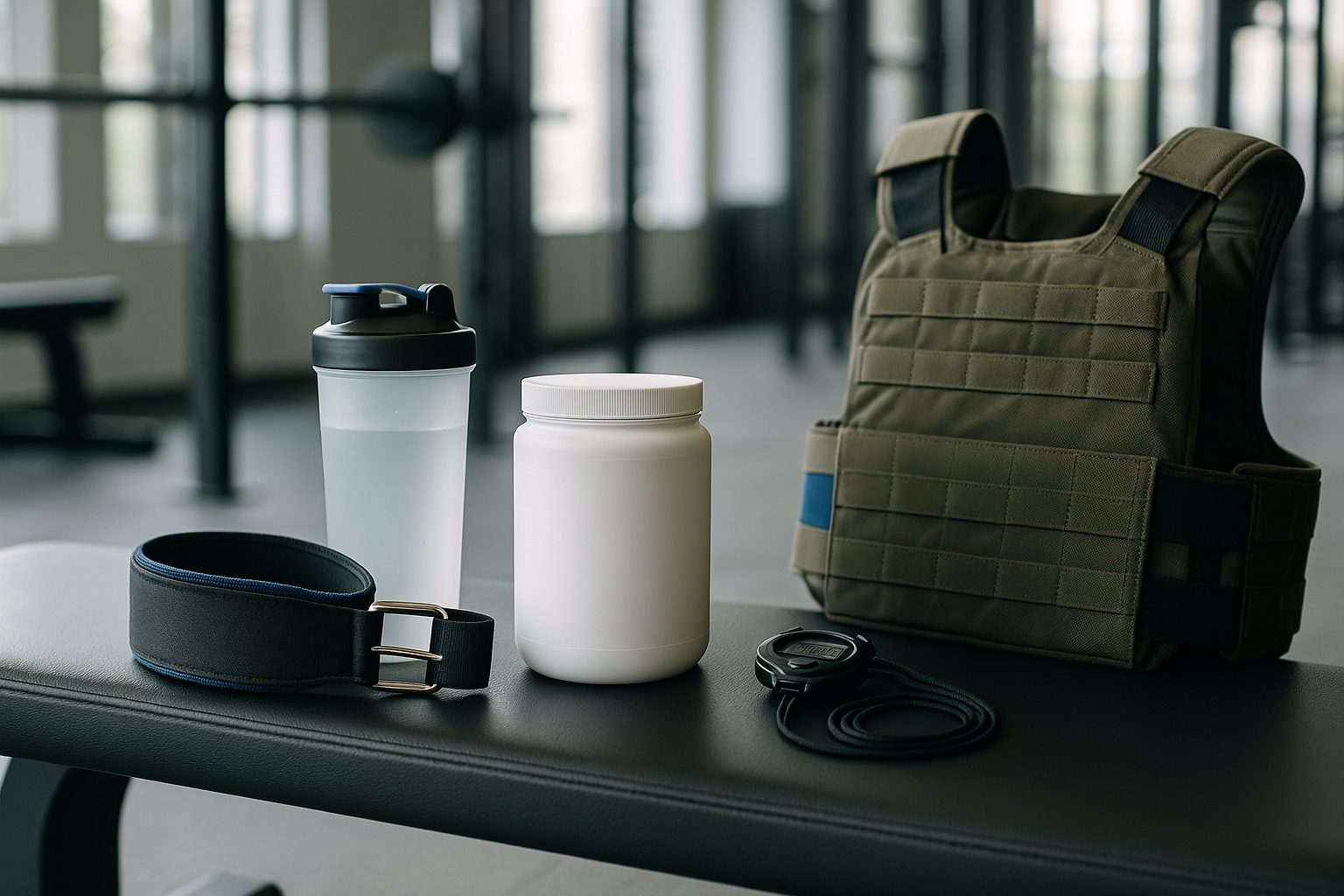
Creatine for Police Officers: Fitness Standards, Use-of-Force Training, and Recovery
By The Creatine Canada Research Team — Evidence-based supplement analysts
Yes—creatine monohydrate is a sensible, evidence-based supplement for police officers who need repeated bursts of strength, sprint ability, defensive tactics capacity, and reliable recovery. For most cops, the practical protocol is simple: take 3–5 g of creatine monohydrate every day, or load with 20 g/day split into 4 doses for 5–7 days if you need faster results.
Evidence-based · Cites 4 sources · Editorial standards
Key Takeaways
- Creatine for police officers is best used to support short, repeated high-intensity efforts, strength training, and recovery—not as a stimulant.
- The most evidence-based option is creatine monohydrate at 3–5 g daily, with an optional loading phase of 20 g/day for 5–7 days.
- Expect the first noticeable effects within 1–4 weeks depending on whether you load, with better gym performance often showing before visible body changes.
- A small increase in body mass from intracellular water is common, but that is not body fat and is often performance-positive for tactical training.
- Creatine is well supported for healthy adults, but officers with kidney disease, relevant medical conditions, or medication concerns should speak to a clinician first.
- For law enforcement and security professionals, consistency matters more than timing: take it daily, including on rest days and shift-work days.
- In Canada, choose a plain monohydrate product with an NPN and preferably third-party testing or strong quality controls.
Should police officers take creatine? Here’s the direct answer
Yes, creatine for police officers is a practical and evidence-based option when the goal is better performance in strength training, repeated sprint work, defensive tactics sessions, and recovery between hard training days. Creatine is not a stimulant, not a steroid, and not a shortcut; it is a naturally occurring compound stored in muscle that helps regenerate ATP, the cell’s immediate energy currency during short, intense efforts.
That matters in creatine law enforcement contexts because police work is physically irregular but often explosive. An officer may sit in a vehicle for long periods, then suddenly need to sprint, wrestle, drag, push, strike, or repeat high-force efforts under fatigue. Creatine is most useful when performance depends on the phosphocreatine system, which fuels high-output efforts lasting roughly a few seconds to about 30 seconds and helps recovery between repeated bouts.
The strongest evidence supports creatine monohydrate, not designer forms. The 2017 ISSN position stand concluded that creatine monohydrate is the most effective ergogenic nutritional supplement currently available for increasing high-intensity exercise capacity and lean mass during training. For police fitness, that translates best to:
- strength and power development
- repeated sprint ability
- hard circuit and HIIT sessions
- use-of-force and grappling-style training
- muscle recovery between sessions
What it will not do is replace conditioning, skill practice, sleep, protein, or sound programming. If an officer never strength trains, never practises work-capacity intervals, and is chronically sleep deprived, creatine will not rescue poor habits. It works best as a force multiplier on a solid training plan.
For most officers, the simplest protocol is 3–5 g daily, every day, mixed with water, coffee, or a protein shake. If you want a complete beginner setup, start with our creatine dosage calculator and then review best creatine rankings to compare well-vetted products.
Bottom line: creatine for cops makes the most sense for officers who lift, sprint, do tactical conditioning, or want more reliable training output from week to week.
Why creatine fits police work better than many ‘performance’ supplements
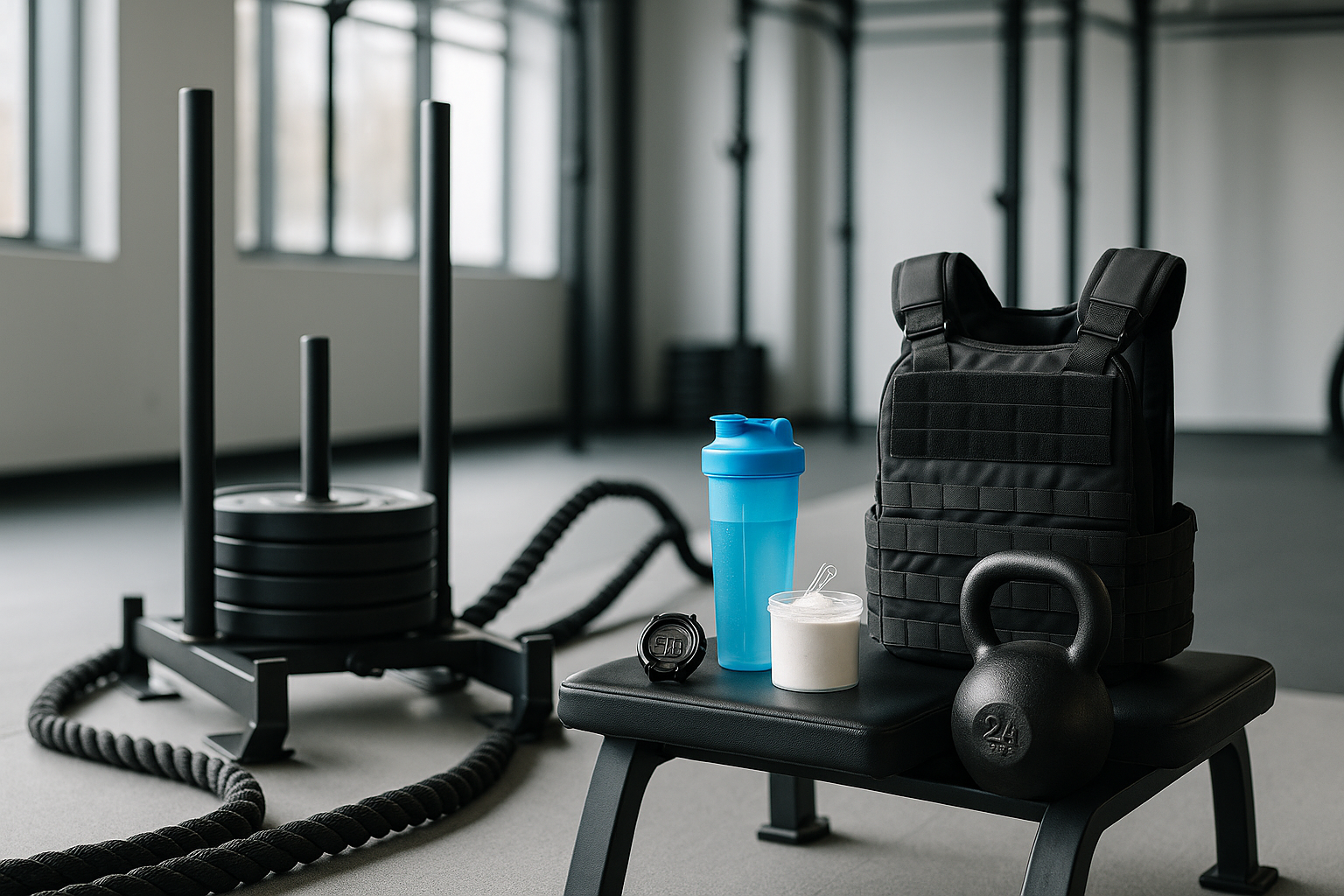
Creatine fits police and security work because the job is built around unpredictable bursts of force, not steady all-day maximal output. A police foot pursuit, fence climb, ground-control struggle, casualty drag, or rapid stair ascent is exactly the kind of high-intensity demand where higher muscle creatine stores can help.
In plain language, supplemental creatine increases intramuscular phosphocreatine. Phosphocreatine is the stored form that donates a phosphate group to help rebuild ATP rapidly during intense effort. When muscle phosphocreatine stores are higher, you can generally sustain a bit more quality work before power drops off, and recover slightly faster between repeated efforts. That is why creatine consistently shines more in sprinting, lifting, jumping, and repeated intervals than in long, slow endurance work.
For police fitness creatine use, the most relevant benefits are usually indirect. Creatine may help you:
- get an extra rep or two at a useful training load
- maintain power better across intervals or circuits
- accumulate more quality volume in a training block
- recover better between hard gym and scenario days
- support lean mass retention during calorie deficits or demanding schedules
Those small advantages add up over months. A supplement that helps you squat, press, row, sprint, drag, and grapple a little better can produce meaningful downstream effects on job readiness.
There is also growing interest in creatine’s role beyond muscle, particularly in brain energy metabolism and sleep deprivation resilience, but that area is still less settled than the performance evidence. It is reasonable for shift-working officers to be interested in cognitive support, yet the strongest case for creatine in law enforcement remains physical performance and training adaptation. If you want that broader context, see what creatine is and creatine and cognition.
According to Kreider et al. (2017), ISSN Position Stand: Safety and Efficacy of Creatine — JISSN, creatine monohydrate is both effective and well-supported for exercise performance. The International Olympic Committee consensus on dietary supplements (2018) also places creatine among the few supplements with strong evidence for performance use.
That is why creatine for tactical athletes has endured while trendier supplements come and go: the mechanism is clear, the dosing is simple, and the evidence base is unusually deep.
How creatine helps in use-of-force training, sprinting, and repeated efforts
Creatine helps police training mainly by improving performance in repeated high-intensity efforts and by supporting better training quality over time. That makes it especially relevant for use-of-force drills, obstacle work, shuttle sprints, defensive tactics circuits, and gym sessions built around strength and power.
Here is the mechanism in practical terms. During a very hard burst—such as a 10-second sprint, a takedown sequence, or a heavy set of trap-bar deadlifts—ATP is spent quickly. Your body can remake ATP using phosphocreatine faster than it can through slower aerobic pathways. By raising muscle creatine and phosphocreatine stores, supplementation gives your body a larger immediate energy reserve for those efforts.
That does not mean superhuman performance. It means a modest but useful edge where seconds, repeatability, and force matter. Research summaries, including Examine.com — Creatine evidence summary, consistently show benefits in strength, power, lean mass accrual with training, and repeated sprint performance. The practical result for an officer is often:
- less drop-off from interval 1 to interval 6
- slightly stronger sets in the gym
- better tolerance for hard circuits and conditioning blocks
- more productive weeks when training and shift stress overlap
Creatine may also help recovery from heavy eccentric work and hard training blocks, although recovery effects are less uniform than performance effects. In real life, that can still matter. An officer who recovers just enough to complete the next lifting session with quality is likely to progress faster across a 12-week academy prep or annual standards cycle.
Importantly, creatine is not an endurance-first supplement. If your primary challenge is a long submaximal run, creatine may help only indirectly by improving strength, interval quality, and training resilience. Some officers who are already very light and focused solely on run times may want to monitor whether the small water-weight increase affects their pace. For most officers, though, the trade-off is favourable because policing is not a pure endurance sport.
If you want deeper background on the energy system, our guides on creatine and ATP and the creatine phosphate system explain the physiology in more detail.
Exactly how to take creatine for police training: the step-by-step plan
The best way for police officers to take creatine is to choose creatine monohydrate, use a proven daily dose, and stay consistent for weeks rather than chasing perfect timing. If you do that, you have already handled 90% of the process correctly.
- Choose the right form. Buy plain creatine monohydrate powder unless you strongly prefer capsules. Monohydrate is the most studied and usually the best value.
- Pick your starting protocol. Use either 3–5 g/day from day one, or load with 20 g/day split into four 5 g doses for 5–7 days, then switch to 3–5 g/day.
- Take it every day. Use it on workout days, rest days, night-shift weeks, annual leave, and deloads. Creatine works by saturating muscle stores, not by creating an acute stimulant effect.
- Mix it in any practical liquid. Water is fine. Protein shakes are fine. Coffee is fine for most people. The best option is simply the one you will remember.
- Pair it with training. Officers doing resistance training 2–4 times weekly and one or two sprint/conditioning sessions usually see the clearest payoff.
- Track outcomes for 4–8 weeks. Use performance markers such as gym reps, loaded carries, shuttle intervals, or body composition—not just the scale.
A simple example for creatine police training looks like this:
- Academy prep: 5 g daily with 3 full-body lifts and 2 conditioning sessions weekly
- Active-duty maintenance: 3–5 g daily with 2–3 strength sessions and optional mobility or zone-2 work
- Fast ramp-up before testing: load for 5–7 days, then continue 5 g daily
Many officers overcomplicate timing. In reality, timing matters far less than adherence. If post-workout is convenient, use post-workout. If your routine is more stable before shift, take it before shift. If you work overnights, place it with the meal or drink you almost never miss.
For exact measuring help, use the creatine dosage calculator. If you want a full beginner protocol, see how to take creatine and creatine loading phase.
The key rule is simple: do not dry scoop it, do not skip it for days at a time, and do not expect it to work like caffeine. Think of it as daily tissue saturation, not a pre-shift jolt.
Creatine dose by body weight and goal for cops, tactical athletes, and security professionals
Most police officers do well on 3–5 g of creatine monohydrate per day, but body size and training goal can justify choosing the high or low end of that range. Larger officers, heavily muscled officers, and officers in hard training blocks often prefer 5 g/day for simplicity.
There are two defensible ways to dose:
- Standard maintenance: 3–5 g/day for nearly everyone
- Loading plus maintenance: 20 g/day split into 4 doses for 5–7 days, then 3–5 g/day
Some practitioners also use a body-weight model of roughly 0.03 g/kg/day for maintenance. That usually lands in the same real-world range as 3–5 g for most adults.
| Body weight | Maintenance dose | Optional loading phase | Best fit |
|---|---|---|---|
| 55–70 kg | 3 g/day | 20 g/day split into 4 doses for 5–7 days | Smaller-framed officers, beginners, lighter runners |
| 70–90 kg | 4–5 g/day | 20 g/day split into 4 doses for 5–7 days | Most officers and tactical trainees |
| 90 kg+ | 5 g/day | 20 g/day split into 4 doses for 5–7 days | Larger officers, strength-focused trainees |
Goal matters too. For example:
- Strength and use-of-force capacity: aim for 5 g/day
- General wellness and basic gym support: 3–5 g/day is enough
- Rapid saturation before a fitness test: use a loading phase
- If prone to stomach upset: skip loading and use 3 g/day for 3–4 weeks
For creatine for security professionals, the same dosing logic applies. The job shares many of the same demands: bursts of movement, restraint work, long shifts, and inconsistent training schedules.
Do not confuse a larger dose with a better result. Once muscle stores are saturated, more is not better. It is usually just more expensive and more likely to upset your stomach. If you want individual guidance, our how much creatine per day guide and maintenance dose guide go deeper.
Practical rule: if you are not sure, start at 5 g/day. It is simple, evidence-based, and appropriate for the majority of active police officers.
When to take it, how fast it works, and what police officers should expect week by week
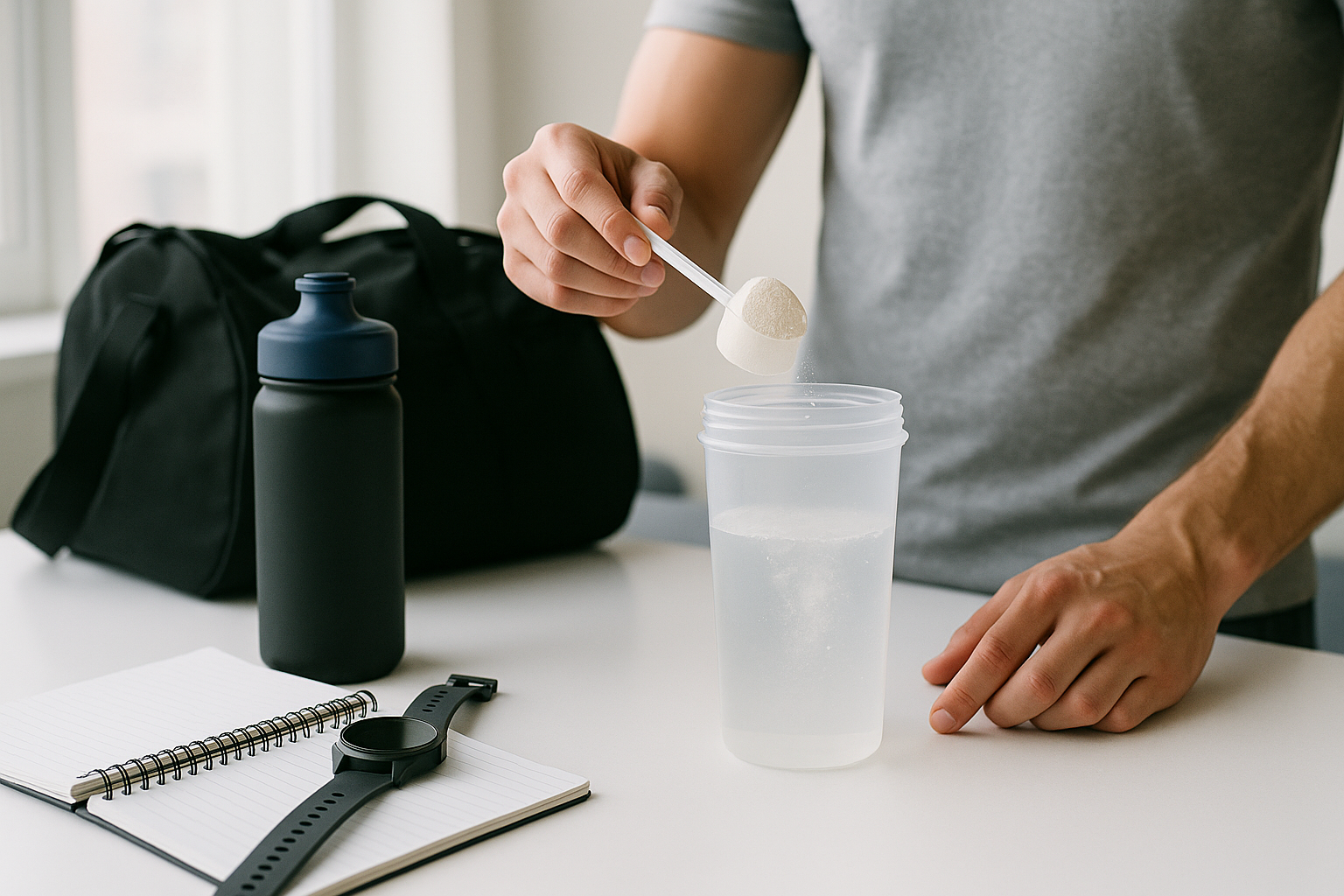
Creatine timing matters far less than daily consistency, and most police officers should expect results within about 1–4 weeks depending on whether they use a loading phase. If you load, performance benefits can appear within the first week. If you start with 3–5 g/day, full saturation usually takes closer to 3–4 weeks.
Here is the realistic timeline:
- Days 1–7 with loading: possible body mass increase from intracellular water; some people notice stronger sets or better repeat effort quickly
- Weeks 2–4 without loading: the most common point where gym performance becomes noticeably better
- Weeks 4–8: improved training quality compounds into more reps, more volume, and better recovery tolerance
- Weeks 8–12: visible body-composition changes may emerge if training and nutrition are solid
For officers, the earliest signs it is working are rarely dramatic mirror changes. More often, you will notice that:
- your last sprint is less awful than before
- sets of 5–10 stay stronger deeper into the workout
- you recover a bit better between defensive tactics rounds
- you maintain strength better during a busy work block
Should you take it before or after workouts? Either is fine. The best answer is: take creatine at the time you are least likely to forget it. For some officers that is breakfast after night shift; for others it is in a post-lift shake. If you want a deeper timing breakdown, read when to take creatine and how long creatine takes to work.
Rest days still count. Muscle saturation is maintained through regular daily intake, so skipping non-training days only makes consistency worse. That is especially important in law enforcement, where schedules can be chaotic and training frequency may vary week to week.
One final expectation check: creatine is a subtle high-value supplement, not a movie-montage transformation. If your bench, sled pushes, shuttle times, or grappling capacity improve modestly but reliably over 6–12 weeks, that is exactly how a good creatine response usually looks.
Who creatine is for in law enforcement: beginners, women, older officers, and hard-training tactical athletes
Creatine is appropriate for many healthy adults in law enforcement, including beginners, women, older officers, and hard-training tactical athletes, provided the goal is better training capacity, strength, or recovery. You do not need to be a bodybuilder to benefit.
Beginners: Creatine is often worth using from the start because beginners respond strongly to sound training, and creatine can support that adaptation. It will not replace learning movement quality, but it can support faster progress once a basic lifting routine is in place. Our creatine for beginners guide covers first steps.
Women in policing: Women do not need a special pink formula or a tiny ‘female’ dose. The same 3–5 g/day monohydrate protocol works well in most cases. Concerns about ‘bulking’ are usually misplaced; creatine does not magically create large muscle gain without training and calorie surplus. For many policewomen, the real benefits are improved training quality, strength, lean mass support, and recovery. See creatine for women for a fuller breakdown.
Older officers and masters tactical athletes: Creatine may be especially useful after 40, when maintaining strength, muscle, and recovery becomes harder. Combined with resistance training, it can help support lean mass and work capacity. That can matter for career longevity as much as appearance.
Vegetarian or low-meat eaters: These officers may respond particularly well because baseline muscle creatine stores can be lower. If you eat little red meat or fish, creatine supplementation may produce a more noticeable difference.
Officers cutting body fat: Creatine can still make sense during a cut because it may help preserve training output and lean mass. Do not panic if scale weight bumps up slightly from water; that is not fat gain.
Who may not prioritise it: If you do zero structured training and your only priority is a long-duration run, creatine may be lower yield than improving sleep, protein intake, or conditioning programming. It is still safe for many healthy adults, but the return on investment is smaller if you are not doing the kind of work creatine best supports.
For job-adjacent groups, the same logic applies to creatine for tactical athletes and creatine for security professionals: the more your job or training involves explosive repeated effort, the more relevant creatine becomes.
Safety, side effects, hydration, and the kidney question police officers always ask
Creatine monohydrate is generally considered safe for healthy adults when used at standard doses, and the biggest real-world side effects are usually mild water-weight gain and occasional stomach upset. The kidney fear is one of the most persistent creatine myths, but in healthy people standard creatine use has not been shown to harm kidney function in the evidence base reviewed by major sports-nutrition sources.
The 2021 JISSN paper on common questions and misconceptions notes that many creatine fears have been overstated, including claims that it inherently damages the kidneys or causes dehydration and cramping in healthy users. Read the source directly here: Antonio et al. (2021), Common questions and misconceptions about creatine supplementation — JISSN.
Common, usually manageable issues include:
- Water-weight gain: often noticeable in the first 1–2 weeks, especially with loading
- Stomach upset: more likely if you take too much at once
- Temporary bloated feeling: usually improved by splitting doses or using a smaller daily intake
Hydration matters for all officers, but creatine does not act like a diuretic. It shifts water into muscle cells, which is one reason body mass may rise. The answer is not to avoid creatine; it is to maintain sensible hydration habits, especially during summer patrol, range days, and tactical training blocks. If hydration is a concern, see how much water to drink with creatine and creatine and dehydration.
The kidney question needs nuance. Creatinine, a breakdown product measured on blood tests, can rise with creatine use or with higher muscle mass, and that can confuse interpretation. That does not automatically mean kidney damage. Officers with known kidney disease, a history of significant renal issues, or clinician-directed restrictions should speak to a physician before supplementing. The same applies if you take medications with potential kidney implications or have a complex medical history.
Also pause and ask a clinician first if you are pregnant, breastfeeding, managing a significant chronic illness, or taking medications where interactions need individual review. For everyone else, standard-dose creatine monohydrate has one of the better safety profiles in sports supplementation. For more detail, read is creatine safe and creatine and kidneys explained.
Common mistakes, myths, and tactical-athlete misconceptions to stop believing
The biggest mistakes with creatine for police officers are inconsistency, overbuying fancy forms, and expecting stimulant-like effects. Most disappointing outcomes come from poor use, not from creatine ‘not working.’
Here are the most common errors:
- Skipping days constantly. Creatine works through saturation, so random use weakens results.
- Buying exotic forms first. Monohydrate remains the gold standard on evidence and value.
- Taking huge doses indefinitely. More than needed does not create extra benefit once stores are full.
- Judging it only by the scale. A slight weight increase can coexist with better performance and body composition.
- Blaming creatine for poor cardio automatically. If running feels worse, consider total body mass, conditioning quality, and heat, not just the supplement.
- Stopping because of mild stomach upset. Smaller divided doses often fix the problem.
Now the myths:
Myth 1: Creatine is a steroid. False. Creatine is a naturally occurring compound involved in energy production, not an anabolic hormone or drug. If you want the full distinction, see is creatine a steroid.
Myth 2: Creatine is only for bodybuilders. False. Creatine is useful anywhere repeated high-intensity output matters, which is why creatine law enforcement interest is entirely logical.
Myth 3: Creatine dehydrates you or causes cramps. The research does not support a blanket claim that creatine inherently causes dehydration or cramping in healthy users.
Myth 4: You must cycle creatine. False for most users. Daily ongoing use is standard; cycling is not required. See do you need to cycle creatine.
Myth 5: If you do not feel a buzz, it is not working. False. Creatine is not caffeine. It quietly improves the capacity of the energy system it targets.
Officers who think creatine failed them should usually audit three things first: dose, consistency, and training quality. If those are sound and you still see little change, you may be a lower responder or already have relatively high muscle creatine stores. That is not rare, and it does not mean the supplement is dangerous or useless. For a broader myth roundup, visit creatine myths debunked.
What to buy in Canada: monohydrate vs flashy forms, labels, testing, and value
For Canadian buyers, the best creatine for police officers is usually a plain creatine monohydrate powder with transparent labelling, an NPN, and solid quality controls. You do not need a tactical-branded formula to get tactical benefits.
NPN stands for Natural Product Number, which indicates a natural health product has been licensed by Health Canada. An NPN is not a guarantee of perfection, but it is a useful legitimacy signal in the Canadian market.
| Option | Evidence strength | Typical cost value | Best for |
|---|---|---|---|
| Creatine monohydrate powder | Strongest | Usually best | Most police officers |
| Micronized monohydrate | Strong | Usually good | Those who want easier mixing |
| Capsules | Strong if monohydrate | Usually worse | Travel convenience |
| HCl / buffered / ethyl ester | Weaker or less compelling | Usually worse | Rarely necessary |
| Gummies / blends | Variable | Often poor | Convenience-first buyers |
What to look for on the label:
- creatine monohydrate as the actual ingredient
- clear serving size in grams, not vague scoop language only
- minimal extras unless you specifically want flavouring
- NPN for products sold as natural health products in Canada
- third-party testing, or at minimum transparent quality statements
For officers in drug-tested tactical teams or those who simply want extra reassurance, third-party testing can be a worthwhile filter. While ordinary patrol officers are not usually subject to sports-style anti-doping rules, contamination control still matters.
If you want help comparing options, browse creatine product catalog, creatine brand reviews, and best creatine rankings. For the broader buying framework, our guides on best type of creatine and how to choose creatine are useful next reads.
The short version is simple: buy boring, buy proven, buy correctly dosed. In creatine, boring usually wins.
Bottom line: when creatine is worth it for police officers—and when it isn’t
Creatine is worth it for police officers when the goal is better strength, repeated sprint capacity, use-of-force training output, lean mass support, and recovery from demanding training. For most healthy officers, 3–5 g of creatine monohydrate daily is the smartest starting point.
It is especially useful if you:
- lift weights 2 or more times per week
- do intervals, circuits, or defensive tactics
- want to improve academy prep or annual fitness-test readiness
- need better training consistency around shift work
- are trying to preserve muscle while cutting body fat
It may be lower priority if you:
- do no structured training at all
- care only about long slow endurance performance
- have a medical reason to avoid it unless cleared by a clinician
The strongest evidence does not support exotic proprietary ‘tactical’ formulas over standard monohydrate. Nor does it support the common fears that healthy adults must cycle creatine, that creatine is a steroid, or that it inevitably harms the kidneys. What the evidence does support is far more useful: creatine monohydrate is one of the most studied, most effective, and most cost-efficient supplements for improving high-intensity exercise performance.
For police, that matters because the job often rewards the ability to produce force quickly, repeat effort under fatigue, and recover well enough to train again. Used properly, creatine can support those qualities with very little day-to-day hassle.
If you are ready to start, use the creatine dosage calculator, compare options in our creatine product catalog, and read is creatine safe if you want a deeper safety review before your first scoop.
Final answer: creatine for police officers is a smart, evidence-based supplement for many healthy cops, tactical athletes, and security professionals—provided they choose monohydrate, dose it correctly, and combine it with serious training.
Creatine for Police Officers: The Numbers That Matter
- 3–5 g/day Standard maintenance dose — Appropriate for most healthy police officers using creatine monohydrate.
- 20 g/day Optional loading dose — Split into 4 doses for 5–7 days to saturate muscle stores faster.
- 5–7 days Fastest typical timeline — Loading can produce near-term saturation and earlier performance effects.
- 3–4 weeks Typical no-loading timeline — Daily 3–5 g use usually reaches full effect over several weeks.
Frequently Asked Questions
Is creatine good for police officers?
Yes, creatine is a good fit for many police officers because it supports strength, power, repeated sprint efforts, and recovery from hard training. It is most useful for officers who lift, do intervals, practise defensive tactics, or want better training quality around unpredictable schedules.
What type of creatine is best for cops and law enforcement?
Creatine monohydrate is the best type for cops and law enforcement because it has the strongest evidence, simplest dosing, and best cost-effectiveness. Most officers do not need HCl, buffered creatine, or tactical blends unless they strongly prefer a specific format.
How much creatine should a police officer take?
Most police officers should take 3–5 g of creatine monohydrate per day. Officers wanting faster results can use 20 g/day split into four doses for 5–7 days, then continue with 3–5 g/day as a maintenance dose.
Does creatine help with police fitness tests?
Yes, creatine can help with police fitness tests when the test includes strength, power, repeated efforts, or high-intensity intervals. It is less likely to dramatically improve a long steady run by itself, but it can still support training quality leading into test day.
Can creatine help with use-of-force training?
Yes, creatine can help with use-of-force training because those drills often involve repeated high-intensity muscular efforts. By increasing muscle phosphocreatine stores, creatine helps the body regenerate ATP faster during hard bursts and between repeated rounds.
Will creatine make police officers gain weight?
Creatine often causes a small increase in body weight, especially early on, but that is usually from water being drawn into muscle cells rather than fat gain. For most officers, that trade-off is acceptable because the same mechanism often supports better training output and muscle retention.
Is creatine safe for female police officers?
Yes, creatine is generally considered safe for healthy female police officers at standard doses, and women do not need a different form or a dramatically different protocol. The same 3–5 g/day monohydrate approach works well for most women.
Should police officers take creatine every day or only on workout days?
Police officers should take creatine every day, not only on workout days, because creatine works by saturating muscle stores over time. Skipping rest days makes supplementation less consistent and can reduce how reliably it supports performance.
Does creatine affect kidney health in police officers?
In healthy police officers using standard doses, creatine has not been shown to damage kidney function in the mainstream evidence base. Officers with kidney disease, known renal issues, or relevant medication concerns should still speak with a clinician before starting.
Is creatine allowed for police, corrections, and security professionals?
Yes, creatine is generally allowed for police, corrections, and security professionals because it is a legal dietary supplement and not a banned anabolic drug. Agency-specific wellness policies can differ, so officers should still check internal rules if their unit has special supplement guidance.