
Creatine and Vitamin C: Does Ascorbic Acid Block Absorption?
By The Creatine Canada Research Team — Evidence-based supplement analysts
No, vitamin C does not block creatine absorption, and most people can take creatine and vitamin C together without any meaningful problem. The bigger practical issue is not absorption but leaving creatine sitting for long periods in a very acidic drink, because creatine can slowly degrade to creatinine in solution over time rather than instantly becoming ineffective.
Evidence-based · Cites 4 sources · Editorial standards
Key Takeaways
- Creatine monohydrate and vitamin C can be taken together safely for most healthy adults.
- Vitamin C does not meaningfully cancel out creatine absorption in the body.
- The main caution is storage: do not pre-mix creatine in acidic juice for many hours or days.
- If you mix creatine with orange juice, drink it soon after mixing rather than letting it sit.
- The dose that matters most is still 3 to 5 g of creatine monohydrate per day.
- Loading, if you choose it, is about 20 g/day split into 4 doses for 5 to 7 days.
- For Canadian buyers, plain creatine monohydrate with an NPN and quality testing is still the smartest choice.
Creatine and vitamin C: the direct answer most people need
Yes, creatine and vitamin C can be taken together, and current evidence does not show that vitamin C meaningfully blocks creatine absorption in humans. If your goal is better strength, power, training volume, or lean mass support, the decision that matters most is using a proven dose of creatine consistently, not avoiding ascorbic acid.
Here is the simple version. Creatine is absorbed from the intestine into the bloodstream, then transported into muscle by specific transporters. Vitamin C, also called ascorbic acid, does not appear to shut down that process in any meaningful real-world way. The common online claim that vitamin C “destroys” creatine is an exaggeration based on confusion about acidity, storage time, and creatine stability in liquid.
The practical concern is this: creatine can slowly convert to creatinine, a breakdown product, when it sits dissolved in liquid for long periods, and that process tends to be faster in more acidic conditions. Orange juice and many vitamin C drinks are acidic. That does not mean a scoop of creatine mixed into juice and consumed right away is useless. It means that mixing it and drinking it soon is smarter than letting it sit all day in a shaker bottle or pre-batching several servings.
For most people, the best protocol is still:
- 3 to 5 g/day of creatine monohydrate
- Take it daily, including rest days
- Mix with water, juice, or a shake you will drink promptly
- Use consistency for several weeks rather than obsessing over perfect timing
The broader creatine evidence base is strong. The 2017 ISSN position stand concluded that creatine monohydrate is the most effective ergogenic nutritional supplement currently available for increasing high-intensity exercise capacity and lean body mass during training. The 2021 JISSN review on common creatine questions also reinforced creatine’s safety and clarified several persistent myths.
If you are new to supplementation, start with plain monohydrate and ignore complicated stacks. Our creatine dosage calculator and guide on creatine product catalog can help you choose a simple daily routine that works.
Why people think vitamin C blocks creatine, and where that myth comes from
The idea that vitamin C blocks creatine mostly comes from a misunderstanding of acidic drinks, not from strong evidence of a true nutrient interaction. In other words, people are usually mixing up absorption inside your body with stability of creatine after it has been dissolved in an acidic liquid.
Creatine powder in a dry tub is quite stable when stored properly. Once you dissolve creatine in liquid, especially an acidic liquid, some of it can gradually break down into creatinine over time. Orange juice, lemon water, vitamin C powders, and many flavoured drinks all have lower pH than plain water. That chemistry has led to a simplified internet myth: “vitamin C ruins creatine.” That statement is too broad to be useful.
What is more accurate?
- Vitamin C does not appear to block intestinal creatine absorption in any important way.
- Acidic liquids can reduce stability if creatine sits dissolved for long periods.
- Freshly mixed creatine in juice is generally fine.
- Pre-mixing and storing it for many hours is the avoidable mistake.
This distinction matters because creatine works by raising muscle phosphocreatine stores over time. Phosphocreatine is the stored high-energy form that helps regenerate ATP, your cells’ immediate energy currency, during short, hard efforts like sprinting or heavy sets. That effect depends on repeatedly getting enough creatine into your system over days and weeks, not on one “perfect” mixing trick.
Another reason the myth persists is that people often hear “acid degrades creatine” and assume any exposure to acid makes it instantly ineffective. That is not how it works. Degradation is not an on-off switch. It is a time-dependent process. The longer creatine stays dissolved in an acidic solution, the more opportunity there is for gradual conversion to creatinine.
If you want the lowest-friction approach, just mix your creatine into water or a protein shake and drink it. If you prefer juice, that is fine too. The important habits are daily use, enough total dose, and not leaving it mixed for ages. For a deeper myth breakdown, see creatine myths debunked and our guide to how to mix creatine.
The science: absorption, ascorbic acid, and what actually happens in the gut and shaker bottle
Creatine absorption and creatine stability are different issues, and separating them explains nearly the whole creatine vitamin C question. Absorption is what happens after you swallow creatine; stability is what happens to the powder after it has been mixed into liquid and left there.
After you drink creatine monohydrate, it is absorbed through the gastrointestinal tract and enters circulation. From there, tissues such as skeletal muscle take it up through creatine transporters. Inside muscle, some of that creatine is stored as phosphocreatine, which helps rapidly regenerate ATP during intense exercise. That is why creatine is most useful for repeated bursts of high effort, strength work, power sports, sprinting, and hard interval training.
Vitamin C does not have a known, established mechanism that meaningfully blocks that transporter-driven process in healthy people taking normal supplement doses. The evidence base around creatine is extensive, and no major sports nutrition guideline identifies vitamin C as a practical absorption problem.
Where acidity matters is in the glass, not mainly in the gut. Ascorbic acid lowers pH. Lower pH can make dissolved creatine less stable over time, encouraging gradual conversion to creatinine. But two points keep this in perspective:
- Your stomach is already highly acidic, and creatine is still an effective supplement in real-world use.
- The key variable is time in solution, especially before consumption, not simply the presence of vitamin C itself.
That is why “creatine with orange juice vitamin C” is not automatically a bad idea. If you stir 3 to 5 g into a small glass of orange juice and drink it right away, the practical downside is likely minimal. If you mix a full day’s worth into a citrus drink in the morning and sip it all afternoon, that is less ideal.
The best-supported form remains plain monohydrate. The ISSN position stand and later reviews continue to treat creatine monohydrate as the benchmark for effectiveness, safety, and cost-effectiveness. Fancy buffered or “pH-protected” products are rarely necessary for normal users.
If you want a broader primer on how creatine works at the cellular level, see what is creatine and our guide to how to maximize creatine absorption.
Can you mix creatine with orange juice or a vitamin C drink? Yes, with one practical rule

Yes, you can mix creatine with orange juice or a vitamin C drink, but drink it soon after mixing rather than letting it sit. That single habit resolves most of the real-world concern about creatine and ascorbic acid.
Many people like juice because it improves taste and makes gritty unflavoured creatine easier to get down. There is nothing inherently wrong with that. In fact, taking creatine in any beverage you reliably finish can be better than overcomplicating things and missing doses.
Use this simple rule set:
- Good: Mix one serving, stir or shake, drink within minutes.
- Still fine: Mix it into a shake you drink during the meal or workout window.
- Less ideal: Let it sit in a citrus drink for several hours.
- Avoid: Pre-mixing for the next day or making large acidic batches for repeated sipping.
For people searching “does vitamin c block creatine” because they use orange juice, the answer is still no in the way most mean it. The juice does not magically stop creatine from working. The bigger risk is simply giving dissolved creatine too much time in an acidic environment before you consume it.
There is also no requirement to take creatine with sugar or juice. Some older advice suggested carbohydrate or carb-plus-protein combinations could modestly support uptake by increasing insulin, but for most users the practical difference is small compared with the effect of taking enough creatine daily. A person who drinks 5 g of creatine monohydrate in water every day will generally outperform a person who owns a “perfect stack” but forgets it three times a week.
If orange juice upsets your stomach, switch to water, milk, or a protein shake. If you dislike gritty texture, warm water can improve solubility slightly, though any normal mixing method works. For more options, see creatine with juice, creatine with or without food, and how to take creatine.
Exactly how to take creatine and vitamin C together without overthinking it
The easiest way to take creatine and vitamin C together is to keep creatine simple: use a proven daily dose, mix one serving at a time, and drink it promptly. You do not need a special stack, cycling protocol, or complicated timing window to make creatine work.
- Choose creatine monohydrate. It is the most studied form and usually the best value. If you are still comparing options, start with our best creatine rankings or browse creatine brand reviews.
- Use 3 to 5 g per day. This is the standard maintenance dose for most adults.
- Optional loading: If you want faster saturation, take about 20 g/day split into 4 doses for 5 to 7 days, then return to 3 to 5 g/day. You can also skip loading and simply reach full saturation more gradually over several weeks.
- Take vitamin C whenever you normally would. With breakfast, with lunch, or in a multivitamin is fine.
- If combining them in one drink, consume soon after mixing. This matters more with acidic beverages such as orange juice or vitamin C powders.
- Repeat daily. Creatine works by saturating muscle stores over time, so consistency beats timing perfection.
Here are beginner-friendly examples:
- Morning routine: 5 g creatine in water with breakfast, vitamin C from fruit or a supplement.
- Workout routine: 5 g creatine in your post-workout shake, vitamin C later with a meal.
- Combined routine: 5 g creatine stirred into orange juice and consumed right away.
What should you expect?
- Days 1 to 7 with loading: faster scale-weight increase from intracellular water and earlier training benefits.
- Weeks 2 to 4 without loading: gradual saturation and more noticeable improvements in repeated efforts, strength progression, or training volume.
- After several weeks: better capacity to maintain output across sets, sprints, or intervals if training and nutrition are in place.
If you want more precision, use our creatine dosage calculator and the guides on creatine loading phase and how long creatine takes to work.
Dosing by body weight and goal: what changes, what does not, and what to expect
The correct dose of creatine does not change because you also take vitamin C. For most people, 3 to 5 g/day of creatine monohydrate is enough, while loading is optional if you want faster saturation.
| Goal | Creatine dose | Vitamin C concern? | Best practical advice |
|---|---|---|---|
| General fitness / beginner | 3-5 g daily | No meaningful interaction | Take daily in water or any drink you finish promptly |
| Faster saturation | 20 g/day split into 4 doses for 5-7 days, then 3-5 g daily | No meaningful interaction | Split doses to reduce stomach upset |
| Strength / power athlete | 5 g daily is common | No meaningful interaction | Prioritize consistency more than timing |
| Older adult | 3-5 g daily | No meaningful interaction | Take with a meal or shake if that improves adherence |
| Smaller body size / sensitive stomach | Start at 3 g daily | No meaningful interaction | Increase only if desired and well tolerated |
Body weight matters more for loading than for maintenance. A larger athlete may choose the classic loading method to fill muscle stores faster, while a smaller or more stomach-sensitive person may simply use 3 g/day and be patient. In practice, maintenance dosing works for most adults regardless of sex, and women do not need a separate “female dose” just because of gender.
What changes by goal is not usually the dose but your expectations:
- Strength and power: expect better repeated high-intensity output over time.
- Muscle gain: expect some early scale increase from water in muscle, with lean mass support over longer training blocks.
- Older adults: creatine is often most useful when paired with resistance training.
- Vegetarians and vegans: some may notice a stronger response because baseline creatine intake from food is lower.
If you are wondering whether vitamin C alters any of that, the answer is no in a meaningful practical sense. Your main variables are daily dose, adherence, training quality, and enough total protein and calories for your goal.
For deeper dosing help, see how much creatine per day, creatine maintenance dose, and creatine for beginners.
Best timing, rest days, and the week-by-week results you should realistically expect
The best time to take creatine with or without vitamin C is the time you will remember every day. Daily consistency is more important than whether you take it pre-workout, post-workout, morning, or evening.
Creatine is not a stimulant. You do not feel it acutely the way you might feel caffeine. It works by gradually increasing intramuscular creatine and phosphocreatine stores until your muscles are more saturated. Once saturated, you may notice better performance in repeated bursts of effort, improved training volume, and over time better support for strength and lean mass gains.
A realistic timeline looks like this:
- With loading: muscle saturation increases faster, often within 5 to 7 days.
- Without loading: meaningful saturation usually takes longer, often around 3 to 4 weeks of daily use.
- First month: some people notice stronger final reps, better repeated sprint output, or less drop-off from set to set.
- Longer term: the bigger payoff is better training quality over months, not a dramatic one-day feeling.
On rest days, keep taking it. Missing occasional days is not catastrophic, but regular daily use is how you maintain saturation. If you are also taking vitamin C, there is no special timing separation required. You can take them together, or separately if that fits your routine better.
Good timing options include:
- With breakfast: easiest for people who want a fixed routine.
- Post-workout: convenient if you already use a shake.
- With a meal: may help if creatine on an empty stomach bothers you.
- Before training: also fine if that is the habit you will stick to.
If you are searching “creatine vitamin c absorption” because you worry timing must be exact, the evidence says not to overcomplicate it. The supplement works through cumulative storage, so consistency over weeks matters far more than the exact minute you took it.
For deeper timing guidance, read when to take creatine, creatine on rest days, and how long does creatine take to work.
Who this applies to: beginners, women, older adults, and competitive athletes
The advice to take creatine and vitamin C together applies to nearly all typical creatine users, including beginners, women, older adults, and athletes. The main exception is not the vitamin C combination itself but whether the person has a medical reason to be cautious with supplements in general.
Beginners should keep things especially simple. Start with 3 to 5 g/day of creatine monohydrate, take it every day, and avoid chasing complicated “absorption hacks.” Beginners often get the best results by pairing creatine with a basic strength program and enough dietary protein.
Women can use the same evidence-based dosing as men. There is no good reason to think vitamin C creates a special creatine issue for women. Many women benefit from creatine for strength, training performance, and support for lean mass, and the common fear of “bulking overnight” is misplaced. The early weight increase some notice is usually water pulled into muscle, not fat gain.
Older adults may find creatine especially valuable when combined with resistance training, since maintaining muscle and function becomes more important with age. A modest, repeatable habit like 3 g/day with breakfast is often easier to sustain than a more aggressive loading plan.
Competitive athletes should focus on product quality as much as dosing. In Canada, look for a Natural Product Number, or NPN, on regulated products and prefer third-party tested options when contamination risk matters. For tested sport, certifications such as NSF Certified for Sport or Informed Sport can be useful depending on the brand. You can compare options in our best creatine rankings and creatine brand reviews.
Vegetarians and vegans may respond particularly well because dietary creatine intake is usually lower when you eat little or no meat. Taking creatine with vitamin C does not change that basic physiology.
The bottom line across groups is consistent: use monohydrate, dose it correctly, drink mixed servings promptly, and choose a product you trust. If you want population-specific guidance, see creatine for women, creatine for older adults, and creatine for competitive athletes.
Safety, side effects, and what Canadian buyers should look for on the label
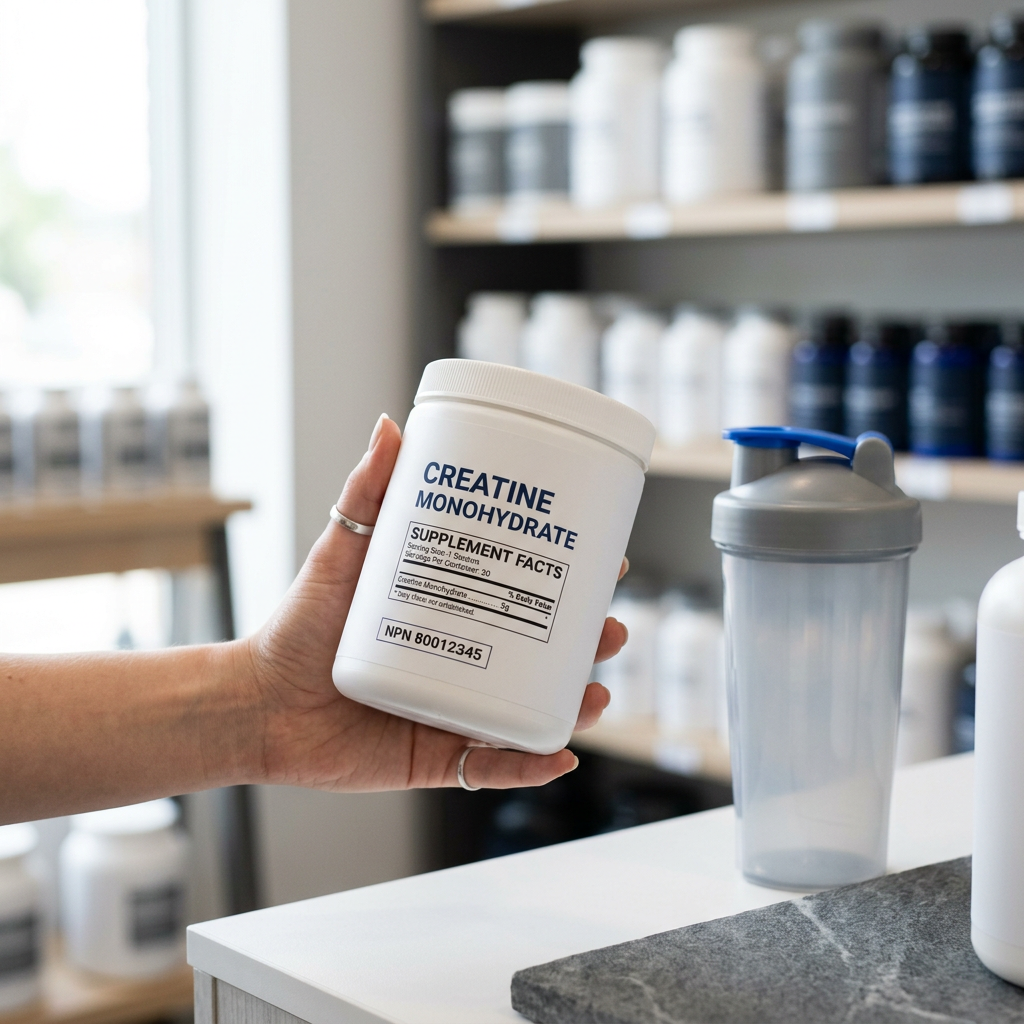
Creatine and vitamin C are generally safe to take together for healthy adults, and the usual side effects to watch are the standard creatine ones, not a special creatine-vitamin C interaction. The best-established side effects of creatine are mild gastrointestinal upset in some people and a small increase in body mass from increased water stored in muscle, especially during loading.
The 2021 JISSN review and Mayo Clinic’s creatine overview both support the general safety profile of creatine when used appropriately. That does not mean every person should supplement without thought. If you have kidney disease, are pregnant or breastfeeding, or take medications that affect kidney function, speak with a qualified clinician before starting.
To reduce side effects:
- Use 3 to 5 g/day instead of unnecessary mega-doses.
- Split loading doses into 4 smaller servings if you choose to load.
- Take with food if creatine on an empty stomach bothers you.
- Stay normally hydrated; you do not need absurd amounts of water, just sensible intake.
For Canadians, label quality matters. Look for:
- Creatine monohydrate as the ingredient
- NPN, which is the Natural Product Number used on Health Canada-regulated natural health products
- Third-party testing or sport certifications where relevant
- Simple formulas without unnecessary proprietary blends
Do not pay a premium for marketing language suggesting vitamin C-enhanced uptake, pH-protected miracles, or “advanced transport systems” unless the product offers genuine quality advantages. Plain monohydrate remains the standard because its evidence is stronger than the claims made for many novelty forms.
If you want help choosing wisely, browse our creatine product catalog, best creatine rankings, and guide to is creatine approved in Canada.
Common mistakes and myths: what actually ruins results, and what definitely does not
Vitamin C is not the thing ruining most people’s creatine results. The mistakes that actually matter are inconsistent dosing, underdosing, poor product choice, and expecting an instant stimulant-like effect from a supplement that works through saturation.
Here are the big myths and the reality behind them:
- Myth: Vitamin C blocks creatine absorption.
Reality: There is no strong evidence that normal vitamin C intake meaningfully blocks creatine absorption in humans. - Myth: Orange juice makes creatine useless.
Reality: Freshly mixed creatine in orange juice is generally fine; the issue is letting it sit too long in an acidic liquid. - Myth: You must take creatine with sugar for it to work.
Reality: Daily creatine monohydrate works well without special carb loading in most real-world users. - Myth: If you do not feel anything on day one, creatine is not working.
Reality: Creatine is usually a cumulative supplement, not an immediate sensation. - Myth: More is better.
Reality: Taking far more than needed mostly increases the chance of stomach upset, not benefits. - Myth: Fancy forms beat monohydrate.
Reality: Monohydrate remains the most studied and most cost-effective option.
The most common real-world errors are simple:
- Skipping days repeatedly
- Taking vague scoop sizes instead of measured grams
- Buying flashy blends instead of plain monohydrate
- Blaming creatine when sleep, calories, protein, or training quality are the real bottlenecks
- Leaving creatine dissolved in acidic drinks for too long
If your current plan is “5 g creatine in a drink I finish right away, every day,” you are already doing almost everything right. If your plan is “random scoops, irregular use, and a fear that my breakfast orange juice cancels everything,” you are worrying about the wrong variable.
For more troubleshooting, see creatine not working, common creatine mistakes, and creatine myths vs. facts.
Bottom line: should you take creatine and vitamin C together?
Yes, you can take creatine and vitamin C together, and for most people vitamin C does not block creatine absorption. If you remember only one nuance, remember this: creatine is fine with vitamin C, but do not leave it sitting for a long time in a highly acidic drink before you consume it.
The highest-value protocol is still remarkably boring:
- Buy plain creatine monohydrate
- Take 3 to 5 g every day
- Optional loading: 20 g/day split into 4 doses for 5 to 7 days
- Mix with water, juice, or a shake you will drink promptly
- Stay consistent for weeks, not just days
If you like taking it with orange juice, do it. If you prefer water, do that. If you take a multivitamin or separate vitamin C tablet, there is no need to create a special gap just because of creatine. The performance outcome depends far more on total creatine intake, muscle saturation, training quality, and time than on minor beverage details.
For most healthy adults, the smartest buying and usage strategy in Canada is a regulated, clearly labelled creatine monohydrate product with an NPN and good quality controls. Anything sold as a special vitamin C-creatine breakthrough deserves scepticism unless it can outperform plain monohydrate with real evidence.
If you want to start today, keep it simple: pick a monohydrate product, measure your dose, choose a routine you can repeat daily, and stop worrying that ascorbic acid is sabotaging your progress. It almost certainly is not.
Next reads: how much creatine per day, when to take creatine, is creatine safe, and the complete creatine guide.
Creatine and Vitamin C: The Practical Numbers That Matter
- 3-5 g/day Standard daily creatine dose — Works for most adults regardless of whether vitamin C is taken.
- 20 g/day Typical loading dose — Usually split into 4 doses for 5-7 days if faster saturation is desired.
- 5-7 days Approximate loading timeline — A loading phase fills muscle stores faster than maintenance-only dosing.
- 3-4 weeks Typical no-loading saturation window — Daily creatine still works without loading; it just takes longer.
Frequently Asked Questions
Can creatine and vitamin C be taken together?
Yes, creatine and vitamin C can be taken together by most healthy adults. There is no strong evidence that normal vitamin C intake meaningfully blocks creatine absorption, so the more important issue is simply taking a proven creatine dose consistently and not leaving it mixed in an acidic drink for long periods before drinking it.
Does vitamin C block creatine absorption?
No, vitamin C does not appear to meaningfully block creatine absorption in real-world human use. The common confusion comes from the fact that acidic drinks can reduce creatine stability over time once it is dissolved, but that is different from saying vitamin C prevents your body from absorbing creatine.
Is ascorbic acid bad for creatine?
Ascorbic acid is not inherently bad for creatine when you consume the drink soon after mixing. The practical concern is that acidic conditions can gradually increase creatine breakdown in solution over time, so pre-mixing creatine into a vitamin C drink and letting it sit for hours is less ideal than drinking it promptly.
Can I take creatine with orange juice and vitamin C?
Yes, you can take creatine with orange juice and vitamin C, and many people do. The best practice is to mix a single serving and drink it right away rather than storing it in the juice for a long time, because acidity affects stability over time more than immediate effectiveness.
Should I separate my creatine and vitamin C doses?
No, most people do not need to separate creatine and vitamin C doses. If separating them makes your routine easier on the stomach or simpler to remember, that is fine, but there is no established need for a timing gap just to protect creatine absorption.
What is the best drink to take creatine with if I also use vitamin C?
The best drink is the one you will reliably finish soon after mixing, such as water, a protein shake, or juice. If you use a vitamin C-rich or acidic drink like orange juice, just avoid letting the creatine sit in it for many hours before consumption.
Does vitamin C make creatine work better?
No, vitamin C is not known to significantly enhance creatine’s core performance effects. Creatine works by increasing muscle creatine and phosphocreatine stores over time, while vitamin C has different biological roles, so any major claim that vitamin C dramatically boosts creatine uptake should be viewed cautiously.
Can I put creatine in a morning smoothie that contains fruit high in vitamin C?
Yes, you can put creatine in a smoothie containing fruit high in vitamin C. Smoothies are a practical option as long as you drink them within a normal timeframe after blending instead of storing them all day, especially if the smoothie is acidic from citrus or berries.
If I already take a vitamin C supplement, do I need a different creatine dose?
No, taking a vitamin C supplement does not usually require changing your creatine dose. Most people still do well with 3 to 5 g/day of creatine monohydrate, with loading remaining optional if they want faster saturation.
What actually reduces creatine effectiveness the most?
The biggest factors that reduce creatine effectiveness are inconsistent daily use, taking too little, poor adherence over weeks, and unrealistic expectations about instant effects. For people worried about vitamin C, the more relevant mistake is letting creatine sit dissolved in an acidic drink for too long before drinking it.