Creatine and Insomnia: Does It Affect Your Sleep?
By The Creatine Canada Research Team — Evidence-based supplement analysts
Creatine does not appear to cause insomnia in most people, and it does not work like a stimulant. If you notice sleep problems after starting creatine, the cause is usually timing of a caffeinated pre-workout, GI discomfort, dehydration, late-night training, or individual sensitivity rather than creatine monohydrate itself.
Evidence-based · Cites 4 sources · Editorial standards
Key Takeaways
- Creatine is not caffeine and has no known stimulant mechanism that should directly keep most people awake.
- The best-supported dose is 3 to 5 g of creatine monohydrate daily; loading is optional, not required.
- If creatine seems to affect your sleep, first change the timing, check your pre-workout ingredients, and reduce any large single dose.
- Taking creatine before bed is usually fine, but people with sensitive stomachs often do better taking it earlier with a meal.
- Some research suggests creatine may help performance and cognitive resilience when sleep is poor, but that is not the same as improving insomnia.
- Persistent insomnia, loud snoring, gasping, anxiety, or daytime sleepiness deserve medical assessment rather than more supplement experimentation.
Does creatine cause insomnia? The short answer is usually no
Creatine does not appear to cause insomnia in most users, and there is no established evidence that creatine monohydrate acts as a stimulant. That direct answer matters because many people search creatine and insomnia, does creatine cause insomnia, or creatine keep you awake after starting a new supplement and noticing poor sleep, but correlation is not the same as causation.
Creatine is a naturally occurring compound stored mostly in muscle as phosphocreatine, which is the rapid-energy reserve that helps regenerate ATP, the cell’s immediate energy currency, during short, intense effort. That mechanism supports training performance; it does not resemble caffeine’s action on adenosine receptors in the brain. In plain English, creatine helps your muscles recycle energy faster, while caffeine directly changes how alert your brain feels. Those are very different pathways.
The broad consensus from major evidence reviews is that creatine monohydrate is the most studied form, is effective for high-intensity performance, and is generally well tolerated when used at standard doses. The 2017 ISSN position stand and the 2021 JISSN review both reinforce that creatine has a strong safety and efficacy profile for healthy people when used appropriately. If you want the primary literature summaries, see Kreider et al. (2017), ISSN Position Stand and Antonio et al. (2021) on common creatine questions and misconceptions.
So why do some people report creatine sleep problems or creatine poor sleep? The most common explanations are:
- They started creatine inside a pre-workout that also contains caffeine or other stimulants.
- They took a large dose late at night and got stomach discomfort.
- They trained late and blamed the supplement instead of the workout timing.
- They changed hydration, food intake, or bedtime habits at the same time.
- They are attributing normal short-term sleep fluctuation to the newest thing they added.
If your only concern is whether creatine monohydrate itself should keep you awake, the evidence-based answer is no, not for most people. For a broader overview of rest and recovery, see our guide to creatine and sleep. If your question is specifically about bedtime use, go to can you take creatine before bed?
Why creatine is not a stimulant, and why that matters for sleep
Creatine should not be confused with stimulants because it does not directly increase wakefulness through the same brain pathways as caffeine, nicotine, or many pre-workout ingredients. That is the key scientific point behind the question does creatine keep you awake.
Creatine’s primary role is to increase intramuscular phosphocreatine stores. Phosphocreatine donates a phosphate group to help rebuild ATP during repeated bursts of high output such as lifting, sprinting, jumping, and hard intervals. Over time, better phosphocreatine availability can help you perform a little more work, recover better between hard efforts, and train at a higher quality. Those training effects can improve results, but they do not equal central nervous system stimulation.
Caffeine works differently. Caffeine blocks adenosine receptors, which reduces the sensation of sleep pressure and can delay sleep onset, reduce total sleep time, and make sleep feel lighter, especially if taken later in the day. Creatine has no comparable, well-established adenosine-blocking effect in typical sports-supplement use. That is why a scoop of plain creatine monohydrate is not physiologically the same as a cup of coffee or a stimulant-heavy pre-workout.
Where confusion starts is the product format. Many gym-goers do not take standalone creatine; they take all-in-one performance products. If your tub says pre-workout, energy, pump-plus-focus, thermogenic, or fat burner, creatine may be present, but caffeine is often the real sleep disruptor. This is especially relevant if your sleep worsened only on training days or only when you use a certain flavoured product.
Another subtle point is behavioural, not biochemical. Creatine can improve training capacity, and harder evening sessions can leave some people more alert at night. In that situation, creatine did not directly cause insomnia; it indirectly supported a workout that was stimulating close to bedtime. That distinction matters because the fix is usually to move training earlier or reduce evening intensity, not to stop creatine entirely.
If you are new to supplementation and want a clear primer on what creatine actually is, start with what is creatine and what does it do?. If you are using a blended supplement, compare the label against standalone products in our creatine product catalog or creatine brand reviews so you know what you are really taking.
What studies actually say about creatine and sleep quality
The current evidence does not show that creatine reliably causes poor sleep in healthy users, but creatine is also not an established treatment for insomnia. That balanced answer is the most accurate way to frame the literature in 2026.
Most creatine research has focused on muscle performance, power, lean mass, recovery, and in some cases cognition, not insomnia outcomes. Because of that, there is less direct trial evidence on sleep quality and sleep duration than people expect. When sleep is reported, the signal is not that creatine consistently worsens sleep. Instead, the literature is largely neutral on sleep quality in standard users, with a separate line of research looking at how creatine may help the brain and body cope better when sleep is restricted.
That distinction is important. Saying creatine may support performance or cognitive resilience during sleep deprivation is not the same as saying creatine improves chronic insomnia, shortens sleep latency, or treats sleep maintenance problems. It means some studies suggest creatine may be useful when people are under sleep stress, such as military settings, athletes, or acute sleep loss models, because cellular energy availability in the brain may matter more when people are underslept.
For evidence summaries that track the broader literature, Examine.com’s creatine evidence summary and the ISSN/JISSN reviews are useful starting points. The practical read-through is simple:
- There is no strong evidence that plain creatine monohydrate commonly causes insomnia.
- There is no strong evidence that plain creatine monohydrate is a primary insomnia treatment.
- There is some interesting research on sleep-deprivation resilience, especially for cognition and performance under acute sleep loss.
- Individual anecdotes exist, but anecdotes are weak evidence when many variables change at once.
If your goal is better sleep itself, you should prioritise the major drivers first: consistent bed and wake times, afternoon caffeine cut-off, cool dark room, alcohol reduction, late-meal management, and screening for sleep apnoea if symptoms fit. Creatine belongs in a performance and recovery plan; it is not a substitute for sleep medicine. For the specific angle of coping with lost sleep rather than treating insomnia, see our guide on creatine and sleep-deprivation benefits.
Why some people blame creatine for sleep problems even when creatine is not the culprit
When people say creatine caused insomnia, the more common reality is that something else changed at the same time. Troubleshooting the full context usually explains the problem better than blaming creatine monohydrate alone.
The biggest confounder is stimulant contamination by context, not by product impurity. Many people start creatine by buying a pre-workout or a post-workout blend instead of plain monohydrate. If that product contains caffeine, yohimbine, green tea extract, synephrine, or large amounts of sugar late at night, your sleep problem is probably not from the creatine itself. This is the first thing to check if you searched creatine sleep problems after beginning a new tub.
The second issue is dose size and stomach comfort. A large single dose, especially during a loading phase, can cause bloating, cramping, or loose stools in some users. Going to bed with GI discomfort can absolutely make sleep feel worse. Again, that is a side-effect management issue, not a stimulant effect. Splitting doses or switching to a smaller once-daily maintenance intake often fixes it. If GI issues are your main problem, read creatine digestive side effects explained.
The third issue is late-night training. A hard evening workout raises body temperature, adrenaline, heart rate, and mental activation. If creatine helps you train harder, you may feel more “amped” after the workout, but the driver is likely exercise timing rather than the supplement itself.
The fourth issue is expectation bias. Once people hear a supplement might cause poor sleep, they start monitoring every wake-up. That does not mean symptoms are imagined; it means the brain is very good at linking new sensations to the newest variable. The right approach is to test one change at a time rather than guess.
Finally, hydration changes can matter at the margins. Creatine does not dehydrate you in the way the old gym myth claimed, but if you suddenly drink a litre of water right before bed because you were told to “drink tons,” waking to urinate may fragment sleep. A better strategy is steady daytime fluid intake rather than chugging late.
For more myth-busting context, see creatine myths debunked and creatine myths vs. facts.
If creatine seems to affect your sleep, use this 7-step troubleshooting plan
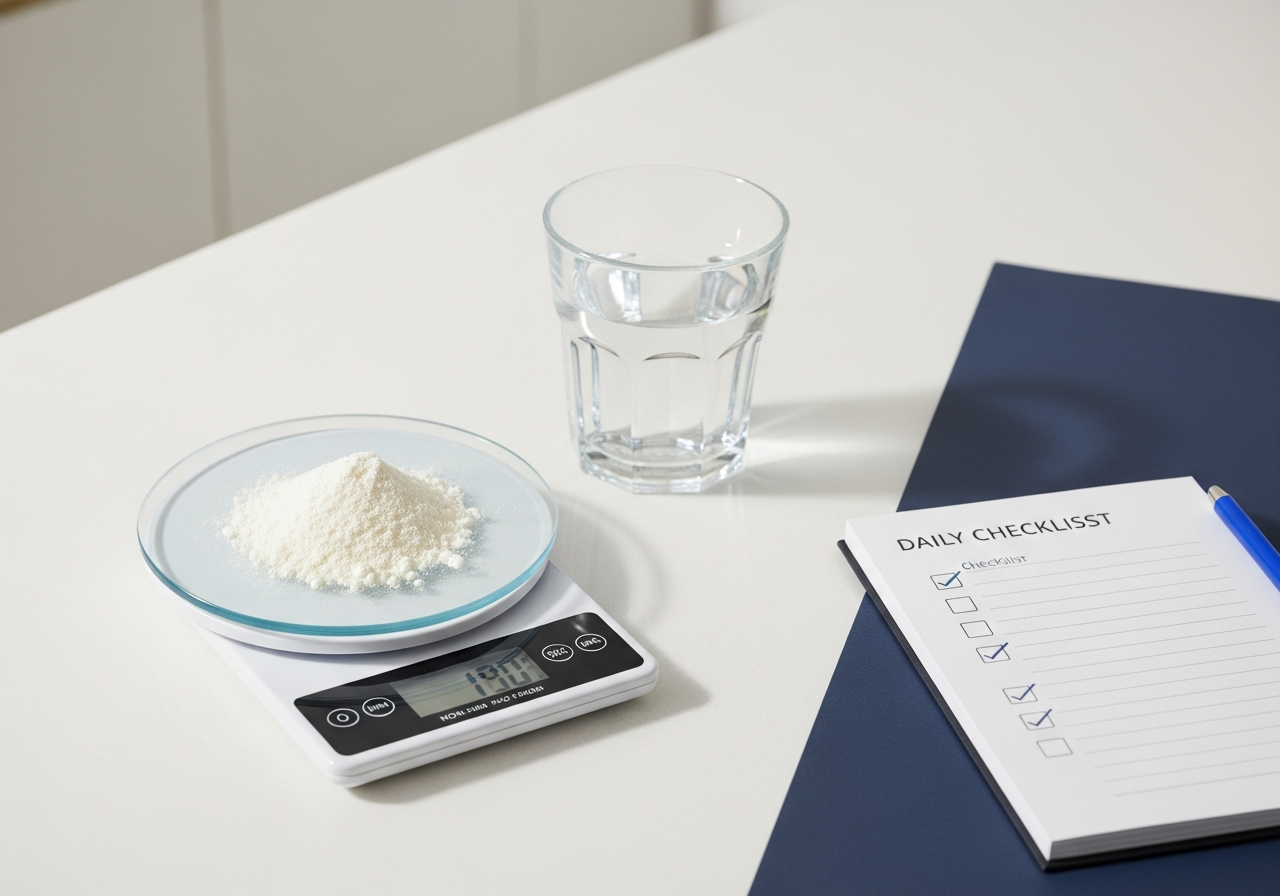
If you think creatine is affecting your sleep, the best next step is not to panic; it is to run a simple, controlled troubleshooting plan for one to two weeks. This approach helps you separate creatine from caffeine, training timing, digestion, and other sleep disruptors.
- Confirm your product. Use plain creatine monohydrate, not a pre-workout, fat burner, or “energy” blend. Ingredient simplicity matters.
- Standardise the dose. Take 3 to 5 g once daily. Avoid random heaping scoops or multiple extra servings.
- Move it earlier. If you currently take creatine at night, switch to breakfast or lunch for 7 days. This is a practical test, not because creatine is proven to be stimulating.
- Take it with food. Mixing creatine into yogurt, a shake, oats, or lunch can reduce stomach upset for sensitive users.
- Pause loading. If you were doing about 20 g per day split into four doses for 5 to 7 days, stop loading and use maintenance only.
- Audit your caffeine. Check pre-workouts, coffee, energy drinks, cola, and “focus” supplements, especially after midday.
- Track sleep and symptoms. Write down bedtime, wake time, night wakings, naps, training time, caffeine, and GI symptoms for at least 7 days.
Here is what to expect. If creatine was never the issue, moving from bedtime to morning may not change sleep at all, but cleaning up caffeine or GI triggers often helps within a few days. If you still sleep poorly after simplifying the supplement routine, creatine is less likely to be the root cause.
A practical example:
- Beginner, 60 kg: 3 g daily with breakfast for 2 weeks.
- Recreational lifter, 80 kg: 5 g daily with lunch or post-workout meal.
- Larger athlete, 100 kg: 5 g daily is still reasonable for most people; higher intakes are usually unnecessary outside loading.
If you want a more personalised intake, use our creatine dosage calculator and see how much creatine per day. For a full beginner-friendly routine, read how to take creatine step by step.
Creatine before bed: timing, dose, and what to do if you are a sensitive sleeper
Taking creatine before bed is usually fine, but if you are a sensitive sleeper, earlier in the day is the simplest low-risk adjustment. That is the practical answer to creatine before bed sleep.
Timing matters less for creatine than consistency does. Creatine works by saturating muscle stores over time, not by producing an acute buzz right after you swallow it. That means a morning dose, lunch dose, post-workout dose, or evening dose can all work if you take it regularly. Most people do well with 3 to 5 g daily of creatine monohydrate.
Loading can speed saturation, but it can also increase the chance of digestive complaints. The classic loading protocol is about 20 g per day split into four 5 g doses for 5 to 7 days, followed by 3 to 5 g daily. If sleep is your concern, loading is rarely worth forcing. A no-loading approach reaches saturation more gradually over a few weeks and is often easier on the stomach.
For sensitive sleepers, use this order of operations:
- Take plain creatine monohydrate only.
- Use 3 to 5 g daily.
- Take it with breakfast or lunch for two weeks.
- Avoid mixing it into caffeinated drinks later in the day.
- If you train at night, consider taking your dose earlier rather than immediately pre-workout.
If you tolerate bedtime dosing well, there is no rule saying you must change it. But if you notice nausea, reflux, bloating, thirst, or bathroom trips after late dosing, moving it earlier is sensible. The point is to reduce sleep-disrupting side effects around bedtime, not because creatine monohydrate itself is known to act like a stimulant.
For a deeper timing breakdown, see creatine before bed and when to take creatine. If you also wonder about pairing it with coffee, read can you mix creatine with coffee? because caffeine timing is far more relevant to insomnia than creatine timing.
Who should pay closer attention to sleep effects: beginners, women, older adults, and athletes
Most healthy adults can use creatine without expecting insomnia, but some groups should be extra methodical when introducing any supplement that could affect routines, digestion, or hydration. The goal is not fear; it is cleaner self-testing.
Beginners are the most likely to misattribute side effects because they often start several products at once. If you are new, take only plain creatine monohydrate first. Do not start creatine, pre-workout, fat burners, magnesium, melatonin, and a new training plan all in the same week. A simple start makes cause-and-effect easier to read. Our creatine for beginners guide is a good companion.
Women do not appear to have any special insomnia risk from creatine monohydrate based on current evidence, but women may be more likely to research sleep carefully because stress, menstrual cycle changes, perimenopause, and menopause can affect sleep independently. In those contexts, it is important not to blame creatine for sleep disturbances that have other strong explanations. See creatine for women if you want a full evidence-based guide.
Older adults often benefit from creatine for muscle and function, especially alongside resistance training, but they may also take more medications or have more established sleep issues. That makes product simplicity and timing even more important. If insomnia predates creatine, address the broader sleep issue rather than assuming creatine is the cause. Our creatine for older adults guide covers the bigger picture.
Athletes who train early morning or late evening should think more about schedule than physiology. If you are doing hard sessions at 8 to 10 p.m., your sleep may be affected by the session itself, team travel, bright lights, and stimulant use. Creatine can support performance, but it is rarely the main sleep disruptor in a serious training environment.
Vegetarians and vegans may respond especially well to creatine because baseline dietary intake is lower, but better response does not imply greater insomnia risk. The most important step is still choosing a plain, well-made product.
Can creatine help when sleep is poor? Possibly for resilience, not as an insomnia cure
Creatine may help some people perform or think better when sleep is restricted, but that should not be mistaken for a treatment for insomnia. This is the nuance most pages miss.
The idea is biologically plausible. The brain has high energy demands, and creatine helps buffer cellular energy through the creatine-phosphocreatine system. Under sleep deprivation, the brain may be operating under greater energetic stress. Some studies have explored whether raising creatine availability can help maintain aspects of cognition, reaction time, or performance when people are acutely sleep-deprived. That is why interest in creatine has expanded beyond the gym into brain-health and healthy-aging discussions.
However, there are two critical limits. First, research in sleep-deprived states is not the same as research in chronic insomnia. Second, even if creatine helps resilience under sleep loss, the best intervention for poor sleep is still to restore adequate sleep whenever possible. Creatine cannot replace the hormonal, neurological, and recovery functions of actually sleeping enough.
The practical interpretation is:
- If you are an athlete, shift worker, student, new parent, or traveller, creatine may be worth using for its established performance benefits and possible support during short-term sleep disruption.
- If your main problem is insomnia, frequent awakenings, snoring, or unrefreshing sleep, creatine is not the primary fix.
- If you are using creatine while sleep is poor, keep expectations realistic: you may notice better training consistency or less drop-off under fatigue, not magically better sleep architecture.
This is one reason market interest in creatine continues to broaden: the product is no longer seen only as a bodybuilding supplement, but as a widely used, evidence-based performance staple with emerging brain and recovery interest. That wider interest should not lead people to overclaim that creatine “treats” insomnia. It does not have that level of evidence.
If this angle is your main reason for reading, go next to creatine for sleep-deprivation benefits and creatine and cognition, which cover the resilience side in more detail.
Safety, side effects, and when sleep problems mean it is time to see a doctor
Creatine monohydrate is generally considered safe for healthy people at recommended doses, but persistent insomnia should not be written off as a supplement issue without proper assessment. Good supplement advice includes knowing when the problem is bigger than the supplement.
The strongest evidence-backed side effects from creatine are usually mild and practical: water retention, temporary scale weight gain, and occasional gastrointestinal upset, especially with larger doses. The ISSN position stand, JISSN review, IOC consensus, and mainstream clinical references such as Mayo Clinic’s creatine page all support the view that creatine monohydrate has a solid safety profile when used appropriately in healthy individuals.
What creatine is not known for is causing a classic insomnia pattern. If you are taking plain monohydrate at 3 to 5 g per day and still have major sleep issues, think broader. See a clinician if you have:
- Insomnia lasting more than a few weeks
- Loud snoring, choking, or gasping at night
- Marked daytime sleepiness or dozing off unexpectedly
- Restless legs symptoms or repeated limb jerks
- Chest symptoms, palpitations, panic, or significant anxiety
- Major mood changes, including depression
- Sleep problems starting with a new medication
You should also speak with a healthcare professional before using creatine if you have known kidney disease, are pregnant or breastfeeding, or are under specialist care for a medical condition. In Canada, checking for an NPN, or Natural Product Number, can help you confirm a product is licensed for sale by Health Canada. An NPN is not a guarantee of perfection, but it is a useful baseline quality signal alongside third-party testing and transparent ingredient lists.
For a deeper risk review, see is creatine safe?, who should not take creatine?, and is creatine approved in Canada?.
How to choose a creatine product that is less likely to create sleep confusion
If you want to avoid blaming creatine for sleep problems, buy a simple standalone creatine product rather than a stimulant-containing blend. Product choice solves a surprising number of “creatine and insomnia” complaints before they start.
The best default choice for most Canadians is plain creatine monohydrate powder with a short ingredient list. Micronized monohydrate can mix a little better, but the core evidence advantage belongs to monohydrate itself. Fancy forms often cost more without offering better sleep tolerance or better results.
| Product type | Best for | Sleep-risk considerations | Verdict |
|---|---|---|---|
| Plain creatine monohydrate powder | Nearly everyone | No stimulant ingredients if unflavoured and standalone | Best first choice |
| Micronized creatine monohydrate | People who want easier mixing | Usually similar to standard monohydrate if ingredients are simple | Also good |
| Capsules | Travel or convenience | Usually low sleep risk, but check serving size and fillers | Fine if cost is acceptable |
| Pre-workout with creatine | People wanting an all-in-one product | High chance caffeine or other stimulants are the real issue | Poor choice if sleep-sensitive |
| Flavoured blends or gummies | Taste and convenience | Check sugars, caffeine, and add-ons carefully | Case by case |
Canadian buying tips:
- Look for an NPN on the label.
- Prefer brands with third-party testing or clear quality documentation.
- Check whether the ingredient panel lists only creatine monohydrate or adds stimulants.
- Watch serving sizes so you know whether one scoop is actually 3 g, 5 g, or something else.
Market-research and industry estimates continue to show creatine demand expanding beyond hardcore gym users into broader wellness, women’s health, and healthy-aging categories. That is useful context because more first-time users now encounter creatine in mixed-format products, and mixed products create more room for sleep confusion than plain monohydrate does.
If you want help choosing, see our best creatine rankings, brand reviews, and best creatine monohydrate in Canada.
Myths and mistakes: what people get wrong about creatine and poor sleep
The biggest myth is that creatine is basically a stimulant. It is not. Most sleep confusion around creatine comes from mistaken comparisons, poor product selection, or sloppy routines.
Myth 1: Creatine gives you energy like caffeine.
Creatine helps regenerate ATP inside cells, especially during short, intense work. That is a muscle-and-cell energy system effect, not a “wired” feeling for most people.
Myth 2: If you feel awake after taking creatine, creatine caused it.
If you took it before a workout, with coffee, inside a pre-workout, or before a late training session, you changed several variables at once. You cannot isolate creatine without controlling the others.
Myth 3: Taking more creatine works better and faster.
Beyond standard dosing, more is not better for most people and is more likely to cause GI discomfort. That discomfort can then disrupt sleep, which gets misread as insomnia from creatine.
Myth 4: If creatine helps during sleep deprivation, it must be a sleep supplement.
No. Potential resilience under acute sleep loss is not the same as treating insomnia or improving sleep quality directly.
Myth 5: All creatine products are the same.
A plain monohydrate powder and a 300 mg caffeine-per-serving pre-workout are not remotely the same sleep-wise, even if both mention creatine on the front label.
Common mistakes include dry scooping, guessing scoop size, loading unnecessarily, starting creatine at the same time as multiple new supplements, taking it in a huge bolus before bed, and drinking all your extra water right before sleep. Better habits are boring but effective: measure your dose, use plain monohydrate, take it consistently, and keep your sleep routine stable.
If you want more on these misconceptions, read is creatine a steroid?, does creatine give you energy?, and dry scooping creatine.
Bottom line: should you stop creatine if your sleep gets worse?
You usually do not need to stop creatine just because your sleep worsened after starting it, but you should simplify the situation and test it properly. In most cases, plain creatine monohydrate is not the true cause of insomnia.
The smartest approach is straightforward:
- Use plain creatine monohydrate only.
- Take 3 to 5 g daily.
- Move the dose to morning or lunch for a week or two.
- Remove caffeine-containing pre-workouts and audit all stimulant sources.
- Take creatine with food if your stomach is sensitive.
- Keep training time and bedtime habits consistent while you evaluate.
If sleep improves after removing stimulants or changing late-night habits, you have your answer. If sleep does not improve, creatine becomes a less likely explanation and it is time to look at the bigger sleep picture. For most users, the benefits of creatine for strength, power, lean mass support, and training quality are compatible with good sleep, not opposed to it.
The evidence-based summary is simple enough to quote: creatine is not caffeine, it is not known to commonly cause insomnia, and sleep problems after starting creatine are more often explained by product blends, GI discomfort, late training, or other sleep disruptors. That is why our default recommendation remains plain creatine monohydrate, standard dosing, and a methodical troubleshooting process rather than automatic avoidance.
If you want the next best pages for this topic cluster, start with creatine and sleep, creatine before bed, and is creatine safe?
Creatine and Insomnia: The Evidence-Based Snapshot
- 3-5 g/day Standard creatine maintenance dose — The best-supported daily range for most healthy adults using creatine monohydrate.
- ~20 g/day Typical loading protocol — Usually split into 4 doses for 5-7 days; optional and more likely to cause stomach upset than maintenance dosing.
- 5-7 days Common loading duration — Used to raise muscle creatine stores faster, but not necessary for results over time.
- No stimulant mechanism Why creatine usually does not keep you awake — Creatine supports phosphocreatine and ATP recycling; it does not act like caffeine on adenosine receptors.
Frequently Asked Questions
Does creatine cause insomnia?
Creatine does not appear to cause insomnia in most people, and it is not classified as a stimulant. If sleep worsens after starting creatine, the more likely explanations are caffeine from a pre-workout, late-night training, stomach discomfort from a large dose, or unrelated sleep issues that happened to show up at the same time.
Can creatine keep you awake at night?
Creatine itself should not keep most people awake because it does not work like caffeine. If you feel more alert at night after taking it, check whether you took it in a caffeinated product, close to a hard evening workout, or in a large dose that caused bloating, reflux, or thirst.
Is it okay to take creatine before bed?
Yes, taking creatine before bed is usually okay if you tolerate it well. That said, people with sensitive stomachs or fragile sleep often do better taking 3 to 5 g earlier in the day with a meal, because timing is less important than consistency for creatine saturation.
Why do I have sleep problems after starting creatine?
Sleep problems after starting creatine are often caused by something that came with the new routine rather than creatine alone. The top suspects are stimulant-containing pre-workouts, evening exercise, loading-phase stomach upset, extra late-night fluids, stress, and expectation bias.
Does creatine improve sleep quality?
Creatine is not an established sleep-quality supplement and should not be marketed as a treatment for insomnia. Some research suggests creatine may help performance or cognition when sleep is restricted, but that is different from directly improving sleep duration, sleep latency, or sleep architecture.
Should I stop creatine if I am sleeping poorly?
You do not always need to stop creatine immediately if you are sleeping poorly. First switch to plain creatine monohydrate, use a consistent 3 to 5 g daily dose, move it to morning or lunch, remove caffeine sources, and monitor symptoms for one to two weeks before deciding whether creatine is really involved.
Can creatine and caffeine together cause sleep issues?
Yes, caffeine is much more likely than creatine to cause sleep issues, especially when taken later in the day. If you mix creatine with coffee or use a pre-workout containing both, any insomnia or delayed sleep onset is far more likely to be driven by the caffeine component.
What is the best creatine dose if I am worried about sleep?
The best starting dose if you are worried about sleep is usually 3 to 5 g of plain creatine monohydrate once daily. Avoid loading at first, take it with food, and choose earlier daytime dosing so you can minimise stomach upset and remove bedtime variables while you test tolerance.
Can creatine cause nightmares or vivid dreams?
There is no strong evidence that creatine commonly causes nightmares or vivid dreams. If dreams seem more intense after starting a supplement, look first at sleep disruption itself, stress, medications, alcohol, and stimulant use, because fragmented sleep can make dream recall more noticeable.
When should I see a doctor instead of blaming creatine for poor sleep?
You should see a doctor if poor sleep lasts more than a few weeks, causes significant daytime sleepiness, or comes with snoring, choking, gasping, anxiety, mood changes, or a new medication. Persistent insomnia deserves medical assessment because sleep apnoea, mental health issues, and other conditions are far more important to catch than a possible supplement mismatch.