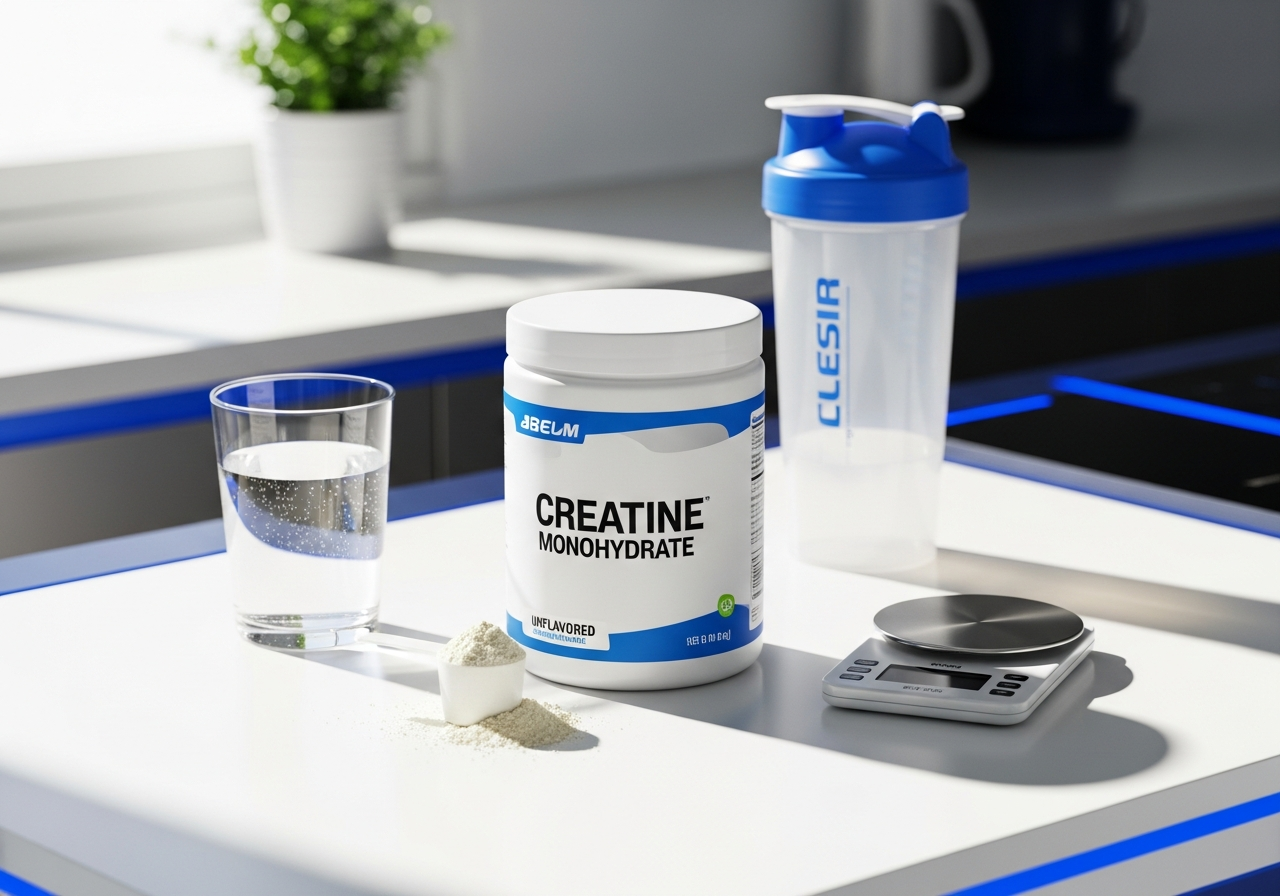
Can You Take Too Much Creatine? Overdose Risks Explained
By The Creatine Canada Research Team — Evidence-based supplement analysts
Yes, you can take too much creatine in a day, but for most healthy adults the usual problem is not a true “overdose” so much as avoidable side effects from taking more than you need. In practice, doses above the evidence-based range do not improve results and are more likely to cause stomach upset, diarrhoea, nausea, temporary water-weight gain, or lightheadedness if you also under-drink fluids or train hard in the heat.
Evidence-based · Cites 4 sources · Editorial standards
Key Takeaways
- For most adults, 3 to 5 g of creatine monohydrate per day is enough once muscles are saturated.
- A standard loading phase is 20 g/day split into 4 doses for 5 to 7 days; taking that all at once is more likely to upset your stomach.
- Taking more creatine does not make it work better once muscle stores are full.
- Too much creatine at once can cause nausea, diarrhoea, bloating, or cramping-like GI discomfort.
- Dizziness or tiredness after creatine is usually not from creatine toxicity; it is more often dehydration, heat, low food intake, or a product issue.
- Healthy adults generally tolerate creatine well, but anyone with kidney disease, a kidney history, or relevant medical advice should speak with a clinician first.
- In Canada, choose creatine monohydrate with clear dosing, a Natural Product Number when applicable, and reputable third-party testing.
Can you take too much creatine? Yes — but the risk is usually side effects, not a dramatic overdose
Yes, you can take too much creatine in the sense that you can take more than is useful and trigger side effects, but the evidence does not support the idea that standard creatine use is broadly dangerous for healthy people. The practical answer is simple: most people do best with 3 to 5 g/day of creatine monohydrate, and anything well beyond that is usually wasted from a performance standpoint.
If you are asking “can you overdose on creatine?”, the important distinction is between acute overconsumption and evidence-based daily supplementation. Creatine is a compound your body already makes from amino acids and also gets from foods like meat and fish. Supplemental creatine raises muscle creatine and phosphocreatine stores, which helps regenerate ATP, the cell’s fast energy currency, during short, intense efforts. But muscles have a storage ceiling, so once those stores are close to saturated, taking more does not keep increasing performance.
The 2017 ISSN position stand concluded that creatine monohydrate is effective and generally safe for healthy individuals when used appropriately. The 2021 JISSN review on common questions and misconceptions also reinforced that many fears around creatine are exaggerated or unsupported. That said, “safe” does not mean “take as much as you want.”
What happens if you take too much creatine? Most often, you get:
- Nausea, especially if you take a large scoop on an empty stomach
- Diarrhoea or loose stools, because a big concentrated dose can pull water into the gut
- Bloating or stomach discomfort, particularly during aggressive loading
- Extra water-weight gain, which is usually intracellular muscle water, not body fat
- Lightheadedness in some real-world cases, usually because training, heat, poor hydration, or under-fuelling are happening at the same time
If your question is “am I taking too much creatine?”, the fastest check is this: if you are consistently taking more than 5 g/day without a specific loading plan, or you are getting GI side effects, you are probably taking more than you need. If you want a more precise starting point, use our creatine dosage calculator and compare your current intake with standard evidence-based dosing.
How much is too much creatine? The useful range, the loading range, and the point of diminishing returns
For most people, creatine becomes “too much” when the dose exceeds what muscles can practically use and starts causing side effects or needless expense. The best-supported maintenance intake is 3 to 5 g/day of creatine monohydrate, while a common loading protocol is 20 g/day split into 4 doses for 5 to 7 days.
Those numbers matter because they align with what research repeatedly uses to saturate muscle creatine stores. A loading phase can raise stores faster, while a lower daily dose without loading gets you to the same place more slowly, usually over roughly 3 to 4 weeks. More than that is not “more effective” in a linear way. Once stores are near saturation, extra creatine is simply not giving you extra strength, muscle, or recovery benefits at the same rate.
| Use case | Evidence-based dose | How long | What to expect |
|---|---|---|---|
| Standard maintenance | 3 to 5 g/day | Daily, ongoing | Gradual saturation over about 3 to 4 weeks |
| Loading phase | 20 g/day split into 4 x 5 g doses | 5 to 7 days | Faster saturation, more chance of GI upset if poorly split |
| Larger athletes using body-mass dosing | About 0.1 g/kg/day for maintenance | Daily, ongoing | Useful if body size is well above average |
| Single large dose at once | Not recommended | Any time | Higher chance of nausea, diarrhoea, bloating |
Examples help. A 60 kg person usually does well on 3 g/day. A 75 kg person commonly takes 5 g/day. A 100 kg athlete may choose around 5 g/day or use body-weight logic closer to 0.1 g/kg/day depending on context. None of those people need 10, 15, or 20 g every day forever once loaded.
If you are unsure whether your current dose is excessive, read our guides on how much creatine per day and creatine maintenance dose. The shortest rule is this: if your muscles are already saturated, extra grams mostly increase the odds of stomach issues, not results.
This is why “can you have too much creatine in a day?” is a better question than “can you overdose on creatine?” In everyday gym use, the problem is usually poor dosing strategy, not poisoning.
What happens if you take too much creatine at once or day after day
If you take too much creatine, the most likely outcomes are digestive upset and unnecessary water retention, not a unique toxic syndrome. Creatine is osmotically active, meaning it influences water movement, and that helps explain why overdoing a dose can feel rough on your stomach.
When you swallow a large amount at once, especially in a small volume of fluid, some of that creatine can remain in the gut long enough to draw water into the intestines. That is why people most often report nausea, bloating, stomach cramps, or diarrhoea after a big single serving. This is also why splitting a loading protocol into smaller doses is smarter than slamming one huge scoop.
Another common effect is rapid scale-weight gain in the first week or two. That gain is primarily water pulled into muscle cells as creatine stores rise, which is one reason muscles often look fuller. It is not the same thing as gaining fat. If you are cutting weight for sport, though, taking more creatine than necessary can create a temporary body-mass issue without adding any meaningful edge. Our guide on does creatine make you gain weight covers that in detail.
Can too much creatine make you sick? Yes, it can make you feel sick in the everyday sense of stomach upset, but the context matters. If someone says creatine made them nauseous or dizzy, the cause may be one of several things:
- They took too much at once
- They dry-scooped it
- They trained hard in the heat without enough fluids
- They took it fasted and were already under-fuelled
- The product included stimulants or other ingredients, not just creatine
Can too much creatine make you tired? Not directly in the way a sedative would, but feeling off, under-hydrated, bloated, or having diarrhoea can absolutely leave you feeling drained. Can too much creatine make you dizzy? It can coincide with dizziness, but dizziness is more often a sign to look at hydration, sodium, meals, blood pressure, heat, illness, or product quality first.
If you notice digestive symptoms, the fix is usually straightforward: reduce the dose to 3 to 5 g/day, take it with food or more water, and choose plain monohydrate from a reputable source. If symptoms persist, stop and reassess rather than forcing it.
Why extra creatine stops helping: saturation, phosphocreatine, and the storage ceiling
Taking more creatine stops helping once your muscles approach saturation because muscle tissue can only store so much free creatine and phosphocreatine. Phosphocreatine is the stored high-energy form that donates phosphate to help regenerate ATP during brief, intense exercise such as sprinting, jumping, heavy lifting, and repeated hard intervals.
Here is the mechanism in plain English. Your muscles use ATP rapidly during high-power effort. ATP runs low quickly, so performance in repeated short bursts depends partly on how fast you can remake it. Creatine supplementation increases intramuscular creatine and phosphocreatine, which improves that rapid ATP recycling system. That is why creatine reliably supports strength, power, training volume, and lean mass gains over time.
But there is a ceiling. Once muscle creatine stores rise enough, the marginal benefit of extra intake falls sharply. This is the reason maintenance doses work so well after loading, and the reason megadosing is unnecessary. The Examine creatine evidence summary and the ISSN position stand both reflect this established saturation concept.
This also helps answer the search question “can you have too much creatine in your body?” In healthy people using normal doses, the body regulates the situation reasonably well. Not all ingested creatine ends up stored in muscle. Some remains unused, and some is converted over time to creatinine, a breakdown product excreted by the kidneys. That does not mean creatine is damaging the kidneys in healthy users; it does mean that more intake does not automatically equal more usable muscle creatine.
It also explains why non-responders and high responders exist. People with lower baseline muscle creatine stores, including many vegetarians and some beginners, may notice more obvious benefit because they have more room to increase. People who already have relatively high stores may notice less dramatic change, but that is not a reason to keep escalating the dose. If anything, it is a reason to keep the protocol simple and consistent. See creatine non-responders and what is creatine if you want the deeper physiology.
The key safety point is this: creatine works by saturating a normal energy system, not by endlessly pushing the body harder as the dose rises. That is exactly why sensible dosing is effective and why excess dosing is mostly pointless.
How to take creatine safely: the simplest step-by-step plan for beginners and experienced lifters
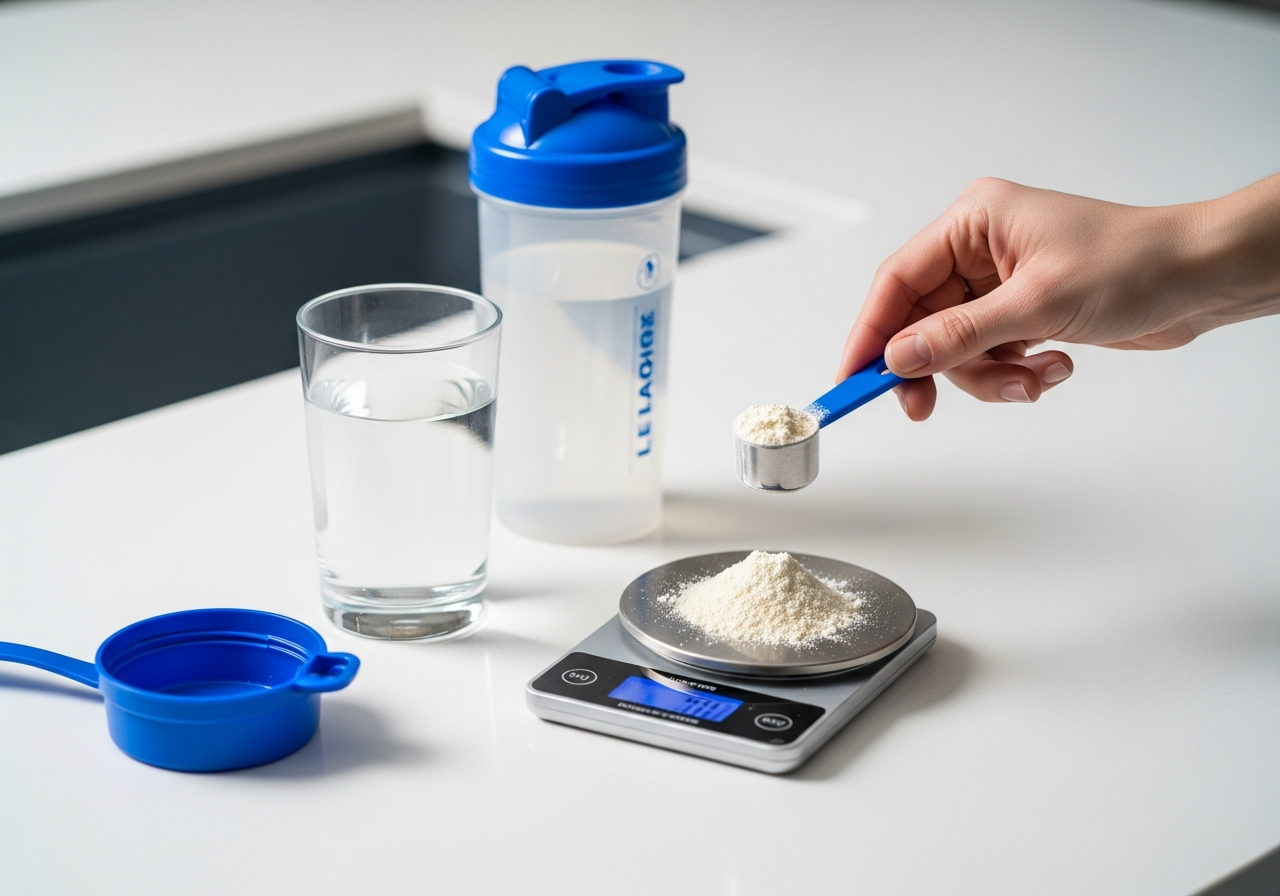
The safest and most effective way to take creatine is to use plain creatine monohydrate, measure the dose accurately, and take it consistently every day rather than guessing or taking huge scoops. If you want a practical routine you can start today, follow these steps.
- Choose creatine monohydrate. Monohydrate is the most studied, most cost-effective form, and the form behind the strongest safety and efficacy data. If you are comparing products, start with our best creatine rankings and creatine brand reviews.
- Pick one of two dosing options. Option A: take 3 to 5 g/day with no loading. Option B: load with 20 g/day split into 4 x 5 g doses for 5 to 7 days, then continue with 3 to 5 g/day.
- Do not take the full loading amount at once. Splitting doses lowers the chance of nausea and diarrhoea.
- Mix it in enough fluid. Water is fine. A shaker bottle or glass works. Taking it with a meal is also fine and often easier on the stomach. If mixing is your issue, see how to take creatine.
- Use a gram-based measure, not a random scoop. A labelled 5 g scoop is convenient, but a kitchen scale is more accurate if the scoop size is unclear.
- Keep taking it on rest days. Creatine works by saturating muscle over time, not only by pre-workout timing.
- Watch for tolerance signals. If you get bloating, diarrhoea, or nausea, reduce the dose, split it, or take it with food.
Week-by-week, here is what many people notice. During week 1 with loading, some people feel fuller muscles and may gain a little scale weight from water in muscle. Without loading, changes are subtler at first. By weeks 2 to 4, training performance often improves in the form of an extra rep, slightly better repeated sprint output, or better tolerance for high-quality volume. By weeks 4 to 8, the performance benefits can compound into more strength or lean mass progress if training and protein are also in place.
If you are still wondering “can I take too much creatine supplement?”, the simplest answer is to stay in the proven lane. More is not better here; consistency is better.
The right dose by body weight, training goal, and athlete type
The right creatine dose depends more on whether you are loading and on your body size than on sex, and most people still land in the 3 to 5 g/day range. Body weight matters most at the edges: very small adults may need less, and very large athletes may reasonably use the higher end or a body-mass approach.
Use these practical examples:
- Under 60 kg: 3 g/day is often sufficient for maintenance.
- 60 to 90 kg: 5 g/day is the standard default for maintenance.
- Over 90 kg: 5 g/day often still works well, though some larger athletes prefer a body-mass estimate near 0.1 g/kg/day.
- Loading for any body size: 20 g/day split into 4 doses for 5 to 7 days is the classic protocol.
For goals, the guidance stays surprisingly consistent:
- Strength and muscle gain: 3 to 5 g/day works well, with optional loading if you want faster saturation.
- Team-sport, sprint, or repeated high-intensity performance: same dose range; loading can be useful before a short block of training or competition.
- General fitness beginners: skip the loading phase if you want maximum simplicity and fewer GI issues.
- Cutting or making weight: you may avoid loading close to weigh-ins because rapid water retention can move the scale.
Women do not need a separate “pink” creatine formula; evidence-based dosing is fundamentally similar. Older adults also commonly use the same daily maintenance range, especially when paired with resistance training. Athletes in power, sprint, CrossFit-style, and stop-start sports often benefit most clearly, but everyday lifters can still see worthwhile training-volume gains.
If you are a beginner, a woman, or an older adult wondering “am I taking too much creatine?”, the answer is usually no if you are in the 3 to 5 g/day lane and tolerating it well. The answer is more likely yes if you are repeatedly taking double that amount for no clear reason. Our guides on creatine for beginners, creatine for women, and creatine for older adults go deeper by population.
The main lesson is that creatine is not one of those supplements where special populations need radically different dosing. The boring answer is the correct one: get the basics right and avoid unnecessary excess.
Can too much creatine make you dizzy, tired, nauseous, or sick? Yes, but look at the full context
Too much creatine can make you nauseous or give you stomach upset, but dizziness and unusual fatigue usually require a wider troubleshooting lens than “creatine is toxic.” The first thing to check is how much you took, how fast you took it, what else you took with it, and what your training conditions were.
Nausea is the most straightforward. A large bolus dose, a gritty under-mixed drink, dry scooping, or taking creatine on an empty stomach can all make you feel queasy. Diarrhoea often points to the same issue: too much at once causing water to shift into the gut. Bloating can show up during loading, especially if doses are not split well.
Dizziness is less specific. Can too much creatine make you dizzy? It can coincide with dizziness, but creatine itself is not known for causing a distinctive dizzy reaction in otherwise healthy users at standard doses. More common explanations include:
- Hard training in the heat with inadequate fluids
- Low sodium intake or a lot of sweating
- Low blood sugar from training fasted
- A pre-workout blend containing caffeine or other stimulants
- An unrelated illness or blood-pressure issue
Tiredness follows the same logic. Can too much creatine make you tired? Indirectly, yes, if GI upset, poor hydration, or interrupted eating leave you feeling run down. But creatine is not typically a fatigue-inducing supplement in the way alcohol, antihistamines, or sleep debt are.
Here is the fastest self-check if creatine made you feel bad:
- Stop taking large single doses.
- Return to 3 to 5 g/day only.
- Take it with a meal and a full glass of water.
- Review the label to make sure it is plain monohydrate, not a stimulant blend.
- Check hydration, sodium, and total food intake on training days.
- If symptoms persist, stop using it and speak with a clinician.
If digestion is your weak point, our guide on creatine digestive side effects can help. If headaches or dehydration are part of the picture, see does creatine cause headaches and creatine and dehydration.
Can too much creatine hurt you, damage your kidneys, or kill you? What the evidence actually says
For healthy adults using recommended doses, creatine monohydrate has a strong safety record, but that does not mean every person in every circumstance should ignore caution. If you are asking “can too much creatine hurt you?” the honest answer is that it can hurt your experience through side effects, and it may be inappropriate for some medical situations, but standard use is not supported as broadly harmful in healthy people.
The biggest fear is usually kidneys. Creatine can raise creatinine, which is a normal breakdown product measured on blood tests, and that can confuse people into thinking creatine is injuring the kidneys when it may simply be affecting the lab marker. This is exactly why context matters. The ISSN position stand and later reviews report that creatine supplementation in healthy individuals has not been shown to impair kidney function when used at recommended dosages. If this topic worries you, read is creatine bad for your kidneys? and creatine vs creatinine.
Can too much creatine kill you? That is not how creatine behaves in normal sports-supplement use, and dramatic internet claims usually lack context, involve extreme misuse, or involve other ingredients and underlying medical issues. The more realistic concern is not death from routine creatine use; it is poor decision-making such as megadosing, ignoring persistent symptoms, buying sketchy products, or using supplements despite a medical contraindication.
You should be more cautious and seek medical advice first if you:
- Have known kidney disease or a history of significant kidney problems
- Have been told to limit certain supplements or high solute loads
- Take medications where your clinician wants to monitor kidney-related labs closely
- Have a complex medical condition and want personalised advice
The Mayo Clinic creatine overview takes a similarly measured position: creatine is likely safe for many people when used appropriately, but medical context matters. In short, routine creatine use at evidence-based doses is far different from reckless overuse.
So, can taking too much creatine hurt you? Yes, it can if “hurt” means causing GI distress, needless water-weight gain, or creating avoidable problems in someone who should first check with a clinician. But that is very different from the common online fear that creatine is inherently dangerous.
Product quality matters: how to avoid problems when buying creatine in Canada
If creatine makes you feel unusually bad, the dose is not the only suspect; the product itself may be the issue. In Canada, choosing a simple, reputable creatine monohydrate product reduces the odds of contamination concerns, mystery blends, or misleading scoop sizes.
Start with the label. Ideally, you want a product that lists creatine monohydrate as the only medicinal ingredient or the clear primary ingredient, with the dose stated in grams rather than vague scoop language. In the Canadian supplement market, you may also see an NPN, which stands for Natural Product Number. An NPN indicates the product has been licensed by Health Canada as a natural health product under the applicable framework. An NPN is not a magic quality guarantee, but it is a useful signal that the product is participating in the regulated Canadian system.
Also look for:
- Third-party testing or credible quality assurance language
- Plain monohydrate instead of heavily marketed proprietary blends
- Clear serving size, ideally 3 g or 5 g per scoop
- Minimal additives if you have a sensitive stomach
Be careful with products that bundle creatine into stimulant-heavy pre-workouts. If you felt shaky, dizzy, or nauseous, the caffeine or other actives may be the real culprit. This is one reason plain standalone creatine is the cleanest way to assess tolerance.
Use this quick comparison when shopping:
| Product type | Best for | Potential downside |
|---|---|---|
| Plain creatine monohydrate powder | Most people; best evidence and value | Can clump or taste gritty if poorly mixed |
| Micronized monohydrate | People who want easier mixing | Usually costs a bit more |
| Capsules | Convenience and travel | More capsules needed to reach 3 to 5 g |
| Pre-workout with creatine | People who already use pre-workout | Harder to troubleshoot side effects from multiple ingredients |
If you are comparing options, browse our creatine product catalog, best creatine monohydrate in Canada, and Canadian supplement regulations guides. The simplest buying rule is also the safest: buy boring creatine from a trustworthy company.
Common mistakes and myths: the beliefs that lead people to take too much creatine
Most people who take too much creatine are not trying to be reckless; they are following a bad assumption. The biggest myth is that if 5 g works, 10 or 20 g every day must work even better. That is not how creatine works after saturation.
Here are the most common mistakes:
- Confusing loading with maintenance. A short loading phase is optional; it is not a permanent daily target.
- Taking one huge scoop because it is convenient. Large single servings increase GI side effects.
- Using a heaping scoop without measuring. Scoop sizes vary, and a “scoop” is not always 5 g.
- Blaming creatine for every symptom. Pre-workout stimulants, poor hydration, and heat are common confounders.
- Thinking water-weight gain means fat gain. Early weight gain is usually intracellular water, not body fat.
- Choosing fancy forms because they promise smaller doses. Monohydrate remains the benchmark form in the evidence.
Another myth behind the question “what happens when your body produces too much creatine?” is that the body is likely to overproduce dangerous amounts on its own. In reality, your body synthesises creatine as part of normal physiology, and the real-world issue people mean is usually taking too much supplemental creatine, not spontaneous internal overproduction causing gym-style side effects.
It is also a mistake to think you need to cycle off creatine to stay safe. Routine cycling is not required for most healthy users. The better strategy is simply staying within a sensible daily dose and monitoring how you feel. If you want the broader misconception cleanup, see creatine myths debunked, creatine myths and facts, and why monohydrate still wins.
The bottom-line myth correction is this: creatine is not one of those supplements where aggressive dosing creates aggressive results. Most mistakes come from treating it like a stimulant or pre-workout when it is really a muscle-saturation supplement that rewards patience and consistency.
Bottom line: how to know if you are taking too much creatine and what to do next
You are probably taking too much creatine if you are using more than 5 g/day long-term without a specific reason, taking large single doses, or regularly getting nausea, diarrhoea, bloating, or unnecessary scale-weight spikes. The fix is usually not complicated: return to the evidence-based basics.
Use this quick decision guide:
- If you are healthy and symptom-free: keep creatine monohydrate at 3 to 5 g/day.
- If you want faster saturation: use 20 g/day split into 4 doses for 5 to 7 days, then drop to 3 to 5 g/day.
- If you feel sick after taking it: stop large doses, take it with food and water, and switch to plain monohydrate if your current product is a blend.
- If you have a kidney condition, significant medical history, or clinician concerns: get personalised medical guidance first.
- If you are still unsure: measure your dose properly and simplify your stack before blaming creatine itself.
For most healthy adults, the answer to “can u take too much creatine?” is yes, but “too much” usually means more than useful, not a dramatic toxic threshold that ordinary users are likely to hit by following normal instructions. Creatine monohydrate remains one of the best-supported sports supplements available, and its safety profile is strongest when the user respects simple, boring dosing.
If you want the next steps, start with our dosage calculator, read is creatine safe?, and keep your routine simple. The most effective creatine plan is not the most extreme one. It is the one you can follow accurately, daily, and without side effects.
Practical takeaway: If you are a healthy adult, take 3 to 5 g of creatine monohydrate per day, avoid megadosing, and treat any persistent nausea, diarrhoea, dizziness, or unusual symptoms as a reason to reduce the dose, review the product, and seek medical advice if needed.
Creatine overdose risk: the numbers that matter
- 3–5 g/day Typical maintenance dose — Enough for most healthy adults once muscles are saturated.
- 20 g/day Common loading dose — Usually split into 4 doses for 5 to 7 days, not taken all at once.
- 5–7 days Standard loading duration — Speeds up saturation compared with lower daily dosing.
- 3–4 weeks Time to saturate without loading — Typical timeline when taking a standard daily maintenance dose.
Frequently Asked Questions
Can you overdose on creatine?
You can take more creatine than is useful, but in healthy adults the usual issue is side effects rather than a dramatic overdose pattern. The most common problems from too much creatine are nausea, diarrhoea, bloating, and needless water-weight gain, especially if you take a large amount at once instead of using the standard 3 to 5 g/day maintenance range.
How much is too much creatine in one day?
For most people, anything meaningfully above the evidence-based plan is too much if it offers no added benefit and increases side effects. A normal maintenance dose is 3 to 5 g/day, while 20 g/day is typically used only for 5 to 7 days during a loading phase and should be split into smaller doses.
What happens if you take too much creatine?
If you take too much creatine, the most likely outcomes are stomach upset, bloating, loose stools, nausea, and temporary water retention. Extra creatine does not keep improving results once muscle stores are saturated, so the main effect of overdoing it is usually discomfort rather than better performance.
Can too much creatine hurt you?
Too much creatine can hurt you in the sense that it can cause unpleasant side effects or be inappropriate for someone with certain medical issues, but standard creatine monohydrate use in healthy adults has a strong safety record. The biggest practical risk is not normal daily use; it is taking more than you need, ignoring symptoms, or using low-quality products.
Can too much creatine make you dizzy?
Too much creatine can coincide with dizziness, but dizziness is often caused by the bigger context rather than creatine alone. Check for dehydration, hard training in heat, low food intake, stimulant-containing products, or low sodium before assuming plain creatine monohydrate is the direct cause.
Can too much creatine make you tired?
Too much creatine can leave you feeling tired indirectly if it causes diarrhoea, stomach upset, poor hydration, or disrupted eating. Creatine itself is not typically a fatigue-causing supplement at normal doses, so persistent tiredness should prompt you to review your whole routine rather than only the creatine.
Can too much creatine make you nauseous or sick?
Yes, too much creatine at once can make you nauseous or give you stomach discomfort, and that is one of the most common side effects of poor dosing. Taking smaller doses, mixing it well, using enough water, and taking it with food often solves the problem quickly.
Can you die from too much creatine?
Routine evidence-based creatine use is not associated with the kind of dramatic death risk implied by that question in healthy adults. If you see alarming claims online, they usually involve missing context, extreme misuse, other substances, poor product quality, or underlying medical issues rather than ordinary creatine monohydrate use.
Am I taking too much creatine?
You may be taking too much creatine if you are exceeding 5 g/day long-term without a loading plan, taking heaping scoops without measuring, or repeatedly getting nausea, bloating, or diarrhoea. If that sounds like you, return to 3 to 5 g/day, use plain monohydrate, and measure your dose accurately.
What happens when your body produces too much creatine?
In normal real-world fitness discussions, that question is usually really about taking too much supplemental creatine, not dangerous internal overproduction. Your body naturally makes creatine as part of normal physiology, and the common practical issue is simply using more supplemental creatine than your muscles can benefit from.