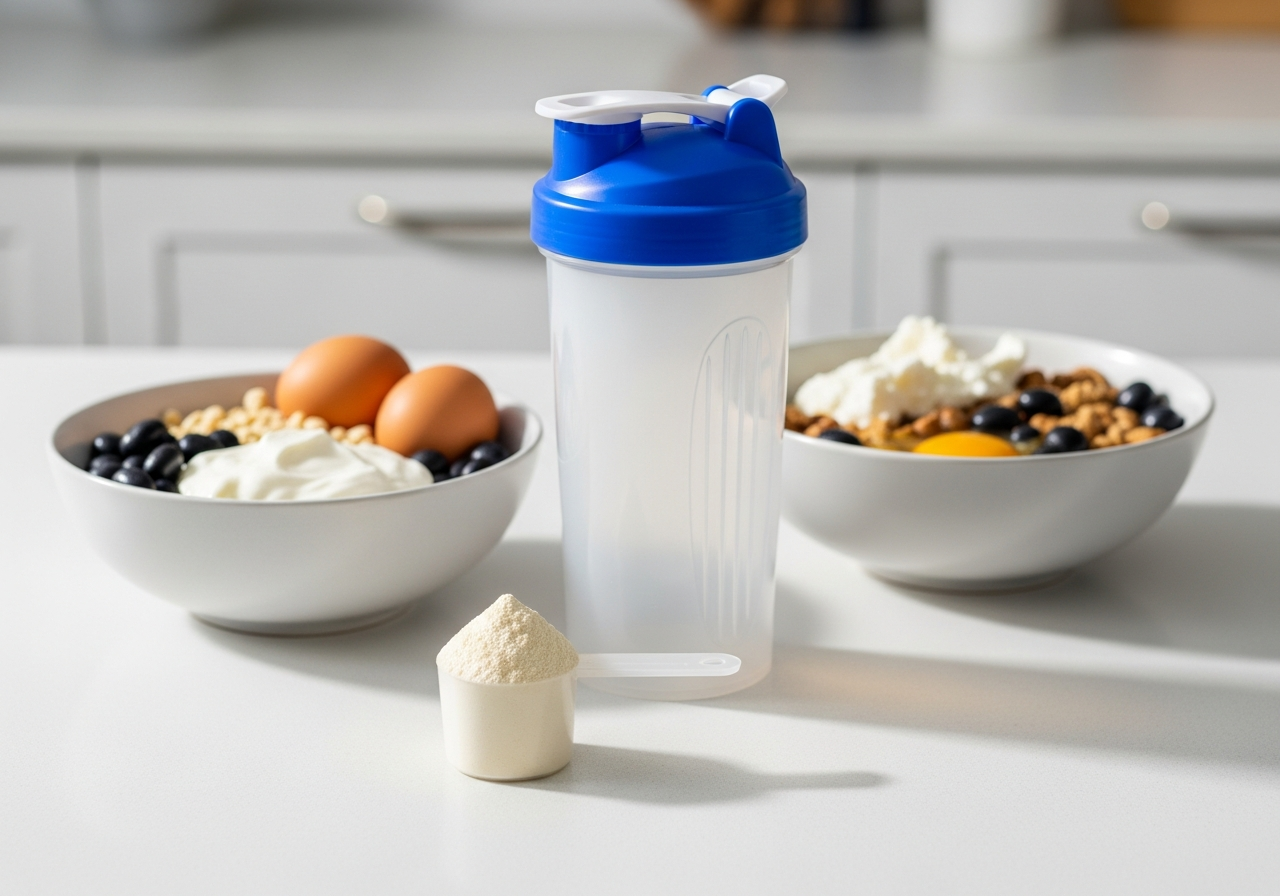
Is Creatine a Protein or an Amino Acid? What It Really Is
By The Creatine Canada Research Team — Evidence-based supplement analysts
No, creatine is not a protein. Creatine is a naturally occurring compound your body makes from three amino acids, while protein is a macronutrient made of long chains of amino acids; creatine can help performance and muscle gain, but it does not count as a protein source and it does not replace protein powder.
Evidence-based · Cites 4 sources · Editorial standards
Key Takeaways
- Creatine is not a protein and it is not itself an amino acid.
- Your body makes creatine from glycine, arginine, and methionine.
- Creatine powder contains essentially no meaningful protein.
- Protein builds and repairs muscle tissue; creatine helps recycle quick energy in muscle.
- You can take protein and creatine together safely and effectively.
- For most adults, 3-5 g of creatine monohydrate daily is the standard maintenance dose.
- If you want faster saturation, load with 20 g/day split into 4 doses for 5-7 days.
Is creatine a protein? The direct answer most people need
No, creatine is not a protein. Creatine is a small nitrogen-containing compound made from amino acids, while protein is a macronutrient built from long chains of amino acids that provide the building blocks for tissue repair, enzymes, hormones, and muscle growth.
If your question is "is creatine protein" or "does creatine have protein", the practical answer is no. A standard creatine monohydrate powder is not a protein source, does not meaningfully contribute to your daily protein target, and should not replace whey, casein, soy, pea, egg, or whole-food protein.
This confusion happens because creatine is associated with muscle and gym supplements, and because the body makes creatine from amino acids. But that does not make creatine a protein any more than making glucose from other compounds would make glucose a protein. Creatine and protein simply do different jobs.
- Protein's job: provide amino acids to build and repair muscle tissue.
- Creatine's job: help regenerate ATP, the cell's immediate energy currency, during short, hard efforts.
That distinction matters for real-world decisions. If you are under-eating protein, adding creatine will not fix that. If you already hit your protein needs but want better strength, power, training volume, and long-term muscle gains, creatine can help. Many people benefit from using both because they solve different problems.
The evidence base for creatine is unusually strong for a sports supplement. The 2017 ISSN position stand concluded that creatine monohydrate is the most effective nutritional supplement currently available for increasing high-intensity exercise capacity and lean mass during training. That statement is about performance support, not protein replacement.
If you are brand new to the topic, start with this rule: treat creatine as an energy-support supplement, and treat protein as a nutrition staple. They complement each other, but they are not interchangeable. If you want a broader primer, see what creatine is and how it works before you choose a product.
Is creatine an amino acid? No — but it is made from three amino acids
No, creatine is not an amino acid either. Creatine is a separate compound that your liver, kidneys, and pancreas synthesize from three amino acids: glycine, arginine, and methionine.
This directly answers several common searches: "is creatine an amino acid," "is creatine amino acids," "is creatine and amino acid," and "does creatine contain amino acids". Creatine is not itself one of the amino acids in protein, but amino acids are used as raw materials to make it.
The three amino acids involved are:
- Glycine
- Arginine
- Methionine
If you have seen the question "what 3 amino acids make up creatine" or "what are the 3 amino acids in creatine", that is the answer. In the body, these amino acids go through enzyme-driven steps to form creatine, which is then transported mainly into skeletal muscle. About 95% of the body's creatine is stored in muscle, where it exists as free creatine and phosphocreatine. Phosphocreatine is the stored form that donates a phosphate group to rapidly regenerate ATP during short bursts of intense effort.
That is why creatine helps with lifting, sprinting, jumping, repeated intervals, and other high-intensity efforts. Protein and amino acids support recovery and tissue building, but creatine mainly supports the immediate energy system used for repeated explosive work.
It is also why creatine supplementation is especially helpful for people who may start with lower creatine stores, such as some vegetarians and vegans. Lower dietary creatine intake does not mean lower protein intake, because protein and creatine intake are separate issues. You can eat plenty of protein and still have relatively low dietary creatine if you avoid meat and fish.
For a deeper ingredient-level explanation, our guide on what creatine is made of breaks down the chemistry and production side in plain English.
The short version is simple: creatine is derived from amino acids, but it is not an amino acid and it is not a protein.
Does creatine powder have protein or amino acids in it? Usually not in any useful amount
Plain creatine monohydrate powder does not contain meaningful protein. If you are asking "does creatine powder have protein," "does creatine have protein in it," or "is creatine a protein source," the answer is no.
A pure creatine monohydrate product is typically just one ingredient: creatine monohydrate. It is not formulated to deliver grams of protein, and the serving size is far too small to matter for protein intake anyway. A normal maintenance dose is 3-5 g per day, whereas a useful protein serving is usually around 20-40 g depending on body size, meal context, and total daily intake.
The same idea applies to amino acids. Creatine is not sold as an amino acid supplement, and a pure creatine powder does not function like BCAAs or EAAs. If the label lists only creatine monohydrate, then you are buying creatine, not a protein blend or amino acid formula.
Where people get confused is with multi-ingredient products. Some post-workout powders, mass gainers, or all-in-one blends contain:
- Creatine
- Protein
- Carbohydrate
- Added amino acids
- Flavouring and sweeteners
In those products, the overall product may contain protein, but the creatine itself is still not protein. You have to read the label carefully to know whether you are buying pure creatine or a blend.
For Canadians, this is one place where label quality matters. Look for a clear Supplement Facts or Natural Health Product panel, a simple ingredient list, and ideally an NPN, which means Natural Product Number, the Health Canada identifier for approved natural health products. An NPN does not make a product superior by itself, but it does indicate the product is regulated within Canada's natural health product framework.
Good buying habits include:
- Choose a product labelled clearly as creatine monohydrate.
- Avoid proprietary blends that hide ingredient amounts.
- Prefer reputable brands and, where possible, third-party testing.
- Compare cost per 100 g, not just the tub price.
If you are shopping now, our best creatine rankings, creatine brand reviews, and product catalog can help you separate plain monohydrate from more confusing blends.
Creatine vs protein: they help muscle in completely different ways
Creatine and protein support muscle through different mechanisms. Protein supplies amino acids to build and repair tissue, while creatine increases muscle phosphocreatine stores so you can regenerate ATP faster during short, intense exercise.
That difference explains why both can improve training outcomes, but through separate pathways. Protein supports muscle protein synthesis, the process of building new muscle proteins after training and across the day. Creatine does not directly provide building blocks for new tissue. Instead, it helps you perform more high-quality work: an extra rep, slightly higher training load, better repeated sprint output, or less drop-off across hard sets. Over weeks and months, that added training quality can translate into greater strength and lean mass gains.
Mechanistically, here is the simple version:
- You perform a hard effort such as a sprint or a heavy set of squats.
- ATP is used rapidly because it is the immediate fuel for muscle contraction.
- Phosphocreatine donates a phosphate to help regenerate ATP quickly.
- Higher muscle creatine stores can improve this rapid-energy system during repeated intense efforts.
This is why the strongest evidence for creatine is in high-intensity, short-duration work and resistance training. The 2018 International Olympic Committee consensus included creatine among the small number of supplements with evidence-based performance use in specific settings. Protein, by contrast, is basic sports nutrition, not just a performance supplement.
In practical terms:
- If you struggle to hit daily protein needs, prioritise food and/or protein powder first.
- If you already eat enough protein and train hard, creatine is one of the most reliable next additions.
- If you want the best results, use both appropriately rather than treating them as rivals.
People often ask whether creatine "builds muscle" if it is not protein. The answer is yes, indirectly. Creatine supports the training stimulus that drives muscle growth, and it also increases intracellular water in muscle, which is why some people notice fuller muscles early on. But that is not the same as supplying protein.
If you want a simple side-by-side comparison, our guide on creatine vs whey protein lays out which one to prioritise depending on your diet and training.
Is it better to take protein or creatine? It depends on what gap you actually need to fill
If you must choose one, protein is usually more fundamental than creatine because protein is an essential nutrient category and creatine is a performance supplement. But if your protein intake is already solid, creatine may be the supplement that adds the most noticeable training benefit.
The best question is not "protein or creatine" in the abstract. It is: what is the current bottleneck in your progress?
| Goal or situation | Usually prioritise first | Why |
|---|---|---|
| Not hitting daily protein needs | Protein | Protein is needed to support recovery, muscle repair, and muscle growth. |
| Hitting protein needs but want more strength/power | Creatine | Creatine helps repeated high-intensity performance and training quality. |
| Building muscle seriously | Both | Protein covers building blocks; creatine supports harder training and lean mass gains. |
| Vegetarian or vegan athlete | Often both, with strong case for creatine | Plant-based eaters may have lower baseline creatine stores and still need reliable protein intake. |
| Older adult preserving muscle | Both, if appropriate | Protein helps maintain muscle tissue; creatine can support strength and training adaptations. |
For beginners, here is the simplest decision tree:
- Eat enough protein first. If you are consistently low, fix that before chasing marginal supplements.
- Add creatine once the basics are in place. It is low-cost, highly studied, and easy to use.
- Use resistance training as the foundation. Neither protein nor creatine replaces progressive overload.
A common mistake is assuming whey and creatine are interchangeable because both are sold as white powders in gym tubs. They are not. Whey helps you reach a daily protein target; creatine helps saturate muscle creatine stores. One helps you hit nutrition needs, the other improves the energy environment for hard training.
If you want exact dosing for the creatine side, use our creatine dosage calculator or read how much creatine per day. If you want the full stacking strategy, see can you mix creatine with protein powder.
Can you have protein and creatine together? Yes — and for many people it is the smartest setup
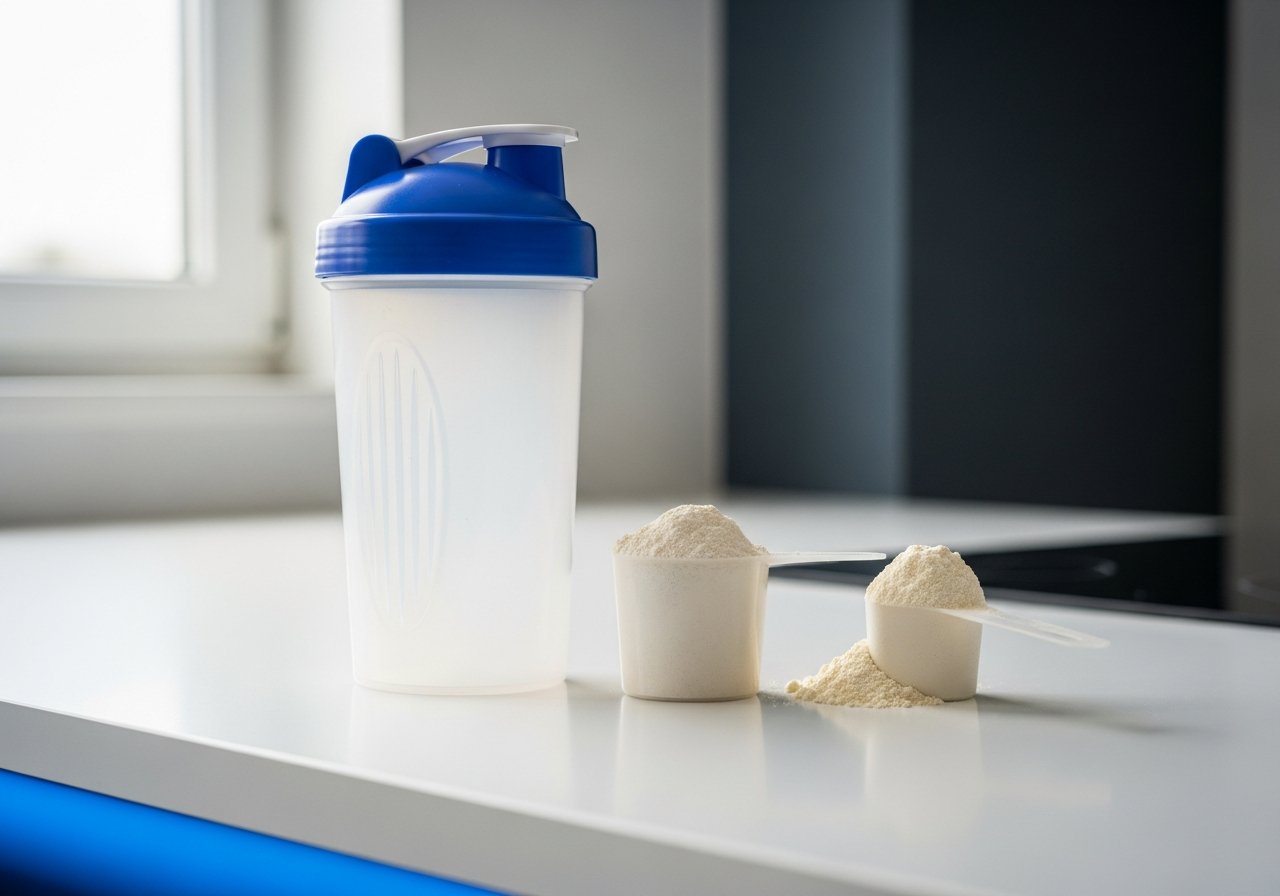
Yes, you can take protein and creatine together safely. In fact, combining them is common because they serve different functions and there is no good evidence that taking them together reduces creatine's effectiveness.
This also answers closely related searches: "can i have protein and creatine together," "can you have protein and creatine together," "can i mix amino acids with creatine," and "can you take creatine with amino acids." In healthy adults, these combinations are generally straightforward when used in normal recommended doses.
Here is the practical version:
- Creatine + whey protein: fine.
- Creatine + EAAs or BCAAs: fine.
- Creatine + a meal containing protein: fine.
- Creatine + post-workout shake: fine.
You do not need a complicated stack. The easiest approach is to put 3-5 g of creatine monohydrate into whatever you already drink consistently each day, such as a protein shake, smoothie, or glass of water. Consistency matters far more than chasing a perfect pairing.
Some people ask whether amino acids improve creatine absorption. The evidence does not justify buying extra amino acids just to "drive in" creatine. What matters most is taking enough creatine daily to saturate muscle stores over time. The 2021 JISSN review on common creatine questions and misconceptions reinforces that many popular claims around special forms or special stacking strategies are overstated compared with the well-established effectiveness of standard monohydrate.
Simple mixing instructions:
- Add your protein powder to water or milk.
- Add 3-5 g creatine monohydrate.
- Shake well and drink.
- Repeat daily, including rest days.
If the texture is gritty, use more liquid or slightly warm water first, then add it to the shake. Micronized creatine can mix a bit better, but standard monohydrate still works very well.
If you want a detailed walkthrough, our guides on how to take creatine and how to mix creatine cover exact steps and common troubleshooting.
How to take creatine properly: exact steps, doses, and what to expect week by week
The best way to take creatine is simple: use creatine monohydrate every day, at a dose that is high enough to saturate muscle stores and easy enough to keep doing consistently. For most adults, that means 3-5 g per day.
Here is the step-by-step plan:
- Choose creatine monohydrate. It is the most studied, most cost-effective form.
- Pick your dose. Most people do well with 3-5 g daily.
- Decide whether to load. If you want faster results, take 20 g per day split into 4 doses of 5 g for 5-7 days, then drop to 3-5 g daily.
- Take it every day. Training day and rest day both count.
- Mix it with water, a shake, or a meal. Timing is secondary to consistency.
What to expect week by week:
- Days 1-7 with loading: muscle creatine stores rise faster; some people notice a small body-weight increase from more water stored inside muscle.
- Weeks 2-4 without loading: saturation gradually builds with daily use.
- Weeks 2-6: many people notice improved gym performance, especially better repeated efforts or an extra rep at a given weight.
- Weeks 4-12: the bigger payoff appears through training progress, not a stimulant-like feeling.
How to tell it is working:
- Your work capacity in the gym improves slightly.
- You maintain performance better across repeated hard sets.
- Your muscles may look a bit fuller.
- Over time, strength and lean mass progress may improve if training and nutrition are in place.
Body-weight examples for maintenance:
- 60 kg person: 3 g daily is often plenty.
- 75 kg person: 3-5 g daily is standard.
- 95 kg person: 5 g daily is a practical default.
Body-weight examples for loading:
- Any average-sized adult: 20 g/day split into 4 doses for 5-7 days.
If you miss a day, do not panic and do not double up aggressively the next day. Just resume your usual dose. Saturation is a long-game effect. For more detailed protocols, see the loading phase guide and how long creatine takes to work.
Best timing, and who creatine is for: beginners, women, older adults, and athletes
The best time to take creatine is the time you will remember every day. Timing matters much less than daily consistency because creatine works by gradually increasing muscle creatine stores, not by delivering an immediate stimulant effect.
That means morning, post-workout, with lunch, or before bed can all work. If attaching it to a routine helps, many people take creatine with their post-workout shake or a regular meal. If you want the deeper timing evidence, see when to take creatine.
Creatine is relevant for more groups than many people realise:
- Beginners: yes, beginners can use creatine. It is often easier to start early with a simple 3-5 g daily habit than to wait until supplements become confusing.
- Women: yes, women can and do benefit from creatine. It does not automatically make women bulky, and it can support strength, performance, and lean mass when paired with training. See creatine for women.
- Older adults: creatine can be useful alongside resistance training to support strength and muscle function with ageing. See creatine for older adults.
- Athletes: especially useful in sports with repeated sprinting, jumping, lifting, and high-intensity intervals.
- Vegetarians and vegans: often strong candidates because dietary creatine intake from meat and fish is low or absent.
Creatine is less obviously useful if your activity is purely low-intensity steady-state work and you do no strength or sprint-style training at all, although some people still value it for preserving strength and supporting training quality.
If you are a true beginner, use this starter routine:
- Buy plain creatine monohydrate.
- Take 3 g daily for the first two weeks if you want to ease in gently.
- Move to 3-5 g daily ongoing.
- Take it with the meal or shake you least often forget.
This is one of the rare supplements where the beginner-friendly plan is basically the same as the advanced plan. You do not need cycling, fancy forms, or complicated timing windows to get benefits.
Safety, side effects, and smart buying in Canada
Creatine monohydrate is well-supported for safety in healthy individuals when used at recommended doses, but it can still cause manageable side effects in some people. The most common issues are mild stomach upset, loose stools when large doses are taken at once, and a small increase in body weight from increased water stored inside muscle.
The Mayo Clinic overview and the 2017 ISSN position stand both support creatine's generally favourable safety profile in healthy users. One important nuance is that creatine can increase creatinine, a breakdown product measured on blood tests, without necessarily indicating kidney damage. That distinction causes a lot of unnecessary panic, which we explain in our kidney guide and creatine vs creatinine.
Common side effects and fixes:
- Stomach upset: split the dose, take it with food, or use smaller daily servings.
- Loose stools: avoid taking 10-20 g at once; loading should be divided into 4 doses.
- Temporary weight increase: usually reflects more intracellular water, not fat gain.
- Grittiness: dissolve in more liquid or choose micronized creatine.
Who should be cautious:
- People with known kidney disease should speak with their physician before use.
- People taking medications that affect kidney function should ask a healthcare professional first.
- Pregnant or breastfeeding individuals should get personalised medical advice.
For buying in Canada, look for:
- Creatine monohydrate as the primary ingredient.
- NPN on the label where applicable.
- Clear dosing in grams, not proprietary blends.
- Third-party testing or strong brand reputation.
In 2026, the smart Canadian buying rule still holds: plain monohydrate from a reputable seller usually beats trendier forms on evidence and value. Our best creatine monohydrate in Canada guide and rankings can help you narrow it down.
Myths and mistakes: the biggest reasons people still misunderstand creatine
The biggest myth is that creatine and protein are basically the same thing because both are associated with muscle growth. They are not. Protein is food-level nutrition; creatine is a specific performance-support compound.
Here are the most common misconceptions, answered directly:
- Myth: Creatine is a protein. False. Creatine is not a protein and does not count toward your protein target.
- Myth: Creatine is an amino acid. False. It is made from amino acids but is not itself an amino acid.
- Myth: Creatine only works if you take it right before a workout. False. Daily saturation matters more than exact timing.
- Myth: You must cycle creatine. False for most healthy users. Routine cycling is not required.
- Myth: Creatine automatically causes bloating and fat gain. Misleading. Some people gain water weight inside muscle, which is different from fat gain.
- Myth: Fancy forms always beat monohydrate. Usually false. Monohydrate remains the evidence-based standard.
The most common practical mistakes are also simple:
- Taking too little or too inconsistently. One random scoop now and then will not maintain saturation.
- Expecting a stimulant feeling. Creatine is not pre-workout; it works gradually.
- Using huge single doses. This often causes digestive issues without extra benefit.
- Replacing protein with creatine. This leaves your actual nutrition gap unsolved.
- Buying blends without checking the label. You may think you bought creatine, but actually bought a small underdosed add-on in a bigger formula.
If you think creatine is not working, first ask whether you have taken 3-5 g daily for at least 3-4 weeks, or whether you loaded properly and kept up the maintenance dose after. Then ask whether your training gives creatine something to enhance. It works best when you do repeated high-intensity efforts.
For more myth-busting, read creatine myths debunked and our myths vs facts guide. The short takeaway is reassuring: most creatine confusion comes from marketing and mixed-up terminology, not from the actual science.
Bottom line: what creatine really is, and what to do next
Creatine is not a protein and it is not an amino acid. Creatine is a compound your body makes from glycine, arginine, and methionine, and its main supplement role is to help regenerate rapid energy in muscle during high-intensity exercise.
If you remember only four things, remember these:
- Creatine does not replace protein. You still need adequate daily protein from food or protein powder.
- Creatine monohydrate is the standard choice. It is the most studied and usually the best value.
- Take it daily. For most people, 3-5 g per day is enough.
- You can combine it with protein. Taking both together is normal and often ideal.
For someone standing in a supplement aisle wondering what to buy, the practical plan is simple. If your diet is low in protein, fix that first. If your protein intake is already decent and you train hard, add creatine monohydrate. If you want the strongest overall setup for muscle and performance, use both appropriately.
You do not need a special stack, a special timing trick, or an overpriced version. You need an evidence-based dose, consistency, and realistic expectations. Creatine's benefits show up through better training quality over time, not because it is secretly a protein.
If your next step is practical, go here:
- Calculate your dose
- Read the beginner guide
- Follow the step-by-step usage guide
- Learn how to stack creatine with protein powder
That is the whole answer in one sentence: creatine is an energy-support compound made from amino acids, not a protein source, and it works best when paired with adequate protein intake and consistent training.
Creatine vs Protein: the numbers that matter
- 3-5 g/day Standard creatine maintenance dose — Typical daily amount used to maintain muscle creatine saturation.
- 20 g/day Typical loading dose — Usually split into 4 doses for 5-7 days to saturate faster.
- 3 amino acids Raw materials used to make creatine — Glycine, arginine, and methionine.
- ~95% Of body creatine stored in muscle — Mostly as free creatine and phosphocreatine.
Frequently Asked Questions
Is creatine a protein source?
No, creatine is not a protein source. Creatine does not provide meaningful grams of protein and should not be counted toward your daily protein intake, because its role is to support rapid energy production in muscle rather than supply amino acids for tissue building.
Is creatine an amino acid?
No, creatine is not an amino acid. Creatine is a separate compound that your body makes from the amino acids glycine, arginine, and methionine, which is why people often confuse the terms.
Does creatine have protein in it?
Plain creatine monohydrate does not have meaningful protein in it. If a product contains both protein and creatine, that is because it is a blend or stack, not because creatine itself is a protein.
What are the 3 amino acids in creatine?
The three amino acids used to make creatine are glycine, arginine, and methionine. Your body combines these through enzyme-driven steps to produce creatine, which is then stored mostly in muscle.
Can I take protein and creatine together?
Yes, you can take protein and creatine together. They are commonly combined in the same shake because protein helps you meet muscle-building nutrition needs while creatine helps support high-intensity training performance.
Can you mix amino acids with creatine?
Yes, you can mix amino acids with creatine. There is no established problem with taking creatine alongside EAAs or BCAAs, although most people do not need extra amino acids just to make creatine work.
Is it better to take protein or creatine?
Protein is usually the first priority if your daily intake is low, because protein is nutritionally foundational. Creatine becomes the higher-value add-on once your diet is already solid and you want more strength, power, or training volume support.
Does creatine powder have protein?
Pure creatine powder does not contain useful protein. A normal creatine dose is only 3-5 g, whereas an effective protein serving is typically many times larger and serves a completely different purpose.
Can you take creatine with amino acids?
Yes, you can take creatine with amino acids. For healthy adults, combining creatine with amino acid supplements is generally straightforward, but the main driver of creatine results is still consistent daily dosing.
If I use creatine, do I still need protein?
Yes, you still need protein if you use creatine. Creatine can improve performance and support muscle gains indirectly, but it does not replace the amino acids your body needs to repair and build muscle tissue.