Does Creatine Increase Testosterone? Hormones and Creatine
By The Creatine Canada Research Team — Evidence-based supplement analysts
Creatine does not reliably increase testosterone in healthy people, and the current evidence does not support using creatine as a testosterone booster. Creatine helps performance by raising muscle phosphocreatine stores and improving rapid energy supply, not by meaningfully changing male or female sex hormones.
Evidence-based · Cites 4 sources · Editorial standards
Key Takeaways
- The best-supported answer is no: creatine does not consistently raise total or free testosterone.
- Creatine works through muscle energy metabolism, not by stimulating testosterone production.
- One small older study raised questions about DHT, but the broader evidence has not confirmed a consistent hormone effect.
- A standard maintenance dose is 3-5 g per day; loading is optional at 20 g per day split into 4 doses for 5-7 days.
- You can generally take creatine with prescribed testosterone therapy, but medical supervision matters if you have labs or health conditions to monitor.
- Women, older adults, beginners, and athletes can use creatine for performance and muscle support without expecting a hormone boost.
Does creatine increase testosterone? Here is the short, evidence-based answer
No, creatine does not reliably increase testosterone, and it should not be marketed or used as a testosterone booster. The strongest modern reading of the evidence is that creatine improves training performance, lean mass gains, and repeated high-intensity output mainly by increasing muscle phosphocreatine, which is stored creatine bound to phosphate and used to rapidly regenerate ATP, the cell’s immediate energy currency.
If you searched for does creatine boost testosterone, does creatine raise testosterone, or can creatine increase testosterone levels, the practical answer is the same: do not expect a meaningful or consistent rise in total testosterone, free testosterone, or other major sex hormones from standard creatine supplementation alone. The 2017 ISSN position stand and the 2021 JISSN review on common creatine questions and misconceptions support creatine for performance and safety, not as a hormone-enhancing supplement.
This distinction matters because people often confuse better training results with higher testosterone. Creatine can help you do more quality work in the gym, recover better between hard efforts, and over time gain more strength and lean mass than training alone. Those outcomes can happen without any meaningful change in testosterone. In other words, if your bench, sprint speed, or training volume improves after a few weeks on creatine, that does not prove your hormones changed.
Creatine is also not a steroid. If you need that deeper comparison, our guides on creatine myths debunked and related safety topics can help separate supplement marketing from physiology. Creatine is a naturally occurring compound made from amino acids and found in foods like meat and fish; supplemental creatine simply raises tissue stores more efficiently than diet alone.
For most healthy adults, the best reason to take creatine is performance and training support, not endocrine manipulation. If your actual goal is to assess low testosterone symptoms, fertility concerns, menstrual changes, menopause symptoms, libido, or hormone therapy interactions, creatine is the wrong tool for diagnosis and only a supporting tool for training outcomes.
Why creatine helps performance without needing to change your hormones
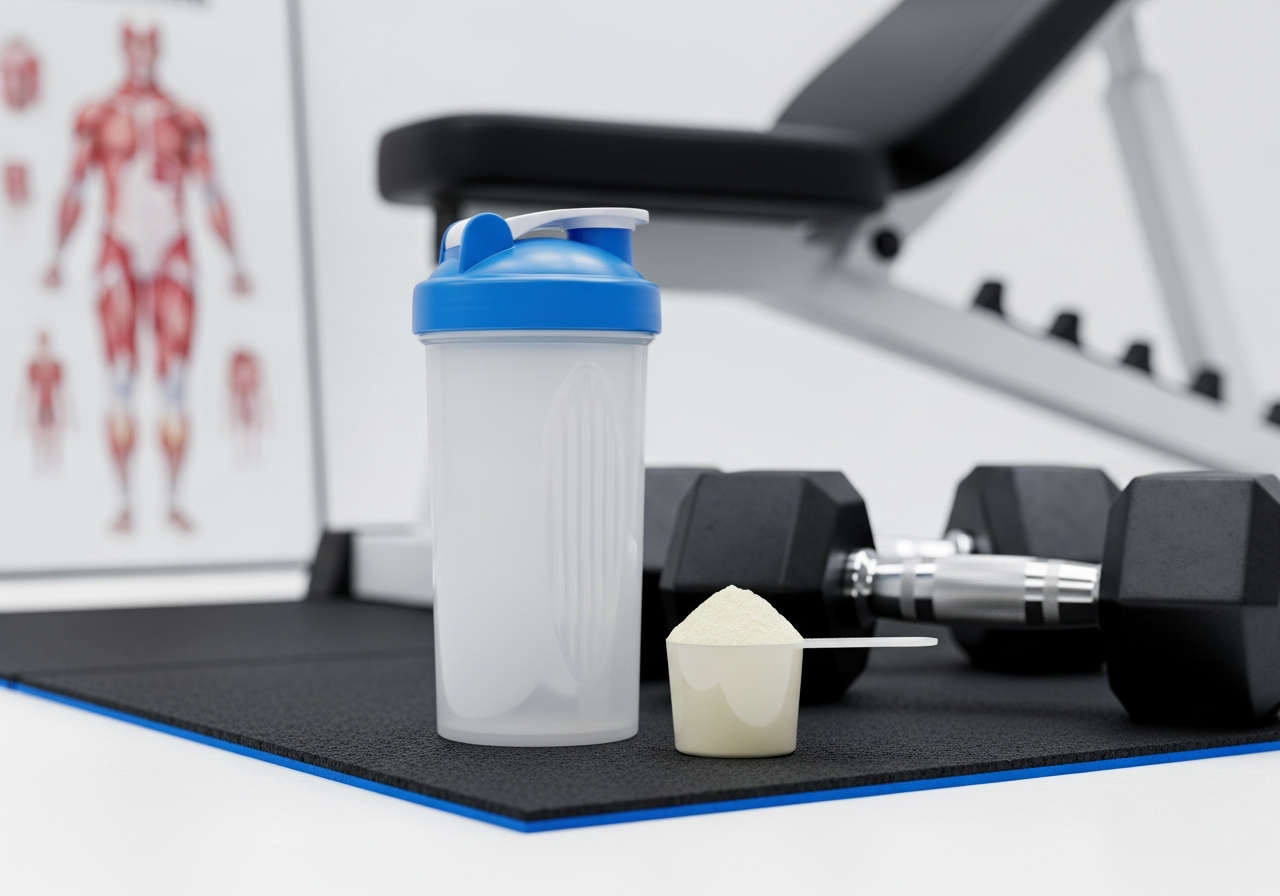
Creatine helps exercise performance through energy recycling inside muscle, not by telling your body to produce more testosterone. That is the key mechanism to understand if you want a clear answer to can creatine affect your hormones or does creatine help hormones.
About 95% of the body’s creatine is stored in skeletal muscle, where some of it exists as phosphocreatine. During short, explosive efforts such as a heavy set of squats, a sprint, a jump, or repeated intervals, phosphocreatine donates a phosphate group to help regenerate ATP quickly. More stored creatine means you can often maintain power output slightly better, squeeze out an extra rep or two, or recover faster between repeated efforts. Over weeks and months, those small session-by-session advantages can translate into better strength and lean mass gains.
That mechanism is fundamentally different from endocrine signalling. Testosterone is a hormone produced primarily in the testes in men and in smaller amounts in the ovaries and adrenal glands in women. Growth hormone is produced by the pituitary. Creatine does not have a well-established mechanism showing that standard oral doses directly stimulate those glands to produce more hormone in healthy users. If you are asking can creatine increase growth hormone, the practical answer is that creatine is not considered a reliable growth hormone booster either.
Why, then, do people keep assuming a hormone effect? There are three common reasons:
- More strength is mistaken for more testosterone. Performance improves because of higher creatine availability in muscle, not because your endocrine system has been “turned up.”
- Water retention is misread as anabolic hormonal change. Early weight gain on creatine is usually intracellular water inside muscle, not proof of higher testosterone.
- Acute exercise hormone spikes get overinterpreted. Hard training itself can transiently change some hormone readings, but those short-lived shifts are not the same thing as a sustained supplement-driven rise in baseline testosterone.
This is also why creatine can help women, older adults, and some vegetarians or vegans despite very different baseline hormone profiles. The common denominator is not sex hormone status; it is the ability of added creatine to improve muscle energy availability. If you want the bigger primer, see what creatine is and what it does and the evidence-based benefits of creatine.
What the research actually says about testosterone, DHT, and creatine
The current body of evidence does not show a consistent increase in testosterone from creatine, and the DHT question remains narrower and more uncertain than social media suggests. If you searched does creatine affect testosterone, can creatine affect testosterone, or does creatine increase dihydrotestosterone, nuance matters here.
Most creatine research was designed to study performance, strength, lean mass, and safety rather than endocrine outcomes. Across that larger literature, testosterone is not a reproducible benefit. Reviews such as the 2021 JISSN paper by Antonio and colleagues specifically address common misconceptions and do not support the claim that creatine is a dependable testosterone booster. Evidence summaries such as Examine’s creatine review reach a similar practical conclusion: any testosterone changes seen in individual studies are not consistent enough to base purchasing or supplementation decisions on.
The DHT discussion usually traces back to one small, older rugby study that reported changes in dihydrotestosterone, or DHT, a more potent androgen made when the enzyme 5-alpha-reductase converts testosterone into DHT. That study became famous online because DHT is often discussed in relation to hair loss and androgenic effects. But a single small study is not enough to establish a reliable biological effect, especially when later evidence has not consistently replicated it. A plausible finding is not the same as a settled one.
So what is the fair summary?
- Total testosterone: no consistent increase across the broader evidence base.
- Free testosterone: no consistent increase strong enough to call creatine a hormone booster.
- DHT: one notable study raised interest, but the evidence is too limited and inconsistent to conclude that creatine reliably raises DHT in real-world users.
- Other hormones: creatine is not established as a meaningful enhancer of growth hormone, oestrogen, progesterone, or cortisol regulation in everyday supplementation.
This is why credible practitioners say creatine can affect training outcomes without materially affecting hormones. If your main concern is DHT and hair, read a more focused breakdown like does creatine cause hair loss. If your main concern is whether creatine can “mess with hormones,” the evidence does not support broad endocrine disruption in healthy users at standard doses.
Can creatine affect hormones in women, menopause, or older adults?
Creatine can support training and muscle function in women and older adults, but it is not a proven treatment for hormone imbalance and should not be expected to correct low oestrogen, low testosterone, or menopause-related endocrine changes. That is the clearest answer to does creatine help with hormones and can creatine help testosterone in these groups.
Women often ask this because hormonal context matters for training, recovery, body composition, and symptoms across the menstrual cycle, postpartum periods, perimenopause, and menopause. Creatine may still be useful, just for different reasons. It can support resistance training quality, lean mass retention, and high-intensity exercise capacity. Those benefits may be especially valuable when age-related muscle loss, lower training recovery, or changing body composition become practical concerns.
Older adults are another important group. Creatine paired with resistance training is often used to support strength and muscle preservation with ageing. Again, that benefit does not require a rise in testosterone. It is more accurately explained by improved phosphocreatine availability, better training tolerance, and potentially better adaptation to repeated resistance exercise.
For women specifically, creatine is not masculinizing at normal doses. It does not act like an anabolic steroid, and it is not known to raise testosterone in a way that would be expected to cause androgenic side effects in healthy users. If a woman gains a small amount of scale weight after starting creatine, that is usually water stored inside muscle, not a sign of “male hormones going up.” Our guide on creatine for women covers that in more depth.
Where extra caution is sensible:
- If you have diagnosed endocrine disorders, use medications that affect hormones, or are being investigated for irregular cycles, fertility, PCOS, menopause symptoms, or low testosterone, use creatine as a training supplement, not as self-treatment.
- If you are tracking lab work, tell your clinician you use creatine because creatinine blood values can be interpreted differently in context, even though creatine itself is not the same as creatinine.
- If symptoms such as low libido, fatigue, menstrual changes, hot flashes, or erectile concerns are the primary issue, proper medical assessment matters more than any supplement stack.
In short, creatine may help your body perform better under training stress, but it is not established as a direct hormone optimiser for women, menopausal adults, or older adults.
Can you take creatine with testosterone therapy or a testosterone booster?
Yes, you can usually take creatine with prescribed testosterone under medical supervision, but creatine should be viewed as a separate performance supplement rather than a hormone amplifier. That directly answers can I take testosterone and creatine at the same time, can you take creatine with testosterone, and can you take testosterone and creatine at the same time.
There is no well-established interaction showing that creatine cancels testosterone therapy or makes it dangerous in otherwise appropriate users. Creatine works primarily in muscle energy systems, while testosterone replacement therapy, or TRT, changes hormone levels more directly. In practice, many people use both because they serve different purposes: TRT addresses clinically assessed hormone deficiency or treatment goals, while creatine supports repeated high-intensity performance and training capacity.
That said, there are three important caveats:
- Do not use creatine as a substitute for evaluation. If you think you have low testosterone, get assessed rather than trying supplements at random.
- Monitor labs through your clinician. Creatine can increase creatinine, a breakdown product commonly measured in blood tests, which may require context when kidney function is assessed. This is not the same as creatine damaging healthy kidneys, but it can complicate interpretation.
- Be more cautious with “test boosters.” Over-the-counter testosterone boosters often contain multiple ingredients with weaker evidence and a greater chance of poor quality control than plain creatine monohydrate.
If you are stacking creatine with a generic testosterone booster, the bigger question is usually not creatine safety but whether the booster is evidence-based at all. Plain creatine monohydrate is simple, well studied, and easier to evaluate. A multi-ingredient proprietary blend is harder to assess, more expensive, and more likely to overpromise endocrine effects.
For athletes in Canada, product quality matters. Look for a clear ingredient panel, a Natural Product Number when applicable, and preferably third-party testing or strong manufacturing transparency. If you are comparing options, see our best creatine rankings, creatine brand reviews, and product catalog. If your use case includes medical treatment, bring the exact product to your clinician or pharmacist before you add it.
How to take creatine correctly when your goal is performance, strength, or muscle
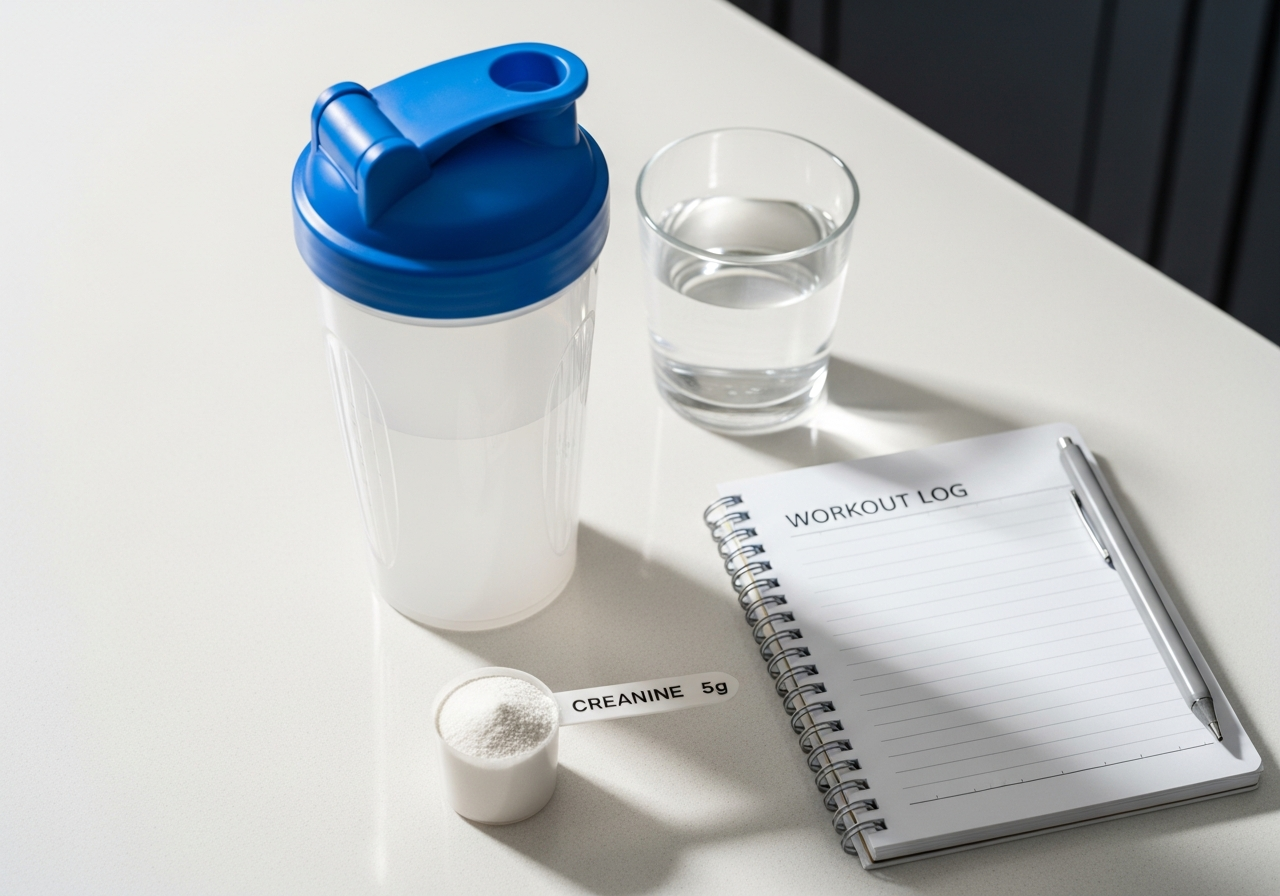
If your real goal is better training results rather than higher testosterone, the simplest effective creatine plan is 3-5 g of creatine monohydrate per day, every day. That is the most actionable answer for beginners wondering what to actually do after learning that creatine does not meaningfully raise testosterone.
Here is the practical step-by-step:
- Choose creatine monohydrate. It is the most studied, most cost-effective form and the benchmark used in the ISSN position stand.
- Decide whether to load. Loading means about 20 g per day split into 4 doses of 5 g for 5-7 days, followed by 3-5 g per day. Loading is optional; it saturates muscle stores faster but is not required.
- If you skip loading, take 3-5 g daily. Full saturation takes longer, typically several weeks rather than one week.
- Take it whenever you will remember it. Timing matters much less than daily consistency. If you want a deeper timing discussion, see when to take creatine.
- Mix it with water or a meal you already use regularly. Routine beats perfection.
- Stay reasonably hydrated. You do not need extreme water intake, but you should not ignore hydration basics either.
Typical body-weight examples for a maintenance-style approach:
- 60 kg person: 3 g daily is reasonable; 5 g is also common and still within standard practice.
- 75 kg person: 3-5 g daily is standard.
- 90 kg person: 5 g daily is a practical default.
- 100 kg+ strength athlete: 5 g daily is still common; some larger athletes use slightly more, but for most readers there is no need to overcomplicate it.
What to expect: with loading, many people notice fuller muscles, a small body-weight increase, and improved training quality within 1-2 weeks. Without loading, those changes usually emerge more gradually over 3-4 weeks. If you want dose help, use our creatine dosage calculator and read how much creatine per day and how to take creatine.
Best creatine dose by goal, body size, and timeline
The right creatine dose depends more on saturation strategy and body size than on hormone goals, because creatine is not taken to raise testosterone. The table below gives practical dosing that aligns with mainstream evidence and real-world adherence.
| Goal | Body size / context | Suggested dose | What to expect |
|---|---|---|---|
| General fitness | Most adults | 3-5 g daily | Gradual saturation over several weeks; improved training capacity and muscle fullness |
| Faster saturation | Most adults willing to load | 20 g daily for 5-7 days split into 4 x 5 g, then 3-5 g daily | Quicker effect within about 1 week; higher chance of mild stomach upset if taken in large single doses |
| Smaller body size | About 60 kg | 3 g daily maintenance | Effective for most; can still use 5 g daily if preferred for simplicity |
| Larger strength athlete | About 90 kg or more | 5 g daily maintenance | Simple, evidence-based default for long-term use |
| Older adult using resistance training | 50+ | 3-5 g daily | Supports training adaptations and muscle maintenance over time |
| Vegetarian or vegan | Lower dietary creatine intake | 3-5 g daily, optional loading | May notice robust response because baseline stores can be lower |
Three important dosing notes:
- More is not better once stores are saturated. Taking far above a standard maintenance dose does not turn creatine into a testosterone enhancer.
- Split loading doses if you use them. Four 5 g servings are usually easier on digestion than one large dose.
- Daily consistency matters most. Missing one day is not a disaster, but regular intake works best because creatine benefits depend on maintaining elevated tissue stores.
If your goal is fat loss, cutting, or sport performance, the dose usually stays the same; what changes is your expectation. Creatine does not directly burn fat or directly alter hormones, but it can help preserve training quality during a calorie deficit or hard practice block. For a fuller expectation-setting guide, see how long creatine takes to work and creatine maintenance dose.
The bottom line on dosing is straightforward: pick creatine monohydrate, use a proven dose, and judge success by better training output over time, not by hoping for a hormone spike.
Can creatine mess with hormones or cause side effects? What safety data really shows
Creatine is well supported for safety in healthy people at recommended doses, and there is no strong evidence that it broadly disrupts hormones. That is the practical answer to can creatine mess with hormones and can creatine lower testosterone.
The 2017 ISSN position stand concluded that creatine monohydrate is effective and generally safe when used appropriately, and later reviews have reinforced that creatine’s reputation for major endocrine disruption is not evidence-based. Common real-world side effects are usually much less dramatic than online claims suggest:
- Temporary weight gain: often from increased water inside muscle, especially in the first 1-2 weeks.
- Stomach upset: more likely if you take too much at once, especially during loading.
- Occasional bloating complaints: often improved by smaller doses, better mixing, or skipping loading.
What creatine does not reliably do is lower testosterone, feminize men, masculinize women, or scramble your endocrine system. Those ideas are usually extrapolated from anecdotes, confusion with anabolic steroids, or overreaction to isolated DHT discussion.
Reasonable caution is still appropriate in some situations:
- If you have kidney disease, significant renal concerns, or are under medical monitoring for kidney function, speak with your clinician before using creatine.
- If you are pregnant or breastfeeding, consult your healthcare provider because routine supplementation decisions deserve individual review.
- If you use prescription hormone therapy, involve the clinician who orders your labs.
- If you get blood work, mention creatine use because creatinine values can be interpreted differently in supplement users.
For Canadians, plain creatine monohydrate with transparent labelling is the safest buying strategy. Look for products with clear dosing instructions, a short ingredient list, and good manufacturing credibility. A Natural Product Number, or NPN, is a Health Canada product licence identifier used on many natural health products sold in Canada; it does not guarantee superiority, but it does signal a regulated pathway and label review. Third-party testing is another plus, especially for competitive athletes.
If side effects are your main concern, see is creatine safe, creatine digestive side effects, and creatine and kidney concerns.
The biggest myths: testosterone booster claims, DHT panic, and other creatine misconceptions
The biggest mistake is buying creatine for the wrong reason: creatine is a performance supplement, not a proven testosterone booster. This single misunderstanding drives most of the confusion behind searches like do creatine boost testosterone, do creatine increase testosterone, and can creatine raise testosterone levels.
Here are the claims that need the most correction:
- Myth 1: “Creatine works because it raises testosterone.”
False. Creatine works mainly by increasing phosphocreatine availability and helping rapid ATP regeneration during high-intensity work. - Myth 2: “If I gained strength fast, my testosterone must have gone up.”
False. Early improvements often come from better training quality, better water retention inside muscle, and improved repeated-effort capacity. - Myth 3: “Creatine definitely raises DHT, so it will affect hair and hormones.”
Overstated. One small study raised the possibility, but broader evidence has not established a reliable DHT-raising effect in everyday users. - Myth 4: “Creatine is basically a steroid.”
False. Creatine is not an anabolic steroid and does not work through the same mechanisms. - Myth 5: “Women should avoid creatine because it affects testosterone.”
False. Women can use creatine for performance and body-composition support without expecting steroid-like hormone effects. - Myth 6: “If some is good, more must be better.”
False. Once muscle stores are saturated, extra creatine does not become a hormone booster.
Another common mistake is buying flashy “hormone support” blends that include a little creatine alongside stimulants, herbs, or underdosed ingredients. In those formulas, creatine often functions as label decoration rather than the reason the product exists. If your goal is evidence and value, plain creatine monohydrate almost always makes more sense than a proprietary testosterone-support stack.
Finally, beware the language shift from increase testosterone to supports hormones. That softer wording often sidesteps the fact that evidence is weak or indirect. If a brand cannot explain the mechanism, dose, timeline, and actual human evidence, it is probably selling a story more than a result. For a broader myth clean-up, visit creatine myths debunked and creatine myths vs facts.
What to buy in Canada: the best creatine type if hormone claims are confusing you
If you are shopping in Canada and wondering which creatine to buy, choose plain creatine monohydrate and ignore products implying they will raise testosterone. That is the best value, the best-studied option, and the easiest format to assess for quality.
Monohydrate still wins because it has the deepest evidence base for efficacy and safety, and alternative forms have not shown consistent superiority for the outcomes most people care about. When a product leans heavily on “test support,” “male vitality,” or “hormone optimization” messaging, treat that as a reason to read the label more critically, not less.
Use this quick buying checklist:
- Form: choose creatine monohydrate first.
- Ingredients: ideally just creatine monohydrate, especially if you want to evaluate your response cleanly.
- Dose clarity: the label should clearly tell you how many grams per scoop or serving.
- Canadian compliance: check for proper label information and, when applicable, an NPN.
- Testing and manufacturing transparency: third-party testing and reputable manufacturing are meaningful positives.
- Price per 5 g serving: compare actual value, not just tub size.
A few practical buying notes for Canadians:
- Powder is usually the most cost-effective format.
- Micronized powder may mix a bit better, but it is still monohydrate.
- Capsules and gummies can work, but they often cost more per effective dose and may require many units to hit 3-5 g.
- Imported products without clear Canadian labelling may create unnecessary uncertainty.
If you want help choosing, compare current options in our best creatine rankings, browse brand reviews, and check our product catalog. If you are deciding between forms, our related guides on monohydrate, capsules, gummies, and other variants go much deeper. But for this topic, the simplest advice is still the strongest: do not pay extra for a creatine product because it hints at testosterone effects the evidence does not reliably support.
Bottom line: use creatine for performance, not as a testosterone supplement
Creatine does not reliably increase testosterone, and the best reason to take it is to support strength, power, lean mass gains, and repeated high-intensity performance. If you came here asking does creatine increase testosterone, can creatine boost testosterone, or can creatine affect hormones, that is the conclusion most consistent with current evidence.
The practical takeaway is simple. Use creatine if you want a well-supported, affordable supplement that helps training performance over time. Do not use creatine as a shortcut for low testosterone symptoms, hormonal concerns, or endocrine self-diagnosis. Those require proper medical evaluation, especially if you are considering TRT, are dealing with fertility or menstrual issues, or have symptoms such as persistent fatigue, low libido, or unexplained changes in body composition.
If you decide to take creatine, keep the plan boring and consistent:
- Choose creatine monohydrate.
- Take 3-5 g daily.
- Use loading only if you want faster saturation.
- Judge it by your training log, not by supplement marketing.
What success looks like is also straightforward: a few more quality reps, slightly better repeated sprint or interval output, more stable training performance across a hard block, and gradual improvements in strength or lean mass over weeks to months. What success does not look like is expecting a clinically meaningful hormone transformation from a scoop of creatine.
For next steps, most readers should continue with creatine for beginners, how to take creatine, is creatine safe, and best type of creatine. Those guides will help you actually use creatine well, which matters far more than chasing the myth that it changes testosterone.
Creatine and testosterone: the numbers that matter
- 3-5 g/day Standard creatine maintenance dose — The evidence-based daily dose used to maintain elevated muscle creatine stores.
- 20 g/day Typical loading dose — Usually split into 4 doses of 5 g for 5-7 days to saturate muscle faster.
- 5-7 days Loading phase timeline — Loading works faster than maintenance-only dosing, but it is optional.
- No consistent increase Testosterone finding in the broader evidence — Current evidence does not support creatine as a reliable testosterone booster.
Frequently Asked Questions
Does creatine boost testosterone?
No, creatine does not consistently boost testosterone in healthy users. Creatine’s main benefit is improving muscle phosphocreatine availability so you can perform better in short, high-intensity efforts, not directly increasing testosterone production.
Can creatine increase testosterone levels at all?
Creatine may occasionally coincide with small hormone changes in individual studies, but the overall evidence does not show a reliable increase in testosterone levels. In practice, you should not take creatine expecting a meaningful rise in total or free testosterone.
Does creatine affect testosterone?
Not in a consistent or clinically meaningful way for most people. The broader research base supports creatine for strength and performance, while any testosterone effects appear inconsistent, small, or not reproducible enough to guide supplementation decisions.
Does creatine increase dihydrotestosterone?
The evidence is too limited to say that creatine reliably increases DHT. One small older study raised the possibility, but later evidence has not clearly confirmed a consistent DHT-raising effect in regular creatine users.
Can creatine mess with hormones?
Creatine is not known to broadly mess with hormones in healthy people at standard doses. Most concerns come from confusion with steroids or overinterpretation of isolated findings rather than strong evidence of endocrine disruption.
Can creatine lower testosterone?
There is no strong evidence that standard creatine supplementation lowers testosterone in healthy users. If you have symptoms of low testosterone, they should be assessed medically rather than blamed on creatine without proper evaluation.
Can you take creatine with testosterone?
Yes, many people can take creatine with prescribed testosterone therapy, but it is best done with clinician awareness. Creatine and testosterone act through different mechanisms, and the main practical issue is making sure your lab work and overall treatment plan are interpreted correctly.
Can you take creatine with a testosterone booster?
Yes, but the more important question is whether the testosterone booster itself is evidence-based and well formulated. Plain creatine monohydrate is well supported; many multi-ingredient test boosters are not, so evaluate the full label carefully.
Can creatine increase growth hormone?
Creatine is not established as a reliable growth hormone booster. Its best-supported effects are on high-intensity exercise performance, training volume, and lean mass gains over time, not on raising pituitary hormone output.
What should I expect from creatine if not higher testosterone?
You should expect better training performance over time, not a hormone spike. With consistent use, many people notice slightly improved repeated-effort capacity, more training volume, fuller muscles, and gradual improvements in strength or lean mass over several weeks.