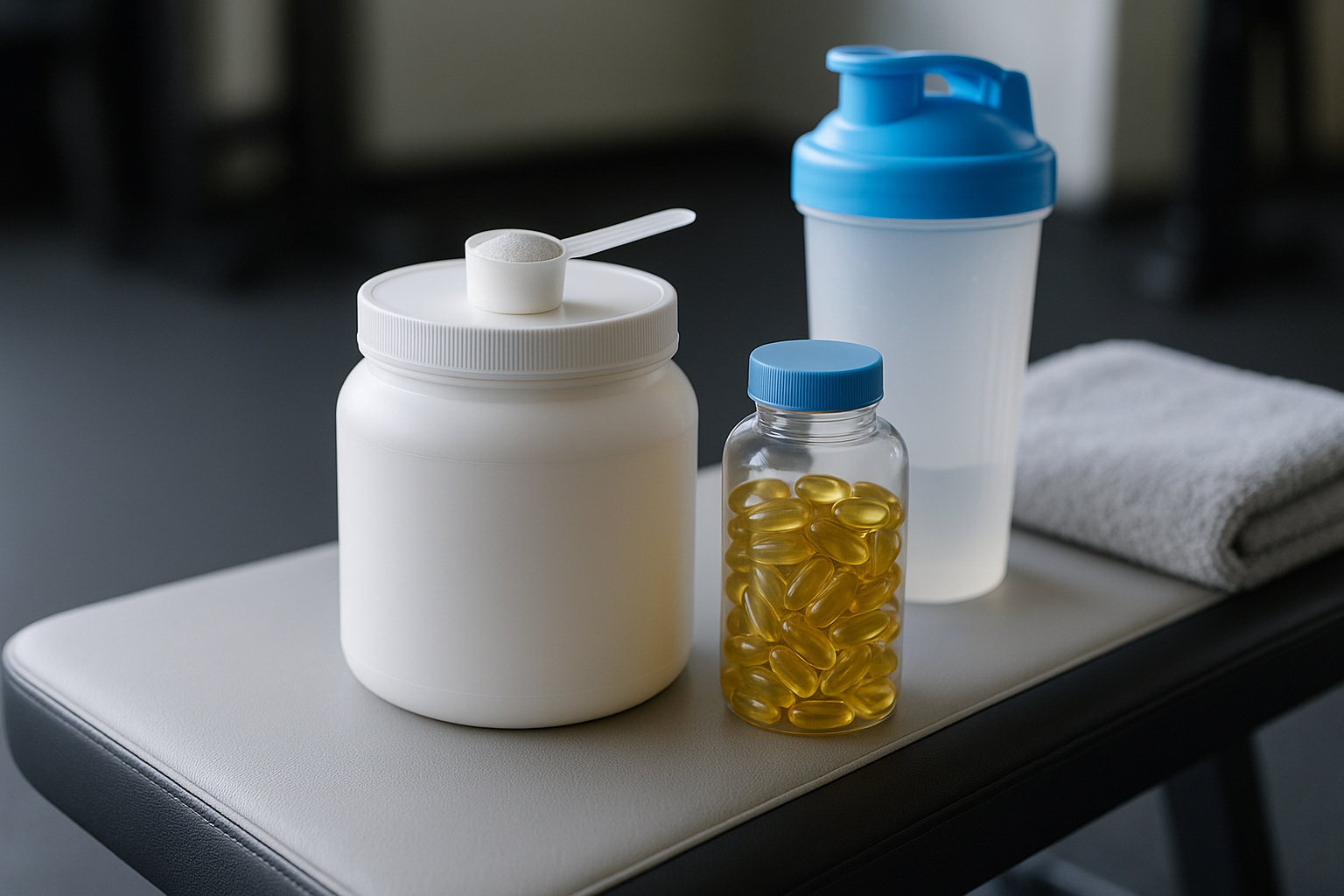
Creatine vs. Fish Oil: Two Essential Supplements With Very Different Jobs
By The Creatine Canada Research Team — Evidence-based supplement analysts
Creatine vs fish oil is not an either-or choice for most people, because they do very different jobs. Creatine is the better pick for strength, power, lean mass, and high-intensity performance, while fish oil is the better pick for increasing omega-3 intake and supporting cardiovascular health, with more modest and less direct sports-performance effects.
Evidence-based · Cites 4 sources · Editorial standards
Key Takeaways
- Choose creatine first if your main goal is strength, muscle, sprint performance, or gym progress.
- Choose fish oil first if you rarely eat fatty fish and want to improve your omega-3 intake for general health.
- Creatine and fish oil can be taken together because they work through different mechanisms and do not meaningfully compete for absorption.
- The evidence for creatine in exercise performance is much stronger and more consistent than the evidence for fish oil.
- A standard creatine monohydrate maintenance dose is 3-5 g daily, with optional loading at about 20 g daily split into 4 doses for 5-7 days.
- Fish oil labels should be judged by EPA and DHA content, not just total oil per capsule.
- In Canada, look for products with an NPN and, for athletes, consider third-party testing such as NSF Certified for Sport or Informed Sport.
Creatine vs. fish oil: which one should you actually buy first?
If you are choosing between creatine vs fish oil for training results, creatine is usually the better first purchase. Creatine directly improves the phosphocreatine energy system, which helps your muscles regenerate ATP, the immediate energy currency used during heavy lifts, sprints, jumps, and repeated hard efforts. Fish oil does not do that job. Fish oil supplies omega-3 fats, mainly EPA and DHA, which are important nutrients and may support cardiovascular health and inflammation balance, but they are not a substitute for creatine's performance role.
In plain English, creatine is a performance supplement and fish oil is a fatty acid supplement. That is why the answer depends on your goal. If your main target is more reps, more power, better training quality, and faster progress in strength or lean mass, choose creatine monohydrate first. If your main issue is that you almost never eat salmon, sardines, trout, mackerel, or other fatty fish, fish oil may fill a nutrition gap.
The 2017 ISSN position stand concluded that creatine monohydrate is the most effective nutritional supplement currently available for increasing high-intensity exercise capacity and lean body mass during training. That is a much stronger and more specific statement than anything that can fairly be said about fish oil for gym or sport performance.
For most active people, the most practical framework is this:
- Pick creatine if your goal is muscle, strength, power, sprint ability, or preserving training quality during hard blocks.
- Pick fish oil if your diet is low in omega-3-rich seafood and your goal is nutritional coverage rather than direct performance enhancement.
- Take both if you want the benefits of each, because creatine and fish oil together are generally compatible.
Beginners often overcomplicate this comparison. You do not need to ask whether creatine or omega 3 is universally “better.” The better supplement is the one that matches the job. Creatine helps your body do short, intense muscular work better. Fish oil helps improve omega-3 intake when food intake is low.
If you are new to creatine itself, start with our creatine dosage calculator and the beginner-friendly guide to creatine product catalog options so you can buy the right format without overspending.
Why creatine and omega-3 are not competitors in the body
Creatine and fish oil work through completely different biological pathways, which is why comparing them like two versions of the same supplement is misleading. Creatine is stored in muscle as free creatine and phosphocreatine. Phosphocreatine donates a phosphate group to help rapidly remake ATP during very intense effort. Fish oil provides the omega-3 fatty acids EPA and DHA, which become part of cell membranes and influence signalling processes throughout the body.
Creatine's core mechanism is fast energy buffering. During a hard set of squats or a 10-second sprint, ATP is used quickly. Muscle phosphocreatine helps restore ATP fast enough to support force output for those short bursts. When muscle creatine stores are saturated, training quality can improve, especially in repeated bouts of high-intensity work. Over time, better training quality can support greater strength and lean mass gains.
Fish oil's core mechanism is structural and signalling-based, not immediate energy production. EPA and DHA are incorporated into cell membranes, where they can affect membrane fluidity and the production of lipid signalling molecules. That can matter for general health, and it may influence recovery or soreness in some contexts, but it does not provide the same acute ATP-regenerating effect as creatine.
That is the key reason fish oil vs creatine is not a fair head-to-head for athletes whose priority is performance. One supplement changes how quickly high-energy phosphates are available during intense work. The other changes fatty acid intake and downstream physiology more indirectly.
The International Olympic Committee consensus on dietary supplements classed creatine among the small group of supplements with strong evidence for specific performance uses. Fish oil is not generally placed in the same performance-evidence tier for strength and power outcomes.
Here is the simplest way to remember the difference:
- Creatine: fuel support for explosive muscular work.
- Fish oil: omega-3 nutrition support for overall diet quality.
- Both together: possible, sensible, and common when goals include both performance and general health.
If you want a deeper primer on how creatine works at the cellular level, see what is creatine and our practical guide on creatine and ATP.
For athletes, creatine has the stronger performance case by a wide margin
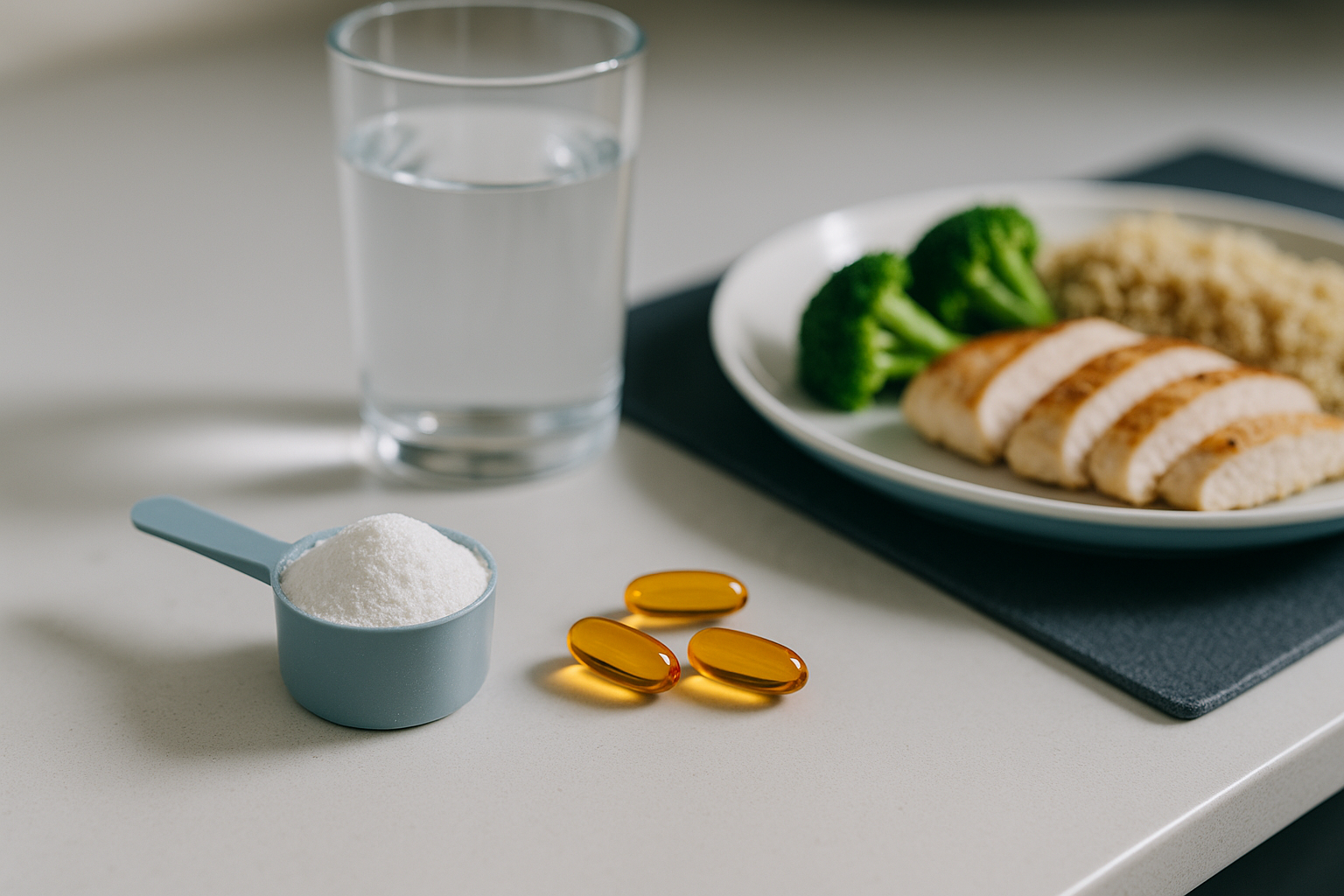
For athletes deciding between creatine vs omega-3 for performance, creatine has far stronger and more consistent evidence. Creatine supplementation reliably helps in sports and training that involve repeated high-intensity efforts, maximal strength, power, sprinting, jumping, and resistance training adaptations. Fish oil may have some supportive roles, but it is not in the same evidence class for these outcomes.
The strongest creatine evidence is in resistance training and repeated sprint or power-type exercise. The ISSN position stand and the 2021 JISSN review on common creatine questions both support creatine monohydrate as effective, well-studied, and safe for healthy people when used appropriately. Typical benefits are not magic, but they are meaningful: a bit more quality in hard training, a few more reps, slightly higher training volume, and over weeks to months, better strength and lean-mass progress than training alone.
Fish oil is different. The evidence for fish oil in athletes is more mixed and more goal-specific. Some people take it for general health, to increase omega-3 intake, or in the hope of helping recovery. But if your question is “which supplement is more likely to improve my squat, sprint repeatability, or muscle gain?”, fish oil is not the better answer.
This matters because shoppers often ask creatine or omega 3 as if both sit in the same budget line. If your budget only covers one supplement and you train hard, creatine usually gives the clearer return on investment for performance.
Who benefits most from creatine?
- Strength trainees and bodybuilders.
- Team-sport athletes who repeat hard efforts, such as hockey, soccer, lacrosse, rugby, and basketball players.
- Sprinters and jumpers.
- Vegetarians and vegans, who may start with lower creatine stores and sometimes respond especially well.
- Older adults doing resistance training, where preserving or improving muscle function matters.
Who might prioritise fish oil first?
- People who rarely eat fatty fish.
- People focused more on overall diet quality than on direct exercise performance.
If performance is your main lens, start with best creatine rankings, then learn the practical protocol in how to take creatine.
Can you take creatine and fish oil together? Yes, and for many people that makes the most sense
Yes, you can take creatine and fish oil together, and there is no known reason most healthy adults cannot combine them. Creatine and fish oil do not meaningfully cancel each other out, and they do not rely on the same mechanism. A fish oil and creatine stack is best understood as a “different jobs” stack rather than a “synergy” stack.
The practical reason to stack them is simple: creatine can cover a performance goal, while fish oil can cover an omega-3 intake gap. You do not need to separate them by hours, you do not need a special loading trick, and you do not need to take them around a workout in a precise sequence for the combination to work.
For convenience, most people can do one of these:
- Take creatine daily at any consistent time, such as with breakfast or after training.
- Take fish oil with a meal that contains food, which often improves tolerance and reduces “fish burps.”
- Take both with the same meal if that helps compliance.
The biggest benefit of taking them together is adherence, not some proven super-stack effect. Supplements only work if you take them consistently enough to matter. Creatine works by building and maintaining higher muscle stores over time. Fish oil works by consistently increasing EPA and DHA intake over time. In both cases, sporadic use is less useful than a simple routine you will actually follow.
There are a few practical caveats:
- If fish oil causes reflux or nausea, take it with a larger meal or split the dose.
- If creatine causes stomach upset, reduce the single serving size and divide it across the day.
- If you use medications or have a medical condition, ask your clinician before adding supplements, especially fish oil if bleeding risk is a concern.
Bottom line: “creatine and fish oil together” is usually a reasonable, low-drama stack for healthy adults. Just avoid expecting fish oil to amplify creatine's muscle-saturation mechanism in any dramatic way. Their value is additive because their purposes are different.
For stacking basics beyond fish oil, see creatine stacking guide and our safety primer on is creatine safe.
Exactly how much to take: creatine and fish oil dosing without the guesswork
For creatine, the evidence-based default is 3-5 g of creatine monohydrate daily, while fish oil dosing should be judged by EPA and DHA content rather than the total grams of oil. Those two rules eliminate most confusion.
Creatine dosing is straightforward. The standard maintenance approach is 3-5 g daily. A loading phase is optional: about 20 g daily, usually split into 4 doses of 5 g, for 5-7 days, followed by 3-5 g daily. Loading saturates muscle faster; it is not required for long-term benefit.
Body weight examples for creatine:
- 60 kg beginner: 3 g daily is often enough, though 5 g is also common and acceptable.
- 75 kg recreational lifter: 3-5 g daily.
- 90 kg strength athlete: 5 g daily is a practical default.
- Very large athlete or someone loading: 5 g four times daily for 5-7 days, then 5 g daily.
Fish oil dosing is less universal because labels vary. What matters is the amount of EPA and DHA, not the front-of-bottle “1000 mg fish oil” claim. Two fish oil products can both say 1000 mg per softgel but contain very different amounts of EPA and DHA. Read the Supplement Facts or Canadian Natural Product label carefully.
| Goal | Creatine | Fish oil |
|---|---|---|
| Strength and muscle | 3-5 g creatine monohydrate daily | Optional; not a substitute for creatine |
| Fast saturation | 20 g/day split into 4 doses for 5-7 days, then 3-5 g/day | Not relevant |
| General nutrition support | Optional unless training goals matter | Judge by EPA + DHA content, not total oil |
| Minimal-pill routine | Powder is usually easiest and cheapest | Take with meals if using softgels |
If you only want one simple recommendation: use plain creatine monohydrate at 3-5 g daily, and only add fish oil if your dietary omega-3 intake is low. That will suit most people asking “fish oil vs creatine” or “creatine vs omega-3.”
If you want a more tailored creatine plan, use the creatine dosage calculator and read how much creatine per day.
Timing, timelines, and what results to expect from each supplement
Creatine timing matters far less than daily consistency, while fish oil works more like a nutrition habit than a pre-workout aid. If you want real-world results, focus on taking the right dose often enough for long enough.
For creatine, daily use is the main variable that matters. Once muscle stores are saturated, the exact minute you take creatine is not especially important for most people. You can take it before training, after training, or on rest days with any meal or shake that helps you remember it. Our full breakdown on when to take creatine explains the nuance, but the short answer is that consistency beats timing.
Typical creatine timeline:
- Days 1-7 with loading: you may notice a small increase in body weight from greater intracellular water retention, meaning more water stored inside muscle.
- Weeks 1-2 without loading: not much to “feel,” but muscle stores are gradually rising if you take it daily.
- Weeks 2-4: some people notice slightly better repeat performance, extra reps, or better recovery between hard efforts.
- Weeks 4-12: the benefits are usually seen in training progress, not a dramatic immediate sensation.
Fish oil feels different because it usually does not produce a noticeable acute performance effect. Most people do not “feel” fish oil working in the gym. If you take it, you are doing so to improve omega-3 intake rather than to get a pre-lift boost.
This is one reason beginners underrate creatine and overrate more “feelable” supplements. Creatine is effective precisely because it changes muscle energy availability over time, even if it does not feel like a stimulant.
How do you know creatine is working?
- You maintain a daily dose for several weeks.
- Your training log shows slightly better volume, reps, or power over time.
- You may gain a modest amount of scale weight early from water stored in muscle, not fat.
How do you know fish oil is working? You often cannot tell subjectively. Its value is mostly in correcting a low omega-3 intake pattern, not in delivering a dramatic workout sensation.
If you want realistic expectations, read how long does creatine take to work and does creatine make you gain weight.
Who should choose creatine, who should choose fish oil, and who should use both
The best answer to creatine vs fish oil depends on who you are, how you train, and what your diet already covers. Most confusion disappears when you sort by goal and population rather than by marketing claims.
Choose creatine first if you are:
- A beginner starting resistance training and wanting better progress.
- A woman who wants strength and lean mass support without a stimulant-heavy supplement.
- An older adult using training to preserve muscle and function.
- An athlete in sprint, power, team-sport, or strength-dominant events.
- A vegetarian or vegan, because dietary creatine intake is lower when you do not eat meat or fish.
Choose fish oil first if you are:
- Someone who eats little or no fatty fish and wants to improve dietary omega-3 intake.
- More focused on general nutrition support than on direct performance benefits.
- Already meeting your strength goals and simply trying to cover nutritional gaps.
Use both if you are:
- An active adult who wants an evidence-based performance supplement plus better omega-3 intake.
- An athlete whose nutrition is broadly strong but whose fish intake is low.
- A busy person who wants a very simple, low-risk stack built around different functions.
Women do not need a different form of creatine. The same creatine monohydrate used in most research remains the best-supported option. Marketing that frames standard creatine as somehow inappropriate for women is usually not evidence-based. See creatine for women for the full breakdown.
Older adults may have a stronger practical case for creatine than many people realise. Age-related muscle loss is a major quality-of-life issue, and creatine paired with resistance training is often more relevant here than fish oil if the goal is maintaining strength and function. That said, dietary omega-3 intake still matters for general nutrition.
For endurance athletes, the answer is more nuanced. Fish oil still is not a replacement for creatine, but creatine's small water-weight effect may be more attractive in some phases than others. Endurance athletes who rely on repeated surges or finish-kick power may still benefit from creatine in the right context.
If you fit one of these groups, our deeper guides on creatine for older adults, creatine for athletes, and is creatine vegan can help refine the decision.
Safety, side effects, and when to be cautious with either supplement
Creatine monohydrate is well supported as safe for healthy individuals when used at recommended doses, while fish oil is also commonly used but comes with its own practical tolerability and medication considerations. Safety questions should be specific, not vague.
The 2021 JISSN review addressed common creatine misconceptions and reinforced that creatine is one of the most studied sports supplements available. The usual creatine side effects are not dangerous in healthy users; they are mostly practical: stomach upset if you take too much at once, temporary water-weight gain, or mild bloating in some people, especially during aggressive loading.
Common creatine side effects and fixes:
- Stomach upset: take smaller doses, use 3-5 g once daily, or split doses during loading.
- Bloating sensation: avoid unnecessary loading if you are sensitive.
- Weight increase: remember this is often intracellular water, not fat gain.
Common fish oil issues:
- Fishy aftertaste or burps.
- Reflux when taken on an empty stomach.
- Digestive discomfort in some users.
When to be cautious:
- If you have kidney disease, liver disease, or another significant medical condition, speak with your clinician before using creatine.
- If you use anticoagulant or antiplatelet medication or have a bleeding disorder, ask your clinician before using fish oil.
- If you are pregnant or breastfeeding, personalised medical advice is more appropriate than general supplement advice.
One important creatine lab note: creatine supplementation can raise blood creatinine, which is a breakdown product often measured on blood tests. That does not automatically mean kidney harm. It can simply reflect more creatine turnover, which is why context matters. If you are concerned, discuss supplementation openly before bloodwork.
For a deeper safety review, read is creatine safe, is creatine bad for your kidneys, and creatine digestive side effects.
How to buy creatine and fish oil smartly in Canada
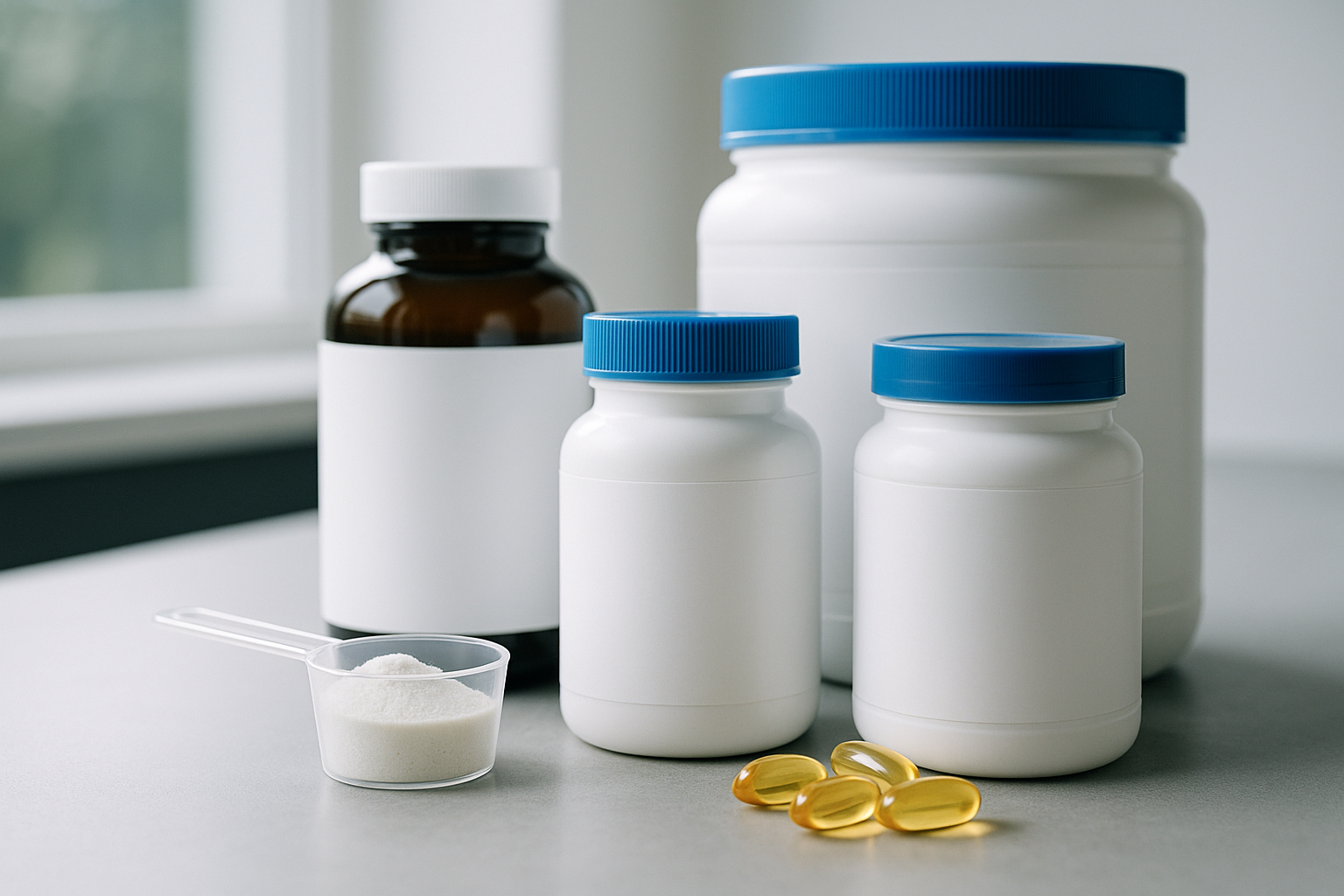
In Canada, the smartest buy is usually plain creatine monohydrate with a Natural Product Number, while fish oil should be judged by EPA and DHA content, freshness, and label transparency. Fancy marketing is rarely the deciding factor.
For creatine, prioritise these features:
- Form: creatine monohydrate is the gold standard.
- Dose transparency: the label should clearly state grams per serving.
- Minimal extras: fewer add-ins usually means easier dosing and better value.
- NPN: in Canada, a Natural Product Number indicates the product is licensed by Health Canada as a natural health product.
- Third-party testing: especially useful for tested athletes.
For fish oil, prioritise these features:
- EPA and DHA listed clearly: total oil alone is not enough.
- Serving size honesty: check whether the stated omega-3 amount is per capsule or per full serving.
- Tolerability: enteric coating or taking with meals may help some people.
- NPN and reputable manufacturing: important in the Canadian market.
Avoid these common buying mistakes:
- Paying a premium for novel creatine forms when monohydrate is better studied and usually cheaper.
- Comparing fish oil bottles by total milligrams of oil instead of EPA and DHA.
- Ignoring serving count and cost per effective dose.
- Buying athlete products without independent sport certification if contamination risk matters to you.
In practical Canadian terms, most people should start by comparing plain monohydrate options in the creatine product catalog, then narrowing with creatine brand reviews. If you want a short list, see best creatine rankings. For regulation details, our guide on is creatine approved in Canada explains how NPNs fit into buying safely.
Bottom line: buy creatine for proven function, not novelty, and buy fish oil for omega-3 content, not bottle size.
Common myths about fish oil vs creatine that confuse beginners
The biggest myth in the creatine vs fish oil debate is that one of them is the universally “better” supplement. They are better for different jobs, and mixing those jobs creates confusion.
Myth 1: Fish oil can replace creatine for performance.
False. Fish oil does not saturate muscle creatine stores or improve ATP regeneration during high-intensity effort the way creatine does.
Myth 2: Creatine is only for bodybuilders.
False. Creatine is relevant to many populations, including women, older adults, team-sport athletes, vegetarians, and recreational trainees. Its role is about cellular energy, not bodybuilding identity.
Myth 3: Fish oil and creatine together is too much.
Usually false for healthy adults. A fish oil and creatine stack is common precisely because the two products serve different functions.
Myth 4: If you do not “feel” creatine immediately, it is not working.
False. Creatine works by increasing muscle stores over time. The result is usually seen in training performance and adaptation, not as a dramatic buzz.
Myth 5: More expensive creatine forms must work better.
False in the evidence-based sense that matters most. Monohydrate remains the most studied and cost-effective form. As the ISSN position stand notes, it is the reference form against which others are compared.
Myth 6: Fish oil labels are easy to compare.
False. Many people compare total fish oil per capsule rather than EPA and DHA, which is like comparing a protein powder by tub size instead of protein grams.
The most common real-world mistakes are behavioural:
- Skipping creatine on rest days.
- Underdosing creatine because of vague scoop sizes.
- Buying fish oil without checking EPA and DHA amounts.
- Expecting fish oil to improve lifts within days.
- Stopping creatine because of a small water-weight increase without understanding what it means.
If you want more myth-busting, visit creatine myths debunked and creatine myths and facts. These are especially useful if you have heard claims that creatine is a steroid, ruins kidneys in healthy people, or only matters for advanced athletes.
The simplest step-by-step plan: when to pick one, when to stack both, and how to start today
If you want a practical answer today, use this four-step system. It will solve the creatine vs omega 3 question for almost everyone without overthinking.
- Define your primary goal. If your goal is stronger lifts, more muscle, better sprint repeatability, or improved gym performance, choose creatine. If your goal is improving low omega-3 intake because you rarely eat fatty fish, choose fish oil.
- Audit your diet honestly. If you eat fatty fish regularly, fish oil may be less urgent. If you eat little meat or fish and train hard, creatine may be especially useful.
- Start with the lowest-complexity evidence-based protocol. For creatine, that means plain monohydrate at 3-5 g daily. For fish oil, that means a product with clearly listed EPA and DHA, taken with meals.
- Track what actually matters for 8-12 weeks. For creatine, track body weight, reps, loads, sprint quality, or training volume. For fish oil, the goal is usually consistency and nutrition coverage, not an immediate performance metric.
Here are three ready-made examples:
- Beginner lifter, 68 kg: start creatine monohydrate at 3 g daily, every day, mixed in water or a shake.
- Recreational hockey player, 82 kg, low fish intake: take 5 g creatine monohydrate daily plus fish oil with meals if fatty fish intake is low.
- Office worker doing light exercise, already eating salmon twice weekly: creatine may still help if strength training is a goal; fish oil is less urgent if omega-3 intake is already solid.
What to troubleshoot if it seems not to work:
- If creatine feels useless after two weeks, check whether you are taking it daily and whether your training is actually intense enough to benefit.
- If creatine causes stomach issues, reduce dose size per serving.
- If fish oil causes burps, move it to a larger meal or split the dose.
The bottom line plan is simple: buy creatine first for performance, add fish oil if your diet needs omega-3 support, and keep both routines boringly consistent.
For even more detail, use how to take creatine, creatine for beginners, and creatine not working.
Bottom line: creatine vs fish oil is really performance support vs nutrition support
If your question is which supplement is better for athletic performance, strength, power, and muscle gain, creatine wins clearly. If your question is which supplement helps increase omega-3 intake when your diet is low in fatty fish, fish oil has the clearer role. That is the simplest accurate answer to fish oil vs creatine.
Creatine is the more evidence-backed performance supplement. It works through a direct mechanism, has decades of research behind it, and is consistently recommended in evidence-based sports nutrition because it improves the capacity for repeated high-intensity effort and supports training adaptations over time. For most gym-goers and many athletes, that makes it the better first buy.
Fish oil is not useless; it is just a different tool. It can be a sensible addition if your omega-3 intake is low, but it should not be treated as a substitute for creatine when the goal is better lifting, sprinting, or power output.
For many healthy adults, the most rational answer is not “creatine or omega 3,” but “creatine first, omega-3 if needed.” And if your goals include both performance and nutritional coverage, taking creatine and fish oil together is typically reasonable.
So if you are standing in a supplement aisle or filling an online cart, use this rule: match the supplement to the job. Choose creatine monohydrate for high-intensity performance and training progress. Choose fish oil to raise EPA and DHA intake when diet falls short. Use both only when you genuinely have both needs.
If you are ready to act, start with a plain, well-labelled monohydrate from our best creatine rankings or browse the creatine product catalog, then keep your routine simple enough to follow every day.
Creatine vs. Fish Oil at a Glance
- 3-5 g/day standard creatine maintenance dose — Creatine monohydrate daily is the mainstream evidence-based default.
- 20 g/day optional creatine loading dose — Usually split into 4 doses for 5-7 days to saturate muscle faster.
- 5-7 days typical loading timeline — Loading is optional; daily maintenance alone also works over a longer timeline.
- EPA + DHA what matters most on a fish oil label — Do not judge fish oil by total oil alone.
Frequently Asked Questions
Is creatine better than fish oil for building muscle?
Yes, creatine is clearly better than fish oil for building muscle when paired with resistance training. Creatine directly supports high-intensity training capacity and helps you do more quality work over time, while fish oil is mainly an omega-3 source and does not have the same consistent effect on strength or hypertrophy.
Should I take creatine or omega-3 first?
Take creatine first if your main goal is muscle, strength, or performance, and take omega-3 first if your diet is low in fatty fish and your priority is nutritional coverage. For most lifters and athletes choosing just one supplement, creatine usually offers the more noticeable return.
Can you take creatine and fish oil together?
Yes, you can take creatine and fish oil together. They work through different mechanisms, do not meaningfully interfere with each other, and can fit into the same routine, often by taking fish oil with meals and creatine at any convenient consistent time.
Does fish oil help gym performance like creatine does?
No, fish oil does not help gym performance in the same direct way creatine does. Creatine improves phosphocreatine availability for short, intense effort, while fish oil mainly improves omega-3 intake and has more indirect, less consistent effects on training outcomes.
Which is better for athletes: creatine vs omega-3?
For most athletes focused on performance, creatine is better than omega-3. Creatine has stronger evidence for repeated sprint ability, power, strength, and lean mass support, whereas omega-3 is better viewed as a nutrition support supplement rather than a primary ergogenic aid.
Do I need fish oil if I already take creatine?
No, taking creatine does not automatically mean you need fish oil. Fish oil is only worth prioritising if your diet is low in omega-3-rich fish or if your clinician has advised you to increase omega-3 intake for your broader nutrition plan.
Is a fish oil and creatine stack worth it?
Yes, a fish oil and creatine stack can be worth it if you have both goals: better performance and better omega-3 intake. The value comes from covering two different needs, not from a proven special synergy that makes either supplement dramatically stronger.
What is the best creatine dose if I also take fish oil?
The best creatine dose usually stays the same even if you also take fish oil: 3-5 g of creatine monohydrate daily for maintenance. Fish oil does not require you to change the standard creatine protocol.
Can fish oil replace creatine for recovery?
No, fish oil cannot replace creatine for the type of recovery and performance support creatine provides. Creatine helps maintain high-energy phosphate availability and training quality, while fish oil is better thought of as omega-3 nutrition support with possible, but less direct, recovery relevance.
Which should beginners choose: fish oil vs creatine?
Beginners who are starting strength training should usually choose creatine before fish oil. Creatine is one of the most proven, cost-effective supplements for training progress, while fish oil is mainly useful when dietary omega-3 intake is low.