Creatine for Military Personnel: Strength, Endurance, and Deployment Demands
By The Creatine Canada Research Team — Evidence-based supplement analysts
Yes—creatine is generally allowed for military personnel and can meaningfully help military athletes, soldiers, and special forces candidates with strength, repeated sprint performance, power, training recovery, and possibly cognitive resilience under fatigue when used correctly. For most service members, the evidence-based protocol is simple: creatine monohydrate, 3–5 g daily, every day, with expectations matched to the job’s real demands.
Evidence-based · Cites 4 sources · Editorial standards
Key Takeaways
- Creatine monohydrate is the best-studied, most cost-effective form for military fitness.
- Most soldiers do well with 3–5 g per day; a loading phase is optional, not required.
- Creatine helps most with repeated high-intensity efforts, lifting, sprinting, carries, obstacle work, and hard training blocks.
- It is not a steroid, not a dehydrator, and not banned in normal military use, but unit-specific policies still matter.
- Some users gain 1–2 kg of water weight early, which can be useful or inconvenient depending on task and body-mass standards.
- The best way to know it is working is better training output over weeks, not a stimulant-like ‘feeling’ on day one.
- Choose plain creatine monohydrate with clear dosing, Canadian-compliant labelling, and preferably third-party testing.
Creatine for military athletes: the direct answer on performance, legality, and practicality
Creatine for military athletes is a sensible, evidence-based supplement choice when the goal is better strength, power, repeated-effort performance, and hard-training resilience. In plain terms, creatine for soldiers is most useful for the exact work that shows up in military fitness: loaded carries, short sprints, repeated obstacle efforts, combatives, gym strength work, casualty drags, jumping, and back-to-back training days.
Creatine is a naturally occurring compound stored mainly in muscle, where it helps regenerate ATP, the body’s immediate energy currency for brief, intense effort. Supplemental creatine raises muscle creatine and phosphocreatine stores; phosphocreatine is the rapidly available stored form that helps remake ATP during high-output work. That is why creatine military fitness benefits are strongest in activities that are explosive, repeated, or both.
For the search question “is creatine allowed in military?”, the practical answer is usually yes, because creatine is a legal dietary supplement rather than a banned drug. However, “allowed” can still depend on your branch, unit, base, schoolhouse, deployment environment, or local commander guidance. If you are in a selection pipeline, using a government-issued supplement programme, or subject to strict operational nutrition policies, verify local rules before you bring any product into the field.
The evidence base is much stronger for physical performance than for long-duration endurance alone. Creatine for armed forces members will not turn a poor endurance athlete into a great ruck marcher overnight, and it does not replace aerobic conditioning, sleep, hydration, calories, or electrolytes. What it can do is help preserve high-output capacity inside mixed military tasks, where bursts of power and repeated efforts often decide performance.
The 2017 ISSN position stand concluded that creatine monohydrate is the most effective ergogenic nutritional supplement currently available for increasing high-intensity exercise capacity and lean body mass during training. If you want a broader beginner primer first, see what creatine is and what it does. If you already know you want to start, use a creatine dosage calculator to set your daily plan.
The bottom line is simple: creatine military athletes can trust is almost always plain monohydrate, taken consistently, with expectations tied to real operational tasks rather than marketing promises.
Why creatine fits military training better than many people realise
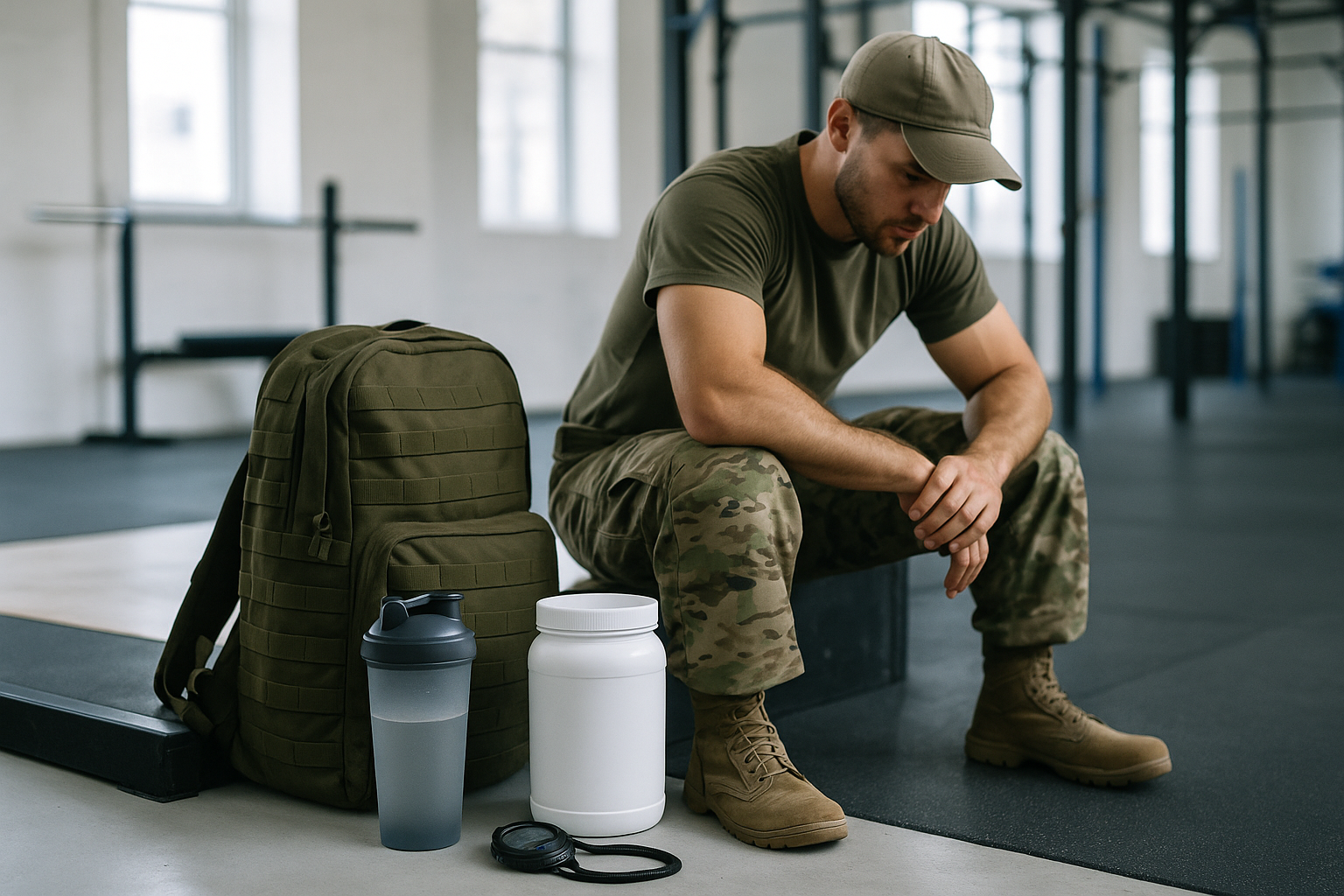
Creatine fits military training well because military performance is rarely pure endurance or pure strength; it is usually repeated bursts of hard work layered onto fatigue. Think of a typical army training day: lifting, sprinting, changing direction, climbing, carrying load, dropping to prone, standing up repeatedly, moving kit, and then doing it again while sleep or food may be less than ideal.
Creatine helps by increasing intramuscular phosphocreatine availability, which speeds ATP resynthesis between intense efforts. That matters most when work bouts are short and demanding, or when many hard efforts are packed close together with incomplete recovery. This is why creatine for army training often makes more sense than people assume from the old stereotype that it is “just for bodybuilders.”
Here is where the evidence is strongest for military athletes and soldiers:
- Strength and power: better performance in resistance training, lifting volume, and explosive effort.
- Repeated sprint ability: better maintenance of output across multiple hard intervals.
- Training quality: more total work completed over weeks, which can compound into better adaptation.
- Lean mass support: useful during strength phases, high-volume blocks, or recovery from very demanding training.
- Potential cognitive support under stress: this is promising but less settled than the physical-performance evidence.
Where creatine is less impressive is steady-state, purely aerobic work performed at a constant submaximal pace, especially if even a small body-mass increase is a disadvantage. That does not mean creatine is bad for rucking or long courses; it means the trade-off depends on the job. For a combat engineer, infantry soldier, tactical athlete, or special forces candidate who needs strength, speed, repeated efforts, and robustness, the upside is usually clearer than for a lightweight endurance specialist.
The International Olympic Committee consensus on dietary supplements places creatine among the few supplements with strong evidence for certain performance outcomes. The key is matching the supplement to the demand. Creatine for special forces candidates, for example, is most rational during hard selection preparation blocks where repeated high-intensity output, strength retention, and recovery matter every week.
If your primary goal is mixed performance rather than scale weight, creatine often earns its place. For a broader sport-performance angle, see creatine for competitive athletes and the evidence-based list of creatine benefits.
The science: how creatine actually powers strength, repeated sprints, and hard field sessions
Creatine works by helping your muscles regenerate ATP faster during intense effort, and that is the core mechanism behind its military fitness benefits. ATP is the immediate fuel your muscles spend when you sprint, jump, lift, strike, drag, or accelerate under load. Because ATP stores are tiny, performance in brief high-output work depends heavily on how quickly ATP can be restored.
Phosphocreatine acts as a rapid phosphate donor to rebuild ATP during those hard efforts. When you supplement with creatine, total muscle creatine stores rise, and a portion of that increase is stored as phosphocreatine. With fuller stores, you have a larger “buffer” for repeated intense efforts and often better recovery between work bouts.
That mechanism explains several real-world outcomes military personnel care about:
- More reps or slightly more load in the gym: over time, this can mean more strength and muscle gain.
- Better output across repeated intervals: less drop-off from sprint one to sprint five, or from carry round one to round four.
- Potentially less training degradation under fatigue: not magic, but a small edge in maintaining quality.
- Cell hydration and anabolic signalling: creatine increases intracellular water, which is not fat gain and may help support training adaptation.
Creatine may also interact with glycogen storage and recovery from hard training, which is relevant during high-volume army training or multi-day courses. Emerging work continues to explore creatine and the brain, especially in contexts of sleep deprivation, mental fatigue, and stressful workloads. That is interesting for military athletes, but the evidence is still not as established as the physical-performance data, so it should be framed as promising rather than guaranteed.
The 2021 JISSN review on common questions and misconceptions about creatine addressed many persistent myths and reinforced that creatine’s benefits are not limited to bodybuilders. You can review that paper here: Antonio et al. (2021), JISSN.
If you want a deeper physiology explainer, our guides on creatine and ATP and the creatine phosphate energy system break down the mechanism in more detail. The short version is that creatine is not a stimulant; it improves the energy system that fuels hard, repeatable work.
Exactly how to take creatine for military training, field fitness, and selection prep
The best way to take creatine for military training is 3–5 g of creatine monohydrate every day, with or without food, and to keep taking it on training days, rest days, and field days if possible. Consistency matters more than timing because creatine works by saturating muscle stores over time, not by creating a same-day boost like caffeine.
- Choose the right form: buy plain creatine monohydrate powder unless you have a specific reason to use capsules. Monohydrate is the evidence-based default and usually the cheapest per gram.
- Pick your dose: most adults do well with 3–5 g daily. Larger athletes or those doing very high training volumes often use the upper end.
- Decide on loading or no loading: a loading phase of about 20 g per day split into 4 doses for 5–7 days saturates faster, but it is optional. Daily 3–5 g works too; it just takes longer.
- Take it when you will remember: breakfast, post-workout, or with your evening meal are all fine. The best timing is the timing you can repeat every day.
- Mix it simply: stir into water, juice, or a protein shake. If grittiness bothers you, use warm liquid or a shaker bottle.
- Keep the habit during off days: skipped rest days slow saturation and make the plan less effective.
Military-specific practicality matters. If you are in garrison, powder is easy. If you are travelling, in the field, or living out of a kit bag, pre-portioned zip packs or capsules may be more realistic. For operational convenience, routine often beats theoretical perfection.
What should you expect? With loading, some people notice fuller muscles and slightly better gym performance inside the first week. Without loading, most notice effects over roughly 2–4 weeks as saturation builds. For a realistic timeline, see how long creatine takes to work and how to take creatine step by step.
Do not dry scoop it, do not “cycle” it just because someone in the platoon said so, and do not chase exotic forms before trying plain monohydrate. The simplest protocol is usually the best one for creatine for armed forces personnel.
Creatine dosing for soldiers by body weight, role, and performance goal
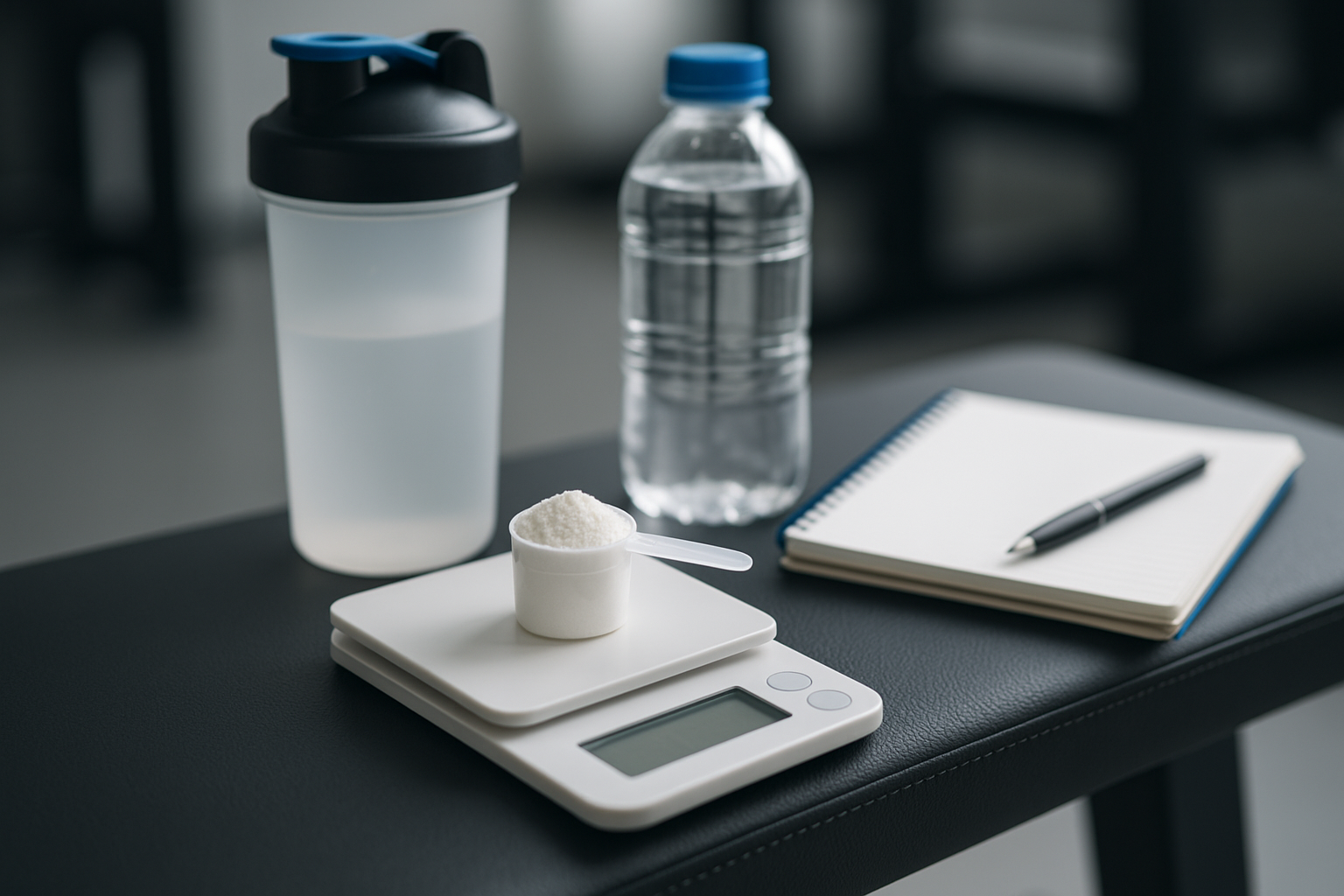
Creatine dosing for soldiers should be goal-based first and body-weight aware second, because the proven everyday maintenance range for most adults is still 3–5 g daily. The most important decision is not whether you are 72 kg or 92 kg; it is whether you want faster saturation, minimal stomach upset, minimal weight fluctuation, or maximum convenience.
| Situation | Recommended protocol | Why it fits |
|---|---|---|
| General military fitness, beginner | 3–5 g daily | Simple, effective, easy to sustain year-round |
| Selection prep or hard training block | Optional load: 20 g/day in 4 doses for 5–7 days, then 3–5 g daily | Faster saturation before a demanding period |
| Concerned about stomach upset | 3 g daily or split 5 g into 2 smaller doses | Smaller doses are often easier to tolerate |
| Concerned about early scale weight | 3 g daily, no loading | Slower saturation often means a slower rise in water weight |
| Frequent travel or field use | Pre-portioned 3–5 g packs or capsules totalling 3–5 g/day | Improves compliance when routine is disrupted |
Practical examples:
- 65–75 kg service member focused on all-round fitness: 3 g daily is often enough.
- 75–95 kg soldier doing regular strength work and loaded conditioning: 5 g daily is the common sweet spot.
- Larger tactical athlete in a high-volume block: 5 g daily is still the mainstream evidence-based ceiling for routine use; more is rarely necessary.
If you want to saturate faster before a course, selection event, or preseason block, loading is reasonable if your stomach tolerates it. If body-mass standards, weigh-ins, or hot-weather movement are a concern, skipping the loading phase is often smarter. The supplement still works; it just works more gradually.
A common mistake is changing dose every few days because you “don’t feel it.” Creatine is not judged by a buzz. Judge it by better training output, slightly better recovery between hard efforts, and small improvements that add up over several weeks.
For more nuance, visit how much creatine per day and the right maintenance dose. If you want a personalised shortcut, use the creatine dosage calculator.
Timing, hydration, and field conditions: what actually matters for military use
For creatine, daily consistency matters far more than exact timing, while hydration matters for overall performance more than for creatine absorption itself. If you remember only one thing, remember this: take your dose every day and keep normal good hydration habits, especially in heat, during rucks, and during high-sweat training.
Timing is straightforward. Morning, post-workout, with supper, or on a rest day at lunch are all acceptable. There is no strong evidence that military athletes need a special “combat timing window” for creatine. If taking it with food helps you remember, do that. If post-workout is easiest, do that. The best schedule is the one that survives real life.
Hydration is where myths explode. Creatine does not dehydrate you by “pulling water out” of the body in a harmful way. It increases water content inside muscle cells as stores rise, but that is not the same thing as systemic dehydration. The 2021 JISSN review discussed this misconception directly. In practice, soldiers using creatine should still take heat, sweat losses, and long training days seriously—not because creatine is dangerous, but because military training itself can be.
Use these practical rules:
- Drink to support training, heat exposure, and sweat losses as you normally should.
- Do not use creatine as an excuse to ignore electrolytes during long hot sessions.
- If you get GI upset, take creatine with meals or split the dose.
- If you spend time in the field, carry measured portions so missed days are less likely.
Field use also raises a storage issue. Keep powder dry and tightly sealed. Moisture causes clumping, and loose unlabelled powder can create avoidable hassle during travel. If you move often, capsules or sealed sachets can be worth the extra cost.
For more on these points, see when to take creatine, how much water to drink with creatine, and whether creatine causes dehydration. The simple truth is that military creatine use succeeds on routine, not ritual.
Who creatine is best for in the military, including women, older personnel, and beginners
Creatine is a good fit for most healthy military personnel who perform strength training, repeated sprint work, loaded conditioning, obstacle training, or physically demanding field tasks. That includes beginners building baseline fitness, experienced military athletes, women in service, and older personnel trying to preserve strength and muscle as training tolerance changes with age.
Beginners: Creatine is absolutely not “too advanced” for new trainees. If a recruit or junior service member is already doing structured physical training and wants a low-risk, evidence-based supplement, creatine monohydrate is usually a more defensible choice than flashy pre-workouts. It will not replace training quality, but it can support it.
Women in military roles: Creatine works for women too, and women often avoid it because of unfounded fears about bulk or bloating. In reality, creatine does not cause fat gain, and the early weight change is usually water held in muscle, not body fat. For women needing strength, repeated-effort capacity, and recovery with minimal supplement complexity, it is one of the better-supported options. See our guide to creatine for women.
Older personnel and masters tactical athletes: As people age, preserving muscle mass, strength, and training quality becomes more valuable. Creatine plus resistance training is especially relevant here, which is why it is widely discussed for older adults as well. If you are still serving, training, or preparing for periodic testing in your 40s, 50s, or beyond, creatine often becomes more—not less—useful. Related reading: creatine for older adults.
Vegetarians and vegans: People who eat little or no meat may start with lower baseline creatine stores and sometimes respond particularly well to supplementation. That can matter for service members eating plant-based diets in garrison or on deployment when food options are limited.
Who may not be ideal candidates? People with relevant kidney disease, certain medical conditions, or medication issues should speak with a qualified clinician before use. Also, if your immediate goal is making a strict body-mass cut or minimising any short-term scale increase, creatine timing may need more planning.
Overall, creatine for military personnel is not a niche supplement for elite commandos only. It is a broadly useful tool for many service members when the training demands are physical and repetitive.
Safety, side effects, and the real answer to ‘is creatine allowed in the military?’
Creatine monohydrate is well-studied and generally considered safe for healthy adults when used at standard doses, but military users still need to separate supplement science from workplace policy. The safety question and the permission question are related, but they are not identical.
On safety, the strongest evidence base is reassuring. The 2017 ISSN position stand concluded that creatine monohydrate is not only effective but also safe when used appropriately in healthy individuals. Common short-term side effects are usually practical rather than dangerous:
- Water-weight gain: often early and usually modest, especially with loading.
- Stomach upset: more likely with large single doses than with smaller split doses.
- Occasional bloating or fullness: often improved by using monohydrate powder properly and avoiding oversized doses.
Creatine does not appear to be a steroid, does not act like an anabolic drug, and does not automatically harm kidneys in healthy users at standard doses. One reason the kidney myth persists is confusion with creatinine, a breakdown marker that can rise on lab work when creatine intake is higher or muscle mass is greater. That does not, by itself, mean kidney damage. If you want the full explanation, read the kidney myth guide and creatine vs. creatinine.
Now the policy side. Creatine is generally allowed in military environments, but local rules can still govern possession, purchase, reimbursement, or recommended use. Some units discourage non-approved supplements broadly. Some educational schools and selections may provide their own guidance. If you are in a high-accountability role, ask your chain, medical staff, sports dietitian, or performance staff what the local expectation is.
In Canada, look for products with compliant natural health product labelling where applicable, including an NPN, which stands for Natural Product Number, when sold under that framework. Third-party testing is especially valuable for athletes and military personnel who want extra reassurance on contamination risk.
The practical takeaway: safe for most healthy adults, usually permitted, but always verify unit policy and buy carefully.
The biggest creatine myths soldiers still hear in the gym—and what the evidence says
The biggest creatine myths in military circles are that it is a steroid, that it causes dehydration and cramps, that you must cycle it, and that it only helps bodybuilders. None of those claims matches the best current evidence.
- Myth: Creatine is basically a steroid.
Fact: Creatine is a legal nutritional compound involved in energy metabolism, not an anabolic steroid and not a hormone manipulator in the usual sense. - Myth: Creatine dehydrates you or makes you cramp in the heat.
Fact: The research does not support the blanket claim that creatine causes dehydration or cramps in healthy users. Heat, poor fluid intake, and poor conditioning are separate issues. - Myth: You have to cycle on and off.
Fact: There is no routine need to cycle creatine. Daily use is the standard evidence-based approach. - Myth: If you don’t feel it in one workout, it isn’t working.
Fact: Creatine is not a stimulant. It works by saturating stores over days to weeks. - Myth: It only adds useless water weight.
Fact: Early water retention is mostly intracellular, inside muscle, and often comes alongside better training capacity. Whether that weight is useful or inconvenient depends on your role and goal. - Myth: Fancy forms are better than monohydrate.
Fact: Monohydrate remains the best-supported form, and pricier alternatives rarely show superior real-world outcomes.
Military-specific mistakes are often even simpler than the myths:
- Loading right before a weigh-in or body-composition check without considering the scale effect.
- Using random scoops instead of measured grams.
- Skipping creatine on weekends or field days.
- Buying proprietary blends with tiny doses hidden under flashy marketing.
- Blaming creatine for poor hydration habits during hard summer training.
If you want a full myth clean-up, read creatine myths debunked and our deeper myths vs. facts guide. For troubleshooting, why creatine may not seem to be working is also useful.
The evidence-backed mindset is boring on purpose: use plain monohydrate, dose it correctly, stay consistent, and judge outcomes over weeks rather than rumours from the barracks gym.
What military personnel in Canada should buy: monohydrate, testing, labels, and value
The best creatine for military personnel in Canada is usually unflavoured creatine monohydrate from a reputable brand with clear dosing, simple ingredients, and preferably third-party testing. You do not need a “tactical” formula, and you should be sceptical of products that hide the actual grams of creatine behind proprietary blends.
Use this quick buying framework:
| What to check | What you want | Why it matters |
|---|---|---|
| Form | Creatine monohydrate | Best evidence, best value, most studied |
| Dose on label | Clear 3–5 g serving information | Makes accurate daily use easy |
| Ingredients | Preferably just creatine monohydrate | Fewer unnecessary additives |
| Testing | Third-party testing or sport certification when relevant | Extra reassurance on purity and contamination risk |
| Canadian compliance | Proper labelling and, where applicable, NPN | Useful sign of legitimate market compliance |
| Format | Powder for value; capsules for travel | Choose based on compliance and convenience |
For service members, purity and reliability matter as much as price. If you travel often, deploy, or are frequently in the field, the cheapest product is not automatically the best if it is a hassle to use consistently. A slightly pricier powder with good mixability or a capsule format that fits your routine may produce better real-world adherence.
Good shopping shortcuts include checking our best creatine rankings, browsing the creatine brand reviews, or comparing formats in the product catalogue. If you want to go deeper on Canadian rules, see guides on whether creatine is approved in Canada and Canadian supplement regulations.
The Mayo Clinic overview offers a cautious mainstream medical summary of creatine here: Mayo Clinic — Creatine. For a broader evidence snapshot, Examine.com’s creatine summary is also useful.
Buying advice in one sentence: choose plain monohydrate you trust enough to take every day.
Bottom line: when creatine is worth it for military athletes, and when to think twice
Creatine is worth it for most military athletes and soldiers whose performance depends on strength, power, repeated high-intensity efforts, and maintaining output through demanding training blocks. If that sounds like your job, your PT, your selection prep, or your sports profile, creatine monohydrate is one of the most evidence-based supplements you can buy.
It is especially worth considering if you:
- lift regularly and want better training quality over time;
- do sprint work, carries, drags, circuits, obstacle work, or combatives;
- need to preserve lean mass during heavy training;
- eat little meat or follow a vegetarian or vegan pattern;
- want a non-stimulant supplement with a long safety record.
Think twice, or at least plan more carefully, if you:
- must make a strict body-mass target in the near term;
- perform mainly long, weight-sensitive endurance work where any extra mass is unwelcome;
- have kidney disease or a medical reason to discuss supplementation first;
- are in a unit or school with strict supplement policies you have not yet checked.
The standard protocol remains remarkably simple in 2026: creatine monohydrate, 3–5 g daily, optional loading if you want faster saturation, and consistent use over weeks. Expect the biggest benefits in hard training and repeated-effort tasks, not as a dramatic acute boost. Measure success by improved gym numbers, less drop-off across intervals, better work capacity, and better resilience during heavy training blocks.
If you are ready to act today, the next three steps are straightforward:
- Confirm local military or unit supplement policy if needed.
- Buy a plain monohydrate product from a reputable Canadian source.
- Take 3–5 g daily for at least 4 weeks before judging results.
For your next step, use the creatine dosage calculator, compare products in our best creatine rankings, or read the full creatine safety guide. For most service members, creatine is not a gimmick. It is a simple tool that supports the kinds of physical demands military life reliably creates.
Creatine for Military Athletes: The Numbers That Matter
- 3–5 g/day Standard daily maintenance dose — The mainstream evidence-based range for most healthy adults using creatine monohydrate.
- 20 g/day Typical loading dose — Usually split into 4 doses for 5–7 days if faster saturation is desired.
- 5–7 days Fastest common saturation window — Applies when using a standard loading phase.
- 2–4 weeks Typical timeline without loading — Many users notice effects after consistent daily use as muscle stores rise gradually.
Frequently Asked Questions
Is creatine allowed in the military?
Yes, creatine is generally allowed in the military because it is a legal dietary supplement rather than a banned drug. That said, local policies can still differ by branch, unit, course, or commander, so service members should verify whether any supplement restrictions apply in their specific environment before using it.
Does creatine help soldiers perform better?
Yes, creatine can help soldiers perform better in tasks that involve strength, power, repeated sprinting, lifting, loaded carries, and hard training recovery. It is less impressive for purely steady-state endurance alone, but military performance is often mixed, which is exactly where creatine tends to fit best.
What type of creatine is best for military athletes?
Creatine monohydrate is the best type for military athletes because it is the most studied, most consistently effective, and usually the most cost-effective form. Newer forms often market convenience or absorption advantages, but monohydrate remains the evidence-based standard as of 2026.
How much creatine should a soldier take per day?
Most soldiers should take 3–5 g of creatine monohydrate per day. A loading phase of 20 g per day split into 4 doses for 5–7 days can speed up saturation, but it is optional rather than necessary.
Can creatine help with rucking or loaded marches?
Creatine can help with the high-force parts of loaded movement, such as hill surges, repeated accelerations, and maintaining strength under load, but it is not a magic endurance booster for long rucks. The trade-off is that some users gain a small amount of water weight, which may or may not be desirable for long distance work.
Is creatine useful for special forces selection prep?
Yes, creatine can be useful for special forces selection prep when the programme includes heavy strength work, repeated efforts, carries, and severe training fatigue. It is most helpful when used well before selection so the athlete can assess body-weight response, stomach tolerance, and day-to-day practicality.
Will creatine make military personnel gain bad weight?
No, creatine does not cause fat gain by itself. Early weight gain is usually water held inside muscle cells as creatine stores rise, and over time creatine may support lean mass gains when combined with training.
Does creatine cause dehydration during military training in the heat?
No, the evidence does not support the claim that creatine inherently causes dehydration in healthy users. Military personnel still need disciplined hydration and electrolyte habits in heat, but that is because hard training and environmental stress are demanding, not because creatine is drying them out.
Should military athletes cycle creatine?
No, military athletes do not need to cycle creatine as a routine practice. Standard use is simply taking the appropriate daily dose consistently over time, including rest days.
Can you take creatine while deployed or in the field?
Yes, you can take creatine while deployed or in the field if local policy allows it and you can store and dose it practically. Pre-portioned packs or capsules are often easier than carrying a large tub when routine, luggage space, and moisture control are issues.