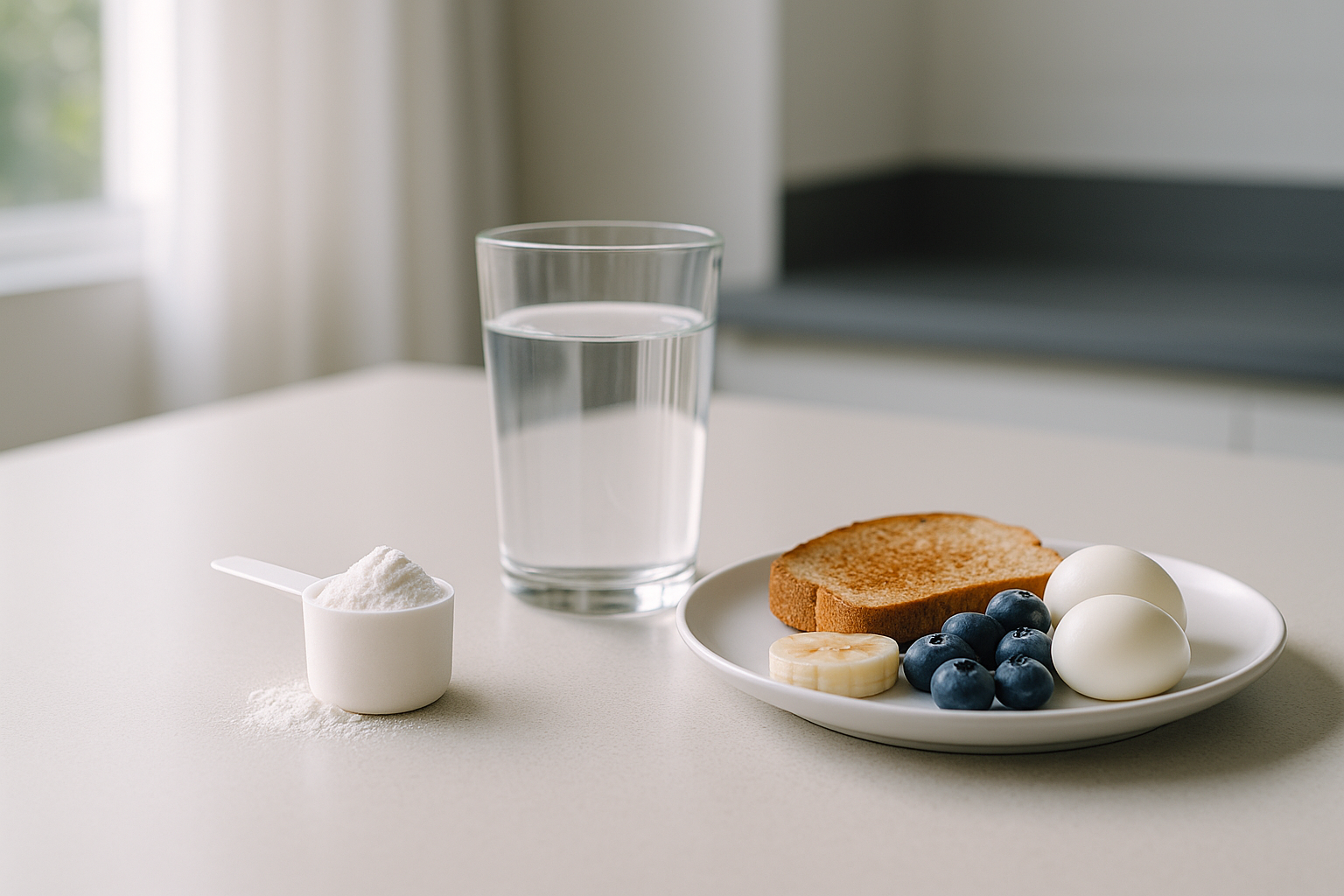
Creatine on an Empty Stomach: Does It Cause Problems or Help Absorption?
By The Creatine Canada Research Team — Evidence-based supplement analysts
Yes — you can take creatine on an empty stomach, and for most people it works just as well as taking it with food. The catch is comfort, not effectiveness: fasted creatine is more likely to cause mild stomach upset in some people, especially if you take a large dose at once, use too little water, or are in a loading phase.
Evidence-based · Cites 4 sources · Editorial standards
Key Takeaways
- Creatine monohydrate does not need food to work; daily consistency matters more than whether you take it fasted or fed.
- A standard maintenance dose is 3-5 g per day, and that amount is usually well tolerated even without food.
- Stomach issues are more common with large single doses, especially during loading at about 20 g/day split into 4 doses for 5-7 days.
- If fasted creatine upsets your stomach, take it with a meal, split the dose, or switch to micronized monohydrate.
- Taking creatine with carbohydrate or a mixed meal can slightly increase uptake, but the real-world difference is small once muscle stores are saturated.
- Dry scooping creatine is unnecessary and increases the chance of throat irritation and digestive discomfort.
- In Canada, choose plain creatine monohydrate with a Natural Product Number (NPN) when applicable and ideally third-party testing if you compete.
Can you take creatine on an empty stomach? Yes — but comfort matters more than absorption
Yes, you can take creatine on an empty stomach, and for most healthy adults it will still raise muscle creatine stores effectively. The main difference between taking creatine fasted and taking creatine with food is usually digestive comfort, not whether the supplement “works”.
Creatine monohydrate works by increasing your muscle stores of free creatine and phosphocreatine, the stored high-energy form used to rapidly regenerate ATP, your cells’ immediate energy currency during short, intense effort. Because creatine’s benefit depends on saturating muscle stores over days and weeks, not on producing an instant stimulant-like effect, the exact moment you take it matters far less than taking it consistently.
The practical answer is simple:
- If 3-5 g of creatine on an empty stomach feels fine, you can keep doing it.
- If it causes nausea, cramping, reflux, or loose stools, take it with food or split the dose.
- If you are loading, empty-stomach dosing is more likely to feel rough because the dose per sitting is larger.
The evidence base consistently supports creatine monohydrate as the most studied and most cost-effective form. The 2017 ISSN position stand concluded that creatine monohydrate is effective for increasing high-intensity exercise capacity and lean mass gains during training, and those benefits are not dependent on taking it with a meal. The 2021 JISSN review on common creatine questions also reinforces that many timing and form claims are overstated compared with the basics of dose and adherence.
If you are brand new to creatine, the best beginner move is boring but effective: take 3-5 g once daily in water at whatever time you reliably remember. If you want a more tailored plan, use our creatine dosage calculator, then compare protocols in our guides on how to take creatine and whether to take creatine with or without food.
In other words, can you take creatine without eating? Absolutely. Should you? Only if your stomach tolerates it well.
How creatine and food absorption really work — and why the difference is smaller than most people think
Creatine does not require food for absorption, but food can make the process feel gentler and may modestly influence uptake into muscle. That distinction matters, because many people confuse stomach tolerance with muscle absorption.
After you swallow creatine monohydrate, it is absorbed through the gut into the bloodstream and then transported into muscle via a specific creatine transporter. Insulin, the hormone released more strongly after eating carbohydrate or mixed meals, can support nutrient transport into tissues, which is why some older sports-nutrition advice recommended taking creatine with carbs. That idea is not baseless, but it is often exaggerated.
Here is the key principle: once you consistently take enough creatine to saturate muscle stores, small differences in day-to-day uptake matter much less than total intake over time. A person taking 3-5 g daily with excellent consistency will generally do better than a person chasing “optimal absorption” but missing doses.
Why food sometimes helps anyway:
- It slows gastric emptying, which can reduce the chance of nausea in sensitive people.
- It dilutes the powder within a larger meal volume, which some people find easier on the stomach.
- It may slightly increase creatine retention when paired with carbohydrate or protein, though this is not essential for results.
Why an empty stomach sometimes feels worse:
- Concentrated powder in a small amount of liquid can sit heavily.
- Large bolus doses are more osmotically active, meaning they can draw water into the gut and contribute to loose stools.
- Fasted training, coffee, and dehydration can combine with creatine to make the stomach feel unsettled, even if creatine is not the only culprit.
If your question is should I take creatine with or without food?, the honest evidence-based answer is this: with food is often more comfortable, without food is usually still effective, and neither is magic. For a deeper timing breakdown, see when to take creatine and our guide to maximizing creatine absorption.
Also note that creatine is not a stimulant and does not need to “hit” your system before a workout to work. It supports performance by building up intramuscular phosphocreatine over time, which is why a steady daily routine matters more than a fed-versus-fasted obsession.
Why creatine on an empty stomach causes stomach issues for some people
Creatine on an empty stomach can cause mild stomach issues in some people because concentrated doses, especially large ones, can irritate the gut or pull extra water into the intestines. This is a dose-and-tolerance issue far more often than a sign that creatine is “bad” for you.
The most common fasted complaints are:
- nausea
- stomach cramping
- bloating or a “sloshing” feeling
- loose stools or urgency
- reflux in people prone to it
These symptoms are most likely when one or more of the following apply:
- You take too much at once. A single 10 g dose is much more likely to upset your stomach than 3-5 g.
- You are loading. A typical loading protocol is about 20 g/day split into 4 doses for 5-7 days, and each of those doses can feel harsher when taken fasted.
- You use too little water. Creatine is easier to tolerate when mixed well and taken with enough fluid.
- You combine it with coffee or pre-workout on a completely empty stomach. The combo may be fine for some, but stimulants plus powder plus no food can be rough.
- You dry scoop it. Dry scooping raises the chance of throat irritation, coughing, and digestive discomfort without improving effectiveness.
This does not mean creatine harms the stomach lining or is dangerous for most healthy users. According to the 2021 JISSN review, many common concerns around creatine are misconceptions, while the real practical side effects tend to be predictable and manageable, with GI discomfort being the main short-term issue when dosing is aggressive.
If you repeatedly get stomach issues from creatine fasted, the easiest fixes are:
- Reduce to 3-5 g once daily.
- Take it after breakfast or with lunch.
- Split the dose into 2 smaller servings.
- Use plain micronized monohydrate instead of a gritty blend.
- Review your full routine for culprits like coffee, artificial sweeteners, or pre-workout.
For a deeper troubleshooting guide, read creatine digestive side effects explained and why creatine can cause bloating. Most people can fix fasted creatine stomach issues with a simple protocol change rather than quitting the supplement.
The best way to take creatine fasted without wrecking your stomach
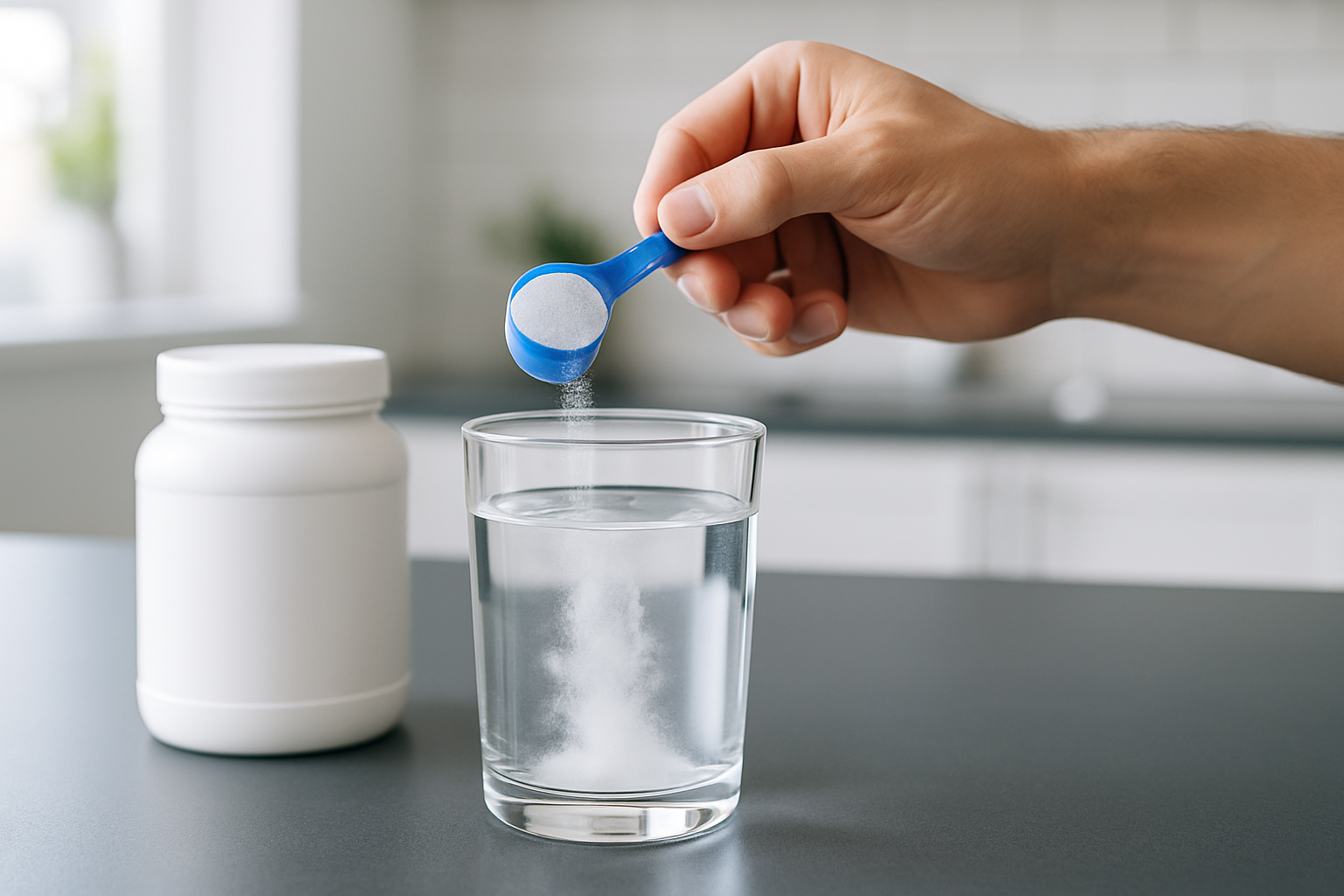
If you want to take creatine fasted, the best approach is 3-5 g of creatine monohydrate mixed in plenty of water, taken slowly rather than dry scooped or slammed as a large dose. That protocol gives you the benefits of a convenient empty-stomach routine while minimizing the main downside, which is GI discomfort.
Use this step-by-step setup:
- Measure an accurate dose. Start with 3 g if you are sensitive, or 5 g if you already tolerate supplements well.
- Mix it in a full glass of water. More fluid generally feels better than less.
- Drink it steadily. There is no prize for taking it all in one gulp.
- Avoid dry scooping. It does not improve absorption and can irritate your throat and stomach.
- Wait and assess. If you feel normal for several days, your body probably tolerates fasted creatine just fine.
- If symptoms appear, troubleshoot immediately. The first fix is taking it with a meal, not buying a fancy alternative form.
A few practical examples:
- Early-morning lifter: Mix 5 g in water upon waking, then train 20-60 minutes later if your stomach feels fine.
- Intermittent faster: Take 3-5 g during the fasting window only if it does not upset your stomach; otherwise move it into your eating window.
- Sensitive beginner: Start with 3 g after waking for 3-4 days, then increase to 5 g if tolerated.
What should you expect? Not much in the moment, and that is normal. Creatine is not supposed to feel like caffeine. The signs it is working show up over time: better repeated effort performance, an easier ability to add reps or training volume, and often a small increase in body weight from intramuscular water as stores rise. Our guides on how long creatine takes to work and realistic creatine results explain the timeline in more depth.
If you are still unsure whether your plan is correct, keep it simple: choose the time you can repeat daily. A “good enough” protocol done every day beats a “perfect” protocol done inconsistently.
Exact creatine dosing by goal, body weight, and whether you eat before training
The right creatine dose is usually based more on your goal and tolerance than on whether you take it with food. For most people, 3-5 g daily is the sweet spot for maintenance, while loading is optional and only useful if you want faster saturation.
Here is the practical framework most people can use:
| Goal | Recommended dose | Best approach | Empty stomach note |
|---|---|---|---|
| General fitness / beginner | 3-5 g daily | Take once per day, every day | Usually fine fasted if tolerated |
| Fast saturation | ~20 g/day for 5-7 days, split into 4 doses, then 3-5 g/day | Loading phase followed by maintenance | More likely to cause stomach upset if fasted |
| Smaller or sensitive user | 3 g daily to start | Increase only if desired and tolerated | Best starting point for fasted use |
| Larger athlete with high lean mass | 5 g daily maintenance is common | Consistency matters more than timing | Fine fasted if GI tolerance is good |
| Older adult | 3-5 g daily | Take with a routine meal if that improves adherence | With food may be gentler |
Body-weight examples for real life:
- 60 kg person: 3 g/day is a reasonable starting dose.
- 75 kg person: 3-5 g/day is typical.
- 90+ kg person: 5 g/day is a practical maintenance dose.
You do not need to match the dose to your pre-workout meal schedule. If you train before breakfast, you can still take creatine before eating. If you train after lunch, you can take it with that meal. Both can work.
The ISSN position stand supports a rapid-loading option of about 0.3 g/kg/day for 5-7 days followed by 3-5 g/day, but it also notes that smaller daily doses will saturate stores more gradually. That means you are not missing out if you skip loading; you are simply choosing the slower, often more stomach-friendly route.
If you want a customized number, check our creatine dosage calculator and the full guide on how much creatine per day. For most readers asking “can I take creatine without eating?”, the answer remains yes — just pair that with a maintenance dose your gut actually tolerates.
Should you take creatine before eating, after a meal, or around workouts?
You can take creatine before eating, after a meal, before a workout, after a workout, or on rest days, and the difference is usually minor compared with total daily intake. Timing is a secondary detail; regular dosing is the primary driver of results.
That said, certain timing choices can make life easier:
- Before breakfast: convenient for people who want a fasted routine and tolerate it well.
- With breakfast or lunch: often the easiest option for people who get stomach discomfort fasted.
- Post-workout meal or shake: convenient because it ties creatine to a habit you already have.
- Rest days: still take it; muscle saturation is maintained by daily intake, not training-day-only use.
Here is the most useful hierarchy of importance:
- Take it every day.
- Hit the correct dose.
- Choose a time you will remember.
- Use food only if it improves comfort or convenience.
For people who ask about creatine and food absorption, the practical reality is that a mixed meal may modestly support uptake, but no compelling evidence shows you need a specific anabolic window to get results. Creatine is not like a pre-workout ingredient meant to peak during a single training session. Its value is cumulative.
If you train first thing in the morning and your stomach is sensitive, taking creatine after the session with breakfast is often a better move than forcing it pre-workout fasted. If you train later in the day, adding it to a post-workout protein shake can be an easy anchor habit. If you fast for lifestyle or religious reasons, you can place it wherever it best fits your overall plan. For readers specifically interested in fasting, our guide on whether creatine breaks a fast is the next step.
The bottom line: there is no universally best time to take creatine, but there is a universally best principle — daily adherence. If your current routine is creatine before eating and it feels fine, you do not need to change it just because someone online says food is mandatory.
Who should take creatine with food instead of fasted
Creatine with food is the smarter choice for people who have a sensitive stomach, are loading, or regularly combine creatine with other supplements that can irritate the gut. Fasted creatine is acceptable, but it is not the best fit for everyone.
People most likely to do better with food include:
- Beginners: A meal-based routine often improves tolerance and consistency while you learn what normal responses feel like.
- Women with lighter body weight or lower habitual supplement use: Starting with 3 g alongside food can feel gentler, though the dose itself does not need to differ purely because of sex. For more, see creatine for women.
- Older adults: Taking creatine with breakfast or lunch is often easier to remember and may reduce GI complaints. More on this in creatine for older adults.
- Athletes in a loading phase: Splitting doses with meals usually improves tolerance.
- People training with coffee or pre-workout on an empty stomach: Adding food can reduce the “stacked irritation” effect.
- Anyone with a history of reflux, nausea, or loose stools: Food is a low-effort fix worth trying first.
People who often tolerate fasted creatine well include experienced supplement users, intermittent fasters who already know their stomach handles powders fine, and athletes using a simple 3-5 g maintenance dose. Vegetarians and vegans may respond especially well to creatine overall because baseline stores can be lower, but they do not necessarily need a fed protocol for effectiveness. They may, however, want whatever protocol is easiest to repeat daily.
One nuance worth remembering: women, older adults, and recreational lifters are sometimes told they need “special” creatine forms to avoid stomach issues. Usually they do not. Plain creatine monohydrate remains the gold standard, and the first fixes are dose, water, meal timing, and consistency — not paying extra for under-proven alternatives. Our best creatine rankings and creatine brand reviews can help you compare straightforward, well-formulated options.
If your question is “can I take creatine without eating if I’m a beginner, woman, or older adult?”, the answer is yes — but taking it with food is often the easiest, most comfortable starting point.
Safety, side effects, and what Canadians should look for on the label
Creatine is one of the best-studied sports supplements, and taking it on an empty stomach is not inherently unsafe for healthy people, but side effects and product quality still matter. The main safety conversation is about choosing an appropriate dose, screening obvious cautions, and buying a clean product.
What the evidence supports strongly:
- Creatine monohydrate is the most studied form.
- Typical maintenance dosing of 3-5 g/day is widely used and generally well tolerated.
- The main short-term side effects are digestive, not hormonal or steroid-like.
The 2017 ISSN position stand and the IOC consensus on dietary supplements both place creatine among the supplements with strong evidence for certain performance uses when used appropriately. That does not mean “take it blindly”. It means the risk-benefit profile is favourable for many healthy users.
Reasonable cautions:
- If you have kidney disease, are under medical evaluation for kidney issues, or take medications that raise concern about renal function, speak with your clinician first.
- If you are pregnant or breastfeeding, get individual medical guidance rather than assuming general sports-nutrition advice applies.
- If you are repeatedly getting significant GI distress, lower the dose or change timing rather than pushing through.
For Canadians, label quality matters. Look for:
- Creatine monohydrate as the active ingredient, ideally without unnecessary proprietary blends.
- A Natural Product Number (NPN) where applicable, which indicates the product is authorized for sale as a natural health product in Canada.
- Third-party testing or sport certification if you are a tested athlete.
- Clear serving size in grams, not vague scoop language only.
If you are comparison shopping, start with our creatine product catalog, then read best creatine monohydrate in Canada and third-party tested creatine in Canada. For most people, the safest buy is plain monohydrate from a reputable brand, not an “advanced absorption” formula making dramatic claims about food timing.
Common mistakes and myths about taking creatine without food
Most problems people blame on taking creatine without food are actually caused by poor dosing, bad mixing habits, or internet myths. Clearing those up can save you money and frustration.
Myth 1: Creatine on an empty stomach does not absorb.
False. Creatine can be absorbed without food. Food may improve comfort and may modestly affect retention, but fasted creatine still works.
Myth 2: You must spike insulin with sugar to make creatine effective.
Overstated. Creatine can be taken with carbs, but daily intake is the bigger factor once muscle stores are rising or already saturated.
Myth 3: If creatine upsets your stomach, you need creatine HCl or a fancy form.
Usually false. First try 3-5 g monohydrate, more water, smaller doses, or taking it with food. Monohydrate remains the evidence leader. We cover this more in monohydrate vs HCL.
Myth 4: Dry scooping makes creatine work faster.
False. It only makes the experience harsher and less safe from a swallowing and irritation standpoint.
Myth 5: You should only take creatine on workout days.
False. Daily saturation is the goal, which is why rest-day dosing still matters. See creatine on rest days.
Myth 6: Stomach discomfort means creatine is damaging your kidneys or liver.
Usually false. GI upset is most often a local tolerance issue. Kidney-related concerns are a separate discussion and should be assessed medically, not guessed from a mild upset stomach.
The most common real mistakes are:
- taking too much at once
- starting with a loading phase when you do not need one
- using a heaping scoop without knowing the gram amount
- mixing poorly and chugging gritty sediment
- stacking it with coffee, pre-workout, and no food, then blaming creatine alone
- switching products constantly before giving a simple monohydrate plan time to work
If you want a myth-by-myth teardown, read creatine myths debunked and common beginner creatine mistakes. The smartest approach is usually the least exciting one: plain monohydrate, correct dose, enough water, and a routine you can maintain.
What to expect in the first days and weeks if you take creatine fasted
If you take creatine fasted, the expected results timeline is basically the same as if you take it with food, unless stomach issues cause you to miss doses. The only short-term difference you are likely to notice is tolerance, not effectiveness.
Here is a realistic week-by-week view for a 3-5 g/day maintenance plan without loading:
- Days 1-3: Usually no dramatic feeling. Sensitive users may notice mild stomach heaviness if taken on an empty stomach.
- Week 1: Most people still do not “feel” much, though some notice slightly better training recovery between hard sets.
- Weeks 2-4: Muscle creatine stores are building. You may notice better repeated sprint or lifting performance, a stronger pump, or a small increase in scale weight from intramuscular water.
- Weeks 4-8: Benefits become more obvious when paired with solid training, especially more reps at a given load or better quality on repeated high-intensity efforts.
With loading at about 20 g/day split into 4 doses for 5-7 days, that timeline can compress, but the trade-off is a greater chance of GI discomfort, especially if you take those split doses without food.
How can you tell if it is working?
- Your body weight may rise modestly at first from water being pulled into muscle, not from fat gain.
- Your working sets may feel stronger or more repeatable.
- You may recover slightly better between explosive efforts.
- Over time, your training quality can support greater lean mass and strength gains.
How can you tell your fasted protocol is not working well?
- You routinely feel nauseated and start skipping doses.
- You get diarrhoea during loading or after large single servings.
- You are inconsistent because the routine is annoying.
That is why the best protocol is the one you can repeat long term. If you want a deeper progression map, see how long creatine takes to work, does creatine make you gain weight, and why creatine may seem not to be working.
Bottom line: the best practice for taking creatine with or without food
Yes, you can take creatine on an empty stomach, and for most people it will be just as effective as taking it with food if the daily dose is consistent. The best practice is to choose the simplest routine your stomach tolerates and you can follow every day.
If you want the shortest practical answer:
- Take 3-5 g creatine monohydrate daily.
- Use a loading phase only if you want faster saturation.
- Take it fasted only if it feels fine.
- Take it with food if you get nausea, cramping, bloating, or loose stools.
- Do not dry scoop it.
- Stick with plain monohydrate from a reputable brand.
If your goal is maximum simplicity, here is the default recommendation we would give most readers: mix 3-5 g of creatine monohydrate in water once daily, ideally at the same time every day, and move it to a meal if your stomach prefers that. That approach covers beginners, recreational lifters, women, older adults, and many athletes.
If you are buying in Canada, prioritize reputable monohydrate products with transparent labels, an NPN where applicable, and third-party testing if sport certification matters to you. If you want help choosing, browse our product catalog, see the best creatine rankings, or read the complete guide to how to choose creatine.
So, can you take creatine without eating? Yes. Should you take creatine with or without food? Whichever way lets you hit the right dose every day without stomach issues. In real-world results, that is what wins.
Creatine on an Empty Stomach: The Numbers That Matter
- 3-5 g/day Standard maintenance dose — Works whether taken with food or fasted for most users.
- ~20 g/day Typical loading dose — Usually split into 4 doses for 5-7 days to speed saturation.
- 5-7 days Common loading phase length — Useful for faster saturation, but more likely to cause GI upset when fasted.
- 2-4 weeks Typical no-loading timeline — A daily 3-5 g plan generally saturates muscle stores more gradually.
Frequently Asked Questions
Can you take creatine on an empty stomach first thing in the morning?
Yes, you can take creatine on an empty stomach first thing in the morning if your stomach tolerates it. A 3-5 g dose in plenty of water is usually fine for most people, but if you feel nauseated or crampy, move it to breakfast or split the dose.
Does creatine absorb better with food?
Creatine may absorb slightly more favourably with carbohydrate or a mixed meal, but the real-world difference is usually small once you take it consistently every day. Muscle saturation over time matters more than chasing a perfect fed state.
Can I take creatine without eating before a workout?
Yes, you can take creatine without eating before a workout, and it can still be effective. Creatine is not a stimulant, so the benefit comes from building muscle stores over days and weeks rather than from a same-day pre-workout effect.
Why does creatine upset my stomach when I take it fasted?
Creatine can upset your stomach fasted because a concentrated dose may irritate the gut or draw water into the intestines, especially if you take too much at once. Large doses, loading phases, dry scooping, and too little water are common triggers.
Should I take creatine with or without food?
You should take creatine whichever way helps you be most consistent and comfortable. With food is often gentler on the stomach, while without food is usually still effective if you tolerate it well.
Can I dry scoop creatine on an empty stomach?
No, dry scooping creatine on an empty stomach is not a good idea. It does not improve absorption or results, and it increases the chance of coughing, throat irritation, poor mixing, and digestive discomfort.
Is creatine fasted okay during intermittent fasting?
Yes, creatine fasted is usually okay during intermittent fasting if your stomach handles it well. Many people take 3-5 g during the fasting window without issues, but if it causes discomfort, taking it during the eating window is a better practical choice.
Will taking creatine with food stop bloating?
Taking creatine with food can reduce stomach discomfort for some people, but it does not guarantee zero bloating. The bigger fixes are using the right dose, avoiding large single servings, mixing it well, and giving your body time to adapt.
Is creatine on an empty stomach bad for you?
No, creatine on an empty stomach is not inherently bad for you if you are a healthy person using an appropriate dose. The main issue is tolerability, not safety, though anyone with kidney disease or specific medical concerns should get medical advice first.
What is the best creatine for sensitive stomachs?
The best creatine for sensitive stomachs is usually still plain creatine monohydrate, ideally in a micronized form and taken at 3-5 g with enough water or with food. Before switching to a pricier form, first fix dose size, timing, and mixing.