Creatine and PCOS: Insulin Sensitivity, Muscle, and What the Research Shows
By The Creatine Canada Research Team — Evidence-based supplement analysts
Creatine and PCOS can be a reasonable add-on for some women, but it is not a proven PCOS treatment. The best-supported use of creatine in polycystic ovary syndrome is to help preserve or build muscle, improve training capacity, and potentially support insulin sensitivity indirectly when paired with regular exercise, while direct PCOS-specific human evidence remains limited.
Evidence-based · Cites 4 sources · Editorial standards
Key Takeaways
- Creatine monohydrate is the form to use for PCOS because it is the most studied, most effective, and usually the best value.
- A standard maintenance dose of 3 to 5 g per day is appropriate for most women with PCOS, with or without a loading phase.
- Creatine is more likely to help PCOS through better resistance-training performance and lean-mass support than through a direct hormone-lowering effect.
- There is not yet strong clinical evidence that creatine alone treats insulin resistance, irregular cycles, or androgen excess in PCOS.
- Mild water-weight gain of roughly 0.5 to 2 kg can happen early, but that is usually intracellular water in muscle, not body fat.
- If you have kidney disease, are pregnant, trying to conceive, or breastfeeding, speak with your clinician before starting creatine.
- In Canada, choose a creatine product with a Natural Product Number when applicable and preferably third-party testing for purity.
Does creatine help PCOS? The direct answer most women actually need
Creatine and PCOS is best understood as a supportive performance and body-composition tool, not a stand-alone treatment for polycystic ovary syndrome. If you are asking whether creatine helps PCOS, the evidence-based answer is this: creatine may be useful for women with PCOS because it can improve high-intensity exercise performance, support gains in lean mass, and potentially make an exercise plan easier to sustain, but there is not yet strong direct clinical evidence that creatine by itself treats the core syndrome.
That distinction matters because PCOS is a multi-system condition involving varying combinations of insulin resistance, higher androgen levels, menstrual irregularity, ovarian dysfunction, and often increased difficulty maintaining muscle and body composition. Creatine does not fix all of those mechanisms directly. What it does do very reliably is raise muscle phosphocreatine stores. Phosphocreatine is the stored form of creatine in muscle that helps regenerate ATP, the cell’s immediate energy currency, during short, intense efforts like lifting, sprinting, and repeated intervals.
Why is that relevant to PCOS? Because resistance training and other forms of structured exercise are often recommended in PCOS management, especially when insulin resistance is part of the picture. A supplement that helps you train harder, recover better between sets, and gradually build more lean tissue can have second-order benefits that matter in PCOS. More muscle generally improves glucose disposal, meaning your body has more tissue available to take up glucose from the blood.
The strongest broad evidence base for creatine comes from sports-nutrition literature rather than PCOS-specific trials. The 2017 ISSN position stand concluded that creatine monohydrate is the most effective ergogenic nutritional supplement currently available for increasing high-intensity exercise capacity and lean body mass during training. That does not prove creatine treats PCOS, but it does show why creatine for PCOS women is a practical topic: many women with PCOS are trying to improve insulin sensitivity, body composition, strength, and long-term metabolic health through exercise.
So the practical takeaway is simple. If you have PCOS and want a supplement with a strong safety record and a realistic chance of helping your training and muscle retention, creatine monohydrate is a sensible option. If your goal is to directly lower testosterone, restore ovulation, or replace medical care, creatine is not the right expectation.
Why creatine could matter for insulin sensitivity in PCOS
Creatine insulin sensitivity PCOS questions come down to one core idea: creatine may help glucose handling most plausibly by improving muscle function and exercise adaptation, not by acting like a glucose-lowering drug. In women with PCOS, that nuance is important because insulin resistance is common, but not universal, and the best strategy usually combines training, nutrition, sleep, and medical management where needed.
Muscle is one of the body’s main sites for glucose uptake. When you build or preserve more lean mass and improve your ability to train consistently, you are increasing the tissue that helps clear glucose from the bloodstream. Creatine may support that process by increasing phosphocreatine availability, which helps you sustain training quality over time. Better workouts can mean more total volume, more progressive overload, and stronger long-term gains in lean body mass.
There is also mechanistic interest in creatine because some studies suggest it may interact with glucose transport pathways when combined with exercise. The practical interpretation is that creatine seems most promising when it is used alongside regular resistance training or mixed exercise, not instead of it. That is very different from saying creatine alone reverses insulin resistance in polycystic ovary syndrome.
For a woman with PCOS, the likely chain looks like this:
- Step 1: Creatine raises intramuscular creatine and phosphocreatine stores.
- Step 2: You perform slightly better in repeated hard efforts, especially lifting and intervals.
- Step 3: Over weeks and months, you may gain or retain more muscle and train more effectively.
- Step 4: Better muscle mass and exercise consistency can support better insulin sensitivity and metabolic health.
That pathway is credible. What remains less certain is the size of any direct effect on fasting insulin, HOMA-IR, menstrual regularity, or androgen levels specifically in PCOS populations. The evidence is simply not mature enough to promise those outcomes.
If insulin resistance is your main concern, it helps to think of creatine as a force multiplier for exercise rather than a metabolic cure. That is why women often do best with a combined plan: resistance training 2 to 4 times per week, walking or cardio for general activity, sufficient protein, and a simple creatine routine. If you want the broader science foundation first, see what creatine is and what it does and our guide on creatine and diabetes for context that overlaps with glucose control.
How creatine works in women with PCOS: muscle first, hormones second
Creatine for PCOS women is most defensible when the goal is improved training output, muscle retention, and body-composition support. The mechanism is straightforward: creatine increases the pool of phosphocreatine stored inside muscle cells, which helps regenerate ATP faster during short bursts of effort, so your muscles can repeat hard work with slightly less performance drop-off.
That matters because PCOS often comes with a frustrating pattern: it can feel harder to improve body composition even when you are exercising. Creatine will not override poor sleep, under-recovery, or a mismatched diet, but it can help you get more from a well-designed programme. Over time, that can translate into better strength gains, improved training density, and more lean mass retention during fat loss phases.
Here is the practical hormonal angle. PCOS is frequently discussed in terms of androgens, ovulation, and insulin, but body composition itself influences all of those systems. More muscle tissue generally improves metabolic flexibility, which means your body handles energy intake and exercise demands more efficiently. Preserving muscle while losing fat is often one of the smartest goals in PCOS, and creatine is one of the few supplements with consistent evidence for helping with that process.
What creatine probably does not do is directly fix PCOS hormone abnormalities in a predictable way. There is no strong evidence that creatine monohydrate reliably lowers testosterone, raises progesterone, restores regular cycles, or directly improves fertility in women with PCOS. If those are your primary clinical targets, the more appropriate conversation is with your physician, endocrinologist, or dietitian.
The 2021 JISSN review on common questions and misconceptions about creatine reinforces a key point: creatine’s most established benefits are in muscle performance, recovery context, and training adaptation, not broad endocrine treatment. That is why the best expectation is usually, “creatine can help me train and keep muscle better,” not, “creatine will solve my PCOS.”
For many women, that is still a meaningful benefit. Better workouts create better odds of progress. Better progress improves adherence. And adherence is what usually changes PCOS outcomes over time.
Who should consider creatine with PCOS, and who should pause first
Creatine and polycystic ovary syndrome make the most sense for women who are actively training or plan to start. If you lift weights, do circuit training, perform intervals, or are trying to improve strength and lean mass, creatine is more likely to be useful than if you are fully sedentary and hoping for a direct hormone effect.
The groups most likely to benefit include:
- Beginners starting resistance training: Creatine can help support early strength progress and make each session more productive.
- Women dieting for fat loss: Creatine may help preserve lean mass while calories are lower.
- Vegetarians and vegans: People who eat little or no meat often start with lower baseline creatine stores and may notice stronger response.
- Women with PCOS trying to improve body composition: Creatine can support the training side of the plan even if the diagnosis itself is not directly treated by the supplement.
- Active women over 40: Muscle retention becomes more important with age, and creatine is often worth considering in that context.
Who should slow down and check with a clinician first?
- Anyone with known kidney disease or reduced kidney function.
- Anyone who is pregnant, trying to conceive, or breastfeeding. Human guidance here is still more cautious because evidence is not robust enough for blanket advice.
- Anyone taking medications or managing a complex metabolic condition.
- Anyone with unexplained lab abnormalities involving creatinine or kidney markers.
Creatine is generally considered safe for healthy people when used at recommended doses, but PCOS often overlaps with other health concerns, so context matters. Mayo Clinic notes that creatine appears to be safe when used for up to several years in healthy adults, while also advising caution in people with kidney problems and other relevant medical issues. You can review that conservative summary here: Mayo Clinic — Creatine.
If you are new to supplementation, the simplest rule is this: if your main goal is to get stronger, keep more muscle, and support a training plan that could improve metabolic health, creatine is worth considering. If your immediate concern is fertility, cycle restoration, or medication planning, treat creatine as a secondary conversation, not the centrepiece.
How to take creatine for PCOS: the simple step-by-step plan
The best way to take creatine for PCOS is the same evidence-based method used for general performance and muscle support: take creatine monohydrate every day, in a dose you can stick to. You do not need a complicated cycling protocol, and you do not need a special “women’s” formula to make it work.
- Choose creatine monohydrate. This is the form with the best evidence, best value, and strongest safety record. If you are comparing formats, our best creatine rankings and creatine brand reviews can help.
- Decide whether you want to load. A loading phase is optional. If you want faster saturation, take 20 g per day split into 4 doses of 5 g for 5 to 7 days. If you prefer a gentler approach, skip loading and just take 3 to 5 g daily.
- Take a maintenance dose every day. Most women with PCOS do well with 3 to 5 g once daily. Consistency matters more than exact timing.
- Mix it in water or a shake. It can go in water, a protein shake, or another non-acidic drink you already tolerate well. For practical tips, see how to take creatine.
- Pair it with training. The supplement is not the main event. Use it while following a resistance-training plan 2 to 4 times per week if possible.
- Give it enough time. Without loading, expect roughly 3 to 4 weeks before muscle stores are near saturation. With loading, you may notice earlier workout-related effects within 1 week.
- Track useful outcomes. Watch your lifts, reps, workout recovery, body measurements, and how stable your energy feels in training. Do not judge creatine by the scale alone.
If you miss a day, just resume your usual dose the next day. There is no need to double up. If you want precise dosing help, use our creatine dosage calculator or read how much creatine per day.
The practical benchmark is this: if you are taking the right form, the right dose, and using it consistently while training, you are already doing the important part correctly.
Best creatine dose for women with PCOS by body weight and goal
For most women with PCOS, 3 to 5 g of creatine monohydrate per day is enough. Body weight can refine the plan slightly, but the biggest decision is your goal: faster saturation, everyday muscle support, or gentle introduction with minimal digestive risk.
| Goal | Body weight | Suggested dose | Notes |
|---|---|---|---|
| General support, no loading | Under 60 kg | 3 g/day | Good starting point if you are smaller or cautious with digestion. |
| General support, no loading | 60-90 kg | 3-5 g/day | Most women fit here; 5 g is common and practical. |
| General support, no loading | Over 90 kg | 5 g/day | Daily consistency matters more than pushing dose higher. |
| Fast saturation | Any adult body weight | 20 g/day for 5-7 days, split into 4 x 5 g | Then continue with 3-5 g/day maintenance. |
| Sensitive stomach approach | Any adult body weight | 2-3 g/day for 1 week, then 3-5 g/day | Useful if you have had bloating or loose stool before. |
A more technical loading formula sometimes used is about 0.3 g per kg of body weight per day for 5 to 7 days, followed by about 0.03 g per kg per day. In the real world, standard fixed doses are easier and work well for most people. The reason a simple 3 to 5 g dose works is that muscle saturation is driven by repeated daily intake over time, not by precision down to the decimal point.
Examples:
- 55 kg woman with PCOS, beginner lifter: 3 g/day is reasonable.
- 70 kg woman with PCOS, strength training 3 days per week: 5 g/day is simple and appropriate.
- 95 kg woman with PCOS in a fat-loss phase: 5 g/day is still a strong default.
More is not automatically better. Once muscle creatine stores are saturated, taking substantially more usually does not create extra benefit and is more likely to cause digestive issues. If you want a deeper dosing framework, see creatine maintenance dose and creatine loading phase.
When to take it, how long it takes to work, and what results to expect
For creatine and PCOS, timing matters far less than daily adherence. You can take creatine in the morning, after training, with a meal, or on rest days at any convenient time; the important thing is keeping muscle stores topped up by taking it every day.
If you do a loading phase, you may notice changes in training performance or muscle fullness within about 5 to 7 days. If you skip loading and take only 3 to 5 g per day, full saturation usually takes closer to 3 to 4 weeks. That is why creatine is a slow-burn supplement rather than a dramatic acute stimulant.
What can you realistically expect in the first month?
- Week 1 with loading: possible slight increase in scale weight from intracellular water, and workouts may feel a bit stronger or more repeatable.
- Weeks 2 to 3: more noticeable benefit in repeated sets, intervals, or the last part of a workout.
- Weeks 4 to 8: clearer strength or rep improvements if training is consistent, with possible better muscle retention during dieting.
- Months 2 to 3: the payoff is usually cumulative; this is where body-composition effects become more visible if your programme and diet are aligned.
For women with PCOS, the key expectation is improved capacity to train, not a sudden shift in symptoms. You are more likely to notice:
- an extra rep or two on compound lifts
- less drop-off between hard sets
- better workout consistency
- more stable muscle retention while losing fat
You are less likely to notice:
- a dramatic drop in cravings in a few days
- immediate menstrual changes
- rapid loss of body fat from creatine alone
If you want to optimise timing details, read when to take creatine and how long creatine takes to work. For most women, though, the “best time” is simply the time you will not forget.
Is creatine safe for women with PCOS? Side effects, labs, and real cautions
Creatine is generally safe for healthy women with PCOS when used at recommended doses, but safe does not mean side-effect free or appropriate for every situation. The broad research consensus, including the ISSN position stand and the International Olympic Committee supplement consensus, is that creatine monohydrate has a strong safety profile in healthy populations when taken responsibly.
The most common side effects are practical rather than dangerous:
- Temporary water-weight gain: often around 0.5 to 2 kg early on, especially with loading.
- Mild stomach upset: more likely if you take too much at once.
- Bloating perception: often confused with normal muscle water retention.
One important PCOS-specific point is lab interpretation. Creatine supplementation can increase serum creatinine somewhat because creatinine is a breakdown product related to creatine metabolism. That does not automatically mean kidney damage. It does mean your clinician should know you are taking creatine if kidney labs are being checked, especially because PCOS patients may have broader metabolic workups done more often than the general population.
When should you avoid self-starting creatine and ask a clinician first?
- Known kidney disease
- One kidney or reduced renal function
- Pregnancy, attempting conception, or breastfeeding
- Use of medications that affect kidney function or fluid balance
- History of unexplained swelling or concerning GI reactions to supplements
Two myths deserve a quick correction. First, creatine is not a steroid. Second, creatine does not dehydrate you in normal use; if anything, it draws water into muscle cells, which is why staying generally well hydrated is sensible. Our guides on is creatine safe, creatine digestive side effects, and creatine and kidneys go deeper on those points.
The bottom line on safety is this: for a healthy woman with PCOS using 3 to 5 g/day of creatine monohydrate, the risk profile is generally low. The biggest errors are unrealistic expectations, poor product selection, and ignoring medical context when it actually matters.
Common mistakes and myths about creatine for PCOS, debunked clearly
The biggest mistake with creatine and PCOS is expecting it to behave like a PCOS medication. Creatine is a performance and muscle-support supplement with possible metabolic knock-on benefits; it is not a direct treatment for the syndrome itself.
Here are the myths that cause the most confusion:
- Myth: Creatine causes fat gain.
Fact: Creatine can increase body weight early by increasing water stored inside muscle cells, but that is not the same as gaining body fat. - Myth: Creatine is only for men or bodybuilders.
Fact: Creatine works through basic muscle-energy physiology and is just as relevant to women, including women focused on strength, health, or body composition rather than maximal size. - Myth: Creatine directly fixes insulin resistance in PCOS.
Fact: The evidence is not strong enough to claim that. The more realistic benefit is improved exercise quality and lean mass support, which can help insulin sensitivity over time. - Myth: You must cycle creatine.
Fact: There is no established need to cycle creatine in healthy users. - Myth: Fancy forms work better than monohydrate.
Fact: Monohydrate remains the best-supported form, and most alternative forms have less evidence despite more marketing. - Myth: Bloating means creatine is not for women.
Fact: Many women tolerate 3 to 5 g/day well, especially when they skip loading or divide doses.
The most common real-world mistakes are just as important:
- Taking creatine inconsistently.
- Judging it only by scale weight in the first 2 weeks.
- Buying underdosed blends instead of plain monohydrate.
- Using creatine without any training plan.
- Stopping after 7 to 10 days because the effect is not dramatic.
If you suspect you are a “non-responder,” first rule out the obvious: you may already eat a high-meat diet, your training may not emphasise repeated high-intensity effort, or you may not have taken creatine long enough. Many people are not true non-responders; they are just measuring the wrong outcomes. See our creatine myths debunked and creatine non-responder guides for a deeper troubleshooting framework.
What to buy in Canada: the smartest creatine choice for women with PCOS
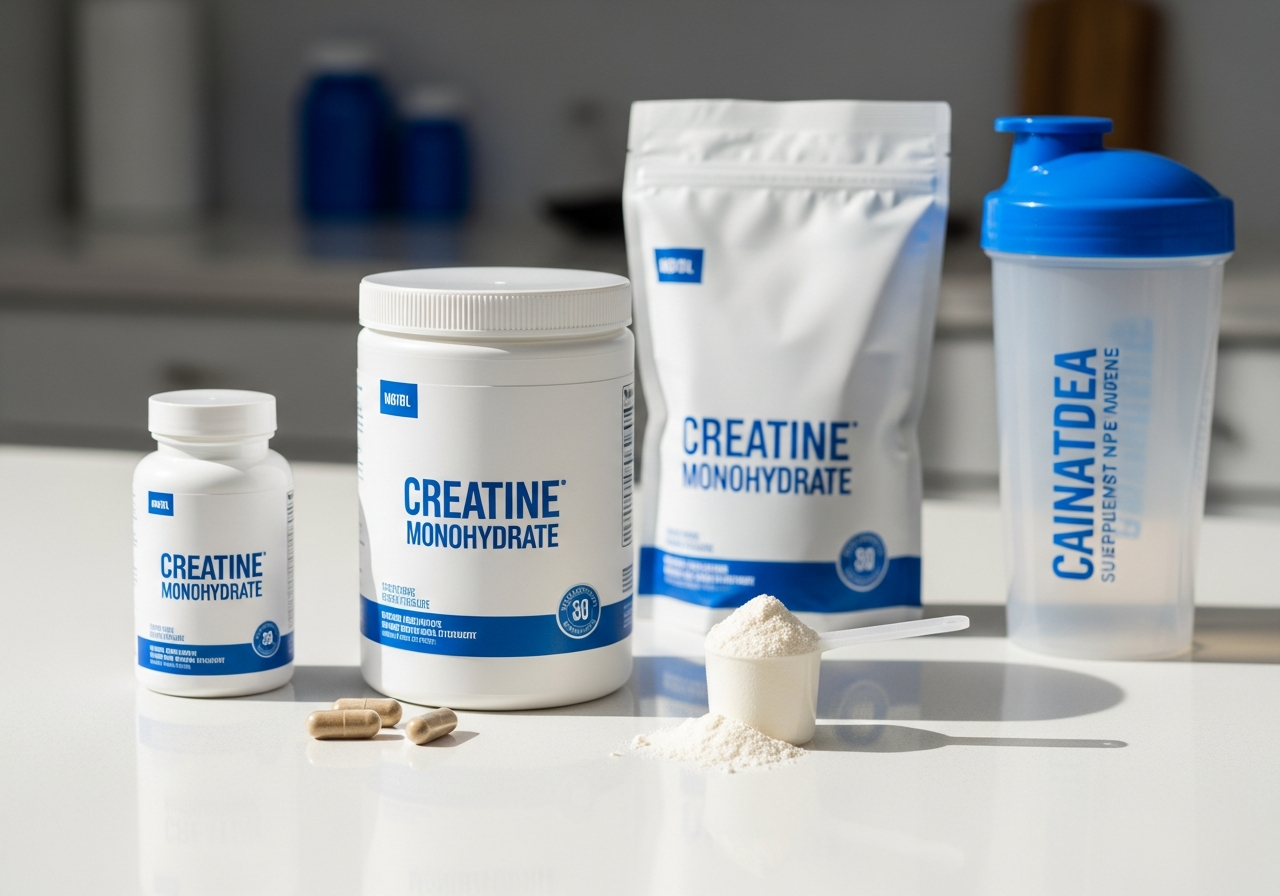
If you have PCOS and are shopping in Canada, the best creatine product is usually a plain creatine monohydrate powder with minimal ingredients, transparent dosing, and reputable quality control. You do not need a hormone-themed blend, a fat-loss stack, or a pink-labelled “women’s” creatine to get the benefit.
Use this checklist when buying:
- Form: choose creatine monohydrate.
- Dose per serving: look for a clearly stated 3 to 5 g serving or an easy scoop size.
- Ingredients: plain powder is ideal; avoid unnecessary stimulant or proprietary blends if your goal is simple daily use.
- Testing: third-party testing is a plus for purity and contamination control.
- Canadian labelling: where applicable, look for a Natural Product Number, or NPN, which indicates the product has been licensed by Health Canada as a natural health product.
| Option | Best for | Pros | Cons |
|---|---|---|---|
| Plain creatine monohydrate powder | Most women with PCOS | Best evidence, best value, easiest to dose | Needs mixing |
| Micronized monohydrate | Those who dislike gritty texture | Often mixes a bit easier | Usually similar effectiveness to standard monohydrate |
| Capsules | Travel or convenience | No mixing, easy to carry | More expensive per gram, many capsules needed |
| Gummies or blends | Taste-first shoppers | Convenient for some users | Often pricier, lower dose efficiency, more additives |
In Canada, quality matters because supplement shoppers are often comparing domestic stock, imported products, and marketplace sellers. For trusted options, compare our creatine product catalog, best creatine monohydrate in Canada, and Health Canada and NPN guide.
The simplest buying rule is still the best one: buy a plain monohydrate from a reputable brand, confirm the serving size, and avoid paying extra for claims that are not backed by better evidence.
Bottom line: when creatine makes sense in a PCOS plan
Creatine and PCOS are a good fit when your real goal is to improve training quality, support muscle, and strengthen the lifestyle side of PCOS management. Creatine does not have strong evidence as a direct treatment for polycystic ovary syndrome, but it does have strong evidence for helping high-intensity exercise performance and supporting lean mass gains during training.
That makes creatine especially relevant for women with PCOS who are doing resistance training, trying to preserve muscle while losing fat, or rebuilding consistency after a long period of low energy or stop-start exercise habits. The supplement is not magic, but it can make productive training a little easier and more repeatable, and that is often enough to matter over months.
If you want the shortest possible recommendation, here it is:
- Use creatine monohydrate.
- Take 3 to 5 g daily.
- Loading is optional: 20 g/day split into 4 doses for 5 to 7 days if you want faster saturation.
- Pair it with resistance training and a broader PCOS plan.
- Do not expect creatine alone to fix cycles, androgens, or fertility.
- Check with a clinician first if you have kidney disease, pregnancy-related questions, or complex medical issues.
If you want a supplement that has a strong chance of being worth the cost, low day-to-day hassle, and useful upside for body composition and strength, creatine is one of the better options available. If you want a cure for PCOS, it is not that.
For next steps, start with creatine for women, creatine for beginners, and does creatine help you lose fat to build a practical plan around your actual goal.
Creatine and PCOS: the numbers that matter
- 3-5 g/day Standard maintenance dose — Appropriate for most adult women using creatine monohydrate.
- 20 g/day Typical loading dose — Usually split into 4 doses of 5 g for 5-7 days.
- 5-7 days Time to near saturation with loading — A faster option if you want results sooner.
- 3-4 weeks Time to near saturation without loading — Daily 3-5 g works well if you prefer a simpler routine.
Frequently Asked Questions
Does creatine help PCOS directly?
Not directly in any well-proven way. Creatine is best viewed as a support supplement that may help women with PCOS train harder, preserve more muscle, and potentially improve insulin sensitivity indirectly through better exercise adaptation, but it is not an established treatment for the hormonal or reproductive features of PCOS.
Can women with PCOS take creatine safely?
Yes, many healthy women with PCOS can take creatine safely at recommended doses. Standard creatine monohydrate at 3 to 5 g per day has a strong safety profile in healthy adults, but women with kidney disease, pregnancy-related concerns, or complex medical conditions should speak with a clinician before starting.
Does creatine improve insulin sensitivity in PCOS?
Possibly, but the best evidence supports an indirect effect rather than a strong direct one. Creatine may improve insulin sensitivity in PCOS mainly by helping you train better and maintain or build more lean mass, which supports glucose disposal, while direct PCOS-specific evidence remains limited.
What is the best creatine for PCOS women?
The best creatine for PCOS women is plain creatine monohydrate. It is the most studied form, the most consistently effective for performance and lean mass support, and usually the most cost-effective compared with capsules, gummies, or heavily marketed alternative forms.
How much creatine should a woman with PCOS take?
Most women with PCOS can take 3 to 5 g of creatine monohydrate per day. Smaller women may start at 3 g, while many active women use 5 g daily; a loading phase of 20 g per day split into 4 doses for 5 to 7 days is optional if faster saturation is desired.
Will creatine make PCOS symptoms worse?
Creatine is not known to worsen PCOS itself. What some women notice is temporary water-weight gain or mild bloating, especially during loading, but that is usually related to water being drawn into muscle cells rather than worsening hormones, insulin resistance, or body fat.
Can creatine cause weight gain in women with PCOS?
Yes, creatine can cause a small increase in body weight at first, but it is usually water in muscle, not fat gain. Early changes are commonly around 0.5 to 2 kg, especially with loading, and that should be interpreted differently from actual increases in body fat.
Should I take creatine if I have PCOS and am trying to lose fat?
Yes, creatine can still make sense during fat loss with PCOS. It may help preserve lean mass and training performance while you are in a calorie deficit, which is often more valuable than the temporary scale increase many women worry about in the first few weeks.
Do I need to take creatine every day if I have PCOS?
Yes, daily use is the standard approach. Creatine works by gradually saturating your muscle stores, so taking it every day, including rest days, is more important than taking it only before workouts.
Is creatine good for PCOS if I do not work out?
It is less compelling if you do not work out. Creatine may still raise muscle creatine stores, but its most meaningful benefits in PCOS are likely to come from supporting resistance training, exercise performance, and lean-mass retention rather than acting as a stand-alone metabolic supplement.