
Creatine and Magnesium: A Recovery Stack Worth Considering
By The Creatine Canada Research Team — Evidence-based supplement analysts
Yes — most healthy adults can take creatine and magnesium together, and for many people the combination makes practical sense because creatine supports high-intensity performance while magnesium supports muscle function, nerve signalling, sleep quality, and recovery. The stack is generally safe when doses are sensible, but it is not a magic synergy and the biggest results still come from taking enough creatine consistently and correcting a true magnesium shortfall.
Evidence-based · Cites 4 sources · Editorial standards
Key Takeaways
- Creatine and magnesium can be taken together; there is no known harmful interaction at standard supplemental doses.
- Creatine monohydrate remains the best-supported form: 3-5 g daily, with or without a loading phase.
- Magnesium may complement creatine for recovery, sleep, cramps, and muscle function, especially if your diet is low in magnesium.
- The main benefit of a creatine magnesium stack is overlap in performance and recovery support, not dramatically better creatine absorption.
- If magnesium upsets your stomach, switch forms: glycinate is often gentler than citrate, while oxide is usually the least useful.
- Take the pair whenever you will be consistent; many people use creatine any time daily and magnesium in the evening.
- Buy simple, clearly labelled products in Canada and look for an NPN and, ideally, third-party testing if you compete.
Yes, you can take creatine and magnesium together — and for many lifters it is a sensible stack
Yes, you can take creatine and magnesium together, and for most healthy adults this creatine magnesium combination is both reasonable and low-risk. Creatine and magnesium do different jobs in the body, so they do not compete in a way that makes the stack inherently problematic.
Creatine primarily helps your muscles regenerate ATP, the body's immediate energy currency, during short, hard efforts such as lifting, sprinting, jumping, and repeated intervals. Magnesium is a mineral involved in hundreds of enzyme-driven processes, including muscle contraction, nerve function, energy metabolism, and normal protein synthesis. In plain English, creatine helps you perform and train harder, while magnesium helps the systems behind contraction, relaxation, and recovery run properly.
That is why people ask about magnesium and creatine together in the first place: the stack sounds like it could improve training quality and post-workout recovery. That logic is fair, but the evidence needs nuance. The strongest evidence in this pair belongs to creatine monohydrate on its own. The 2017 ISSN position stand concluded that creatine monohydrate is the most effective ergogenic nutritional supplement currently available for increasing high-intensity exercise capacity and lean mass gains during training, and it is also the most studied form. You can review that directly here: Kreider et al. (2017), ISSN Position Stand.
Magnesium is different. If you are low in magnesium, fixing that deficiency can improve muscle function, sleep, and overall wellbeing. If you already consume enough magnesium, adding more may still help if your intake is borderline or training stress is high, but the effect is usually less dramatic than creatine's effect on strength and repeated-power output.
So the direct answer is simple: creatine with magnesium glycinate, citrate, or another well-chosen magnesium form is usually fine. The more important question is not whether they can be combined, but why you are combining them. If your goal is better gym performance, start by nailing your creatine dose. If your goal is better sleep, fewer twitches or cramps, or a broader recovery routine, magnesium may be worth layering in.
If you are new to supplementation, start with plain creatine monohydrate and learn the basics first using our creatine dosage calculator and guide on how to take creatine. Then add magnesium only if it fits a clear need.
How the stack works: creatine powers rapid energy, magnesium helps the machinery run
The reason creatine and magnesium for recovery gets attention is that the two nutrients support overlapping parts of exercise physiology from different angles. Creatine helps restore phosphocreatine stores, while magnesium helps enzymes and muscle cells use energy efficiently.
Creatine is stored in muscle largely as free creatine and phosphocreatine. Phosphocreatine is a high-energy compound that donates a phosphate group to help regenerate ATP during very short, intense effort. More stored creatine generally means a better capacity to sustain repeated bursts of force, complete extra reps, or maintain output across sets. Over time, that can translate into stronger training sessions and more muscle and strength gains.
Magnesium matters because ATP in the body is functionally handled as a magnesium-ATP complex. Magnesium is also involved in ion movement across cell membranes, including sodium and potassium balance that influences muscle contraction and nerve signalling. This is one reason people with low magnesium intake may notice cramps, twitching, fatigue, poor sleep, or a general sense that they do not recover well.
Mechanistically, that means the creatine magnesium stack is not two supplements doing the same job. It is more like one supplement increasing rapid energy availability and another supporting the cellular conditions required to make good use of that energy. That is a plausible complement, but it is not proof of a massive additive effect in everyone.
There has also been interest in magnesium-chelated creatine compounds and in whether magnesium directly enhances creatine transport or retention. As of 2026, the practical take-home remains unchanged: the best evidence still supports standard creatine monohydrate, not boutique creatine-magnesium hybrid products, and the most reliable way to support magnesium status is adequate diet or a standalone magnesium supplement when needed. Antonio et al. (2021) also reinforced that many creatine misconceptions persist despite strong overall safety and efficacy data.
Put simply, creatine helps you train with more high-output energy available. Magnesium helps the contraction-relaxation and energy-use systems do their job. That can make them a sensible pairing, but the stack works best when your training, sleep, hydration, and protein intake are already in order.
If you want a deeper primer on creatine's role in ATP production and muscle saturation, see what creatine is and what it does.
Does magnesium improve creatine absorption? Probably not in a big, proven way
No, there is not strong evidence that taking magnesium dramatically improves creatine and magnesium absorption beyond what standard creatine monohydrate already achieves when taken consistently. Most people should think about this stack as complementary, not as an absorption hack.
Creatine absorption from the gut is already quite good with plain monohydrate. The main determinant of whether creatine works is not a fancy pairing but whether you take enough of it, every day, for long enough to raise muscle creatine stores. A loading phase of about 20 g per day split into four 5 g doses for 5-7 days saturates stores faster; a maintenance dose of 3-5 g daily gets you there more slowly, usually over about 3-4 weeks. That basic protocol matters far more than stacking creatine with magnesium.
Where magnesium might matter indirectly is not intestinal creatine uptake, but overall muscle function and recovery. If low magnesium is contributing to poor sleep, tightness, or fatigue, correcting that may help you train better and tolerate your program better. That can make your creatine supplementation look more effective, because your whole training setup improves.
There is a second nuance: creatine uptake into muscle is influenced by muscle saturation dynamics and can be affected by factors such as consistent daily intake and, in some contexts, insulin-mediated nutrient transport. Magnesium is not commonly used as a frontline strategy to enhance that process. So if you came here wondering whether creatine with magnesium glycinate is a secret biohacking trick for bigger pumps or instant uptake, the evidence does not support that claim.
What does help in practice?
- Take creatine daily: missed days slow saturation.
- Use the right dose: usually 3-5 g/day.
- Split high doses: useful during loading to reduce stomach upset.
- Mix thoroughly and drink enough fluids: mostly for comfort and consistency, not because creatine is hard to absorb.
If absorption is your real concern, you will likely get more value from our guides on how to mix creatine, taking creatine with or without food, and how long creatine takes to work than from chasing a magnesium-specific uptake effect.
The easiest way to take creatine and magnesium together: a simple step-by-step routine

The best way to take creatine and magnesium together is to keep the routine simple enough that you will actually follow it every day. Consistency beats timing tricks.
- Choose plain creatine monohydrate. Use a product that clearly lists grams per scoop. For most adults, 3-5 g per day is the default maintenance dose. If you want help choosing a product, compare options in our best creatine rankings or browse the creatine product catalog.
- Pick a magnesium form based on tolerance and goal. Magnesium glycinate is often chosen for gentler digestion and evening use. Magnesium citrate is common and can work well, but some people find it loosens stools. Magnesium oxide is widely sold but tends to be a poorer practical choice because it is more likely to cause GI issues and is less appealing from an absorption standpoint.
- Decide whether to load creatine. If you want faster saturation, take about 20 g/day split into 4 doses of 5 g for 5-7 days, then drop to 3-5 g/day. If you prefer simplicity, just take 3-5 g/day from day one.
- Take creatine whenever it fits your day. Breakfast, post-workout, lunch, or dinner all work if you are consistent. For deeper timing nuance, see when to take creatine.
- Take magnesium when it suits tolerance. Many people prefer magnesium in the evening because it is easy to remember and may fit a wind-down routine. If it upsets your stomach, take it with food or split the dose.
- Hydrate normally. You do not need to flood yourself with water, but do meet normal daily fluid needs, especially during hard training. Our guide on how much water to drink with creatine covers the practical side.
- Track outcomes for 4-6 weeks. Look for strength improvements, better repeated-effort performance, bodyweight increases from intracellular water with creatine, and, where relevant, fewer signs of magnesium shortfall such as twitching or poor sleep.
This routine works for most beginners because it removes unnecessary complexity. The real mistake is often not the stack itself, but underdosing creatine, buying a weak magnesium form, or changing too many variables at once. If you are new, start one supplement for a week or two before adding the other so you can identify what helps and what causes side effects.
Dosing by body weight and goal: exact creatine and magnesium ranges that make sense
The best dose for a creatine magnesium stack depends more on your creatine goal and magnesium tolerance than on a rigid combined formula. For creatine, evidence-based dosing is straightforward. For magnesium, individual needs vary more because diet quality and GI tolerance differ.
| Goal / Body size | Creatine monohydrate | Magnesium approach | Best use case |
|---|---|---|---|
| Smaller adult under ~60 kg | 3 g/day maintenance | Use label dose of a well-tolerated form; consider evening use | General fitness, beginners, lighter women |
| Most adults ~60-100 kg | 3-5 g/day maintenance | Use label dose based on elemental magnesium, start low if sensitive | Strength, hypertrophy, team sport, HIIT |
| Larger adult over ~100 kg | 5 g/day maintenance | Use label dose; split if GI issues occur | Large lifters, power athletes |
| Rapid saturation phase | 20 g/day split into 4 x 5 g for 5-7 days, then 3-5 g/day | Keep magnesium at a conservative routine dose | People wanting faster results |
| Recovery / sleep emphasis | 3-5 g/day | Often easier to take magnesium in the evening | Hard trainers, poor sleepers, people with cramps |
For creatine, the standard evidence-backed maintenance range is 3-5 g/day. A smaller person can often do well at 3 g/day, while bigger athletes usually land at 5 g/day. If you want more precision, use our creatine dosage calculator or see how much creatine per day.
Magnesium is different because supplements list elemental magnesium, not just compound weight, and forms vary. That means a capsule of magnesium glycinate is not equal to a capsule of magnesium citrate unless the elemental amount matches. The safest practical rule is to follow the product label and start at the lower end if you are prone to loose stools or nausea.
If your goal is performance, do not overcomplicate the stack: 5 g creatine monohydrate daily plus a well-tolerated magnesium supplement taken as labelled is already enough. If your goal is recovery or sleep support, taking magnesium later in the day may feel better, but that is mostly a routine decision, not a requirement for synergy.
One important point: more is not better. Taking extra magnesium on top of a solid diet will not supercharge creatine, and large doses are more likely to cause digestive issues than extra benefits.
Best timing for performance, sleep, and recovery: when to take each supplement
The best timing for magnesium and creatine together is the timing you will repeat daily, because creatine works through saturation and magnesium works through adequacy, not acute stimulant-like effects. There is no single mandatory clock time.
For creatine, timing matters less than total daily intake. The International Society of Sports Nutrition and later reviews consistently support regular use, with only minor practical differences between pre-workout and post-workout use compared with simply taking it every day. If you train in the morning, mixing 3-5 g into your breakfast shake is fine. If you train after work, taking it post-workout is fine. If rest days throw you off, tie it to one permanent habit like brushing your teeth or eating lunch.
For magnesium, the most practical timing depends on why you are taking it:
- For general adequacy: any consistent time works.
- For stomach comfort: take it with food or split the dose.
- For evening routine or sleep support: many people prefer dinner or pre-bed.
- For training-day convenience: take it separate from your pre-workout if that reduces nausea.
You can absolutely take both at the same time in the same meal window. Many people use creatine in a shake and magnesium capsules with that meal. Others separate them, not because they must, but because magnesium is easier at night and creatine is easier earlier in the day.
What should you expect over time?
- Days 1-7 with loading: you may notice a small bodyweight increase and better repeated effort if you respond quickly.
- Weeks 2-4 without loading: creatine's effects often become more obvious as stores rise.
- Weeks 2-6 for magnesium-related changes: if you were low, you may notice better sleep quality, fewer twitches, or improved tolerance to training stress.
If you miss a day, do not double up the next day unless you are intentionally following a loading schedule. Just resume your normal dose. Consistent ordinary use beats occasional mega-dosing.
For more timing detail, our related guides on creatine on rest days and creatine before bed can help you build a schedule that fits real life.
Who this stack helps most: beginners, women, older adults, athletes, and plant-based eaters
The people most likely to benefit from a creatine magnesium combination are those who can gain from creatine's proven performance effects and who either have marginal magnesium intake or specific recovery-related reasons to add magnesium. That includes a surprisingly broad group.
Beginners often do well with this stack because creatine helps support strength and training output, while magnesium can be useful if training increases fatigue, soreness, or sleep disruption. That said, beginners should not start five supplements at once. A simple creatine-first approach is usually smartest.
Women can benefit just as much from creatine as men. Creatine is not a steroid and does not inherently make women bulky. Women who train hard, diet frequently, or under-eat overall may also have more reason to pay attention to magnesium intake. If this applies to you, our guide on creatine for women goes deeper.
Older adults may be especially good candidates. Creatine is commonly used to support strength, lean mass, and function when paired with resistance training, while magnesium can matter for muscle function and overall nutritional adequacy. Older adults also take more medications on average, so checking compatibility with a clinician matters more here.
Athletes in repeated-sprint or power sports are natural creatine users because their sport depends on rapid ATP turnover. Hockey, football, sprinting, CrossFit, and team sports are classic examples. If heavy training also drives poor sleep or high cramp risk, magnesium may earn its place as a recovery support tool.
Vegetarians and vegans often respond very well to creatine because baseline muscle creatine stores may be lower when dietary creatine from meat and fish is absent. Plant-based eaters should also be more intentional about the overall quality of their micronutrient intake, including magnesium. See is creatine vegan for the basics.
People likely to benefit less include those already eating a magnesium-rich diet with no symptoms of low intake and those expecting the stack to replace training, sleep, or protein. The stack helps most when it fills a real gap. It helps least when it is treated as a shortcut.
Safety, side effects, and what to check on labels in Canada
For most healthy adults, taking creatine and magnesium together at standard doses is considered safe, but both supplements can cause side effects if the dose is too high or the product choice is poor. The main issues are usually digestive, not dangerous.
Creatine monohydrate's most common side effects are water retention, temporary bodyweight increase, and occasional stomach upset, especially when large doses are taken at once. The 2017 ISSN position stand and later reviews support creatine's overall safety in healthy populations when used appropriately. Mayo Clinic's summary is broadly aligned that creatine appears safe for many people when used as directed: Mayo Clinic — Creatine.
Magnesium's most common side effects are loose stools, cramping, or nausea, especially with forms such as citrate at higher doses or with lower-quality products. Glycinate is often chosen when gentler digestion is the priority.
You should be more cautious and speak with a qualified clinician before using this stack if you:
- have kidney disease or significant renal impairment
- take medications that interact with magnesium absorption or excretion
- are pregnant or breastfeeding
- have a complex medical condition and are already managing electrolytes closely
In Canada, pay attention to how products are labelled. Many supplements sold legally carry an NPN, or Natural Product Number, which indicates the product has been assessed under Health Canada's natural health product framework. An NPN does not guarantee elite quality, but it is a useful legitimacy signal. Competitive athletes may also want third-party testing such as NSF Certified for Sport or Informed Sport when possible.
When comparing products, keep the checklist simple:
- Creatine: plain monohydrate, clear grams per serving, minimal extras.
- Magnesium: clear form listed, clear elemental magnesium listed, conservative serving size.
- For both: lot information, reputable brand, no proprietary blends hiding the dose.
If you are shopping in Canada, our creatine brand reviews and creatine myths debunked pages can help you separate evidence-based products from marketing fluff.
Common mistakes and myths: what people get wrong about creatine with magnesium
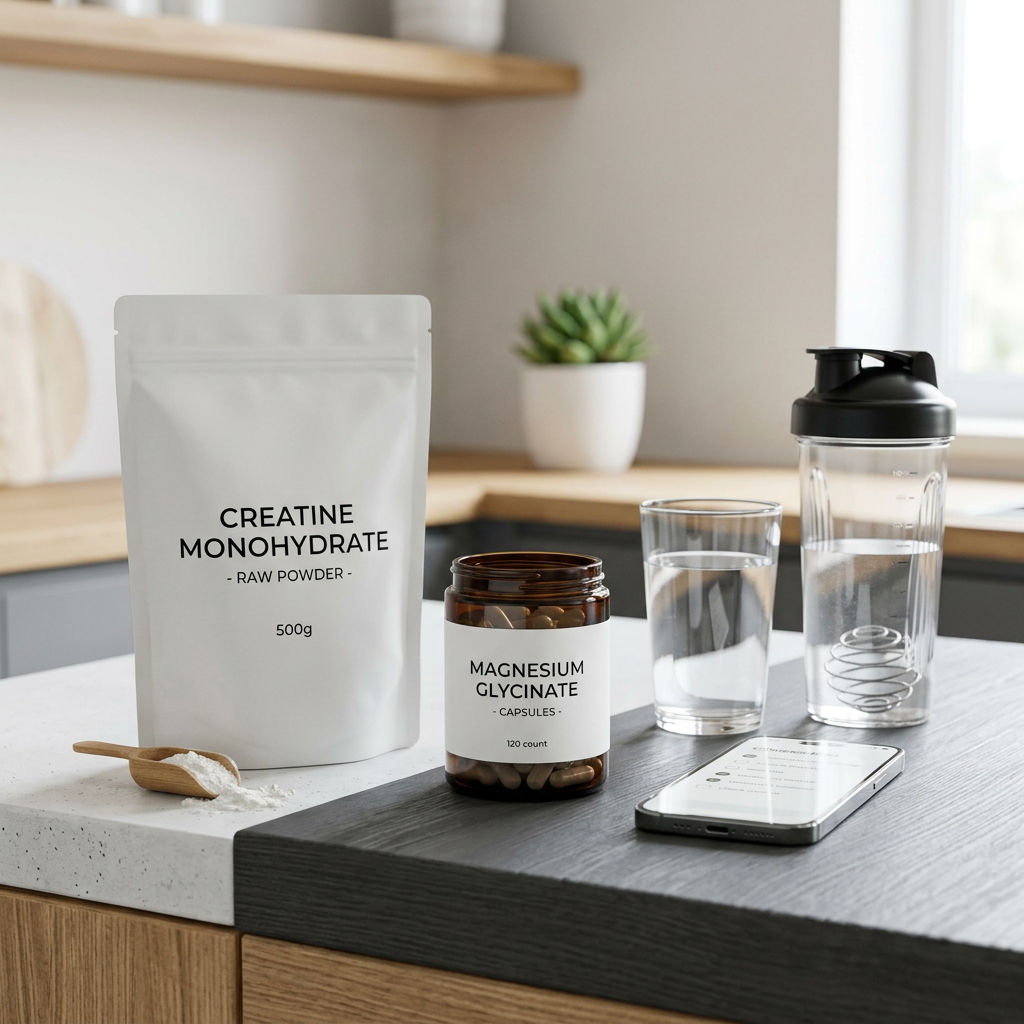
The biggest myths around creatine and magnesium are that the stack is either a miracle recovery hack or somehow unsafe by default. Neither view is accurate.
Myth 1: Magnesium makes creatine absorb dramatically better. The evidence does not support a large, universally meaningful absorption boost from pairing creatine with magnesium. Creatine monohydrate already works very well on its own when taken consistently.
Myth 2: You need a special creatine-magnesium hybrid product. You do not. Plain creatine monohydrate remains the most studied and most cost-effective option. A separate magnesium supplement is usually simpler, easier to dose, and easier to troubleshoot.
Myth 3: If some magnesium helps, more must help more. That logic often backfires. Extra magnesium commonly means extra GI distress, not extra performance.
Myth 4: Magnesium will instantly fix cramps, poor recovery, and bad sleep. It might help if low intake is part of the problem, but muscle cramps and poor recovery can also come from training load, dehydration, low sodium, lack of sleep, under-eating, or poor programming.
Myth 5: Creatine causes dehydration or kidney damage in healthy users. These concerns are persistent but overstated in healthy people using normal doses. Creatine can raise creatinine, a blood marker, without harming the kidneys, which is why context matters. If this topic worries you, read is creatine bad for your kidneys.
The most common real-world mistakes are simpler:
- using creatine inconsistently
- taking one giant creatine dose and blaming the supplement for stomach upset
- buying magnesium oxide and assuming all magnesium forms feel the same
- stacking multiple new products at once, so you cannot tell what caused side effects
- expecting supplements to override poor sleep, low protein, or weak training
The fix is usually boring but effective: take 3-5 g of creatine monohydrate daily, choose a well-tolerated magnesium form if you need it, and give the plan at least several weeks before judging it. In supplement use, boring consistency usually beats clever stacking.
Best forms to buy: plain monohydrate plus the right magnesium usually beats flashy combo products
The best buying strategy for a creatine magnesium stack is usually to buy creatine monohydrate separately and pair it with a magnesium form that fits your digestion and goals. For most people, that is smarter than buying a premium-priced all-in-one formula.
| Option | Pros | Cons | Best for |
|---|---|---|---|
| Creatine monohydrate + magnesium glycinate | Best creatine evidence, flexible dosing, often gentler magnesium option | Two products instead of one | Most people, especially recovery or sleep-focused users |
| Creatine monohydrate + magnesium citrate | Strong practicality, widely available, often lower cost | More likely to loosen stools in some users | Budget-conscious users with good GI tolerance |
| Combo creatine-magnesium formula | Convenient, one product to remember | Often pricier, less flexible dosing, may underdose one ingredient | People who value convenience above all |
| Creatine with magnesium oxide | Common and easy to find | Usually the least attractive choice for tolerance and practical utility | Rarely the best option |
Why does monohydrate keep winning? Because the evidence base is unmatched. The International Olympic Committee consensus on supplements also places creatine among the few sports supplements with strong evidence for specific performance uses: International Olympic Committee consensus on dietary supplements.
When buying in Canada, read the panel carefully:
- Look for grams of creatine monohydrate per serving.
- Check whether magnesium is listed by compound and elemental amount.
- Avoid proprietary blends. If the label hides the dose, skip it.
- Prioritize quality cues. NPN, clear lot numbers, and third-party testing matter more than flashy claims about exotic absorption technologies.
If you want to compare current options, start with our best creatine rankings and creatine brand reviews. If you specifically want the plainest, most reliable format, monohydrate powder remains the benchmark choice for value, flexibility, and evidence.
Bottom line: a worthwhile stack for the right person, but creatine does the heavy lifting
Yes, creatine and magnesium together can be a worthwhile stack, but the benefits are easy to overstate if you do not separate what is proven from what is merely plausible. Creatine monohydrate is the heavy hitter here. Magnesium is the useful supporting player when your intake is low, your recovery is strained, or you want a better overall routine for muscle function and sleep.
If you want the shortest evidence-based recommendation, it is this:
- Take 3-5 g of creatine monohydrate daily.
- If you choose magnesium, use a well-tolerated form such as glycinate or citrate and follow the product's labelled elemental dose.
- Take both at a time you can repeat every day.
- Give the routine at least 3-4 weeks to judge creatine's full effect if you do not load.
- Do not expect magnesium to transform creatine absorption or replace sleep, protein, hydration, and smart training.
The best candidates for this stack are lifters, athletes, older adults, plant-based eaters, and people whose diets or symptoms suggest magnesium may be a weak point. The worst candidates are those hoping a supplement stack will compensate for inconsistent training or chaotic recovery habits.
If you are deciding what to buy today, keep it boring: plain creatine monohydrate, a sensible magnesium form, and a repeatable routine. That is usually the highest-value answer.
For next steps, use our creatine dosage calculator, review is creatine safe, and compare product options through our creatine product catalog. If you stick to the basics, the stack can be practical, safe, and genuinely useful without becoming another overmarketed supplement trend.
Creatine and Magnesium Together: The Numbers That Matter
- 3-5 g/day standard creatine maintenance dose — The evidence-based daily range for most adults using creatine monohydrate.
- 20 g/day typical loading dose — Usually split into 4 doses of 5 g for 5-7 days to saturate faster.
- 3-4 weeks time to full effect without loading — A daily maintenance dose can saturate muscle more gradually over several weeks.
- 5-7 days time to saturate with loading — A loading phase speeds muscle creatine saturation compared with maintenance only.
Frequently Asked Questions
Can I take creatine and magnesium at the same time?
Yes, you can take creatine and magnesium at the same time, and most healthy adults do not need to separate them. Creatine and magnesium do different jobs in the body, so there is no known harmful interaction at standard doses. If magnesium bothers your stomach, take it with food or move it to the evening.
Does magnesium help creatine absorption?
Probably not in a major, proven way. Creatine monohydrate already absorbs well, and the main factor behind results is consistent daily dosing, not adding magnesium. Magnesium may still help indirectly if correcting low intake improves sleep, muscle function, or recovery, which can make your training better overall.
Is creatine with magnesium glycinate a good combination?
Yes, creatine with magnesium glycinate is a practical combination for many people. Creatine monohydrate handles the performance side, while glycinate is often chosen because it is gentler on digestion than some other magnesium forms. It is a sensible stack if you want simple daily creatine plus magnesium support without frequent GI issues.
What is the best time to take creatine and magnesium together?
The best time is the time you will follow consistently every day. Creatine works by saturating muscle stores over time, so daily intake matters more than clock time. Magnesium is often taken in the evening for convenience or because some people find it fits their wind-down routine better.
Can I mix creatine and magnesium in the same drink?
Yes, you can mix creatine and magnesium in the same drink if both products are meant to be mixed and the flavour or texture is acceptable. Many people prefer creatine in water or a shake and take magnesium as capsules, simply because it is easier. The key is dose accuracy and consistency, not a special mixing method.
Are there side effects from taking magnesium and creatine together?
There can be side effects, but they are usually mild and dose-related rather than caused by the combination itself. Creatine can cause temporary water weight and occasional stomach upset, especially with large single doses. Magnesium can cause loose stools or nausea, particularly with higher doses or forms such as citrate in sensitive users.
Who should avoid a creatine magnesium stack?
People with kidney disease, significant renal impairment, certain medication issues, or complex medical conditions should not self-prescribe the stack without medical guidance. Pregnant or breastfeeding individuals should also get individualized advice. For healthy adults, the stack is usually straightforward, but pre-existing health conditions change the picture.
Is a creatine magnesium combo supplement better than separate products?
Usually no — separate products are often the better buy. Plain creatine monohydrate gives you the strongest evidence and the most flexible dose, while a separate magnesium lets you choose the form that best matches your tolerance. Combo products can be convenient, but they are often pricier and sometimes underdose one ingredient.
Does the creatine magnesium stack help recovery?
It can help recovery, but mainly because the two ingredients support different parts of the process rather than because they create a dramatic special synergy. Creatine can support training quality and repeated-effort performance, while magnesium may help if your recovery is limited by poor sleep, low intake, or muscle function issues.
How long does it take to notice creatine and magnesium together?
Creatine is usually the faster and more noticeable part of the stack. With loading, some people notice effects within 5-7 days; without loading, it often takes around 3-4 weeks. Magnesium-related changes depend on whether you needed it in the first place, but improvements in sleep comfort or twitching may take a few days to a few weeks.