Creatine and Insulin: How Insulin Enhances Creatine Uptake Into Muscle
By The Creatine Canada Research Team — Evidence-based supplement analysts
Insulin can enhance creatine uptake into muscle, but for most people it is not necessary to spike insulin to make creatine work. The practical takeaway is simple: daily creatine monohydrate at 3 to 5 g consistently matters far more than taking it with sugar, although pairing creatine with a mixed meal or carbohydrate-protein drink can modestly support uptake during loading or for people chasing every marginal gain.
Evidence-based · Cites 4 sources · Editorial standards
Key Takeaways
- Insulin helps move creatine into muscle, but consistency beats insulin-spiking strategies.
- Creatine monohydrate at 3 to 5 g/day is the evidence-based maintenance dose for most adults.
- A loading phase of 20 g/day split into 4 doses for 5 to 7 days saturates muscles faster.
- Taking creatine with carbs or a mixed meal may modestly improve creatine uptake, especially during loading.
- You do not need high sugar intakes to get full creatine benefits.
- Timing is secondary; total daily dose and long-term saturation matter most.
- People with diabetes or insulin resistance should prioritise medical guidance and avoid unnecessary sugar loading.
The direct answer: insulin can help creatine uptake, but it is not the main driver of results
Yes, insulin can enhance creatine uptake into skeletal muscle, but most people do not need to deliberately chase a large insulin response for creatine to be effective. The reason is that muscle creatine gains are driven primarily by saturation, meaning gradually filling the muscle's creatine stores over days and weeks through regular intake.
Creatine enters muscle cells through a specific carrier called the creatine transporter, often abbreviated as CreaT or SLC6A8. Insulin appears to support this process indirectly by improving the cellular conditions that favour nutrient transport, which is why creatine taken with carbohydrate or carbohydrate plus protein has sometimes produced greater short-term retention than creatine taken alone. That said, the practical effect is modest compared with the much larger effect of simply taking enough creatine consistently.
The 2017 ISSN position stand concluded that creatine monohydrate is the most effective ergogenic nutritional supplement currently available for increasing high-intensity exercise capacity and lean mass during training. Notice what that statement does not require: it does not require sugar loading, special transport blends, or precise insulin manipulation.
For most lifters, athletes, and beginners, the most reliable protocol is:
- Maintenance-only: 3 to 5 g of creatine monohydrate every day.
- Fast saturation: 20 g/day for 5 to 7 days, split into 4 doses of 5 g, then 3 to 5 g/day.
If you want to take creatine with food, that is perfectly sensible. A normal mixed meal containing carbohydrate and protein will usually create enough insulin response to support uptake without forcing down a large amount of sugar. If you want a deeper primer on basic dosing, see our guides on creatine dosage calculator, how much creatine per day, and how to take creatine.
The bottom-line definition is this: creatine and insulin are linked because insulin can improve creatine transport conditions, but daily creatine intake remains the dominant factor determining muscle creatine saturation and real-world results.
How creatine insulin-mediated transport actually works inside muscle
Creatine insulin-mediated transport refers to insulin's ability to support the movement of creatine from blood into muscle, where it is stored as free creatine and phosphocreatine. Phosphocreatine is the high-energy form that helps rapidly regenerate ATP, the cell's immediate energy currency, during short explosive efforts like sprinting, lifting, and jumping.
The key player is the creatine transporter. This transporter sits on the muscle cell membrane and carries creatine from the bloodstream into the cell. It does not work in isolation. Its function depends on cellular energy status and ion gradients, especially sodium-dependent transport. Insulin appears to enhance the environment for this transport process rather than acting like an on-off switch.
Here is the mechanism in plain English:
- You ingest creatine and blood creatine levels rise.
- Muscle cells pull creatine inward through the creatine transporter.
- Insulin helps activate nutrient-handling pathways and supports sodium-potassium pump activity, which helps maintain the gradient used by several transport systems.
- When more creatine is retained in muscle, phosphocreatine stores rise.
- Higher phosphocreatine availability improves rapid ATP resynthesis during repeated high-intensity work.
This is why the search phrase creatine uptake mechanism insulin matters scientifically: insulin can influence the physiological conditions that support transport, but the transporter itself and total creatine exposure over time are still central.
There is another nuance many articles miss. Insulin's role is more relevant when you are trying to maximise acute retention, such as during a loading phase, than when you have already reached saturation. Once muscle stores are close to full, there is simply less room for extra creatine, so the benefit of special insulin strategies shrinks.
Examine's creatine evidence summary and the 2021 JISSN review on common creatine misconceptions both support the broader practical point: monohydrate works extremely well on its own, and exotic absorption claims are often overstated. If you want to understand the bigger energy-system context, our guides on creatine and ATP and the creatine phosphate system go deeper.
In one sentence: insulin can enhance creatine absorption into muscle by supporting the cellular transport environment, but it does not replace the need for adequate dose, time, and muscle saturation.
What the evidence really shows about creatine and insulin response
The evidence shows that insulin can improve creatine retention, especially when creatine is taken with carbohydrate or carbohydrate plus protein, but the size of the practical benefit is smaller than supplement marketing often suggests. In other words, creatine and insulin response is real physiology, yet it is usually a fine-tuning issue rather than the deciding factor in whether creatine works.
Older studies helped establish the concept that high carbohydrate intake alongside creatine could increase whole-body creatine retention compared with creatine alone. That finding makes biological sense because carbohydrate raises insulin, and insulin supports nutrient transport. Later work suggested that adding protein to carbohydrate could create a similar insulin response without relying on carbohydrate alone.
What matters here is interpretation. The studies did not show that creatine by itself is poorly absorbed. They showed that under certain conditions, co-ingestion with nutrients that raise insulin can improve retention somewhat. That is a very different claim from saying you need a sugar spike for creatine to work.
The 2021 review by Antonio and colleagues in JISSN emphasised that creatine monohydrate remains the reference standard because it is the most studied, effective, and economical form. It also addressed a broader pattern in creatine marketing: mechanistic claims are often exaggerated well beyond what outcome data justify.
Here is the most evidence-based way to rank the factors that matter for results:
- Most important: total daily dose and regular use.
- Very important: enough time to reach muscle saturation.
- Useful but secondary: taking creatine with a meal or shake.
- Usually unnecessary: large sugar boluses purely to raise insulin.
This is especially relevant if you are trying to minimise excess calories, avoid blood sugar swings, or manage insulin resistance. For those people, forcing a high-sugar creatine protocol often creates more downside than upside.
A practical summary is this: creatine absorption and insulin are linked in the lab and in short-term retention studies, but the real-world performance and muscle benefits still come mainly from saturating muscle creatine stores through consistent daily dosing.
The smartest practical strategy: use meals, not sugar hacks
The best way to use insulin to support creatine uptake is simply to take creatine with a normal meal or recovery shake, not to force down a large amount of sugar. This approach captures most of the practical upside of creatine and carbs insulin strategies while avoiding unnecessary calories and a lot of supplement nonsense.
If your goal is convenience and reliable results, use this step-by-step plan:
- Choose plain creatine monohydrate. It is the form backed by the strongest evidence and is usually the best value. Our best creatine rankings and creatine brand reviews can help you compare options.
- Pick your dose. Take 3 to 5 g/day for maintenance, or 20 g/day split into 4 doses for 5 to 7 days if you want faster saturation.
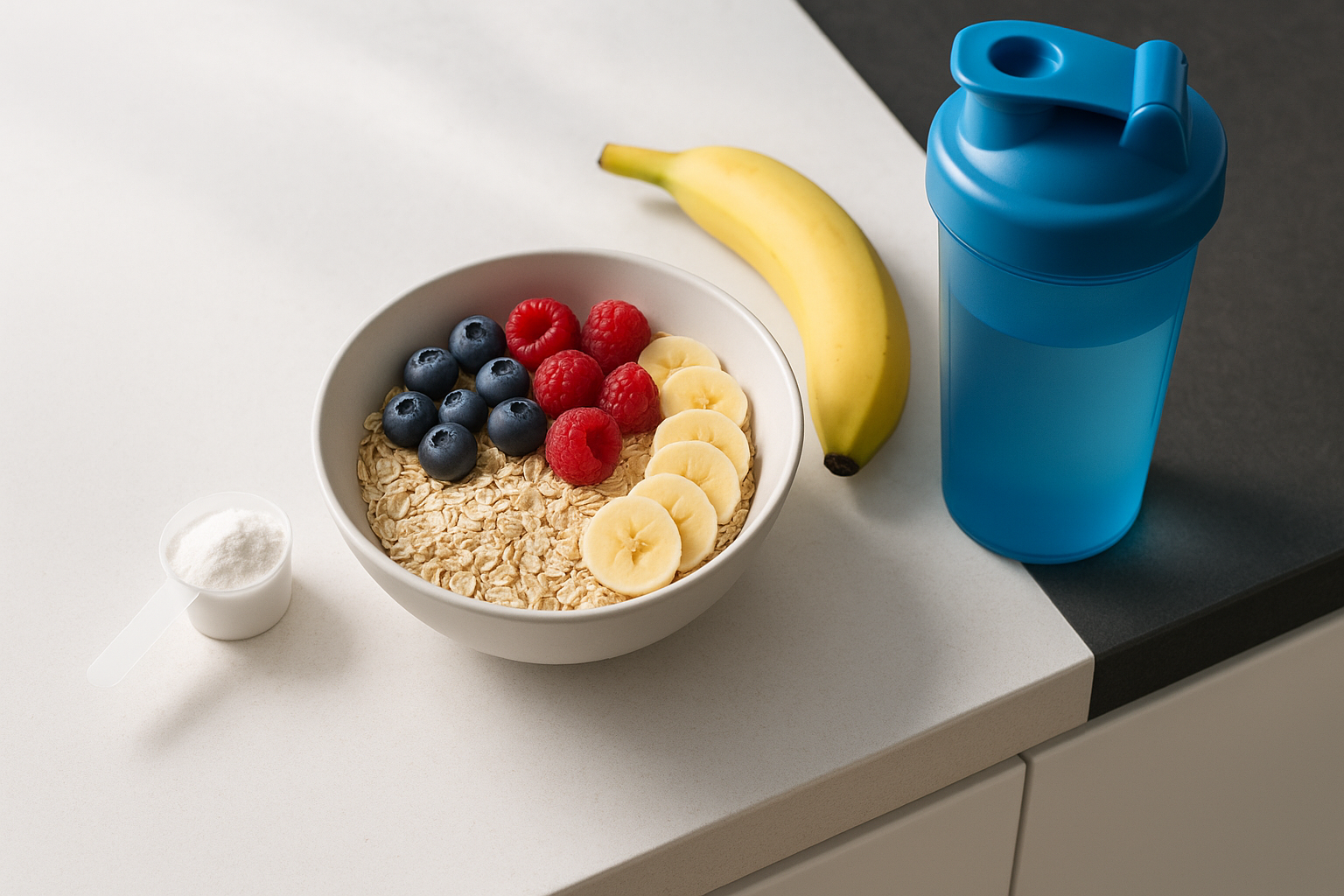
- Pair it with food if you like. A meal containing carbohydrate and protein is enough for most people. Examples include oats plus yoghurt, rice plus chicken, or a protein shake plus fruit.
- Take it every day. Training day and rest day consistency matters more than timing.
- Drink enough fluid. Creatine pulls water into muscle cells, so normal good hydration helps comfort and training quality.
Here are easy combinations that make sense in the real world:
- 5 g creatine stirred into a post-workout protein shake with milk and a banana.
- 5 g creatine with breakfast if breakfast includes oats, toast, cereal, fruit, or yoghurt.
- 5 g creatine with lunch or dinner if that helps you remember it consistently.
If you train fasted, you can still take creatine without carbs and get excellent results over time. If you prefer to keep your fasting window strict, you can also move creatine to your first meal and lose very little, if anything, in practical effect. Our related guides on creatine with or without food, when to take creatine, and creatine and intermittent fasting cover those scenarios in more detail.
The key insight is simple: a mixed meal creates a useful insulin environment for creatine uptake, but chasing a huge insulin spike is an optional optimisation, not a requirement.
Exact dosing by body weight, goal, and how fast you want results
The right dose for creatine does not change dramatically based on insulin, but your body size and goal can help you choose between a standard maintenance approach and a faster loading protocol. For most adults, the evidence-based maintenance range remains 3 to 5 g/day, while loading is typically 20 g/day split into 4 doses for 5 to 7 days.
A useful body-weight rule for loading is about 0.3 g/kg/day for 5 to 7 days, followed by a maintenance dose of roughly 0.03 g/kg/day. In practice, most people can simplify this to standard scoop sizes without losing meaningful results.
| Body weight | Goal | Suggested protocol | How to take it |
|---|---|---|---|
| Under 60 kg | General fitness | 3 g/day | Take daily with any meal or shake |
| 60 to 90 kg | General fitness or muscle gain | 5 g/day | Take daily; with food is optional |
| Over 90 kg | Strength, size, repeated sprint performance | 5 g/day maintenance; consider loading | Use 5 g/day or load first for faster effect |
| Any body weight | Fast saturation | 20 g/day for 5 to 7 days, then 3 to 5 g/day | Split into 4 doses of 5 g to improve comfort and retention |
| Any body weight | Sensitive stomach | 3 g/day to 5 g/day | Take with meals and avoid large single doses |
How much difference does loading make? Loading helps you saturate muscle faster, which means you may notice training and bodyweight changes within about a week instead of waiting several weeks. Without loading, reaching full saturation usually takes around 3 to 4 weeks of daily use. If you want precision, use our creatine dosage calculator or read creatine loading phase and creatine maintenance dose.
If you are specifically trying to exploit creatine insulin uptake, the loading phase is where taking each 5 g dose with meals may make the most sense. Once you are saturated, exact nutrient co-ingestion matters less.
The practical rule: choose the simplest protocol you can stick to for months, because long-term adherence produces more benefit than a perfect but unsustainable insulin-targeted dosing plan.
Timing, meals, and what to expect week by week
Creatine timing matters far less than total intake, but taking creatine near a meal or post-workout shake is a sensible way to support compliance and possibly slightly improve uptake. The main reason creatine “starts working” is not the clock time you take it; it is the gradual rise in intramuscular creatine and phosphocreatine stores.
Here is what most people can realistically expect:
- Days 1 to 7 with loading: muscle stores rise quickly; some people notice a small bodyweight increase from intracellular water and a slightly better ability to repeat hard efforts.
- Weeks 2 to 4 without loading: saturation builds more gradually; performance changes are subtle at first but accumulate.
- Weeks 3 to 8: training quality often improves through better rep quality, repeated sprint capacity, and slightly more total work.
- Weeks 8 to 12: any body composition benefit shows up mainly because creatine helped you train harder or recover better, not because creatine directly builds muscle without training.
If your main question is creatine absorption insulin timing, the answer is straightforward: taking creatine with breakfast, lunch, dinner, or a post-workout shake is all reasonable. You do not need to treat creatine like a stimulant or acute pre-workout. Saturation, not urgency, is the mechanism.
Good practical timing options include:
- Post-workout with whey and fruit.
- At breakfast with oats or toast and eggs.
- With your largest daily meal if that makes adherence easiest.
- On rest days, at the same time you usually remember it.
If you miss one day, do not double up dramatically the next day; just resume your normal dose. If you are curious about timelines, see how long does creatine take to work, creatine on rest days, and missing a day of creatine.
The clearest summary sentence is this: taking creatine with a meal may modestly help uptake through an insulin response, but day-to-day consistency and enough weeks of use are what actually determine whether you notice results.
Who should care most about insulin-enhanced creatine uptake
Most healthy adults can keep creatine simple, but certain groups have stronger reasons to think about meals, insulin response, and uptake efficiency. The people who may care most are those trying to maximise rapid saturation, those eating very low carbohydrate diets, and those with metabolic conditions that affect insulin handling.
Beginners do not need complicated protocols. They usually benefit most from 3 to 5 g/day, taken daily with any meal. For beginners, the limiting factor is not transporter science; it is forgetting doses or expecting overnight results. If that is you, start with our guide on creatine for beginners.
Strength and power athletes may care more about loading and meal pairing because they are often chasing small performance edges. For a rugby player, sprinter, hockey athlete, or powerlifter, slightly improved creatine retention during loading can matter if it helps reach saturation before a heavy training block.
Women can use the same evidence-based dosing as men. Women do not need a special “female creatine” insulin strategy. A normal mixed meal is enough if they prefer taking creatine with food. See creatine for women for sport- and life-stage-specific guidance.
Older adults may benefit from taking creatine with meals simply because routine improves consistency, and pairing creatine with resistance training is especially valuable for maintaining muscle and function with age. The evidence supports creatine as one useful tool for healthy aging when combined with training.
Vegetarians and vegans may respond particularly well to creatine because baseline muscle creatine stores are often lower. They do not necessarily need higher insulin exposure, but they may notice a stronger response to supplementation overall.
People with diabetes, prediabetes, or insulin resistance should not assume that old-school high-sugar creatine protocols are appropriate. The better strategy is usually plain monohydrate at standard doses, potentially with ordinary meals, and medical input when needed. For deeper context, read creatine and diabetes and creatine and blood sugar.
The practical takeaway is this: nearly everyone can benefit from creatine, but only a subset needs to think carefully about insulin-mediated transport beyond simply taking creatine with regular meals.
Safety, blood sugar, and the side effects people wrongly blame on insulin strategies
Creatine monohydrate is well supported for safety in healthy people at recommended doses, but pairing it with large amounts of sugar is often unnecessary and can create avoidable downsides. Those downsides are not usually caused by creatine itself; they are often caused by the delivery strategy.
The Mayo Clinic overview on creatine and the ISSN position stand both support the general safety profile of creatine when used appropriately. Typical issues are mild and practical, not dramatic: stomach upset, loose stools, or a temporary bodyweight increase from water drawn into muscle.
Here is what commonly goes wrong when people overfocus on creatine absorption insulin tricks:
- Too much sugar at once: can cause GI discomfort, calorie overshoot, or blood glucose swings.
- Huge single creatine doses: 10 g or more at once is more likely to upset the stomach than 3 to 5 g doses.
- Confusing water retention with bloating: creatine primarily increases intracellular water in muscle, which is different from feeling puffy from a giant sugary drink.
- Using “transport matrix” products: these often add sugars or fillers without outperforming plain monohydrate in a meaningful long-term way.
If you have kidney disease, are under medical care for kidney issues, or take medications that affect kidney function or fluid balance, talk to your clinician before using creatine. Healthy athletes commonly see a rise in creatinine on bloodwork because creatinine is a breakdown product of creatine, but that does not automatically mean kidney damage. If you want that distinction explained clearly, see creatine vs creatinine and is creatine bad for your kidneys.
The cleanest evidence-based summary is this: creatine itself has a strong safety record at standard doses, while unnecessary high-sugar insulin-spiking methods are often the real source of digestive, calorie, or blood-sugar problems.
The biggest myths about creatine, insulin, carbs, and ‘transport’ formulas
Most myths about creatine and insulin come from turning a true mechanism into an exaggerated sales pitch. Yes, insulin can support creatine uptake; no, that does not mean you need sugar bombs, proprietary transport systems, or expensive creatine blends.
Let us debunk the most common claims directly:
Myth 1: Creatine will not absorb unless insulin spikes.
False. Creatine is absorbed and works very well on its own. Insulin can enhance retention under some conditions, but it is not a prerequisite for effectiveness.
Myth 2: You need fruit juice or dextrose with every dose.
False for most people. A normal meal is sufficient if you prefer taking creatine with food, and many users get excellent results taking it with plain water.
Myth 3: Transport blends outperform creatine monohydrate.
Usually not in any meaningful, outcome-based way. The 2021 JISSN review reinforced that monohydrate remains the benchmark because it is the best validated form.
Myth 4: More insulin always means more muscle creatine.
False. Transport is not infinitely boosted by higher insulin, and once your muscles approach saturation, extra tricks matter less.
Myth 5: Low-carb or keto diets make creatine ineffective.
False. People on low-carb diets can still saturate muscle stores with regular daily creatine. They may simply choose to take it with one of their regular meals rather than with a carbohydrate-heavy drink.
Myth 6: If creatine is not “felt” immediately, absorption failed.
False. Creatine is not a stimulant. The best signs it is working are improved repeated-effort performance, fuller muscles, and better training quality over time.
If you want a full myth breakdown, visit creatine myths debunked, creatine myths and facts, and creatine not working.
The practical truth is this: the creatine transporter and insulin relationship is real science, but supplement companies often overstate that relationship to sell more complicated products than most people need.
Buying creatine in Canada: what matters more than insulin-focused branding
If you are buying creatine in Canada, prioritise purity, form, dose transparency, and testing rather than marketing built around insulin or “hyper-absorption” claims. The best product for almost everyone is still plain creatine monohydrate with a clear serving size and minimal extra ingredients.
In Canada, many supplements carry an NPN, or Natural Product Number, which indicates the product has been licensed by Health Canada as a natural health product. An NPN is useful, but it is not the only quality marker. For athletes and cautious buyers, third-party testing and reputable manufacturing matter too.
| What to look for | Why it matters | What to avoid |
|---|---|---|
| Creatine monohydrate | Most studied, effective, and cost-effective form | Fancy forms with weak evidence and much higher price |
| 3 to 5 g serving clarity | Makes dosing easy and accurate | Proprietary blends that hide the real creatine amount |
| Minimal ingredients | Reduces unnecessary sugars, fillers, and flavouring | “Transport matrix” formulas sold on insulin hype |
| NPN and/or reputable compliance | Useful Canadian legitimacy signal | Grey-market products with poor label transparency |
| Third-party testing where relevant | Helpful for athletes concerned about contamination | Vague purity claims with no verification |
If a product claims that its special carb blend is required for creatine transporter insulin activation, treat that as a marketing claim until proven otherwise. The evidence supports meal pairing as a reasonable option, not as a requirement to unlock creatine's benefits.
For Canadians comparing options, browse our creatine product catalog, best creatine rankings, and best creatine monohydrate in Canada. If you want the regulatory angle, our guide on is creatine approved in Canada explains the basics.
The buying rule is simple: do not pay a premium for insulin-themed branding when plain monohydrate, correctly dosed, already delivers the outcome most people want.
Bottom line: how to use creatine and insulin knowledge without overcomplicating it
Creatine and insulin are connected, but the practical lesson is much simpler than the mechanism. Insulin can enhance creatine uptake into muscle, especially during loading or when creatine is taken with carbohydrate or mixed meals, yet this effect is secondary to the far more important goal of reaching and maintaining muscle creatine saturation.
If you want the shortest evidence-based protocol that works for nearly everyone, do this:
- Buy plain creatine monohydrate.
- Take 3 to 5 g every day, or load with 20 g/day split into 4 doses for 5 to 7 days if you want faster results.
- Take it with a regular meal or shake if convenient, but do not worry if you take it with water.
- Keep using it on rest days.
- Judge results over weeks, not workouts.
Who should care most about insulin? Mainly people trying to optimise a loading phase, athletes chasing marginal gains, or those with specific dietary and blood-sugar considerations. Who should care least? Most everyday gym-goers who simply want better long-term strength, power, training quality, and lean mass support.
The strongest evidence base, reflected by the ISSN position stand and broader sports nutrition consensus, still points to the same answer in 2026: creatine monohydrate works extremely well, and consistency is king. Insulin is part of the uptake story, but not the hero of the story.
If your next step is practical implementation, start with how to take creatine, the ideal daily creatine protocol, and the complete guide to creatine.
Final takeaway in one sentence: use insulin knowledge to make creatine easy and slightly more efficient by pairing it with normal meals if you want, but never let that distract you from the fundamentals of dose, form, and daily consistency.
Creatine and Insulin: The Numbers That Actually Matter
- 3-5 g/day Standard maintenance dose — Enough for most adults to maintain muscle creatine saturation.
- 20 g/day Typical loading dose — Usually split into 4 doses for 5 to 7 days.
- 5-7 days Fast saturation timeline — Loading fills stores faster than maintenance-only use.
- 3-4 weeks Saturation without loading — Daily maintenance dosing works, just more gradually.
Frequently Asked Questions
Does insulin increase creatine uptake?
Yes, insulin can increase creatine uptake into muscle, but the effect is supportive rather than essential. Insulin helps create favourable conditions for the creatine transporter, which is why creatine taken with carbohydrate or a mixed meal can improve short-term retention, especially during loading.
Do you need to take creatine with sugar for it to work?
No, you do not need to take creatine with sugar for it to work. Creatine monohydrate is effective on its own, and most people will get full benefits from 3 to 5 g per day taken consistently, with or without food.
Is creatine better with carbs or protein?
Creatine can be slightly better retained when taken with carbs or with carbs plus protein, but the advantage is modest. In practice, taking creatine with any normal meal or post-workout shake is a simple way to capture that benefit without overthinking it.
What is the creatine transporter and how does insulin affect it?
The creatine transporter is the protein that moves creatine from blood into muscle cells. Insulin appears to support the transport environment by influencing nutrient-handling pathways and ion balance, which can help muscle retain more creatine under some conditions.
Can you take creatine on keto or low carb if insulin is low?
Yes, you can absolutely take creatine on keto or a low-carb diet. Lower carbohydrate intake does not stop creatine from working, because the main driver is still daily intake over time, not a large insulin spike.
Should people with diabetes use sugar to improve creatine absorption?
No, people with diabetes should not assume a high-sugar creatine protocol is necessary or wise. Standard creatine monohydrate dosing with regular meals is usually the more sensible strategy, but individual medical advice is important.
When is insulin most relevant for creatine supplementation?
Insulin is most relevant during a loading phase or when someone is trying to maximise short-term creatine retention. Once muscle stores are near saturation, the added value of insulin-targeted strategies becomes much smaller.
Does creatine raise insulin?
Creatine itself does not meaningfully raise insulin in the way carbohydrate does. The insulin response usually comes from the meal or drink taken alongside creatine, not from the creatine molecule itself.
What is the best time to take creatine for absorption?
The best time to take creatine is the time you will take it every day. If you want a small absorption advantage, taking it with a mixed meal or post-workout shake is reasonable, but consistency matters more than timing.
Are expensive creatine transport formulas worth it?
Usually not. Most creatine transport formulas rely on mechanistic marketing around insulin and absorption, but plain creatine monohydrate remains the most studied, effective, and economical option for the vast majority of users.