Creatine and Estrogen: How Female Hormones Affect Creatine Response
By The Creatine Canada Research Team — Evidence-based supplement analysts
Creatine does not appear to raise estrogen or disrupt hormone balance in women; the best current evidence suggests its main job is to increase muscle phosphocreatine stores, while estrogen may simply change how strongly some women respond across the menstrual cycle and life stages. In practice, women can usually use creatine monohydrate the same way men do, with a few smart adjustments for symptoms, training phase, and life stage.
Evidence-based · Cites 4 sources · Editorial standards
Key Takeaways
- Creatine is not an estrogen supplement and is not known to meaningfully increase estrogen levels.
- Estrogen may influence creatine metabolism and muscle uptake, but it does not make creatine unsafe or ineffective for women.
- A simple evidence-based dose is 3 to 5 g of creatine monohydrate daily, every day.
- Loading at 20 g per day split into 4 doses for 5 to 7 days can work faster, but it is optional.
- Women may notice creatine feels especially helpful for strength, repeated high-intensity work, and training consistency during lower-energy phases of the cycle.
- Small scale-weight increases early on are usually water drawn into muscle, not fat gain.
- If you are pregnant, breastfeeding, have kidney disease, or take medications that affect kidney function, speak with a qualified clinician first.
Does creatine affect estrogen? Here’s the direct answer first
Creatine does not appear to meaningfully increase estrogen levels or disrupt female hormone balance in healthy women. That is the short answer to the main question behind “creatine and estrogen.” Creatine is a compound stored mostly in muscle and used to rapidly regenerate ATP, the cell’s immediate energy currency, during short, hard efforts. Its primary mechanism is energetic, not hormonal.
The most important distinction is this: creatine can interact with female physiology without being an estrogen-altering supplement. Women’s hormone patterns, especially changes in estrogen across the menstrual cycle and through perimenopause and menopause, may affect fluid balance, energy availability, recovery, creatine transport, and perceived response. That is different from saying creatine raises estrogen.
The broader evidence base on creatine is strong for performance, strength, lean mass support, and safety when used appropriately. The 2017 ISSN position stand concluded that creatine monohydrate is the most effective ergogenic nutritional supplement currently available for increasing high-intensity exercise capacity and lean body mass during training. The 2021 JISSN review on common questions and misconceptions also reinforced that many hormonal and safety fears around creatine are overstated or unsupported.
For women specifically, the practical message is simple:
- If your goal is strength, sprint ability, lifting performance, muscle retention, or healthy aging, creatine is a reasonable option.
- If your concern is estrogen dominance, irregular cycles, PMS, or hormone balance, creatine is not a treatment for those conditions.
- If you are choosing a form, creatine monohydrate remains the gold standard, not because it is trendy, but because it is the most studied, most effective, and usually the most cost-effective. See our best creatine rankings and creatine myths debunked for more context.
If you only remember one sentence, make it this: creatine supports energy metabolism in muscle and possibly the brain, while estrogen may shape the context in which women experience those benefits.
How female hormones may change creatine response without changing the basic dose
Estrogen may influence how women experience creatine, but it does not usually require a completely different creatine protocol. This is where the phrase “creatine and female hormones” matters most. Women are not just smaller men in sports nutrition, yet the core creatine dosing framework still mostly holds.
Estrogen affects several systems relevant to training. It can influence muscle damage, fluid regulation, substrate use during exercise, and possibly the expression or behaviour of creatine transport in tissues. Researchers are still working out the exact degree of that interaction in real-world supplementation, but the key idea is straightforward: the hormonal environment may change responsiveness more than it changes safety.
There are a few plausible reasons some women report different responses at different times:
- Muscle energetics: Creatine works by increasing phosphocreatine, a stored high-energy phosphate that helps regenerate ATP during repeated intense efforts. Hormonal state may affect training output and therefore how noticeable this benefit feels.
- Fluid shifts: Estrogen and progesterone can affect body water distribution. Because creatine also increases intracellular water in muscle, some women notice the scale or sensation of fullness differently across the cycle.
- Dietary baseline: Women who eat little red meat or fish, or who follow plant-based diets, may start with lower creatine stores and feel a stronger response. This is one reason our creatine dosage calculator and creatine product catalog can help simplify setup.
- Life stage: Lower estrogen states, such as perimenopause and menopause, may raise the value of creatine for muscle, function, and training recovery, though the exact hormone-creatine interaction remains an active area of research.
What the evidence does not currently support is the idea that creatine acts like an estrogen booster, estrogen blocker, or hormone balancer. Those claims are too strong. Creatine is better understood as a foundational performance and muscle support supplement that sits downstream of hormones by helping the body handle energy demand.
So if you have searched for “creatine estrogen interaction,” the most accurate answer is this: the interaction is likely indirect and physiological, not a direct push upward or downward in estrogen itself.
Creatine and the menstrual cycle: what women often notice in real life
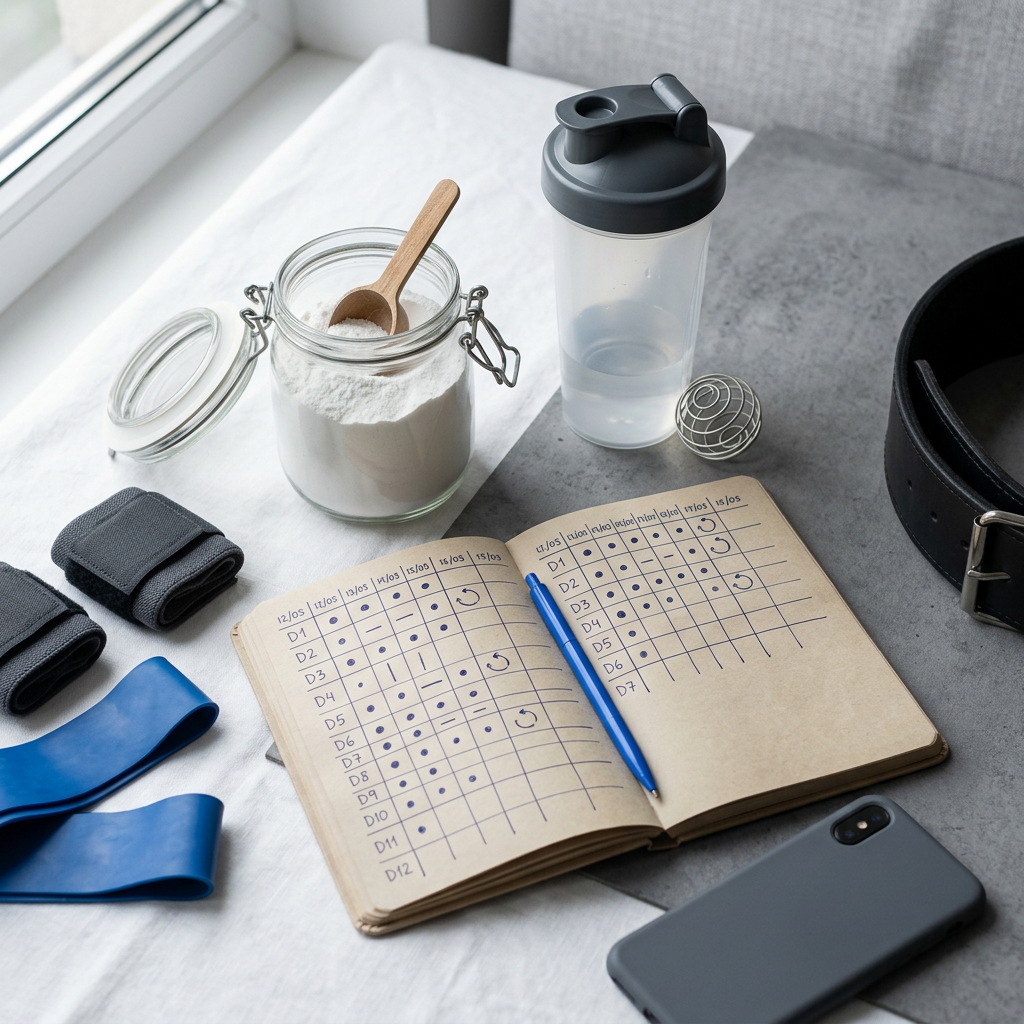
Creatine does not need to be cycled with your period, but some women may notice its benefits or side effects differently across the menstrual cycle. This addresses the search intent around “creatine and menstrual cycle” more directly than most articles do.
The menstrual cycle changes much more than bleeding days. Energy, sleep, appetite, body temperature, GI comfort, and fluid retention can all shift from phase to phase. Because creatine’s main early effect is increased water inside muscle, women who already feel puffy or heavier in certain phases may misread that as a hormone problem when it is usually just normal physiology layered on top of creatine saturation.
Here is the practical pattern many active women report:
- Early follicular phase: If symptoms are low, this can feel like a good time to start creatine because appetite and bloating concerns may be easier to interpret.
- Late follicular to ovulatory phase: Some women feel strongest and most explosive here, so creatine’s support for repeated intense efforts may be especially noticeable in training.
- Luteal phase: If you tend to have more fatigue, cravings, heat sensitivity, or water retention, creatine is still fine to take, but you may want to avoid loading because a sudden jump in daily dose can make GI symptoms or “puffy” feelings more noticeable.
What should you actually do?
- Take the same daily dose consistently rather than changing it week to week.
- Track body weight, training quality, and symptoms for at least one full cycle.
- Judge results by performance, recovery, and training volume, not by day-to-day scale fluctuations.
- If you are very sensitive to GI upset or bloating, skip the loading phase and use 3 to 5 g daily from day one. Our guides on how to take creatine and how long creatine takes to work walk through this in more depth.
The bottom line is that your cycle may change how creatine feels, but it does not mean creatine is altering your hormones or causing imbalance. It usually means you are observing normal hormone-related fluctuations while using a supplement that changes muscle energy storage and intracellular water.
Why creatine works in women: the mechanism has more to do with ATP than estrogen
Creatine helps women for the same core reason it helps men: it raises phosphocreatine stores, which helps muscles regenerate ATP faster during hard efforts. This matters because many questions about creatine and hormones start with the wrong assumption that the supplement must work by changing sex hormones.
Here is the mechanism in plain English. Your muscles store a small amount of ATP, the molecule that directly powers contraction. During short, explosive efforts like a heavy set, sprint, jump, or repeated interval, ATP runs low quickly. Phosphocreatine donates a phosphate to help rebuild ATP fast. When you supplement with creatine, muscle stores of phosphocreatine generally rise. That gives you a bigger buffer for high-intensity work.
From there, the benefits cascade:
- You may squeeze out an extra rep or maintain output across sets.
- That slightly better training quality, repeated over weeks, can support greater strength and lean mass gains.
- You may recover better between repeated bouts of intense effort.
- In some contexts, creatine may also support brain energy metabolism, which is one reason interest extends beyond bodybuilding.
None of that requires a change in estrogen. Instead, hormones may act as context. Estrogen can affect recovery, neuromuscular function, body water, and substrate metabolism, all of which can influence how dramatic creatine feels from one woman to another.
The International Olympic Committee consensus on supplements places creatine among the few supplements with strong evidence for certain performance applications. That status is based on creatine’s energy-system effects, not on endocrine manipulation.
If you are brand new to this topic, start with what creatine is and then review our creatine for women guide. The key sentence to remember is this: creatine is a cellular energy supplement first, and any hormone-related differences in response are secondary modifiers rather than the primary mechanism.
Exactly how much to take: dosing by goal, body weight, and female life stage
For most women, the evidence-based maintenance dose is 3 to 5 g of creatine monohydrate per day, every day, regardless of cycle phase. That is the simplest answer to “how much” for creatine and hormone balance concerns. The dose is based on saturating muscle creatine stores, not on changing estrogen.
If you want faster saturation, a loading phase can work: 20 g per day split into 4 doses for 5 to 7 days, followed by 3 to 5 g per day. Loading is optional, not mandatory. Many women prefer to skip it to reduce the chance of stomach upset or short-term water-weight changes.
| Goal or situation | Recommended approach | What to expect |
|---|---|---|
| General fitness beginner | 3 to 5 g daily | Gradual saturation over roughly 3 to 4 weeks |
| Fast results for training block | 20 g daily in 4 doses for 5 to 7 days, then 3 to 5 g daily | Faster saturation, but higher chance of GI discomfort |
| Smaller body size or sensitive stomach | Start at 3 g daily | Slower but usually easier to tolerate |
| Vegetarian or vegan athlete | 3 to 5 g daily; loading optional | Often a more noticeable response due to lower baseline stores |
| Perimenopause or menopause training support | 3 to 5 g daily, consistently | Useful for muscle and performance support; consistency matters more than timing |
Body weight can help you think practically, even if most healthy adults still land in the same 3 to 5 g range:
- A 50 to 60 kg woman will usually do well on 3 g daily.
- A 60 to 80 kg woman will usually do well on 3 to 5 g daily.
- A larger athlete with high lean mass may choose 5 g daily as a clean default.
If you want a tailored estimate, use our creatine dosage calculator and see how much creatine per day.
Do not overcomplicate dose based on estrogen status alone. There is currently no standard evidence-based protocol that says women must change creatine dose by menstrual phase or estrogen level. Focus on consistency, tolerance, and whether your training output improves over several weeks.
A simple step-by-step plan if you want to start creatine without overthinking hormones
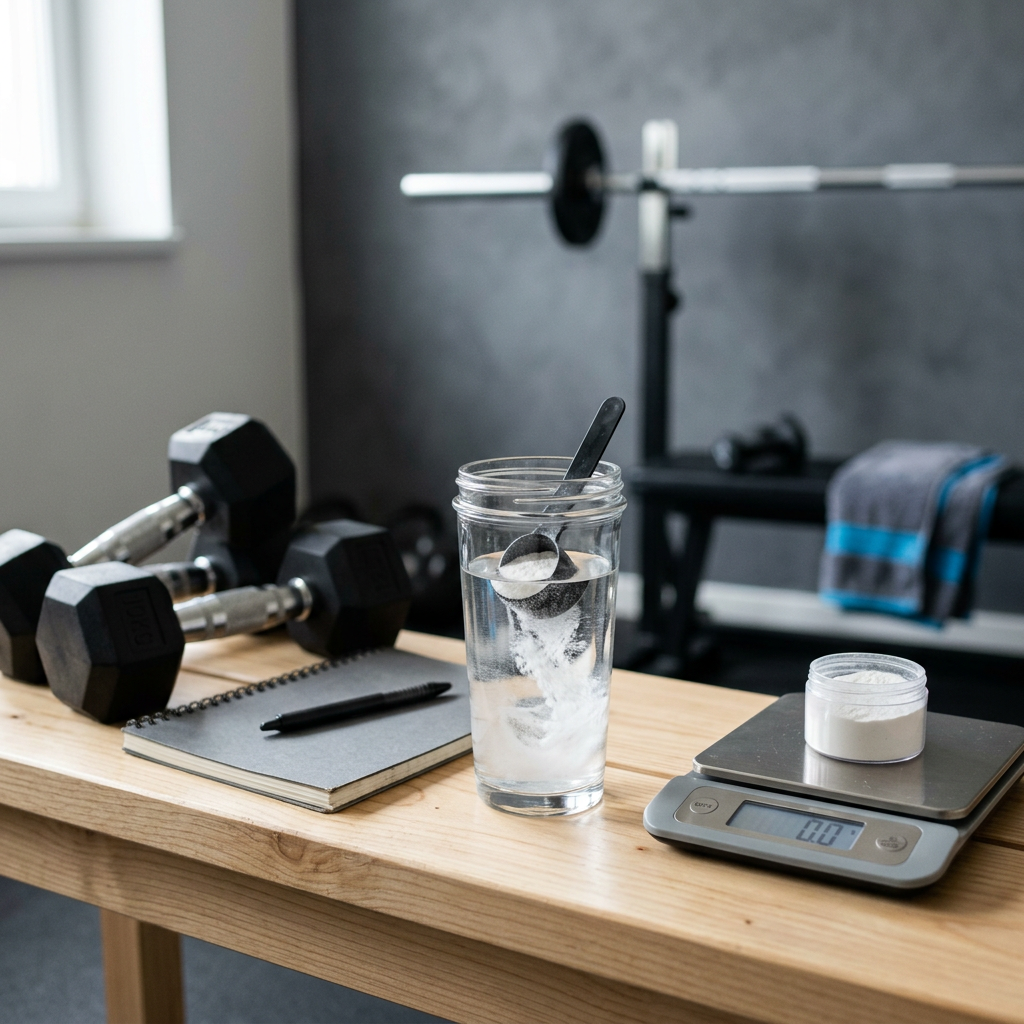
The best way to start creatine is to pick creatine monohydrate, choose a consistent daily dose, and track real outcomes for 4 to 8 weeks. If you are worried about creatine and female hormones, this removes most of the noise.
- Choose the form. Buy plain creatine monohydrate powder unless you have a strong reason to prefer capsules. Monohydrate has the strongest evidence and best value. Our creatine brand reviews and creatine product catalog can help you compare options.
- Choose your dose. Start with 3 g daily if you are cautious, smaller-bodied, or prone to GI issues. Start with 5 g daily if convenience matters more than precision and your stomach is generally fine.
- Decide on loading or no loading. If you want faster results and tolerate supplements well, you can use 20 g daily split into 4 doses for 5 to 7 days. If you dislike the idea of temporary water-weight increase, skip loading.
- Take it daily. Mix it into water, a shake, or a meal once per day. Timing matters far less than consistency. If you want more detail, read when to take creatine.
- Track the right markers. Watch for better performance on repeated sets, slightly better training volume, improved sprint repeatability, or easier maintenance of strength during hard weeks.
- Ignore day-to-day scale noise. Especially in women, cycle-related water shifts can hide the signal. Compare weekly averages, not one morning weigh-in.
- Reassess after 4 to 8 weeks. If you are training hard and taking it consistently, that is enough time to judge whether it is helping.
A realistic week-by-week expectation looks like this:
- Week 1: Little to modest noticeable change unless you loaded.
- Weeks 2 to 4: Saturation builds; some women notice improved repeated-effort performance and better training quality.
- Weeks 4 to 8: The main benefit becomes clearer through stronger workouts, more reps at a given load, or slightly better recovery between hard efforts.
If you are wondering whether it is “working,” the best signs are performance-based, not hormonal. Creatine is successful when your training quality improves, not when your hormones feel dramatically different.
Timing, meals, and what to expect on the scale if you’re worried about bloating
Creatine timing is much less important than taking it every day, and mild early weight gain is usually water inside muscle rather than fat or hormone disruption. This is one of the biggest sticking points for women searching “creatine hormones women” or “creatine and hormone balance women.”
The best time to take creatine is the time you will remember. You can take it:
- With breakfast
- After training in a protein shake
- With lunch or dinner
- On rest days exactly the same way
There is no compelling evidence that women need a special estrogen-aware timing protocol. If taking it with food feels better on your stomach, do that. If you prefer it after training because it helps build the habit, that is fine too. For a deeper timing discussion, see with or without food and creatine on rest days.
Now the scale question. Creatine often increases intracellular water, meaning water is pulled into muscle tissue. That can create a small increase in body weight early on, especially with loading. This is not the same as fat gain and is not evidence that creatine is raising estrogen.
How to interpret it wisely:
- If your weight rises but your waist measurement does not, that points away from fat gain.
- If your muscles feel a bit fuller and training improves, that is a normal creatine response.
- If you feel bloated in the stomach, the issue is often dose size or how you took it, not hormone damage.
To reduce discomfort:
- Use 3 to 5 g once daily instead of a loading phase.
- Split the dose if needed.
- Mix it well.
- Stay normally hydrated; there is no need to force extreme water intake.
Our pages on does creatine cause bloating and does creatine make you gain weight explain the difference between water, muscle, and fat in more detail.
The short version is this: timing is flexible, consistency matters most, and early scale changes are usually a normal muscular water effect rather than an estrogen problem.
Who benefits most from creatine? Beginners, athletes, older women, and low-meat eaters
Creatine can be useful for many women, but it is especially relevant for those doing resistance training, repeated high-intensity sport, or trying to preserve muscle through aging. The effect is not limited to bodybuilders.
Women who often benefit most include:
- Beginners lifting weights: Creatine can support better training quality while you build the habit of progressive overload.
- Team-sport and court-sport athletes: It is most useful where repeated sprints, jumps, or explosive efforts matter.
- Vegetarian and vegan women: Because dietary creatine intake is lower, supplementation may feel more noticeable.
- Women in perimenopause and menopause: Creatine becomes more compelling when maintaining muscle, function, and training capacity gets harder.
- Older adults: It can complement resistance training for preserving strength and lean mass.
For women asking whether low estrogen states change the value of creatine, the practical answer is often yes in the sense of usefulness, not because creatine corrects estrogen directly, but because the goals become more important. When estrogen declines, maintaining muscle mass, power, and physical function can become more challenging. Creatine fits that problem well because its best-supported use is to improve high-intensity work capacity and support training adaptations.
For a broader overview, our guides on creatine for beginners, creatine for older adults, and creatine and menopause are the next reads.
Who should be more cautious? Women who are pregnant, breastfeeding, have known kidney disease, or take medications with kidney-related considerations should involve a clinician. The general safety profile of creatine is good, but “good for healthy adults” is not the same as “automatic for every medical context.”
The concise answer is this: creatine is for women whose goals include strength, muscle, power, recovery, or healthy aging, and female hormones mainly change the context of use rather than the core reason to use it.
Safety, side effects, and what Canadian buyers should check on the label
Creatine monohydrate is widely considered safe for healthy adults when used at standard doses, and the most common side effects are digestive upset or mild short-term weight increase rather than hormonal disturbance. This is consistent with major reviews, including the ISSN position stand and the JISSN misconceptions paper.
The most common practical issues are:
- Stomach upset: More likely with loading, large single doses, or poor mixing.
- Small weight increase: Usually intracellular water, especially early on.
- Misread bloodwork: Creatine can increase creatinine, a breakdown product, which can confuse interpretation if your clinician is not aware you supplement. That does not automatically mean kidney harm.
What about estrogen, PMS, acne, or cycle disruption? Current evidence does not support creatine as a common cause of raised estrogen or hormonal chaos. If symptoms change after starting creatine, first check for simpler explanations: menstrual phase, calorie intake, sleep, sodium intake, loading dose, or training stress.
For Canadians, buying quality matters. Look for:
- Creatine monohydrate as the active ingredient
- NPN, meaning Natural Product Number, if applicable under Health Canada labelling
- Third-party testing or sport certification if you are a tested athlete
- A plain label without fairy-dust blends
You can compare options in our best creatine rankings, creatine brand reviews, and creatine product catalog. If safety is your main concern, also read is creatine safe.
A clean buying rule is this: the best creatine for women worried about hormones is usually the same best creatine for everyone else: plain, tested, properly labelled creatine monohydrate from a reputable brand.
Myths to stop believing about creatine, estrogen, and “hormone balance”
Most hormonal fears about creatine are either unsupported or caused by confusing normal cycle changes with normal creatine effects. This section tackles the most common myths behind searches like “does creatine affect estrogen” and “creatine and hormone balance women.”
Myth 1: Creatine raises estrogen.
There is no strong evidence that standard creatine supplementation meaningfully elevates estrogen in healthy women. Creatine’s primary action is on phosphocreatine and ATP turnover.
Myth 2: If the scale goes up, your hormones are out of balance.
A small early increase in body weight is usually water inside muscle. That is not the same as estrogen-related fat gain or fluid retention from a hormone disorder.
Myth 3: Women need a “female creatine” formula because of hormones.
Usually false. Most women do well with the same creatine monohydrate used in the sports nutrition literature. Gendered marketing often changes the packaging more than the science.
Myth 4: Creatine causes bloating in all women.
Not true. Some women feel nothing; some notice transient fullness; others mainly get benefits. Dose size, loading, cycle phase, and GI sensitivity explain much of the variation.
Myth 5: You should stop creatine during your period.
There is no standard evidence-based reason to stop during menstruation. In fact, consistency is one of the reasons creatine works.
Myth 6: Creatine fixes hormonal problems.
Also false. Creatine may support training, muscle, and possibly cognition, but it is not a treatment for estrogen dominance, PCOS, hypothalamic amenorrhea, or other endocrine conditions.
If you like plain-language myth breakdowns, our creatine myths debunked and creatine myths vs. facts guides go deeper.
The smartest framing is this: creatine is a useful, well-studied supplement that lives in the sports nutrition lane, while hormone symptoms still deserve proper medical evaluation when they are persistent or concerning.
Bottom line: how to use creatine confidently if you care about female hormones
Creatine and estrogen are linked more by context than by direct cause and effect. The best current evidence says creatine helps by increasing phosphocreatine availability and supporting repeated high-intensity performance, strength, and training adaptations. It does not appear to be a meaningful estrogen booster or hormone disruptor in healthy women.
If you want the most practical summary, here it is:
- Choose creatine monohydrate.
- Take 3 to 5 g daily.
- Use loading only if you want faster saturation and tolerate it well.
- Stay consistent across the menstrual cycle instead of constantly changing dose.
- Judge success by gym performance, recovery, and long-term body composition, not daily scale swings.
- If you have a medical condition, pregnancy, breastfeeding, or kidney-related concerns, check with a clinician.
For most women, creatine is not a hormone hack. It is a simple, evidence-based tool for better training support. If your next step is choosing a product, start with our best creatine rankings or explore the creatine product catalog. If your next step is learning the fundamentals, read what creatine is and how to take creatine.
The final takeaway is one sentence: creatine does not seem to meaningfully alter estrogen, but female hormones can influence how and when women notice creatine’s benefits, which is why a steady, low-drama protocol works best.
Creatine and Estrogen: The Numbers That Matter
- 3-5 g/day Standard maintenance dose — Works for most women and men once taken consistently.
- 20 g/day Typical loading dose — Usually split into 4 daily doses for 5 to 7 days.
- 5-7 days Time to saturate with loading — Loading is optional, not required.
- 3-4 weeks Time to saturate without loading — A steady daily dose reaches similar muscle stores more gradually.
Frequently Asked Questions
Does creatine increase estrogen in women?
Current evidence does not show that creatine meaningfully increases estrogen in healthy women. Creatine’s main effect is to raise phosphocreatine stores and support ATP regeneration during intense exercise, so it is better understood as an energy-support supplement than a hormone-altering one.
Can creatine mess up your hormones or menstrual cycle?
Creatine is not known to commonly disrupt the menstrual cycle or female hormone balance. What some women notice instead are normal cycle-related changes in water retention, appetite, and training performance that can overlap with creatine’s early water-storage effects and make the supplement seem hormonal when it usually is not.
Should women change creatine dose during different phases of the menstrual cycle?
Most women do not need to change creatine dose across the cycle. A consistent 3 to 5 g daily is the simplest evidence-based approach, and changing dose week to week usually adds confusion rather than benefit unless you are managing stomach tolerance.
Does creatine help more when estrogen is low?
Creatine may feel especially useful during lower-estrogen life stages or lower-energy phases because preserving strength, muscle, and training quality becomes more valuable then. That said, it is not correcting low estrogen directly; it is supporting muscle energy metabolism and training performance.
Can creatine make PMS bloating worse?
It can feel that way for some women, especially if they use a loading phase, but creatine does not necessarily worsen PMS itself. The usual issue is that creatine increases water inside muscle while the luteal phase can already bring water-retention sensations, making the combined effect more noticeable.
Is creatine safe for women in perimenopause or menopause?
For many healthy women, creatine monohydrate is a reasonable supplement to consider in perimenopause or menopause. Its value there is less about estrogen itself and more about supporting strength training, muscle retention, and physical function as hormonal changes make those goals harder.
What is the best creatine for women worried about hormone balance?
Plain creatine monohydrate is usually the best choice. It has the strongest evidence, the clearest dosing, and the least marketing noise, which matters when you are trying to judge your body’s response without the extra variables found in proprietary blends.
Does creatine cause weight gain because of estrogen?
No, creatine-related weight gain is not thought to happen because it raises estrogen. The usual reason is increased intracellular water in muscle, especially during the first weeks, which is different from fat gain and different from a hormone-driven body-composition change.
Can women take creatine every day long term?
Healthy adults commonly use creatine daily long term at standard doses, and major reviews have supported its safety profile in appropriate contexts. The practical rule is to use a standard dose, buy from a reputable brand, and check with a clinician if you have kidney disease, are pregnant, breastfeeding, or take relevant medications.
If I have hormone symptoms, should I use creatine to balance them?
Creatine should not be treated as a hormone-balancing therapy. It may support training, strength, and energy-demanding tasks, but persistent symptoms such as irregular periods, severe PMS, unexplained weight changes, or signs of endocrine dysfunction deserve proper medical assessment.